Medieval art · mortality · the painted chamber
The Three Dead Kings
of Longthorpe
Three kings go hunting. Instead of their quarry, they meet three corpses. The dead have one message for the living: wealth, youth and rank all end in exactly the same place. At Longthorpe Tower, somebody chose to paint that warning on the wall of his own private room.
The dead are frightening because they are telling the truth.
Longthorpe Tower contains one of Peterborough's most unsettling medieval images, but its purpose was not simply to frighten. The scene is a moral encounter between the living and the dead, designed to force the viewer to think about the one outcome nobody, not even a king, can escape.
The subject is usually called The Three Living and the Three Dead. Three wealthy young men, often represented as kings or princes, are out hunting when they suddenly encounter three corpses. The dead confront the living with their own future.
In different medieval versions the dialogue varies, but the message hardly changes. The corpses tell the richly dressed hunters that they too were once handsome, prosperous and powerful. The living should look carefully at what remains, because this is what they themselves will become.
There are no chains, haunted castles or restless spirits. The horror comes from recognition.
More than 690 years later, the encounter is still on the wall.
Longthorpe's version forms part of the extraordinary painted scheme covering the first-floor chamber of the medieval tower. The surviving scene shows the Three Living Kings confronting the Three Dead Kings.
Only two of the three living kings now survive clearly, while centuries of damage and fading have made the whole scene more difficult to read than it would have been when newly painted. Originally, the colours throughout the room were far stronger.
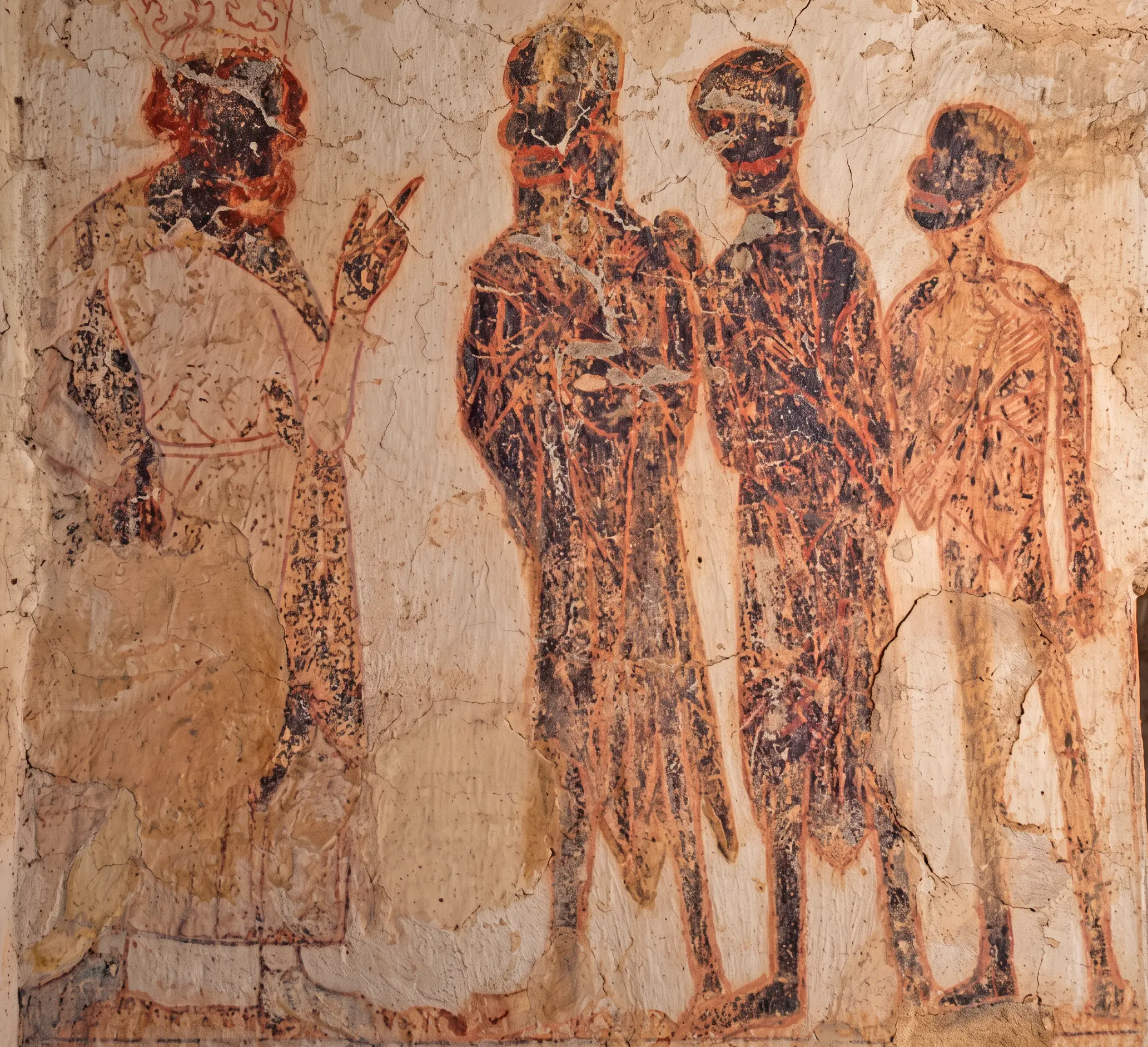
Three young kings ride out believing the world belongs to them.
The hunt was the perfect beginning for a medieval warning about privilege. Hunting was associated with aristocratic status, youth, horses, expensive equipment and control over land. The Three Living enter the story at the height of worldly confidence.
Then the road is blocked by three dead men.
Some versions make the bodies freshly dead. Others show them increasingly decomposed, moving from corpse towards skeleton. The difference is only one of degree. The living are being shown the future stages of their own bodies.
The encounter collapses the distance between courtly splendour and decay. Fine clothes, horses, weapons, titles and social position suddenly become irrelevant because the dead kings once possessed those things too.
You are also looking at yourselves.
That is why the story became so successful across medieval Europe. The dead do not merely threaten the living. They act as mirrors.
Medieval people did not hide death from view.
The Three Living and the Three Dead belongs to the broad medieval tradition now described as memento mori, art and writing that reminded people of mortality and encouraged them to consider the state of their soul.
That does not mean medieval people spent every waking moment terrified of death. The point was moral preparation. Earthly success could disappear instantly, so wealth and power needed to be understood in relation to judgement, charity, conduct and salvation.
The choice of kings made the lesson sharper. If death could reduce a king to bones, nobody looking at the image could imagine themselves exempt.
Beauty fades.
The body changes.
What remains is how you lived.
The Longthorpe scene is a moral tale about the instability of earthly rank and riches. It belongs to a room where ideas about ageing, reason, faith, power and human behaviour were painted across almost every available surface.
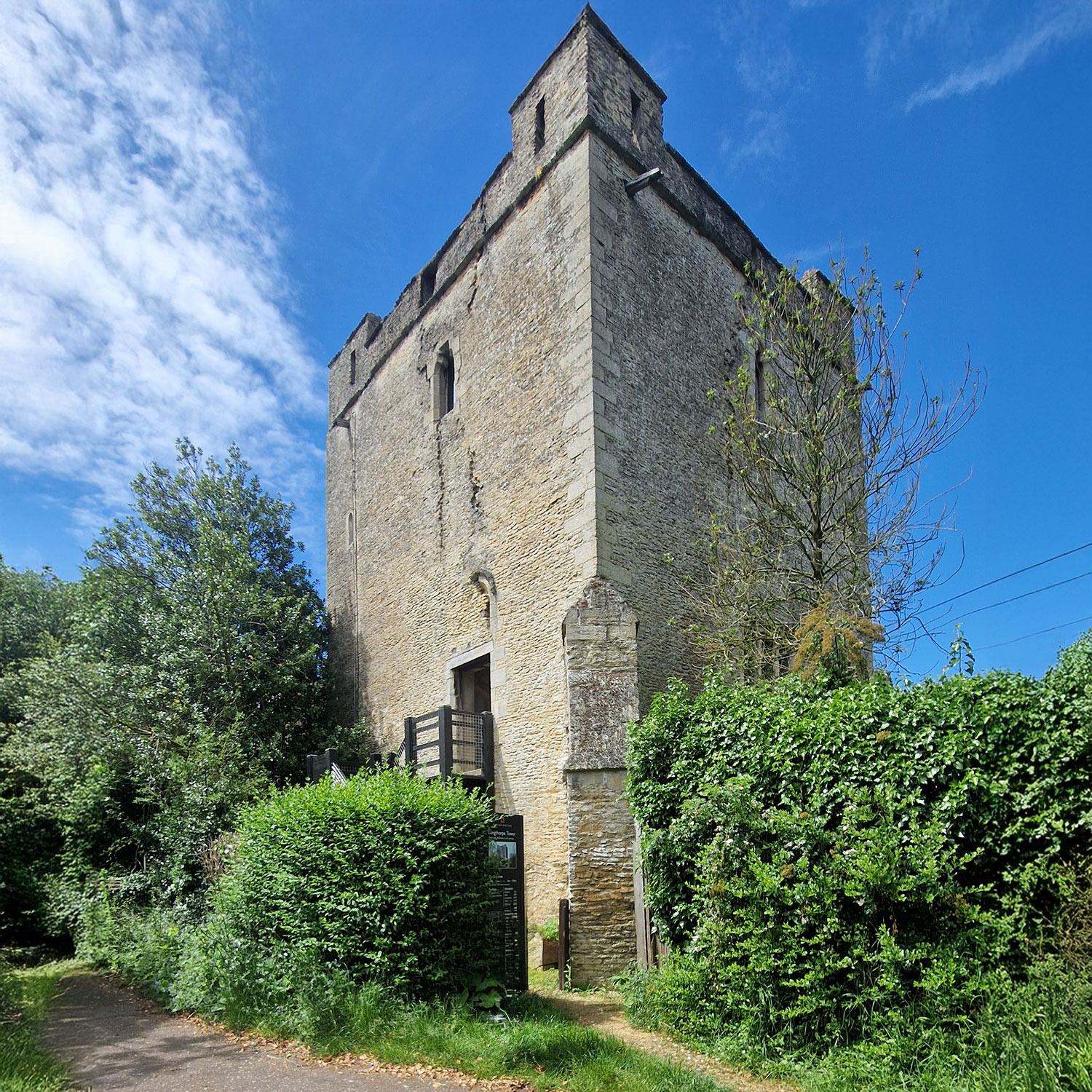
Robert Thorpe built a monument to success, then filled it with reminders of mortality.
The painted chamber belonged to Robert Thorpe, a lawyer whose family rose dramatically through service to Peterborough Abbey and the Crown.
Robert was acting professionally for Peterborough Abbey by around 1300. In 1309 he became the abbey's lay steward, one of its most important secular officers, responsible for legal affairs and the protection of its rights across the Liberty of Peterborough.
He accumulated wealth and influence, entered royal service and was knighted by about 1320. In 1330 he returned to the position of abbey steward, around the period in which the extraordinary painted scheme was created.
The tower itself had already been built at the end of the thirteenth century. It was partly defensive, but it was also an unmistakable statement of position and prosperity, rising above a manor house in the countryside west of medieval Peterborough.
That makes the Three Dead Kings particularly striking. The building announces that its owner has succeeded. The painting quietly replies that success has limits.
Robert Thorpe had wealth, office, royal connections, a knighthood and an imposing tower. Yet in one of the most prestigious rooms of his own home he lived beside an image explaining that none of those things could defeat death.
The dead kings make more sense when you see what surrounds them.
Longthorpe Tower is remarkable because the Three Dead are only one part of a much larger visual argument.
On the north wall, the Seven Ages of Man traces human life from infancy through youth and maturity to old age and decrepitude. Nearby are religious figures, birds and representations of the Church.
On the east wall, above and around the encounter with the dead, sits the extraordinary Wheel of the Five Senses. Animals represent taste, smell, touch, hearing and sight, while a crowned human figure is generally interpreted in relation to reason and the ability to control sensory impulses.
Elsewhere the room contains saints, political figures, heraldry, musicians, the labours of the months, animals and even a bonnacon, a legendary beast whose defence mechanism was rather less philosophical than the Wheel of the Senses.
Youth.
Power.
Age.
Death.
Seen together, the paintings feel less like disconnected decoration and more like a medieval visual encyclopaedia. Robert Thorpe surrounded himself with questions about what a human being is, how a person should live and what eventually happens to every worldly achievement.
Longthorpe is extraordinary precisely because this was a domestic room. These were not images painted for an abbey cloister or public church. They formed the private intellectual world of a wealthy medieval household.
The Black Death did not create Longthorpe's fascination with death.
Medieval images of corpses are often explained automatically as responses to the Black Death. Longthorpe is an excellent reason to be more careful.
The existing painting scheme is generally dated to around 1330, with evidence placing it comfortably before the arrival of the Black Death in England in 1348.
The Three Living and the Three Dead was already a well-known European story before plague transformed the demographics of the later fourteenth century. Versions circulated in poetry, manuscript illumination and wall painting.
A near-contemporary English example appears in the De Lisle Psalter, a lavish manuscript of the early fourteenth century. There too, three richly dressed living men confront three corpses and are forced to recognise their own mortality.
The painting demonstrates that medieval concern with death, bodily decay and the instability of worldly status was already deeply established before the Black Death. The plague later intensified Europe's experience of mortality, but it did not invent the idea represented here.
For centuries, Longthorpe's dead kings disappeared.
The remarkable survival of the paintings is partly the result of their disappearance beneath later layers of limewash and decoration.
During the Second World War the tower had been used by the Home Guard. In 1945, tenant Hugh Horrell was preparing to redecorate when paintings began to emerge beneath the many coats covering the medieval walls.
The discovery transformed understanding of the building. Specialist E. Clive Rouse spent much of 1946 to 1948 uncovering, recording and consolidating the scheme. The tower subsequently entered public guardianship and was opened to visitors.
The fourteenth century came back through the wall.
Conservation practice has changed enormously since those early interventions. Later specialists had to address some of the materials used during the first treatment, while modern scientific investigation has continued to reveal more about the paintings and how best to protect them.
That work continues a remarkable chain of care. A private medieval room, concealed for centuries, is now recognised as one of Peterborough's most important artistic treasures.
This is one folklore story where the original image is still waiting.
Longthorpe Tower is not a reconstruction and the Three Dead Kings are not a modern interpretation. The surviving paint is on the medieval wall for which it was created.
The tower stands on Thorpe Road, only a short distance from central Peterborough. Visits are seasonal, so check current opening arrangements before travelling.
When you reach the painted room, resist the temptation to look at each image as an isolated curiosity. Turn slowly and read the walls together. Ageing, kingship, the senses, scripture, work, animals, mortality and absurdity all occupy the same space.
Then find the Three Living and the Three Dead.
Because the warning has not become obsolete.
Nearly seven centuries separate us from Robert Thorpe, but the basic trick of the image still works instantly.
The living kings possess everything that medieval society admired: youth, wealth, horses, status and fashionable dress. The corpses possess none of it. Yet the dead are the ones who understand the situation.
That reversal gives the story its power. Death makes the lowest body equal to the highest. The king can command subjects, acquire estates and surround himself with symbols of rank, but he cannot negotiate with his own mortality.
For Robert Thorpe, a man whose remarkable career was built on social advancement, the warning must have had particular force. His tower announced success to the world outside. Inside, the walls reminded him what success could not buy.
That tension is what makes Longthorpe so extraordinary. The building celebrates ambition while the paintings repeatedly question it.
The dead kings answer: look what you will become.
Longthorpe opens a different door into medieval Peterborough.
Explore the tower itself, discover how its paintings are being conserved, then follow other surviving medieval images and mortality stories across Peterborough.
Longthorpe Tower
Step inside the fortified medieval tower and see the painted chamber, the Three Dead Kings, the Wheel of the Five Senses and the rest of this exceptional domestic scheme.
Discover Longthorpe Tower → 02 · CONSERVING THE PAINTINGSThe Painted Tower
Discover how specialists study, stabilise and reinterpret Longthorpe's fragile medieval paintings, and why conservation remains part of their continuing story.
Explore the conservation story → 03 · THE BIGGER PICTUREPeterborough History
Place Longthorpe within the wider history of medieval Peterborough, the great abbey, local estates and the city that grew around them.
Explore Peterborough's history → 04 · ANOTHER MEDIEVAL WARNINGSimon Magus
At Peterborough Cathedral, another medieval image turns spiritual failure into something physical: a human figure falling head first beneath the church of St Peter.
Examine the carving →More Peterborough Folklore
Strange carvings, lost images, omens and human stories from Peterborough's medieval landscape.
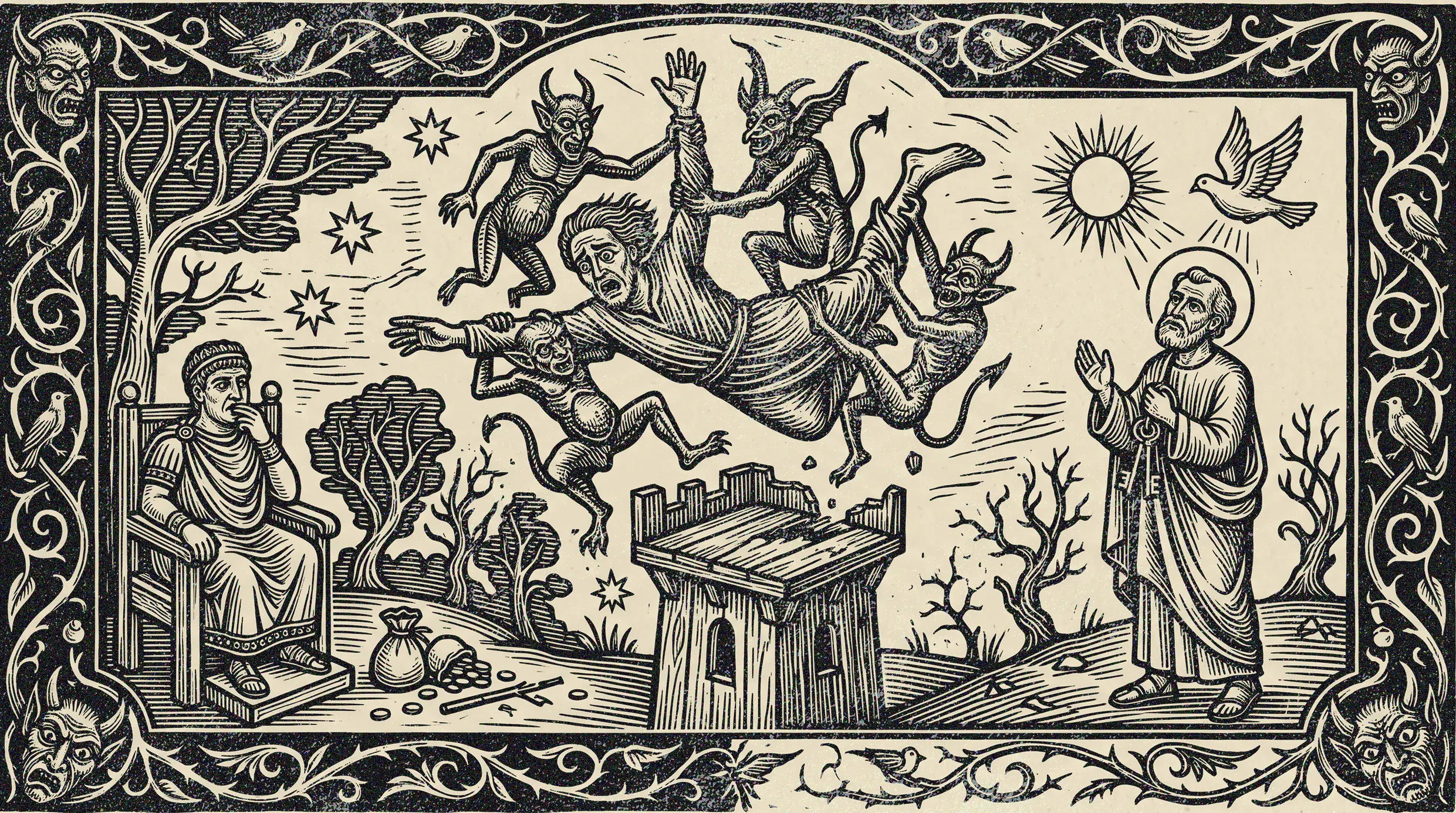
Simon Magus
A falling figure beneath Peterborough Cathedral may represent the magician who tried to challenge the authority of St Peter.
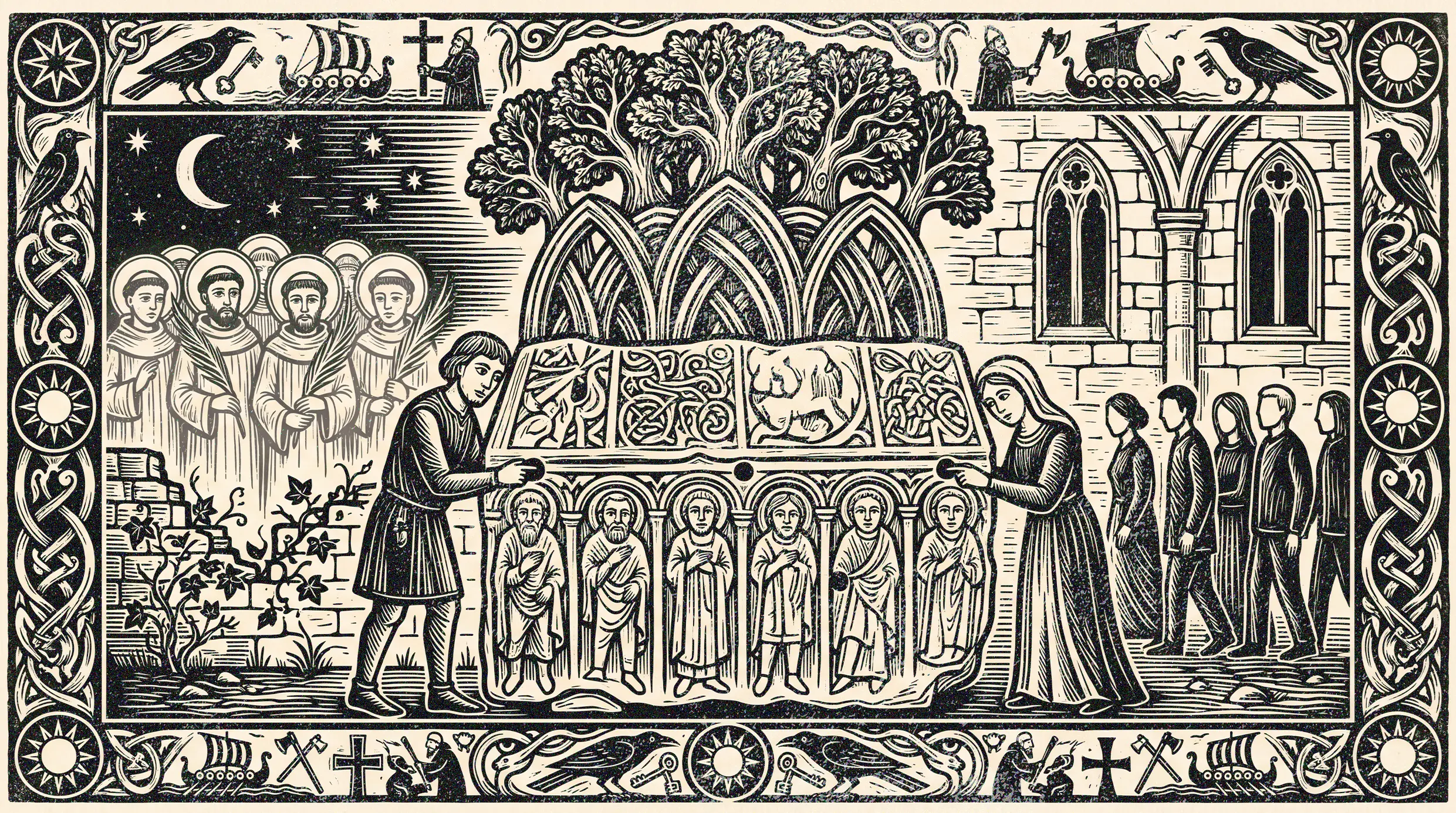
The Hedda Stone
One of Peterborough's oldest carvings carries mysterious holes and centuries of changing explanations.
The Paschal Pickerel
Peterborough's vanished medieval glazing preserved one particularly memorable fish in a sacred meal.
Old Scarlett
Peterborough's famous sexton spent a lifetime among graves and became the man remembered for burying two queens.
The Hare in the Close
A perfectly ordinary animal became a warning when old Peterborough connected its appearance with fire.
Come, Devil
A genuine medieval catastrophe became inseparable from a prophecy, an angry servant and one disastrous invitation.
Behind the Three Dead Kings
The Longthorpe painting is treated here as a medieval moral and devotional image rather than as evidence of a supernatural encounter. The wider Three Living and Three Dead tradition circulated across medieval Europe in poetry, manuscripts and wall painting.
-
English Heritage · History of Longthorpe Tower
History of Robert Thorpe, the construction of the tower, the medieval paintings, their rediscovery and later conservation. -
English Heritage · Description of Longthorpe Tower
Interpretation of the painted room, including the Three Living Kings and Three Dead Kings, Seven Ages of Man and Wheel of the Five Senses. -
Historic England · Longthorpe Tower
The national heritage record for this exceptionally important medieval building and painted interior. -
Discover Peterborough · Longthorpe Tower
Visitor guide to the tower, its nationally important paintings and the medieval household that created them. -
Discover Peterborough · The Painted Tower
Explore the conservation, research and interpretation of Longthorpe's medieval painted chamber. -
Discover Peterborough · Peterborough History
Place Longthorpe within the wider story of medieval Peterborough. -
Discover Peterborough · Peterborough Folklore
Explore Peterborough's wider collection of legends, unusual customs, strange creatures and historical folklore. -
Discover Peterborough · Weird Weekends
Follow Peterborough's stranger stories into the real places where they survive. -
Image credits
Three Living Kings and the Three Dead, Longthorpe Tower · Discover Peterborough. Longthorpe Tower exterior · Discover Peterborough.