


Tucked away in a quiet corner of Longthorpe is one of Peterborough’s most extraordinary historic sites. Longthorpe Tower may appear modest from the outside, but within its walls lies a rare and remarkable collection of medieval wall paintings that have survived for more than 700 years.
A new exhibition, The Painted Tower: Conservation in Context, developed by The Courtauld Institute of Art, offers a deeper look at this hidden treasure. It explores not only the significance of the paintings themselves, but the careful and complex work that has gone into preserving them for future generations.
A rare survival from medieval England
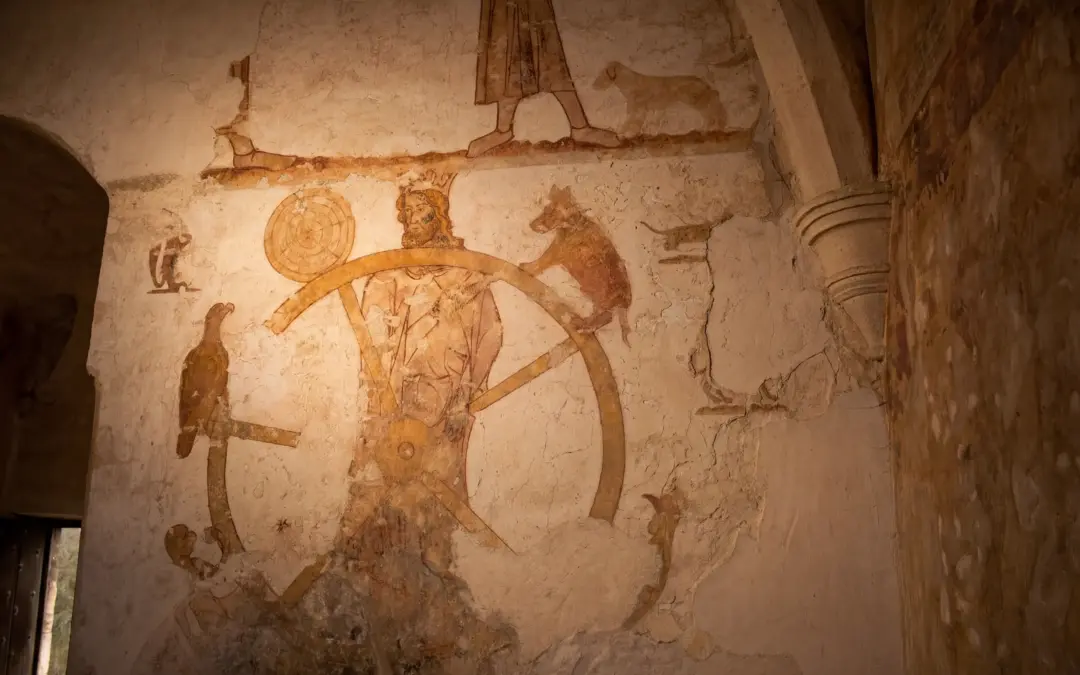
Longthorpe Tower dates back to the early 14th century and was originally part of a fortified manor house. Around 1330, its interior walls were decorated with a series of detailed paintings that remain among the most important examples of medieval domestic art in England.
These murals are striking not just for their age, but for their content. They include religious imagery, moral allegories, and scenes that reflect the knowledge and beliefs of the time. Together, they provide an unusually rich insight into the intellectual and cultural life of a medieval household.
For centuries, the paintings were hidden beneath layers of plaster, only rediscovered in the 20th century. Their survival is remarkable, and their preservation has required a careful balance between protecting fragile surfaces and allowing public access.
Understanding conservation in context
The exhibition focuses on the story behind that preservation. Rather than presenting the tower as a static historic site, it reveals the ongoing process of conservation, research, and interpretation.
Visitors are invited to consider how techniques have evolved over time, how decisions are made about what to preserve, and how experts work to stabilise and protect delicate materials. It also highlights the role of academic research in uncovering new details about the paintings and their meaning.
By placing conservation “in context”, the exhibition shows that heritage is not fixed. It is something that is continually studied, reassessed, and cared for, with each generation adding to our understanding of the past.
A hidden chapter of Peterborough’s story
Longthorpe Tower offers a different perspective on Peterborough’s heritage. While the city is often associated with its cathedral and more visible landmarks, this small tower connects it to a wider European tradition of medieval art and scholarship.
It is a place where history feels close and immediate. The paintings, created centuries ago for a private household, still speak today, offering a rare and personal glimpse into medieval life.
Why it matters today
Projects like The Painted Tower: Conservation in Context underline the importance of protecting cultural heritage while making it accessible and meaningful. They also demonstrate the value of collaboration between local sites and leading institutions such as The Courtauld Institute of Art.
As Peterborough continues to evolve, places like Longthorpe Tower help to anchor the city in its deeper history. They remind us that heritage is not just about the past, but about how we choose to understand and care for it in the present.
Plan your visit
Managed by English Heritage, Longthorpe Tower is open to visitors who want to experience this unique site for themselves. The exhibition provides an added layer of insight, enriching the visit and offering a fresh perspective on one of Peterborough’s most fascinating hidden gems.
Step inside, and you will find a space where history, art, and conservation come together — a rare opportunity to encounter the medieval world up close, right here in Peterborough.