

Peterborough Weird Weekends
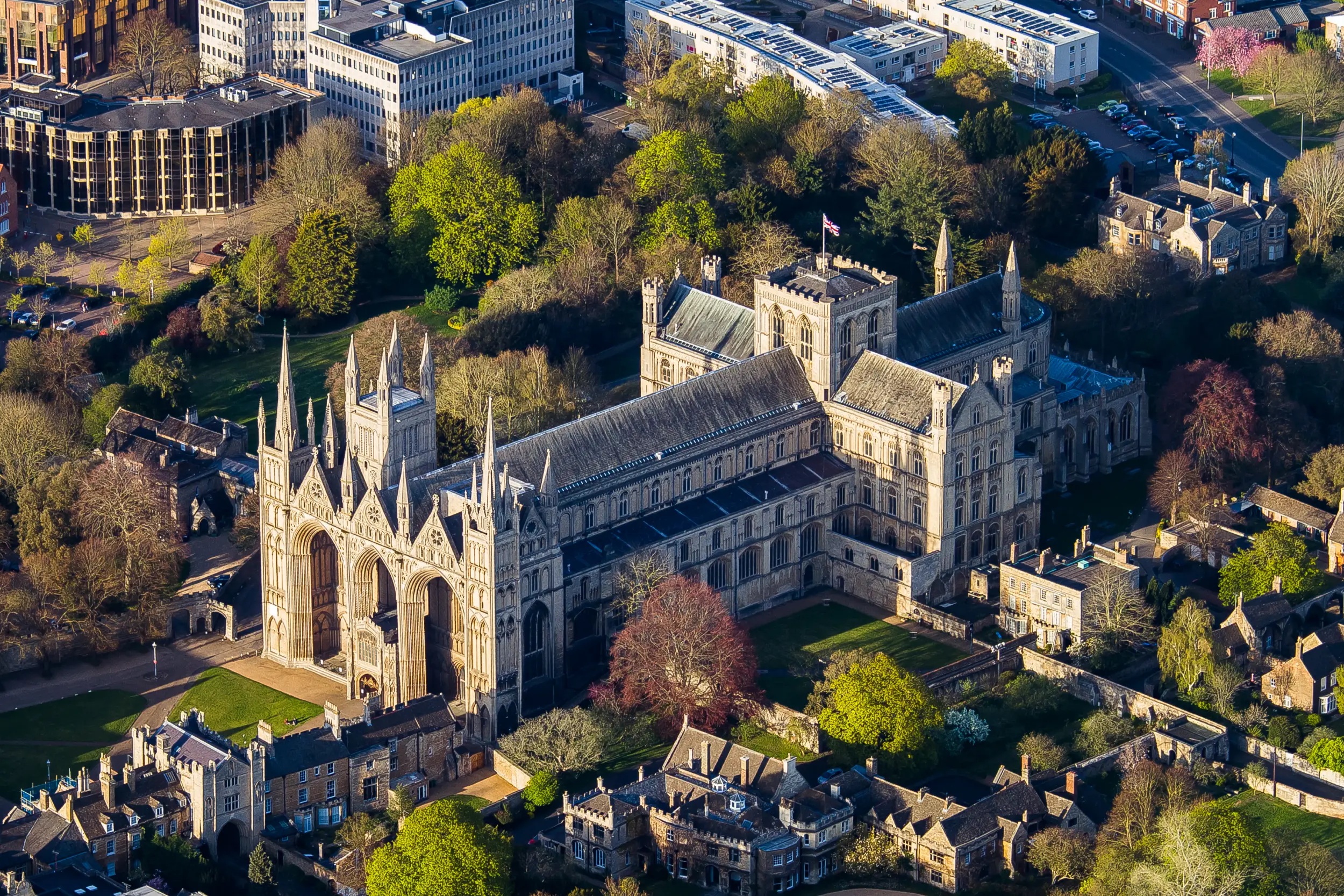
A city with a Wild Hunt in its chronicle, demons carved at the Cathedral door, sea monsters in a museum and 150-million-year-old shells underfoot in the shopping centre. This is the Peterborough that doesn't make the postcards. Tick them off as you find them.
Start the hunt
Peterborough keeps its strangest things in plain sight
Nobody signposts the finger holes in the Hedda Stone. Nobody tells you that the man being pulled apart by demons at the west door has been there since the twelfth century, or that two stones in a field near Milton Ferry are supposed to mark where Robin Hood and Little John's arrows landed. You have to know to look.
So here is the list. Thirty-two genuinely odd things you can go and see across Peterborough, the Soke villages and the fen edge — some in the Cathedral, some in a shopping centre floor, one behind a locked church door that needs a phone call first.
Look down as often as up
Half of this list is at floor level — fossils, coffin lids, worn stone and things people have stopped noticing.
Ring the church first
Rural parish churches are often locked. A call to the churchwarden usually turns a closed door into a guided tour.
Press the seal
Every card carries a wax seal marked with a symbol from its story — a skull, a heart, an antler, a toad. Tap it to stamp that curiosity Found and move your rank along.
The story is the attraction
A few of these are things you can no longer see. Stand in the right spot anyway — that's rather the point.
Thirty-two curious things
Filter by the kind of strange you're in the mood for.
Showing all curiosities.
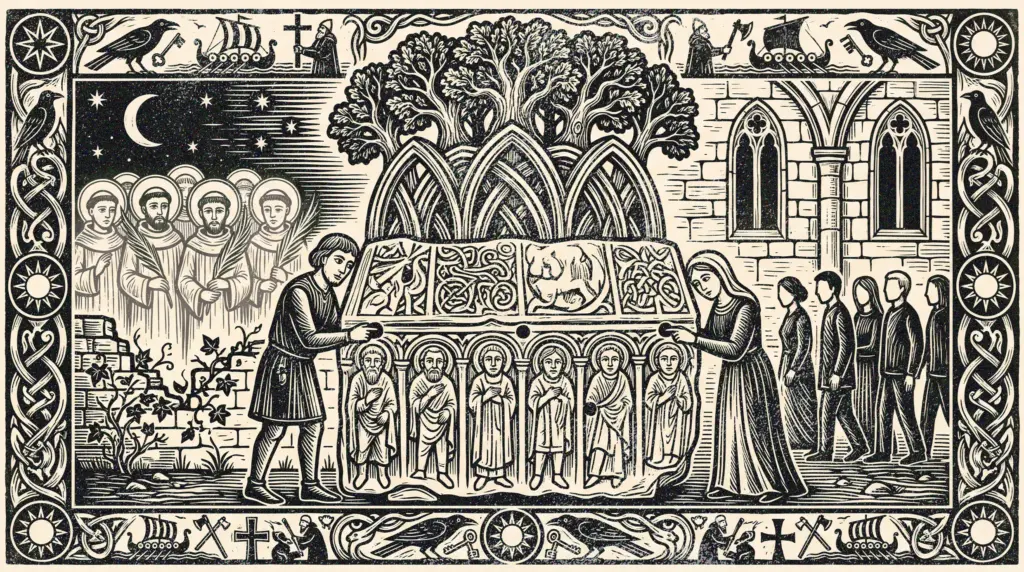
The finger holes in the Hedda Stone
Peterborough Cathedral, behind the high altar
A carved block older than almost anything else in the building, set up in the ruins of the first monastery after the Danes destroyed it in 869. Its surface carries small worn hollows, and the tradition is that you put a finger in one and make a wish.
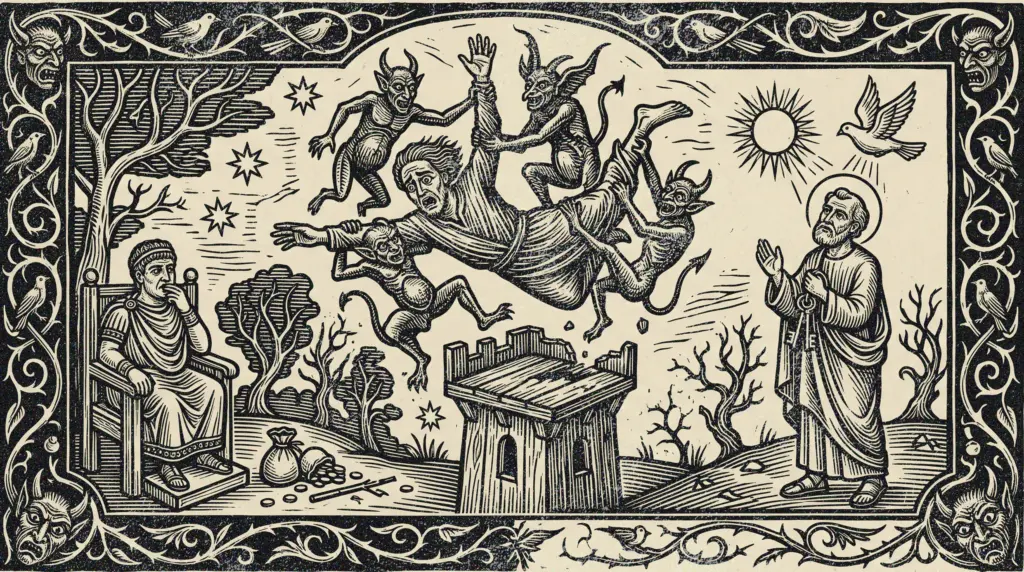
Simon Magus at the west door
Peterborough Cathedral, base of the central column, west front
Walk in through the west front and look down. A man is carved upside down with four demons hauling on his limbs, one to each. It is the fall of Simon Magus, and it is the first thing the medieval visitor saw on the way in — deliberately.
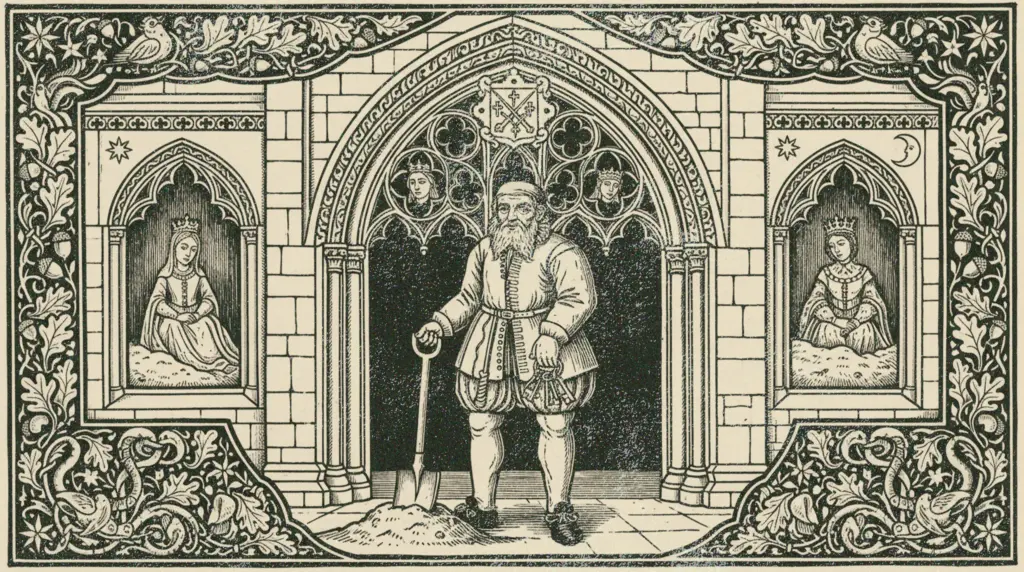
Old Scarlett, the man who buried two queens
Peterborough Cathedral, painted portrait near the west end
Robert Scarlett was sexton here for most of the sixteenth century. He buried Katharine of Aragon in 1536 and Mary, Queen of Scots in 1587, and lived to be 98. His portrait hangs in the building, spade in hand, entirely unbothered.
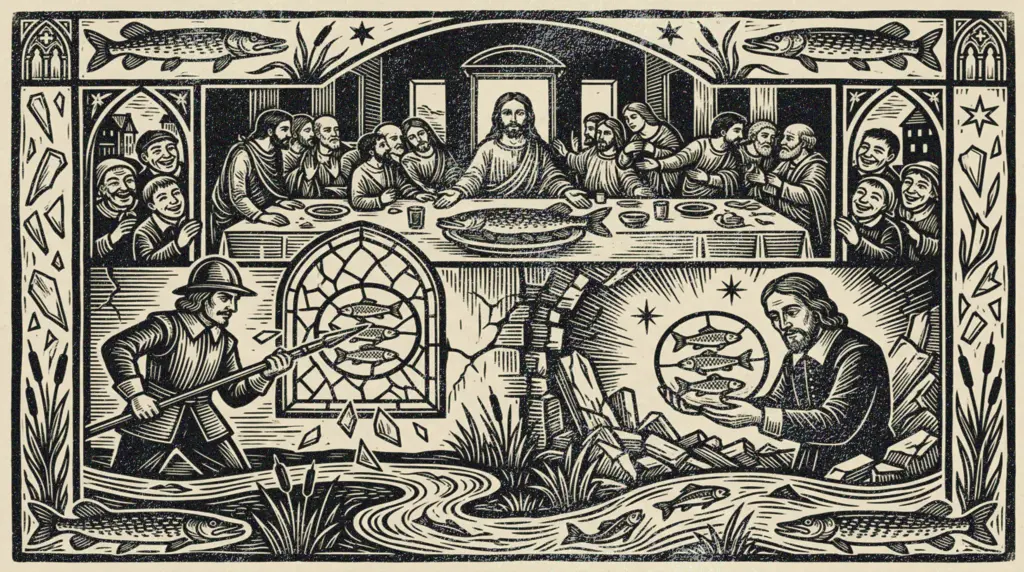
The pike at the Last Supper
Peterborough Cathedral cloister — the window that isn't there
Before Cromwell's soldiers smashed the medieval glass in 1643, one window was famous across the city: a Last Supper in which the dish on the table held not a lamb but a fenland pike. A local joke about a local diet, in stained glass, in a cathedral.
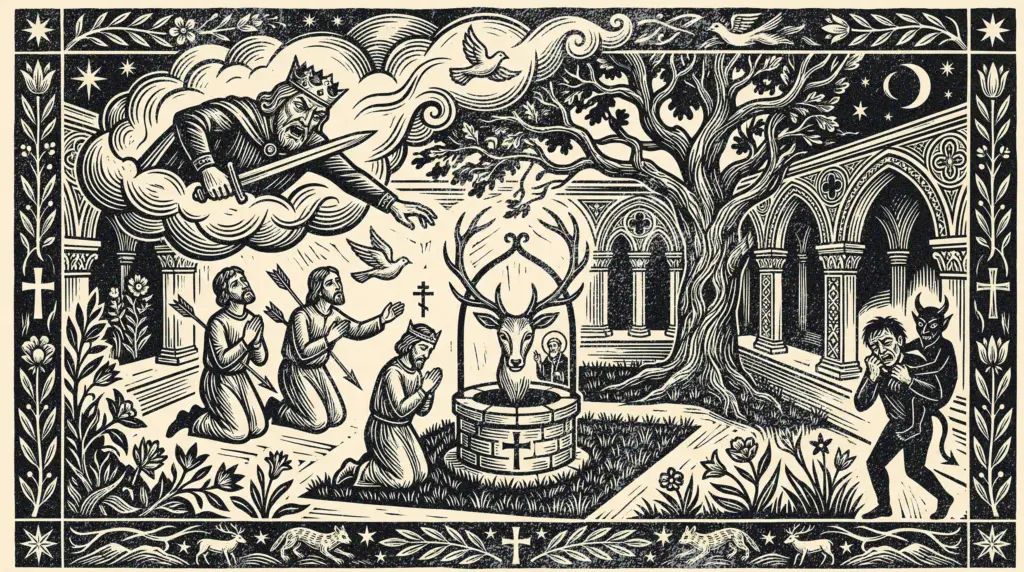
The well in the cloister, and the hunted hart
Peterborough Cathedral precincts
Christian Peterborough begins with a hunt that went wrong. Prince Wulfade chased a hart, the hart fled to the cell of St Chad, and Chad hid it under branches. What the prince found instead changed the story of this place entirely.
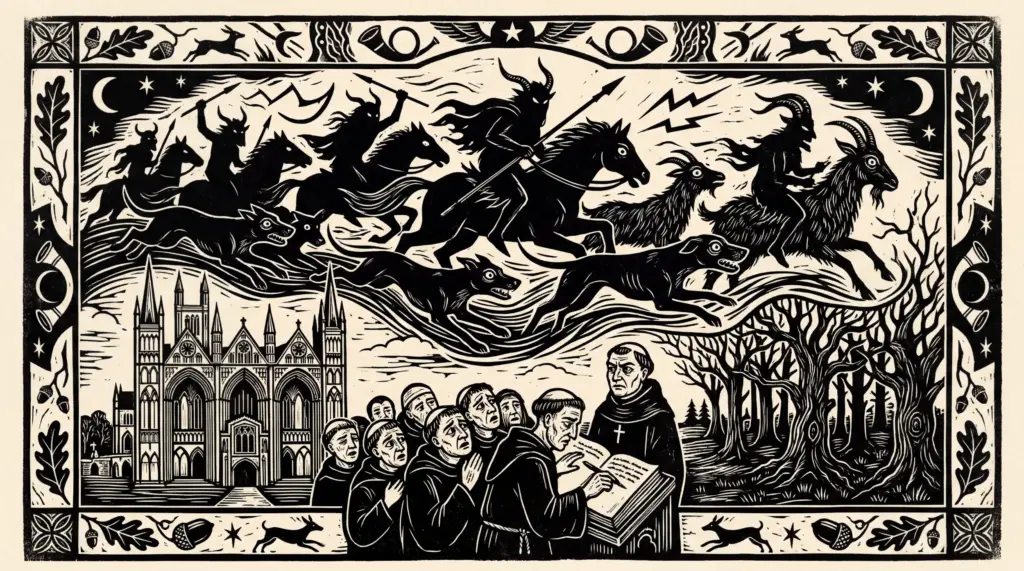
The Wild Hunt of 1127
Peterborough Cathedral & the woods to the north
England's oldest written account of the Wild Hunt was recorded here. When a Norman abbot the monks disliked arrived to take charge of the abbey, black huntsmen on black horses were heard riding through the woods and deer park, night after night, for weeks.
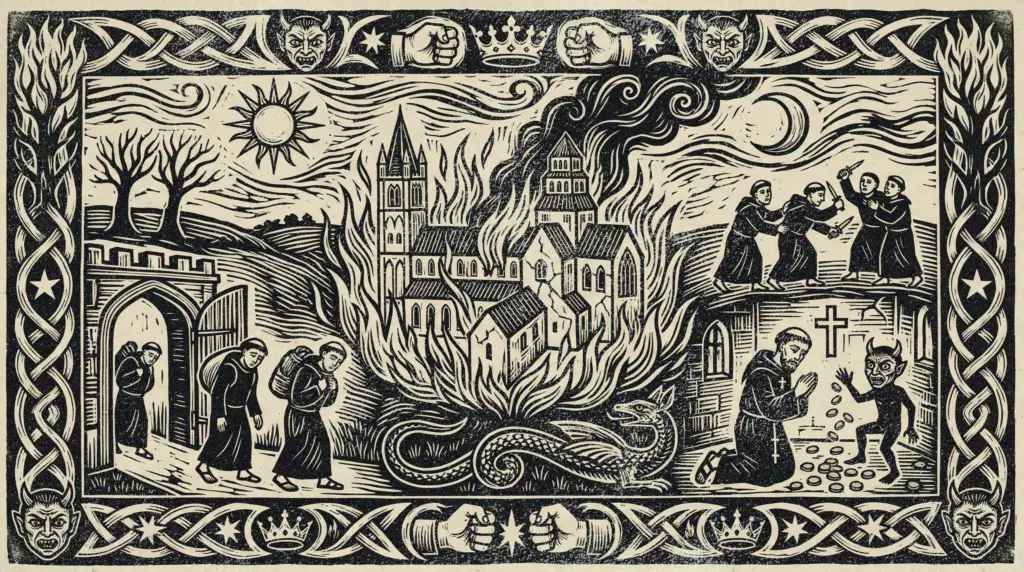
The devil's three fires
Peterborough Cathedral
The devil is said to have promised Peterborough Abbey three disasters, and then taken his time about delivering them. It starts with a monk, a Durham treasure hoard and a very bad decision in 1041.
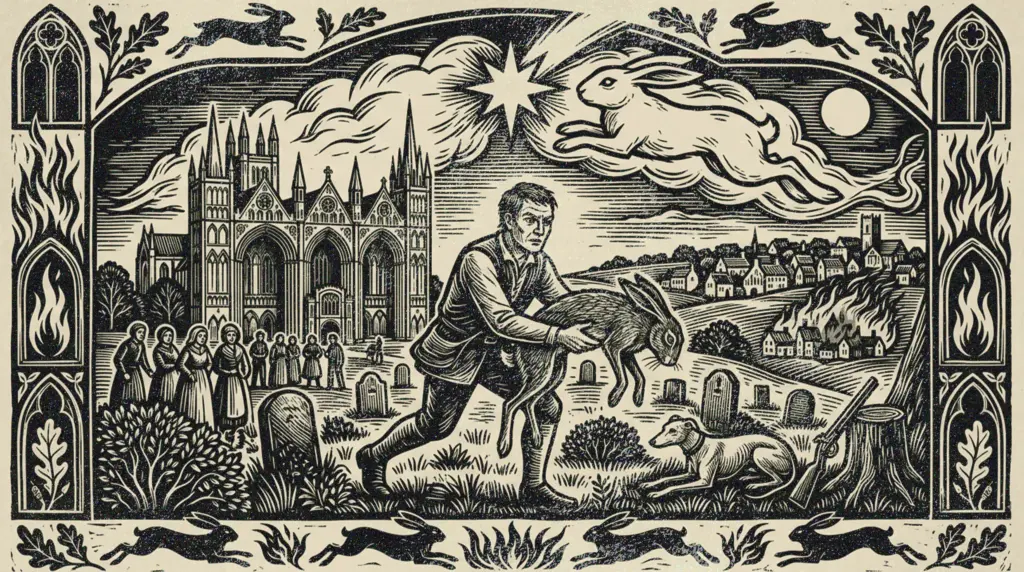
The hare in the Minster Close
Cathedral Close, city centre
Hares came in off the fields to graze the good grass of the Close, and Peterborough took it very badly. The rhyme was blunt: a hare making its form in the Minster Close meant a fire in the town before the week was out.
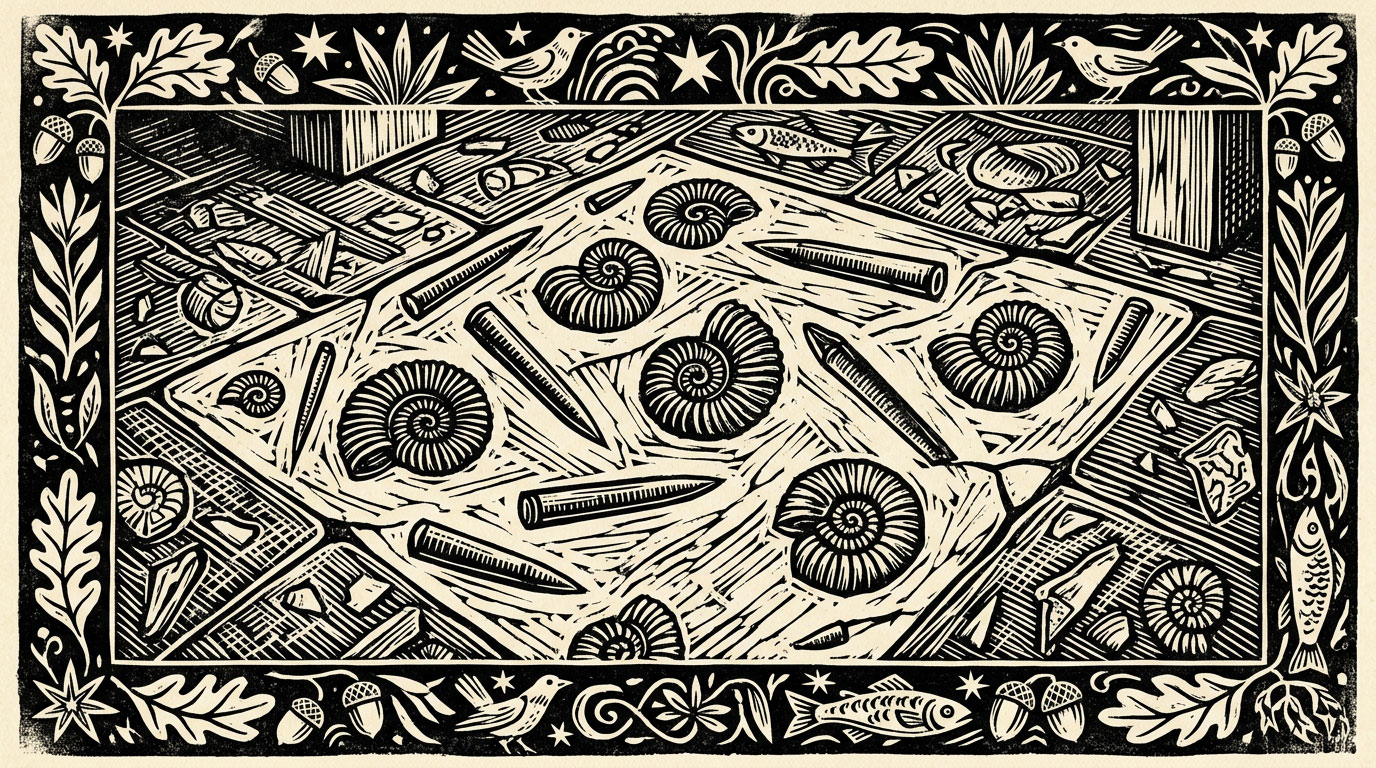
The fossils in the shopping centre floor
Queensgate Shopping Centre & Cathedral Square paving
Peterborough is built on and out of limestone, and limestone is compressed sea life. Look down at the polished floor slabs and the city-centre paving and you start seeing them: shells, spirals, fragments of creatures that died in warm shallow water long before there was a fen, let alone a city.
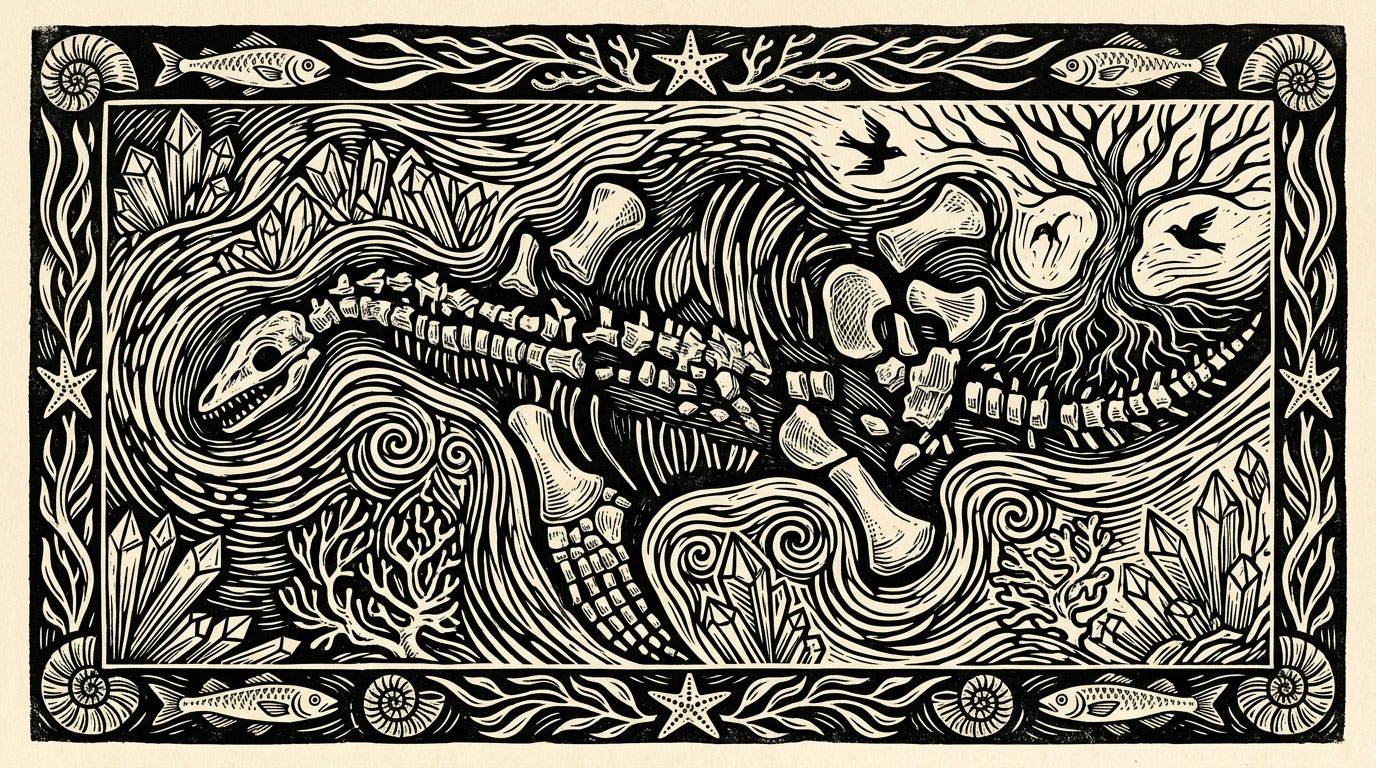
Sea monsters in a Georgian mansion
Peterborough Museum & Art Gallery, Priestgate
The clay pits that made Peterborough's bricks also gave up Jurassic marine reptiles — long-necked plesiosaurs and dolphin-shaped ichthyosaurs that swam over what is now the Ortons. The museum's collection is nationally important and startlingly close to the tea room.
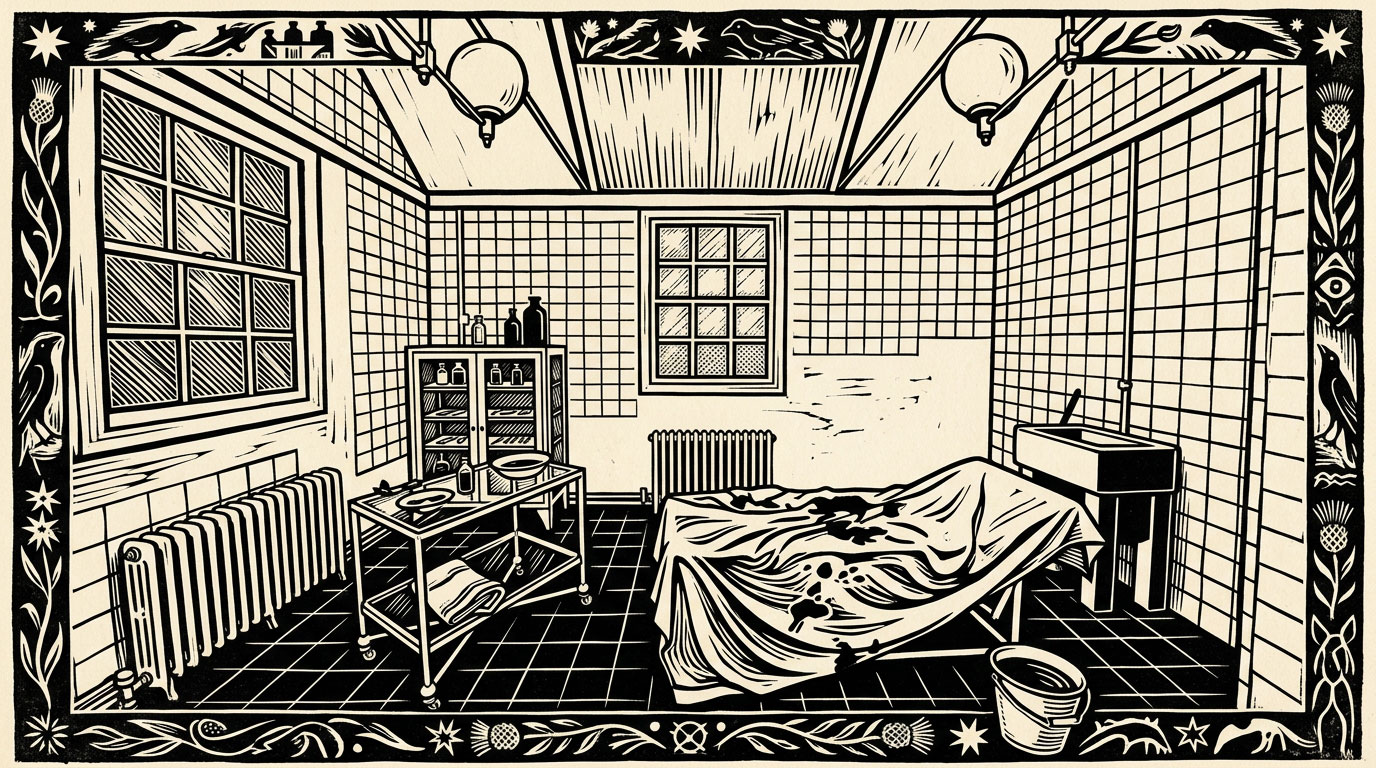
The Victorian operating theatre
Peterborough Museum & Art Gallery, Priestgate
One of the last surviving historic operating theatres in the country, upstairs in a building that was the city infirmary. Original instruments, grisly practice and the stories of the people who lived, worked and died here — including one of England's pioneering radiographers.
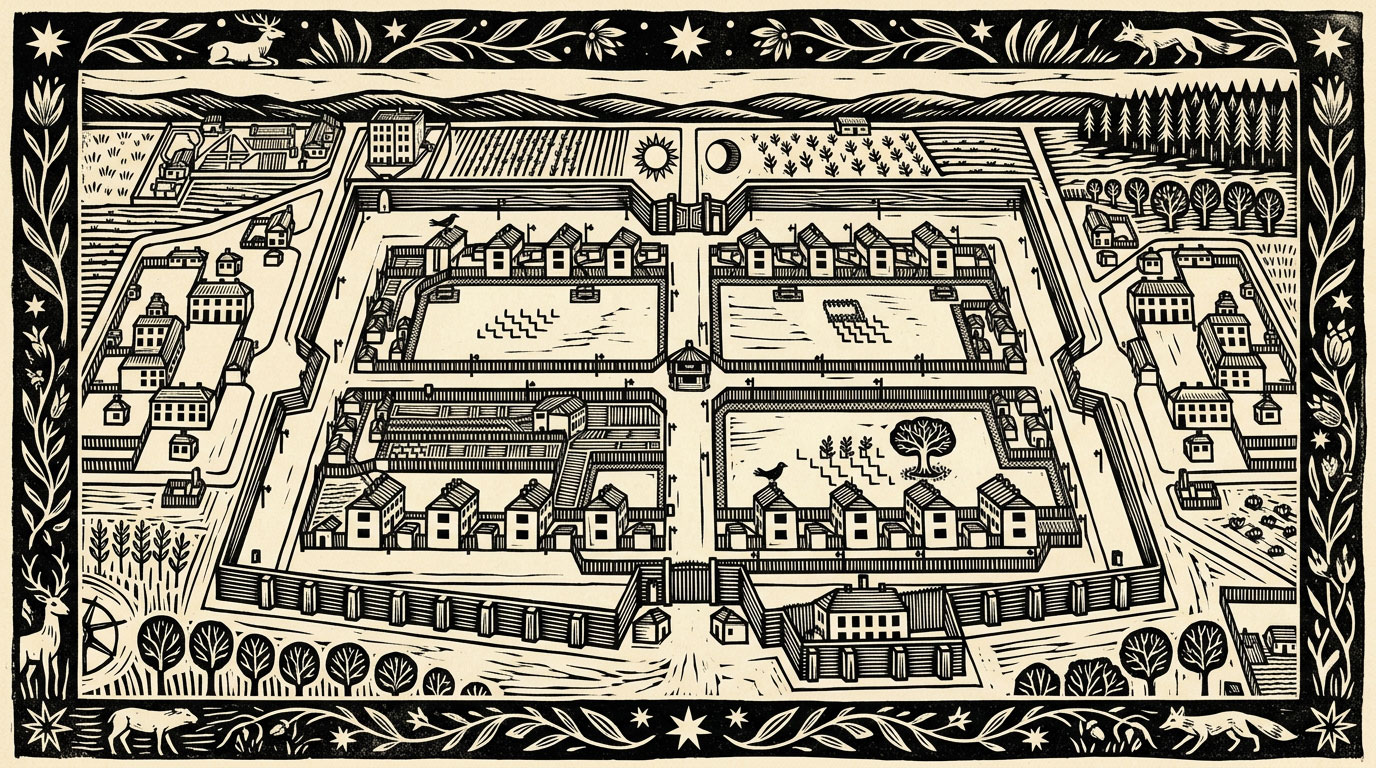
Bone models made by prisoners of war
Peterborough Museum & Art Gallery, Priestgate
In 1796 the world's first purpose-built prisoner of war camp was constructed just outside Peterborough, at Norman Cross. Its Napoleonic inmates carved astonishing things from soup bones and plaited straw: model ships, working automata, shimmering marquetry.
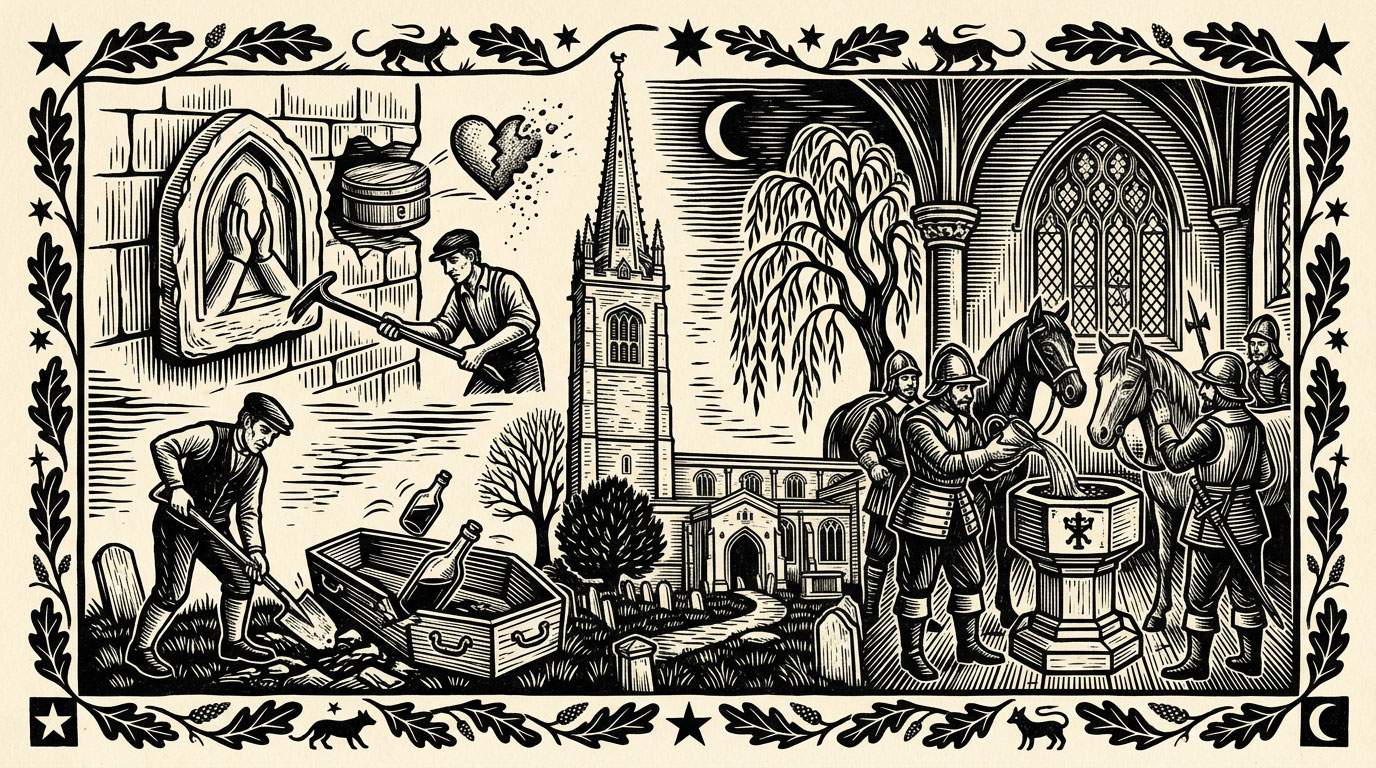
The abbot's heart at Yaxley
St Peter's Church, Yaxley
In the north transept there is a carved stone showing two arms holding a heart aloft. Behind it, in 1842, a vicar found a wooden box. Inside was a human heart, said to be that of William de Yaxley, Abbot of Thorney, who died in 1293 — and who left instructions that his body go to Thorney but his heart come home to the chapel he founded here.
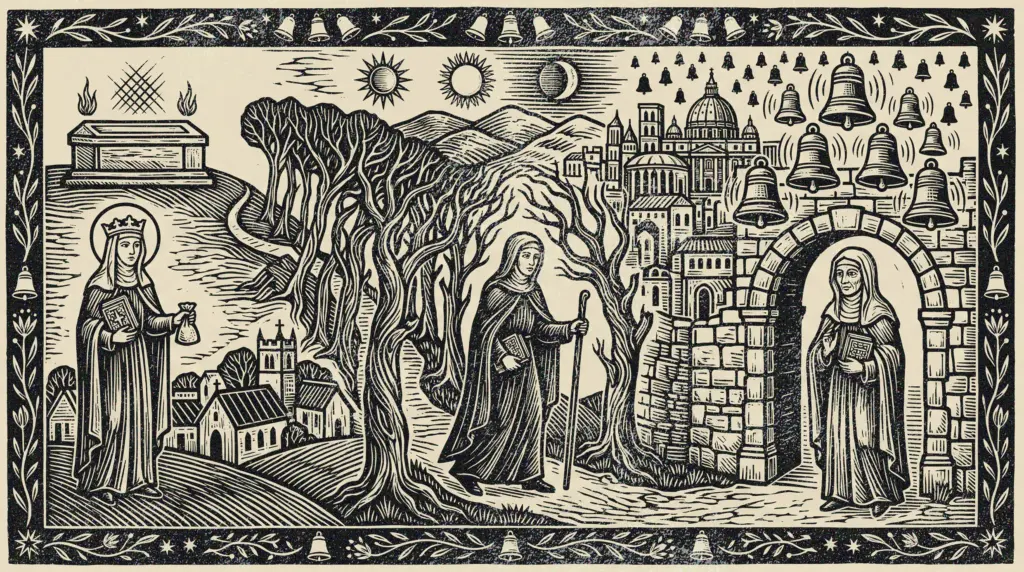
St Pega's broken heart stone
St Pega's Church, Peakirk
Pega gave her name to the village — a rare thing for a woman — and died on pilgrimage in Rome in 719. Tradition says her heart was brought back and kept here in a carved heart stone, and that Cromwell's soldiers smashed it. The broken pieces are in the south aisle window.
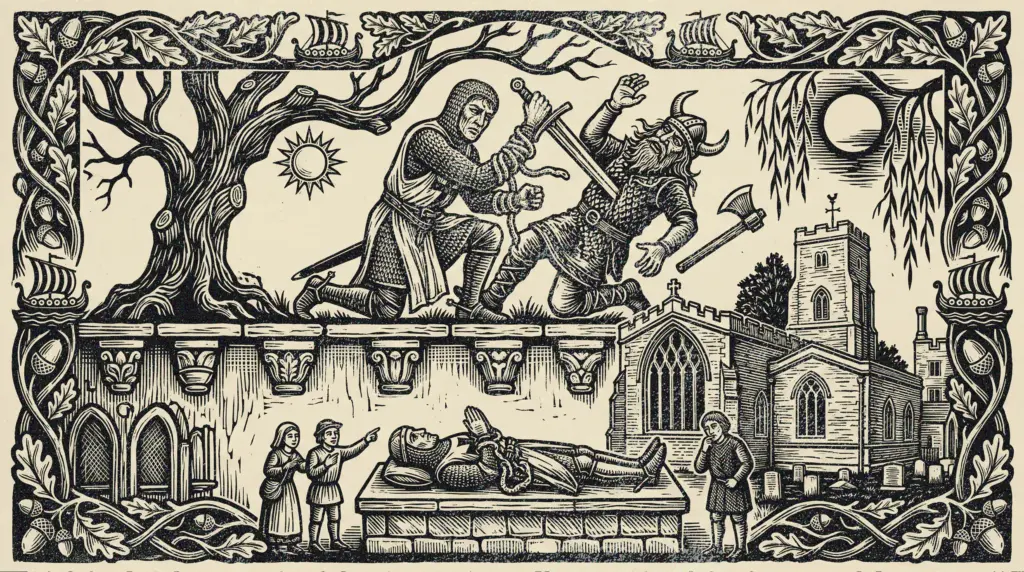
The disembowelled knight
St Mary's Church, Orton Longueville
Behind the chancel stalls lies the stone effigy of a medieval knight, hands joined in prayer, with a curious loop of something round his left wrist. The church says it is a piece of cloth. The village had a considerably better explanation.

The burial ground under the roundabout
Bourges Boulevard / Queensgate roundabout, city centre
For nearly fifty years the quick walk from the station ran through concrete subways beneath the roundabout. They closed for good in July 2026. Most people who used them had no idea what had been on that ground before — a burial ground, and a body-snatching scandal.
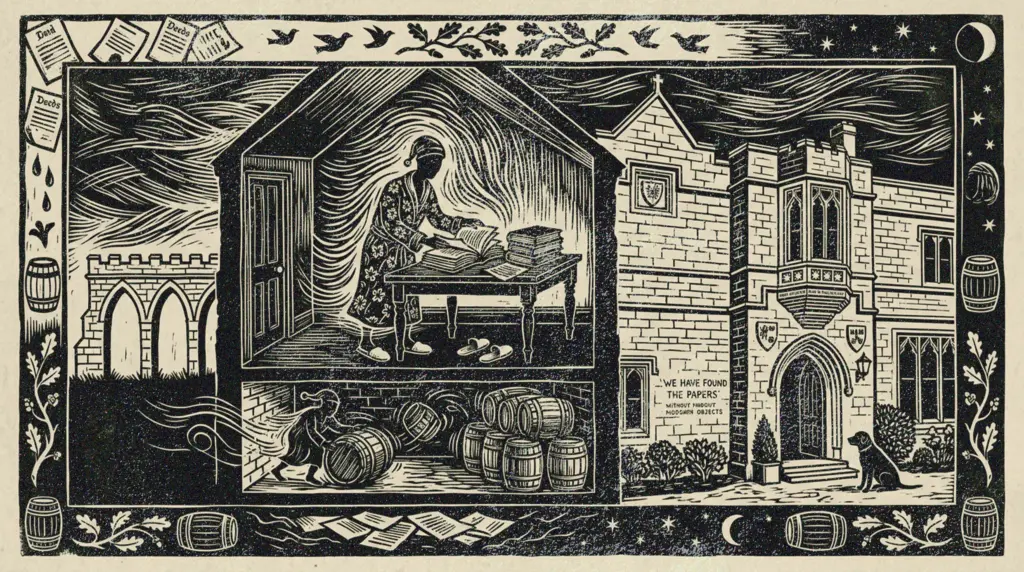
Button Cap of Barnack
Barnack village, church and Hills & Holes
The rectory ghost had habits everyone in the house knew. He kept to the big north room. He crossed the floor in loose slippers that flopped as he walked. And he turned the pages of books, over and over, looking for a deed he had hidden in life.
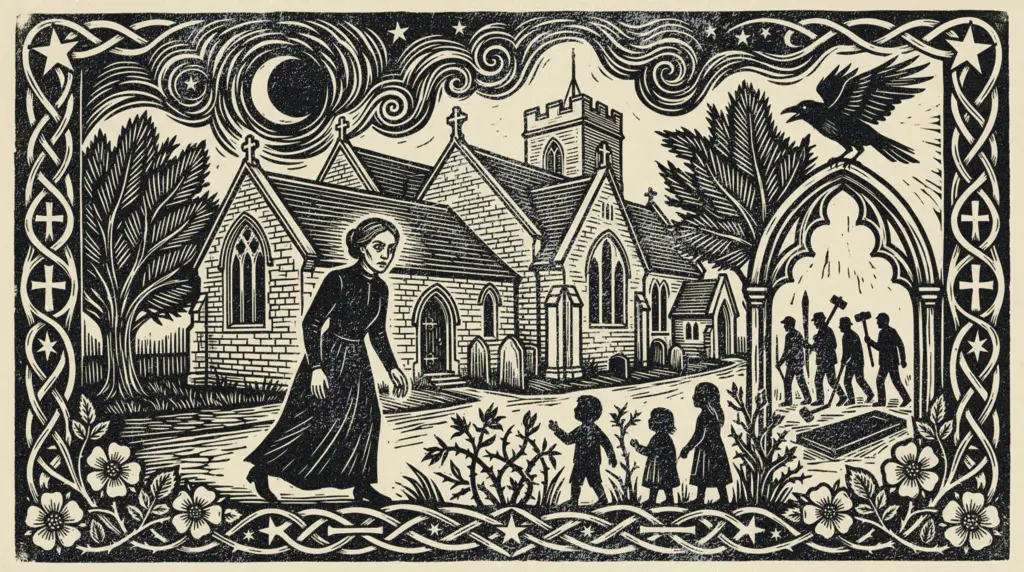
The Woman in Black of Woodston
Woodston, around Belsize Avenue
First seen in 1908, and people were still arguing about her sixty-five years later. An eyewitness gave a local reporter the full account in 1973: a poor woman from what was then the roughest street in Woodston, and what happened to her.
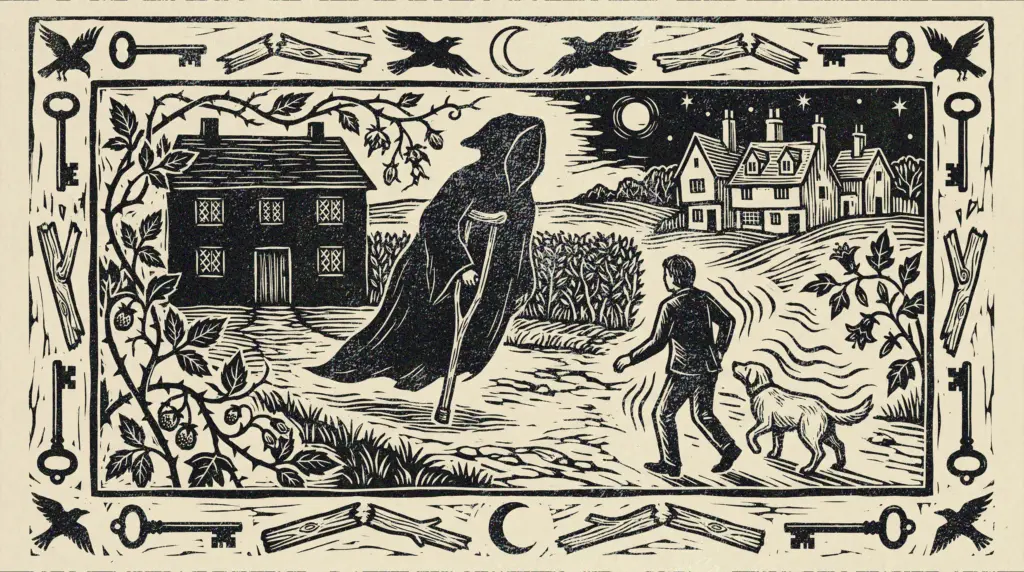
The Garton End ghost
Elmfield Road, between Dogsthorpe and Garton End
This one is recent enough that you can read the witness statements. In the spring of 1926 people started seeing a short figure in a black hood on the lane. Children stopped using the road. Adults did too.
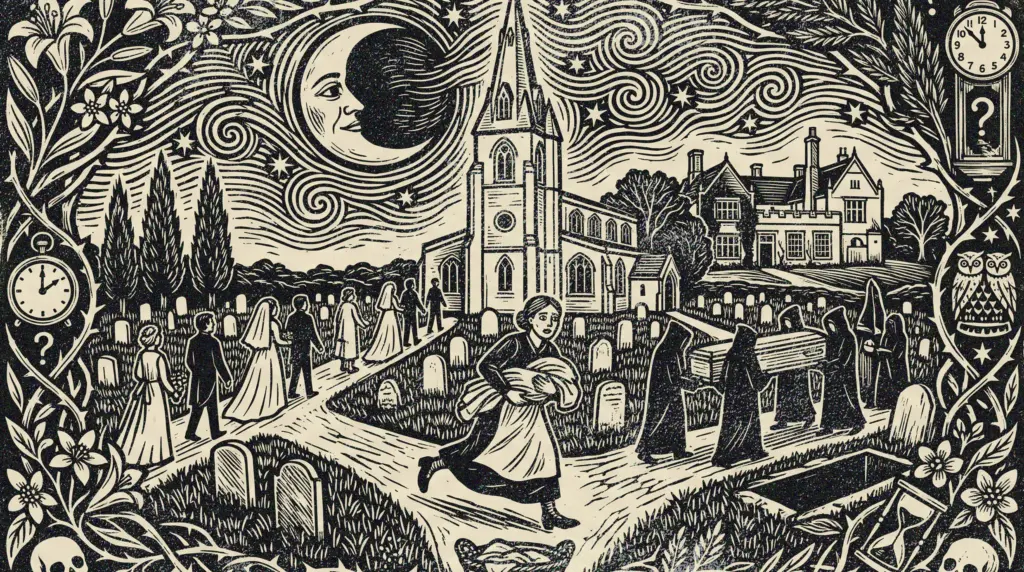
St Mark's Eve in Paston churchyard
St Mary's Church, Paston
The belief was that on the night of 24 April you could sit in the churchyard and see who would be married and who would be buried in the coming year. Watchers went out on purpose to do it. The woman in this story did not.
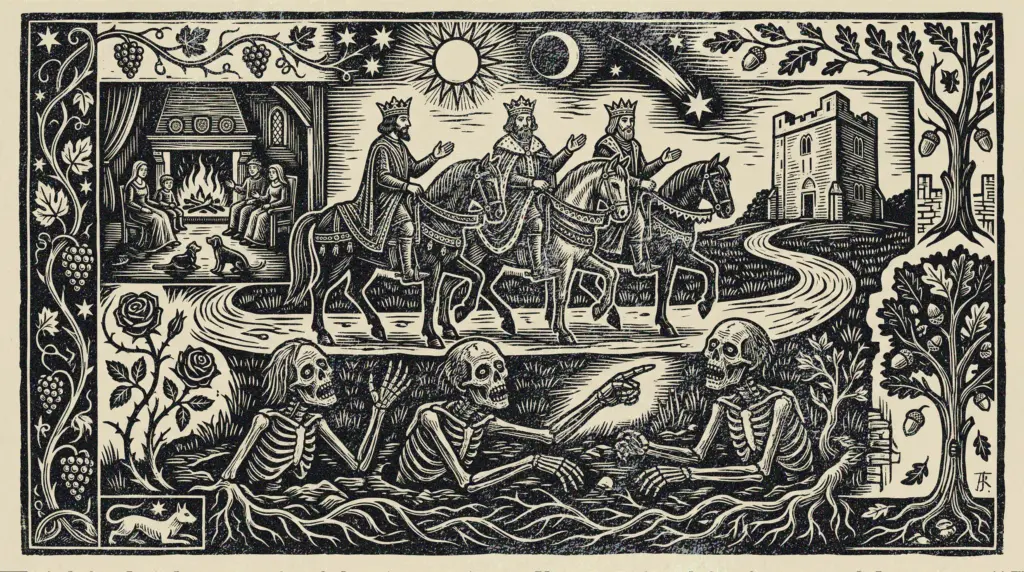
The Three Dead Kings of Longthorpe
Longthorpe Tower, Thorpe Road
Longthorpe holds the finest medieval domestic wall paintings in northern Europe, and someone chose to live with them. Beside the visitors' entrance: three kings ride out and meet three corpses, who tell them exactly what they are looking at.
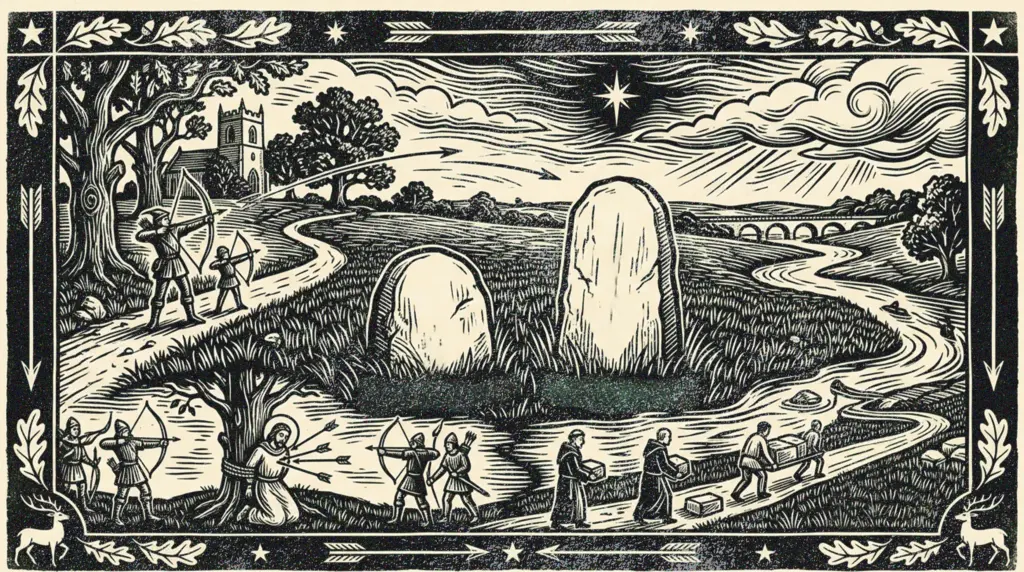
Robin Hood and Little John's stones
Field above Milton Ferry Bridge, old Castor field
Two low stones stand in a field above the bridge. For centuries people said Robin Hood and Little John loosed two arrows from Alwalton churchyard, and that these stones mark where they fell. One was Robin's. One was John's. The distance involved is, let us say, ambitious.
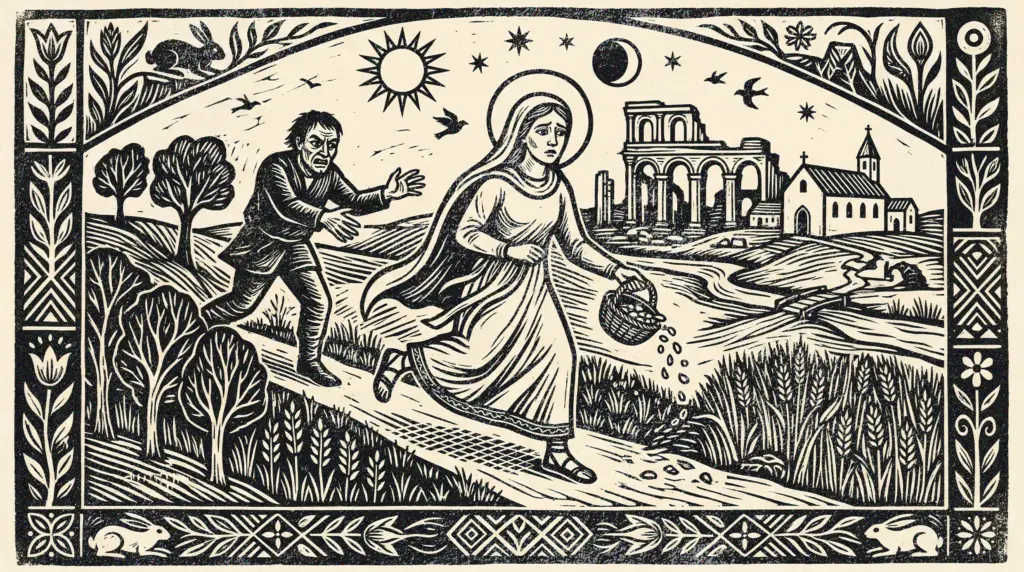
Lady Conyburrow's Way
Castor, in the fields beside St Kyneburgha's Church
Kyneburgha, daughter of the pagan King Penda, founded a monastery at Castor around 650 on the ruins of an enormous Roman building whose foundations still lie beside the church. Villagers used to point out a strange line in the field and say it was her road.
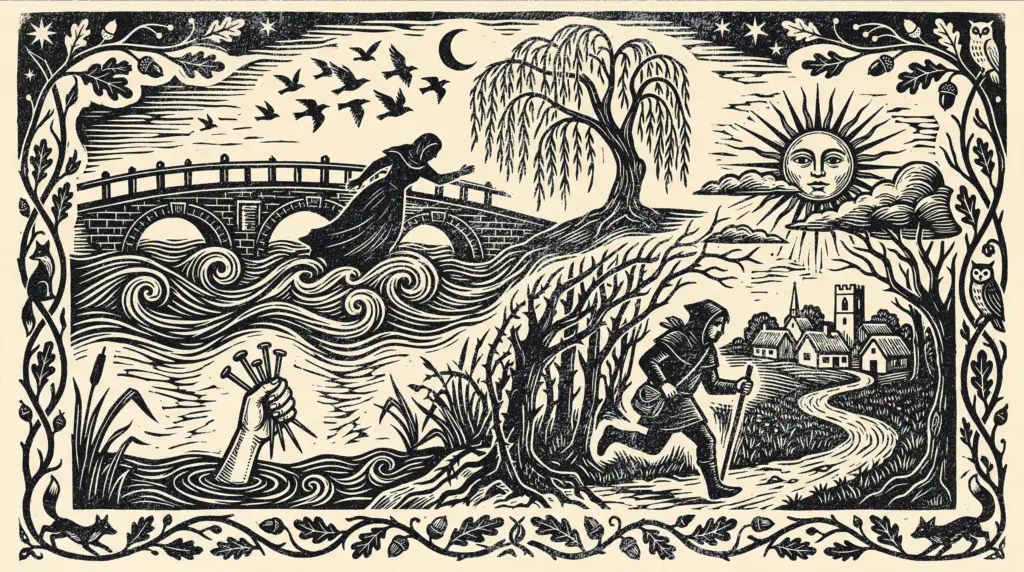
The Witch of Ailsworth
Ailsworth village, near Castor
Around the year 948 a widow and her son were accused of driving iron pins into a man named Aelfsige. The case survives only because King Edgar later granted the land at Ailsworth to Aelfsige's son, and the charter explains why it was going spare. It is one of England's earliest recorded witchcraft cases.
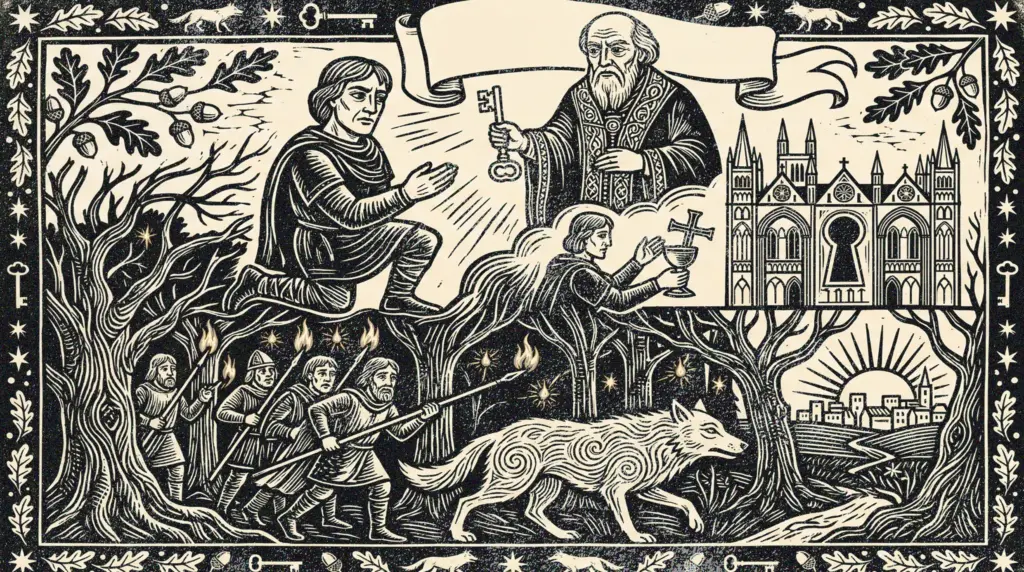
Hereward and the white wolf
Peterborough Abbey precincts & the fen beyond
Hereward the Wake, the last Englishman holding out against the Normans, planned to strip the abbey and burn the town. The night before, an old man came to him in a dream — splendidly dressed, and very specific about what would happen if he went ahead.
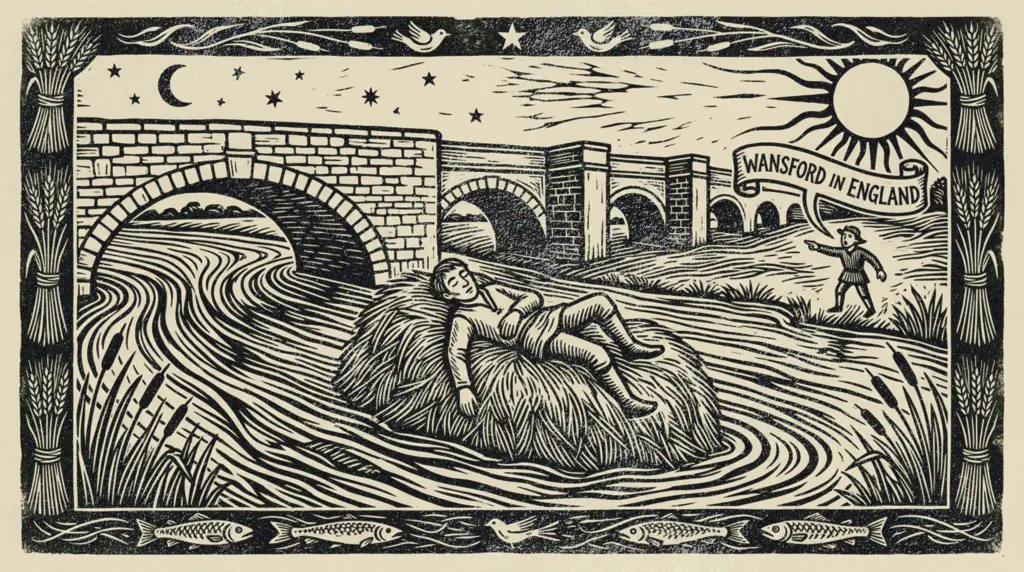
Wansford in England
Wansford, on the Nene
A village that has spent nearly four hundred years living down a joke. A man napped on a haycock by the river, the water rose, and the haycock floated off with him still aboard. When he woke and asked where he was, the answer became the village's nickname — and it is still on the sign.
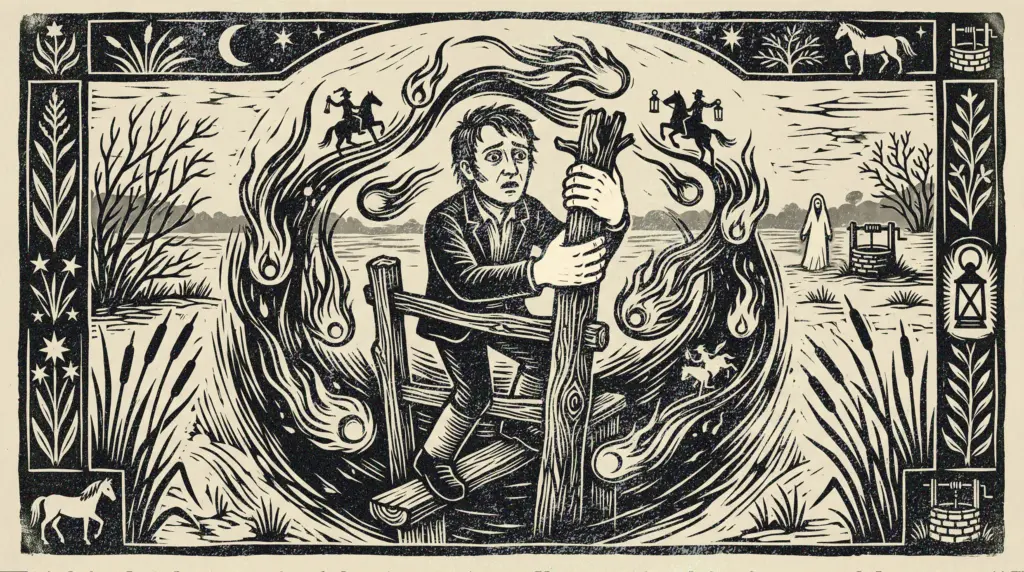
The will o' the wisps of Helpston
Helpston, John Clare's village
John Clare tried hard to believe in ghosts and failed. Will o' the wisps were another matter entirely, and they frightened him all his life. He had reason — he wrote down exactly what happened the night he and a neighbour went out looking for one thing and found another.
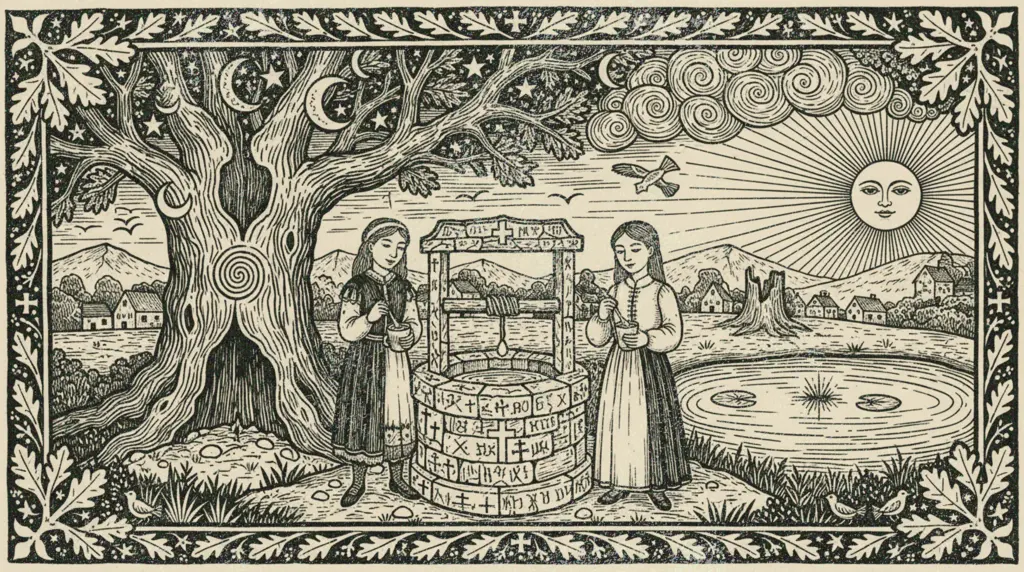
Sugar cupping at East Well
Helpston
There was a spring at Helpston that never ran dry, with old stone troughs cut about with crosses and initials, and water reckoned good for sore eyes. On Whit Sunday the young people came with sugar and stirred it into the water. That was the whole custom, and it lasted for generations.
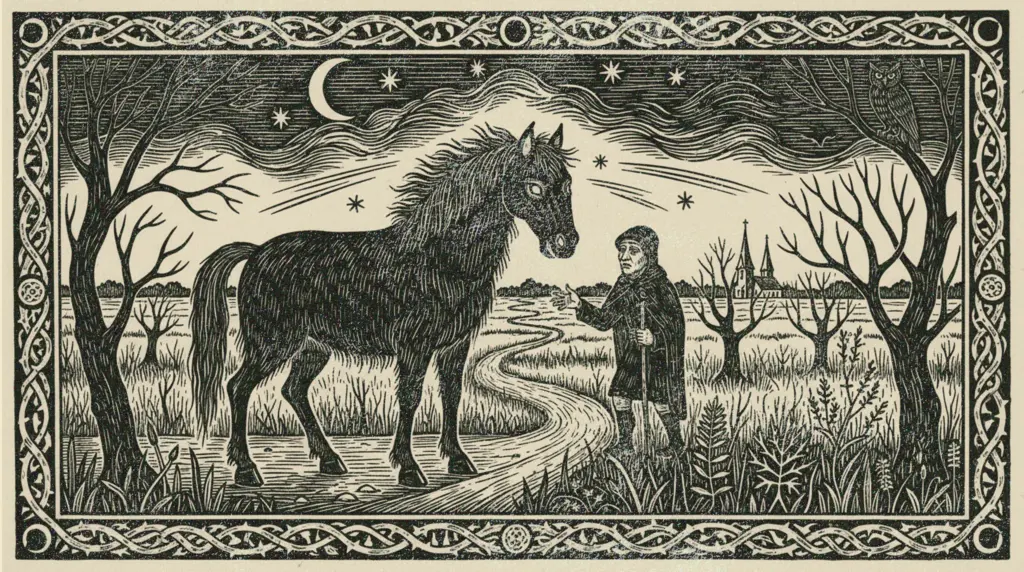
The Shag Foal
Lanes between Barnack and Helpston
Country people around here knew to be careful after dark. A woman whose family had lived at Barnack for generations described it in 1902: a large black animal, shaggy and ill-kempt, more like a bear than a horse. It followed people home.
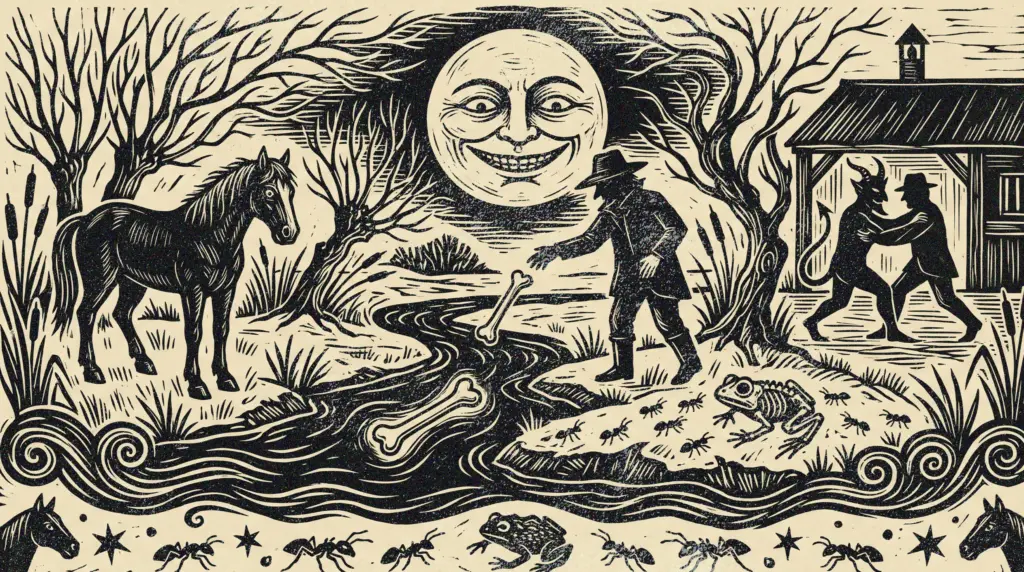
The Toadmen
Fen villages east of the city
In the Fens there were men who could stop a horse dead or send it wild, and everyone knew how the trick was come by. It involved a toad, an anthill, a running stream at midnight and a level of commitment most of us do not have.
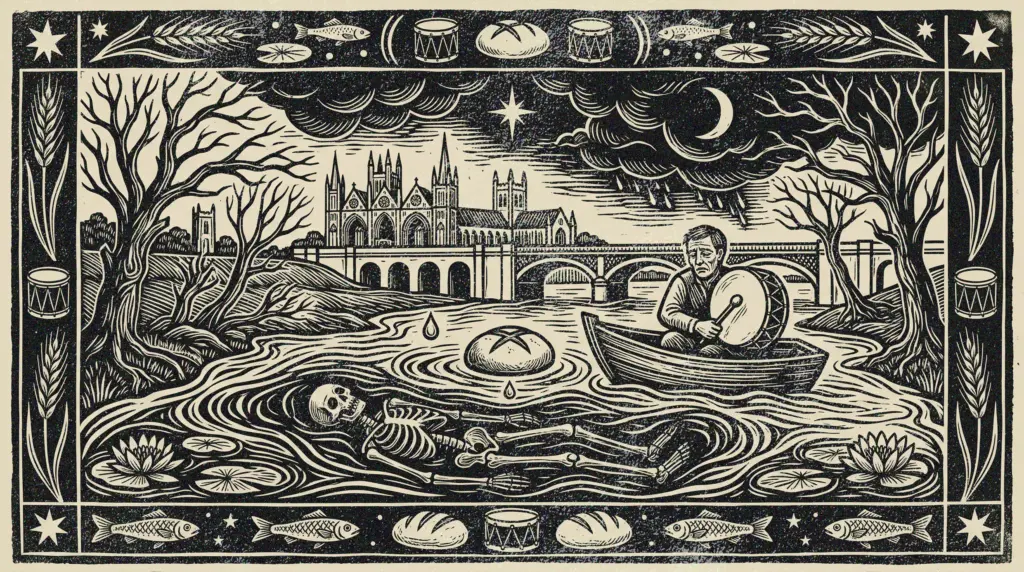
Drumming up the dead
The River Nene, through the city
When somebody drowned in the Nene and the body would not surface, there was a method, and it was still in use in the 1850s. You took a loaf of bread, put quicksilver inside it, and set it on the water. It would drift, and then it would stop.
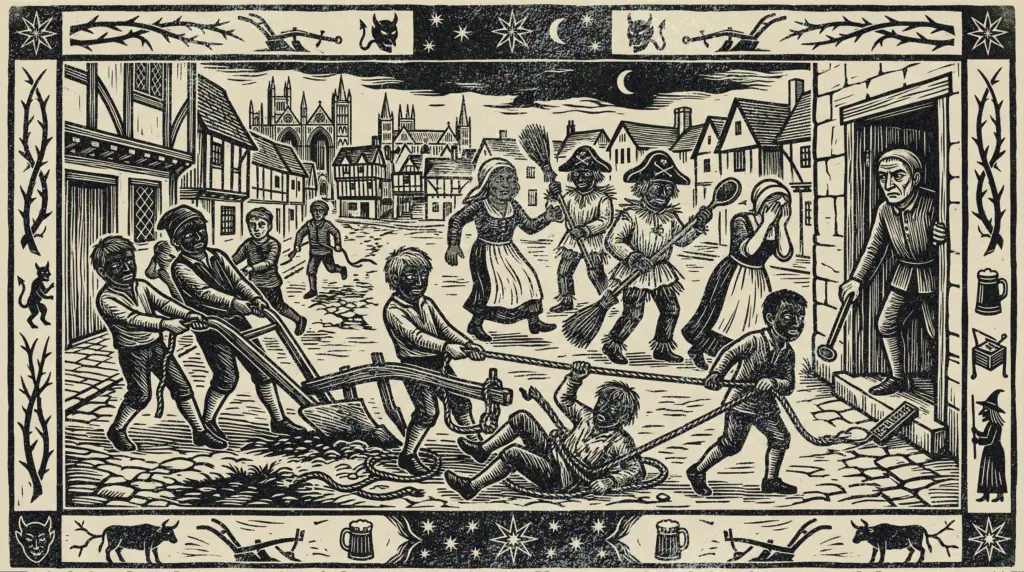
The Plough Witches
Across the Soke villages — first Monday after Epiphany
For centuries Peterborough had exactly one lawless day a year. John Clare wrote down what happened on Plough Monday: the plough boys met at the blacksmith's, blacked their faces, dressed in whatever came to hand, and went out. The rest is best read in his own account.
Weekend routes
Both are drivable in a day and a half, and both work from a base in the city centre. Neither is a race.
Weekend one — The city of bones
Cathedral, museum, city centre, then west along the Nene.
Saturday
- Cathedral, from opening. Simon Magus at the west door, the Hedda Stone behind the altar, Old Scarlett, Katharine of Aragon, the cloister.
- Lunch in Cathedral Square — and look down at the paving while you eat.
- Queensgate floor fossils on the walk through to Priestgate.
- Peterborough Museum. Jurassic sea monsters, the operating theatre, the Norman Cross bone models.
- Dusk: the Cowgate burial ground and the closed subways, then supper in the city.
Sunday
- Longthorpe Tower for the Three Living and the Three Dead.
- Orton Longueville for the knight with the loop round his wrist.
- Alwalton churchyard, then the Robin Hood and Little John stones above Milton Ferry.
- Castor and Ailsworth — Lady Conyburrow's Way, the Roman foundations, the witch.
- Finish at Wansford for the haycock sign and a pub by the river.
Weekend two — Clare country & the fen edge
Limestone villages to the north, then out east into the wet country.
Saturday
- Helpston. John Clare Cottage first, then East Well and the will o' the wisp country.
- Barnack. Button Cap's rectory, the church, and the Hills & Holes.
- The Barnack–Helpston lane towards evening, for Shag Foal purposes.
- Peakirk. St Pega's heart stone and the wall paintings — ring ahead.
Sunday
- Yaxley. The abbot's heart, the three-padlock chest, the green man on the screen — ring ahead.
- Woodston for the Woman in Black, and the Nene embankment.
- Paston churchyard to finish, ideally not on 24 April.
Three practical things
Churches are often locked
Yaxley, Orton Longueville and Peakirk all need arranging in advance. Contact details are on each parish website, and churchwardens are almost always delighted to be asked.
Check opening before travelling
Longthorpe Tower has seasonal hours, and the Cathedral hosts services and events that close parts of the building. A two-minute check saves a wasted drive.
Bring the right shoes
Several of these involve fields, churchyards and fen paths. The city centre is flat and walkable; the rest of it is not always.
Found something we've missed?
Every village around here has one — a stone, a story, a thing in a church that nobody explains. Tell us about it and we'll go and look.
Read all the folklore Send us a curiosity