
Moving lights · dark meadows · a poet who saw them
The Will-o'-the-Wisps
of Helpston
John Clare spent his life noticing things other people missed. Birds, flowers, weather, voices, paths and disappearing customs all entered his writing. Then there were the lights. They moved across the dark country around Helpston, and Clare was quite certain he had seen them.
This story survives because John Clare wrote down what frightened him.
Will-o'-the-wisps belong to folklore across Europe, but Helpston gives us something unusually valuable: the testimony of one of England's greatest observers of the natural world.
John Clare was born at Helpston in 1793 and grew up among labourers, shepherds, farm workers and village storytellers. He learned the countryside not as scenery but as a place of work, memory, names and minute observation.
His writing preserves birdsong, dialect, plants, weather, seasonal work and customs that might otherwise have vanished. It also preserves the supernatural imagination of the people around him.
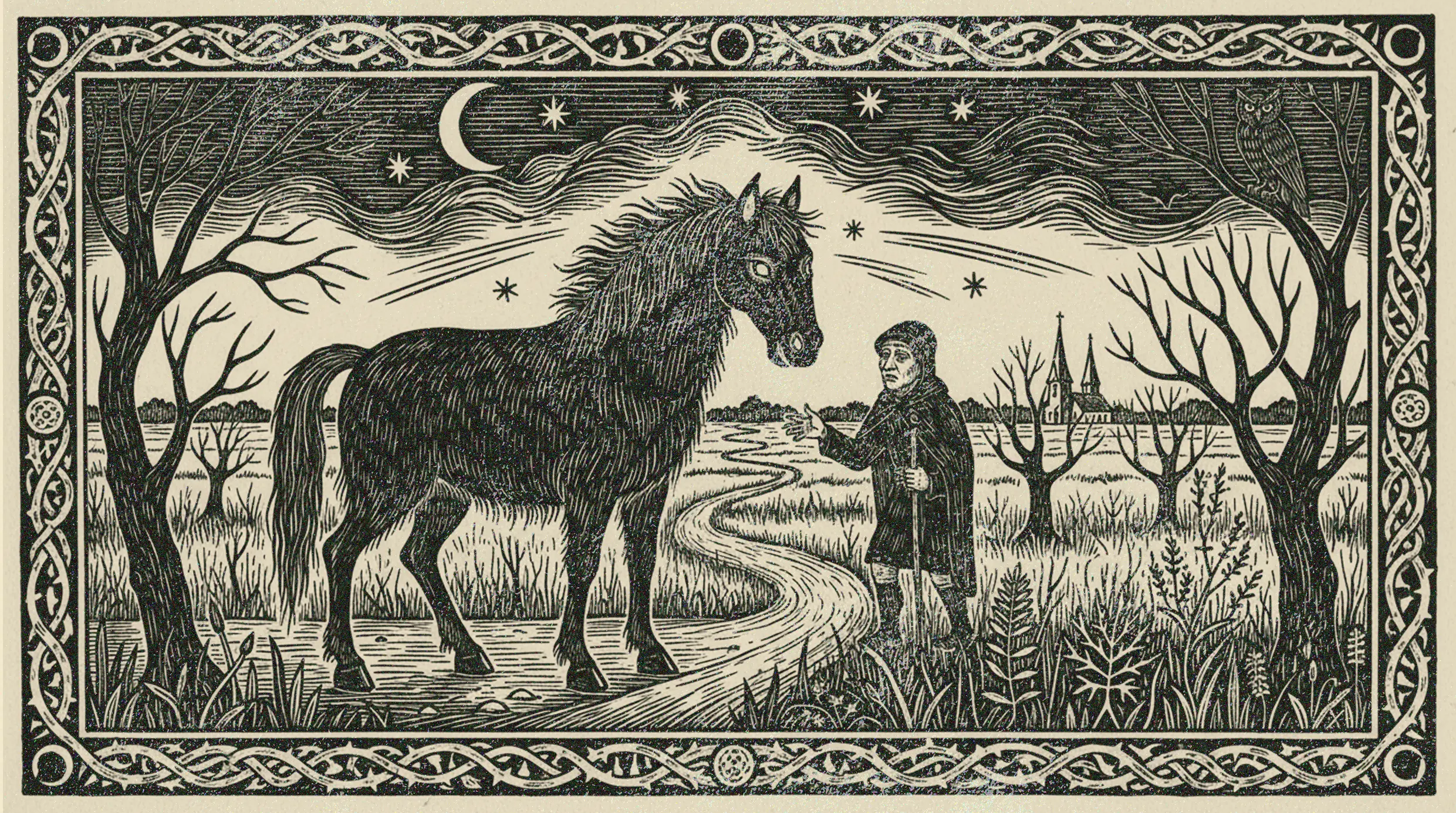
Clare could be sceptical. Some things that frightened him eventually received very ordinary explanations. A terrifying hairy creature that once followed him across the fields turned out to be a lonely foal.
Will-o'-the-wisps were harder to dismiss.
He saw them himself.
Clare did not stand outside village superstition. He grew up inside it.
Clare's childhood was filled with songs, stories, weather lore, fairies, ghosts and strange things encountered after dark. That traditional knowledge became part of the same imagination that later made his poetry so distinctive.
On Helpston Heath he knew the village cowherd Mary Bains, remembered as Granny Bains, whose store of songs and local knowledge made a deep impression on him. Other labourers and neighbours supplied stories Clare absorbed and later recorded.
This matters because Clare was neither a distant antiquarian collecting quaint beliefs nor an educated visitor translating rural culture for outsiders. He belonged to the community whose folklore he described.
When he wrote about a will-o'-the-wisp, he knew the names local people gave it, the stories told beside the fire and the fear of meeting one on a lonely path.
He also recorded what people thought lived in it.
That makes the Helpston lights part of something bigger than supernatural folklore. They belong to Clare's record of an entire rural culture at the moment that enclosure, agriculture and social change were beginning to transform it.
Clare decided to wait and find out what he was actually seeing.
One of Clare's most vivid autobiographical accounts begins with exactly the sort of uncertainty that makes will-o'-the-wisp stories so effective.
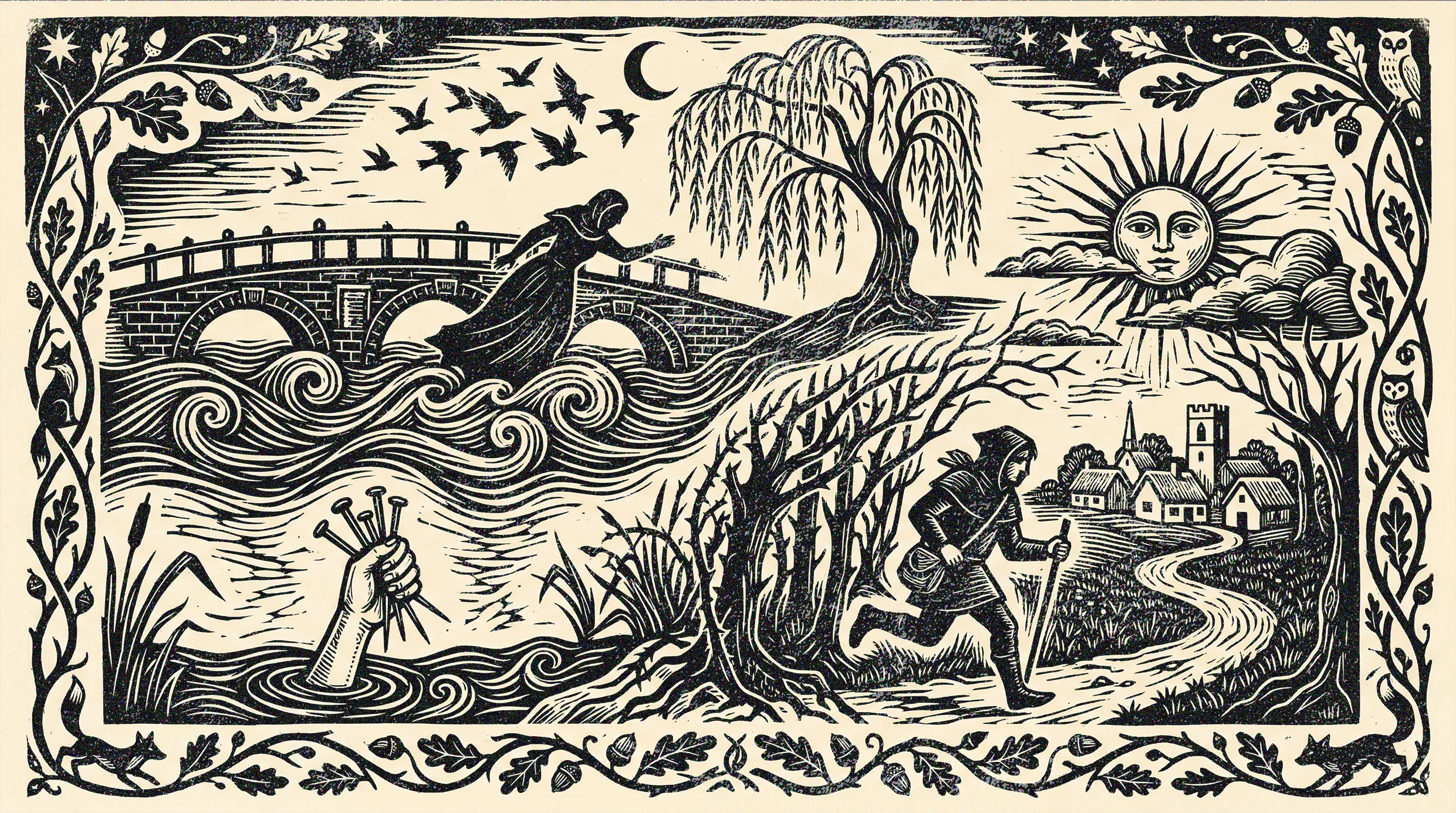
He saw a light coming towards him along a path.
At first, he thought it might simply be somebody carrying a lantern. Clare reached a stile and waited, determined to settle the question for himself.
The light continued steadily towards him. When it came close, it stopped. Then it suddenly flared.
Clare compared the appearance to a burning wisp of straw and remembered a cracking sound. The light around him became terrifyingly strange. His own hands seemed enlarged and pale. Rushes appeared enormous. Bushes seemed to stretch upwards into the darkness.
He clung to the stile until the light moved away. Then he ran home.
Poet second.
Terrified young man throughout.
After describing the encounter at length, he ended the account with the wonderfully understated words: “so much for will o whisps.”
Helpston remembered whole groups of lights.
Clare also recorded what other people around Helpston said they had seen, and one account is particularly memorable.
Mrs Nottingham, associated with the Exeter Arms behind Helpston church, told Clare that from an upstairs window she had seen as many as fifteen lights together.
They moved in and out among one another as though dancing.
Clare compared their motion with reels and country dances. He also noted that many lights were known around Eastwell Moor, placing the phenomenon directly into the landscape east of his village.
This is important because will-o'-the-wisps were not simply a literary metaphor to Clare. They were part of the oral knowledge of Helpston, discussed by named people in familiar places.
Fifteen dancing together were harder to explain.
Clare's writings preserve both sides of the tradition: the frightening personal encounter and the communal story repeated around the village.
Forget the elegant Latin. Clare knew her as Jinny-burnt-arse.
Natural philosophers could call the phenomenon ignis fatuus. English writers used names such as Will-o'-the-wisp and Jack o' Lantern. Clare preserved something much more local and much more memorable.
In The Village Minstrel, published in 1821, the young rustic poet listens beside the fire to a story about Jinny-burnt-arse, carrying her light and trying to lure a traveller towards danger.
The name is funny until you imagine hearing the story as a child and then having to cross dark, wet ground alone.
Folklore gave the light a personality. Instead of an uncertain glow somewhere across a meadow, it became a thing with intent. It wanted you to follow.
That transformation is fundamental to will-o'-the-wisp traditions across Britain. A moving light behaves almost like another traveller, always apparently ahead, always difficult to reach and often leading towards marsh, water or dangerous ground.
A light that wants you to follow is folklore.
He did not simply record the lights. He wrote them into literature.
Clare eventually transformed the experience into his poem Will-O'-Wisp, where the movements of the lights become almost impossible to pin down.
They move up and down, disappear, return and resemble lamps, balls of fire and the lantern of an invisible rider.
The poem is fascinating because Clare does something unusual. He does not write from the safe position of an educated observer explaining why a frightened countryman has misunderstood nature.
Clare is the frightened countryman.
He knows precisely how uncertainty works because he has stood alone in it.
That short phrase captures the contradiction beautifully. Clare is describing movement with the precision of somebody watching closely, but interpreting what he sees through the stories, fears and language of his own community.
It is one of the reasons Clare matters so much to folklore. He lets us see rural belief from the inside.
Clare lived exactly where a wandering light could become terrifying.
Helpston stands close to the western edge of the great Fenland landscape, where firmer limestone country begins to fall towards wetter ground, drains, streams, meadows and former marsh.
Clare knew this geography intimately. His world stretched through Helpston, Maxey, Glinton, Northborough and the nearby countryside, following footpaths and working routes rather than modern roads.
In his autobiographical writings he described seeing a light near a bridge over water, apparently dropping from the bridge and then moving along close to the surface of the stream. What astonished him was that it seemed to travel against the current.
These are exactly the environments historically associated with reports of ignis fatuus: low ground, standing or slow water, marsh, organic decay and darkness.
The old landscape also lacked almost every source of light pollution now taken for granted. A small unexplained glow could dominate the whole visual field.
Wet ground.
A moving flame where no person should be.
The Helpston landscape therefore matters to the story. The lights belong not simply to a village name on a map, but to the physical world that produced both Clare's poetry and his fear.
We know much more than Clare did. The mystery is still more interesting than “swamp gas”.
Will-o'-the-wisps have long been associated with gases produced by decaying organic material in wet ground, particularly methane and phosphorus compounds.
The difficulty was always ignition. Methane does not simply burst into flame over a cool marsh without something starting the reaction, and historic descriptions do not all behave like ordinary flames.
That has led scientists to explore several possibilities, including chemical luminescence, phosphorus compounds, biological light and combustion involving marsh gases.
In 2025 researchers reported a particularly intriguing mechanism. Experiments with methane-containing microbubbles produced tiny spontaneous electrical discharges, described as microlightning. These flashes could initiate methane oxidation and produce visible luminescence without an external flame.
It is a striking experimental result because it supplies one possible missing link between gases rising from wet ground and apparently spontaneous light.
The experiment does not prove that Clare saw methane microlightning, nor that every historical will-o'-the-wisp had one cause. Reports differ enormously in colour, movement, duration and setting. It simply shows that an apparently impossible marsh light may have perfectly natural mechanisms capable of producing it.
That actually makes Clare's testimony more interesting. He may have been describing a real and unusual luminous phenomenon rather than merely repeating a superstition.
The folklore begins with what people thought the light meant. Science asks what might have made the light possible.
Follow John Clare through Peterborough's folklore.
The will-o'-the-wisps are not an isolated Clare curiosity. His writings preserve a remarkable network of customs, stories and experiences from the countryside around Helpston.
Sugar Cupping
Clare recorded the old Helpston custom of visiting East Well with sugar and water for good luck and wishing.
Explore Sugar Cupping →The Plough Witches
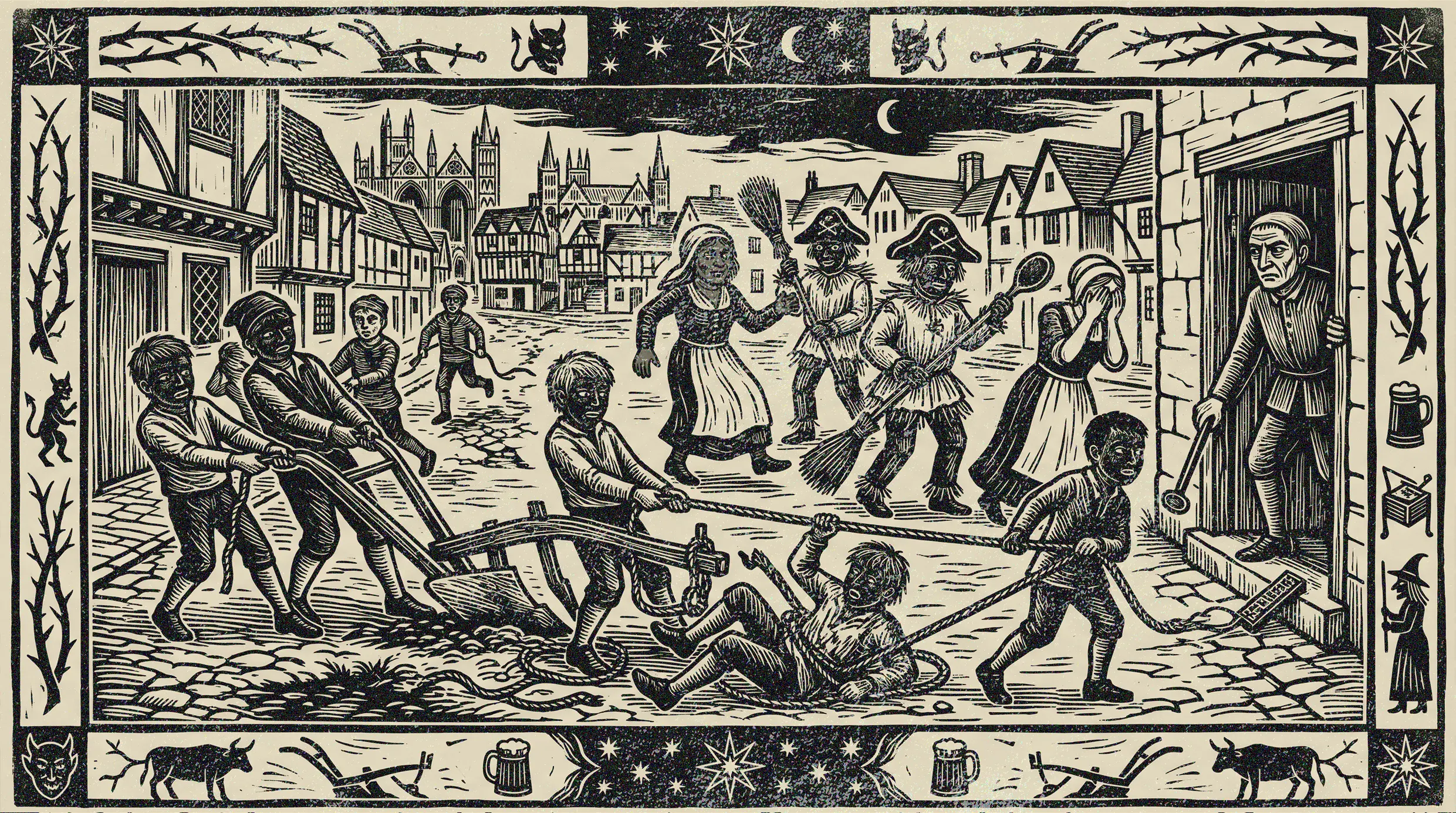
Clare also preserved the riotous disguises, blackened faces and ritual collecting of the agricultural workers who took over the roads each January.
Meet the Plough Witches →The Shag Foal
Clare's own terrifying encounter with a mysterious hairy figure, later revealed as a foal, gives another glimpse of how darkness transformed this familiar landscape.
Meet the Shag Foal →Start with the poet. Then look at Helpston differently.
The best way to explore this story is not to search for a supernatural light. It is to understand the landscape closely enough to see why the story belonged here.
Begin at John Clare Cottage → in Helpston, where Clare was born and where his relationship with the surrounding countryside is interpreted.
From there, explore the village and the public countryside routes beyond it. Notice how quickly buildings fall away and how broad the horizons become.
Clare's world is most rewarding when approached slowly. Look at the ditches, reeds, hedges, water, changing ground levels and distant tree lines. These were not background scenery to him. They were the structure of his world.
Visit John Clare Cottage, read his account of the lights, then explore Helpston and the surrounding public paths before daylight is lost. Do not enter private land or wetlands, and do not wander unfamiliar rural routes in darkness simply to recreate an historic encounter. Clare has already done the frightening part for you.
Because Clare leaves the mystery exactly where it should be.
It would be easy to turn the Helpston will-o'-the-wisps into either a ghost story or a science lesson. Clare allows them to remain more complicated.
He was an exceptional observer of nature who also belonged to a community saturated with folklore. He could recognise that fear distorted perception, yet still describe lights he could not comfortably explain.
He looked at them carefully. He waited to see whether one was a person carrying a lantern. He watched one move close to water. He listened to neighbours describe many lights dancing together.
Then he did what John Clare did with everything important in his landscape.
He wrote it down.
That is why we can still stand in Helpston two centuries later and know not merely that people once believed in wandering lights, but what one of those encounters actually felt like.
Clare waits.
Then the darkness changes shape.
The lights are one doorway into a much larger landscape.
Discover Clare himself, visit his Helpston home and follow other traditions he preserved from the countryside around Peterborough.
John Clare
Meet the Helpston poet whose extraordinary observation of wildlife, rural life, language and folklore made this landscape part of English literature.
Discover John Clare → 02 · THE PLACEJohn Clare Cottage
Begin in the cottage where Clare was born, then step back outside into the village and countryside that formed his imaginative world.
Plan a visit → 03 · EAST WELLSugar Cupping
Another Helpston tradition preserved through Clare's writing, linking Whitsun, East Well, wishing and the social life of the village.
Enter the story → 04 · THE WORKING YEARThe Plough Witches
Clare also recorded the disguises and ritual misrule of Plough Monday, another tradition rooted in the working landscape around Peterborough.
Meet the Plough Witches →More Peterborough Folklore
Strange animals, seasonal customs, lights and old beliefs from the countryside around Peterborough.
Sugar Cupping
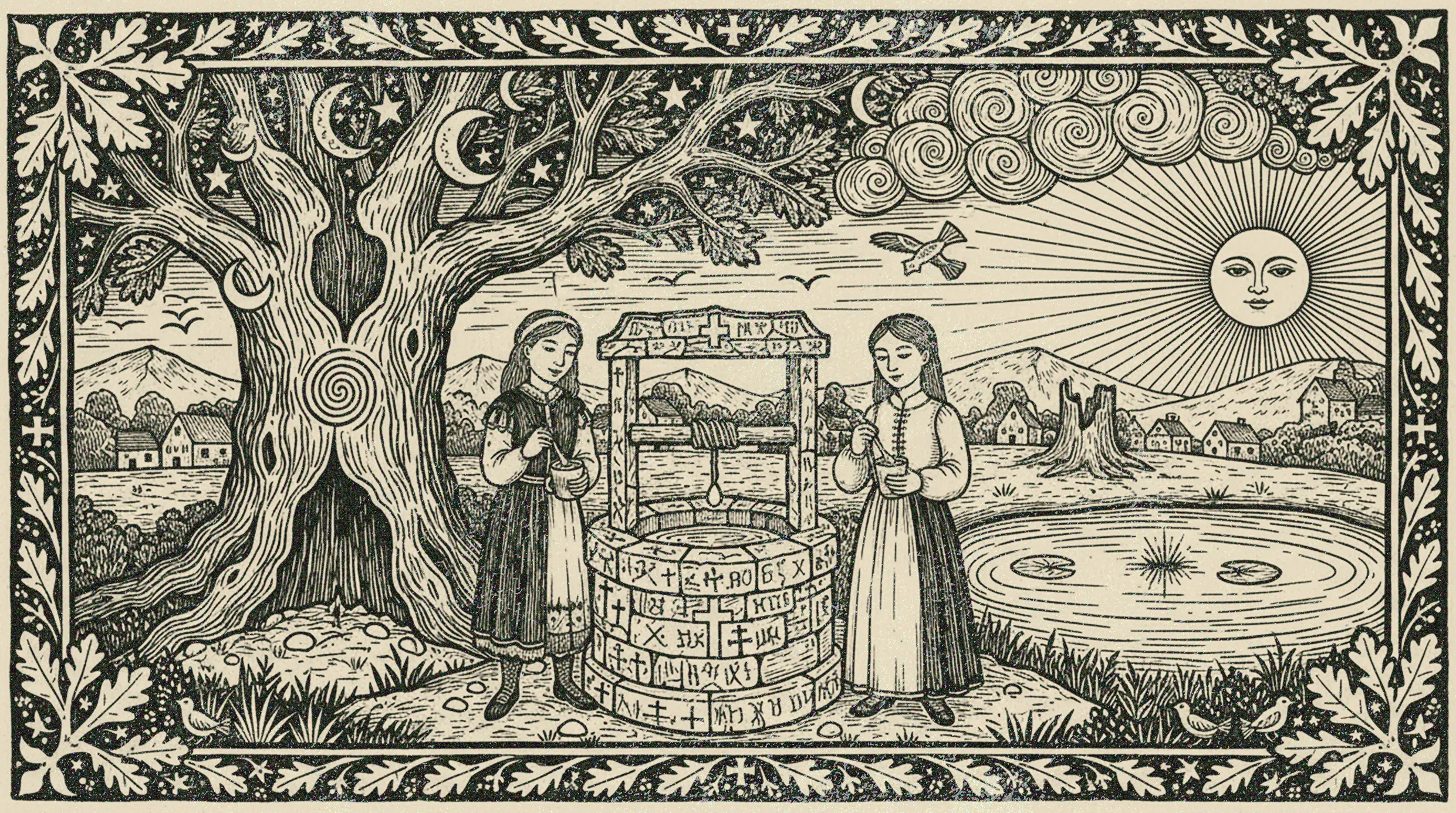
At Whitsun, Helpston's young people visited East Well and mixed sugar with the spring water for luck and wishing.
The Plough Witches
Clare preserved the extraordinary disguises and ritual collecting of the agricultural workers who took over the roads on Plough Monday.
The Shag Foal
Around the same countryside, darkness could turn an ordinary animal into something much stranger.
The Toadmen
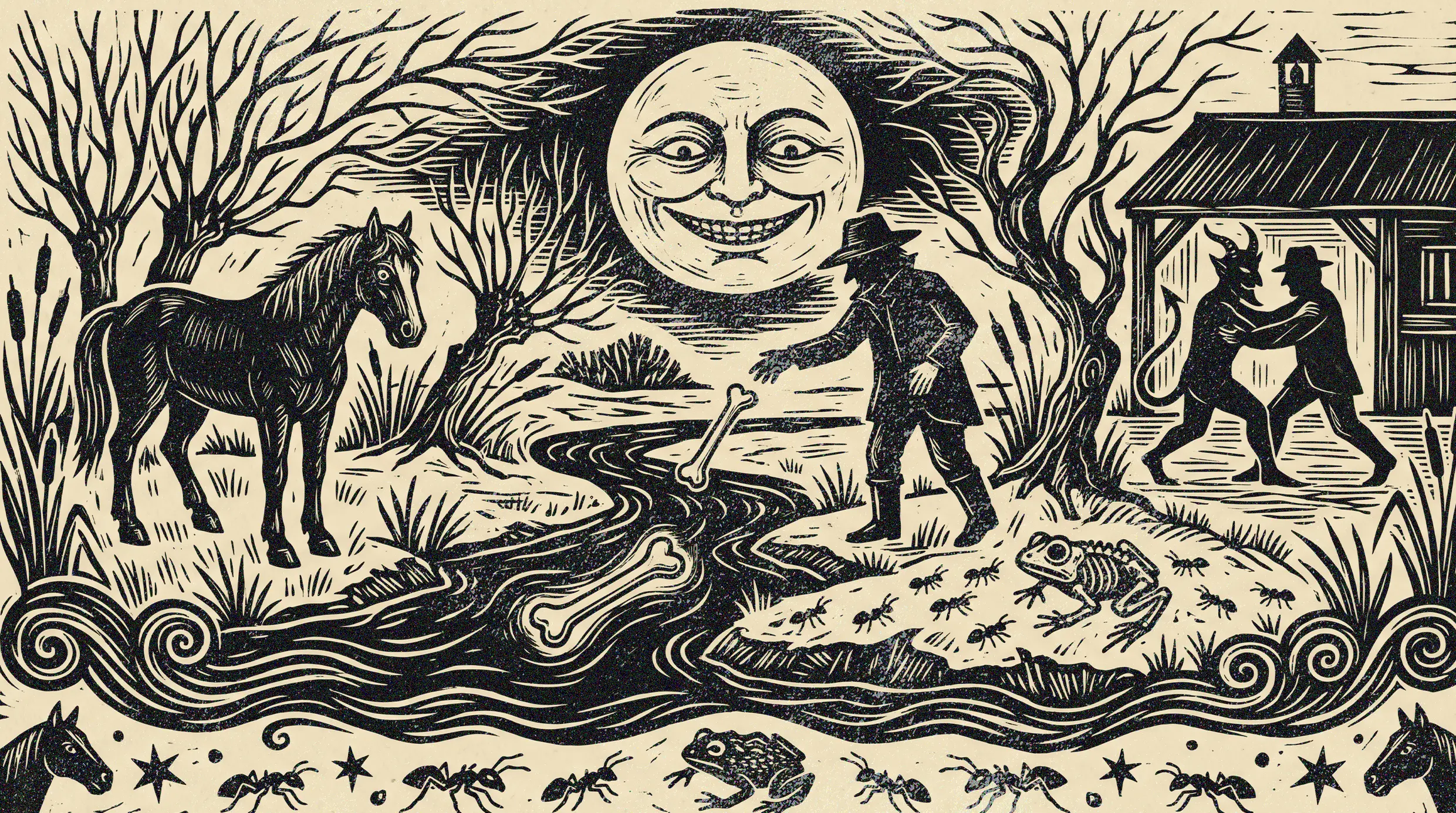
Certain horsemen around Peterborough were said to possess a secret power acquired through one very particular bone.
Hereward and the White Wolf
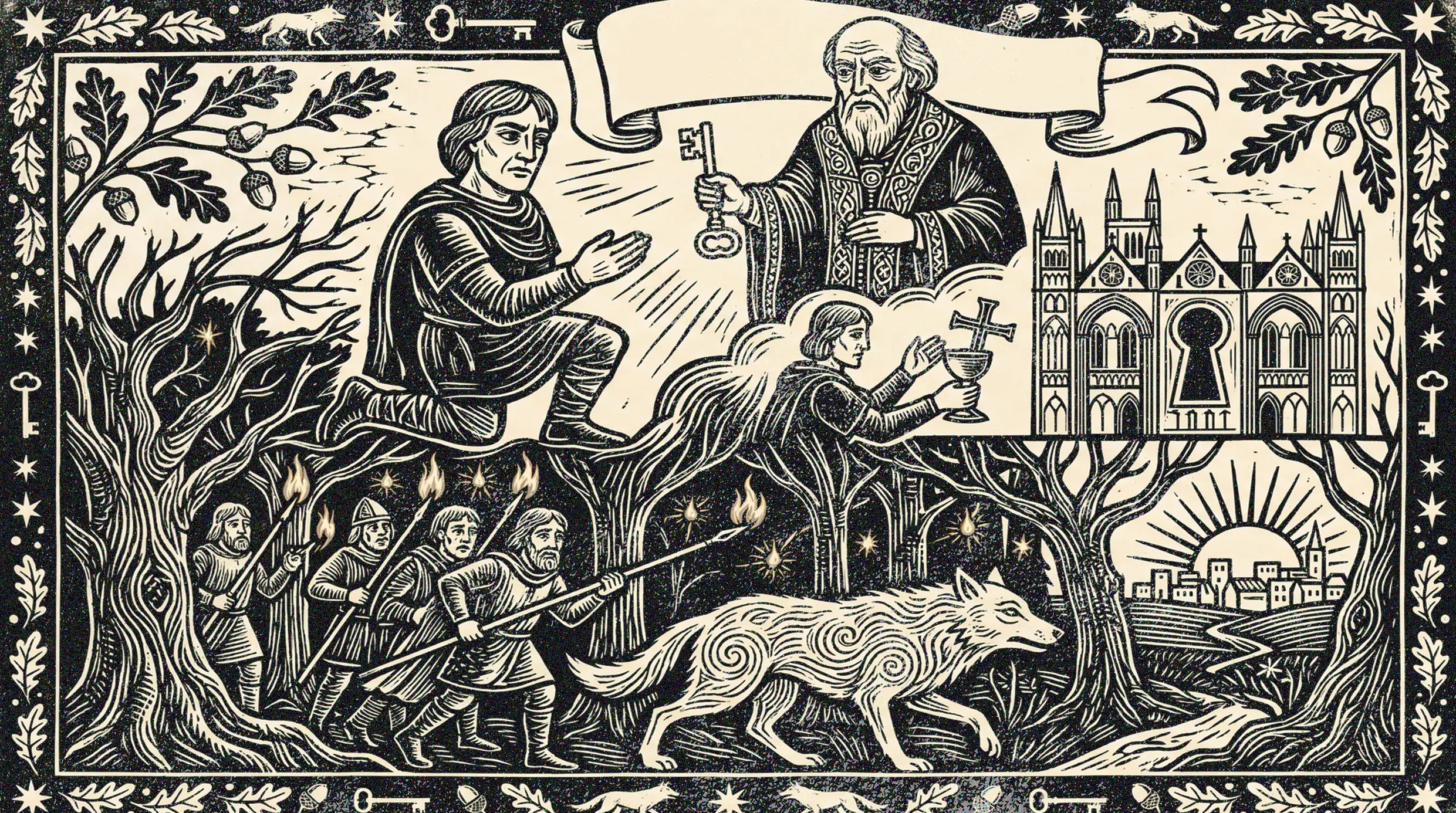
A later medieval legend describes strange pale lights appearing on the weapons of Hereward's lost men as they followed a white wolf through the night.
The Witch of Ailsworth
A much older Peterborough story survives because an accusation of magic became entangled with land, law and an Anglo-Saxon charter.
Behind the Helpston lights
John Clare's own autobiographical writing and poetry are central to this page. Later commentary is used to place his experiences within wider folklore and current scientific discussion. No single physical explanation is presented as proven for Clare's individual sightings.
-
John Clare · John Clare by Himself
Clare's autobiographical writings preserve several encounters with will-o'-the-wisps, including the light approaching him at a stile, the bridge and stream episode, and local testimony concerning numerous lights around Helpston and Eastwell Moor. -
University of California · research on Clare and ignis fatuus
Academic discussion drawing directly on Clare's autobiographical fragments, The Village Minstrel and his poem Will-O'-Wisp, including the local name Jinny-burnt-arse. -
Frederick Martin · The Life of John Clare
Early biography describing Clare's upbringing in Helpston, Granny Bains, local supernatural beliefs and his journeys through the wet countryside around the village. -
East Anglian Traditional Music Trust · John Clare
Explores Clare not only as poet but as fiddler, collector and participant in the traditional songs and folklore of his community. -
Proceedings of the National Academy of Sciences · 2025
Experimental research demonstrating spontaneous electrical discharges between methane-containing microbubbles and a potential physical mechanism for ignis fatuus luminescence. -
Royal Society of Chemistry · The Ignis Fatuus
Modern overview of historical sightings, folklore and the competing physical and biological explanations proposed for will-o'-the-wisp phenomena. -
Discover Peterborough · John Clare
Discover the life of the Helpston poet whose observation of landscape, wildlife and rural culture made him one of Peterborough's most important literary figures. -
Discover Peterborough · John Clare Cottage
Visit Clare's birthplace in Helpston and explore the landscape and cultural world that shaped his writing. -
Discover Peterborough · Peterborough Writers & Poets
Place Clare within Peterborough's wider literary story and discover other writers associated with the city and district. -
Discover Peterborough · Peterborough Folklore
Explore Peterborough's wider collection of strange creatures, seasonal customs, hauntings and historical traditions. -
Discover Peterborough · Weird Weekends
Follow Peterborough's stranger stories into the places and landscapes where they belong.