
Barnack · Ailsworth · Thorney · Fen-edge folklore The Shag Foal
Around old Peterborough there was something you did not want to meet at dusk. At Barnack it looked like a great black bear. At Thorney it was half horse and half dog. At Ailsworth it had flaming eyes. Everyone called it the Shag Foal.
The strangest thing about the Shag Foal is that nobody could quite agree what it looked like.
Country folklore often gives its monsters recognisable shapes. A ghost looks like a person. A black dog looks like a dog. The Shag Foal is more difficult. Around Peterborough its body seemed to change from place to place, while the name remained the same.
At Barnack, people remembered a huge dark creature resembling a bear. At Thorney it became an impossible hybrid of horse and dog. At Ailsworth it was simply enormous, black and equipped with eyes that appeared to burn in the fading light.
The creature belonged especially to the uncertain hour between day and night. The old account is remarkably specific about that. It did not habitually appear at noon, nor in the deepest darkness, but at dusk, when colours flatten, hedges merge with the road and an ordinary animal can become difficult to identify from only a few yards away.
That does not make the tradition less interesting. It may be exactly what made it possible.
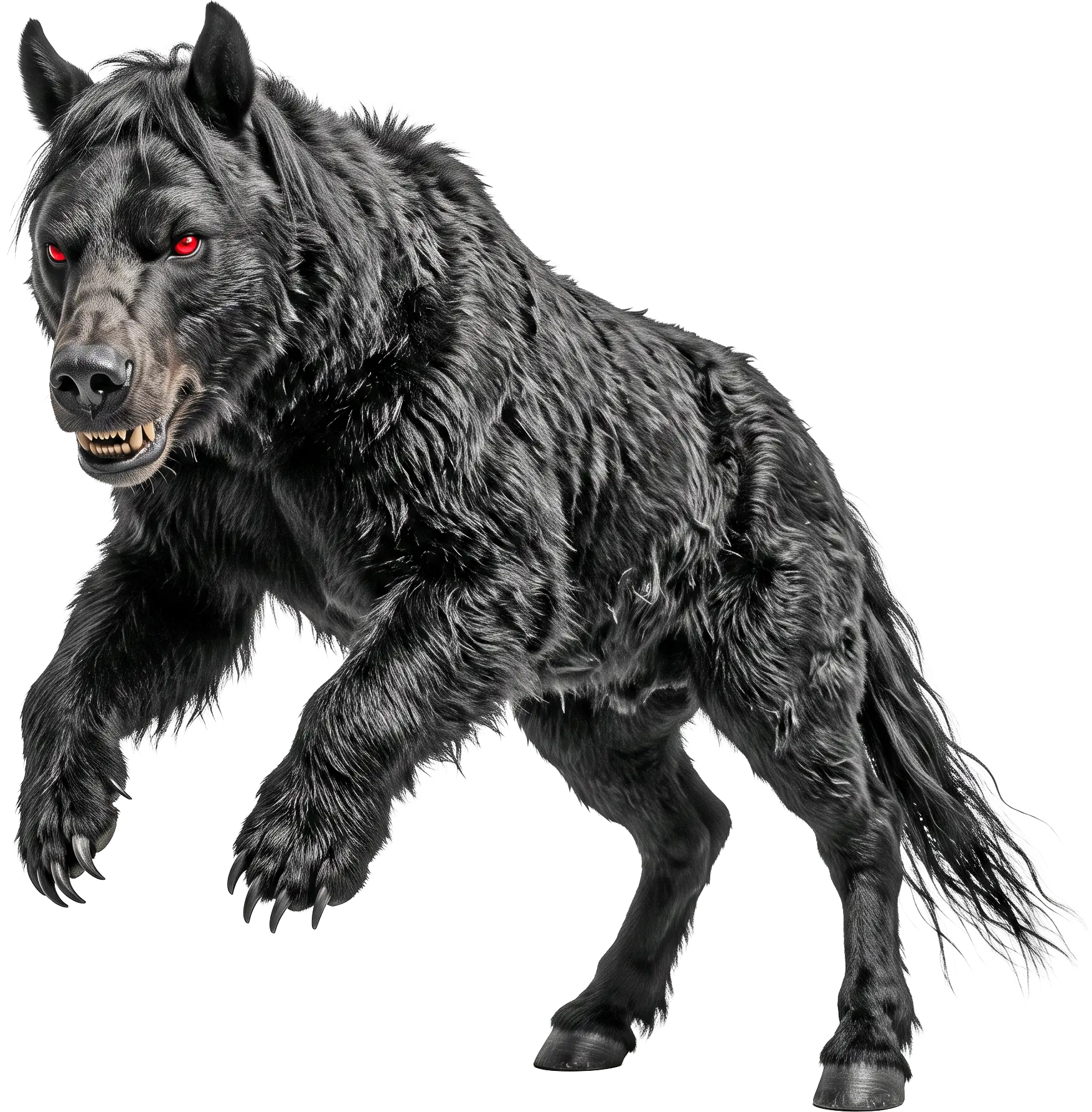
Peterborough's Shag Foal did not always resemble a foal.
If the name makes you picture a small shaggy horse, the local descriptions quickly become unsettling.
A traditional Lincolnshire Shag Foal or Tatterfoal was often imagined as a rough-coated supernatural horse, foal or donkey. Peterborough lay close enough to that folklore region for the name to be familiar, but the local creature had become much less anatomically reliable.
In one place it might be horse-like. In another it resembled a dog. At Barnack, the comparison was with a bear. What held the tradition together was not a precise species but a group of characteristics: enormous size, black or very dark colour, shaggy hair, sudden appearance and the ability to frighten a traveller after daylight had begun to fail.
In other words, the Shag Foal was defined as much by the encounter as by the animal.
Then somebody actually wrote the tradition down.
The most useful early record for the Peterborough-area Shag Foal appeared in volume 12 of the Journal of the Northamptonshire Natural History Society and Field Club in 1903.
The account is valuable because it does not describe one generic monster. It compares what people in different communities thought the Shag Foal was.
At Barnack, it was remembered as a great spectral bear, or at least as a huge animal generally resembling one. The account was emphatic on one detail: it was not white.
At Thorney, the creature was described as half a horse and half a dog and of great size. The writer dryly observed that nobody seemed quite sure which half was horse and which half was dog.
At Ailsworth, the description was shorter but wonderfully effective. The Shag Foal was large and its eyes appeared to flame.
Thorney saw a horse-dog.
Ailsworth saw the eyes.
That range is important. It tells us that the Shag Foal was not a zoological description passed faithfully from one witness to another. It was a folkloric category, a name available for the enormous dark thing that should not have been standing there.
Some modern retellings place the Barnack description in 1902. The clearest publication located for this page is the 1903 journal account. It may preserve material collected shortly beforehand, but 1903 is the secure publication date and is therefore used here.
Peterborough had more than one Shag Foal.
The 1903 account becomes even more interesting when its local details are allowed to remain different instead of being compressed into one standard creature.
The spectral bear
Barnack's creature was enormous, black and bear-like. This is the version that most clearly explains why local people could describe the Shag Foal without describing anything recognisably equine.
Horse or dog?
At Thorney it became a huge creature part horse and part dog. Tradition placed it beside a thicket on the Wisbech road and, unusually, associated its appearance particularly with August.
The flaming eyes
Ailsworth's description concentrated on scale and eyes. The beast was large, and the eyes seemed to burn. In fading light, that was probably enough detail for anybody walking home alone.
Shag Foal could mean an animal, a goblin or both at once.
Nineteenth-century Lincolnshire dialect collections preserve two meanings for “shag-foal”. One was completely ordinary: a young foal. The other was supernatural: a hobgoblin believed to haunt particular places.
That overlap is revealing. Folk creatures often borrow the shapes of familiar animals rather than inventing entirely new bodies. The name starts with something everybody knows and then allows fear, darkness and storytelling to alter it.
The Shag Foal also belongs to a much larger British family of frightening road creatures. Depending on the county, related beings might be called gytrashes, boggarts, brags, padfoots, shucks or tatterfoals. Some appeared as dogs, some as horses and some changed form altogether.
Uncertain enough to fear.
It is therefore better to think of the Shag Foal as a type of encounter rather than a single fantasy species with a fixed appearance.
Lincolnshire knew the creature particularly well.
Peterborough sits on the edge of several cultural regions, and the Shag Foal is a particularly good example of folklore ignoring modern administrative boundaries.
Across Lincolnshire, Shag Foals and Tatterfoals were remembered as rough-coated goblin horses or donkeys haunting hills, lanes and lonely places. Some chased people. Some obstructed roads. Some had unnatural eyes. Others behaved like shape-changing boggarts and seemed far less interested in maintaining a consistent anatomy.
Folklore researcher Caitlin Green has collected examples at places including Frieston, Tathwell, Kirton-in-Lindsey, South Ferriby and Roxby. An old description from Asgarthorpe remembered a shaggy-looking horse given to alarming travellers and playing malicious tricks.
The geographical fit is striking. Barnack and the northern Peterborough countryside sit immediately beside the region in which this creature was particularly well established.
Stories crossed them without noticing.
Peterborough's versions, however, deserve to be kept distinct. The local evidence gives us something stranger than a standard Lincolnshire goblin horse. Here the creature could become a bear, a dog-horse or a pair of burning eyes in the dusk.
One night near Helpston, a monster really did follow him home.
John Clare provides a wonderfully grounded parallel to the Shag Foal tradition because he left his own account of how quickly an ordinary animal could become something terrifying in this landscape after dark.
As a young man Clare had been working at Ashton. After a late finish he walked home across the fields towards Helpston, passing through a landscape in which, as he remembered it, stories of ghosts and goblins were plentiful.
In the uncertain light he saw something standing in the path. His fear transformed the indistinct shape into a horrible figure. It seemed hairy, long-eared and alive, and when Clare tried to escape it the thing followed.
By the time he reached home he had terrified himself almost beyond endurance.
Clare later discovered that the thing pursuing him had been a young foal, recently separated from its mother and apparently looking for company.
There is no evidence that Clare called this animal the Shag Foal, and the two stories should not be merged. The value of his experience is different. Clare shows us the mechanism by which a lonely path, an indistinct animal and a mind already full of supernatural stories can produce a completely sincere experience of terror.
Clare's foal is included as a revealing local parallel, not as proof that he encountered the folkloric creature. In fact, its ordinary explanation makes the comparison more useful.
The old record gives us one of the biggest clues.
The 1903 account says the Shag Foal did not generally display itself in full daylight or in complete darkness. It appeared at dusk.
That is exactly the time at which visual recognition becomes unreliable. Colour drains from the landscape, distances become difficult to judge and familiar forms merge with hedges, shadows and uneven ground.
Animals can behave differently too. Horses, cattle, deer and dogs become silhouettes. Eyes may catch the remaining light. A creature partly concealed by vegetation can appear much larger than it really is.
None of this proves what any particular witness saw, and folklore should not be reduced to a single optical explanation. Stories influence perception just as perception influences stories. Once a community knows that a black shaggy thing appears at dusk, the next uncertain silhouette arrives with a name already waiting for it.
Then you remember the story.
The Shag Foal lives in the space between those two moments.
Barnack and Helpston still make the story easy to understand.
The modern landscape is very different from that known by the people who passed down the Shag Foal, but around Barnack, Helpston and the limestone countryside between them it is still possible to understand why stories gathered around journeys made after dark.
Barnack sits beside a remarkable landscape of old quarry workings, grassland and paths. Helpston lies only a short distance away, surrounded by the country John Clare knew in extraordinary detail.
Walk either landscape in daylight first. Notice the hollows, hedges, isolated trees and changing levels of the ground. Then imagine making the same journey before electric lighting, carrying little more illumination than a lantern and knowing that generations before you had given the darkness names.
Explore Barnack and the surrounding public paths as daylight begins to fade, then notice how quickly familiar objects lose their shape. Use proper paths, carry a torch and reflective clothing, and avoid walking unlit carriageways after dark. Seeing an actual Shag Foal remains optional.
Because uncertainty is much more frightening than a monster with a fixed shape.
The Shag Foal would be less effective if everybody agreed exactly what it was.
A clearly defined monster can be illustrated, classified and eventually made familiar. Peterborough's Shag Foal refuses that treatment. It is a bear until you go to Thorney. There it is a horse and a dog. At Ailsworth the body matters less than the eyes.
The old name therefore seems to have worked like a container. Different communities poured their own experiences into it, while retaining the essential idea of an enormous dark animal encountered at the edge of visibility.
That makes the Shag Foal an unusually good example of how folklore actually works. Stories are not fossils. They adapt to places, people and new encounters.
And there is one final reason the creature remains effective. Almost everyone who has walked a lonely rural path at dusk has experienced the same basic moment: something ahead moves, and for several seconds you cannot tell what it is.
Thorney could not decide.
The darkness did the rest.
The Shag Foal belongs to a countryside already crowded with strange stories.
Follow the creature into John Clare's Helpston, Barnack's haunted rectory and the other customs and beliefs of Peterborough's northern landscape.
John Clare
Discover the Helpston poet who recorded the fields, animals, customs and supernatural beliefs of this landscape with extraordinary precision.
Meet John Clare → 02 · BARNACKBarnack Hills & Holes
Explore the extraordinary quarry landscape beside the village where one version of the Shag Foal was remembered as a great spectral bear.
Explore the landscape → 03 · ANOTHER BARNACK STORYButton Cap
Barnack's rectory had a very different supernatural resident, remembered for loose slippers, turning pages and a missing deed.
Meet Button Cap → 04 · LIGHTS AFTER DARKThe Will-o'-the-Wisps of Helpston
Clare struggled with ghost stories, but the strange lights moving through the wet landscape around Helpston frightened him for very different reasons.
Follow the lights →More Peterborough Folklore
Strange animals, lights and old beliefs from the fen edge, limestone country and countryside around Peterborough.
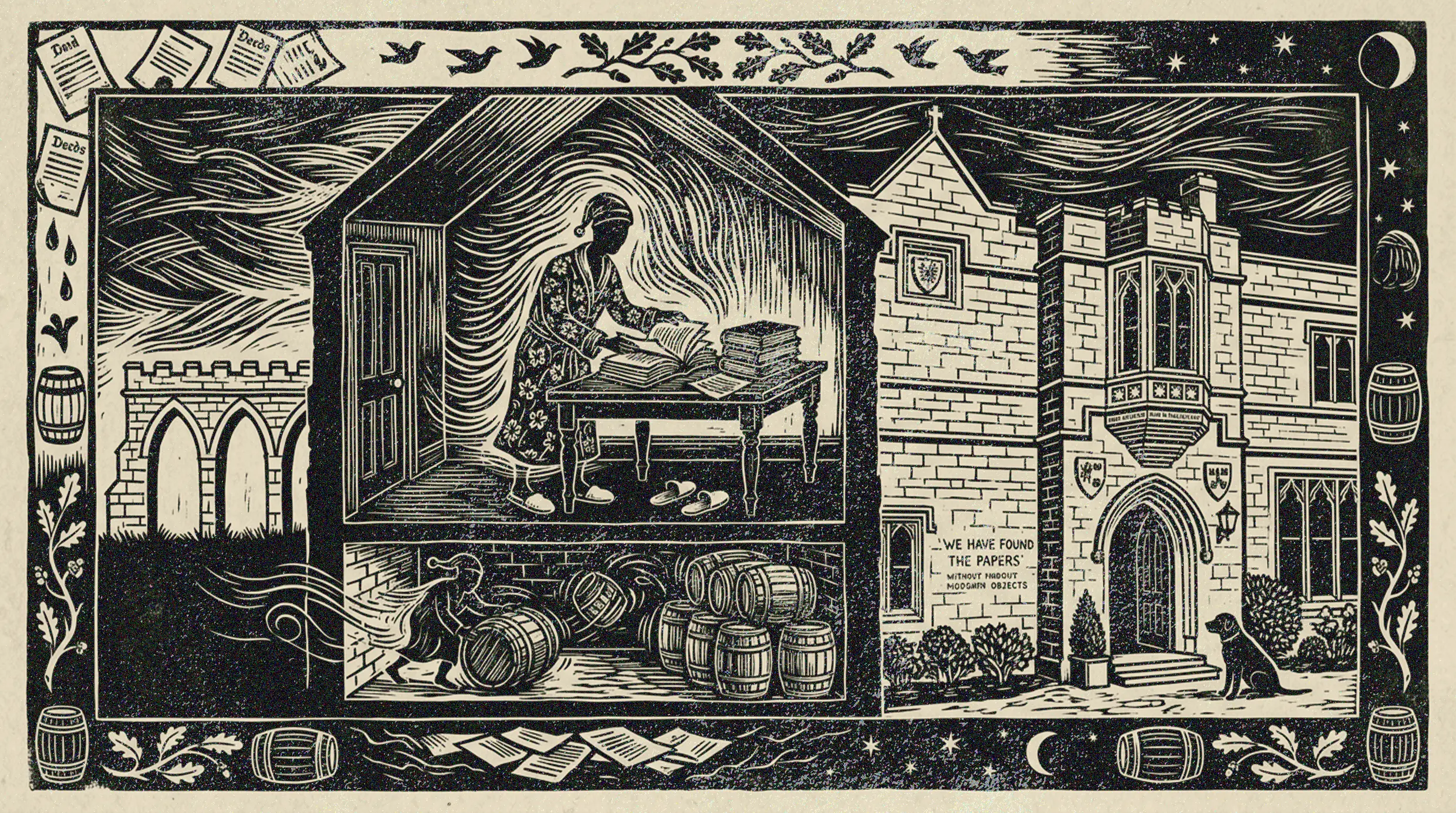
Button Cap
A second strange Barnack tradition, this time involving a ghost who turned pages, wore noisy slippers and searched endlessly for something he had lost.
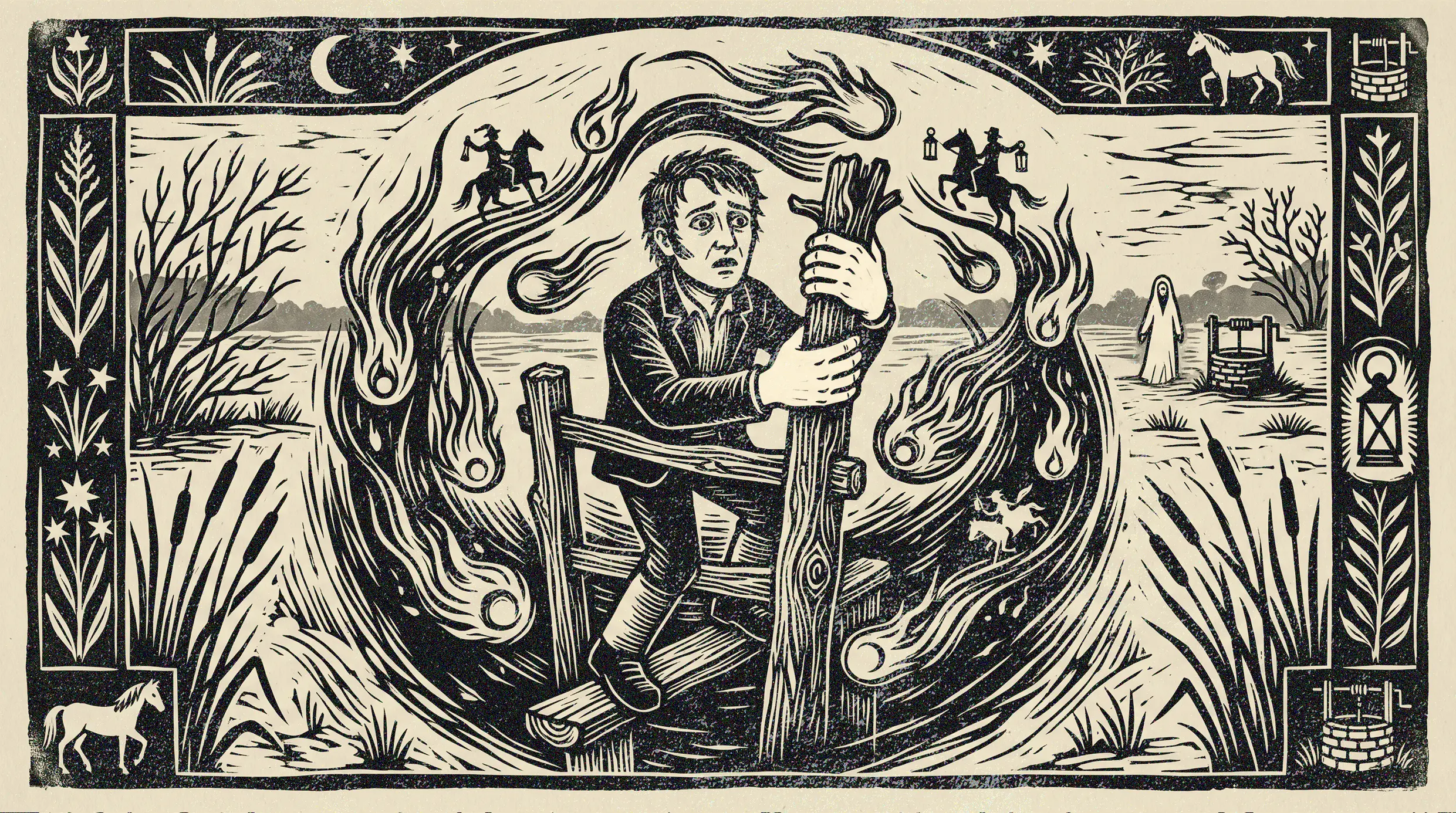
The Will-o'-the-Wisps
Strange moving lights turned the wet landscape around Helpston into one of John Clare's most unsettling experiences.
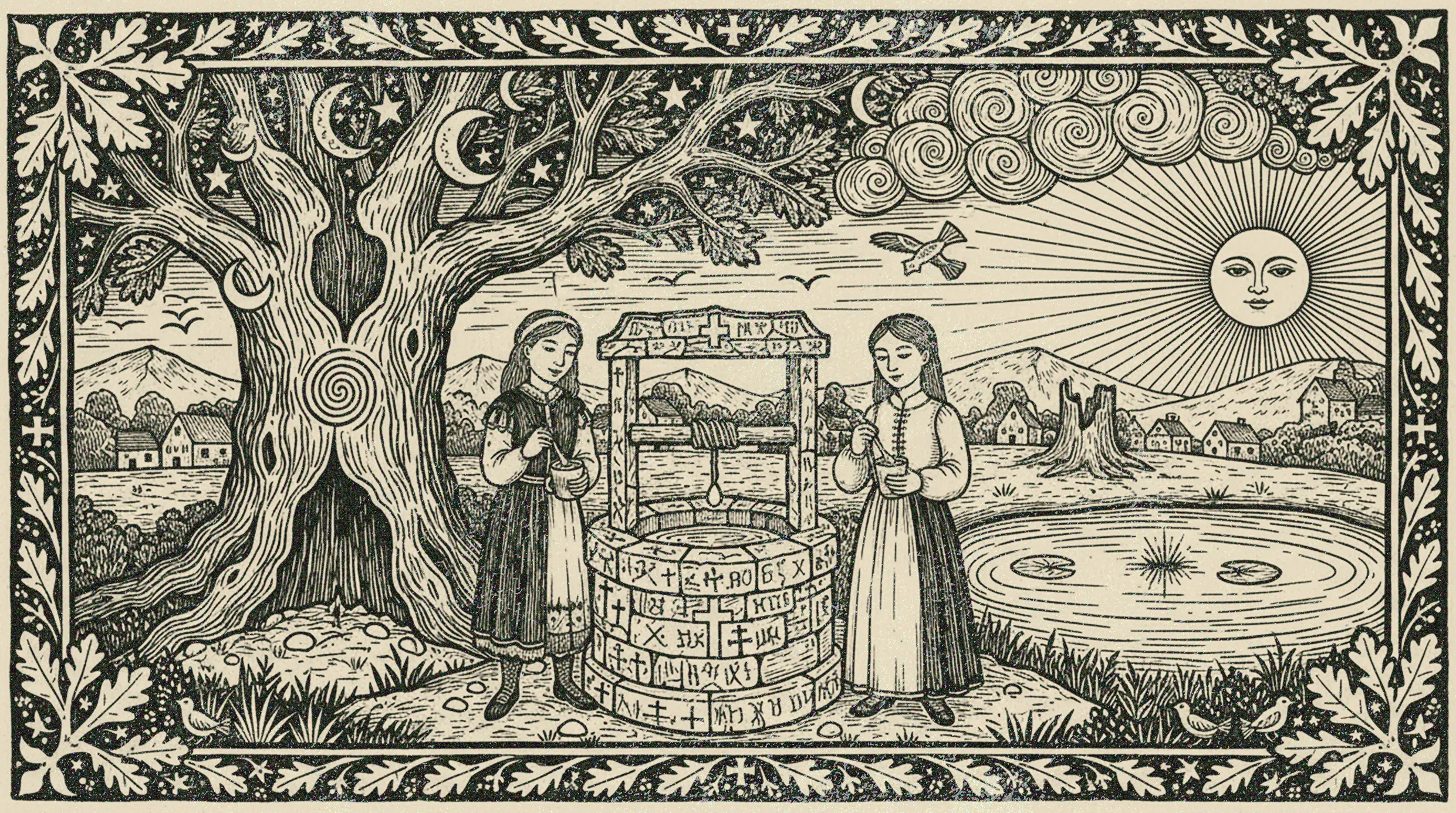
Sugar Cupping
At Whitsun, Helpston's young people brought sugar to East Well and mixed it with spring water for luck and wishing.
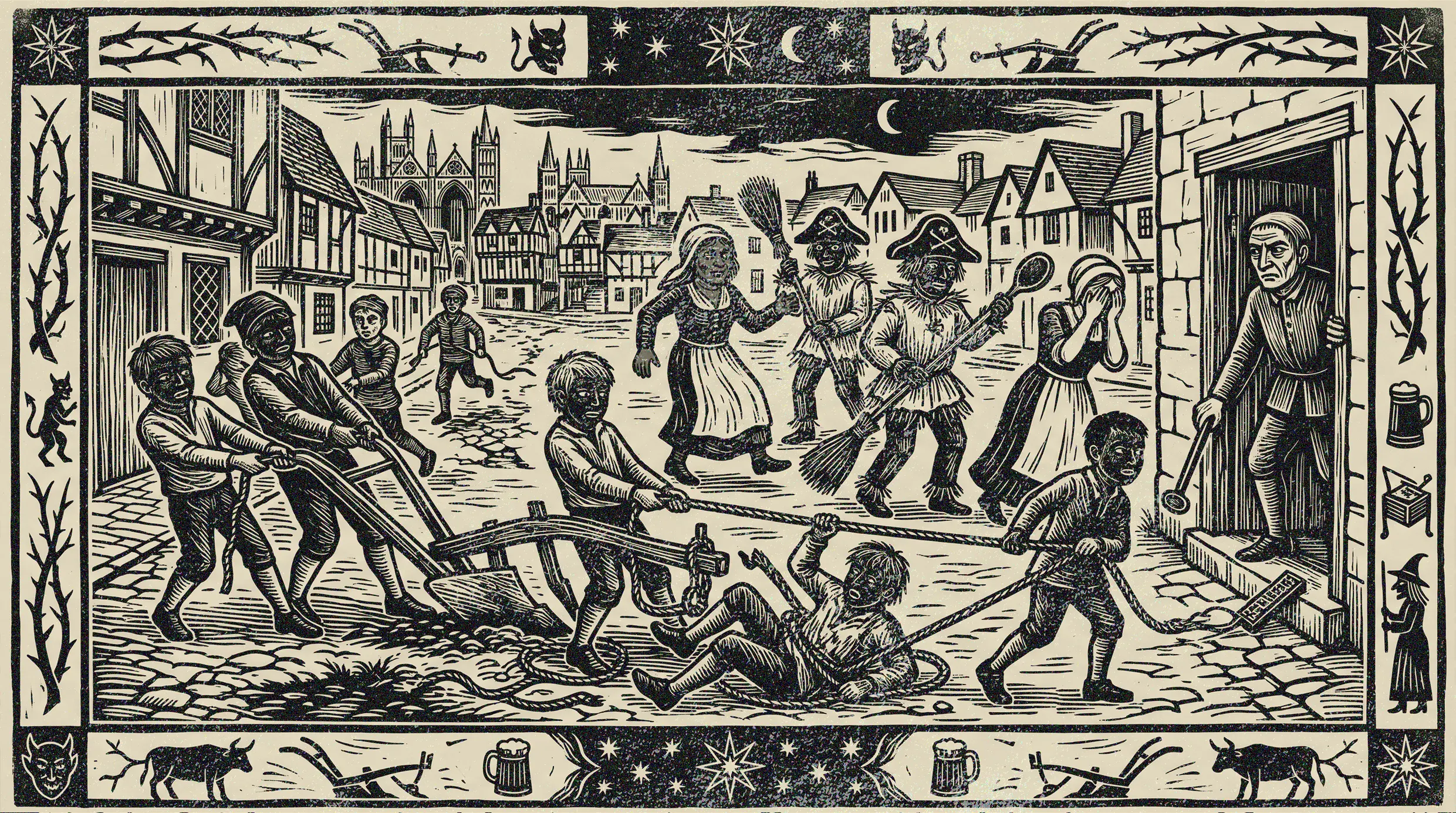
The Plough Witches
On Plough Monday, farm workers disguised themselves, dragged a plough from door to door and made refusing their collection a surprisingly risky choice.
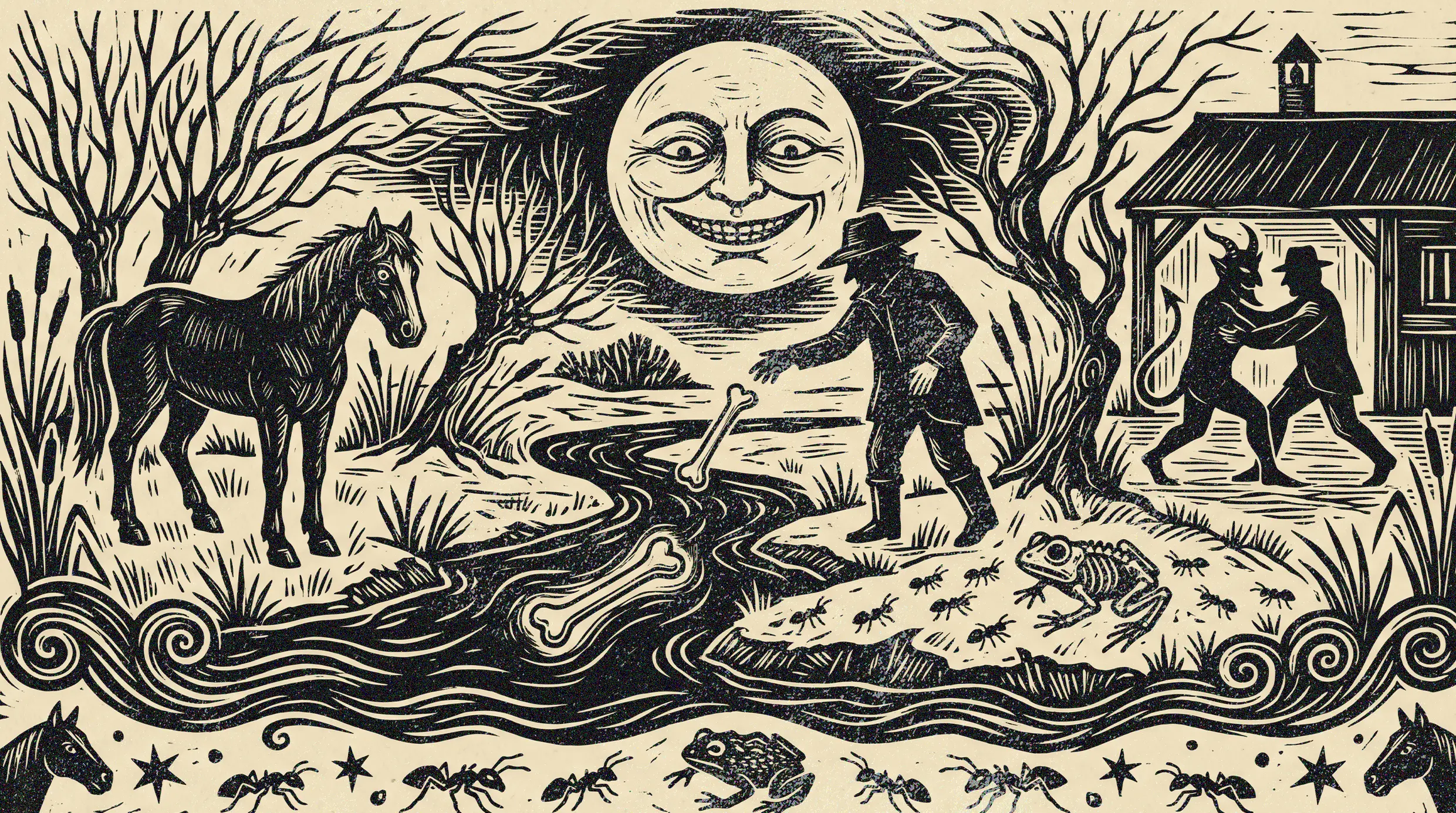
The Toadmen
Men who worked with horses were said to acquire strange powers through one particular bone taken from a toad.
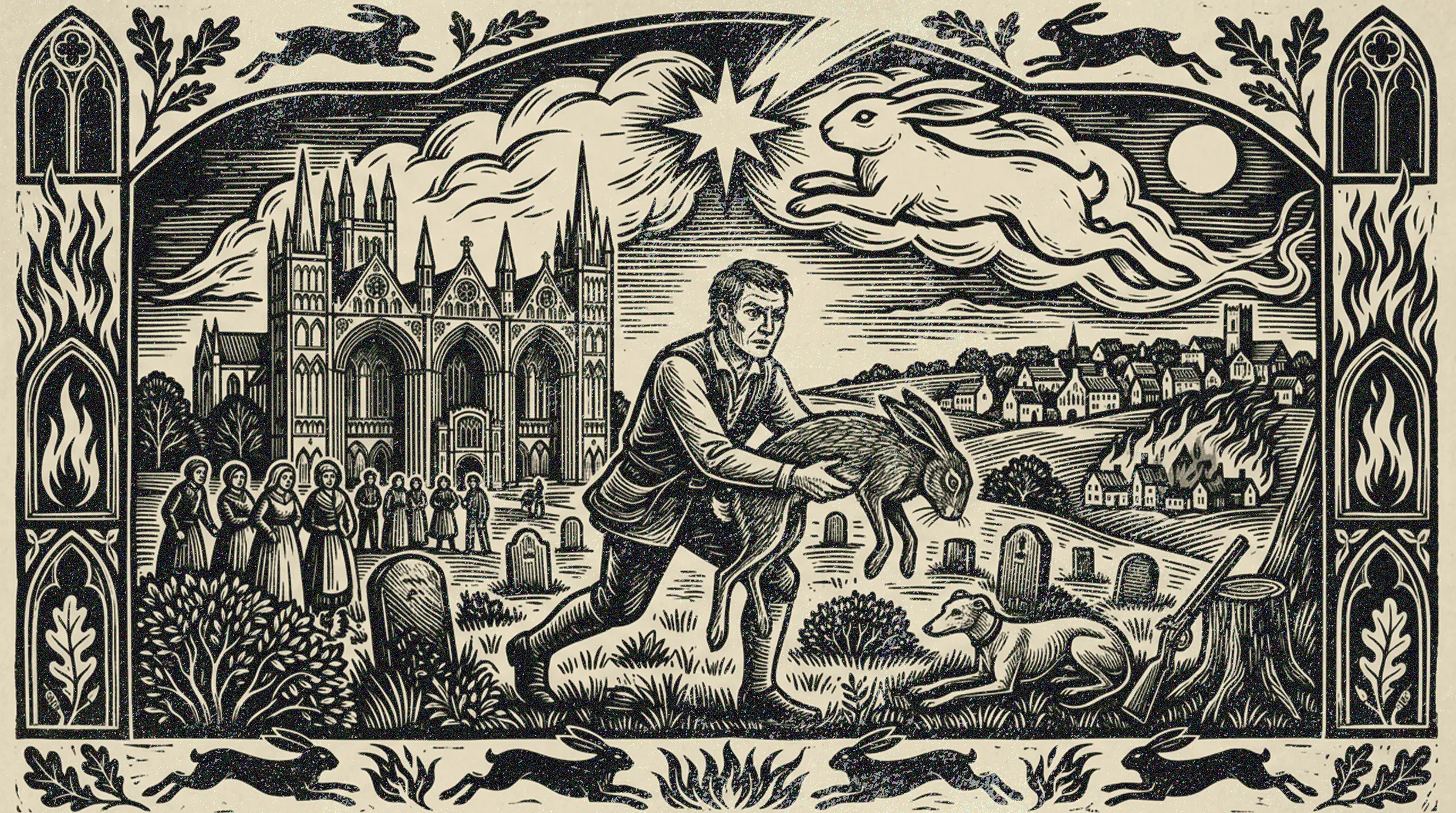
The Hare in the Close
Another ordinary animal acquired an extraordinary meaning when Peterborough connected the arrival of a hare with fire in the town.
Behind the Shag Foal
The Shag Foal is treated here as folklore rather than as evidence for an unknown animal. The strongest early local record located for this page was published in 1903 and shows that descriptions differed substantially between neighbouring communities.
-
Journal of the Northamptonshire Natural History Society and
Field Club · Volume 12 · 1903 · p.15
The key early local source. It records Shag Foal traditions at Barnack, Thorney and Ailsworth, including the spectral bear, horse-dog and flaming-eyed versions, and notes the creature's association with dusk. -
Northamptonshire Natural History Society · Journal
The Society was founded in 1876 and its historic journal preserved the important early Peterborough-area account of the Shag Foal. -
Caitlin Green · More Monstrous Landscapes of Medieval Lincolnshire
A detailed modern survey of Lincolnshire Shag Foal and Tatterfoal traditions, including rough-coated goblin horses, donkeys and related boggart lore. -
Lincolnshire Folk Tales Project · Shag Foals
Modern discussion of the wider Shag Foal tradition and its relationship with other frightening creatures of roads and wet landscapes. -
The Story of Torpel · John Clare's ghost story
Reproduces the local Clare story in which an indistinct, terrifying hairy figure followed him across the fields at night and was later discovered to be an ordinary foal. -
Discover Peterborough · John Clare
Explore Clare's life and his extraordinarily detailed relationship with the landscape, wildlife and customs around Helpston. -
Discover Peterborough · Barnack Hills & Holes
Explore the extraordinary limestone landscape beside Barnack, one of the communities where Shag Foal folklore was recorded. -
Discover Peterborough · Peterborough Folklore
Explore Peterborough's wider collection of strange creatures, customs, hauntings and historical traditions. -
Discover Peterborough · Weird Weekends
Follow Peterborough's strangest stories into the landscapes where they belong. -
Image credit
Shag Foal interpretation supplied by Discover Peterborough. Featured folklore artwork and supporting imagery from the Discover Peterborough collection.