

Founding legend · St Chad · The hunted hart
The Princes, the Hart
and the Well in the Cloister
One of Peterborough's oldest Christian legends begins not in a church, but in a hunt. A royal prince pursued a hart through the woods. The animal fled to St Chad for sanctuary, and what happened next was said to change the story of this place forever.
Christian Peterborough was said to begin with a hunt that went wrong.
Medieval monasteries loved stories that explained why they existed, why their site was sacred, and how royal power, divine favour and local memory came together in one place. Peterborough was no exception.
In the legend, Prince Wulfade, son of King Wulfhere of Mercia, was out hunting when he chased a hart into the woodland around the hermitage of St Chad. The animal, desperate to escape, reached the holy man's retreat and took refuge there.
Chad, seeing the frightened creature, hid it beneath branches and leaves. When the prince arrived, he found not the quarry he expected, but the saint who had sheltered it. The encounter led to conversation, conversion and, in later retellings, the Christian reorientation of the ruling house itself.
It is a vivid story because it works on several levels at once. The hunted animal reaches sanctuary. The prince chasing death instead meets holiness. The forest gives way to revelation.

The animal is not just scenery. It carries the whole legend.
The hart gives the story its movement, but also its meaning. It is the creature being hunted, the innocent thing seeking refuge, and the sign that leads the prince to a holy encounter.
This is a familiar structure in Christian and medieval storytelling. Wild animals are often more than themselves. They become instruments through which divine purpose reveals itself, turning an ordinary journey or pursuit into a moment of recognition.
In Peterborough's version, the hart runs towards sanctuary. That matters. The story imagines the future sacred landscape before the monastery even exists. The animal knows where safety lies before the prince does.
The hart led him to holiness.
Once the saint and the prince begin to speak, the story shifts from hunting legend to foundation legend.
The story does not end quietly.
In later versions of the legend, Wulfade and his brother Ruffin became converts under the influence of St Chad. Their father, King Wulfhere, was then said to have reacted in fury and to have killed them.
This darker turn gives the tale the shape of martyrdom. The princes become not simply noble listeners but victims whose deaths help sanctify the place and explain why their memory mattered.
Their mother, often identified in later tradition as the pious Queen Ermenild, ensured that they received honourable burial. Wulfhere, stricken with remorse, repented and was then drawn more deeply into the Christian faith.
In medieval storytelling, remorse often leads to foundation. A king who has done wrong seeks reconciliation through acts of piety, patronage and building. That pattern helps explain why this legend became attached to Peterborough Abbey's early identity.
Conversion becomes martyrdom.
Martyrdom becomes foundation.
The historical details are uncertain, and historians treat the story with caution, but as a piece of medieval memory it is powerful. It explains why this landscape was sacred before the great church rose above it.
Later Peterborough attached the story to the cloister.
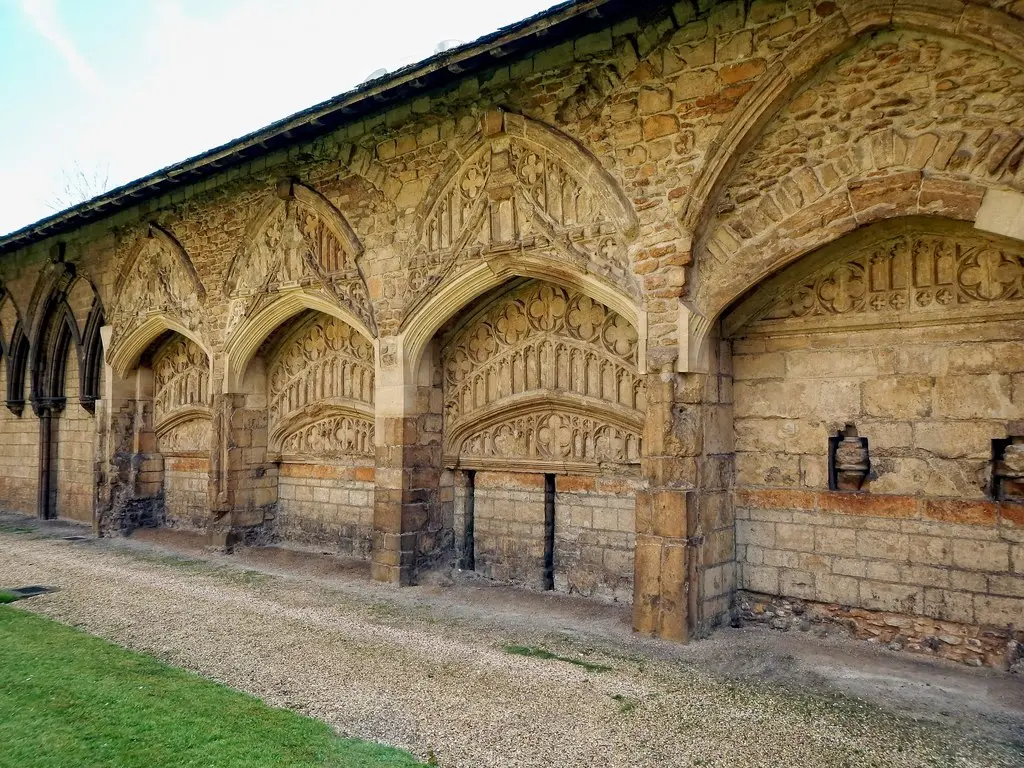
However far the legend reaches back, one of its most tangible later associations lies in the cloister at Peterborough Cathedral, where a well came to be linked with the story.
The cloister was one of the great processional and reflective spaces of the medieval monastery: enclosed, rhythmic, partly open to the elements and closely bound to daily monastic life. It was also an ideal setting for memory.
Medieval religious houses did not preserve stories only in books. They anchored them in buildings, shrines, windows, carvings, wells and named locations. Place itself became a way of remembering.
That is what makes the well in the cloister so interesting. Whether or not the legend began there, Peterborough later chose to imagine the story in that setting.
Water, memory and a sacred claim.
The well later shown in the cloister became attached to the legend in more than one way. One tradition held that Prince Wulfade's heart was placed there by St Chad. Another claimed that Chad had baptised the prince in the well.
Both versions do similar work. They connect the story not just to a general landscape but to a specific place within the monastic precinct. That is an important distinction. A legend tied to a named feature becomes easier to show, retell and inhabit.
Wells held particular imaginative power in medieval religious culture. They could be practical features, but they could also be devotional focal points, associated with healing, blessing, memory and story. A well in a cloister, especially one linked to a saint, invited exactly that kind of interpretation.
The cloister gave it a home.
The precise historical development of that association remains uncertain, and there are complications about whether later memory may have become entangled with other holy wells in the precincts. Yet that uncertainty is part of the fascination. The site shows how monasteries continuously remade their own past.
Even when a story shifts in detail, the instinct behind it is recognisable: to root sacred history in visible stone and place.
The story matters even when the history is uncertain.
Modern historians do not treat the princes' story as a simple factual record of Peterborough's beginnings. Parts of it are almost certainly late, shaped by monastic tradition and the desire to provide the abbey with a dramatic sacred ancestry.
There are good reasons for caution. The association with St Chad is difficult to prove, and some elements of the tale are more securely connected with other places in Mercian tradition. Peterborough's version appears to be part history, part local adaptation and part imaginative claim.
But that does not make it unimportant. Folklore and legend are valuable not simply because they tell us what happened, but because they show what later communities wanted to believe about themselves.
It tells us how Peterborough wanted its beginnings to be remembered.
In this case, the message is clear. Peterborough wanted its sacred origin to be ancient, royal, dramatic and blessed by saintly presence. That is an impressive claim for any abbey, and one well worth telling in the cloister.
It gives Peterborough an origin that is both wild and sacred.
Some local legends survive because they are strange. Others survive because they are useful. This one survives because it is both.
It begins in woodland and chase, so it feels older than stone. It includes saints and princes, so it carries authority. It ends in memory attached to a real place inside the Cathedral precincts, so it can still be imagined on the ground.
That combination gives the tale unusual staying power. Peterborough is not simply the place where a monastery stood. In this story, it is the place where a hunted animal reached sanctuary and where sacred destiny revealed itself to royalty.
The well in the cloister, whether taken literally or symbolically, completes the movement from open countryside to enclosed devotion. The landscape becomes a monastery. The chase becomes a founding memory.
A prince arrives in pursuit.
Peterborough's sacred story begins.
This legend belongs to a much wider Peterborough story.
Continue into the Cathedral's long history, explore other strange tales rooted in the precincts, and discover how folklore, memory and place keep overlapping here.
Peterborough Cathedral
Follow the history of the sacred site from Anglo-Saxon Medeshamstede and Burgh St Peter to the great Cathedral seen today.
Explore 1,350 years → 02 · ANOTHER CATHEDRAL LEGENDSimon Magus at the West Door
Another Peterborough Cathedral mystery, where a carved, falling figure may represent Simon Magus beneath the church of St Peter.
Enter the story → 03 · LOST CATHEDRAL IMAGERYThe Paschal Pickerel
The cloister once carried painted glass that remembered Peterborough in unexpectedly local terms, including a fish at the Last Supper.
Find the lost fish → 04 · AN OMEN IN THE CLOSEThe Hare in the Minster Close
Another story rooted in the Cathedral precincts, where the appearance of a hare was once thought to foretell fire in Peterborough.
Enter the story →More Peterborough Folklore
Strange carvings, sacred objects, warnings and legends gathered around Peterborough's ancient religious heart.
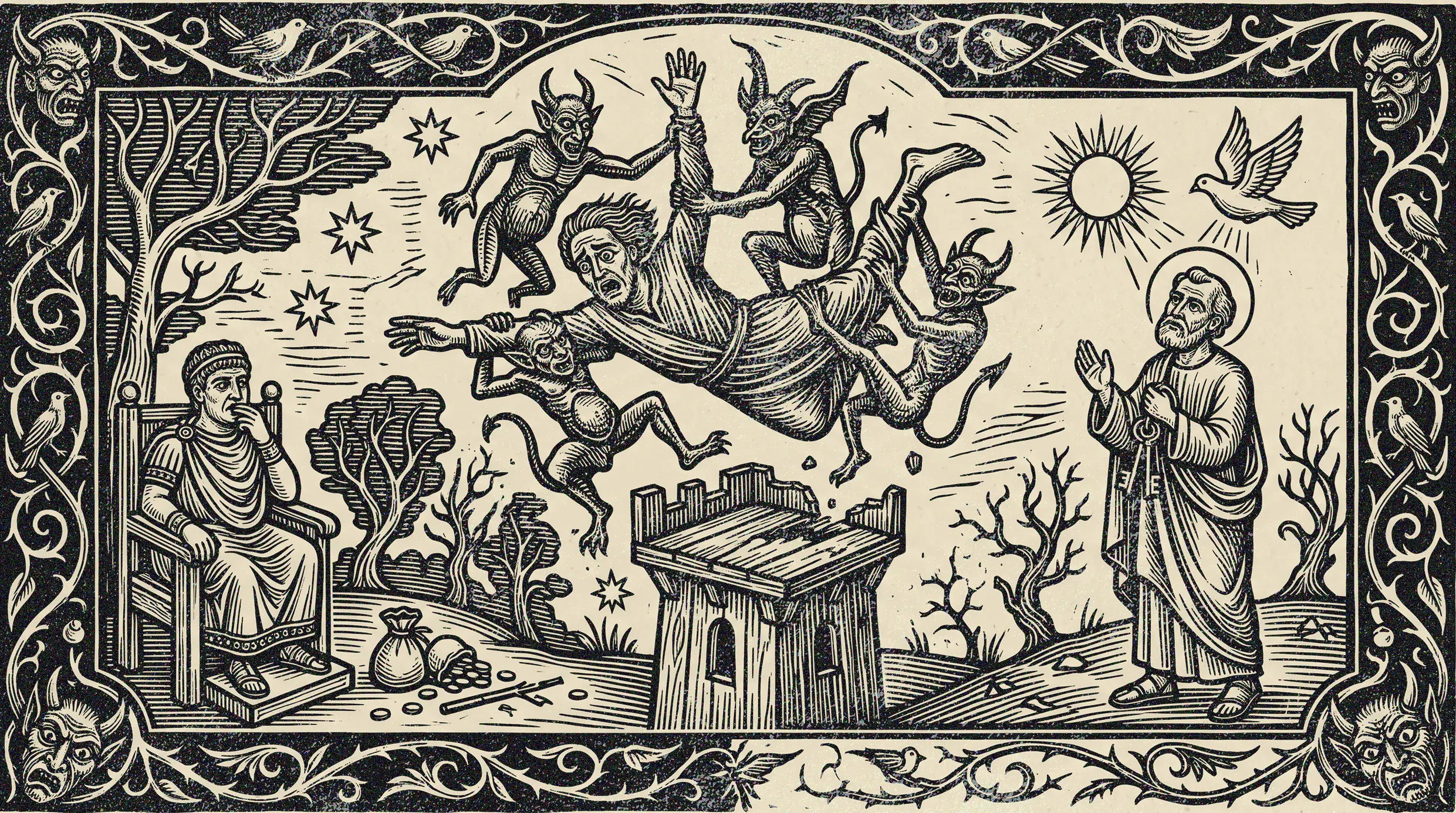
Simon Magus
A strange figure falls beneath the West Front, perhaps linking Peterborough Cathedral directly to St Peter's biblical rival.
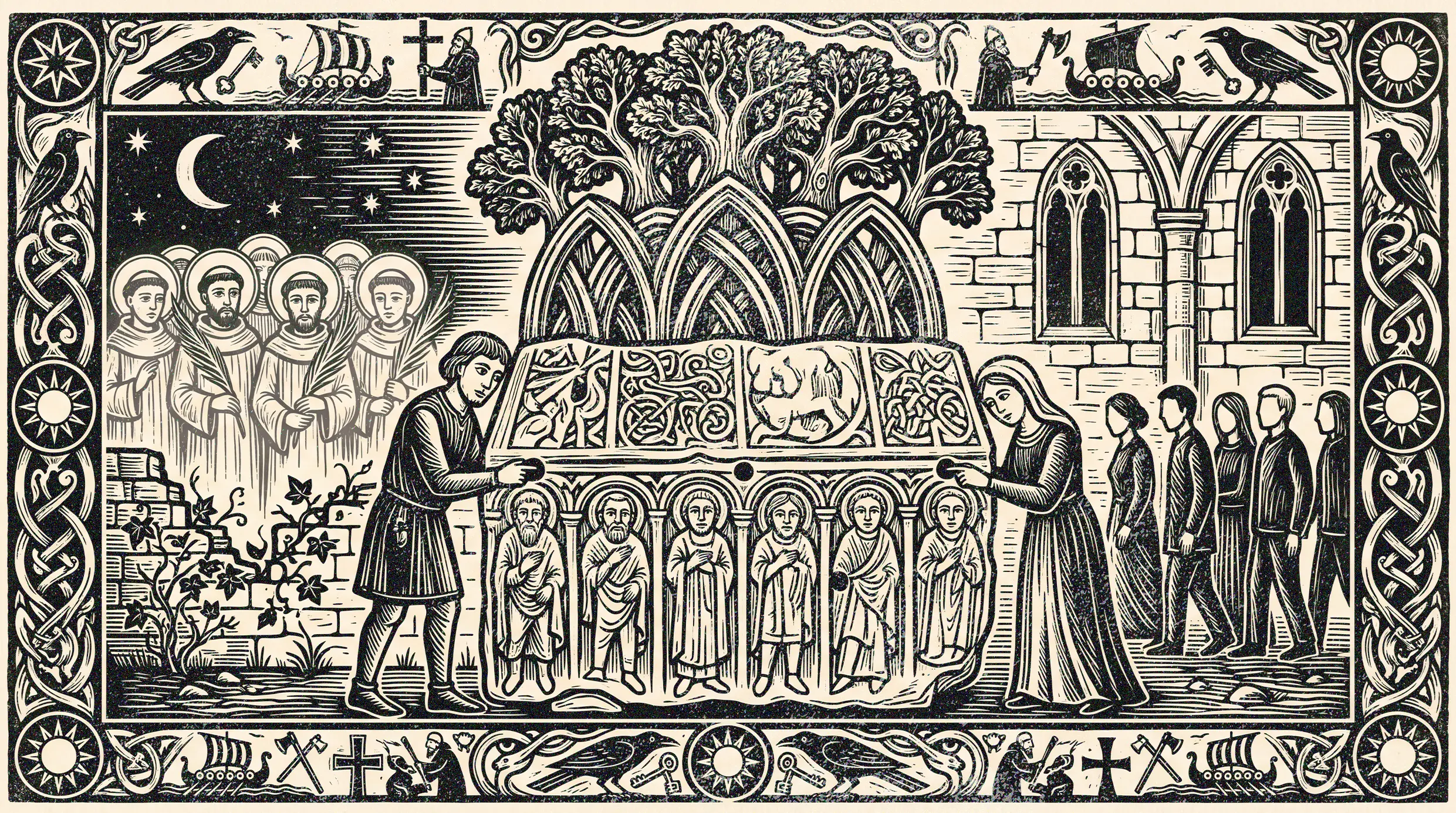
The Hedda Stone
One of Peterborough's oldest carved survivals carries its own folklore, questions and physical traces.
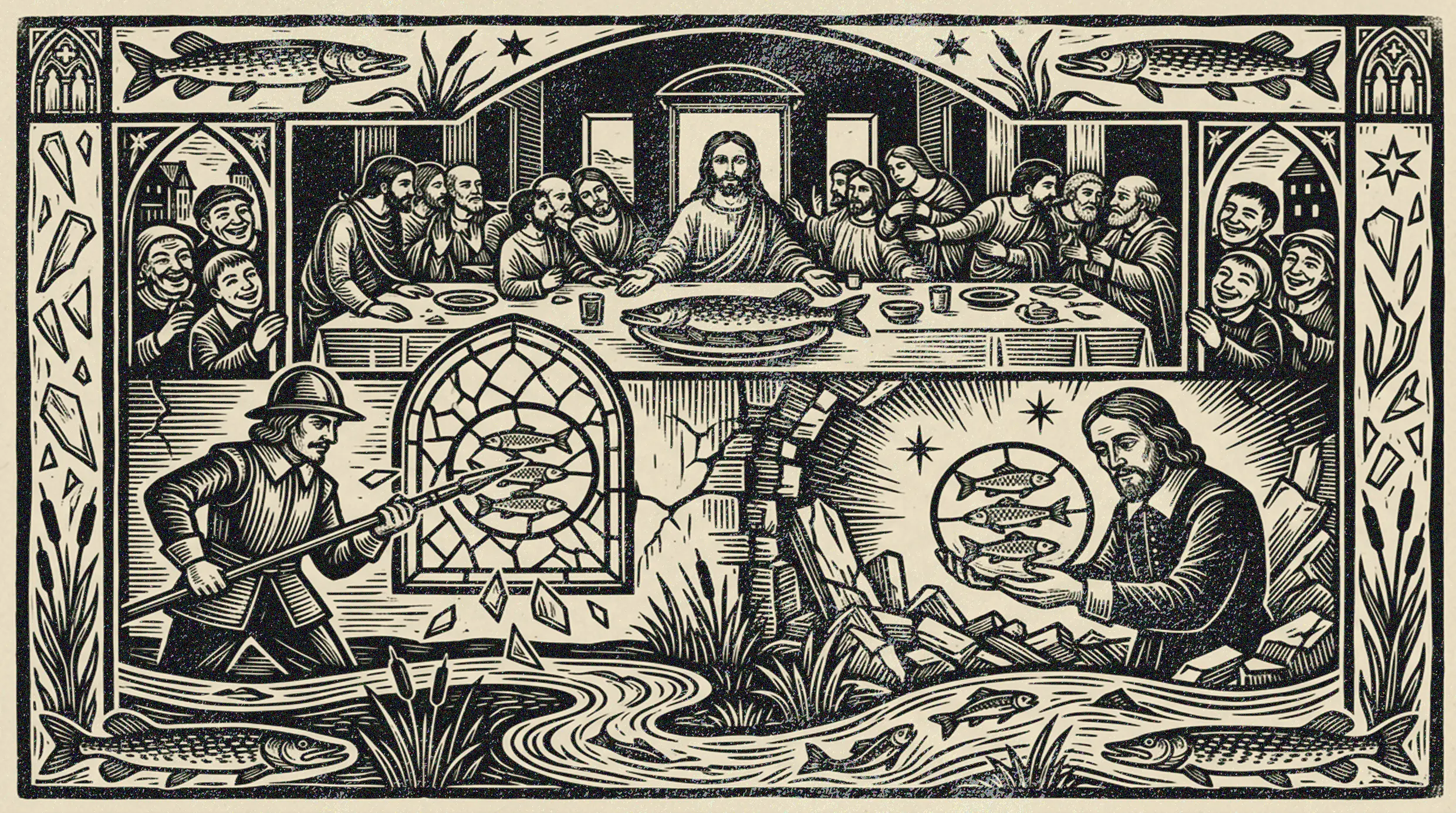
The Paschal Pickerel
One of Peterborough's most delightful lost details: a fenland fish remembered in the Cathedral's medieval glass.
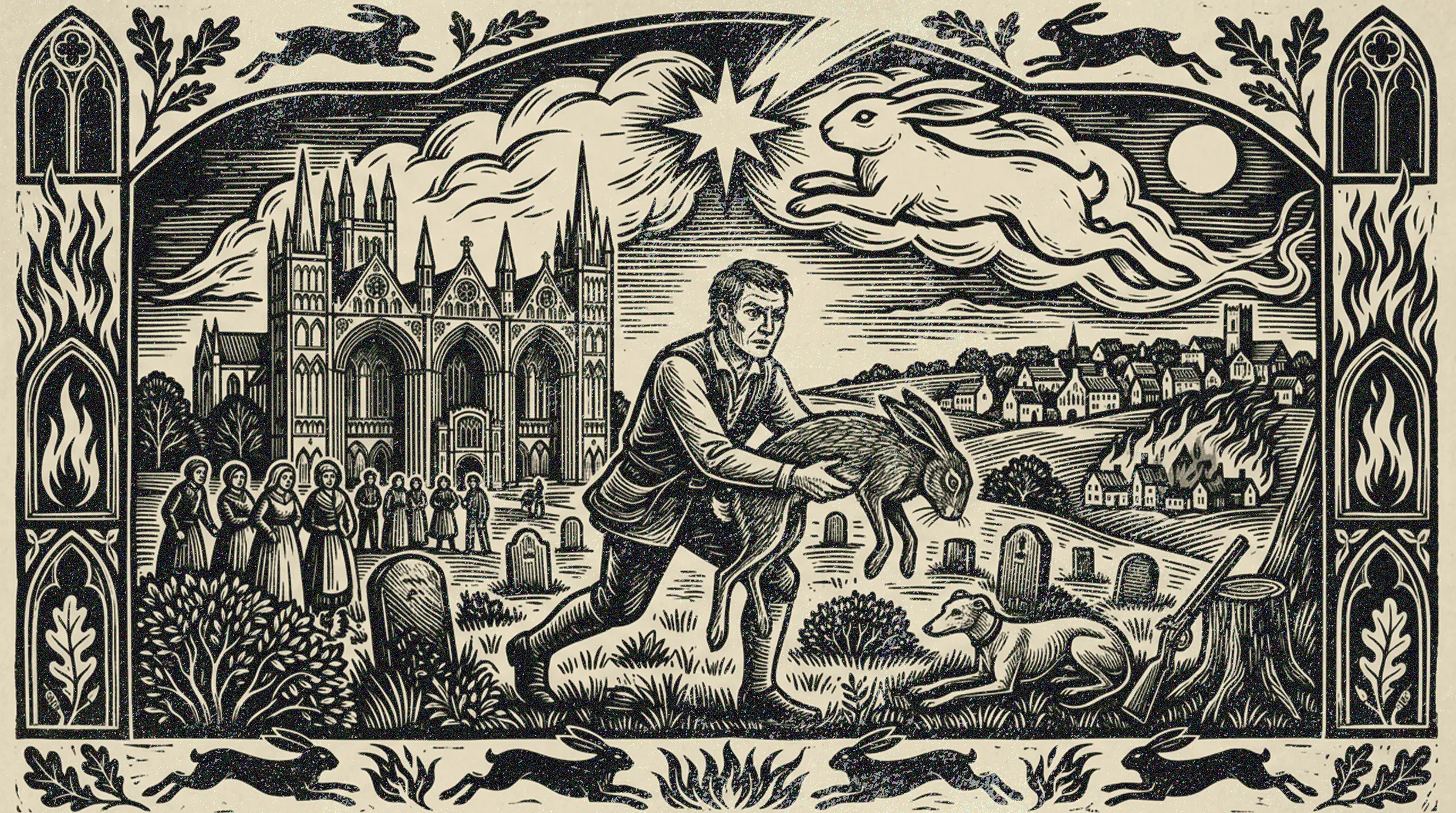
The Hare in the Close
A hare appearing in the Cathedral precincts was once said to be a warning that fire would soon follow.
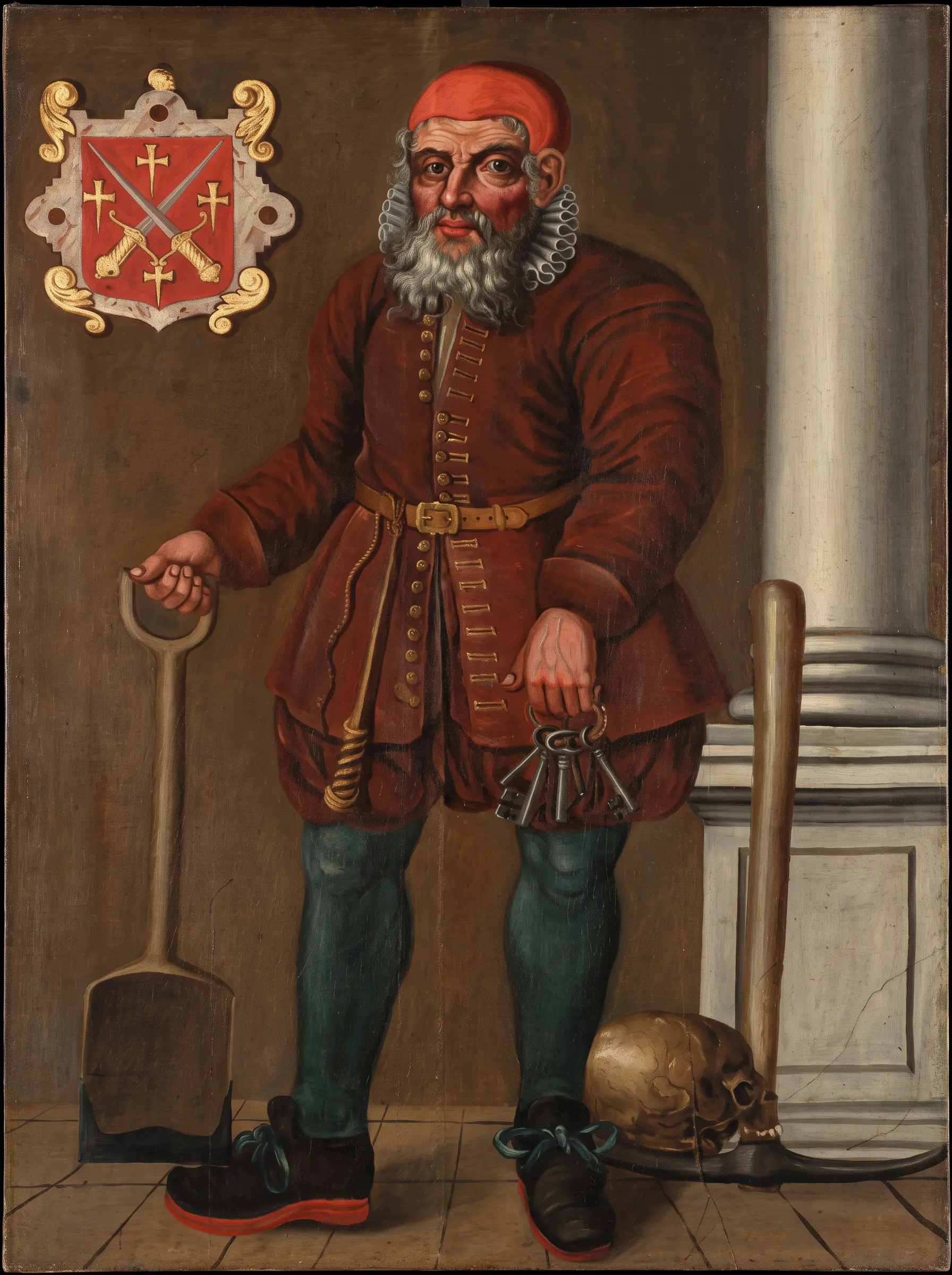
Old Scarlett
Peterborough's most famous sexton became part of the Cathedral's own folklore through memory, burial and legend.
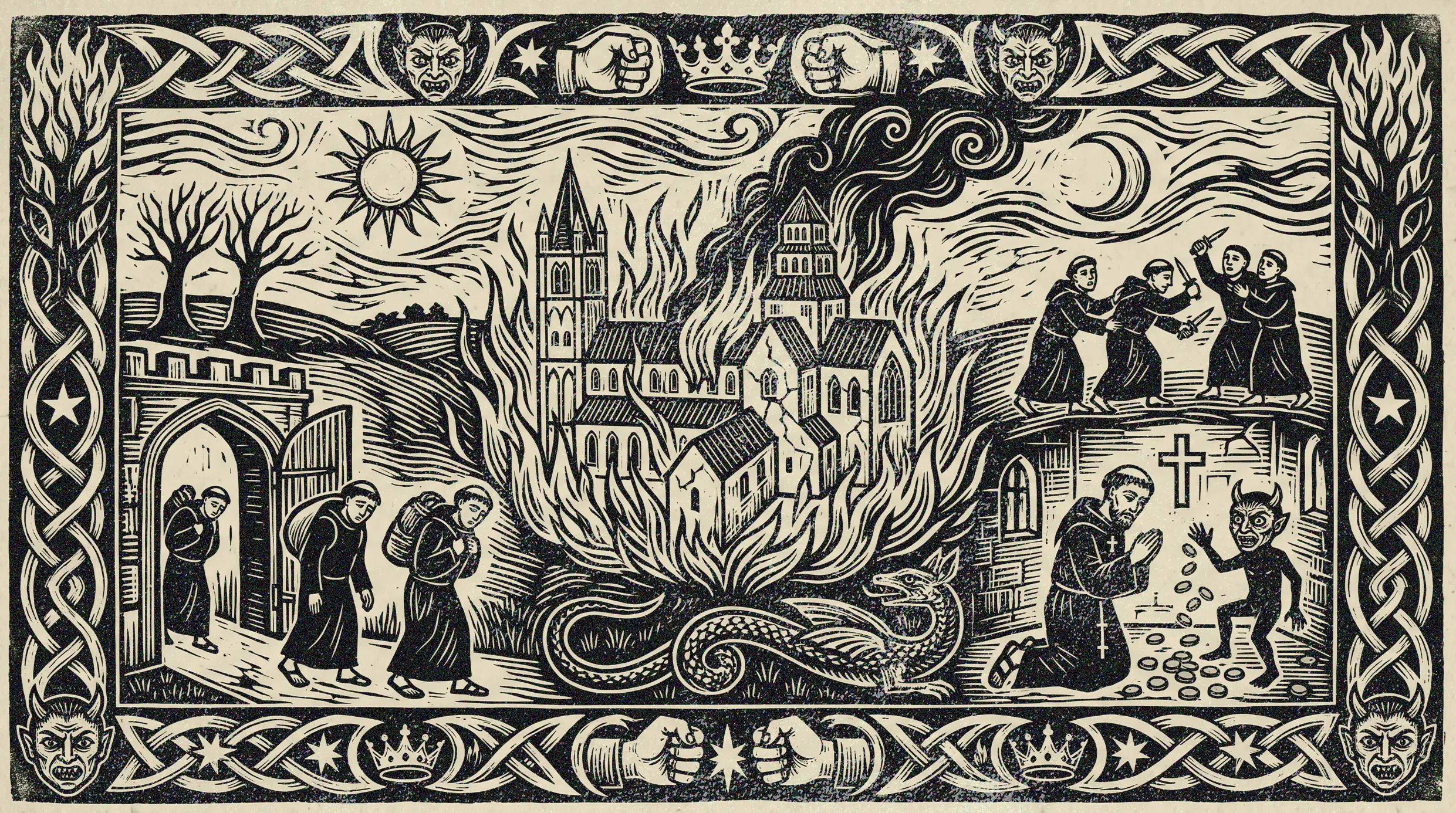
Come, Devil
A destructive fire, a rash remark and an enduring story about catastrophe at Peterborough Abbey.
Behind the legend
This page treats the princes, the hart and the cloister well as an important Peterborough legend rather than a straightforward factual account. It reflects the way monastic tradition, local memory and sacred place were woven together.
-
Simon Gunton and later Peterborough antiquarian tradition
Important for preserving Peterborough's monastic memory, including traditions attached to the Cathedral precincts and cloister. -
Peterborough Cathedral historical tradition
The story of Wulfade, Ruffin, St Chad and King Wulfhere belongs to the wider legendary landscape surrounding the origins of the monastery at Medeshamstede. -
Modern scholarship on the legend
Historians generally treat the tale with caution, especially its association with St Chad and the exact Peterborough setting, but recognise its importance as a piece of monastic memory. -
Image credits
Cloister image: Discover Peterborough. Hart image supplied for use on this page. -
Discover Peterborough · Peterborough Folklore
Explore Peterborough's wider collection of myths, legends, beliefs and ghost stories. -
Discover Peterborough · Weird Weekends
Follow Peterborough's stranger stories into the places where they still make the most sense.