
John Clare · Winter Misrule · Rural Custom
The Plough
Witches
On the first Monday after Epiphany, ordinary farm workers became something else. Faces were disguised, clothes were exchanged, a plough was dragged from door to door, money was demanded and anybody who refused risked discovering exactly what a plough could do to a front path.
The agricultural year began with a day of deliberate disorder.
Plough Monday was the first Monday after Epiphany, traditionally the moment when the long Christmas holiday ended and agricultural labour began again. In eastern England, however, the first plough of the year did not always go quietly back into the fields.
Groups of farm workers hauled a plough through villages and towns, dressed in conspicuous or deliberately strange clothes, collecting money, food and drink. Some danced, some performed plays, some adopted comic characters, and some threatened householders who declined to contribute.
Different places had different names for the performers. Across eastern England they could be Plough Bullocks, Plough Stots, Plough Jags, Plough Jacks or Plough Boys. In Cambridgeshire and Huntingdonshire one particularly memorable name became established: Plough Witches.
Peterborough sat almost perfectly within this cultural borderland, drawing customs from Northamptonshire, Huntingdonshire, Cambridgeshire and Lincolnshire. The Plough Witches belonged to that shared world.
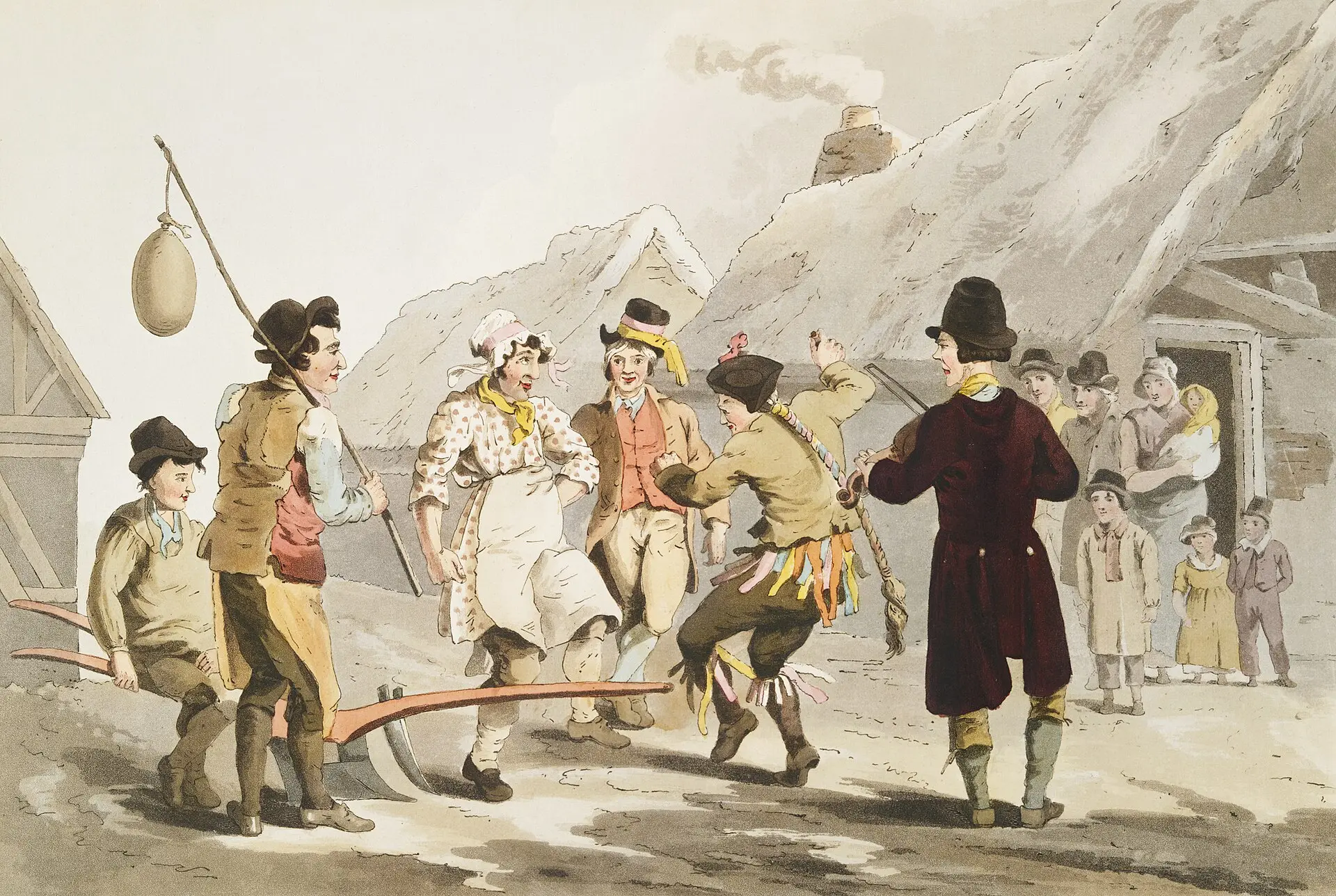
The tool of work became the centre of the performance.
George Walker's famous early nineteenth-century illustration comes from Yorkshire, but the scene immediately explains the basic structure of the custom found across much of eastern England.
Instead of being used for work, the plough is being hauled ceremonially through the community. The people around it are costumed, ribbons and ornaments turn agricultural labour into spectacle, and the ordinary social order has been loosened for the day.
Medieval Plough Monday had once contained a more explicitly religious element. Money could be collected for the Plough Light, a candle maintained in the parish church for the welfare of farm workers, and ploughs could receive a church blessing.
After the Reformation, many of those religious practices disappeared. The house-visiting, collecting, dressing up and ritual mischief proved rather harder to eliminate.
These were not witches in the magical sense.
The name is wonderfully suggestive, but Peterborough's Plough Witches were not people accused of sorcery and the custom was not a witchcraft ritual.
“Witches” was one of several regional names applied to Plough Monday performers. The English Folk Dance and Song Society particularly associates the term with Cambridgeshire and Huntingdonshire, while neighbouring counties used names such as Plough Bullocks, Jags, Jacks or Stots.
Costume was deliberately disruptive. Historical accounts from the wider region describe soot-blackened or disguised faces, ribbons, unusual hats, borrowed clothing and men taking female characters such as Bessy, Betty or Molly.
For one winter day, the ploughmen stopped looking like ploughmen.
Much of Plough Monday worked through inversion. Working men became performers. Men could appear in women's clothing. A tool associated with disciplined agricultural labour became an instrument of noise, comedy and threat.
Modern revivals do not have to reproduce every historical element of the custom. The soot-blackened faces and gendered disguises belong to the historical record and should be understood in that context rather than assumed to be necessary parts of contemporary performance.
Clare did more than write about fields. He recorded the life around them.
John Clare grew up at Helpston inside the agricultural world that produced customs such as Plough Monday. That makes his evidence especially valuable.
In 1825 Clare set down a calendar of local customs that followed the year through St Mark's Eve, Whitsun, May Day, mumming, harvest and winter. Among them he recorded the Plough Monday “plough bullocks”.
Clare's descriptions capture something easily lost when old customs are reduced to quaint costumes. These events belonged to the social and economic life of working communities. Farm labourers moved through the village together, collected contributions and temporarily claimed licence to behave in ways that would have been unacceptable on an ordinary working day.
Other material associated with Clare describes the plough bullocks and witches ending the day together, using the money they had collected for a communal supper of cake and ale. Noise and threat eventually returned to fellowship.
Clare's interest in these traditions runs through much of his writing. He recorded the beliefs, games, seasonal rituals and disappearing landmarks of the countryside with the same intensity he brought to birds, flowers and fields.
A procession, a collection and a little carefully licensed chaos.
There was never one universal Plough Monday script, but the eastern English versions shared a recognisable structure.
Farm workers gathered after the Christmas break and dressed themselves for the occasion. A plough was dragged through the village or town. Houses, inns and businesses were visited and contributions were requested.
Music, dancing, comic characters and fragments of mumming plays might accompany the procession. In some areas a man dressed as a woman carried the collecting box. Elsewhere the performers included fools, hobby horses, musicians or characters from a traditional play.
The atmosphere mattered as much as the exact cast. These were workers asserting a temporary right to be noisy, intrusive and difficult to ignore.
Refuse them and the plough might become less decorative.
That threat was not merely folklore invented afterwards. Nineteenth-century collectors repeatedly recorded the custom of ploughing up ground outside houses whose occupants refused to contribute.
In town, you did not need a garden to regret saying no.
Charles Dack preserved one of the best descriptions of the Peterborough version in his account of old local customs.
In the countryside, he wrote, a refusal could result in the plough being driven across the path in front of the house, tearing up the ground.
Peterborough's more urban environment required an adaptation. Where a house had a metal boot scraper outside, the point of the ploughshare could be pushed underneath it. The plough boys then pulled.
The scraper came away.
The consequences of refusing could be surprisingly agricultural.
Dack explicitly remembered the performers as “Plough Witches and Mumpers”. He also remembered a scrap of the doggerel they recited, although even by his time much of the older spoken material had already disappeared.
It is tempting to call Plough Monday a “lawless day”, but that is slightly misleading. The custom worked because communities recognised a temporary licence for behaviour that would normally have been unacceptable. It was misrule with rules of its own.
Dack watched the custom disappearing.
By the time Charles Dack published Weather and Folk Lore of Peterborough and District in 1911, Plough Monday had moved from familiar community practice towards historical curiosity.
Dack wrote that the custom had almost passed away. In Peterborough that year he had seen only two groups of men keeping it.
He suspected that the changing commercial city was part of the reason. The shops and businesses of modern Peterborough were less inclined to encourage the collections than older tradespeople had been.
Dack recorded its disappearance.
Industrialisation, mechanised agriculture, changing employment patterns, policing and changing attitudes towards begging and public disorder all weakened customs of this kind across England.
Yet the ritual did not vanish without leaving relatives.
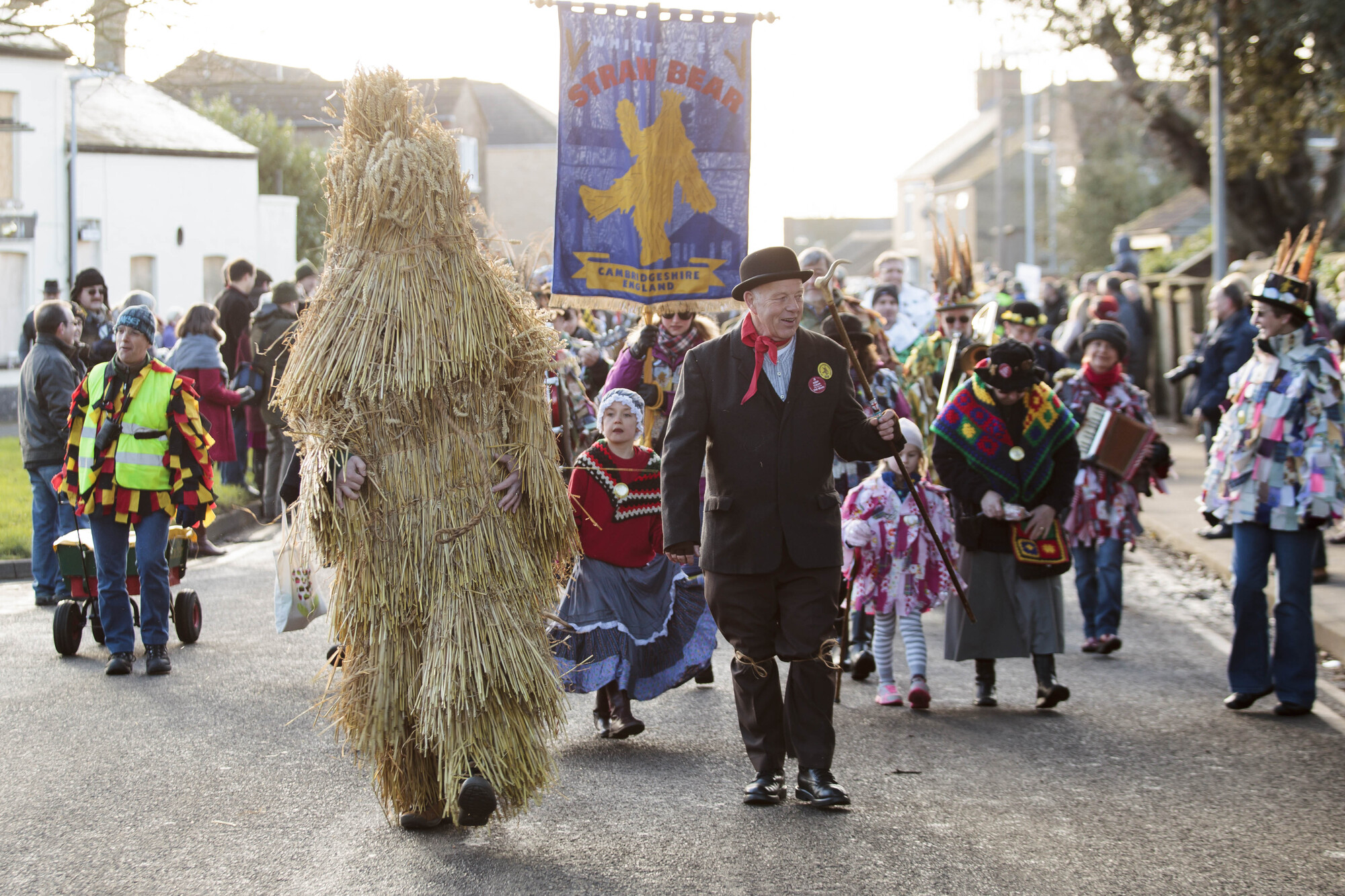
Just beyond Peterborough, January still belongs to the plough.
The most spectacular modern echo of this winter world can be found at Whittlesey, where the Straw Bear Festival brings thousands of people into the streets each January.
The historic Whittlesey custom was slightly different from Peterborough's Plough Witches. On the Tuesday after Plough Monday, a man or boy was dressed from head to foot in straw and led from house to house to dance in return for money, food, drink or tobacco.
The practice disappeared in the early twentieth century. Local enthusiasts revived the Straw Bear in 1980, and the revival developed into a major festival of folk dance, music, performance and local tradition.
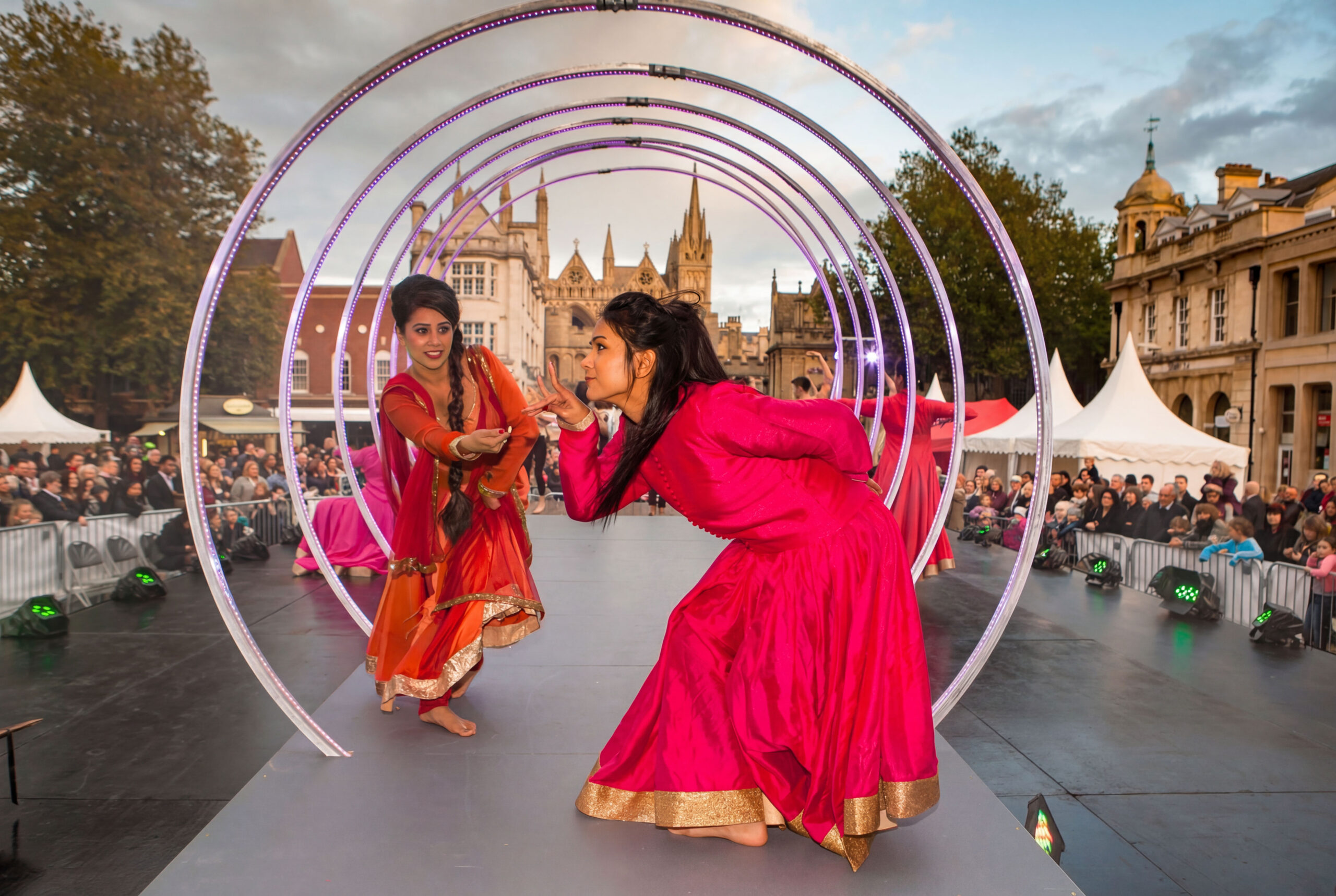
Today the Bear is accompanied through Whittlesey by dancers and musicians, including traditions such as Molly dancing that fit naturally within the wider East Anglian world of winter disguise and Plough Monday misrule.
The Straw Bear should not be described as an uninterrupted continuation of Peterborough's exact Plough Witches custom. It is something more interesting: a neighbouring tradition from the same Plough Monday season, deliberately revived and transformed into a thriving modern celebration.
A revived custom does not have to be an archaeological reconstruction.
Plough Monday is a useful reminder that folk traditions are not fixed objects handed down unchanged from the distant past.
Even historically, practices differed from village to village. One place had a Bessy, another had a fool. One dragged an actual plough, another performed a play. Some collected money politely, while others made refusal considerably less attractive.
Peterborough's Plough Witches belonged to this shifting family of traditions rather than to a single ancient ritual with one definitive set of rules.
Modern festivals continue that process. They select, adapt and reinterpret older customs for contemporary communities. Whittlesey's revival survives precisely because people decided the tradition was worth making meaningful again.
It stays alive by being used.
They reveal a Peterborough that organised the year very differently.
Today January is divided by school terms, work calendars and sales. For the agricultural communities around old Peterborough, the year was structured by weather, saints' days, farming tasks and communal customs.
Plough Monday stood at an important boundary. Christmas was over. Work in the fields was returning. Before normal labour resumed, the people who would perform it claimed one last day in which the hierarchy of everyday life could be loosened.
That helps explain the costumes, the noise and the demands for money. Plough Monday was funny, but it was also social. Working people occupied the village, visited the better-off, demanded contributions and turned refusal into a public act.
John Clare understood this world because he belonged to it. Charles Dack recognised its importance because he saw it disappearing. The Straw Bear Festival shows what can happen when a community chooses to bring part of that seasonal imagination back.
On Plough Monday, almost nothing went straight.
Plough Monday was only one custom in Clare's Peterborough landscape.
Follow the poet into Helpston's wells, lights and lost traditions, then discover the real places in which he lived and wrote.
John Clare
Discover the life of the Helpston labourer, naturalist and poet who preserved an extraordinary record of the landscape and customs around Peterborough.
Meet John Clare → 02 · HELPSTONJohn Clare Cottage
Visit Clare's birthplace in Helpston and explore the village landscape from which so much of his poetry and folklore emerged.
Plan your visit → 03 · LIGHTS IN THE DARKThe Will-o'-the-Wisps of Helpston
Clare struggled to believe in ghosts, but the strange lights he encountered around the wet landscape of Helpston were a different matter.
Follow the lights → 04 · ANOTHER LOST CUSTOMSugar Cupping at East Well
Clare also recorded the Helpston custom of drinking sugar and spring water at East Well at Whitsun for luck and wishing.
Visit East Well →More Peterborough Folklore
Seasonal customs, strange creatures and beliefs preserved in the villages and landscapes around Peterborough.
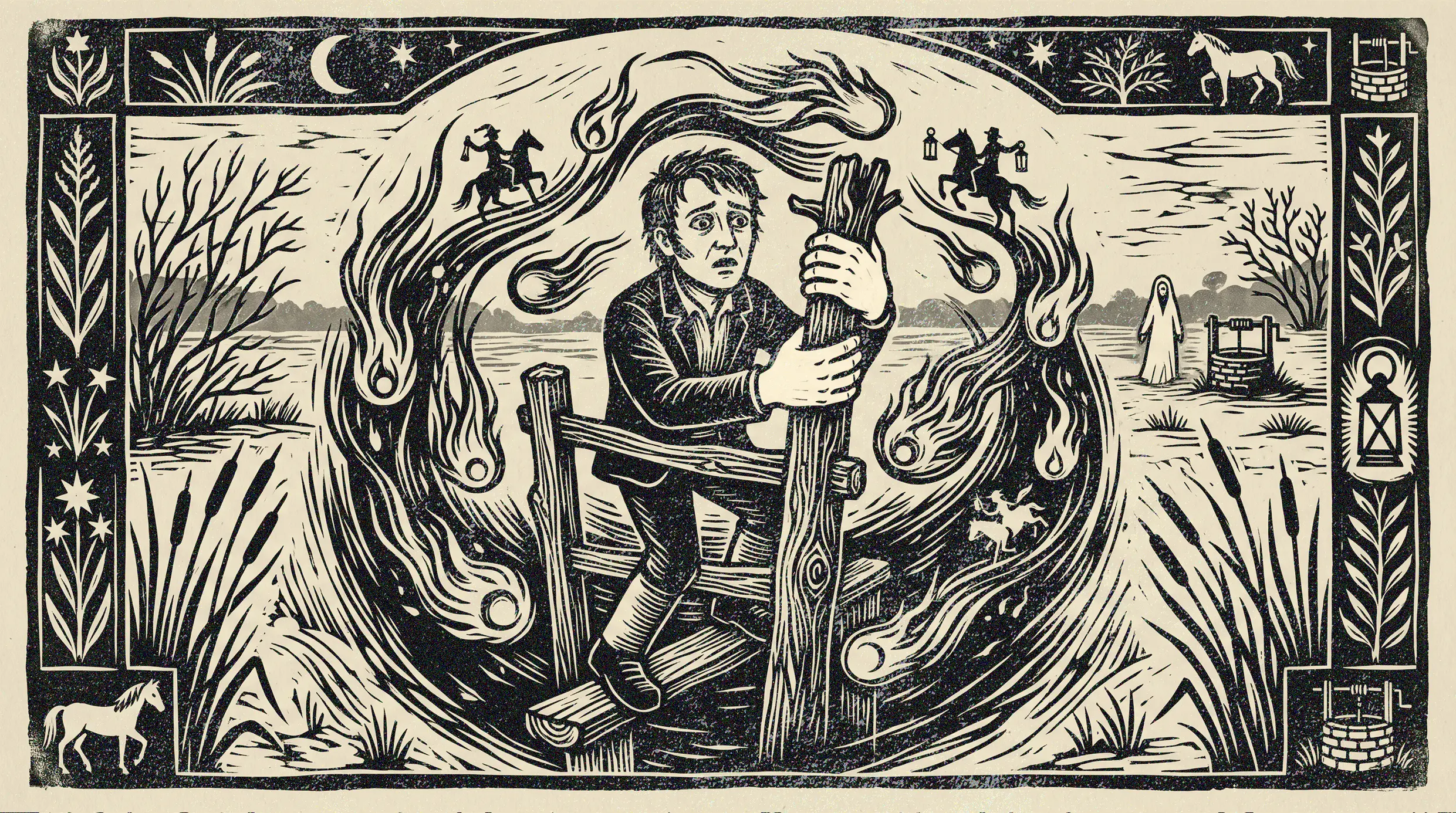
The Will-o'-the-Wisps
Strange lights moved across the wet ground around Helpston, and John Clare remembered exactly how frightening they could be.
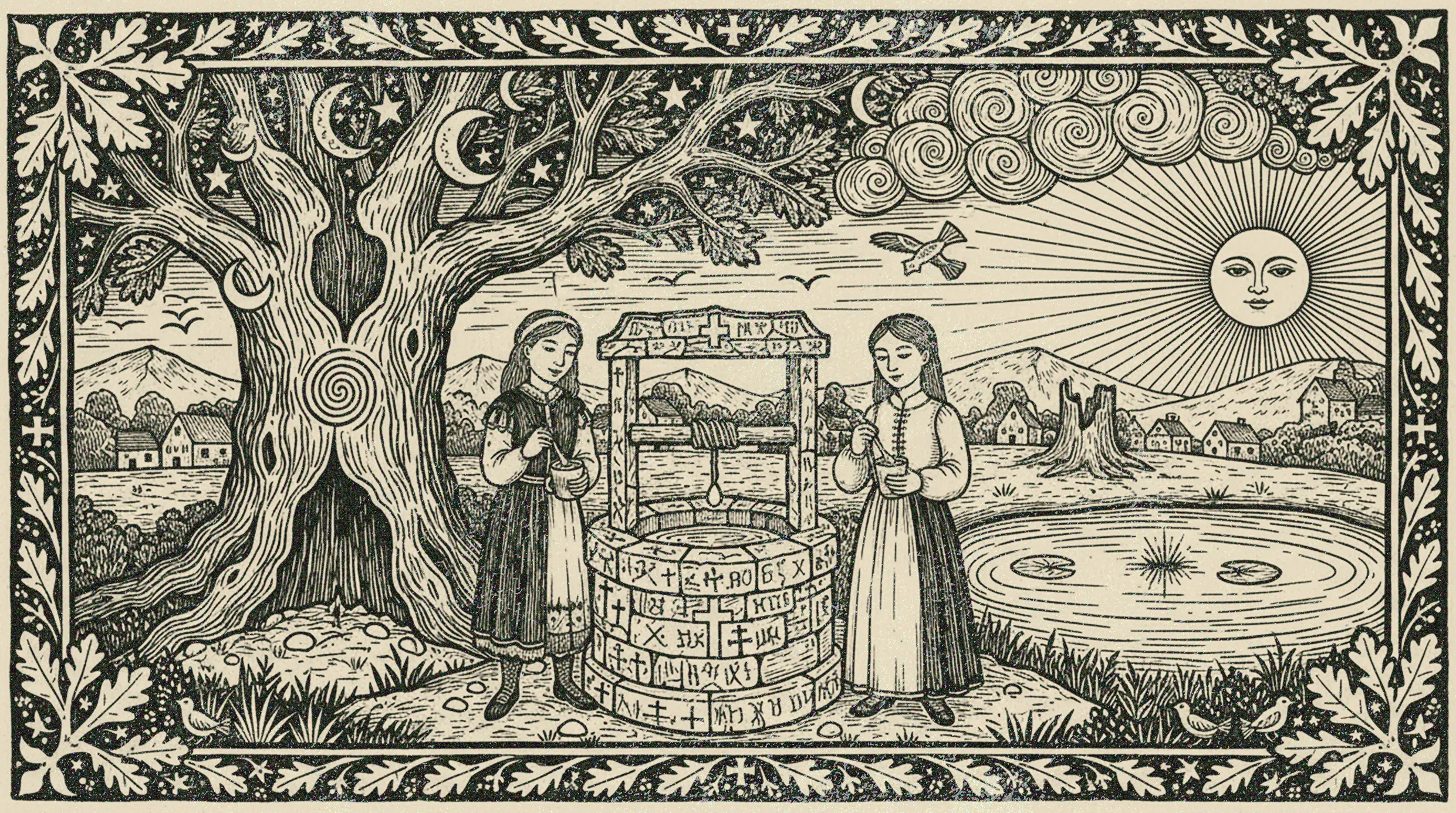
Sugar Cupping
At Whitsun, Helpston's young people brought sugar to East Well and mixed it with spring water as part of a custom Clare remembered.
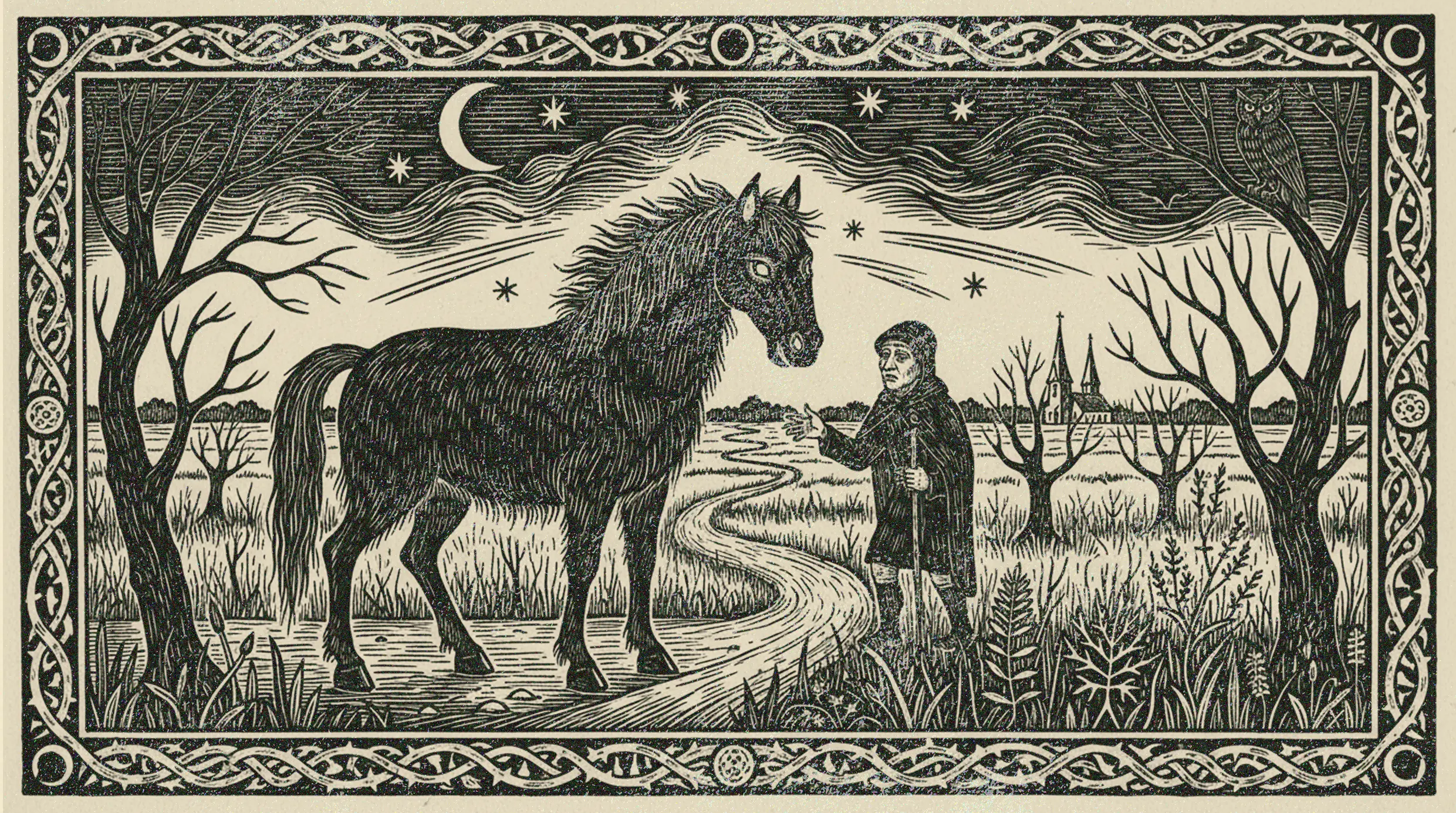
The Shag Foal
A large, black, shaggy creature was said to follow people along the lanes between Helpston and Barnack after dark.
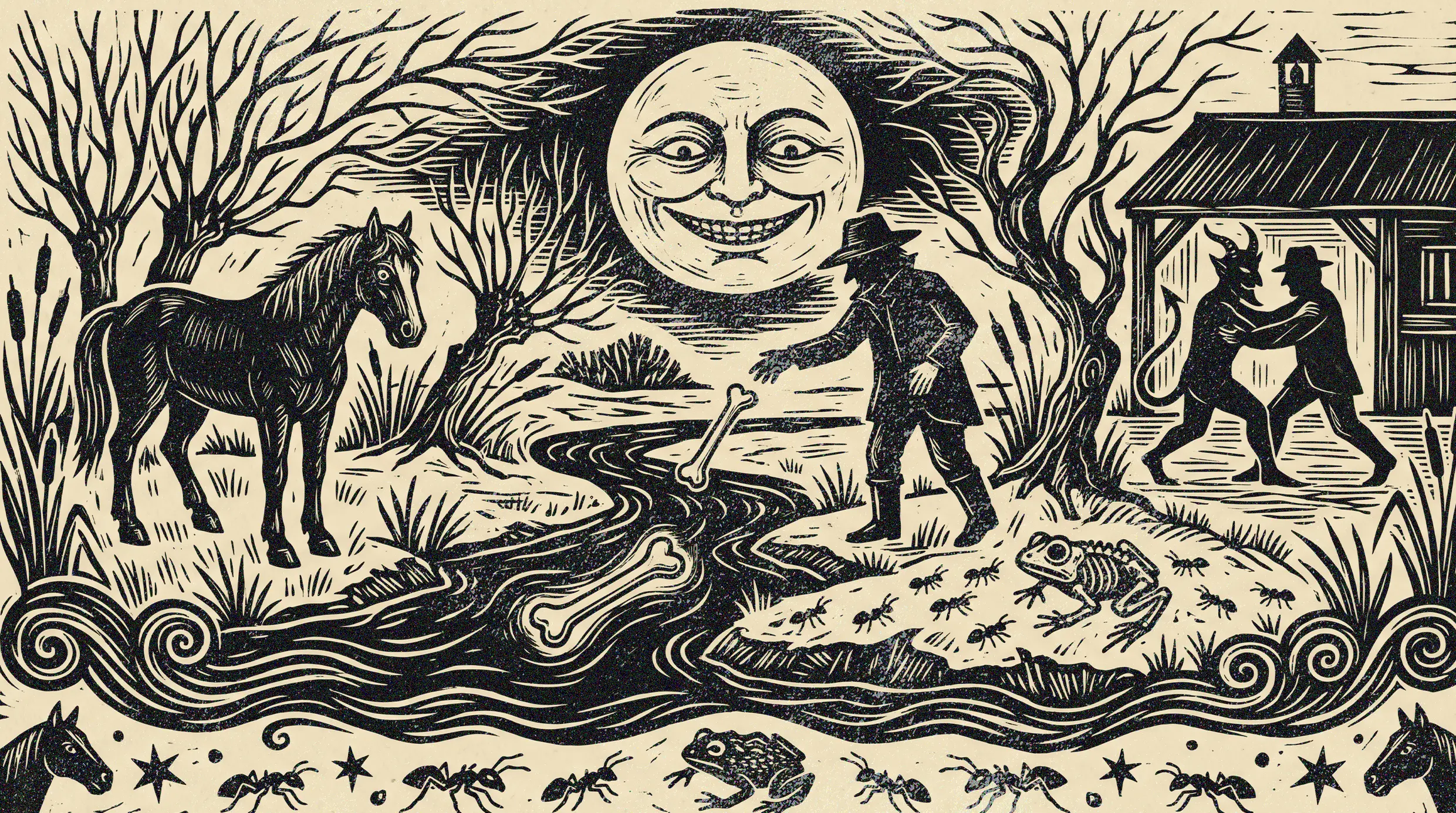
The Toadmen
Men who worked with horses were said to gain extraordinary power through one particular bone taken from a toad.
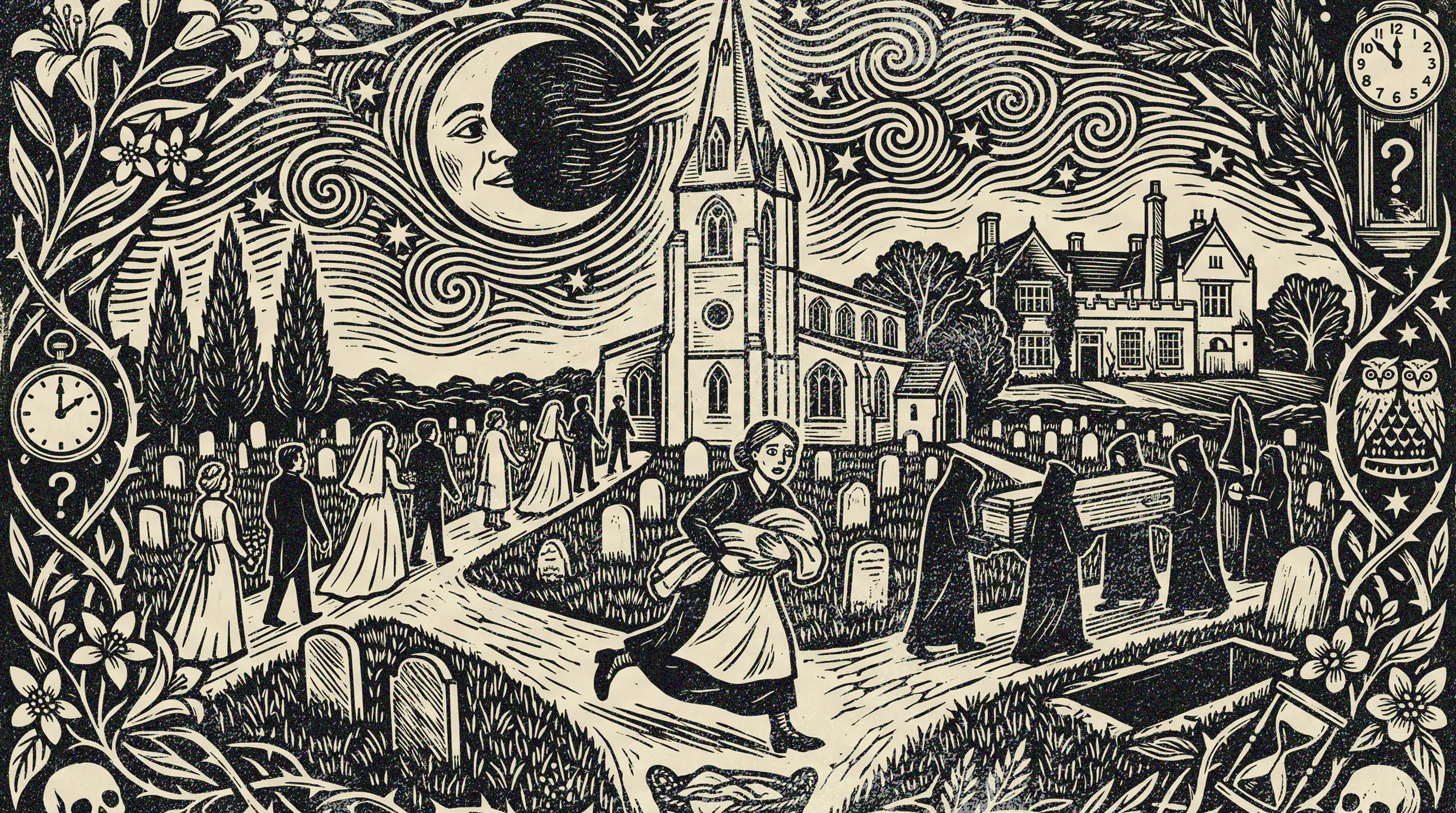
St Mark's Eve
Another night in the old local calendar when the ordinary rules were suspended and the future might briefly become visible.
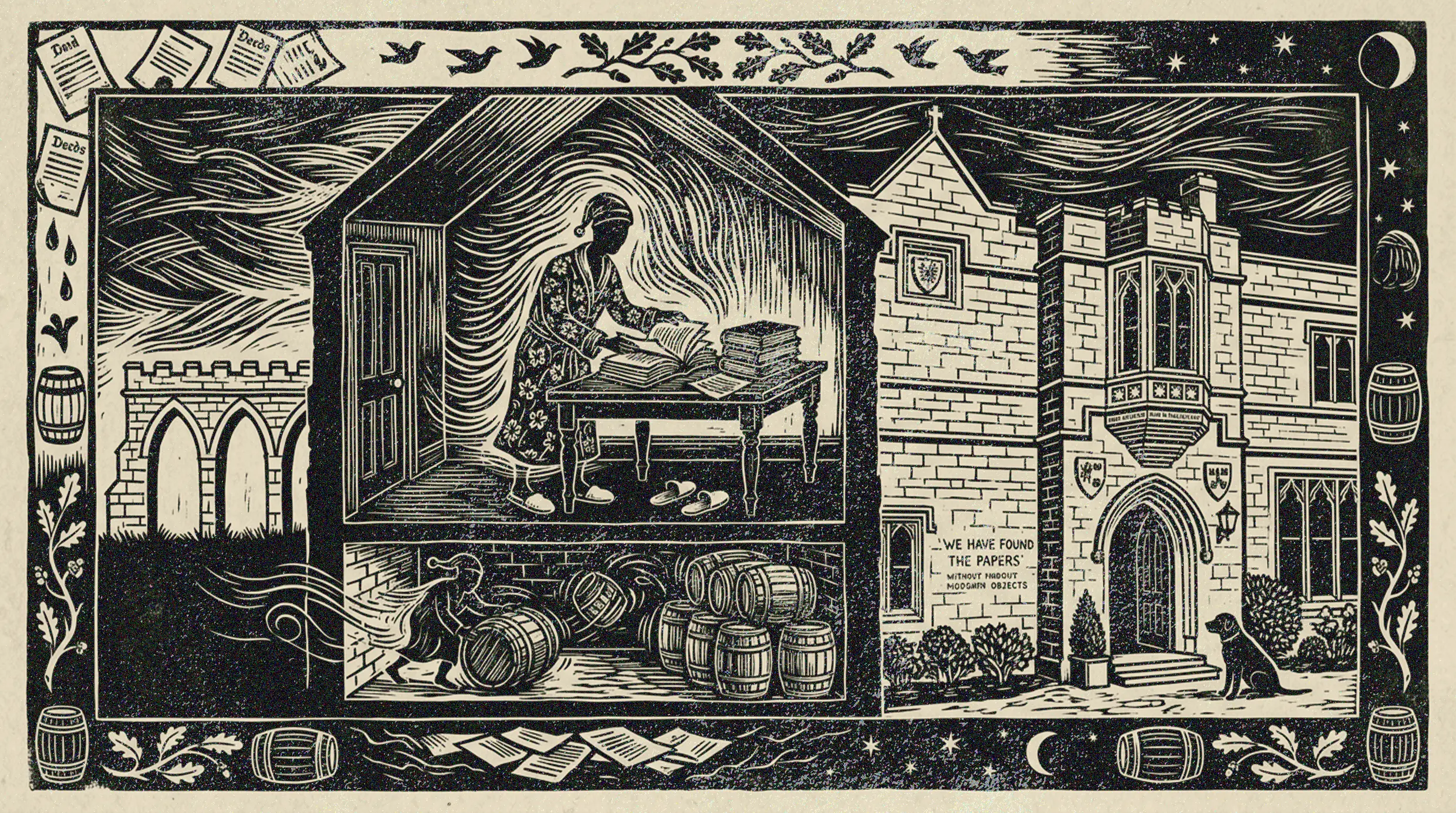
Button Cap
Another piece of the local countryside's stranger memory, preserved through stories told long after its original context had faded.
Behind the Plough Witches
Plough Monday was a family of related regional customs rather than one identical ritual practised everywhere. This page distinguishes Peterborough evidence, John Clare's local record, wider eastern English traditions and the modern Whittlesey revival.
-
Charles Dack · Weather and Folk Lore of Peterborough and District
Published in Peterborough in 1911. Dack records Plough Monday on the first Monday after Epiphany and comments that the custom had almost disappeared, with only two groups seen in Peterborough that year. -
Charles Dack · Old Peterborough Customs and Their Survival
Dack's earlier account records the Peterborough terms “Plough Witches and Mumpers” and describes the punishment for householders who refused to contribute, including ploughing up paths and pulling out doorstep scrapers. -
Bob Bushaway · Things said or sung a thousand times
Scholarly discussion of John Clare's 1825 calendar of local customs, including his record of Plough Monday “plough bullocks”, alongside Helpston's other seasonal rituals. -
Rutland Record · Plough Monday customs
Discusses the regional Plough Witches and Plough Bullocks and cites Clare's 1825 description of the participants ending the day together with a communal supper of cake and ale. -
English Folk Dance and Song Society · Plough Monday
Overview of the regional names, costumes, characters and earlier Plough Light tradition, including the use of “Witches” in Cambridgeshire and Huntingdonshire. -
Science Museum Group · The Fool Plough
Catalogue record for George Walker's image of Yorkshire Plough Stots, published as plate 11 of The Costume of Yorkshire in 1814. -
Whittlesea Straw Bear Festival
The modern revival of Whittlesey's traditional Straw Bear custom, associated historically with the Tuesday following Plough Monday and revived in 1980. -
Discover Peterborough · John Clare
Explore Clare's life at Helpston and his extraordinary record of the landscape, labour and traditional culture around Peterborough. -
Discover Peterborough · Peterborough Folklore
Explore the wider collection of local customs, beliefs, strange creatures, hauntings and historical traditions. -
Discover Peterborough · Weird Weekends
Follow Peterborough's unusual stories into the real landscapes where they belong. -
Image credits
Plough Monday illustration from George Walker's The Costume of Yorkshire, 1814. Whittlesey Straw Bear Festival photograph by Terry Harris for Discover Peterborough.