


Last Supper · Medieval Peterborough · Fenland Fish
The Paschal
Pickerel
Somewhere in Peterborough's lost medieval imagery, the Last Supper acquired a distinctly watery detail. Instead of the expected Paschal lamb, tradition remembered a fish on the table. In Peterborough, that fish became a pickerel.
A pike at the Last Supper sounds like a Peterborough joke. It is much more interesting than that.
The old story is wonderfully simple. Peterborough's medieval church once contained an image of the Last Supper in which a fish appeared on the table where later viewers might have expected to see the Paschal lamb.
Local tradition identified that fish as a pickerel, the old British word for a young or small pike. In a city rising from the watery edge of the Fens, where fishing had supported communities for centuries, it is easy to see why the detail came to feel particularly Peterborough.
But the fish was not simply an artist inserting local food into a biblical scene for amusement. Christian art had been associating fish with Christ, bread, sacred meals and the Eucharist for more than a thousand years before Peterborough's medieval glazing disappeared.
The Paschal Pickerel therefore sits in a fascinating place between theology and folklore. It is Christian symbolism that became a local curiosity, and a lost work of art whose reputation survived after the glass itself was smashed.
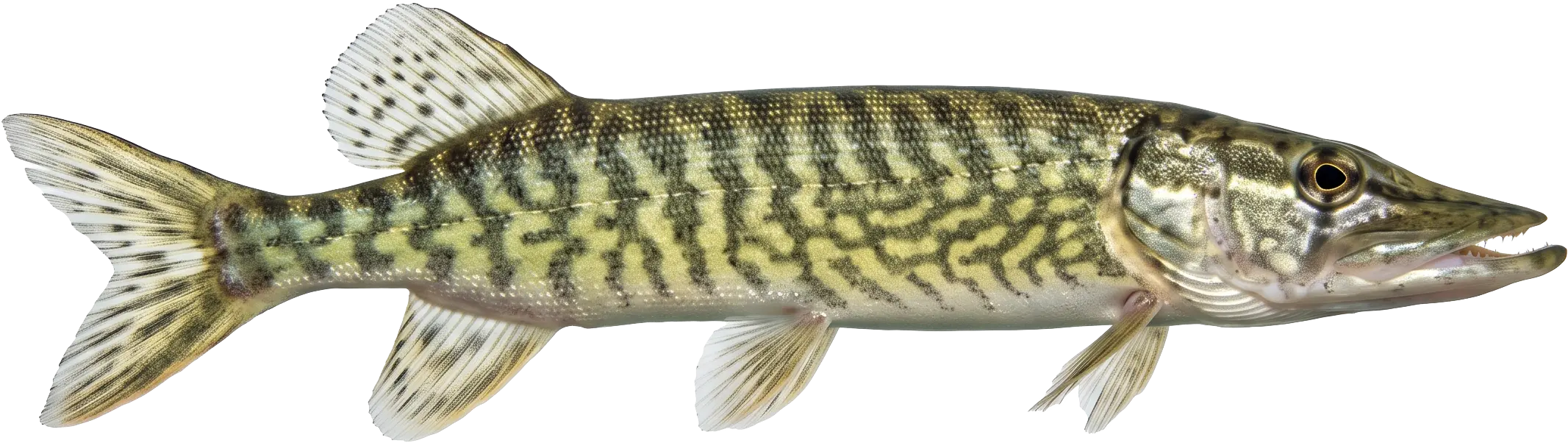
A pickerel is a young or small pike.
That matters because the Paschal Pickerel is not simply a generic medieval fish. Its remembered name gives the story a particularly local flavour.
Pike are unmistakable freshwater predators, with long bodies, broad flattened snouts and a reputation very different from the small fish often used in Christian art. In the waterways and wetlands surrounding medieval Peterborough, however, such fish belonged to an entirely familiar world.
The strange phrase therefore brings two landscapes together. One is the sacred landscape of the Last Supper, Easter and Christian symbolism. The other is the physical landscape of Peterborough, the Nene and the edge of the Fens.
That combination is one reason the story has remained so memorable.
The cloister once told stories in colour.
Before the destruction of the seventeenth century, Peterborough possessed an extraordinary programme of medieval stained glass extending around the monastic cloister.
Simon Gunton, Peterborough clergyman and historian, knew the Cathedral before much of its surviving medieval imagery was destroyed. His history describes the cloister windows as particularly celebrated for their artistry and variety.
The scheme was arranged like an enormous illustrated book. The south cloister contained stories from the Old Testament, the east cloister the New Testament, the north showed successive kings, and the west told the story of the monastery itself.
Peterborough's Paschal Pickerel belongs to the memory of this lost visual world. The surviving local tradition associates a Last Supper with a fish on the table, commonly described as a pike or pickerel.
Peterborough history in glass.
And somewhere among it, a fish at supper.
We should be careful about reconstructing the precise appearance of a window that no longer survives. We do not have the medieval pane in front of us, and Gunton did not leave a detailed drawing of every image.
What survives is the documentary memory of the glazing and the strange phrase attached to its fish.
Paschal pickerel sounds mysterious until you unpack it.
“Paschal” means relating to Passover or Easter. “Pickerel”, in older British usage, means a young or small pike.
Pickerel · a young or small pike
The phrase therefore means something close to the Easter or Passover pike.
Nineteenth-century church historian Arthur Penrhyn Stanley specifically discussed a medieval fish known as the “Paschal pickerel”, citing Simon Gunton's history of Peterborough. Stanley associated it with a tradition that a fish had been substituted for the Paschal lamb at the Last Supper.
That tradition should not be confused with the biblical accounts themselves. It belongs to the long afterlife of the Last Supper in Christian art, symbolism and storytelling.
The Gospels do not put a fish on the Last Supper table.
If you open the New Testament looking for the Paschal Pickerel, you will not find it.
The Last Supper accounts focus above all on bread, wine, the Passover setting, Jesus' words to his disciples and the betrayal that is about to unfold. They do not describe Jesus replacing a lamb with a pike.
That means Peterborough's fish should not be presented as a forgotten biblical fact.
Later Christian symbol.
Medieval Peterborough interpretation.
Medieval artists did not approach biblical scenes as modern documentary illustrators. Images accumulated symbols, theological meanings, traditional details and visual ideas inherited from centuries of Christian art.
A fish could therefore belong at a sacred meal without claiming that somebody had recorded one on the original table in Jerusalem.
Christianity had been putting fish beside bread for centuries.
Some of Christianity's earliest surviving art uses fish as a symbol of Christ and places fish beside bread, wine and sacred meals.
The Greek word for fish, ichthys, became especially important because its letters could be read as the initials of a Greek phrase identifying Jesus Christ as Son of God and Saviour.
Fish also recalled several Gospel stories: the calling of fishermen such as Peter and Andrew, the feeding of the multitude with loaves and fishes, miraculous catches and the meal of bread and fish shared with the risen Christ beside the Sea of Galilee.
In the Roman catacombs, early Christian banquet scenes and other imagery repeatedly place fish alongside bread. Some have been interpreted in Eucharistic terms, although scholars debate whether individual scenes represent Communion, funerary meals, biblical miracles or the heavenly banquet.
It could recall a miracle.
It could point towards Christ himself.
Against that background, a fish appearing in a medieval Last Supper is much less bizarre than it first appears.
In the Fens, a pike did not feel exotic.
Whatever the theological origin of the image, Peterborough gave it a landscape in which a pickerel made immediate sense.
Medieval Peterborough stood at the western edge of a vast watery world. Rivers, meres, marshes, drainage channels and seasonally flooded ground supported an extraordinary abundance of fish and wildfowl.
Medieval descriptions of the wider Fenland repeatedly marvel at its fisheries. The Liber Eliensis, describing the neighbouring fen country, lists eels, perch, lampreys and what are translated as large water wolves and pickerel among its abundance.
Pike were therefore not an abstract biblical creature to people living around Peterborough. They belonged to the waters beyond the monastery walls.
Seen through a Fenland imagination.
This is where the story becomes particularly Peterborough. The fish has a wider Christian history, but the landscape gives the pickerel its local resonance.
Peterborough Abbey took fish very seriously.
Fish was not simply symbolic. It was an important part of medieval monastic food culture, particularly on days when religious discipline restricted the eating of meat.
Peterborough's records preserve evidence of substantial fish supplies and a dedicated Abbot's Fish House. Gunton's history includes inventories containing large quantities of dried ling, stockfish and salmon.
Archaeology within the Cathedral precinct has also identified a large historic fish pond west of the monastic complex, probably connected with medieval water management and the supply of fish.
None of that proves that the monks deliberately painted a local pike into the Last Supper because they liked eating one. It does explain why fish occupied a very ordinary place in monastic Peterborough as well as a symbolic one.
One of the pleasures of the Paschal Pickerel is that the two worlds overlap. A fish could carry complex Christian meaning while also being one of the most familiar foods in a Benedictine community surrounded by wetlands.
Then the medieval picture disappeared.
Peterborough's great medieval glazing did not survive the English Civil War.
The city had strong Royalist sympathies. In 1643 Parliamentarian troops under Oliver Cromwell entered Peterborough and occupied the Cathedral precinct.
Religious imagery became a particular target. Stained glass was smashed, the organ was damaged, furnishings and monuments were attacked, books were destroyed and parts of the former monastic complex suffered severe damage.
Gunton, who knew Peterborough before and after the destruction, left one of the most important accounts of what had been lost. Later Cathedral historians used his descriptions to reconstruct at least the subjects and arrangement of glazing that could no longer be seen.
The description did not.
That distinction is the reason we can still talk about the Paschal Pickerel at all.
Peterborough Cathedral still contains medieval glass fragments, mainly gathered into windows around the apse. They are fragmentary and rearranged. There is no surviving intact Paschal Pickerel window waiting to be rediscovered.
The strange thing that survived was the fish's name.
Destroy an image and, in theory, its meaning disappears with it. Peterborough's pickerel did something more stubborn.
Gunton and later writers preserved enough of the Cathedral's lost visual culture for subsequent generations to keep asking about it. The phrase “Paschal pickerel” travelled into wider discussions of Christian art and Eucharistic symbolism.
That creates an unusual kind of folklore object. There is nothing physical to photograph in its original form. No intact medieval pike sits glowing in coloured glass.
The curiosity is the absence itself.
One remembered fish.
Centuries of explanation.
Peterborough's folklore is full of objects you can still touch, stones you can stand beside and carvings you can find. The Paschal Pickerel asks something different.
You have to imagine what used to be there.
Walk into the cloister and reconstruct medieval Peterborough.
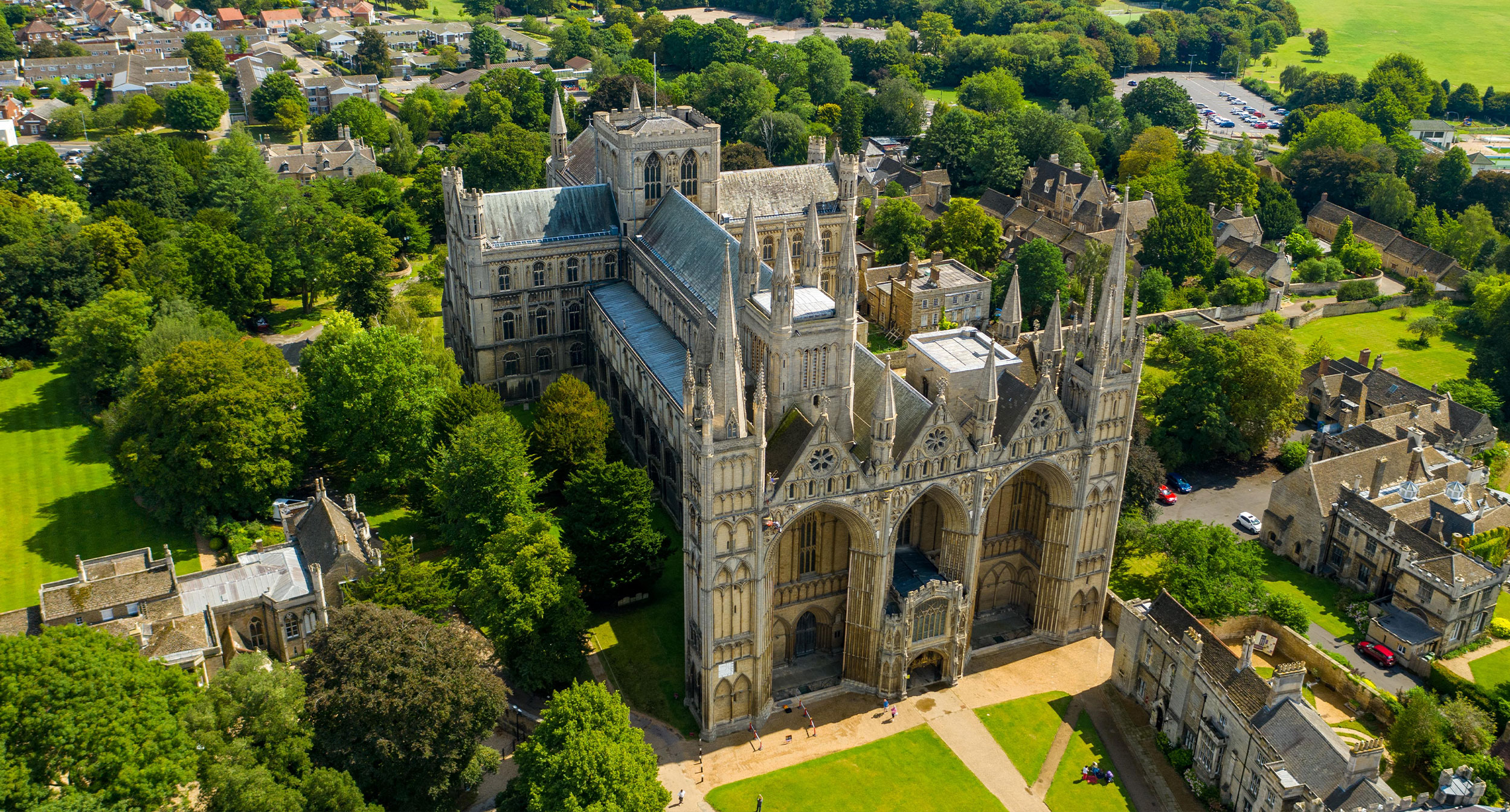
The surviving cloister area at Peterborough Cathedral gives you enough architecture to understand the setting, even though the medieval glazing scheme has gone.
Stand in the Laurel Court and picture the arcades closed with coloured glass. One side told the Old Testament, another the New Testament, another the succession of kings, and another the monastery's own foundation story.
Medieval visitors would have walked through a continuous visual narrative rather than the comparatively open cloister seen today.
Somewhere within the remembered imagery of Peterborough's sacred meals sits the pickerel.
Stand in the cloister and find the empty openings where medieval glass once transformed the space. Then imagine the Last Supper returning pane by pane until one distinctly Fenland fish appears on the table.
Because the fish is both stranger and less strange than it looks.
At first glance the Paschal Pickerel looks like pure local eccentricity: medieval Peterborough putting a Fenland pike on Christ's supper table.
Look more closely and the story opens out. Fish had been used as Christian symbols since antiquity. Fish and bread appeared together in early Christian sacred imagery. Medieval art was comfortable combining biblical narrative with layers of later symbolism.
Peterborough then supplied the final ingredient. Here was a monastery on the edge of a landscape famous for fish, with its own fisheries, fish stores and watery economy.
The Paschal Pickerel therefore feels perfectly at home in Peterborough while also belonging to a much older Christian visual tradition.
Then the window was destroyed and the fish became folklore.
The pickerel is still swimming.
One lost fish leads into the Cathedral's stranger history.
Follow the vanished cloister imagery into surviving stones, carvings, fires and legends elsewhere around Peterborough Cathedral.
Peterborough Cathedral
Follow the monastery from Anglo-Saxon Medeshamstede through Norman rebuilding, medieval splendour, Reformation, Civil War and the Cathedral today.
Explore 1,350 years → 02 · LOST CLOISTER STORIESThe Princes, the Hart & the Well
Another story once displayed around Peterborough's cloister connected the monastery's foundation with a hunted hart, royal brothers and St Chad.
Enter the founding legend → 03 · ANGLO-SAXON MYSTERYThe Hedda Stone
One of Peterborough's oldest surviving sculptures carries mysterious holes, sacred figures and centuries of changing explanations.
Examine the stone → 04 · MEDIEVAL IMAGERYSimon Magus
At the West Door, another extraordinary medieval image survived: a falling man surrounded by demons beneath the church of St Peter.
Look beneath the West Door →More Peterborough Folklore
Lost images, strange carvings, warnings and legends that accumulated around Peterborough's medieval monastery.
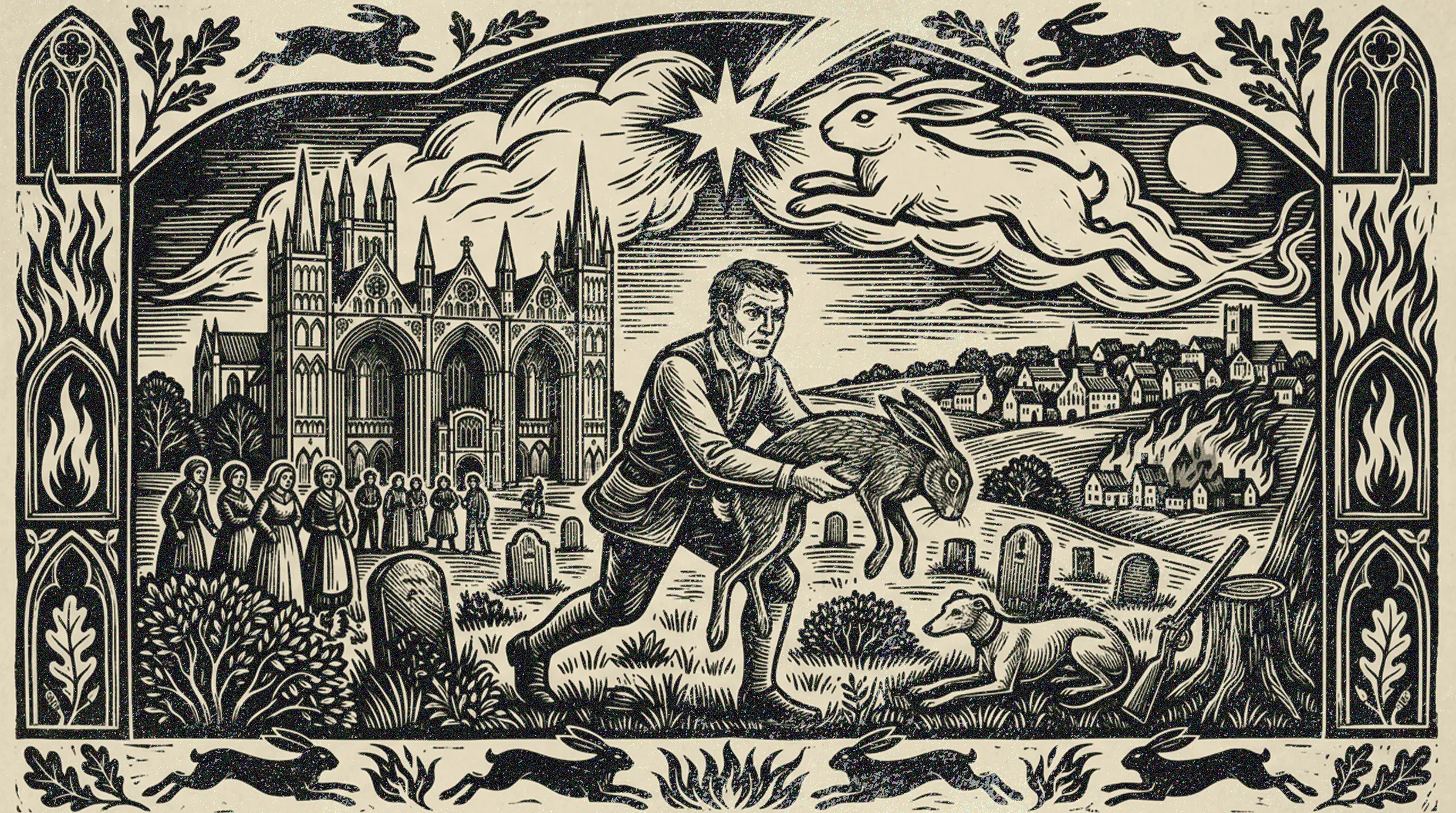
The Hare in the Close
If a hare settled in the Minster Close, Peterborough expected a fire somewhere in the town before the week was out.
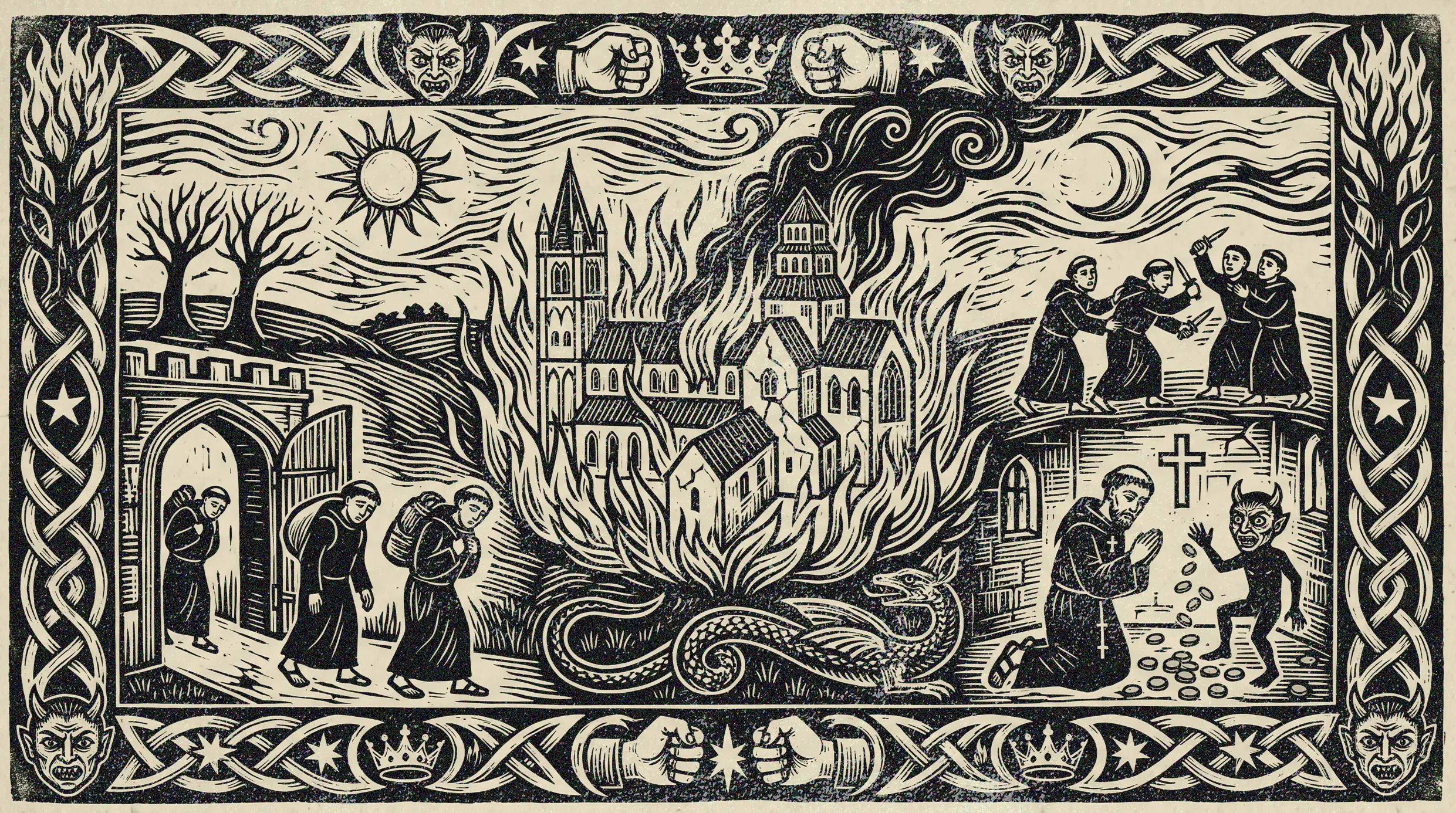
Come, Devil
A catastrophic historical fire became inseparable from a story about an angry servant and one disastrous invitation.
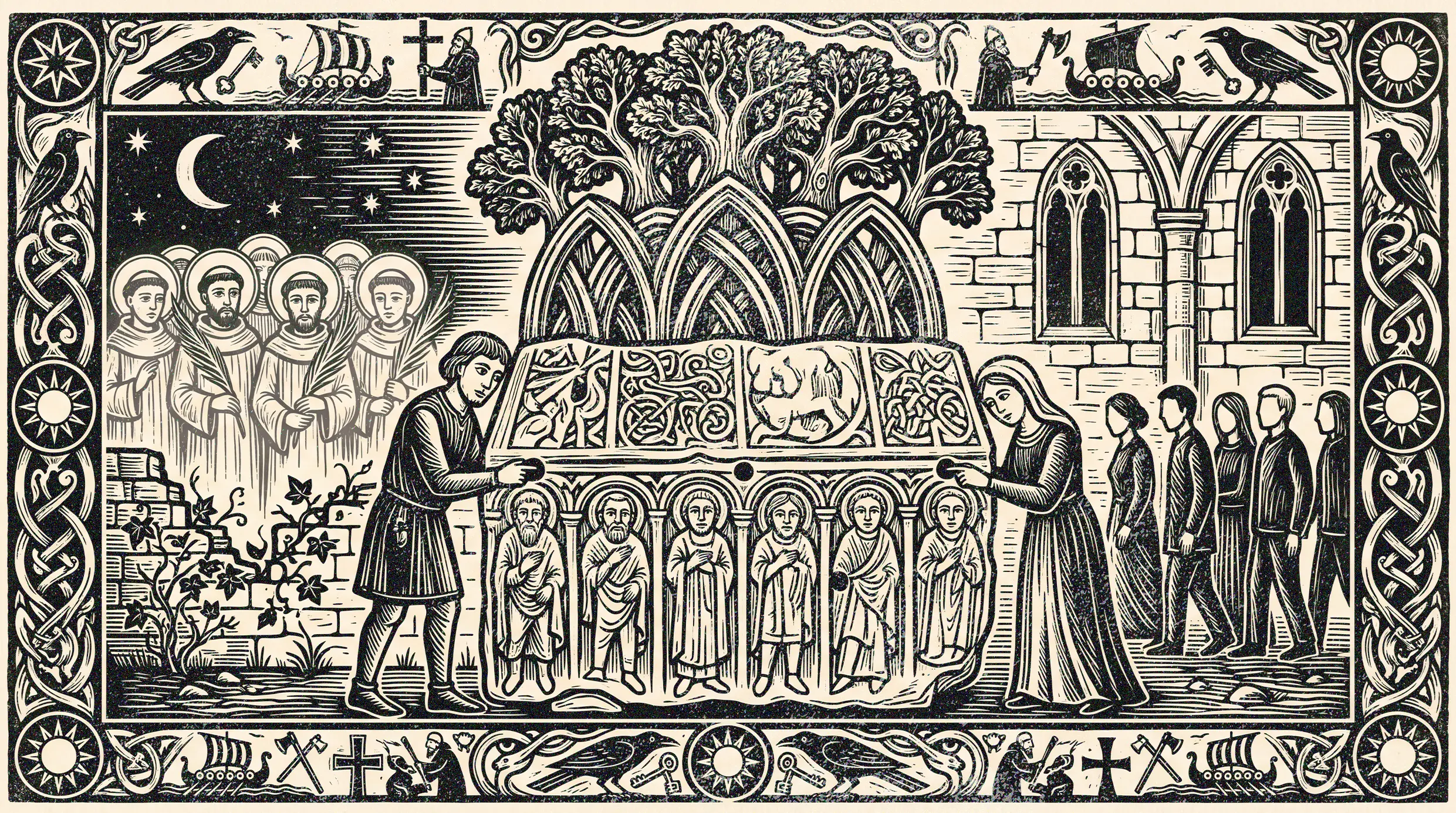
The Hedda Stone
Six mysterious holes in one of Peterborough's oldest sculptures became the focus of centuries of touching, explanation and folklore.
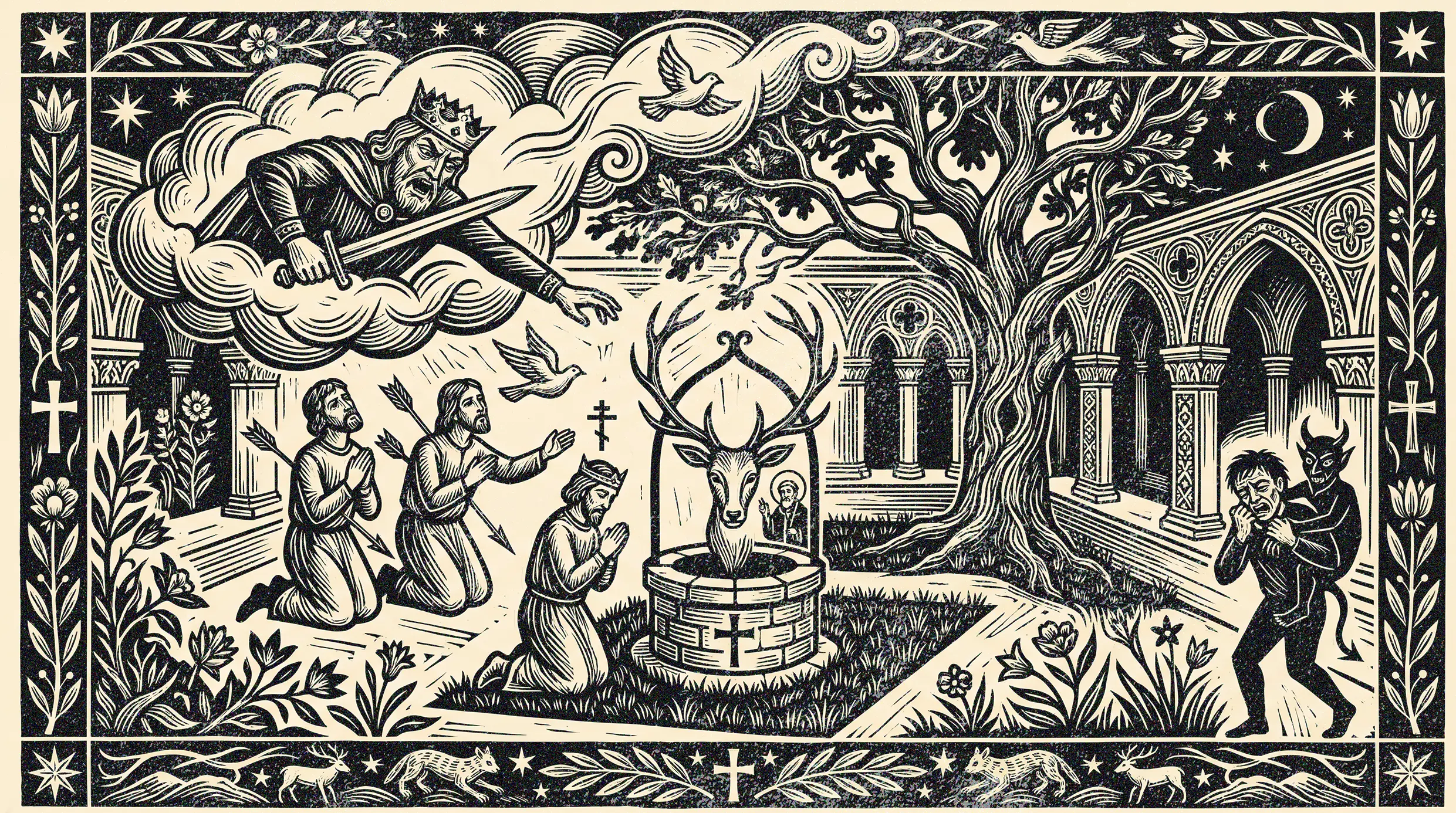
The Princes & the Hart
A royal hunt, a hidden hart and St Chad became part of the story Peterborough Abbey told about its own beginnings.
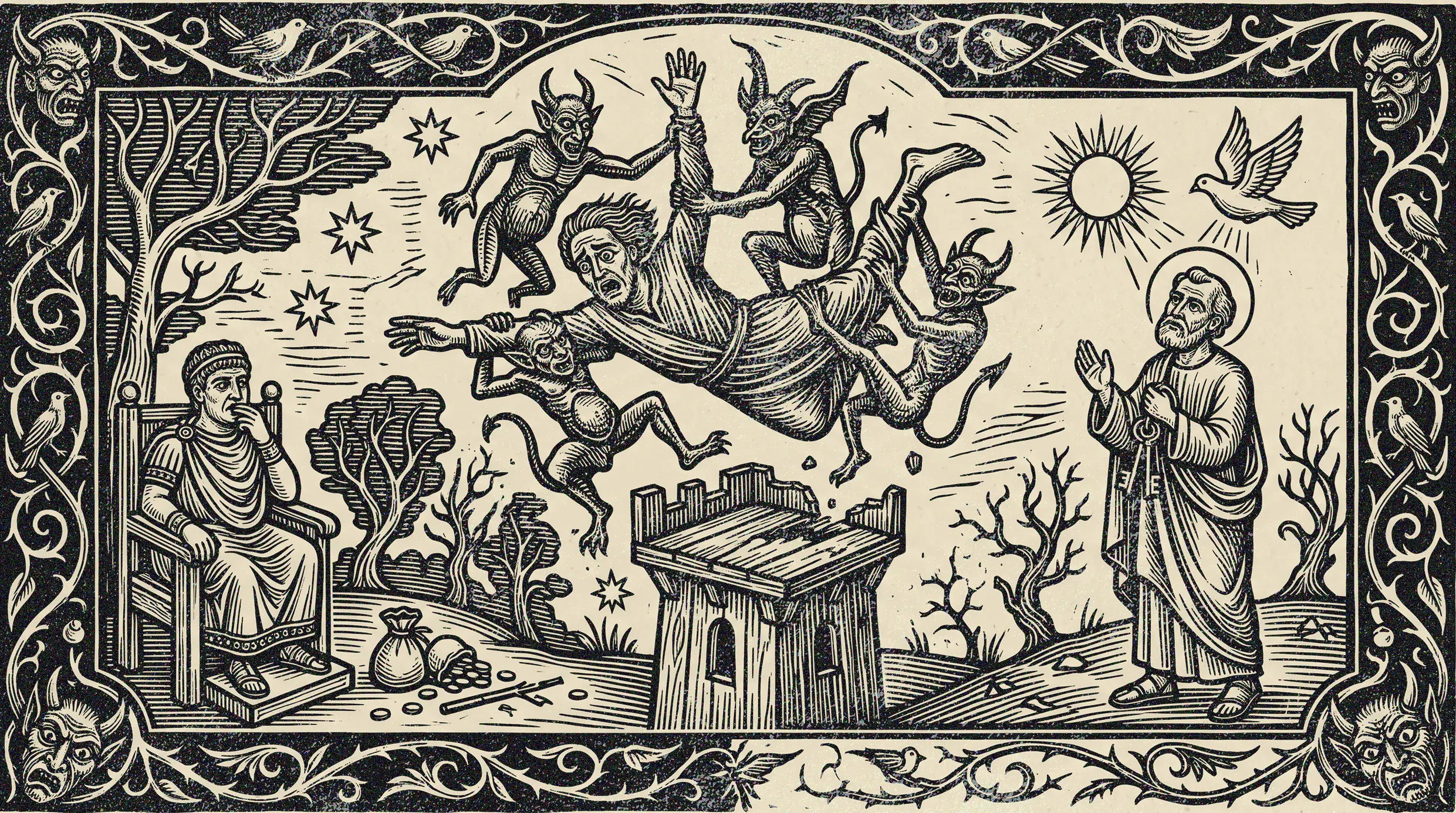
Simon Magus
An upside-down figure surrounded by demons survives at the base of Peterborough Cathedral's great western entrance.
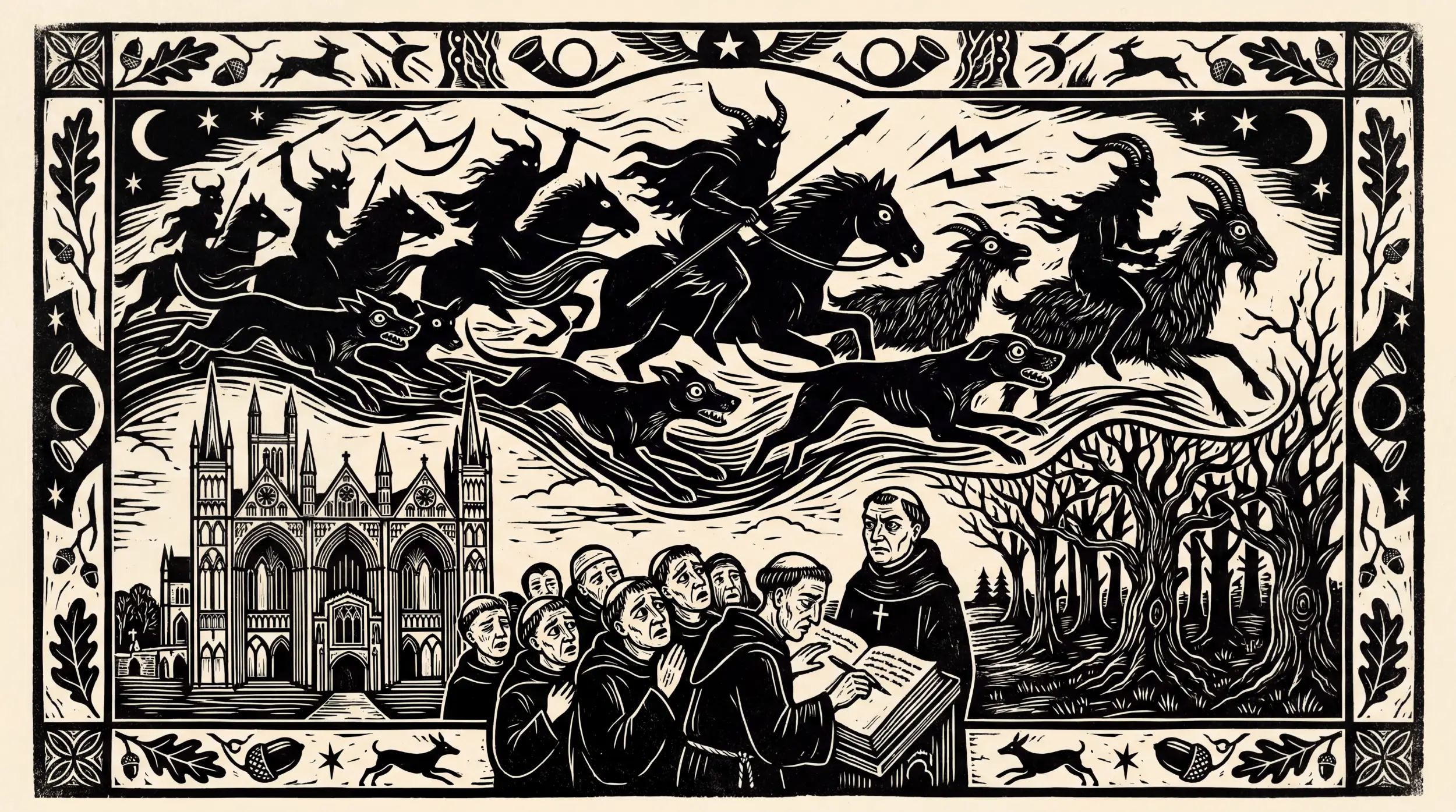
The Wild Hunt
Black riders, monstrous hounds and hunting horns entered Peterborough's written record during the rule of an unpopular abbot.
Behind the pickerel
The lost medieval glass, early Christian fish symbolism and historical importance of fishing are documented. The precise appearance of Peterborough's vanished Last Supper image cannot now be reconstructed with certainty.
-
Simon Gunton · The History of the Church of Peterburgh, 1686
Gunton's history is fundamental to our knowledge of Peterborough's lost medieval imagery, monastic traditions and seventeenth-century destruction. -
Arthur Penrhyn Stanley · Christian Institutions
Stanley discusses the medieval “Paschal pickerel” tradition while citing Gunton's Peterborough history. -
Peterborough Cathedral · Medieval stained glass
Cathedral interpretation drawing on Gunton describes the lost cloister windows and their destruction. -
Peterborough Cathedral Archaeology · Stained and Painted Glass
Discussion of the survival and rearrangement of Peterborough's remaining medieval glass fragments. -
Vatican · The Christian Catacombs
Background to early Christian symbolism, including the fish as a symbol of Christ. -
Discover Peterborough · Peterborough Cathedral History
The wider story of the monastery, medieval precinct, Civil War destruction and Cathedral. -
Discover Peterborough · Peterborough Folklore
Explore the wider collection of Peterborough legends, customs and unusual historical traditions. -
Discover Peterborough · Weird Weekends
Explore Peterborough's stranger histories through the real places where they belong.