

Whitsun · Spring Water · Good Luck
Sugar Cupping
at East Well
Every Whitsun, young people in John Clare's Helpston walked out to a spring, sweetened the water with sugar and drank together for good luck. Then enclosure changed the landscape, and one of the village's simplest customs disappeared with it.
Bring sugar.
Find the spring.
Drink for luck.
Not every piece of folklore requires ghosts, witches or supernatural creatures. Sometimes a tradition survives because people once agreed that on a particular day they should walk somewhere together and do something their parents had done before them.
Eastwell Spring lay on the edge of Helpston, the village north of Peterborough where John Clare was born in 1793. The spring was valued as a dependable source of water and became the focus of one of the village's old Whitsun customs.
Young people went out to the spring, brought sugar with them and mixed it with the water. Clare remembered the practice himself, and in 1825 included it in a remarkable list of the customs that structured the year in the village of his youth.
The ingredients could hardly have been simpler. What mattered was the date, the place and the act of doing it together.
Clare called it good-luck wishing.
In 1825 John Clare wrote to the radical printer and antiquarian William Hone describing the customs that had once marked the seasons in Helpston.
Among St Mark's Eve divination, May celebrations, Holy Thursday processions, Christmas mumming and Plough Monday was a Whitsun custom centred on Eastwell Spring.
Modern historian Bob Bushaway summarises Clare's description as Whitsun good-luck wishing at the Eastwell spring with the drinking of sugar and water.
Sugar stirred into cold water.
A wish for good luck.
We should resist making the ceremony more elaborate than the evidence allows. There is no need to invent a secret spell or complicated rite. Its strength lies in the fact that it appears to have been a communal custom that everyone simply knew how to perform.
You went to Eastwell at Whitsun. You drank sugar and water. You wished for luck.
John Clare remembered because he remembered everything.
Clare is unusually valuable to folklorists because he did not separate poetry, landscape and ordinary village life into different worlds.
He grew up in a labouring family and took part in the rural culture he later described. He heard songs in his father's company, played the fiddle, recorded local speech and superstitions, noticed seasonal work and remembered the rituals by which people marked the year.
That means Eastwell is not preserved simply because a later antiquarian heard that villagers once did something unusual there. Clare knew the custom from the inside.
His recollection of going to the spring to drink sugar and water sits alongside his memories of May games, Plough Monday, divination customs, harvest work and the countless informal traditions through which rural communities created a sense of continuity.
Eastwell made sense because it happened at the right moment.
In Clare's Helpston, the calendar was more than a sequence of dates. Different points of the year arrived with particular expectations, games, ceremonies and permissions.
St Mark's Eve invited divination. May brought garlands and seasonal celebration. Whitsun sent people towards Eastwell. Christmas brought mumming, while Plough Monday allowed the agricultural year to begin with disguise, noise and mischief.
These customs were not necessarily organised by an institution. They survived because people remembered when to perform them and taught the next generation what to do.
May · garlands and seasonal customs
Whitsun · Eastwell and sugar water
Winter · mumming and Plough Monday
Seen in that context, sugar cupping was not a strange isolated belief. It was one small part of the way a community gave the year rhythm and meaning.
The water mattered long before anybody added sugar.
Eastwell was valued because it was a dependable spring. Local accounts remember it as a source that continued to flow even in dry weather, when a reliable supply of clean spring water was far more important to everyday life than it appears to us now.
The older folklore also attached healing qualities to the water, particularly for sore eyes. Such beliefs occur around springs and wells across Britain, where reliable water sources often attracted both practical use and layers of customary meaning.
We should describe that as historical belief rather than medical fact. Whatever qualities villagers attributed to the spring, the importance of Eastwell did not depend on a modern understanding of medicine.
Water for luck.
Water that became part of memory.
Eastwell was not Round Oak Spring.
Helpston had two famous springs, and because both appear repeatedly in writing about John Clare they are easily confused.
Eastwell Spring lay to the north-east of the historic centre of Helpston, close to the lane now called Golden Drop. This is the spring associated with the Whitsun sugar-and-water custom.
Round Oak Spring lay in a different part of the parish, south-west of Royce Wood. It took its name from the trees and landscape around its watercourse and became one of Clare's most important poetic symbols of what enclosure had destroyed.
Round Oak: another spring, another story.
Clare himself makes the distinction explicit in a poem usually known as Round Oak and Eastwell, where he writes of two fountains in his native landscape and mourns the damage done to both.
The connection between them is therefore not that they were the same place. It is that both formed part of the network of familiar waters, paths and gathering places whose character changed dramatically during Clare's youth.
Round Oak became a voice for a damaged landscape.
Clare returned to Round Oak repeatedly in poetry because its transformation gave him a way to write about a much larger experience.
Before enclosure, he remembered the water running beneath trees and vegetation that sheltered the stream. Afterwards, the banks had been cleared and the old landscape reorganised.
In The Lamentations of Round-Oak Waters, Clare goes further and allows the brook itself to speak. The damaged watercourse becomes a witness to what has happened around it.
He allowed the places to remember people.
That approach is one reason his writing now matters far beyond literary history. Landscape, ecology, labour, access, memory and belonging all become part of the same story.
Eastwell's lost Whitsun gathering belongs within that world.
Then enclosure redrew the landscape.
The parliamentary act authorising the enclosure of Helpston and neighbouring land was passed in 1809, when Clare was sixteen.
The old open landscape of commons, shared fields, tracks, heath and wet ground was progressively reorganised into separately owned holdings with new boundaries, roads, drains and hedges.
Enclosure had complicated agricultural and economic causes, but Clare experienced it personally as the destruction of a geography he knew intimately.
Paths disappeared or changed. Trees were felled. Streams were straightened. Places where people had wandered, gathered plants, grazed animals or simply spent time became subject to a different pattern of ownership and access.
Clare specifically connected this upheaval with the decline of village customs. In recollecting Eastwell, he remembered people going to the spring on Sunday for sugar and water, before enclosure drove such practices from the village.
Losing the spring gathering meant losing more than a drink.
Sugar cupping sounds almost trivial when reduced to its ingredients. That is precisely why it is easy to underestimate.
A shared custom creates reasons for people to leave the house, meet one another, revisit a familiar place and acknowledge the season. It teaches younger people where things are and why particular parts of the landscape matter.
No committee needs to organise it. No permanent building is required. The tradition exists because everybody knows that when Whitsun arrives, this is what people do.
Once access, landscape and social habits change, that kind of custom can disappear extremely quickly.
Clare was therefore preserving something especially fragile. He remembered not simply what Eastwell looked like, but what people once did there.
Today the lane is called Golden Drop.
The modern street name provides another tantalising fragment of the old Eastwell landscape, although we should be careful not to make the name tell us more than the evidence supports.
Helpston's local street history records that the lane was long known simply as the Drop and was officially renamed Golden Drop in 1971.
It is tempting to connect the word “Golden” directly with the old sugar-cupping custom, but the evidence for that derivation is not clear enough to state it as fact.
Eastwell survived underground.
A suggestive name remained on the map.
That uncertainty is useful. Folklore pages do not need every loose end tied into a perfect explanation. Sometimes the more responsible thing is to preserve the connection as a possibility and say where the evidence stops.
Eastwell also belonged to a much older idea about water.
Springs that flowed reliably often became places where practical value and belief overlapped.
Local tradition credited Eastwell water with being particularly useful for sore eyes. Other waters in the countryside around Helpston acquired reputations for curing complaints too.
Such beliefs do not prove that the water possessed any medicinal property, but they help explain why certain springs became socially important. A reliable source could be simultaneously drinking water, meeting place, landmark and place of hope.
The crosses and initials remembered on old stonework around springs fit the same pattern. People left marks at places they returned to repeatedly.
Eastwell still flows, but not as Clare knew it.
Visitors looking for a picturesque stone wellhead beside a clear pool will be disappointed. The surviving water is now part of a much more engineered landscape.
Modern accounts of the site describe Eastwell as running below a brick-built inspection chamber, with a steel cover marking the point at which the spring survives before its water is channelled away.
In some ways, that makes the story more powerful. The folklore attraction is not a reconstructed prop. You are looking for the place where something used to happen and then using Clare's words to restore the missing landscape in your imagination.
That is exactly what Clare spent much of his life doing.
Treat the site as a piece of landscape history rather than a functioning drinking well. Do not lift inspection covers, interfere with drainage infrastructure, add sugar to the water system or drink untreated water. The point is to find the location and understand the lost custom.
Because John Clare wrote down what everybody else thought was ordinary.
No monument was built to sugar cupping. There was no organisation responsible for preserving it and no official record required every Whitsun.
It survived because one man understood that ordinary life was worth recording.
Clare paid attention to the things that conventional history often ignored: the routes people walked, the songs labourers sang, the names of small pieces of land, the flowers in a ditch and the customs young people performed because everybody around them knew that this was what the season required.
That makes Eastwell more than a curious old drinking custom. It is a tiny surviving window into the social world that existed around Helpston before enclosure rewrote both the landscape and many of the practices attached to it.
The gathering disappeared.
Clare remembered the taste.
Eastwell opens the door to much more than one lost custom.
Discover the poet who recorded it, visit his surviving home and follow the other strange beliefs and seasonal traditions he preserved around Peterborough.
John Clare
Explore the life of the Helpston labourer and poet whose writing preserved the wildlife, dialect, customs and changing countryside of this landscape in extraordinary detail.
Read Clare's story → 02 · VISITJohn Clare Cottage
Visit Clare's birthplace and explore the cottage, gardens and displays that connect his writing directly with the countryside and community he knew.
Plan your visit → 03 · CLARE'S FOLKLOREThe Will o' the Wisps
Clare was sceptical about ghosts, but the strange moving lights of the wet countryside around Helpston frightened him enough to remain vivid throughout his life.
Follow the lights → 04 · CUSTOM & MISRULEThe Plough Witches
Another Helpston tradition Clare recorded, when Plough Monday transformed young agricultural workers into blackened, disguised figures demanding money from their neighbours.
Enter the custom →More Peterborough Folklore
Old customs, strange lights, seasonal rituals and creatures remembered around the same northern landscape.
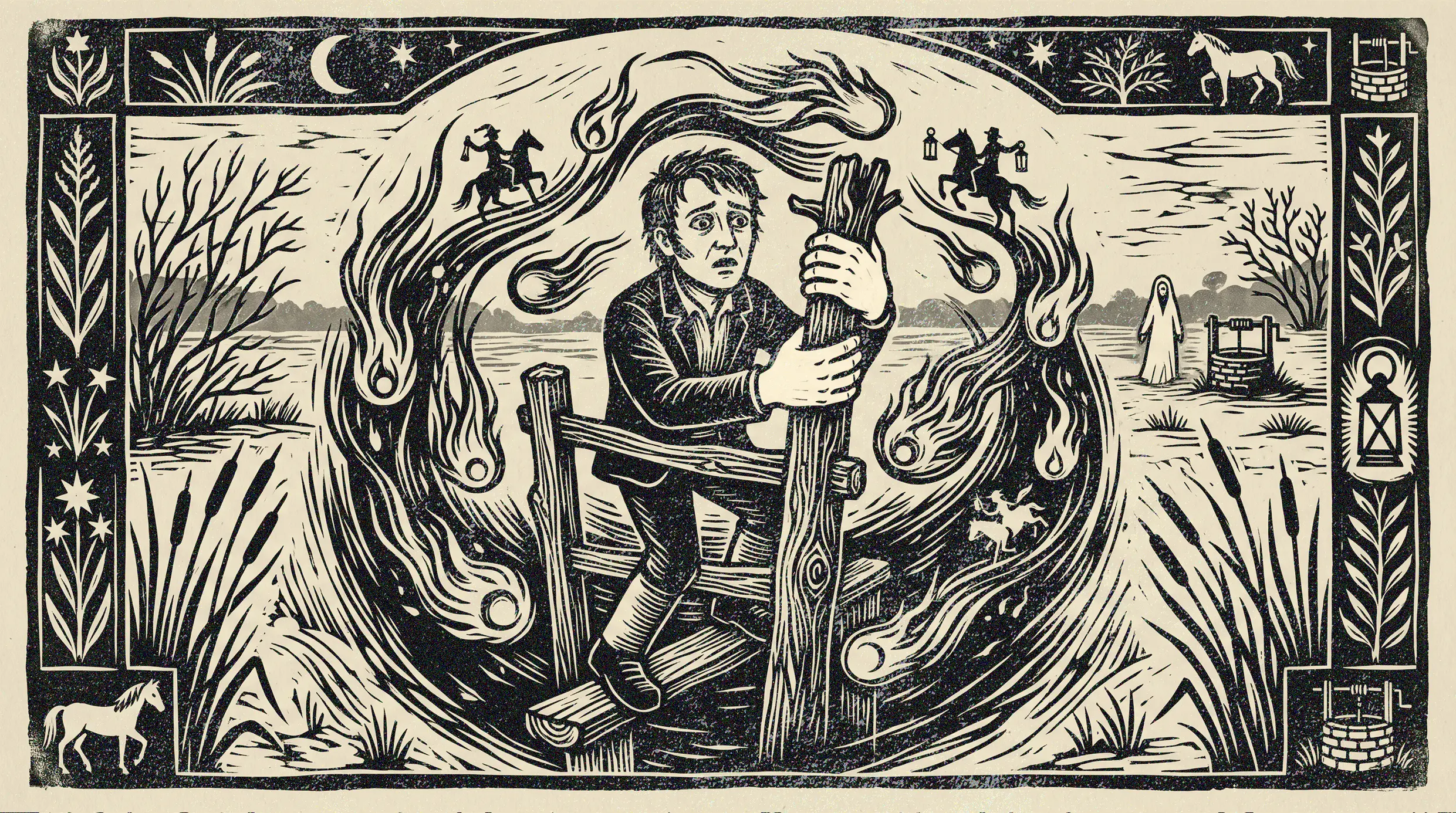
The Will o' the Wisps
Clare tried to dismiss ghosts, but the strange lights moving over wet ground around Helpston were another matter.
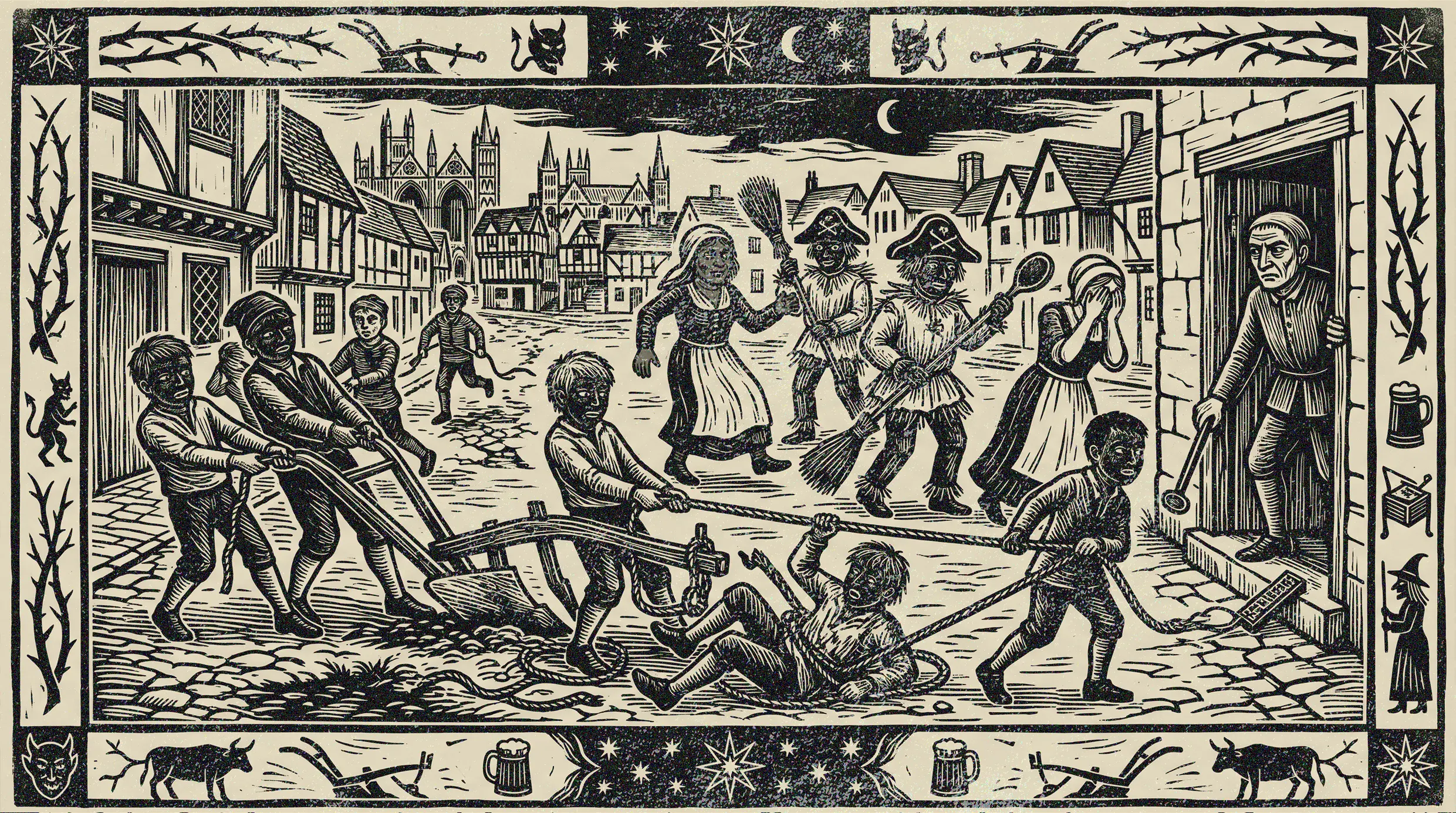
The Plough Witches
Blackened faces, strange clothes and a plough dragged from door to door turned the agricultural year upside down for one winter day.
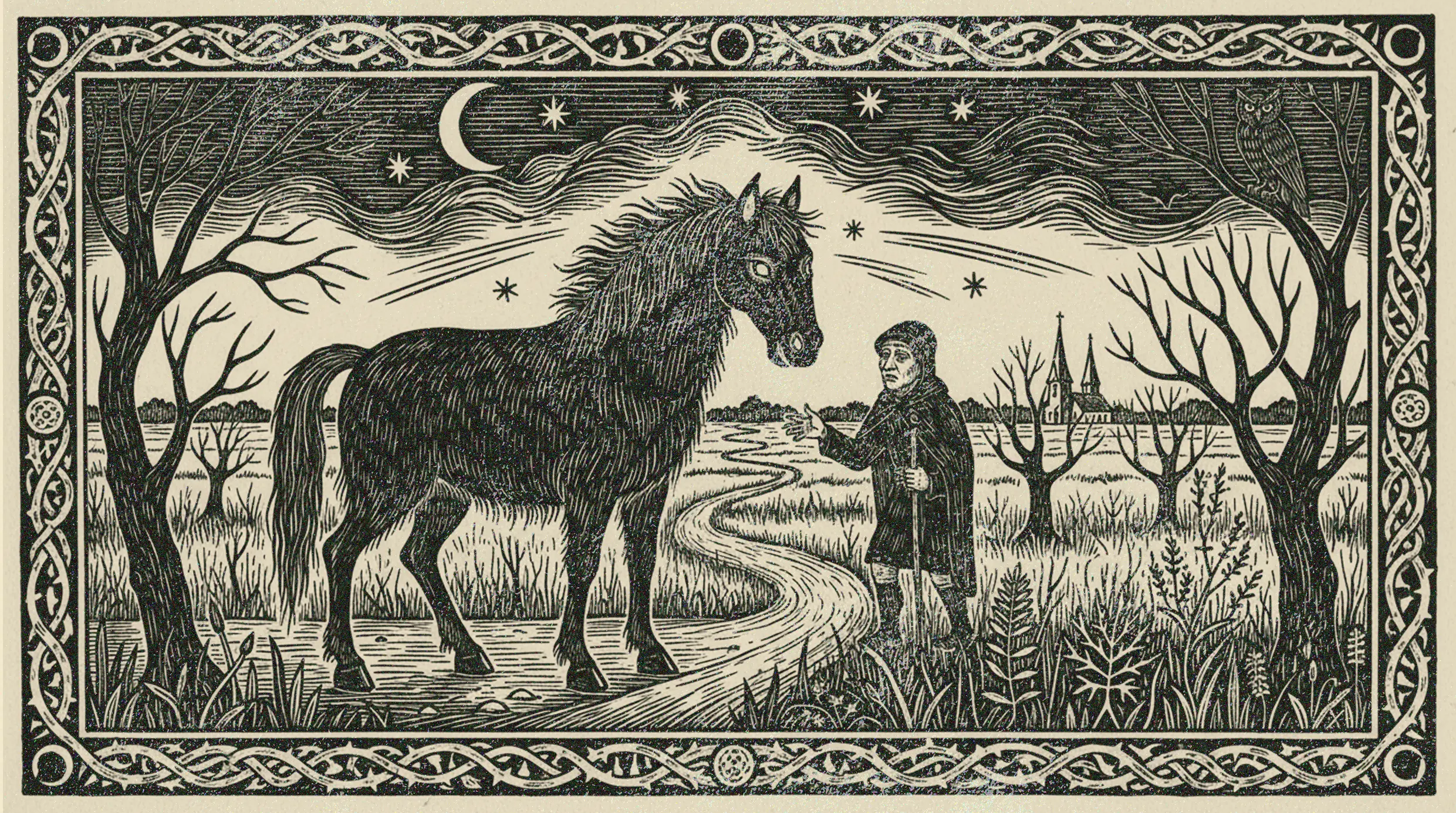
The Shag Foal
A huge shaggy black creature was said to follow travellers along the lanes after dark, somewhere between horse, bear and nightmare.
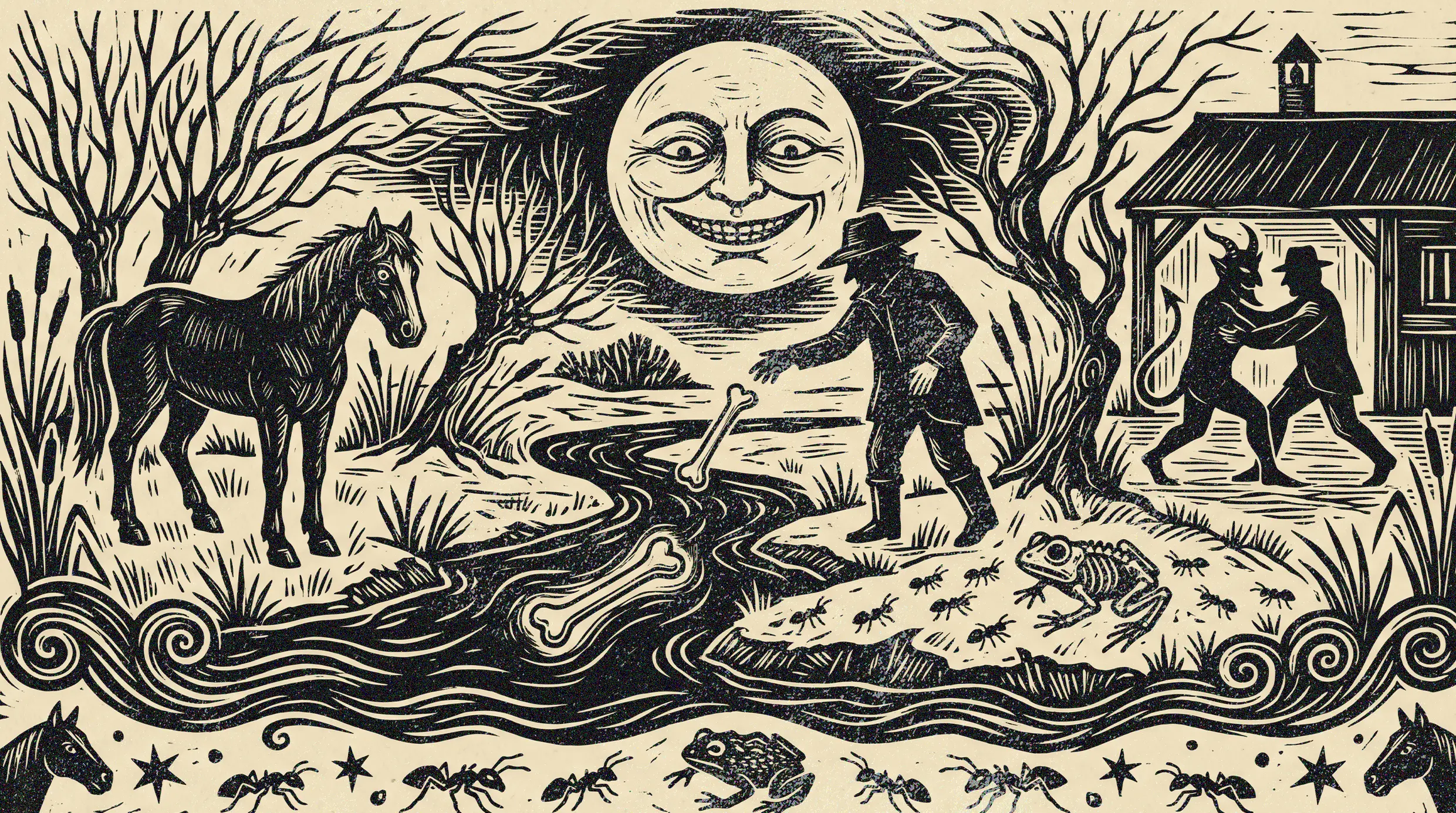
The Toadmen
Men were said to gain uncanny power over horses through one of the strangest initiation rituals in eastern English folklore.
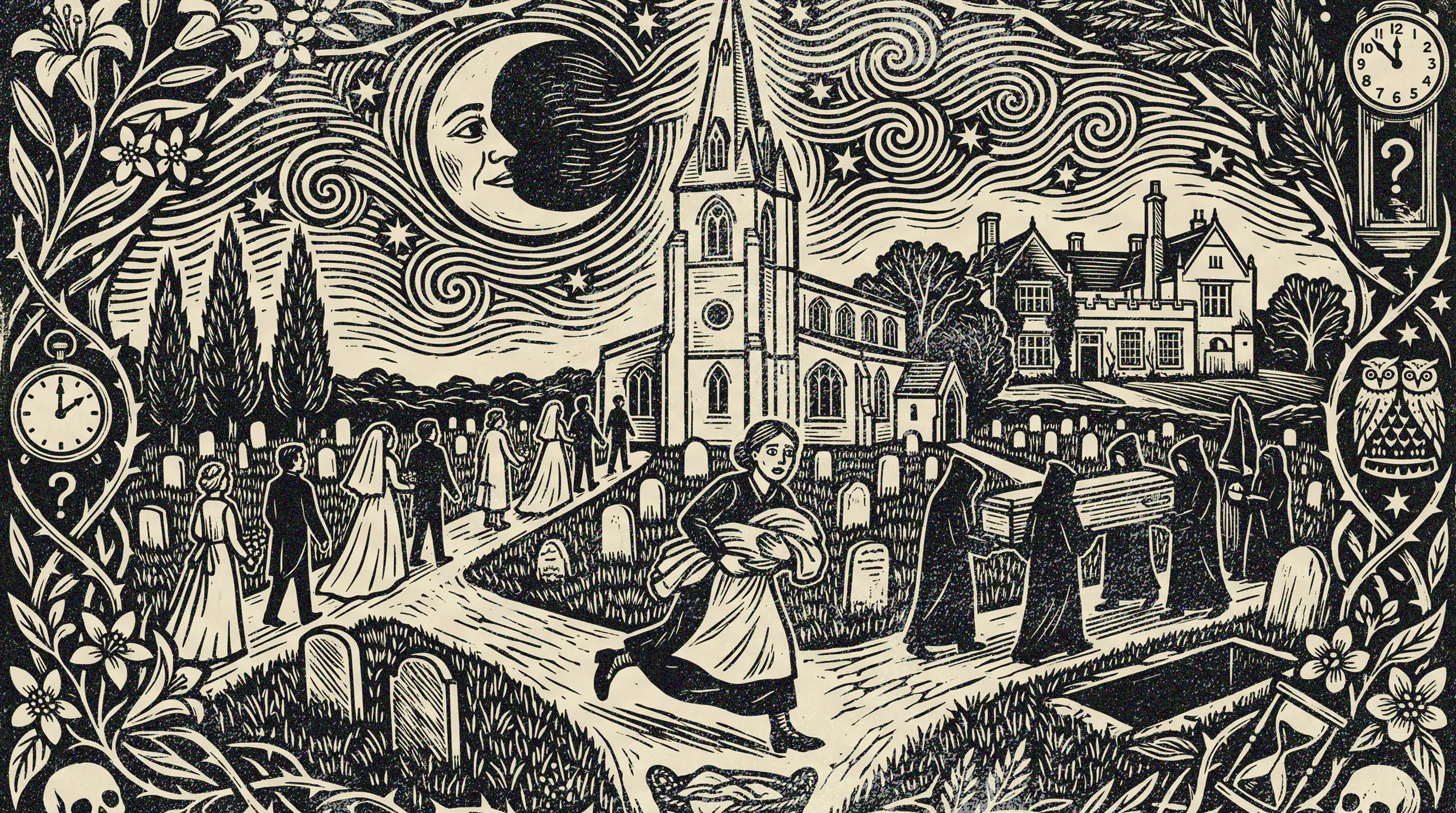
St Mark's Eve
On the night of 24 April a churchyard was said to reveal the weddings and funerals that had not happened yet.
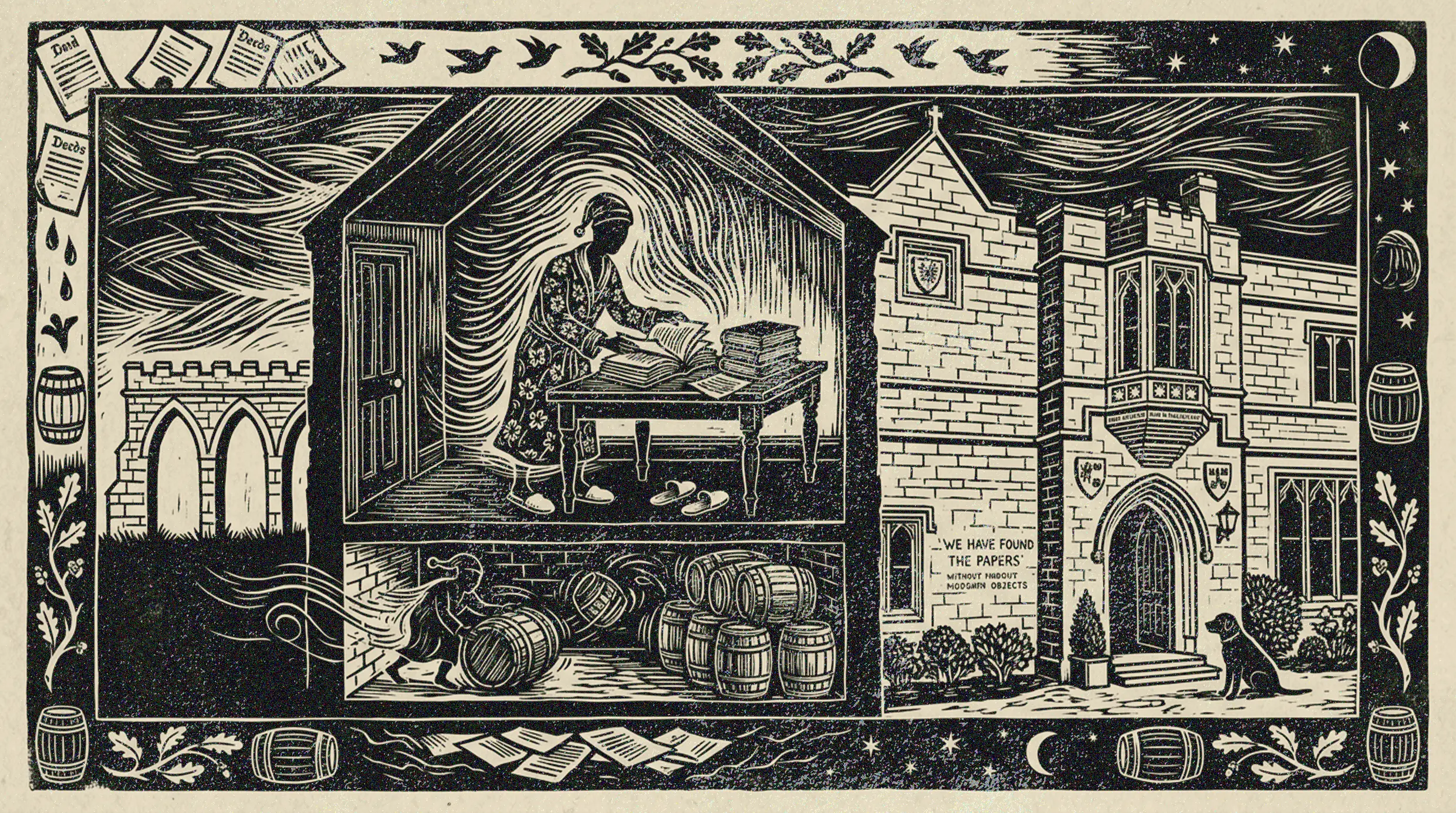
Button Cap
A ghost in loose slippers wandered through a rectory night after night, apparently still looking for something hidden in the house.
Behind the folklore
Sugar cupping is unusually well grounded because John Clare personally recorded the custom as part of Helpston's annual calendar. His poetry and prose also allow Eastwell to be placed within the much larger story of enclosure and landscape loss.
-
Bob Bushaway · “Things said or sung a thousand times”
Open-access scholarship on customary rural culture. Bushaway draws directly on Clare's 1825 letter to William Hone and records the Helpston calendar, including Whitsun good-luck wishing at Eastwell Spring with sugar and water. -
Timothy Adams · Representing Rural Leisure: John Clare
and the Politics of Popular Culture
Scholarly discussion of Clare's participation in and recording of Helpston's popular customs, including his recollection of going to Eastwell on Sunday for sugar and water and the effect of enclosure on such practices. -
John Clare · Round Oak and Eastwell
Clare's poem explicitly distinguishes the two Helpston fountains, remembering Round Oak and Eastwell as separate springs whose landscapes had both been damaged by enclosure. -
Arbour Editions · Helpston's Fountains
Modern account of Round Oak Spring and Eastwell Spring as two separate sites, including the survival of Eastwell beneath a modern inspection chamber and drainage system. -
Helpston History · Street Names
Local historical research records that Golden Drop was officially renamed in 1971 and had previously been known as “the Drop”. -
Discover Peterborough · John Clare
The wider biography of Helpston's poet, including his childhood landscape, rural customs, the 1809 enclosure and the extraordinary body of writing through which he preserved the countryside around Peterborough.