


Woodcroft Castle · 6 June 1648 · Dr Michael Hudson
The Ghost of
Woodcroft Castle
A thirteenth-century castle, a Royalist rising, a siege and one of the most brutal deaths in Peterborough's Civil War story. At Woodcroft, the history is disturbing enough before the ghost ever appears.
At Woodcroft, the terrible part really happened.
Many hauntings begin with a vague tragedy attached to an old building. Woodcroft Castle gives us something much harder to dismiss: a named man, a documented Royalist rising and a death recorded on 6 June 1648.
Dr Michael Hudson was not a fictional victim invented to explain a ghost. He was a clergyman, soldier, political agent and former chaplain to King Charles I, deeply involved in the Royalist cause during the English Civil Wars. His final stand took place inside the moated walls of Woodcroft.
Later tradition says the violence of that day never entirely left the building. The clash of weapons has supposedly been heard again, along with a man's voice crying for mercy and quarter. The apparition associated with the castle is usually identified as Hudson himself, condemned in folklore to repeat the final moments of his life.
Whether anybody has ever heard such a thing is another question. What happened to Hudson is disturbing enough without embellishment.
Woodcroft was built to look formidable.
Historic England describes Woodcroft Castle as the inhabited surviving fragment of a late thirteenth-century castle built on a moated site.
What survives is principally the western side of the original complex, with a central gateway and a circular tower rising directly from the moat at the northern end. The lost parts may once have enclosed a central courtyard, giving Woodcroft more of the appearance of a compact fortified residence than the building seen today.
Later generations altered and extended it, including an early Tudor wing, but enough medieval fabric survives for the building to retain its extraordinary character. It is now protected at Grade II*.
A gatehouse.
A circular tower.
And water around it.
In ordinary times this was a substantial country residence. In the confused summer of 1648, its moat and medieval masonry suddenly became militarily useful again.
Michael Hudson was a priest who became a Royalist operative.
Hudson's life before Woodcroft reads less like the career of a country clergyman than the plot of an adventure novel.
Educated at Queen's College, Oxford, he became a fellow and clergyman before entering royal service. During the Civil War he served Charles I and was associated with the Royalist northern army as a scoutmaster. He also accompanied the king during part of his extraordinary journey from Oxford towards the Scottish army in 1646.
Hudson was subsequently imprisoned, escaped, was captured again and sent to the Tower of London. Early in 1648 he escaped once more, reportedly disguising himself and carrying a basket of apples on his head.
He then returned to eastern England and attempted to revive armed resistance to Parliament.
Royal chaplain.
Prisoner.
Escaped prisoner.
Rebel commander.
That chain of events brought him eventually to Woodcroft Castle, where the final Royalist force around him prepared to resist Parliamentarian troops.
By June 1648, England was fighting again.
The first Civil War had effectively ended, but the political settlement had failed. Royalist risings broke out in several parts of England, beginning what historians call the Second English Civil War.
Hudson attempted to encourage resistance in the eastern counties and gathered Royalist horsemen around him. Pursued by Parliamentarian forces, he and his supporters withdrew into Woodcroft, where the castle's old defensive qualities gave them a temporary advantage.
Fighting continued over several days. Parliamentarian attacks were initially resisted, but reinforcements arrived and the defenders' position became increasingly hopeless. By 6 June the attackers had forced their way into the house.
The defenders fell back.
Hudson went upwards.
With the lower parts of the castle lost, Hudson and a small number of remaining Royalists retreated towards the battlements.
The versions of what happened next differ in some details, but they agree on the essential point. Hudson did not leave Woodcroft alive.
The real death is more disturbing than the later embellishments.
Older accounts say Hudson and the remaining defenders yielded after being promised quarter, only for that protection to be denied once the Parliamentarian soldiers reached them.
Hudson was forced or thrown over the battlements, but managed to catch a projecting stone or spout and hang above the moat. His attackers then struck or cut at his hands until he fell into the water below.
He was still alive.
The nineteenth-century Dictionary of National Biography, drawing on much earlier sources, says Hudson asked to be allowed to die on land. A soldier named Egborough then killed him with a blow from a musket, after which another Parliamentarian removed Hudson's tongue and carried it away as a trophy.
The moat below.
A death remembered for its cruelty.
His body was eventually buried, although sources disagree about its later resting place.
Some modern retellings say Hudson was also disembowelled. That detail does not appear in the better-attested accounts used here, which describe the attack on his hands, his fall into the moat, the fatal blow and the removal of his tongue. Discover Peterborough therefore treats disembowelment as a later embellishment rather than established history.
The castle began replaying the violence.
The haunting attached to Woodcroft is a classic example of what folklorists sometimes call a repetitive or residual ghost story. The apparition does not wander randomly through the building. It repeats the emotional core of a historic event.
Twentieth-century accounts of local ghost tradition record stories of weapons clashing and Hudson's voice being heard during the imagined recreation of the siege.
Quarter.
In some versions the sounds are associated particularly with June, the month in which Hudson died. The effect is to turn the castle itself into a kind of memory device, with the violence of 1648 supposedly impressed onto the building and replayed long after the people involved were dead.
There is no historical evidence that supernatural sounds occur at Woodcroft, of course. What we can trace is the tradition that they do.
Woodcroft is a useful lesson in separating history from folklore.
The castle is real. Hudson is real. The Royalist rising is real. The attack on Woodcroft and Hudson's death on 6 June 1648 are historical events.
The surviving accounts of his final moments are themselves shaped by politics, memory and later retelling, so even the historical narrative must be handled carefully. Sources sympathetic to the Royalist cause had every reason to portray Hudson as a courageous martyr and his killers as exceptionally brutal.
Yet the broad outline of his violent death is unusually well established.
Folklore tells us what people did with that memory.
Claims about spectral cries, clashing weapons or Hudson returning on the anniversary of his death belong to the later folklore. They should neither be mistaken for documentary history nor discarded as meaningless.
They show how an exceptionally violent local event remained attached to a particular building for generations.

John Clare worked at Woodcroft.
More than 150 years after Hudson's death, an eleven or twelve-year-old boy from nearby Helpston arrived at Woodcroft to work.
His name was John Clare.
In 1805 the future poet was employed as a ploughboy by Mrs Bellairs of Woodcroft Castle. Clare later remembered the job with little affection. He disliked the early mornings, and wet weather caused the moat to overflow the causeway leading to the house.
He recalled having to wade through the water to get in and out. After about a month he returned home and refused to go back.
It is a wonderful collision of Peterborough stories. A place associated with one of the area's most violent Civil War episodes also appears in the childhood working life of one of England's greatest poets.
Peterborough had already been scarred by the Civil War.
Five years before Hudson's final stand, Parliamentarian troops had entered Peterborough and inflicted severe damage on the Cathedral.
In 1643 stained glass was smashed, religious imagery and furnishings were attacked, books were destroyed and parts of the medieval complex suffered damage from which they never recovered. Charles I himself later passed through Peterborough while in Parliamentary custody.
Woodcroft therefore belongs within a much wider local story of divided loyalties, iconoclasm, military occupation and the political collapse that eventually led to the execution of the king in 1649.
Woodcroft in 1648.
A region living through civil war.
Woodcroft survives, but it is somebody's home.
The medieval gateway, tower and moat still make Woodcroft one of the most remarkable historic buildings in the Peterborough area, but the castle is a private residence rather than a visitor attraction.
The story is best explored through the surrounding public landscape, historical sources and Discover Peterborough's Weird Weekends material rather than by approaching the house.
Knowing the history changes the way the landscape feels. The moat is no longer simply picturesque water around an old building. It is part of both Hudson's recorded death and John Clare's much less dramatic memory of getting wet on his way to work.
Woodcroft Castle is a private home. Do not enter the grounds, drive, moat area or any other private property in order to investigate the story. Explore only from legitimate public routes and follow current access guidance.
Woodcroft connects war, poetry and folklore.
Continue into the people and places that make the castle much more than an isolated ghost story.
John Clare
Meet the Helpston labourer's son who worked briefly at Woodcroft before becoming one of England's greatest poets of landscape and rural life.
Discover John Clare → 02 · VISIT THE STORYJohn Clare Cottage
Visit Clare's former home and discover the childhood, working life, writing and landscape that shaped the poet who once trudged through Woodcroft's flooded moat.
Plan your visit → 03 · CIVIL WAR PETERBOROUGHPeterborough Cathedral
Five years before Woodcroft, Parliamentary soldiers brought the Civil War into the heart of Peterborough and devastated the Cathedral interior.
Explore 1,350 years → 04 · THE BIGGER STORYPeterborough History
Put Woodcroft into the larger story of a place shaped by invasion, rebellion, religious conflict, industry and continual change.
Explore Peterborough's history →Because the haunting did not need an invented tragedy.
Woodcroft already possessed everything a later ghost story required: old stone, water, siege, betrayal and an exceptionally violent death.
The supernatural tradition simply gave that history another form. Hudson's cries became audible again, weapons clashed after the soldiers had disappeared and a private medieval house became one of Peterborough's best-known haunted places.
Then another layer arrived. John Clare walked through the same gate and across the same moat, carrying the castle into an entirely different part of Peterborough's cultural history.
That accumulation is why Woodcroft matters. It is not merely a castle with a ghost attached. It is a place where documented history, literary biography and folklore occupy the same landscape.
The story survived the centuries.
More Peterborough Folklore
Haunted houses, strange roads and stories in which real Peterborough history became something harder to explain.
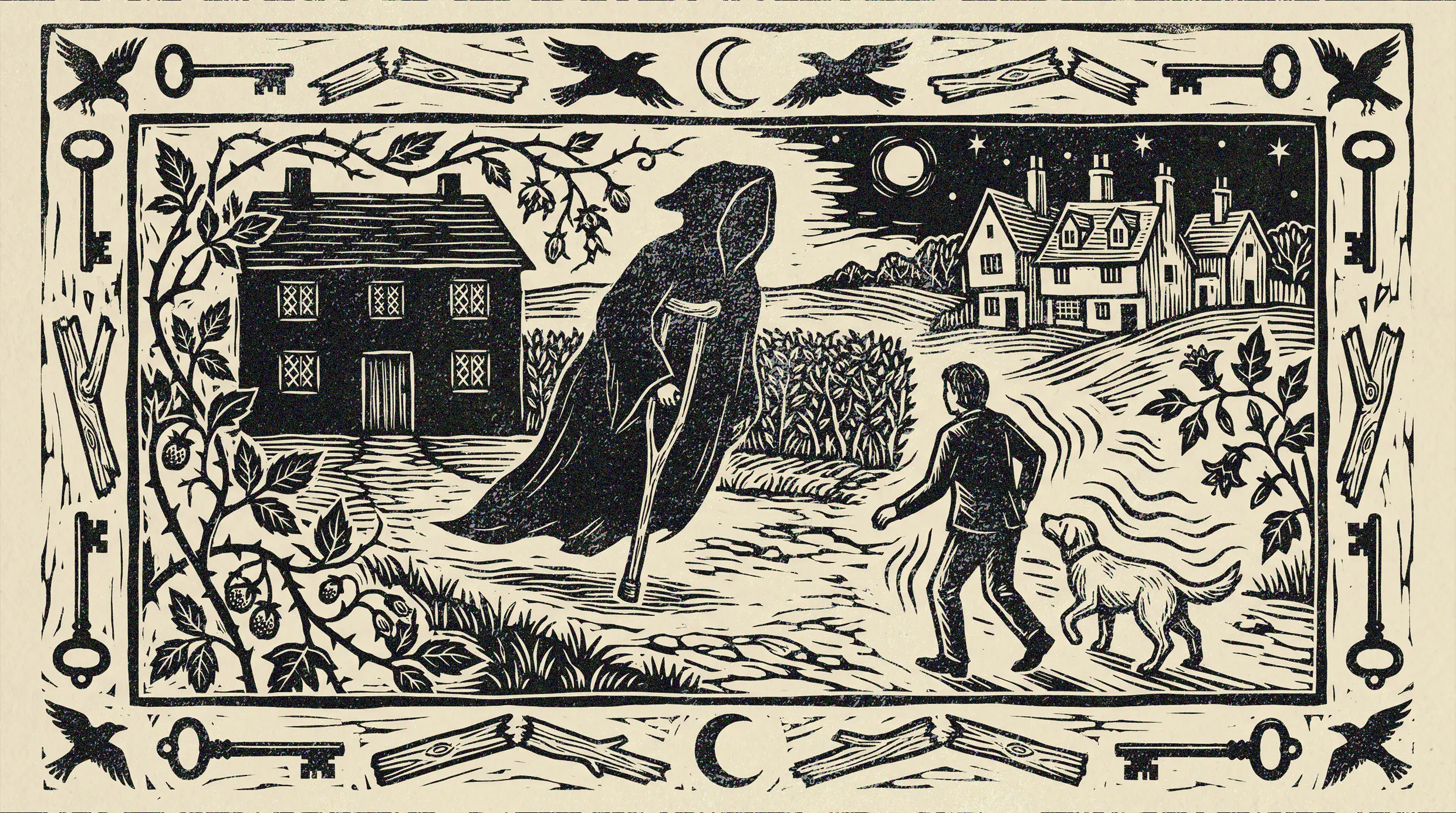
The Garton End Ghost
A hooded figure glided along a Peterborough road until Charles Johnson decided to run after it.
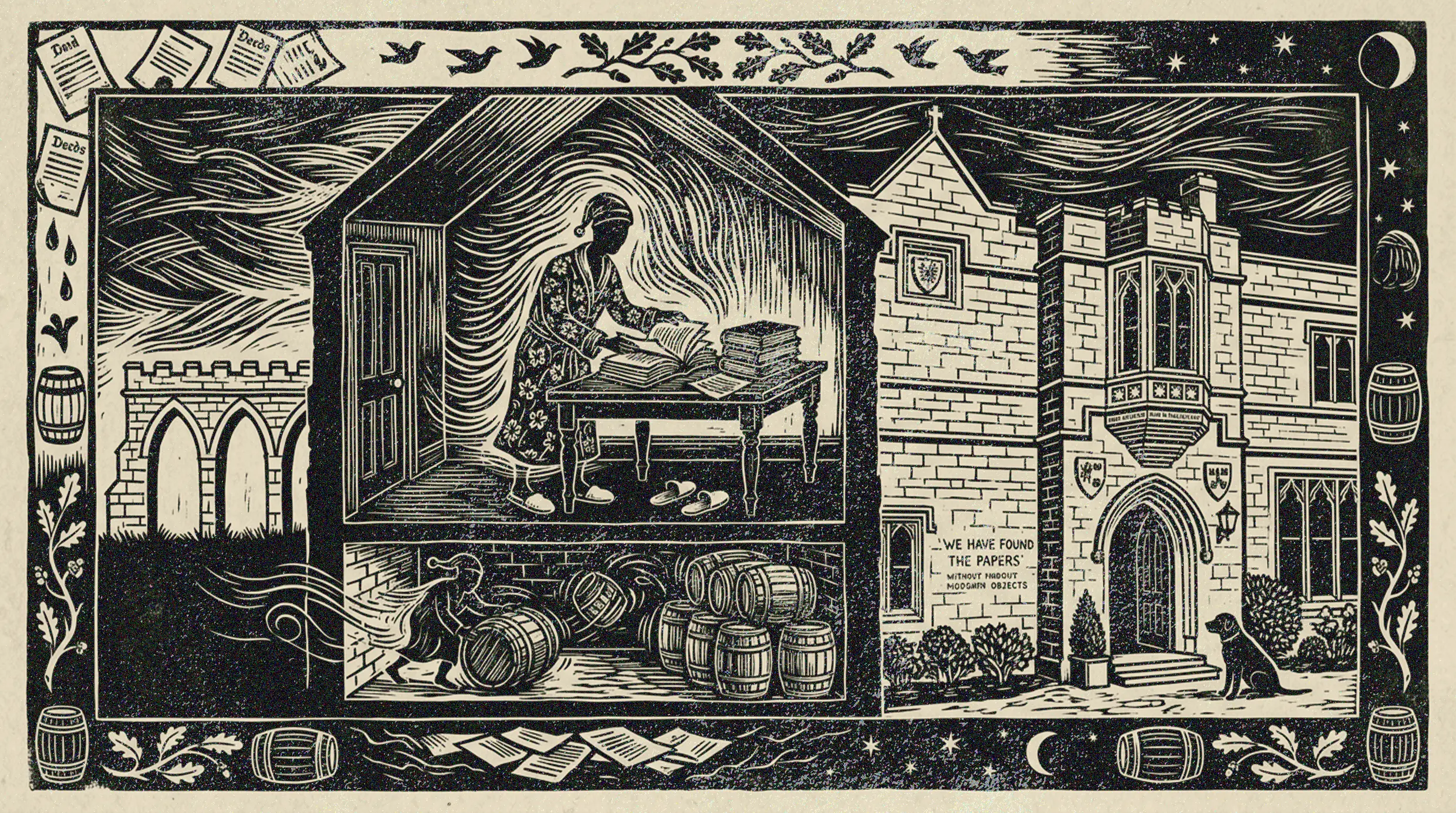
Button Cap
An unseen former rector searched the same room night after night for a document that might undo an old injustice.
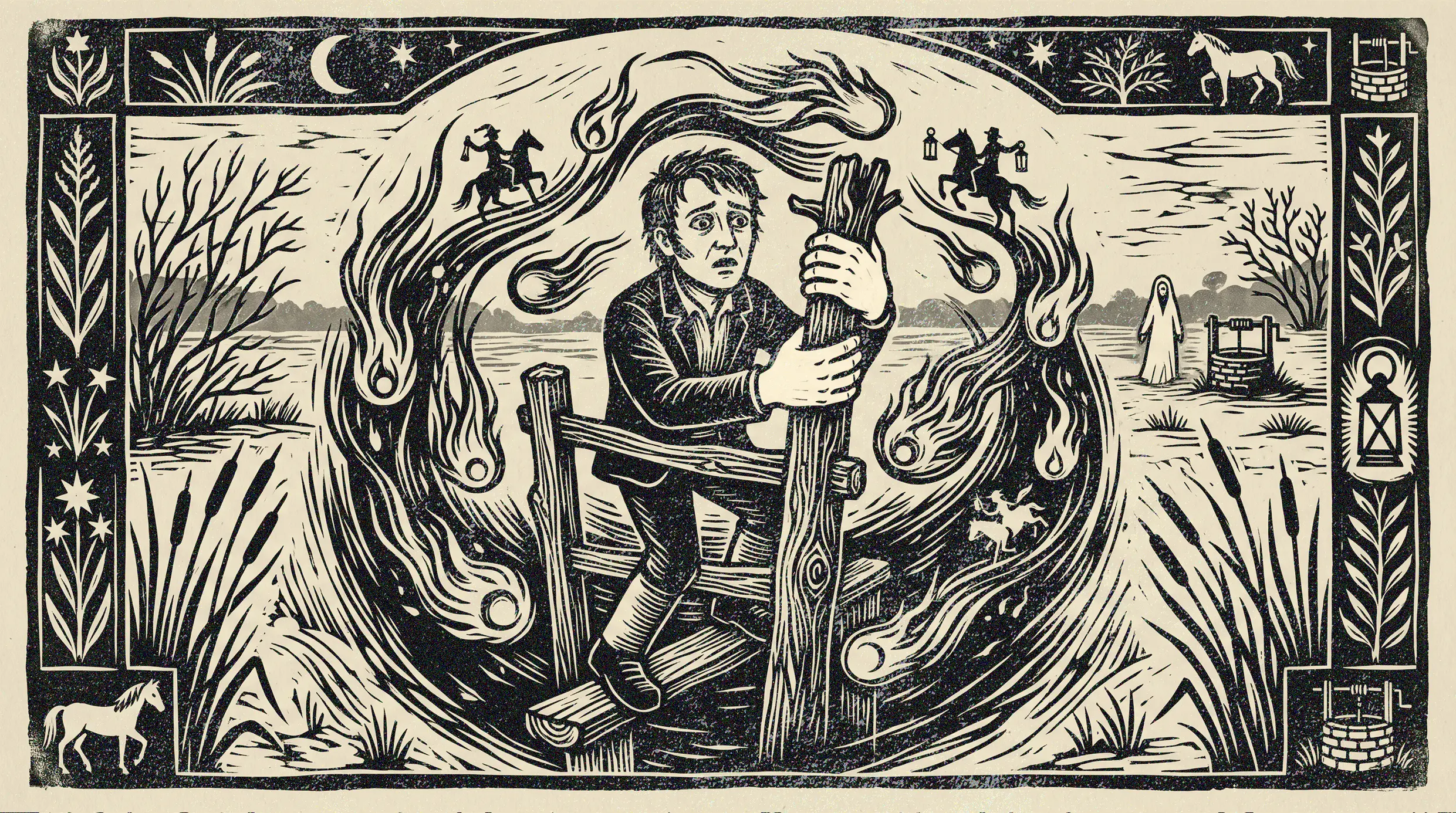
The Will o' the Wisps
John Clare struggled to believe in ghosts, but the lights he encountered around Helpston frightened him deeply.
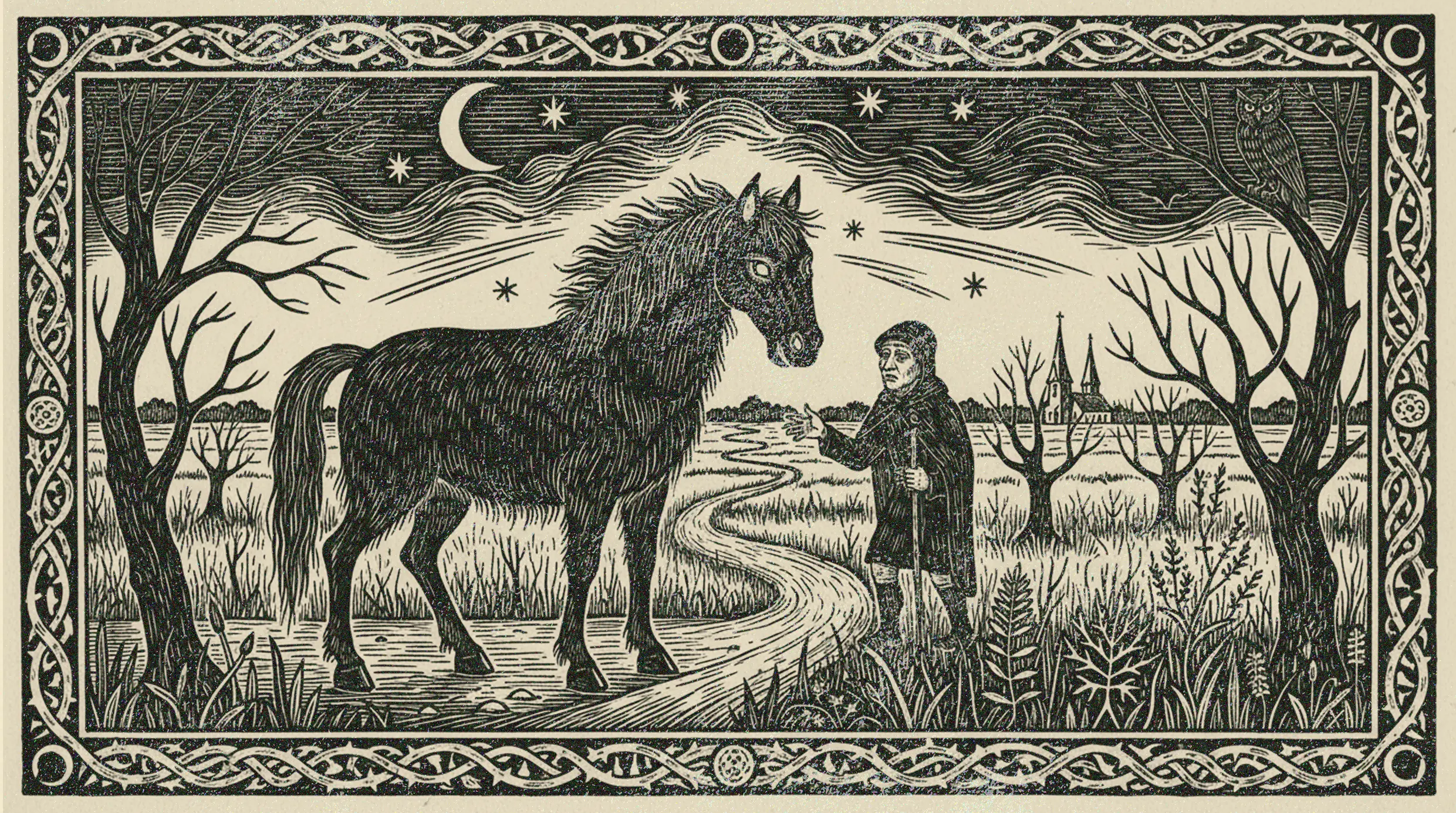
The Shag Foal
A huge black creature, neither quite horse nor bear, was said to follow travellers through the countryside after dark.
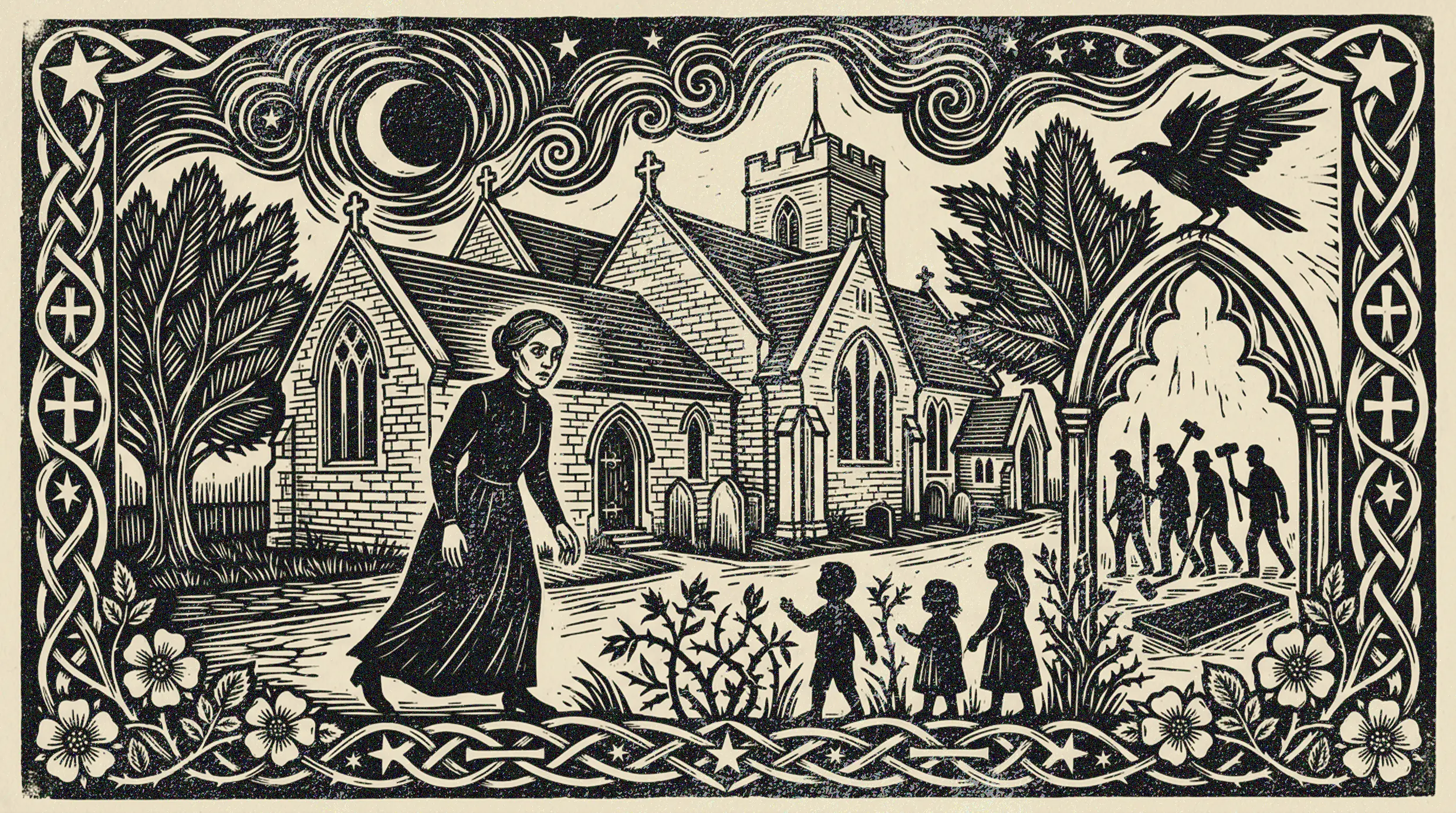
The Woman in Black
First reported in 1908, a Peterborough apparition continued to generate witness testimony decades later.
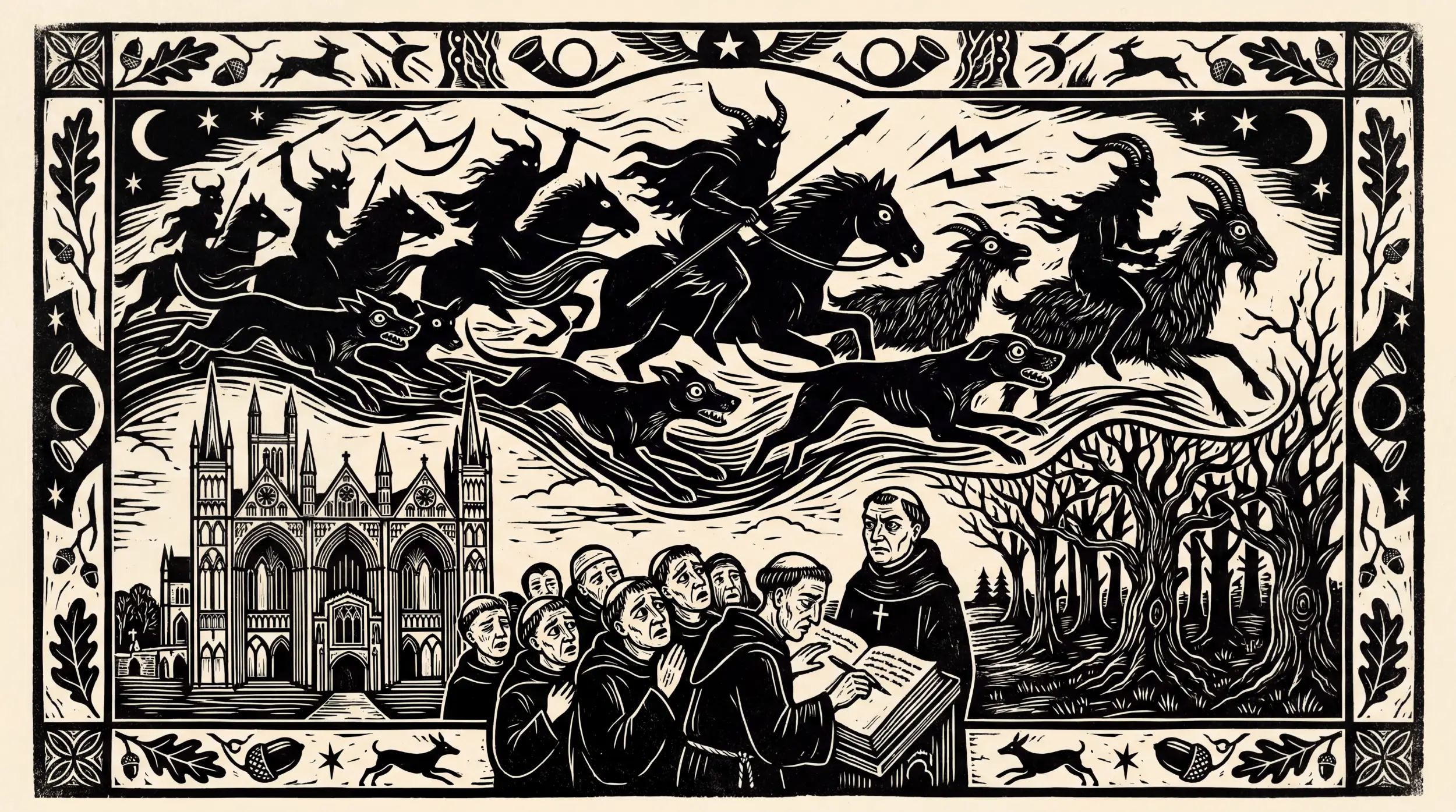
The Wild Hunt
Black riders, monstrous hounds and hunting horns entered Peterborough's written record during the rule of an unpopular abbot.
Behind the haunting
The siege and Hudson's death are historical events. The supernatural manifestations attributed to him belong to later folklore and are presented as tradition rather than fact.
-
Historic England · Woodcroft Castle
Grade II* listing for the late thirteenth-century moated fortified residence, including the surviving gateway, western range and circular tower. -
Dictionary of National Biography · Michael Hudson
Detailed biographical account of Hudson's Royalist career, imprisonments, escapes and death at Woodcroft on 6 June 1648, drawing upon earlier seventeenth-century sources. -
Anthony Wood · Athenae Oxonienses
Early account of Hudson's career and violent death at Woodcroft, including the battlements, moat and treatment of his body. -
Cromwelliana · Woodcroft Manor ghost tradition
Records the later tradition that Hudson's cries for mercy and quarter and the sounds of fighting could still be heard at Woodcroft. -
John Clare Chronology
Records Clare's employment at Woodcroft Castle in 1805. -
Discover Peterborough · John Clare
The wider life and Peterborough connection of the poet whose childhood working life briefly brought him to Woodcroft. -
Discover Peterborough · Peterborough Cathedral History
The wider Civil War story, including Parliamentarian destruction at the Cathedral in 1643 and the city's place in the political conflict of the seventeenth century. -
Discover Peterborough · Peterborough Folklore
Explore the wider collection of hauntings, customs, legends and strange stories associated with Peterborough. -
Discover Peterborough · Weird Weekends
Use Peterborough's stranger histories as a starting point for discovering real places and stories across the area.