


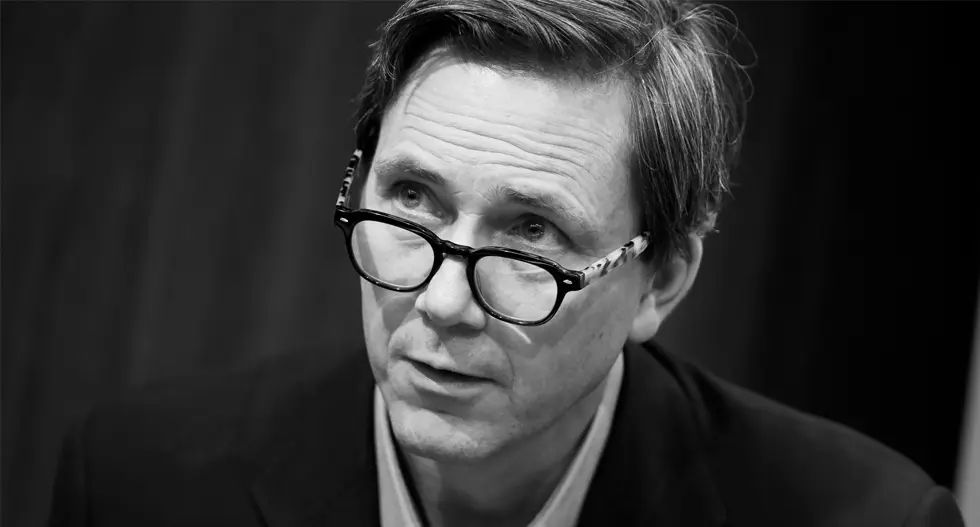
Peterborough-born writer and social scientist Richard V. Reeves has built an international career examining social mobility, class, family life and the changing circumstances of boys and men.
Life and career in dates
- 1969 Born in Peterborough on 4 July
- 1987 Leaves Jack Hunt Comprehensive School
- 1990 Graduates from Wadham College, Oxford, with a first-class degree in geography
- 1994–2000 Works for the Guardian and the Observer
- 2007–08 Publishes his biography John Stuart Mill: Victorian Firebrand
- 2008–10 Director of the London think tank Demos
- 2010–12 Director of Strategy to Deputy Prime Minister Nick Clegg
- 2012 Moves to the United States and joins the Brookings Institution
- 2013 Awarded a doctorate in philosophy by the University of Warwick
- 2017 Publishes Dream Hoarders
- 2022 Publishes Of Boys and Men
- 2023 Founds the American Institute for Boys and Men
Peterborough beginnings
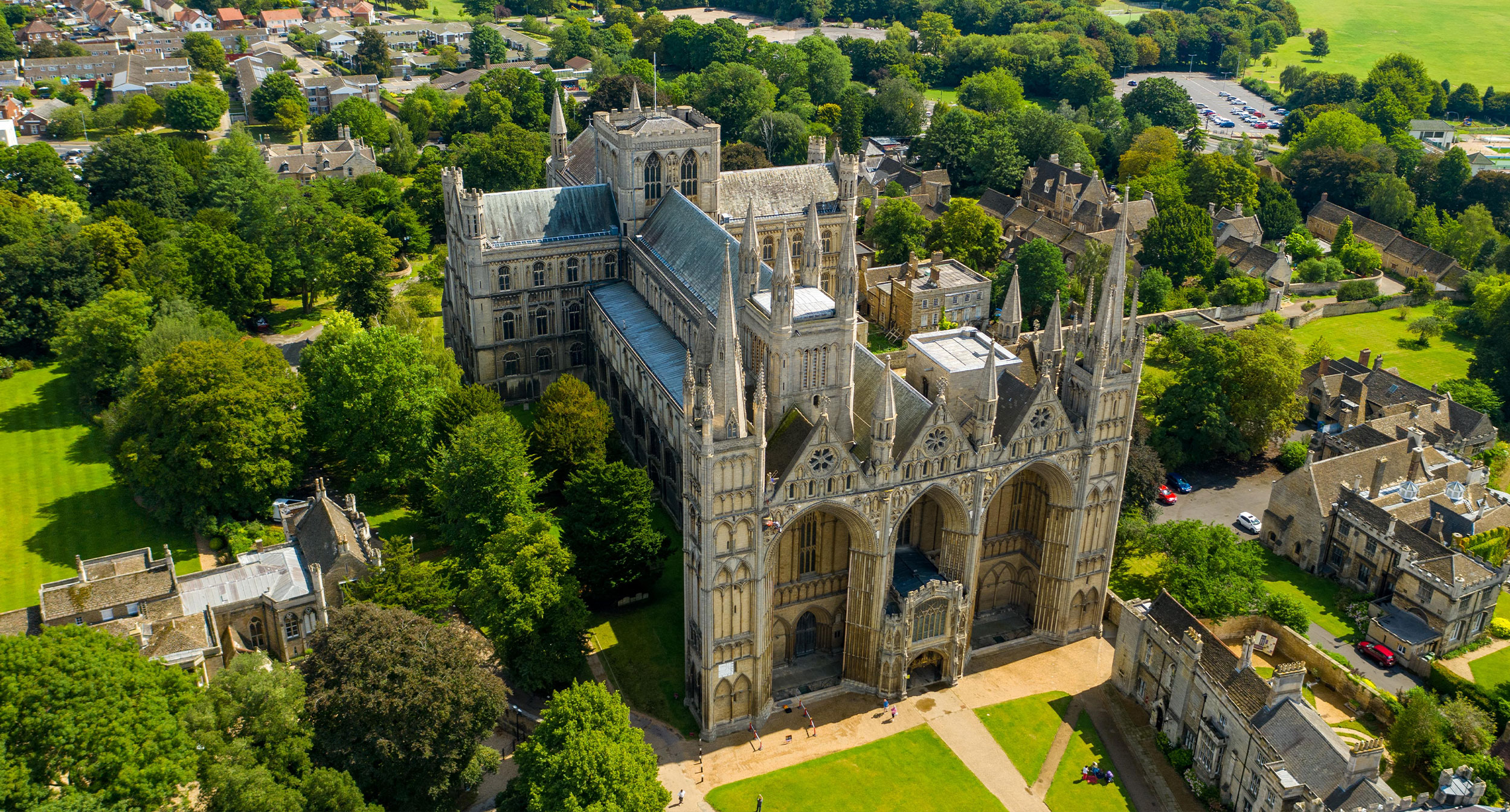
Richard Vaughan Reeves was born in Peterborough on 4 July 1969 and grew up while the city was still strongly shaped by manufacturing, engineering and agricultural employment.
His father worked on the white-collar side of manufacturing after an earlier career with Ford. The industrial recessions of the 1980s hit the family directly when his father experienced periods of unemployment. Reeves has recalled how his father would still get dressed for work each morning before sitting down to write job applications, treating the search for employment as his new job.
His mother worked for a time as a night nurse at a factory, while Reeves himself spent part of his teenage years working in a frozen-pea factory. These experiences gave him an early view of the connections between employment, family identity, social class and personal dignity—subjects that would later run through much of his writing.
Reeves attended Jack Hunt Comprehensive School, a large and socially mixed Peterborough school. He has described it as diverse not only in ethnicity and family background but also in the range of pupils it supported, including young people with physical disabilities.
A lunchtime debating club helped change the direction of his life. Through debating, Reeves discovered an enthusiasm for testing ideas and speaking in public. After an older member of the club encouraged him to visit Oxford, he began to see the university as somewhere he might genuinely attend. He later recalled being only around the third pupil from his school to reach Oxford or Cambridge.
Peterborough gave Reeves an early education in industrial change, aspiration and the uneven distribution of opportunity—themes that have remained central throughout his career.
Oxford and early research
Reeves studied geography at Wadham College, Oxford. Arriving from a comprehensive school where progression to Oxbridge was unusual made him particularly conscious of differences in educational background and social confidence.
He graduated in 1990 with first-class honours. His interest in social policy initially took him into academic research rather than journalism. Between 1990 and 1992 he worked as a researcher at the Institute of Psychiatry at the University of London, contributing to research concerning mental health services and primary care.
He then became a research fellow at the Institute for Public Policy Research. The role placed him within the world of British policy development during the period in which many of the ideas associated with New Labour were being formed.
Journalism and public policy
In 1994 Reeves joined the Guardian as its economics correspondent. His financial journalism earned him the Wincott Young Financial Journalist of the Year award in 1995.
He subsequently became the newspaper’s Washington correspondent before returning to British public policy in 1997 as principal policy adviser to Frank Field, then Minister for Welfare Reform in Tony Blair’s government.
From 1998 to 2000 he was social affairs editor of the Observer. He then became Director of Futures at the Work Foundation, where his interests included employment, wellbeing, workplace culture and the relationship between work and family life.
His early books reflected this broad range of concerns. Happy Mondays: Putting the Pleasure Back into Work considered how working life could become more rewarding, while The 80 Minute MBA, written with John Knell, offered an accessible introduction to management thinking.
John Stuart Mill and liberal thought
One of Reeves’s most substantial early projects was a biography of the Victorian philosopher, economist and politician John Stuart Mill. The resulting book, John Stuart Mill: Victorian Firebrand, examined Mill’s ideas alongside the experiences, relationships and political campaigns that shaped them.
Mill’s commitment to individual liberty, equal opportunity and the removal of barriers to human development had a lasting influence on Reeves. He has said that writing the biography helped him recognise how deeply liberal principles informed his own outlook.
The biography was shortlisted for both the James Tait Black Memorial Prize and Channel 4’s Political Book of the Year. Reeves later developed his study of Mill into a doctorate in philosophy at the University of Warwick. His thesis, completed in 2013, considered the relationship between Mill’s life and thought.
Demos and government
In 2008 Reeves became director of Demos, the influential cross-party London think tank. Its work brought him into contact with politicians and policymakers from across the political spectrum, although Reeves increasingly identified himself with liberal rather than conventionally left-wing politics.
Following the formation of the Conservative–Liberal Democrat coalition in 2010, Deputy Prime Minister Nick Clegg appointed Reeves as his Director of Strategy. His responsibilities included policy development, political strategy and speechwriting during the first half of the coalition government.
Reeves left government in 2012. By then his career had moved repeatedly between research, journalism, think tanks and frontline policymaking—a combination that would shape the accessible, evidence-led approach of his later work.
Opportunity and inequality in America
Reeves moved with his family to the United States in 2012 and joined the Brookings Institution in Washington, DC. He initially worked within its Center on Children and Families and later became a senior fellow in Economic Studies.
During his years at Brookings, he researched intergenerational mobility, poverty, race, education, family structure and the economic position of the American middle class. He directed the Future of the Middle Class Initiative and also helped lead the Center on Children and Families.
His Brookings work repeatedly returned to the gap between the American promise of equal opportunity and the advantages enjoyed by children born into affluent families. In the 2014 essay Saving Horatio Alger, he examined the weakening of social mobility and the continuing power of family background.
Those arguments were developed in Dream Hoarders, published in 2017. The book contended that America’s upper-middle class preserves its position through mechanisms including exclusionary housing, unequal access to education, professional networks and the passing of advantages from one generation to the next.
A related essay, published by the New York Times under the title “Stop Pretending You’re Not Rich”, became one of his most widely discussed articles. Rather than concentrating only on the very richest households, Reeves asked affluent professionals to recognise how their own advantages could restrict opportunity for others.
Reeves became an American citizen in 2016 and retains British citizenship.
Of Boys and Men
While researching inequality across class and race, Reeves became increasingly concerned by evidence that many boys and men were struggling in education, employment, health and family life. His experience of raising three sons also made the subject personally significant.
In 2022 he published Of Boys and Men: Why the Modern Male Is Struggling, Why It Matters, and What to Do About It. The book argues that the difficulties facing boys and men should be treated as structural social problems rather than simply as failures of individual character.
Among the policies he has advanced are closer attention to boys’ developmental position when they start school, recruiting more male teachers, expanding apprenticeships and encouraging more men to enter growing occupations in health, education, administration and literacy.
He has also written extensively about fatherhood, male friendship, suicide, social isolation and the economic dislocation experienced by working-class men. His approach has attracted support and criticism from different parts of the political spectrum, helping to move a previously neglected subject into mainstream policy debate.
Of Boys and Men was selected as a book of the year by both The Economist and the New Yorker. Barack Obama included it on his 2024 summer reading list.
In 2023 Reeves delivered the TED Talk “How to solve the education crisis for boys and men”, setting out his evidence on educational gender gaps and some of the reforms he believes could help address them.
The American Institute for Boys and Men
In 2023 Reeves founded the American Institute for Boys and Men, a non-partisan organisation established to improve public understanding of the challenges facing boys and men and to develop evidence-based policy responses. He remains its president.
The institute’s research covers education, employment, mental health, fatherhood and family life, with particular attention to the experiences of Black boys and men. Reeves’s own current priorities include fatherhood and gender gaps in education.
He also helped launch Britain’s Centre for Policy Research on Men and Boys in 2025 and initially chaired its board. The organisation now lists him as a commissioner on its Boys’ Education Commission.
Reeves continues to write and speak internationally. His work has appeared in publications including the Atlantic, the Wall Street Journal and the New York Times. His books have been translated into numerous languages, and his official biography says he is also pursuing a master’s degree in theology at Trinity College, Toronto.
He now lives in the Appalachian Mountains of East Tennessee and is the father of three adult sons.
From a Peterborough comprehensive school and a teenage job in a frozen-pea factory to government, international publishing and American public policy, Reeves’s career has remained focused on a question rooted in his earliest experiences: who receives a fair opportunity to flourish, and who is in danger of being left behind?