
24 April · Midnight · The Churchyard
St Mark's Eve
in Paston Churchyard
She thought she had simply left for work too early. Then she reached Paston churchyard at midnight and found it filled with silent weddings, silent funerals and people whose futures had not happened yet.
On one night of the year, the churchyard could show you what came next.
There was an old belief that if you kept watch in a churchyard on the night of 24 April, you might see the future walking towards you.
St Mark's Eve belonged to the watchers. Across parts of England, people deliberately sat beside a church or in its porch around midnight, waiting to see a procession that was believed to reveal what the coming year would bring.
These were not usually thought to be the ghosts of people already buried there. The tradition was stranger than that. The figures were supposed to be the likenesses of people who were still alive, but who would die during the next twelve months.
Some versions of the custom allowed another future to appear alongside death. Those destined to marry might also be seen, so the churchyard became a supernatural rehearsal for the parish year ahead, with weddings and funerals passing through the same space before either had happened.
At Paston, one woman was said to have discovered that hidden world without intending to watch for it at all.
The date was always 24 April.
St Mark the Evangelist's feast day falls on 25 April. In English folklore, however, the previous night acquired a remarkably different character.
By at least the seventeenth century there are records of people keeping a St Mark's Eve vigil in order to discover who would die during the following year. The precise rules varied from place to place, but the essential idea remained surprisingly consistent.
In some traditions the watcher sat in the church porch between eleven at night and one in the morning. Others demanded complete silence, or insisted that the vigil had to be repeated over successive years before the watcher truly gained the ability to see what was coming.
There were warnings too. Falling asleep could be dangerous, and some versions said that the most terrible figure a watcher could possibly encounter was their own.
It showed you the people who were going to become dead.
Yet St Mark's Eve was not exclusively about death. Traditions of future marriage also became attached to the night, bringing together two of the great ceremonies that defined parish life. That combination of burial and wedding is crucial to the story remembered at Paston.
You did not even have to stay in the churchyard.
Peterborough has its own documented St Mark's Eve tradition, showing that the Paston tale belonged to a wider local culture of divination rather than existing as an isolated ghost story.
Charles Dack's Weather and Folk Lore of Peterborough and District records a custom in which three tufts of grass were taken from a churchyard on St Mark's Eve and placed beneath the pillow. A short charm was spoken before the sleeper waited for a dream that might reveal what the future held.
Good fortune or bad.
The churchyard knew before you did.
We cannot know how literally such customs were believed by everyone who repeated them. What matters is that the ritual was remembered locally, linking churchyards, dreams and future events with the night of 24 April.
At Paston, the tradition acquired a much more dramatic form. Someone was said to have walked straight into the future while simply trying to get to work.
She was only trying to get to work.
The woman in the Paston story was not a fortune teller, ghost hunter or deliberate churchyard watcher. She was a working woman travelling between neighbouring communities.
She lived at Werrington and went to the rectory at Paston to do the household laundry. Washing on that scale was heavy, time-consuming work, and the story places her journey before dawn, when the roads and fields between the two places were still dark.
One moonlit night she woke and judged that it was time to leave. The telling makes a point of the fact that she had no clock. Like many people, she relied on habit, darkness and the position of the moon.
On this occasion she misjudged it badly. She left much earlier than she intended and arrived at Paston at precisely the wrong hour.
The churchyard was full.
When she reached All Saints, the scene beyond the churchyard gate made no sense. People seemed to be everywhere, although there was no reason for a crowd to have gathered in the middle of the night.
Some appeared to be attending funerals. Others formed wedding parties. The two ceremonies were not happening one after the other, but together, as though different moments in the village's future had been layered over the same patch of moonlit ground.
Funerals.
Silent people moving through the moonlight.
There was none of the sound such gatherings should have made. No celebration, no crying, no bell and no conversation. The figures simply occupied the churchyard, apparently engaged in ceremonies that had not yet taken place.
Unfortunately for the woman, the churchyard stood between her and where she needed to go.
She ran straight through the middle of them.
The familiar route to the rectory now required her to cross a churchyard that appeared to be filled with impossible people. Turning back meant returning alone through the darkness, while going forward meant passing directly through them.
She chose forward and ran, crossing the graveyard as quickly as she could before continuing towards the rectory.
Through the silent ceremonies.
Straight to the rectory door.
She hammered until somebody inside woke and let her in. By daylight there was nothing remarkable to see in the churchyard at all. Whatever had filled it at midnight had disappeared.
The explanation came only when she described what had happened.
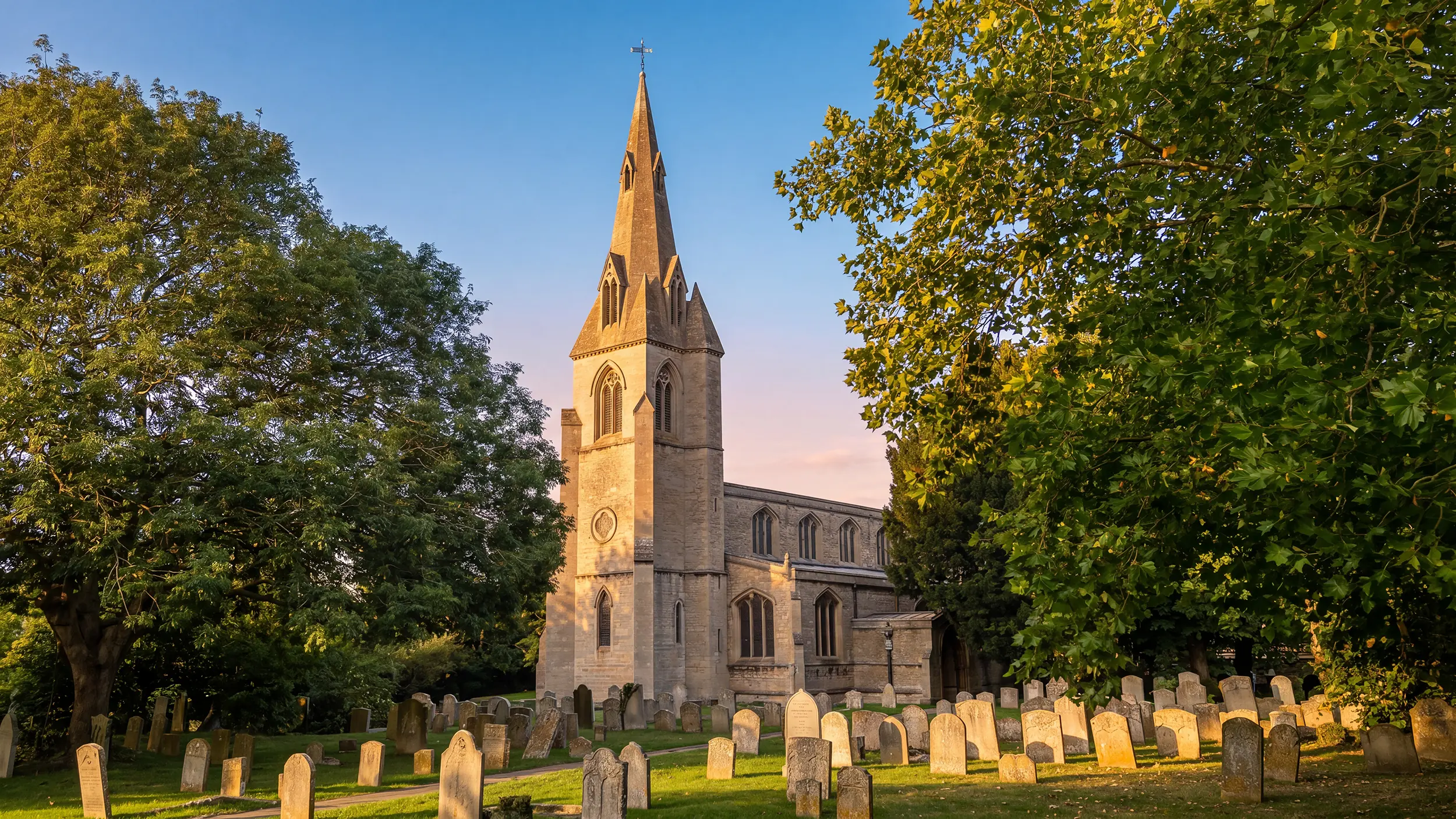
This is All Saints Church, Paston.
One of the strengths of the story is that its setting is neither lost nor difficult to recognise.
All Saints is a Grade I listed medieval parish church with a history stretching back towards the eleventh century. Its north chapel dates from around 1220, much of the tower is fourteenth century, and a late medieval screen survives inside.
For generations this was the working church of a rural parish. People came here to be baptised and married, and eventually to be buried in the ground surrounding it.
That everyday cycle of life makes it an ideal setting for St Mark's Eve folklore. The supernatural version of the churchyard simply takes the ceremonies that really happened here and allows them to arrive early.
“Mr Pratt” may help us place the tale in time.
When the woman finally described what she had seen, the rector in the story is remembered simply as “Mr Pratt”.
That detail is interesting because the history of All Saints records the Rev Joseph Pratt as rector of Paston-cum-Werrington from 1811 until 1876. During the earlier part of his incumbency, Werrington was still part of the same parish as Paston and was not separated from it until 1853.
We cannot prove from the surviving folklore that Joseph Pratt is definitely the rector intended. Nevertheless, the combination of names, places and parish history gives the tale a plausible nineteenth-century setting.
Paston Rectory.
A rector named Pratt.
A nineteenth-century world in which St Mark's Eve was still remembered.
The rector's response is also the perfect ending to this part of the story. After hearing about the crowded churchyard, funerals, weddings and silent figures, he was apparently not surprised at all.
Of course she had seen them. It was St Mark's Eve.
That reaction is more interesting than a conventional ghost story ending. The woman had not discovered a new mystery. She had accidentally walked into a piece of folklore that other people already knew.
These were not ghosts in the usual sense.
A conventional ghost belongs to the past. Somebody dies and something of them is believed to remain. St Mark's Eve folklore reverses that sequence.
The person whose likeness is seen may still be alive and asleep in a nearby house. Their apparition appears because the churchyard supposedly already knows where the coming year will lead them.
Folklorists use terms such as wraith, fetch and double for traditions in which the appearance of a living person is seen elsewhere, often as an omen of death.
Paston's version is more ambitious. Instead of revealing one person's fate, the entire churchyard seems to contain a preview of parish life, with marriage and burial appearing together as events already fixed somewhere in the future.
The church stayed.
Paston is now firmly part of modern Peterborough, but All Saints preserves a much older landscape in miniature.
The medieval church still stands within its churchyard, and the physical relationship between Paston and nearby Werrington still makes the old story understandable. What has changed is everything around it.
Roads, housing and the expansion of Peterborough have replaced the much darker rural journey imagined in the tale. Yet the church tower remains, the burial ground remains, and the geography of the story still works.
That continuity is one reason the folklore remains so effective. It is not a story attached to a vanished building. The city simply grew around the place where it was supposed to have happened.
It turns a familiar walk into something terrifying.
Nothing in the Paston story requires a ruined castle, a murderer or a cursed object. Its ingredients are deliberately ordinary: a woman has work to do, wakes too early, follows a route she already knows and enters a familiar churchyard.
Only the date changes.
On St Mark's Eve, the ordinary churchyard becomes a place where time briefly stops behaving properly. Weddings and funerals arrive before the people involved have lived the events themselves.
That is what makes calendar folklore so effective. The world does not need to look different. The night itself carries the danger.
Same churchyard.
Wrong night.
Follow the story deeper into Peterborough.
Explore the medieval church itself, place the story within Peterborough's wider history, or continue into the other strange traditions preserved across the city.
All Saints Church, Paston
Discover the Grade I listed medieval church at the centre of the story, including its ancient fabric, medieval chapel and continuing place in the community.
Explore All Saints → 02 · HISTORYPeterborough History
Place Paston's medieval church and rural parish world within the much larger story of Peterborough, from ancient settlement to the modern city.
Explore Peterborough's history → 03 · FOLKLOREPeterborough Folklore
Discover the wider collection of strange beliefs, apparitions, church curiosities and old traditions preserved across Peterborough and its historic landscape.
Explore the folklore → 04 · EXPLOREPeterborough Weird Weekends
Turn the stories into a journey and discover unusual places, hidden details and curious histories that can still be found across Peterborough today.
Plan a Weird Weekend →More Peterborough Folklore
Churchyards, warnings, apparitions and strange encounters waiting in ordinary places across Peterborough.
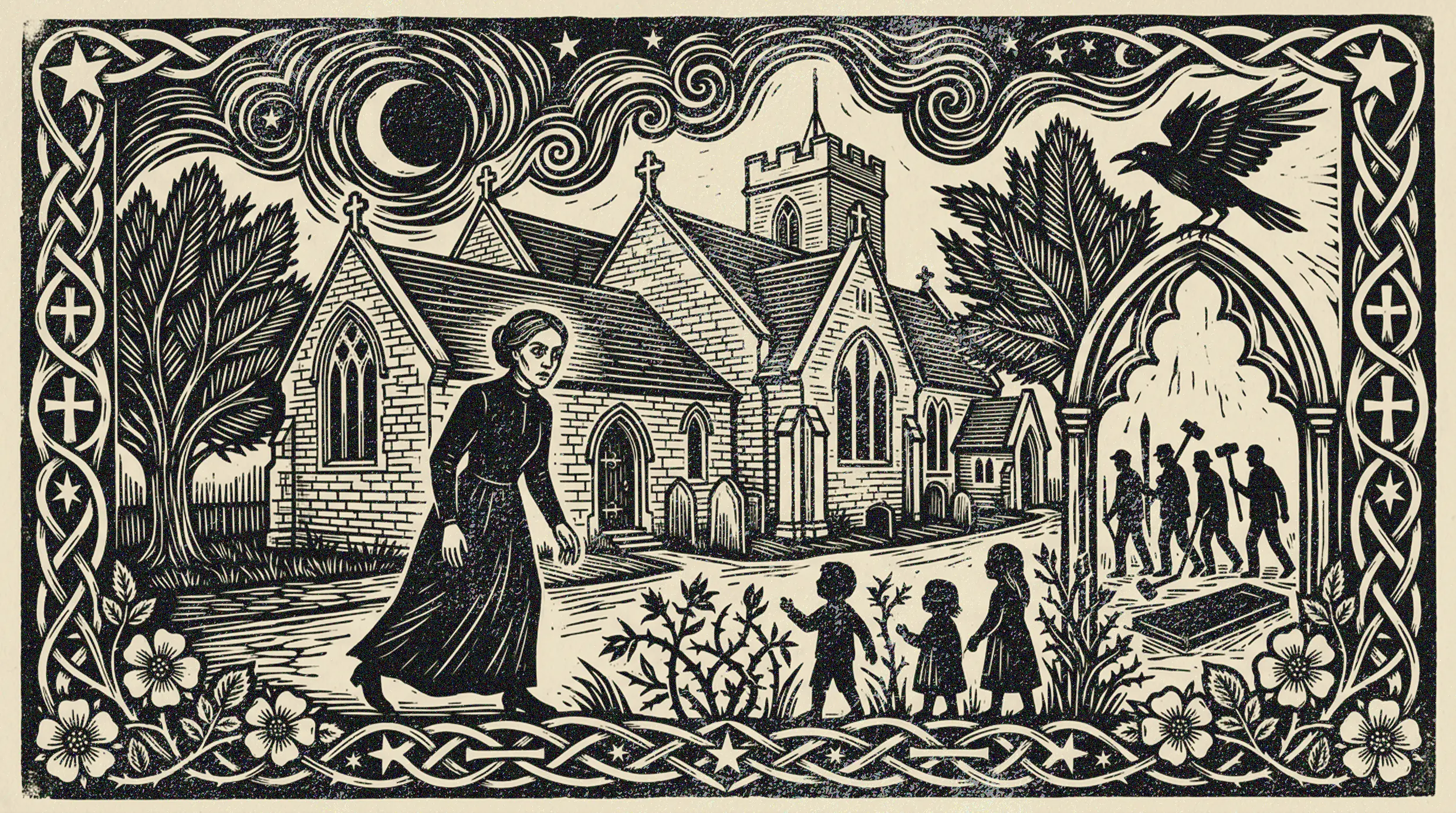
The Woman in Black
First seen in 1908, the mysterious woman of Belsize Avenue was still being discussed by eyewitnesses decades later.
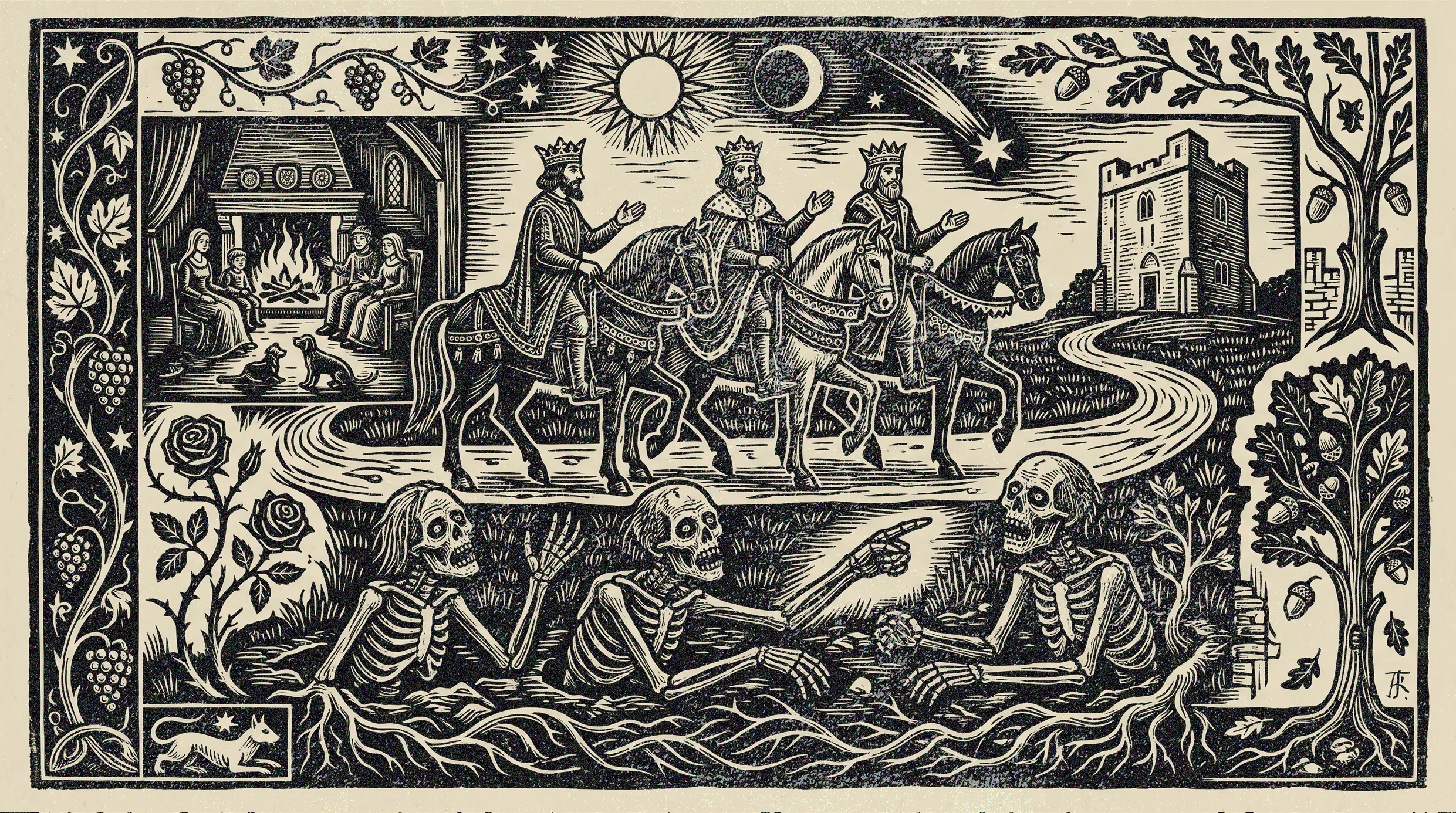
The Three Dead Kings
Three living kings meet three corpses who show them exactly what wealth, youth and power eventually become.
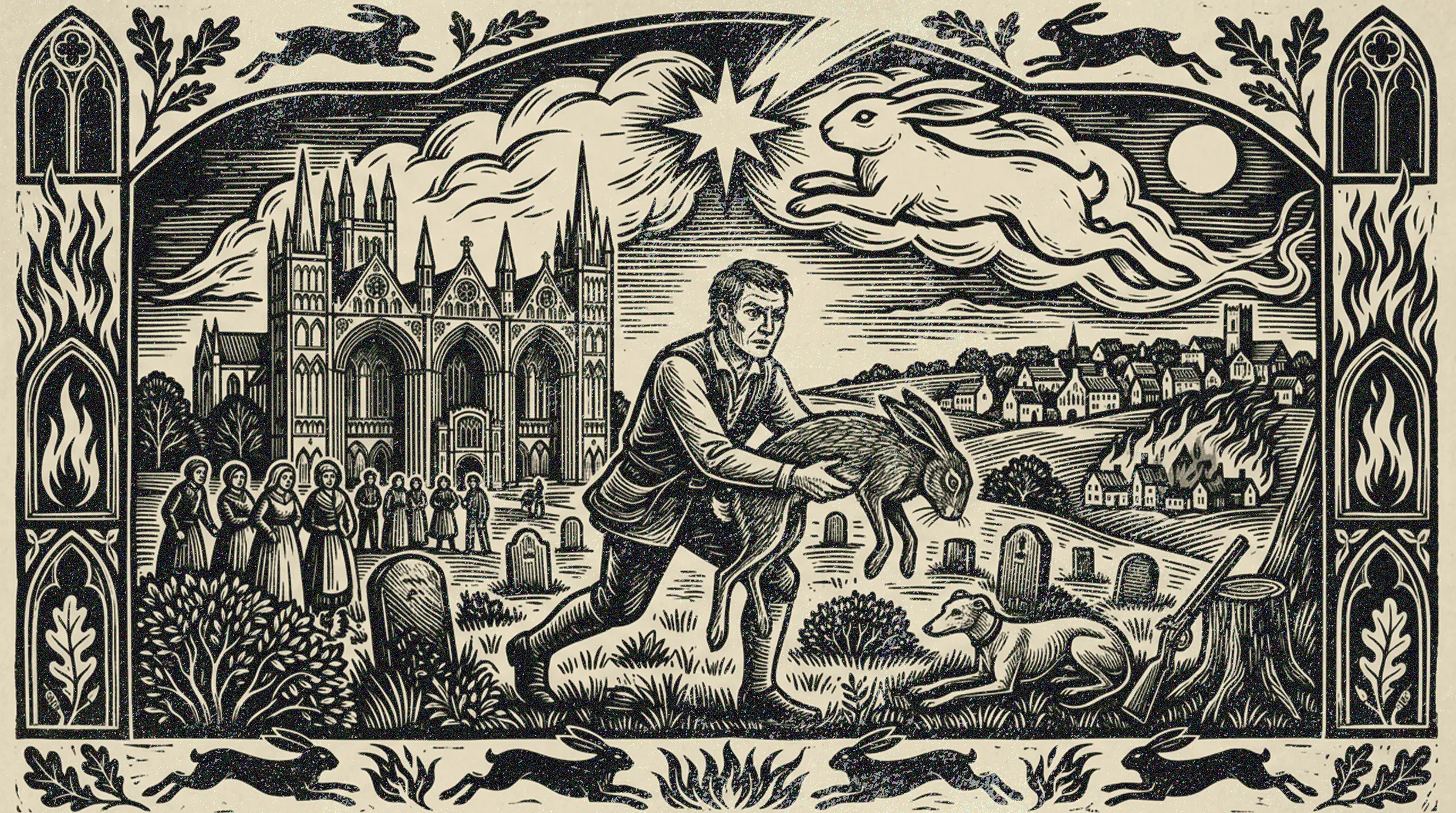
The Hare in the Close
If a hare made its form inside the Minster Close, Peterborough expected a fire in the town before the week was out.
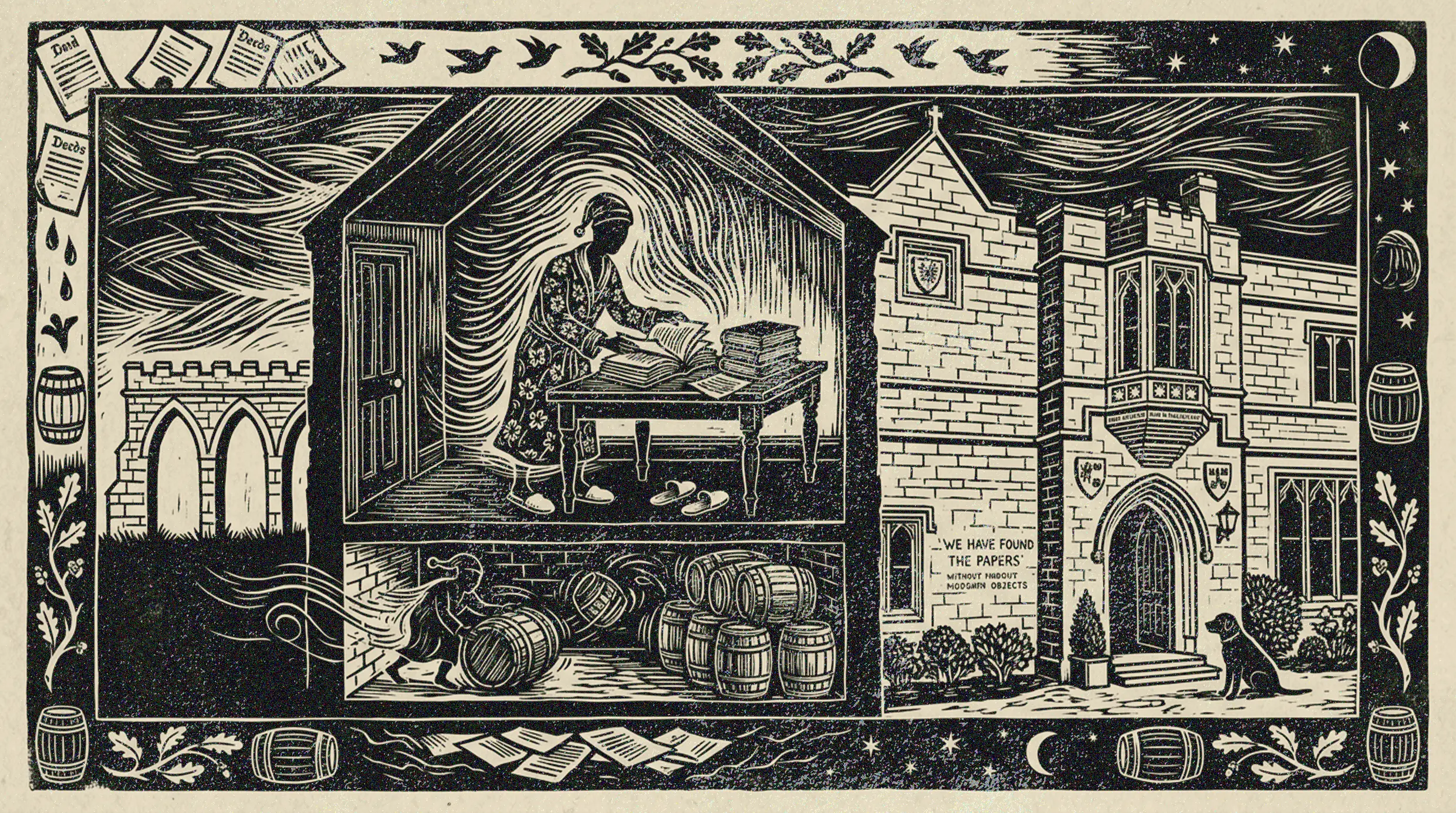
Button Cap
A rectory ghost in loose slippers crossed the room night after night, apparently still searching for something he had hidden while alive.
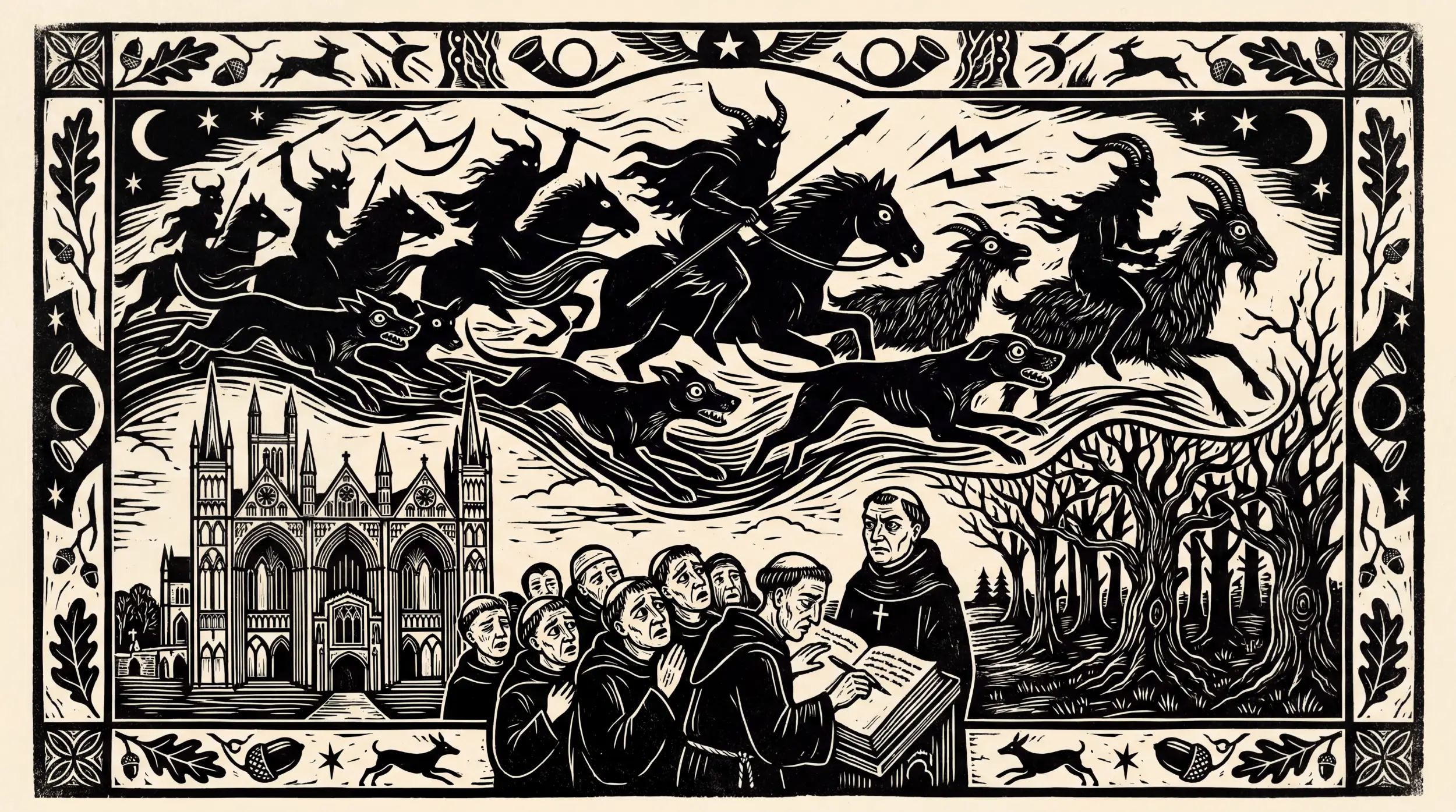
The Wild Hunt
Black riders, monstrous hounds and hunting horns were heard through the countryside after the arrival of an unpopular abbot.
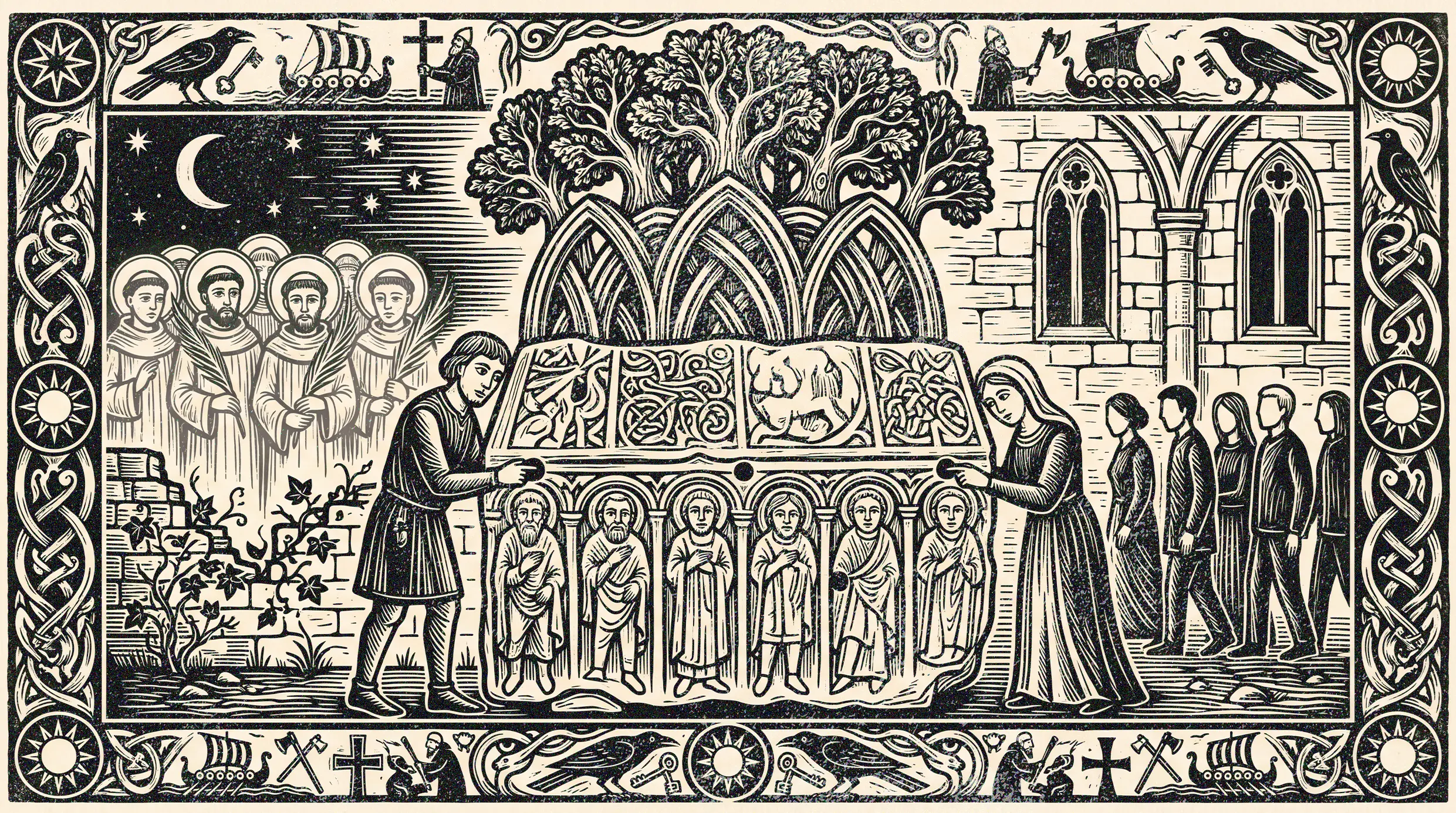
The Hedda Stone
Generations pushed their fingers into mysterious holes worn into one of Peterborough Cathedral's oldest carved stones.
Behind the folklore
The Paston story belongs to a much wider English tradition of St Mark's Eve church watching, but it also sits within a specifically Peterborough landscape in which St Mark's Eve divination was still being recorded in the early twentieth century.
-
Local tradition · St Mark's Eve in Paston Churchyard
The Peterborough tale remembers a woman travelling from Werrington to Paston Rectory before dawn, encountering simultaneous spectral weddings and funerals in the churchyard and later being told that she had unknowingly arrived there on St Mark's Eve. -
Charles Dack · Weather and Folk Lore of Peterborough
and District
Dack records a local St Mark's Eve divination involving three tufts of grass taken from a churchyard and placed beneath the pillow so that a dream might reveal the person's future. -
All Saints Church Paston · Church History
Local church history records the medieval fabric of All Saints, the long nineteenth-century incumbency of Rev Joseph Pratt and the former parish connection between Paston and Werrington. -
Discover Peterborough · All Saints Church
Visitor information and history for the Grade I listed church at the centre of the story. -
Discover Peterborough · Weird Weekends
Paston churchyard forms part of the wider collection of strange places, church curiosities, hauntings and folklore that can still be explored across Peterborough.