

John Clare (13 July 1793 – 20 May 1864) was an English poet, naturalist and agricultural labourer whose extraordinarily attentive writing captured the wildlife, language, customs and changing landscapes of the countryside around Helpston, now within the City of Peterborough.
Born into a labouring family and educated only intermittently, Clare achieved national fame with the publication of Poems Descriptive of Rural Life and Scenery in 1820. His success briefly carried him from the fields of Helpston into fashionable literary circles, but it did not bring lasting financial security. He continued to write through poverty, ill health, family loss and prolonged periods of serious mental distress, producing a vast body of poetry and prose that was only fully appreciated long after his death.
Today, Clare is recognised as one of the most distinctive voices of the Romantic period, one of England’s greatest writers about nature and rural life, and an important chronicler of the environmental and social upheaval caused by enclosure. His poetry is inseparable from the landscape north of Peterborough: Helpston, Glinton, Northborough, Lolham, Royce Wood, Swaddywell, Maxey, the heath, the fen edge and the surviving fragments of the countryside he knew.
A life in dates
- 1793Born in a thatched cottage at Helpston
- 1809Enclosure act passed; writes his first dated poem
- 1820First collection published; marries Patty Turner
- 1832Moves the four miles to Northborough
- 1837Enters Dr Allen’s asylum at High Beach
- 1841Walks 80 miles home from Essex
- 1841Admitted to the Northampton asylum
- 1864Dies at Northampton; buried at Helpston
- 1989Memorial stone, Poets’ Corner, Westminster Abbey
A Peterborough poet
John Clare was born on 13 July 1793 in a small thatched cottage in Helpston. At the time, Helpston formed part of the historic Soke of Peterborough in Northamptonshire. Following local government changes in the 20th century, the village is now within the present-day City of Peterborough unitary authority.
Clare therefore belongs to both the literary history of Northamptonshire and the cultural heritage of modern Peterborough. During his lifetime he was widely marketed as the “Northamptonshire Peasant Poet”, a description that helped to attract readers but also confined him within a romanticised image of rural poverty. Today, he is more properly understood as a sophisticated, experimental and exceptionally knowledgeable writer whose work reaches far beyond that original label.
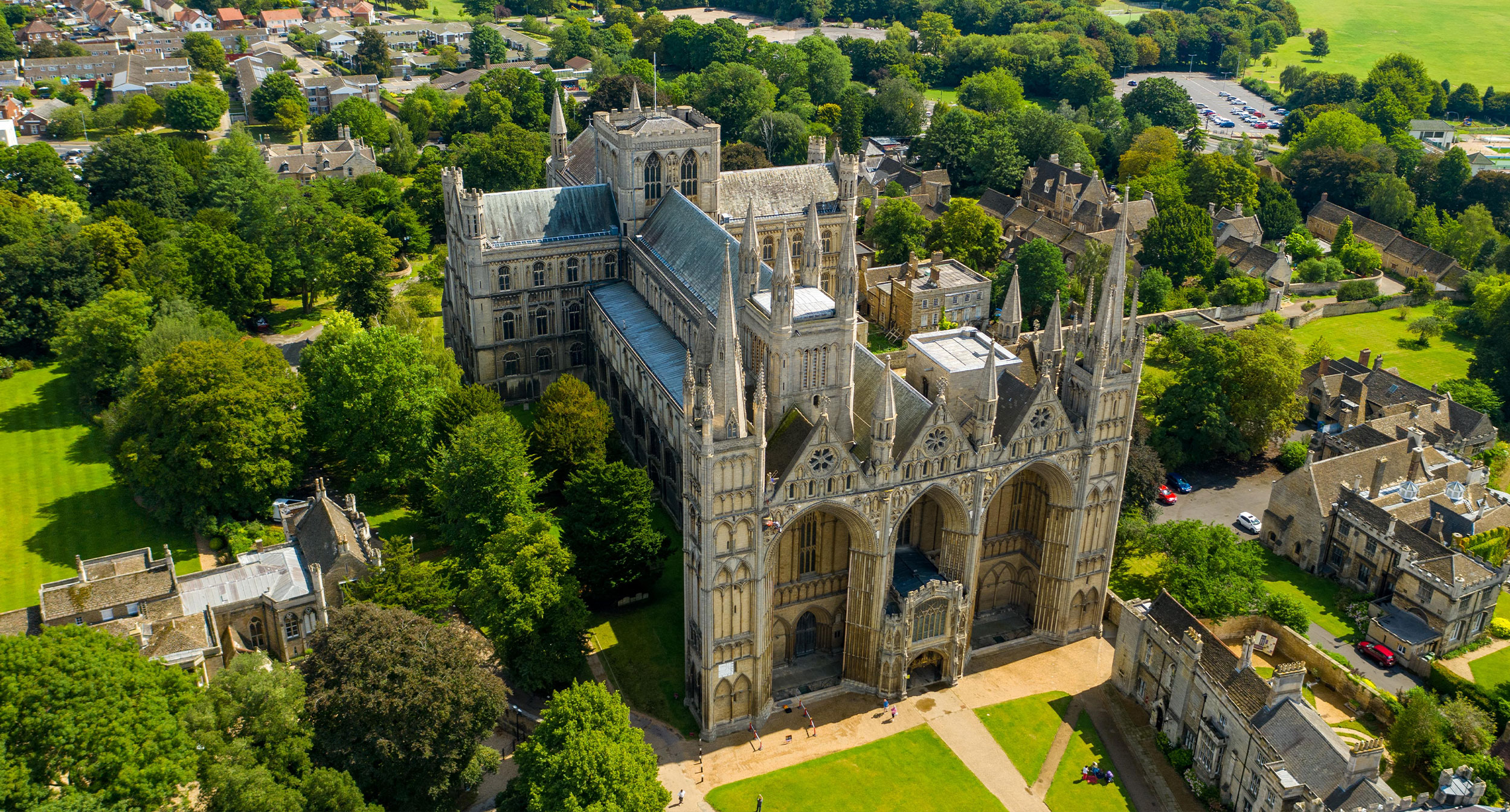
His birthplace survives as John Clare Cottage, a museum, garden and community heritage site in the centre of Helpston. Clare is buried nearby in the churchyard of St Botolph’s Church.
A Poet is Born not Made
Clare’s gravestone, St Botolph’s churchyard, Helpston
Peterborough also holds an important collection of Clare manuscripts and associated material. The scale of this local archive is a powerful reminder that Clare is not simply a poet who happened to have been born near Peterborough. His life, language, natural knowledge and creative imagination were all deeply formed by this particular landscape.
Childhood in Helpston
Clare was the son of Parker Clare, an agricultural labourer with a reputation as a singer of traditional songs, and Ann Clare, née Stimson. John was the elder of twins, but his sister Elizabeth, known as Bessy, died during infancy.
The family lived in considerable poverty. Their cottage was small, and John began agricultural work while still a child. His education was irregular and had to be fitted around the demands of seasonal labour. He attended a local dame school run by Mrs Bullimore and later a school at Glinton Church. He did not enjoy the extended formal education available to children from wealthier families, but he developed an intense appetite for reading and continued to educate himself.
Around the age of 11, Clare encountered the poetry of John Pomfret. His father, whose eyesight was poor, reportedly asked John to read the poems aloud. A few years later, while working as a potboy at the Blue Bell Inn in Helpston, Clare discovered James Thomson’s The Seasons. The book made a profound impression on him because it demonstrated that the changing life of the countryside could become the subject of serious poetry.
Clare later associated this discovery with his earliest efforts to write verse. His first dated surviving poem, “Helpstone”, was written in 1809. Even at this early stage, his home village was more than a backdrop. It was the centre of his emotional and imaginative world.
Labourer, gardener and self-educated writer
Clare’s working life was varied and physically demanding. He was employed as a ploughboy, agricultural labourer, gardener, lime burner and potboy. He worked at Burghley House near Stamford and spent periods working in Great Casterton and Pickworth. In 1812 he joined the Northamptonshire Militia at Oundle, although military life did not become a lasting career.
These experiences gave Clare detailed practical knowledge of rural work. He understood the countryside not as a distant view or decorative scene but as a working environment shaped by labour, weather, poverty, custom and necessity. His poems contain ploughmen, shepherds, gleaners, bird-nesters, gypsies, woodmen, field workers and village characters because these were the people among whom he lived.
Clare was also deeply interested in popular traditions. He played the fiddle, collected songs and dance tunes, recorded local stories and wrote about customs, celebrations, courtship, superstition and everyday village life. His surviving work is therefore valuable not only as poetry but as an unusually rich record of rural culture during a period of rapid change.
Calling Clare “self-taught” is broadly accurate, but it should not suggest intellectual isolation. He read widely whenever books became available and engaged seriously with earlier and contemporary poets. His influences included James Thomson, Robert Burns, William Cowper, George Crabbe and fellow labouring-class poet Robert Bloomfield. Later, his London contacts introduced him to leading literary figures including Charles Lamb, William Hazlitt, Samuel Taylor Coleridge, Thomas Hood and Thomas De Quincey.
Mary Joyce and Martha Turner
As a young man, Clare fell in love with Mary Joyce, the daughter of a comparatively prosperous local farmer. Her father opposed the relationship, and the couple did not marry. Mary nevertheless remained a powerful presence in Clare’s memory and imagination. He wrote numerous poems connected with her and, during his later illness, sometimes believed that she was his wife.
In 1817 Clare met Martha Turner, usually known as Patty, while working as a lime burner in Rutland. They married at Great Casterton on 16 March 1820, shortly after the publication of his first book. Their marriage lasted for the remainder of Clare’s life, although it was placed under severe pressure by poverty, his prolonged absences and his deteriorating health.
John and Patty had a large family, and several of their children died young. Patty faced the difficult responsibility of supporting and caring for the household while Clare attempted to balance physical work, writing, public expectations and increasingly serious mental distress. She outlived him by seven years, dying in 1871.
Enclosure and a changing landscape
One of the most important events of Clare’s youth was the enclosure of Helpston and its neighbouring landscape. The parliamentary act authorising enclosure was passed in 1809, when Clare was 16.
Before enclosure, much of the countryside around Helpston consisted of common fields, heath, wet ground, tracks and other shared spaces governed by longstanding customary rights. Rural people could use parts of this land for grazing, gathering fuel, collecting food or moving between settlements. Enclosure divided and reorganised this landscape into separately owned fields, frequently marked by hedges, ditches, fences and roads.
Enclosure had complex agricultural and economic causes, but for many poorer villagers it meant the loss of customary access to land. Clare witnessed both the physical transformation of familiar places and the weakening of a communal way of life. Paradoxically, he was at times employed in the labour of making new boundaries, even while grieving for what those boundaries destroyed.
This experience runs throughout poems including “The Mores”, “The Lament of Swordy Well”, “The Fallen Elm” and “Remembrances”. Clare records the disappearance of open ground, old trees, paths, habitats and freedoms. His criticism is not an abstract political argument imposed upon the countryside. It emerges from a precise knowledge of particular places and from the experience of seeing them altered.
For this reason, Clare is frequently described as an early environmentalist or ecological poet. These are modern terms that he would not have used about himself, but they help to explain his contemporary importance. He understood that changes to land ownership could simultaneously affect wildlife, human communities, memory, movement and belonging.
Literary discovery and sudden fame
Clare’s route into publication began through the Stamford bookseller Edward Drury. Drury recognised the quality of his writing and helped bring it to the attention of his cousin John Taylor, a London publisher associated with the work of John Keats.
In January 1820 Taylor and Hessey published Clare’s first collection, Poems Descriptive of Rural Life and Scenery. Its title page identified the author as “a Northamptonshire Peasant”, foregrounding Clare’s class and occupation as part of the book’s appeal.
The collection was an immediate success. It went through four editions during 1820, attracted extensive press attention and brought Clare into contact with wealthy patrons and the London literary world. The Marquess of Exeter, whose seat was Burghley House, granted him an annuity, while Earl Spencer and Earl Fitzwilliam were among those who offered support.
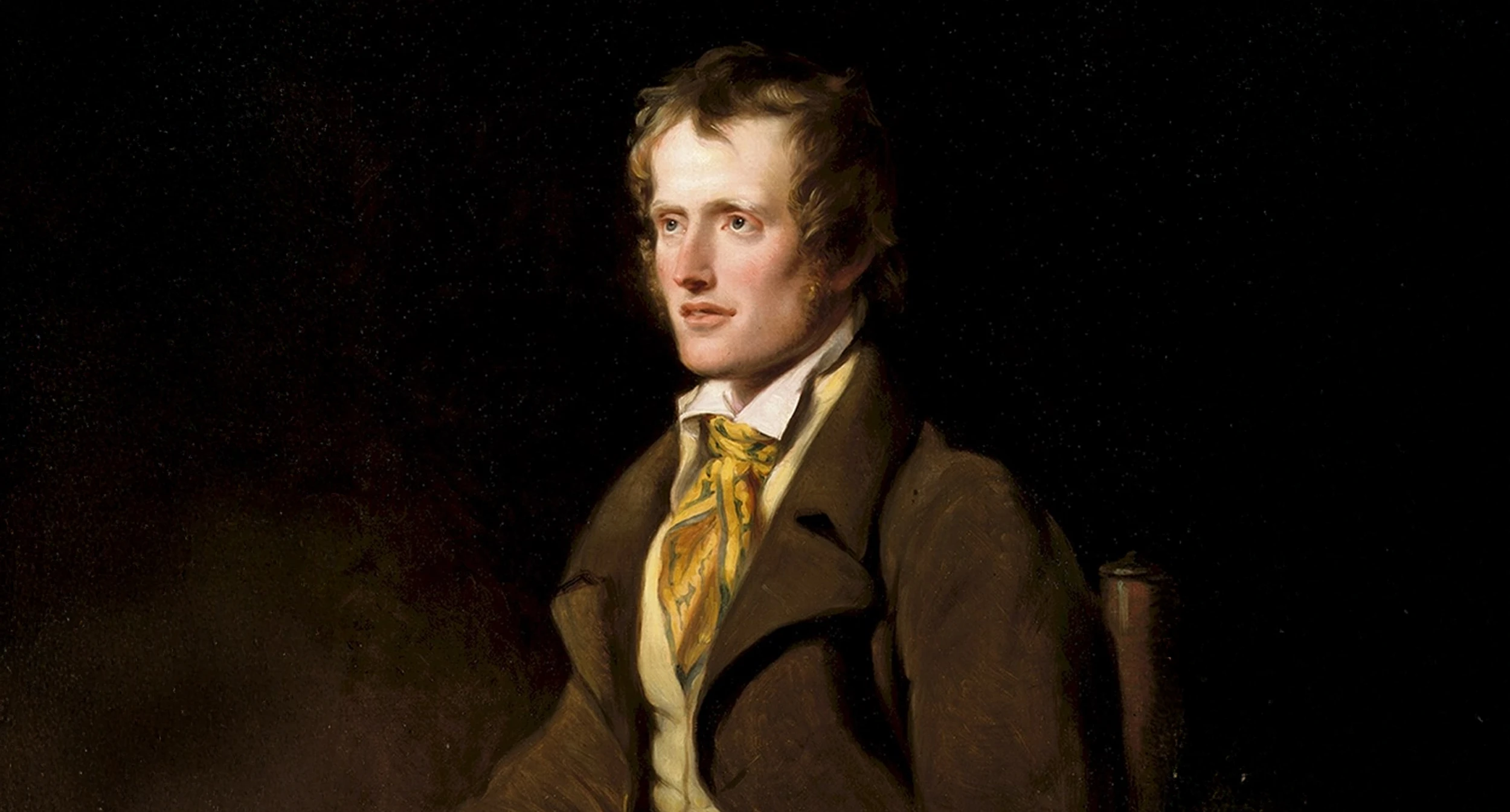
Clare visited London and sat for a portrait by the artist William Hilton. For a time, he was celebrated as a literary discovery: a supposedly untutored rural labourer who appeared to write directly from nature.
That public story was always misleading. Clare’s poetry was rooted in lived experience, but it was also shaped by sustained reading, revision and conscious artistic choices. His publishers sometimes altered his spelling, punctuation and grammar to conform to metropolitan expectations. These interventions could make his work appear more conventional while weakening elements of its rhythm, dialect and distinctive voice.
Clare’s relationship with literary London was therefore ambivalent. He valued friendship, recognition and access to books, but disliked being treated as a curiosity. In London he was separated from the places he understood most intimately. Back in Helpston, his fame could create a different kind of isolation, marking him out from neighbours without freeing him from poverty.
Clare’s four lifetime collections
1820
Poems Descriptive of Rural Life and Scenery
His breakthrough volume introduced readers to his close observations of village life, labour, plants, birds, insects, weather and seasonal change. It also established the public image of Clare as the “peasant poet”.
1821
The Village Minstrel, and Other Poems
This second collection developed his accounts of childhood, rural society and the imaginative life of the village. Although it followed quickly after his first success, it did not create the same level of public excitement.
1827
The Shepherd’s Calendar
Organised around the months of the year, this is one of Clare’s most important achievements. Its detailed descriptions follow agricultural work, wildlife, weather, celebrations and customary life through the seasonal cycle.
1835
The Rural Muse
Clare’s final published collection appeared after his move from Helpston to Northborough. Although it received some favourable reviews, sales were limited. It was the last new volume of his poetry to appear during his lifetime.
Clare also prepared other substantial collections that remained unpublished, including The Midsummer Cushion. Many of his finest poems did not appear in an authorised book while he was alive. The Clare known to modern readers is therefore partly the product of later manuscript research and editorial recovery.
A poet of exact observation
Clare’s poetry is remarkable for its precision. He did not write about an undifferentiated idea of “nature”. He noticed individual species, behaviours, sounds, textures and habitats. Birds build nests in particular ways; insects move through particular plants; weather changes the appearance and sound of particular fields.
His knowledge came through repeated observation. He walked extensively and often wrote outdoors or soon after returning home. His poems preserve the movement of clouds, the calls of birds, the disturbance of grass, reflections in water and the small signs by which rural people read the weather.
Clare was especially fascinated by birds and their nests. Poems such as “The Nightingale’s Nest” bring the reader close to a hidden habitat while remaining conscious of how easily human curiosity can become intrusion. The poem is both an act of discovery and an exercise in restraint.
“The Badger” depicts the persecution of an animal by dogs and people with an uncomfortable directness. “Mouse’s Nest” transforms an apparently minor encounter into a moment of intimate attention. “The Lament of Swordy Well” gives a damaged piece of land its own speaking voice. “The Mores” remembers common land as a place of ecological abundance and human freedom.
Clare’s writing is sometimes gentle and celebratory, but it is not sentimental. Nature in his poetry can be violent, exposed, hunted, damaged and indifferent. What distinguishes his work is the effort to see other forms of life on their own terms.
Language, dialect and punctuation
Clare wrote using local vocabulary, vernacular speech and forms of grammar that reflected the language he heard around Helpston. Words from his poetry preserve elements of local knowledge that standard English might otherwise have lost.
His surviving manuscripts often use little punctuation. Editors have disagreed over how closely printed versions should follow this practice. Early publishers introduced punctuation and standardised his spelling, partly to satisfy contemporary readers. Later editors have sometimes restored a freer text intended to reflect the movement and openness of Clare’s manuscripts.
This makes the choice of edition particularly important. The same poem can look and sound significantly different depending on how an editor has treated Clare’s spelling, lineation and punctuation.
Clare’s resistance to standardisation was not simply the result of limited schooling. He understood that rules of “correct” language were connected with class and authority. His vernacular writing asserts that the speech, knowledge and experience of rural working people belong within literature.
Northborough and the loss of home
By the early 1830s Clare and his growing family needed more space and greater financial security. With assistance from Earl Fitzwilliam and other supporters, they moved in 1832 from Helpston to a cottage and smallholding in Northborough.
The distance was only a few miles, but Clare experienced the move as a profound displacement. Helpston was the landscape of his childhood, memory and identity. Northborough never entirely became home.
This sense of estrangement appears in poems such as “The Flitting”, in which physical relocation becomes a larger meditation on loss and belonging. Clare’s distress was not caused by one event alone, but the move intensified his feeling that the world he knew was slipping beyond reach.
His financial difficulties continued. Literary fashion had changed, book sales declined and the annuities provided by patrons were insufficient to support his family. His physical and mental health became increasingly unstable.
High Beach and the journey from Essex
In 1837 Clare entered Dr Matthew Allen’s private asylum at High Beach in Epping Forest. Historical accounts differ in their interpretation of how voluntary this move was and of the precise nature of his illness. Surviving records describe delusions and severe disturbances of identity, but retrospective diagnosis is difficult and should be approached cautiously.
Clare continued to write at High Beach. Some of the poems from this period engage with Lord Byron and Shakespeare, writers whose identities became entangled with his own during episodes of illness. His later poetry can be comic, defiant, erotic, visionary and painfully conscious of isolation.
In July 1841 Clare left High Beach and walked approximately 80 miles towards home. He recorded the experience in the prose work usually known as Journey Out of Essex. Travelling with damaged shoes and very little food, he slept outdoors and ate grass by the roadside.
He believed he was returning to Mary Joyce. Mary had died in 1838, but Clare could not accept that she was gone. After several days on the road, he was found near Northborough and reunited with his family.
The journey has sometimes been romanticised as the poet’s triumphant return to his native landscape. Clare’s own account is more unsettling: it records hunger, exhaustion, physical pain, disorientation and a desperate search for home.
The Northampton asylum years
In December 1841 Clare was admitted to Northampton General Lunatic Asylum, now associated with St Andrew’s Healthcare. He remained there for the final 23 years of his life.
Institutionalisation did not end his writing. Clare was given a measure of freedom within the asylum and was encouraged to compose poetry. He walked in Northampton, visited the town and continued to write about memory, nature, identity, love and loss.
Among the poems associated with his later life is “I Am”, now one of his best-known works. The poem presents a speaker who feels isolated from other people and uncertain of his place in the world, yet longs for a realm of peace and continuity. It is tempting to read it solely as a medical document, but it is a carefully constructed work of art whose questions about selfhood have a much wider resonance.
Death and burial
John Clare died at Northampton on 20 May 1864 after suffering a stroke. He was 70 years old. In accordance with his wishes, his body was returned to Helpston.
He was buried in the churchyard of St Botolph’s Church, close to the cottage and countryside that had inspired so much of his writing. Patty was later buried at Northborough.
Clare’s return to Helpston after death carries a powerful symbolic meaning. Despite fame, travel, displacement and more than two decades in Northampton, Helpston remained the fixed point of his imaginative world.
Reputation and rediscovery
Clare’s reputation faded during the later 19th century. His work was often regarded as a minor or provincial branch of Romantic poetry, and readers had access to only part of what he had written.
During the 20th century, editors and critics began to recover his unpublished manuscripts and reassess the range of his achievement. Arthur Symons and Edmund Blunden helped revive interest in his poetry, while John and Anne Tibble’s editions brought a much larger body of work before the public. Later scholarship further demonstrated the extent of Clare’s writings and the complexity of their manuscript history.
In 1989 Clare was commemorated with a memorial stone in Poets’ Corner at Westminster Abbey. His international reputation has continued to grow, supported by the John Clare Society, the Centre for John Clare Studies at the University of Cambridge, John Clare Cottage and scholars, writers, artists and environmentalists inspired by his work.
Modern criticism has explored Clare from many perspectives: class, enclosure, ecology, dialect, mental health, manuscript studies, folk culture, natural history and the politics of place. These approaches have helped establish him not as an interesting exception to English literary history but as a major writer within it.
John Clare’s importance today
Clare speaks with particular force to the 21st century because he understood the relationship between environmental change and human loss. His poems show that the destruction of a habitat is also the destruction of names, memories, customary freedoms and ways of understanding the world.
He challenges us to pay attention. A field is never merely a field in Clare’s poetry. It is a network of plants, insects, birds, animals, workers, paths, stories and inherited uses. To change it is to alter all those relationships.
His writing also raises enduring questions about who is permitted to become a poet, whose language is accepted as literary and whose knowledge is valued. Clare entered print from a social position far removed from the educated elite that dominated the literary establishment. He insisted, through the evidence of his writing, that precise thought, imaginative power and cultural knowledge were not the property of one class.
For Peterborough, John Clare offers something especially valuable: a literary figure of international importance whose work is rooted unmistakably in the local landscape. His poetry connects the city and its rural communities with the history of Romantic literature, the story of enclosure, the emergence of environmental consciousness and continuing debates about nature recovery and people’s relationship with place.
Discover John Clare’s landscape
Visitors can still explore a number of places connected with Clare.
John Clare Cottage, Helpston
Clare’s birthplace and former home, now a museum with gardens, exhibitions and a community café.
St Botolph’s Church, Helpston
The village church whose churchyard contains Clare’s grave.
Helpston village
The historic centre of Clare’s early life and the starting point for exploring his local landscape.
Glinton
Where Clare attended school and encountered people and places that entered his writing.
Northborough
Clare’s home from 1832 until his admission to the Northampton asylum.
The John Clare Countryside
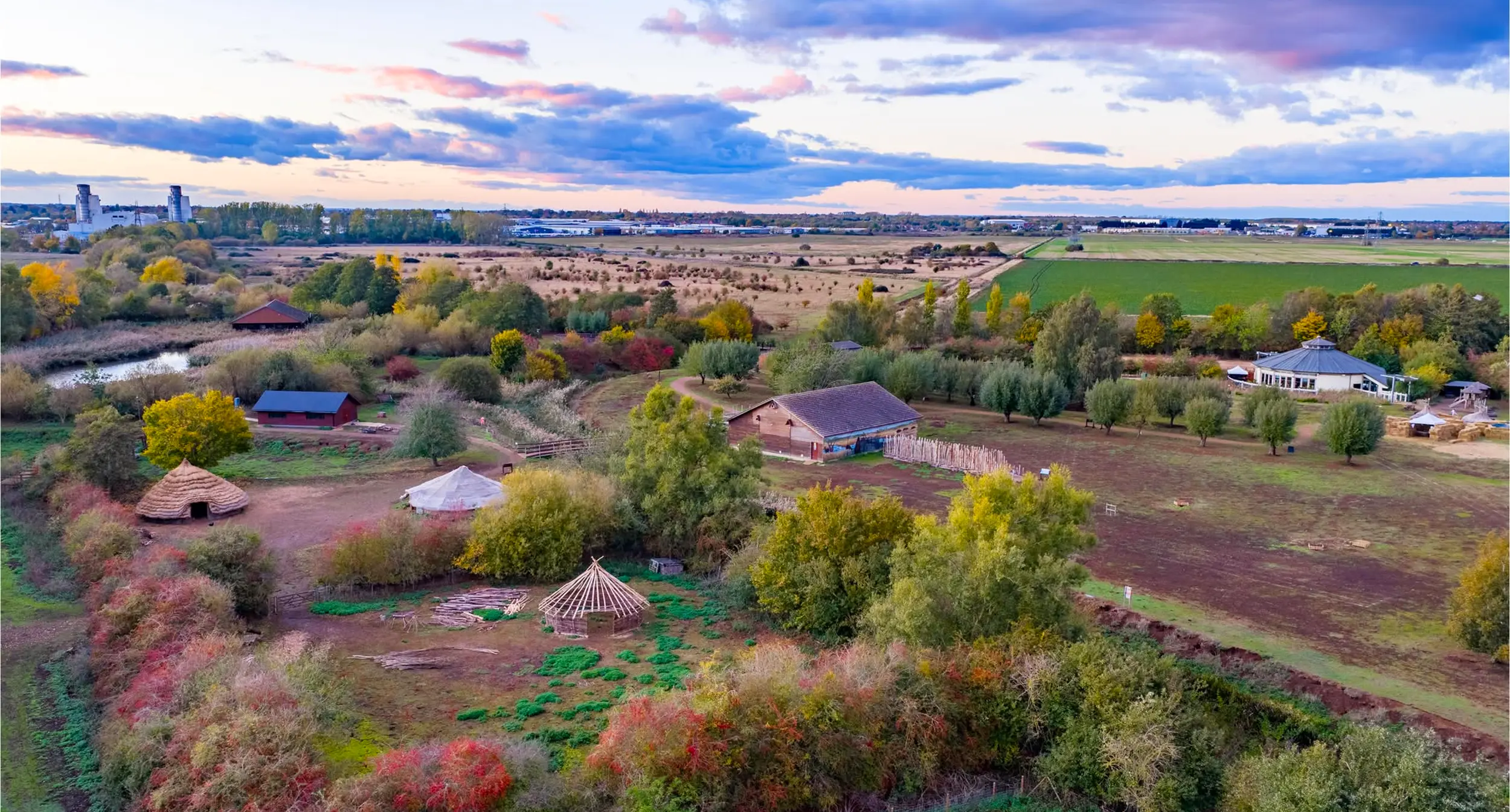
The wider landscape between Peterborough and Stamford, where local organisations are working to protect and reconnect nature.
Peterborough Museum and Archives
Home to a significant collection of Clare manuscripts and related material. Check access arrangements before planning a research visit.
To walk through Clare’s country is not to find an untouched version of the landscape he knew. Much has changed since the early 19th century. The survival of hedgerows, old tracks, wetlands, churches, villages and fragments of species-rich countryside nevertheless makes it possible to understand the scale and intimacy of the world recorded in his writing.
Essential John Clare poems
Readers approaching Clare for the first time may wish to begin with:
- I Am
- The Nightingale’s Nest
- The Badger
- Mouse’s Nest
- The Mores
- The Lament of Swordy Well
- Remembrances
- The Fallen Elm
- The Flitting
- First Love
- Snow Storm
- Autumn
- The Yellowhammer’s Nest
- The Skylark
- Emmonsail’s Heath in Winter
- Clock a Clay
- The Flood
- The Shepherd’s Calendar
Editorial source note
This biography has been checked against specialist and institutional sources, including the Oxford Dictionary of National Biography, the detailed John Clare Cottage chronology, the John Clare Society, the Poetry Foundation, the Centre for John Clare Studies, the University of Cambridge announcement of Sarah Houghton-Walker’s 2026 biography, and specialist Cambridge scholarship on Clare’s poetry of enclosure and protest.
The principal modern biographical studies include Jonathan Bate’s John Clare: A Biography and Sarah Houghton-Walker’s John Clare, published by Reaktion Books in 2026. The latter draws upon Clare’s autobiographical writing, journals, correspondence and poetry and represents the most recent specialist biography available at the time of writing. Dates before Clare’s first publication are sometimes uncertain, as acknowledged by John Clare Cottage, so statements about his earliest education and employment should not be made more precise than the surviving evidence allows.