


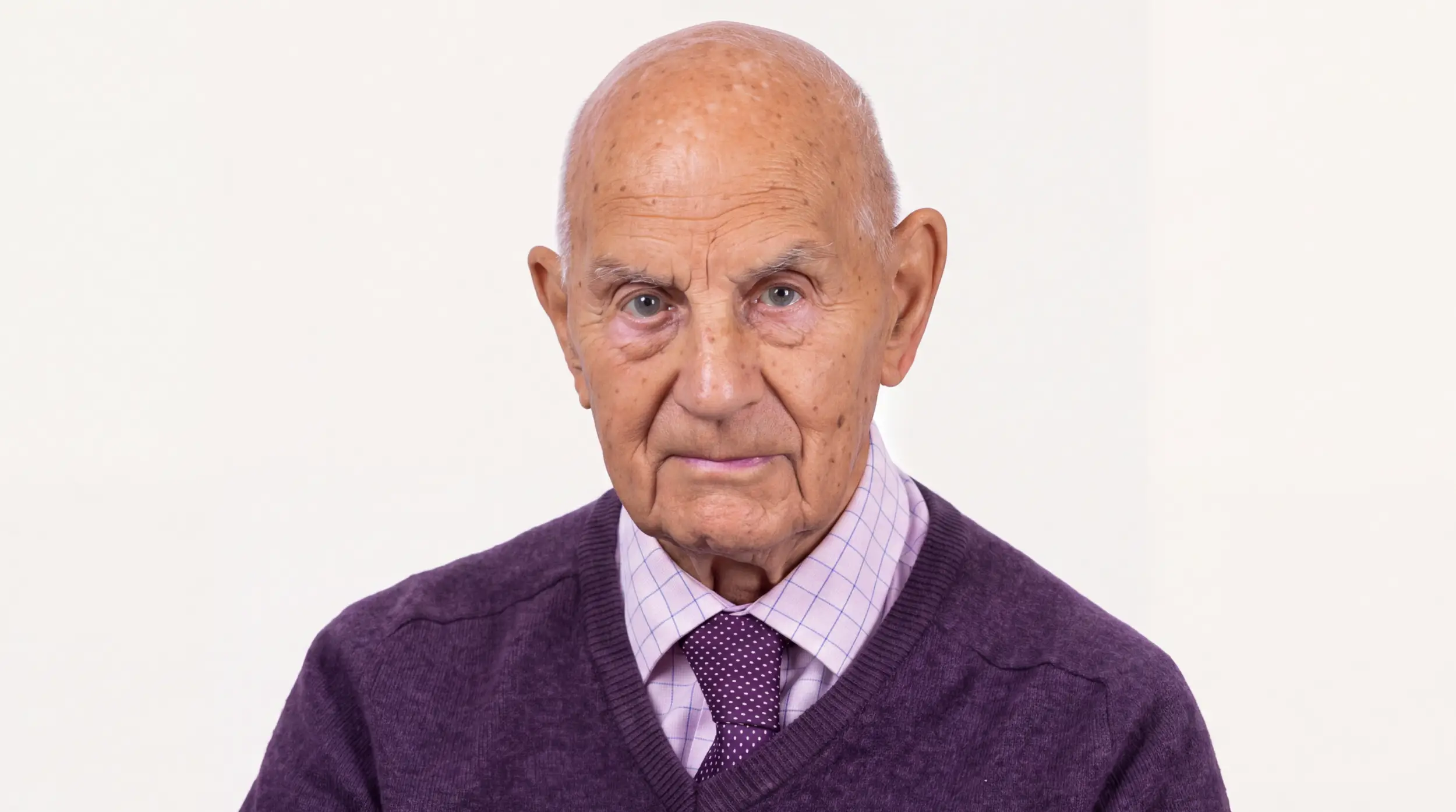
Charles Swift OBE at a glance
- Born
- 1930
- Died
- 16 August 2022, aged 92
- Public service
- Peterborough councillor for 62 years
- Roles
- Council leader, Mayor, Deputy Mayor and Honorary Alderman
- Profession
- Railway engine driver
- Honour
- OBE for services to the public, 1985
For more than six decades, Charles Swift was part of the everyday civic life of Peterborough, representing the same part of the city through extraordinary social, political and economic change.
Charles Swift was not born in Peterborough. He came from Yorkshire and arrived in the city with his mother, Maud, on VJ Day in 1945. Peterborough would become his home, his workplace and the focus of a remarkable lifetime of public service.
He worked on the railways for 48 years, eventually becoming an engine driver, while simultaneously building one of the longest careers in British local government.
First elected to Peterborough City Council in 1954 at the age of 23, Swift remained a councillor until 2016.
By the time he stepped down, Britain had changed beyond recognition. Peterborough had changed even more.
Sixty-two years on Peterborough City Council
Charles Swift entered the council when Winston Churchill was Prime Minister and remained there through the creation of the modern city, the expansion of Peterborough, new communities arriving from across the world and more than half a century of national political change.
A family of public service
Politics was already part of the Swift household before Charles was elected.
His mother, Maud Swift, had joined Peterborough City Council two years before him. His sister, Audrey Chalmers, would also become a councillor and serve for more than three decades.
Charles followed in 1954, becoming the youngest member of the council at the age of 23.
What began as an early entry into local politics became an extraordinary commitment to one community.
A councillor measured in decades
First elected
Swift won election to represent Peterborough’s North ward while still in his early twenties.
The same community
His public life became closely associated with New England, Millfield and the communities around the north of the city.
Council leader
Swift eventually rose to lead the council during one of the most important periods in Peterborough’s modern development.
Mayor of Peterborough
He also served as Mayor and Deputy Mayor, representing the city at civic and ceremonial occasions.
Politics was only one part of his working life.
For almost half a century Swift also worked on the railway.
Peterborough’s New England district had grown around the Great Northern Railway’s vast yards, locomotive sheds and railway workforce, making Swift’s professional and political lives closely connected with the same communities.
He eventually became an engine driver and continued railway work alongside his council responsibilities.
The councillor on the bicycle
Swift never learned to drive a car.
Instead, he became a familiar sight cycling around Peterborough, travelling through his ward and even riding to council meetings well into later life.
The bicycle became almost as recognisable as the man himself.
1972: a decision that changed Peterborough
One of the most important episodes of Swift’s career came far from the council chamber.
In 1972, Ugandan dictator Idi Amin ordered tens of thousands of Asians to leave Uganda. Many held British passports and arrived in Britain with little more than the possessions they could carry.
Temporary resettlement centres were established around the country while local authorities decided whether they would help families build new lives.
Peterborough’s response would become a defining moment in the city’s modern history.
Fifty homes. Fifty opportunities to start again.
As leader of Peterborough City Council, Charles Swift travelled with local employers to the Tofannau resettlement centre in Wales.
The Peterborough delegation offered around 50 council homes to families prepared to take employment opportunities offered by local businesses.
The decision was courageous and controversial.
Swift received hate mail and death threats from opponents of the resettlement. For a period he required police protection while travelling to work as a railway driver.
He did not reverse the decision.
Peterborough was becoming somewhere new.
The families who arrived in 1972 became part of Peterborough’s rapidly changing social landscape.
They established businesses, raised families, joined professions and contributed to the civic life of the city.
Half a century later, Peterborough’s Ugandan Asian community is woven deeply into the story of modern Peterborough.
Civic leadership means making choices before the outcome is known.
The significance of Swift’s decision becomes clearer with distance.
It was taken amid intense political pressure, public hostility and genuine personal threats.
Today it forms part of the wider story of how Peterborough became one of Britain’s most diverse cities.
Helping Peterborough grow
Swift later described helping to expand Peterborough as his greatest achievement and legacy.
His council career overlapped with one of the most dramatic periods of growth in the city’s history.
Peterborough was designated for major expansion during the twentieth century, with new housing, roads, neighbourhoods, industries and infrastructure transforming what had been a relatively compact city.
Swift served through that transformation and became closely associated with the practical politics of accommodating growth while representing established communities in the north of Peterborough.
Politics at street level
Swift’s longevity cannot be explained simply by political allegiance.
He became known for the intensely personal way he approached representation.
Rather than treating councillor duties as something confined to meetings, committees and elections, Swift regarded involvement in the lives of constituents as part of the job.
One retrospective recorded that he attended more than 1,700 funerals for people from his community.
That extraordinary figure says something about the kind of politics he practised: local government as personal presence.
Labour, then Independent
Much of Swift’s political career was spent with the Labour Party, and he served as Labour leader of the council.
Later, he became an Independent councillor and led the Peterborough Independent Forum.
The shift did not end his electoral success or his relationship with the area he had represented for decades.
The ward came before the label.
Political parties changed. Council structures changed. Peterborough itself changed dramatically.
Swift’s defining political relationship remained with the people and neighbourhoods he represented.
Faith and the Salvation Army
Swift was an active member of the Salvation Army from his teenage years.
That faith formed another enduring strand running through his public life.
Service, community and practical help were recurring themes both in his civic career and his involvement with the organisation.
When he died in 2022, his funeral service was held at Peterborough’s Salvation Army Citadel.
Charles Swift OBE
After more than three decades in public life, Swift was appointed an Officer of the Order of the British Empire in 1985 for services to the public.
He would go on serving Peterborough for another thirty-one years.
By the time he finally left the council in 2016, the honour belonged almost to the midpoint rather than the conclusion of his extraordinary civic career.
A city full of personal connections
Swift’s long public life meant that his story repeatedly intersects with other parts of Peterborough’s history.
He welcomed royalty, represented generations of the same families and became involved in everything from housing and community development to local business and the future of Peterborough United.
In 1987, for example, he helped the Datoo brothers search Peterborough Development Corporation properties for a suitable industrial unit as they established the business that became Swift Car Care.
The company later remembered him as somebody who would help almost anyone who knocked on his door.
Charles Swift is born
Swift was born in Yorkshire before later moving to Peterborough.
Arrives in Peterborough
He came to the city with his mother, Maud, on VJ Day.
First elected
At 23, Swift became the youngest member of Peterborough City Council.
Ugandan Asian resettlement
As council leader he helped offer homes and employment opportunities to families expelled from Uganda.
Awarded the OBE
Swift was honoured for services to the public.
Sixty years as a councillor
He marked six uninterrupted decades of service to Peterborough.
Steps down
Swift ended his council career after 62 years of elected public service.
Honorary Alderman
Peterborough City Council unanimously granted him the status of Honorary Alderman.
Charles Swift dies
He died peacefully on 16 August at the age of 92.
Remembered across the city
Schools, communities and civic institutions continue to commemorate his decades of service.
The Charles Swift Wing
Swift’s relationship with communities in north Peterborough extended into education.
He served for many years as a governor at Fulbridge Academy.
When the school opened a major new building in 2014, part of the development was named the Charles Swift Wing in recognition of his work as a governor and more than sixty years representing the North Ward.
It is an unusually fitting memorial for somebody whose civic philosophy was based so strongly around investment in people and neighbourhoods.
A nickname earned one doorstep at a time
Local photographer Chris Porsz described Swift as “Mr Peterborough”.
The nickname captures something statistics cannot.
Sixty-two years on the council is remarkable. Hundreds of meetings and repeated election victories are remarkable. But Swift’s reputation ultimately came from being visible, accessible and embedded in the life of the city.
For generations of residents, he was simply always there.
The making of modern Peterborough
Charles Swift’s biography is valuable because it doubles as a history of post-war Peterborough.
He arrived as the Second World War ended and entered politics while the city was still strongly shaped by railway employment and traditional neighbourhoods.
He then witnessed and helped govern expansion, new housing estates, industrial development, migration, changing communities and Peterborough’s emergence as the much larger city we recognise today.
Few individuals were present for so much of that transformation.
His own summary was characteristically straightforward: helping Peterborough expand was the achievement he regarded as his legacy.
Continue exploring Peterborough
Peterborough People
Meet more of the people whose lives have shaped the city and connected Peterborough with the wider world.
Discover more peoplePeterborough Timeline
Explore the extraordinary transformation of Peterborough across the period Swift knew so well.
Travel through timePeterborough History
Discover the communities, industries, people and events that created the modern city.
Explore the historyPeterborough’s Railway Story
Explore the railway world in which Swift worked for almost half a century and which shaped New England and north Peterborough.
Discover railway PeterboroughPeterborough United
Explore another institution whose fortunes repeatedly became part of Peterborough’s civic story during Swift’s lifetime.
Discover The PoshThings to Do
Discover the places, communities and experiences that make up Peterborough today.
Explore PeterboroughDiscover more Peterborough changemakers
Explore the civic leaders, campaigners, innovators and remarkable local figures whose decisions helped create the Peterborough we know today.
Explore Peterborough People