

Discover Peterborough
Peterborough's
Railway History
The lines that built a city. Discover how the arrival of the railway transformed Peterborough from a cathedral and market town into one of Britain's great railway junctions, shaping its industry, communities and connections for generations.
1845 · The railway arrives
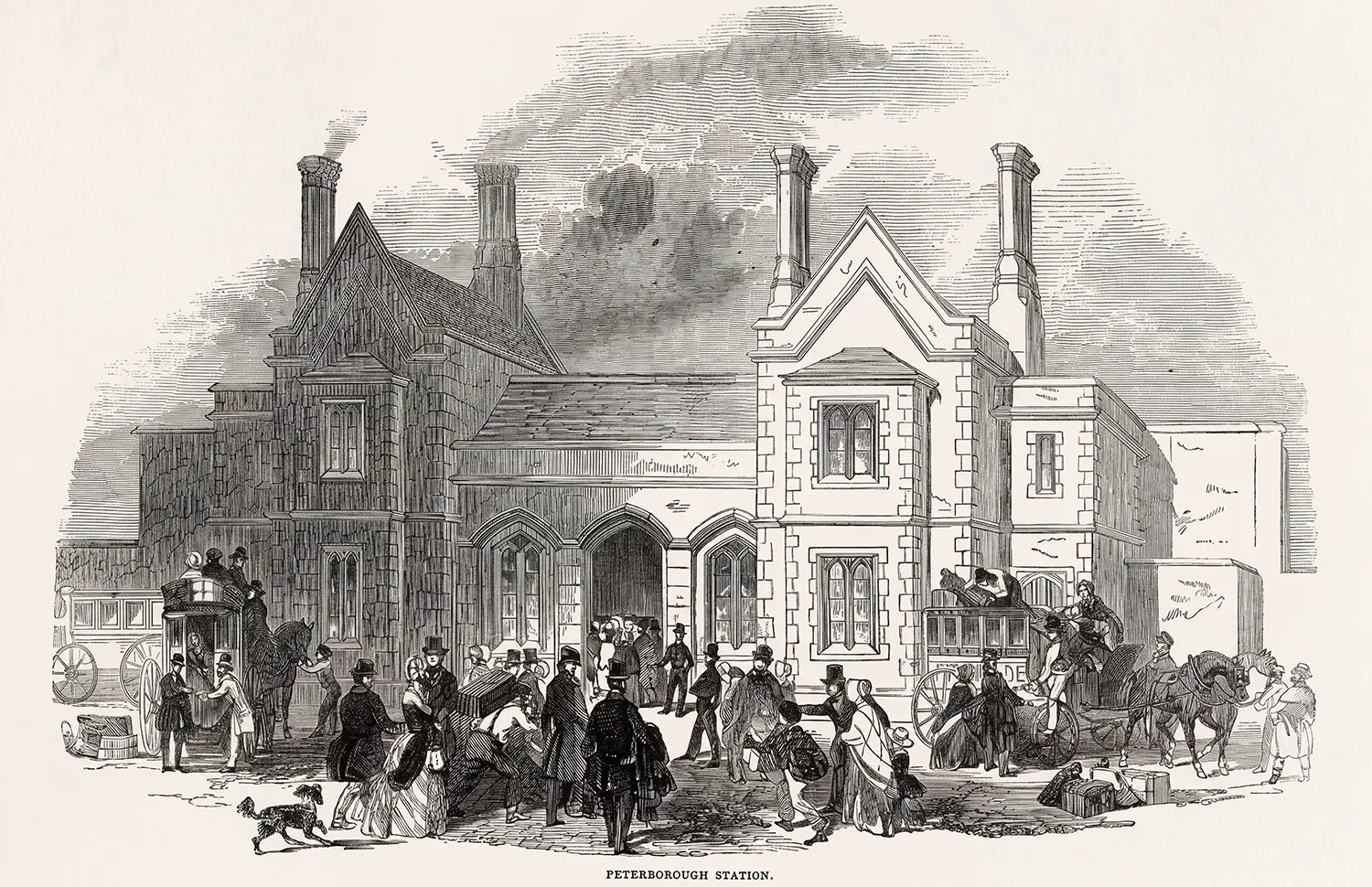
A station south of the river
On 2 June 1845, Peterborough’s first railway station opened south of the River Nene, on the site that would later become known as Peterborough East. It placed the town on an emerging railway corridor between the Midlands and East Anglia.
Until then, Peterborough’s fortunes had depended heavily on roads, river navigation, agriculture and its traditional market. Rail changed the equation. People, mail, materials and goods could now move further and faster than ever before.
Expansion was rapid. By 1848 a line ran north towards Lincoln. Peterborough was beginning to acquire the characteristic that would define it for generations: it was becoming a junction.
1850 · The Great Northern Railway
Peterborough joins the main line
The decisive change came in 1850. The Great Northern Railway opened its own Peterborough station and a new railway route south towards London.
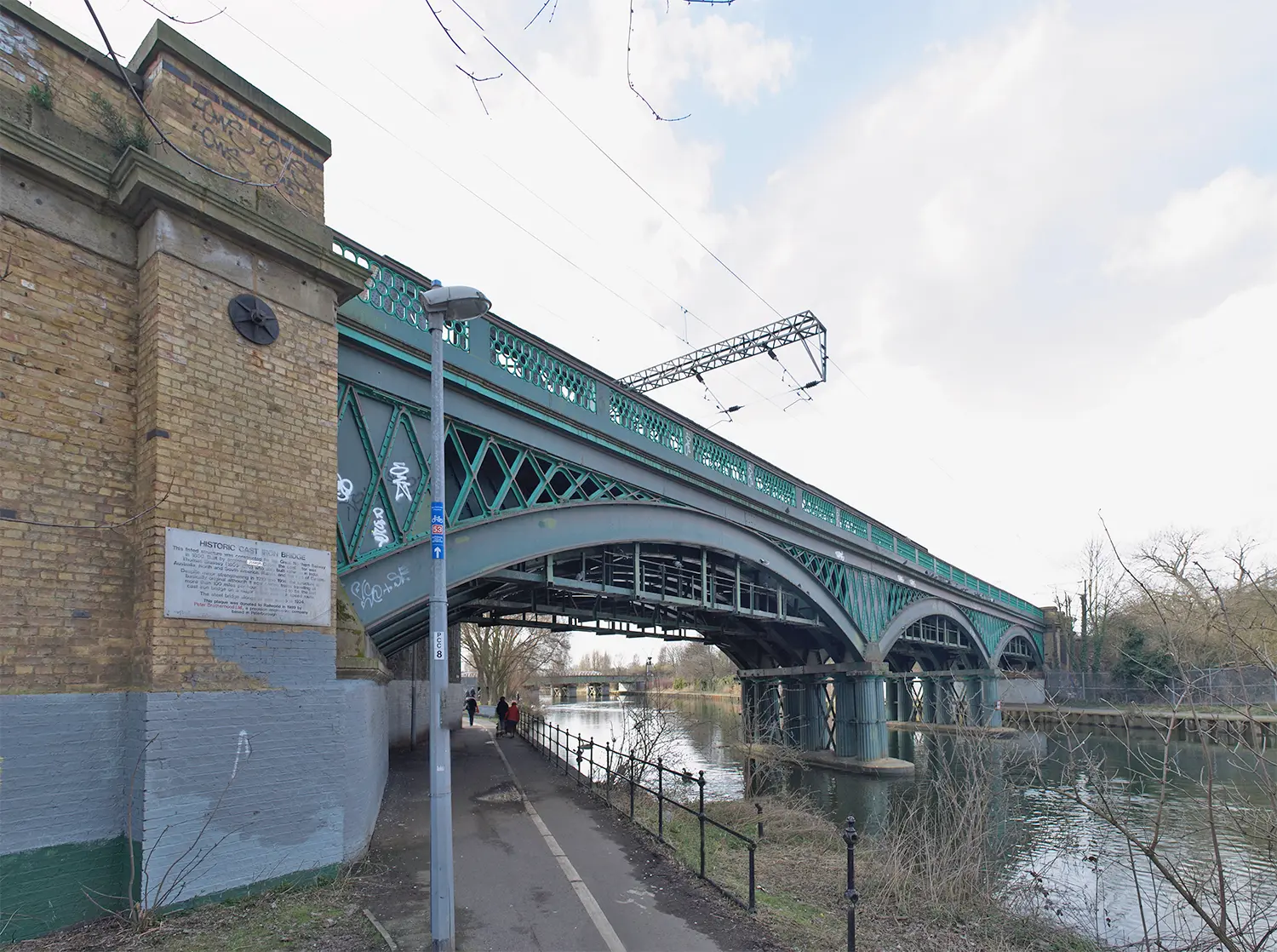
The engineering required to carry the railway through the city created landmarks of its own. Among the most remarkable is the Nene Viaduct, built in 1850 by Sir William Cubitt and his son Joseph Cubitt to carry the railway across the River Nene.
Its three elegant cast-iron arches are supported on fluted iron columns rising from the river. More than 175 years later, trains still cross the original structure as part of the East Coast Main Line.
King’s Cross became the Great Northern Railway’s London terminus in 1852, while the route north from Peterborough reached Doncaster in 1853. Peterborough was no longer simply connected to the railway system. It occupied a strategic position within it.
The Nene Viaduct is not simply a Peterborough landmark. It is an extraordinary survivor of the earliest age of main-line railway engineering and continues to carry modern trains on one of Britain’s most important railway routes.
National Transport Trust →Peterborough did not simply get a railway. The railway remade Peterborough.
A new gateway
The railway creates a new front door to Peterborough
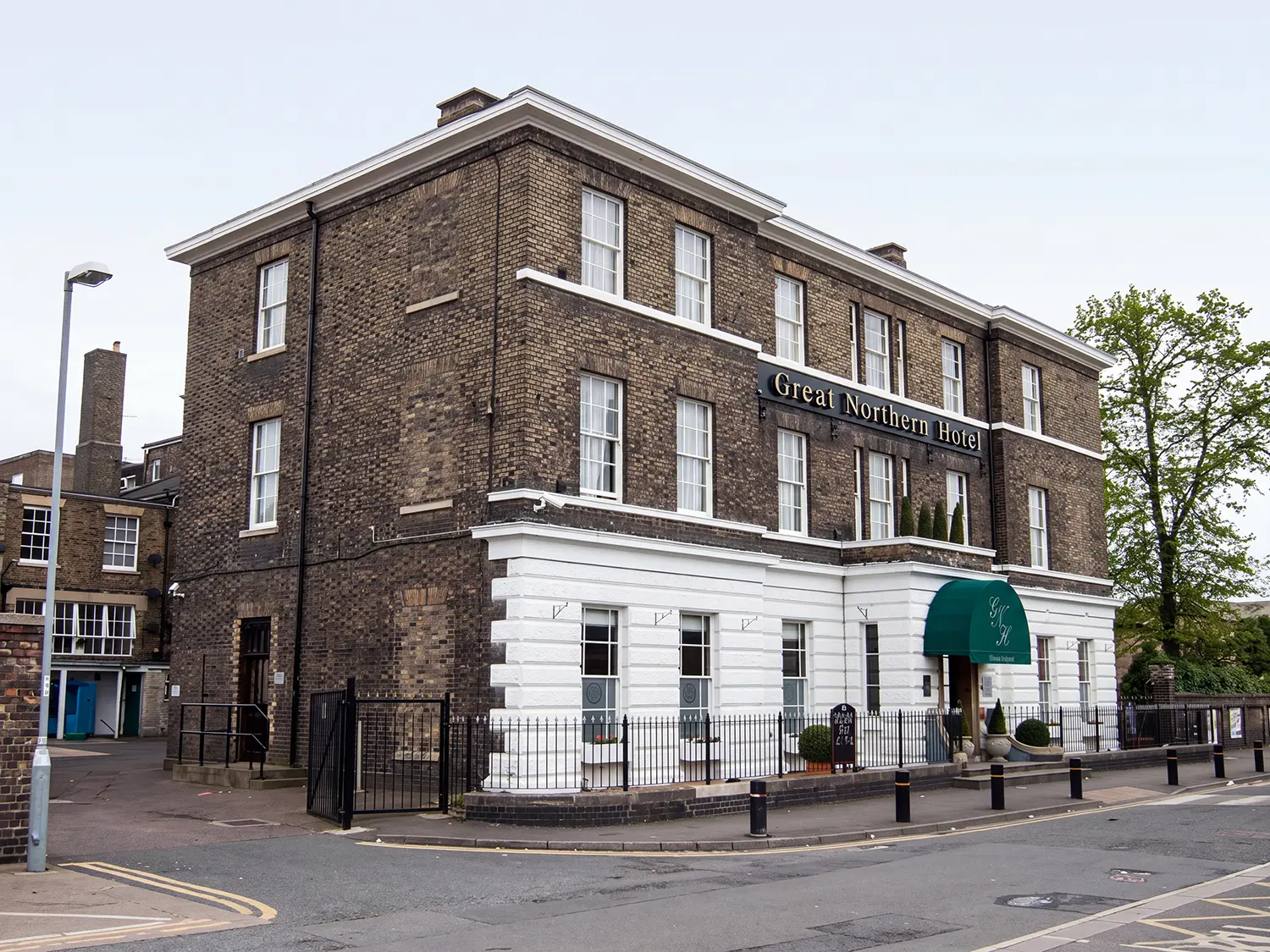
The railway began altering the physical geography of the town almost immediately. A new arrival point developed around Station Road, complete with one of Peterborough’s great Victorian railway landmarks: the Great Northern Hotel.
Designed by architect Henry Goddard, the original 13-bedroom hotel opened in 1852 at a cost of £2,500. It was extended again in 1859 as railway traffic, travellers and the town itself continued to grow.
Peterborough increasingly faced two ways at once: towards its ancient centre around the Cathedral and Market Place, and towards a new Victorian gateway defined by platforms, hotels, tracks and industry.
A railway town emerges
New England: locomotives, labour and a new community
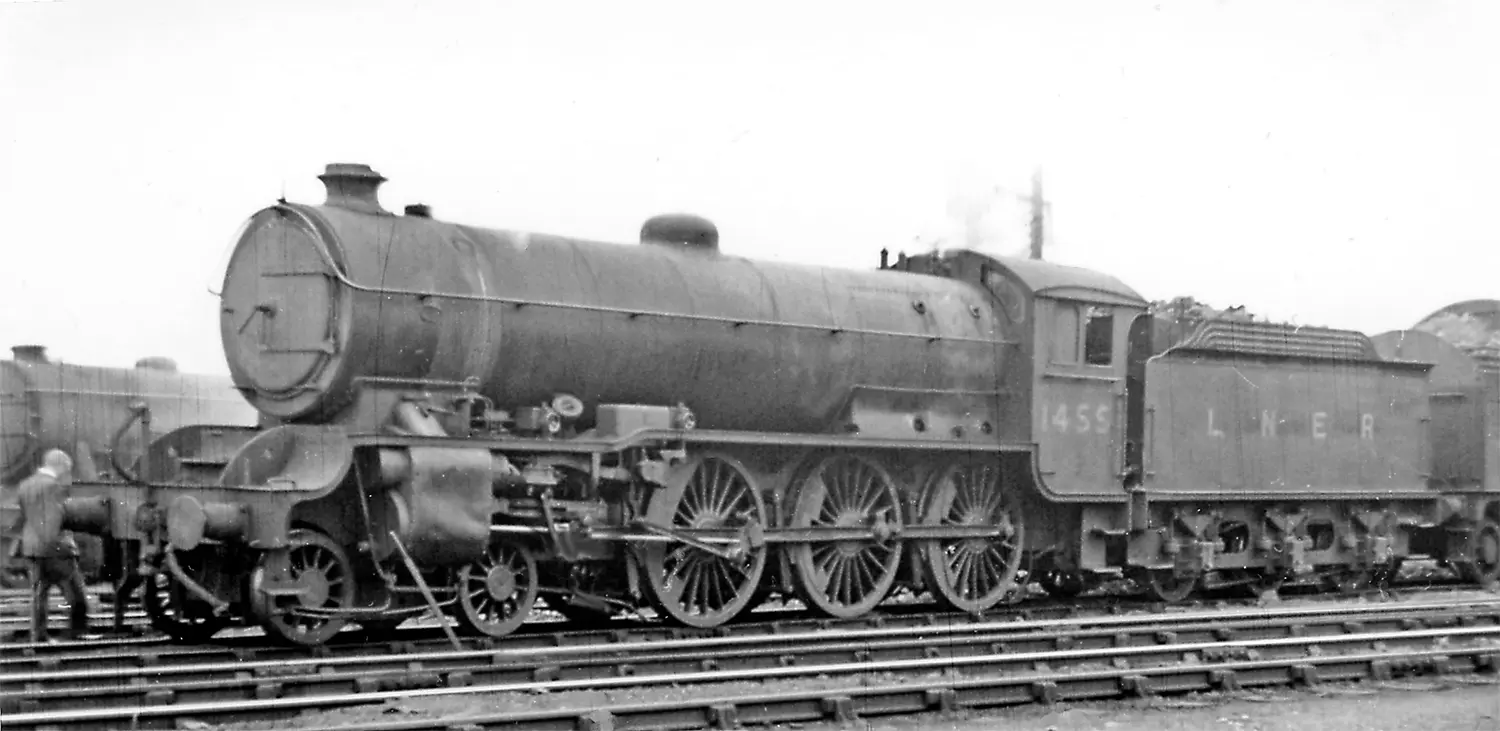
North of the station, New England became one of the defining landscapes of railway Peterborough. Locomotive sheds, sidings, yards and railway engineering works employed generations of local people and helped create an entire community around the railway.
By 1900 Peterborough had around 35,000 residents, and one adult in four was a railway employee. Railway employment brought wages and skills, while new workers helped turn the modest market town into a rapidly expanding industrial city.
One young apprentice at the Great Northern Railway’s New England engineering works was Henry Royce. He would later become one of the founders of Rolls-Royce. Peterborough’s railway history and its engineering history are inseparable.
More than transport
The railway made industrial Peterborough possible
Peterborough’s great industrial stories cannot be separated into neat boxes. Railway expansion, brickmaking, engineering and population growth reinforced one another, creating the conditions in which an industrial city could emerge.
Millions of bricks could leave Peterborough
The railway gave Peterborough’s rapidly expanding brick industry access to enormous markets. Fletton bricks could be moved in vast quantities to the towns and cities being built across Victorian and Edwardian Britain.
Industry gained skills, materials and customers
Rail brought coal, metals, machinery and skilled labour into the city while allowing Peterborough-built equipment and engineering products to reach customers across Britain and around the world.
A bigger, more diverse city emerged
Railway construction and railway employment drew new workers into Peterborough. New neighbourhoods, businesses and institutions followed as the population expanded at extraordinary speed.
1913 · A city divided by rails
When railway success began reshaping the streets
Railways connected Peterborough to the country, but the growing number of tracks also created barriers within Peterborough itself.
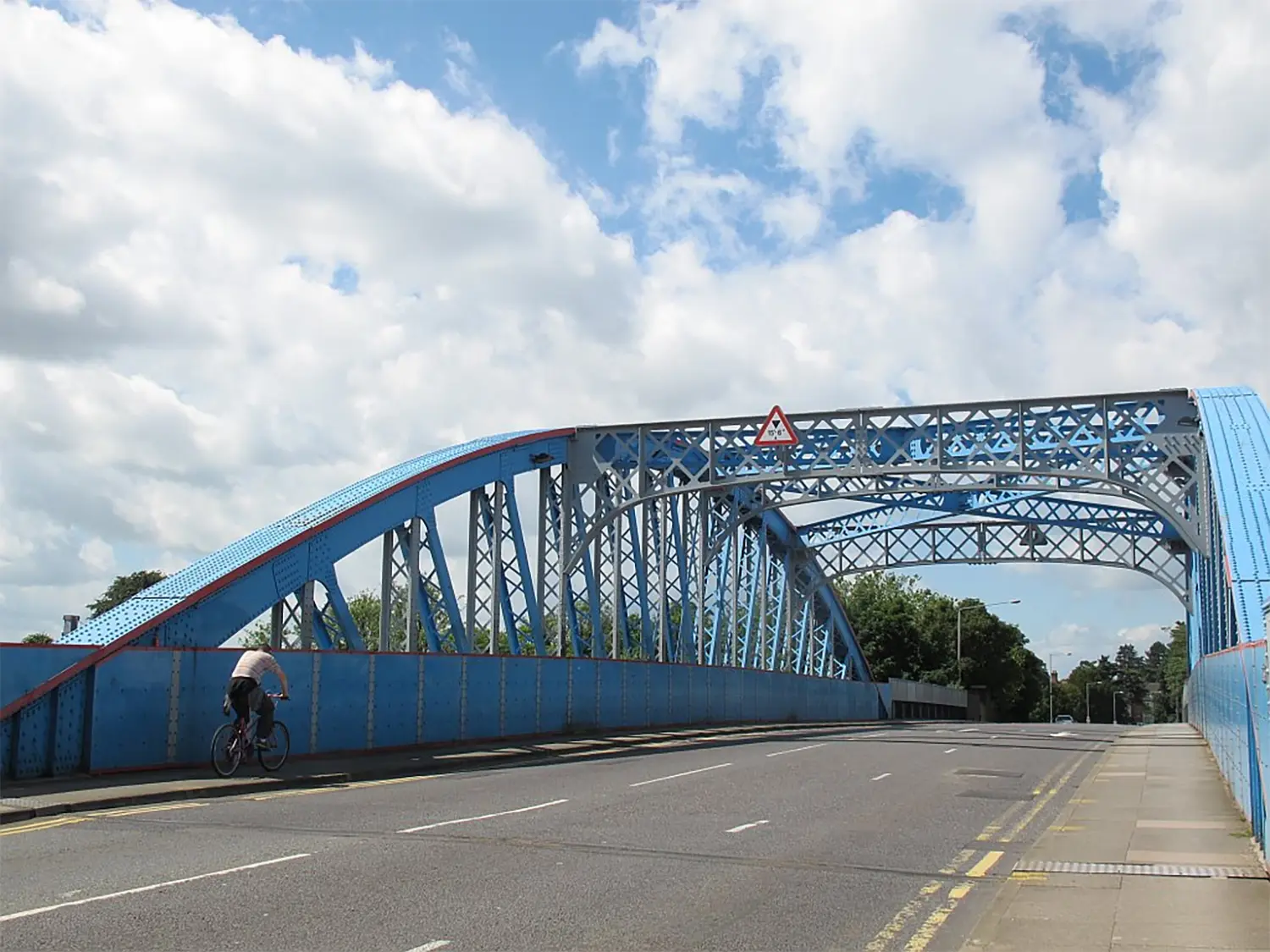
Crescent Bridge opened in 1913 to overcome the problems caused by two troublesome level crossings and a subway. The original crescent of 1830s houses was demolished and Thorpe Road was carried high above the railway instead.
Built by the Cleveland Bridge and Engineering Company, the bridge became another piece of architecture created directly by Peterborough’s growth as a railway city. More than a century later, it remains one of the most recognisable structures on the approach to the station.
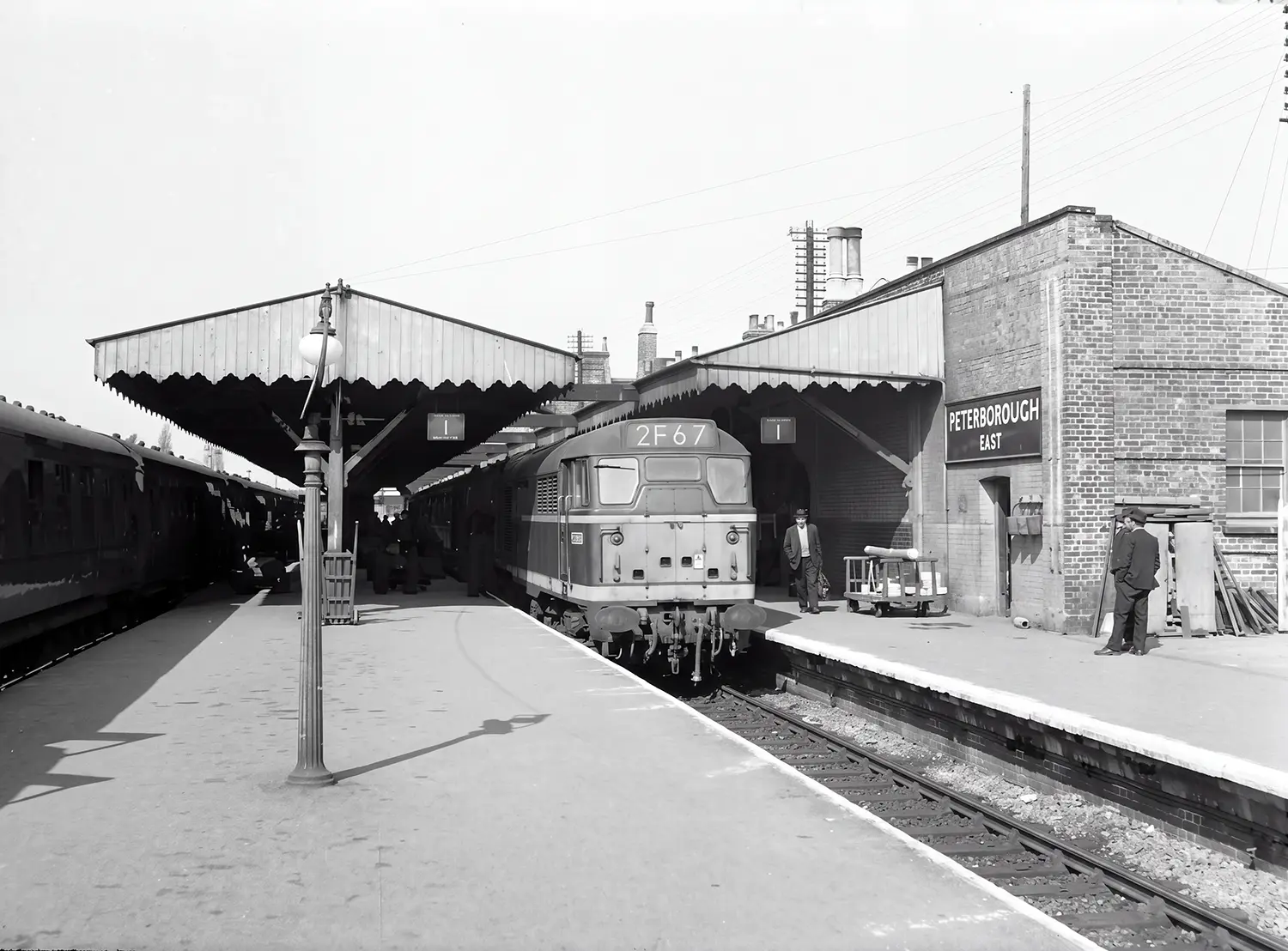
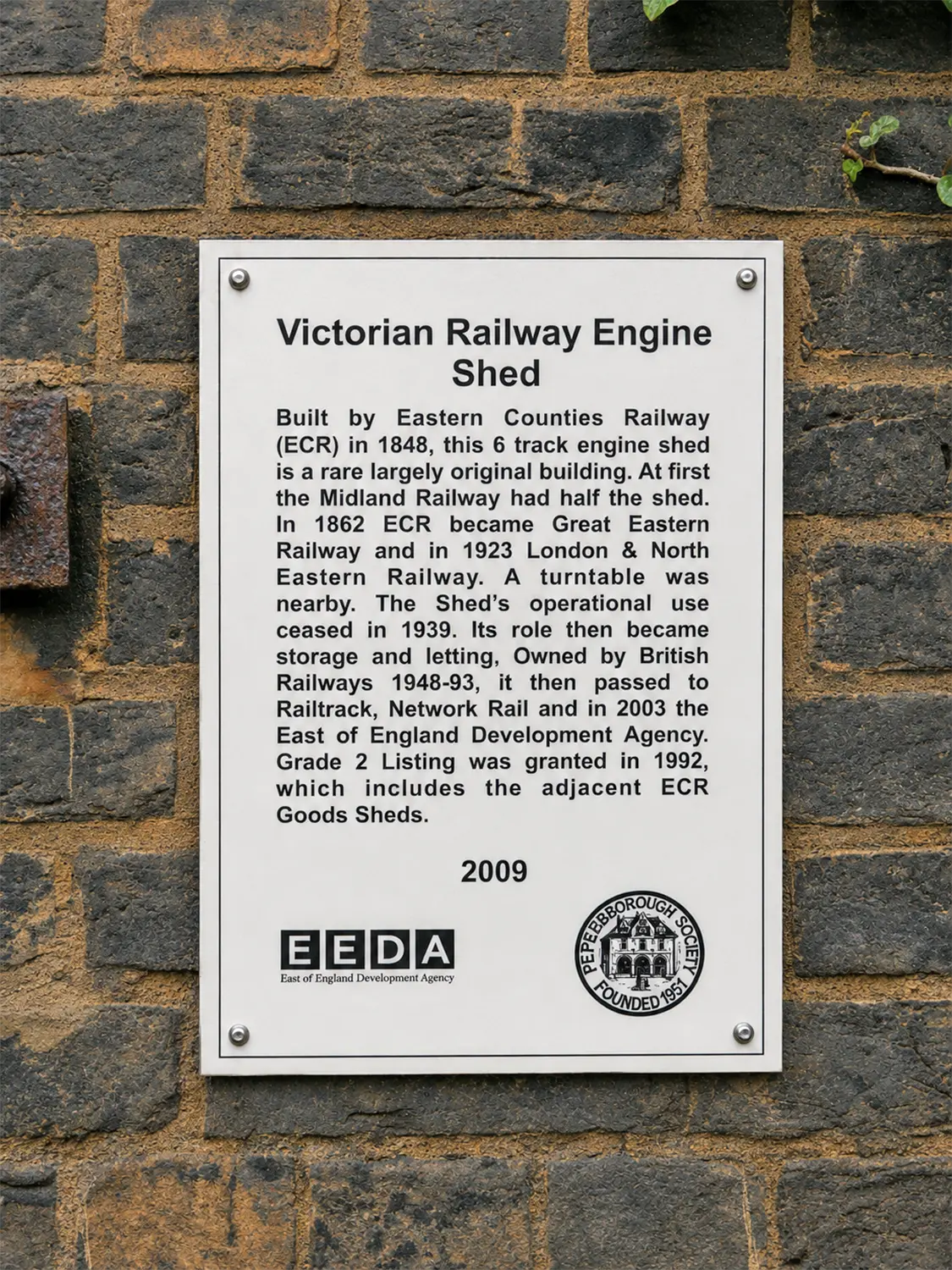
Left: D5636 arriving at Peterborough East in April 1964. Original photograph: Lamberhurst / Wikimedia Commons, CC BY-SA 4.0. Right: the surviving Victorian engine shed. Original photograph: Paul Bryan / Geograph, CC BY-SA 2.0. Enhanced for Discover Peterborough.
1966 · The railway landscape contracts
The end of Peterborough East
The railway network that had expanded so dramatically during the Victorian era began contracting during the twentieth century.
Peterborough’s original station, known as Peterborough East since 1923, finally closed to passenger traffic in 1966. Its principal station buildings were later demolished.
Yet the railway did not disappear from the site. The line towards Ely remains in use and the surviving Victorian engine shed is an important physical reminder that Peterborough’s railway story began on the south side of the Nene.
With East gone, the former Peterborough North station lost its geographical suffix. It became simply Peterborough, the city’s principal railway station.
Look around the city
The railway is still written into Peterborough
The Nene Viaduct
Victorian cast-iron engineering still carrying trains across the River Nene on the East Coast Main Line.
The last surviving cast iron structure on a main line.New England
A place whose streets, communities and identity grew directly from railway employment.
Crescent Bridge
A reminder of the moment when railway growth became powerful enough to reshape the road network.
Peterborough East
The surviving shed and railway corridor preserve traces of the station where the story began in 1845.
 Railway Heritage Reborn
Fletton Quays
When railway buildings become part of the modern city
The railway past has been given a new life.
Just beyond Town Bridge, beside the route of Peterborough’s original railway, another chapter in the city’s railway story can be seen at Fletton Quays.
Planning permission was granted in 2015 for a major £120 million regeneration of this former railway and industrial landscape on the banks of the Nene. New homes, offices, public spaces, a Government Hub and other development have since created an entirely new riverside quarter.
It is a striking example of adaptive reuse. Buildings created for the Victorian railway age now serve the administration of a twenty-first-century city, allowing an important part of Peterborough’s industrial architecture to remain in daily use.
Fletton Quays demonstrates how regeneration and heritage do not have to be opposing ideas. The railway structures have become part of a new riverside district while retaining a visible connection with the industrial landscape that once occupied the site.
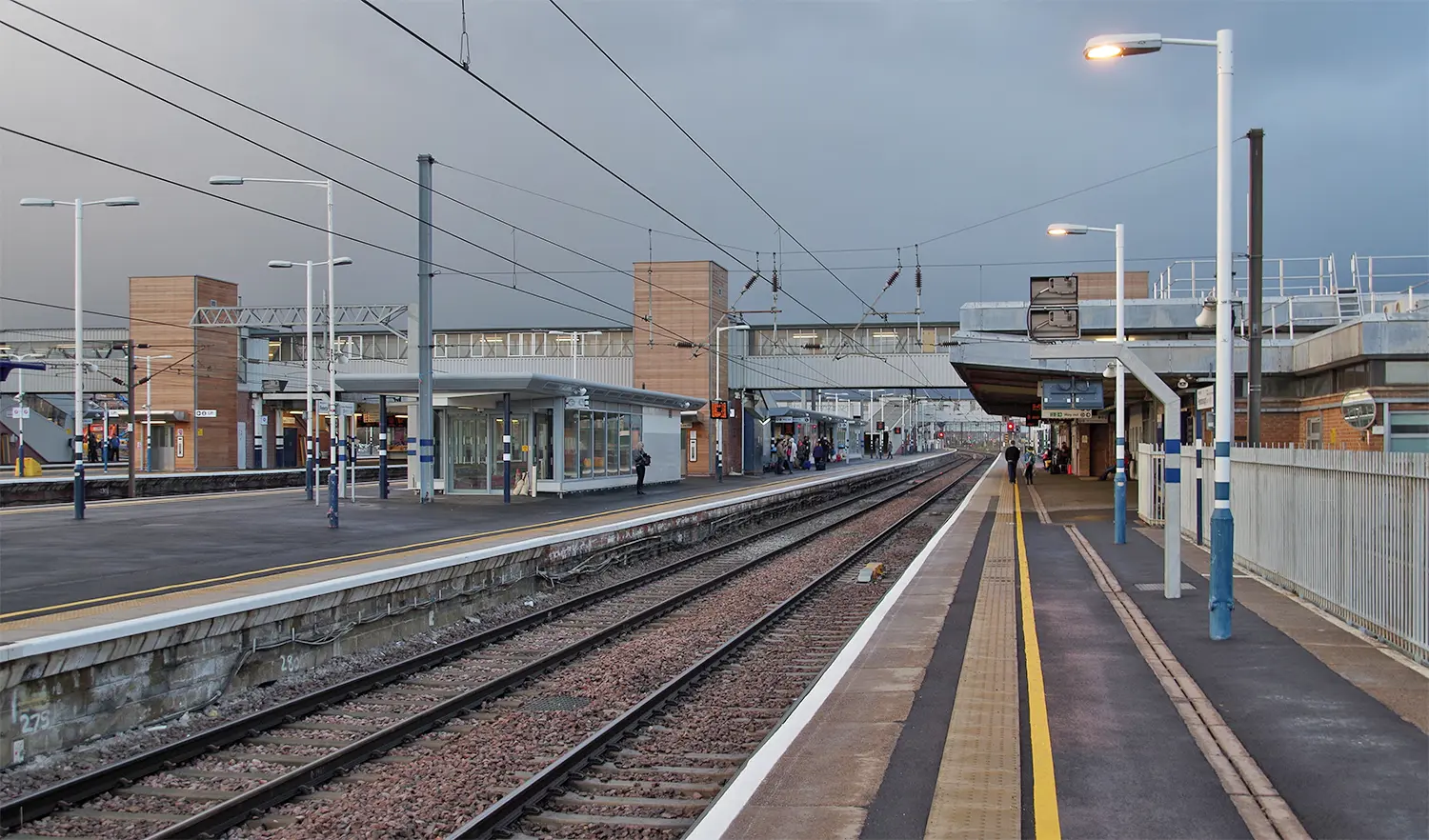
Still a railway city
The junction still matters
Nearly two centuries after the first train arrived, Peterborough remains a major railway interchange on the East Coast Main Line, with routes spreading east and west as well as north and south.
The technology has changed, the old companies have disappeared and much of the Victorian railway landscape has been rebuilt. But Peterborough’s strategic geography remains remarkably familiar. The city is still a meeting point between London and the north, the Midlands and East Anglia.
The modern station is therefore more than transport infrastructure. It is the latest chapter in a story that helped turn a small market town into an industrial city and continues to shape Peterborough’s relationship with the rest of Britain today.
Living Railway Heritage
This history is not confined to photographs and archives
Peterborough’s railway story is still something you can experience.
Steam, locomotives, railway engineering, restored stations, model railways and remarkable railway artefacts remain part of the visitor experience in Peterborough today. Two attractions in particular keep that heritage alive.
 01
Heritage Railway
01
Heritage Railway
Nene Valley Railway
Leave the modern main line behind and step into the age of steam. The Nene Valley Railway operates through the beautiful Nene Valley between Peterborough and Wansford, preserving historic locomotives, rolling stock and railway buildings as a living working railway.
Visitors can travel behind steam and heritage diesel locomotives, explore the railway’s historic stations and discover a collection with a distinctive international character. It is one of the region’s great family attractions and one of the best ways to experience Peterborough’s railway heritage in motion.
 02
Railway + Wildlife
02
Railway + Wildlife
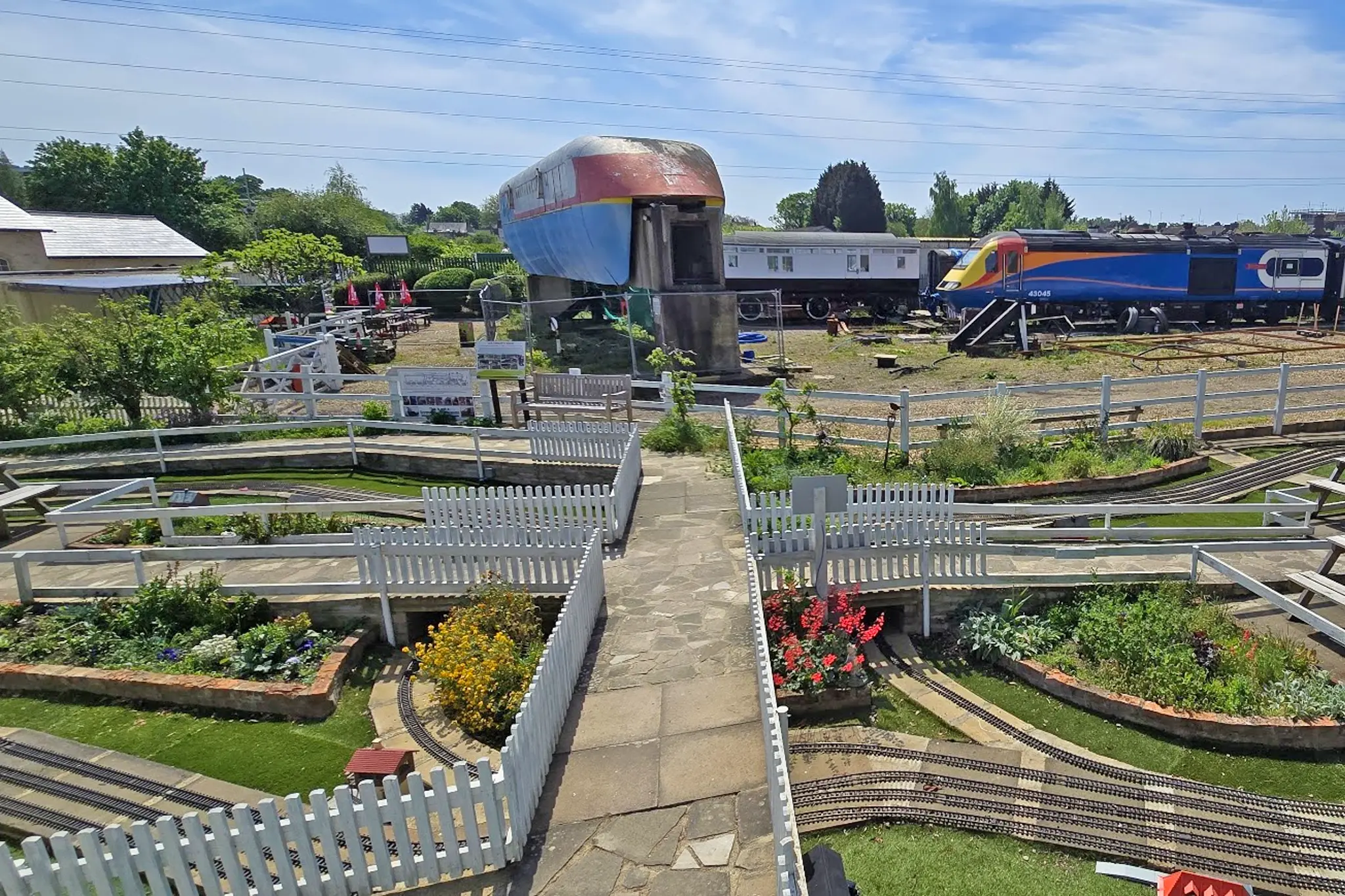
Railworld Wildlife Haven
A former railway coal yard beside the River Nene has become one of Peterborough’s most unusual attractions. Railworld Wildlife Haven brings railway heritage, model railways, engineering, environmental education and wildlife together in one remarkable volunteer-created site.
Historic railway structures and artefacts sit alongside gardens, ponds and habitats created on land once dominated by railway industry. It is both a celebration of Peterborough’s railway past and a powerful example of how industrial land can be given a completely new future.
And now Peterborough is entering its next railway age.
In 1845 the railway changed Peterborough forever. Almost two centuries later, the city is once again rethinking what its railway gateway can be. Station Quarter and City Link are designed to transform not only the station itself, but the experience of arriving in Peterborough.
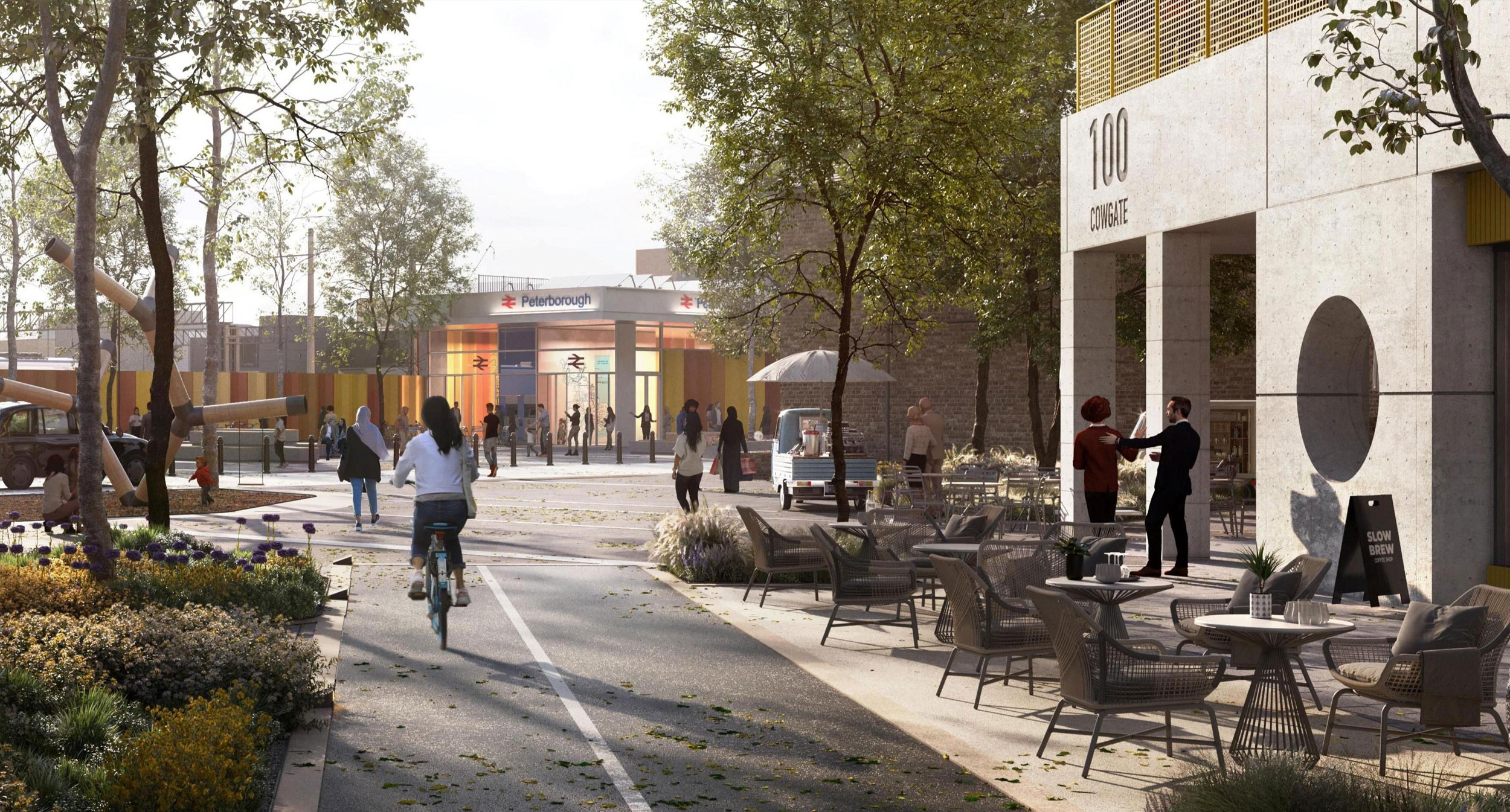
01 · Station Quarter
A new front door for Peterborough
Peterborough City Council’s Station Quarter programme is a major transformation of the railway station and the land around it, designed to create a more confident, accessible and welcoming gateway to the city.
The plans include a new western entrance to the station, refurbishment and extension of the existing eastern station building, a new Station Square, changes to passenger circulation and new parking provision.
It is about much more than the station building. The ambition is to reconnect the railway with the surrounding city, unlock development and investment and dramatically improve the first impression Peterborough gives to people arriving by rail.
02 · City Link · Under Construction
From platform to city centre.
For generations, Peterborough station has been physically close to the city centre but surprisingly difficult for a first-time visitor to navigate from. City Link is designed to change that.
The new route will create a much clearer connection for pedestrians and cyclists between the railway station and Cowgate and the city centre, replacing two of the existing subways beneath Queensgate roundabout with a more direct, accessible route.
New landscaping will transform the arrival environment too. The intention is simple but enormously important: when visitors step out of Peterborough station, the city should feel close, visible and welcoming.
1845 → 2028 → Beyond
The railway built modern Peterborough. Now the gateway is changing again.
From the first trains at Peterborough East to the Great Northern Railway, New England, Fletton Quays, the East Coast Main Line and today’s Station Quarter, rail has repeatedly changed the direction of the city. The next chapter is already being built.