


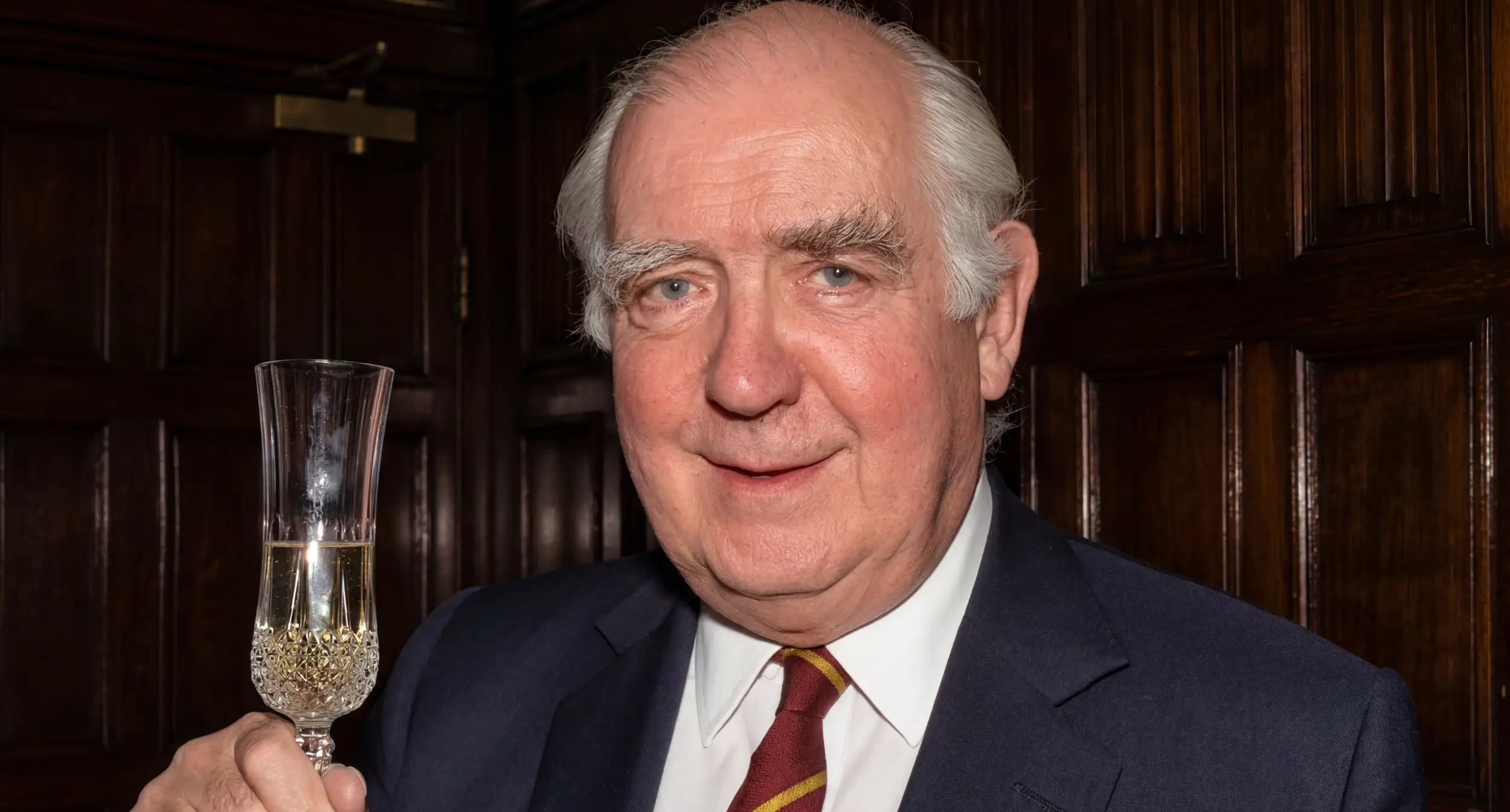
Peter Boizot was one of Peterborough’s great originals: an entrepreneur, restaurateur, philanthropist, art collector, jazz promoter, football club owner and determined champion of his home city. Best known nationally as the founder of PizzaExpress, he later invested his money, energy and imagination in Peterborough’s buildings, heritage, culture and sporting life.
Life in dates
- 1929 Born at Walton, Peterborough
- 1948 Discovers pizza while staying with a family in Italy
- 1953 Graduates in history from St Catharine’s College, Cambridge
- 1965 Opens the first PizzaExpress on Wardour Street in Soho
- 1967–69 Expands PizzaExpress and introduces art, distinctive design and live jazz
- 1974 Stands twice as the Liberal parliamentary candidate for Peterborough
- 1977 Creates the Veneziana pizza to support Venice in Peril
- 1986 Receives the MBE and establishes the Soho Jazz Festival
- 1993 Buys and modernises Peterborough’s Great Northern Hotel
- 1996–97 Acquires the former Odeon and Peterborough United Football Club
- 2000 Receives an honorary doctorate for his business and civic contribution
- 2001 The restored Broadway entertainment complex opens
- 2008 Made a Freeman of the City of Peterborough
- 2014 Publishes Mr Pizza and All That Jazz
- 2018 Dies at his home in Peterborough, aged 89
A Peterborough childhood
Peter James Boizot was born at Walton, on the northern side of Peterborough, on 16 November 1929. His family briefly moved to Stilton when he was young before returning to Peterborough, where they lived on All Saints Road.
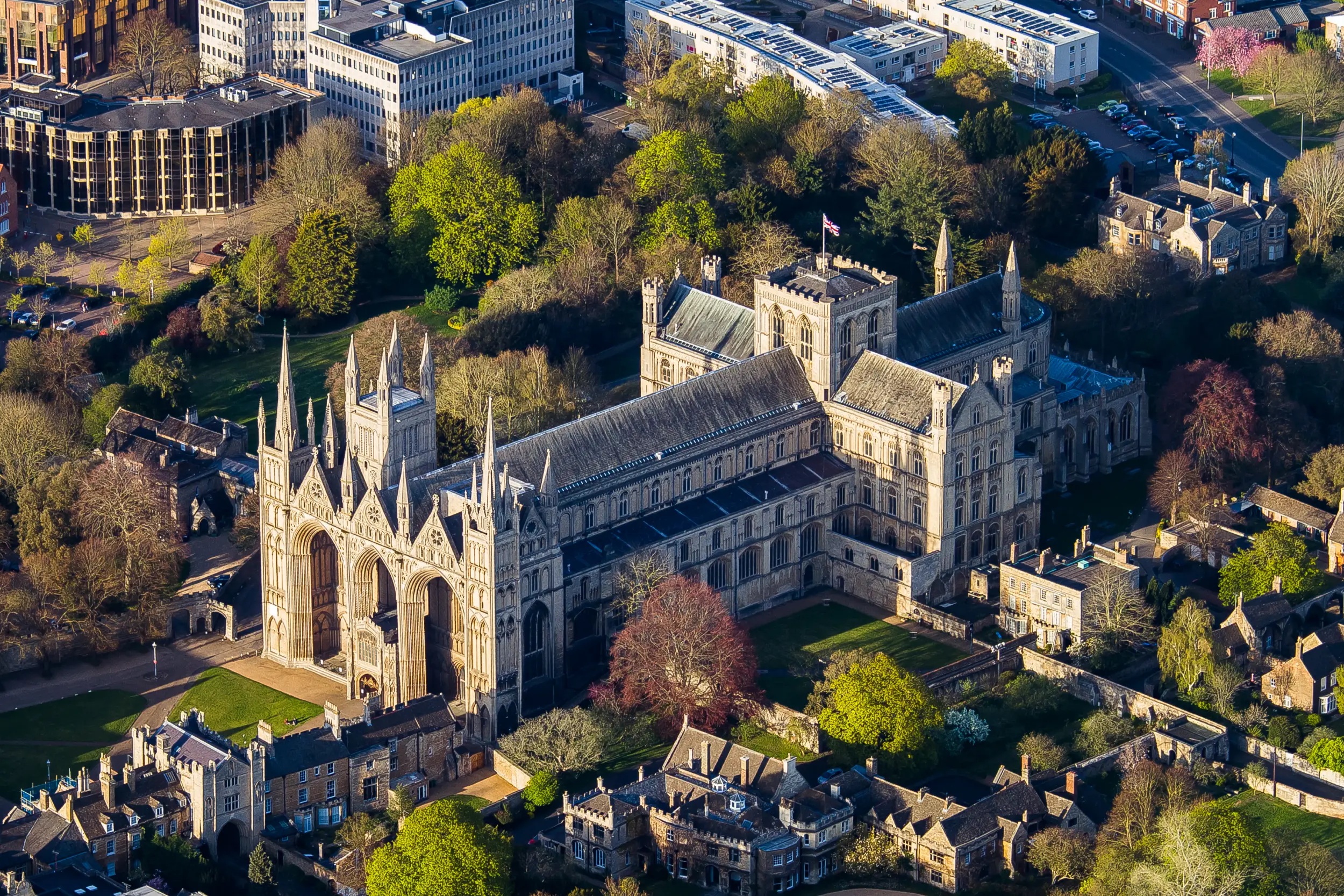
Boizot attended St Mark’s School before moving to The King’s School. He became head boy and won a choral scholarship as a member of Peterborough Cathedral Choir. The Cathedral, his school and the city’s historic centre remained important to him throughout his life.
He became a vegetarian as a young child, an unusual decision in 1930s Britain and one that anticipated his later interest in simple Mediterranean food.
After completing National Service, including time in Egypt, Boizot studied history at St Catharine’s College, Cambridge. He graduated in 1953, but it was the experience of travelling, working and eating across Europe that provided the foundation for his future career.
Discovering Europe
Boizot’s relationship with Italy began in 1948, when his Peterborough headmaster arranged for him to spend several months teaching English to an Italian family in Tuscany.
It was during this visit that he encountered an expert pizzaiolo at work and tasted pizza for the first time. The experience stayed with him as a vivid example of the informal, sociable eating culture he felt was largely absent from post-war Britain.
After university, Boizot spent much of the following decade in continental Europe. His varied work included teaching English in Paris, working in publicity in Switzerland and joining the news photography department of the Associated Press in Rome.
Paris also deepened another lifelong enthusiasm. Jazz musicians performed in cafés, clubs and restaurants across the city, allowing food, conversation and live music to occupy the same social space. That combination would later become central to Boizot’s approach to restaurants.
Creating PizzaExpress
When Boizot returned to London, he was frustrated by the difficulty of finding the authentic, affordable pizza he had enjoyed across Europe. Rather than accept that absence, he decided to open a pizzeria himself.
He obtained a specialist pizza oven from Naples and opened the first PizzaExpress on Wardour Street in Soho in 1965. At first, large pizzas were cut into square slices and sold through the front window on greaseproof paper. Customers stood to eat, following the informal model Boizot had encountered overseas.
The venture did not begin as an immediate triumph. Takings on its first day reportedly amounted to only £3. Boizot nevertheless resisted advice to fill the menu with more familiar British dishes.
Tables, a wine list and metal cutlery followed. The hot cheese had proved capable of melting the original plastic implements. Boizot also became, according to PizzaExpress, the first person to import Peroni beer into the United Kingdom.
Pizza was not completely unknown in Britain, but Boizot helped move it from a specialist or unfamiliar food into the mainstream. PizzaExpress combined accessible prices, fashionable interiors, visible food preparation and a relaxed atmosphere that anticipated the modern casual-dining restaurant.
Boizot did more than popularise a dish. He helped change British expectations about how an affordable restaurant could look, feel and behave.
Art, design and all that jazz
Boizot did not want PizzaExpress to become a repetitive corporate chain. He preferred to describe its restaurants as a “necklace of individual gems”, connected by food and service but shaped by their buildings and communities.
He worked closely with Italian designer and cartoonist Enzo Apicella, whose bright, uncluttered interiors helped establish the company’s visual identity. Apicella went on to design more than 80 PizzaExpress restaurants, introducing open kitchens, striking graphics and modern furniture.
Contemporary art became another defining feature. Boizot was an enthusiastic collector and believed original artwork belonged in places used by ordinary people, not only in private collections and galleries. Restaurants displayed and commissioned work by leading modern artists, making visual culture part of the dining experience.
Jazz was equally important. Live music was introduced at early PizzaExpress restaurants, and the basement of the Dean Street branch became a respected jazz venue. The wider PizzaExpress music tradition later presented performers including Ella Fitzgerald, Norah Jones, Jamie Cullum and Amy Winehouse.
Boizot founded the Soho Jazz Festival in 1986 and developed music publishing, recordings and magazines alongside his restaurant businesses. In his world, food, art, architecture and performance were not separate interests. They were all parts of a richer social experience.
Politics and philanthropy
Boizot was a longstanding Liberal and later Liberal Democrat supporter. He stood as the Liberal parliamentary candidate for Peterborough in both general elections held in 1974.
The February contest was exceptionally close. Conservative MP Harmar Nicholls retained the seat by only 22 votes over Labour, while Boizot secured more than 10,000 votes. He stood again in October, when Labour’s Michael Ward won the constituency.
Boizot remained active in liberal politics and civic campaigning. He was appointed MBE in 1986 for political and public service and later became a Deputy Lieutenant of Cambridgeshire.
His business ideas frequently incorporated charitable giving. Following the damaging Venice floods of 1966, he created the Veneziana pizza, with a contribution from every sale supporting the Venice in Peril fund. The initiative continued after his departure from PizzaExpress and raised millions of pounds for the conservation of Venetian art and architecture.
The Peter Boizot Foundation distributed substantial sums to cultural, educational and charitable causes. Beneficiaries included The King’s School, Peterborough Cathedral, the Fenland Archaeological Trust, Westgate at Risk, Childline, Barnardo’s and the Royal Academy of Arts.
Bringing ambition back to Peterborough
After achieving national success, Boizot redirected much of his attention towards his home city. His intention was not simply to donate money but to demonstrate confidence in Peterborough’s buildings, institutions and potential.
In 1993, he acquired and modernised the Great Northern Hotel beside Peterborough railway station. The building had represented elegance and aspiration to him as a child, and owning it carried considerable personal meaning.
In 1996, he bought the former Odeon cinema on Broadway. The Art Deco building had closed in 1991 and fallen into disrepair. Boizot reportedly invested around £9 million in transforming it into the Broadway, a major entertainment complex containing theatre, cinema, conference, restaurant and gallery facilities.
The development opened in 2001. Although its subsequent history involved financial difficulty, closure, fire and changes of ownership, Boizot’s investment saved and transformed an important cultural building. It continues to serve Peterborough as the New Theatre.
He also invested in local restaurants, an art gallery and the Miss Pears wine bar, established the Peterborough Arts Trust and supported the archaeological work at Flag Fen.
Archaeologist Francis Pryor later recalled that Boizot’s generosity during financially difficult periods had effectively kept the Fenland Archaeological Trust operating. This support helped sustain one of Peterborough’s most important heritage sites.
Peterborough United
Boizot’s civic involvement extended into sport. A lifelong supporter of Peterborough United, he bought the struggling club in 1997 and became its owner and chairman.
Over the following years, he invested millions of pounds in the club and helped place it on a firmer financial footing. His period of ownership included one of the most memorable moments in its modern history.
In May 2000, Peterborough United defeated Darlington in the Third Division play-off final at Wembley, securing promotion. The achievement associated Boizot’s leadership with a rare Wembley success and a period still remembered warmly by many supporters.
Not every decision or investment produced the result he wanted, but his intervention came when the club was facing significant difficulty. He treated Peterborough United as another civic institution worthy of ambition and personal commitment.
“Mr Peterborough”
Boizot received an honorary doctorate from Loughborough University in 2000 in recognition of his business achievements and contribution to Peterborough. In 2008, he was made a Freeman of the City.
He published his autobiography, Mr Pizza and All That Jazz, with journalist Matthew Reville in 2014. Its title captured the two interests with which he was most widely associated, but his life also encompassed art, architecture, heritage, sport, politics, education and philanthropy.
Boizot died at his home in Peterborough’s Cathedral Precincts on 5 December 2018, shortly after his 89th birthday. A memorial service was subsequently held at Peterborough Cathedral, where he had sung as a boy.
His local investments were bold and sometimes financially risky. Some prospered, while others encountered serious difficulties. Their common feature was his refusal to believe that Peterborough should settle for less ambition than London, Cambridge or the European cities that had inspired him.
Peter Boizot took ideas from Italy, France and Soho, built them into a nationally recognised business, and then brought his confidence, culture and capital back to Peterborough. That commitment made him far more than the founder of PizzaExpress. It made him “Mr Peterborough”.