



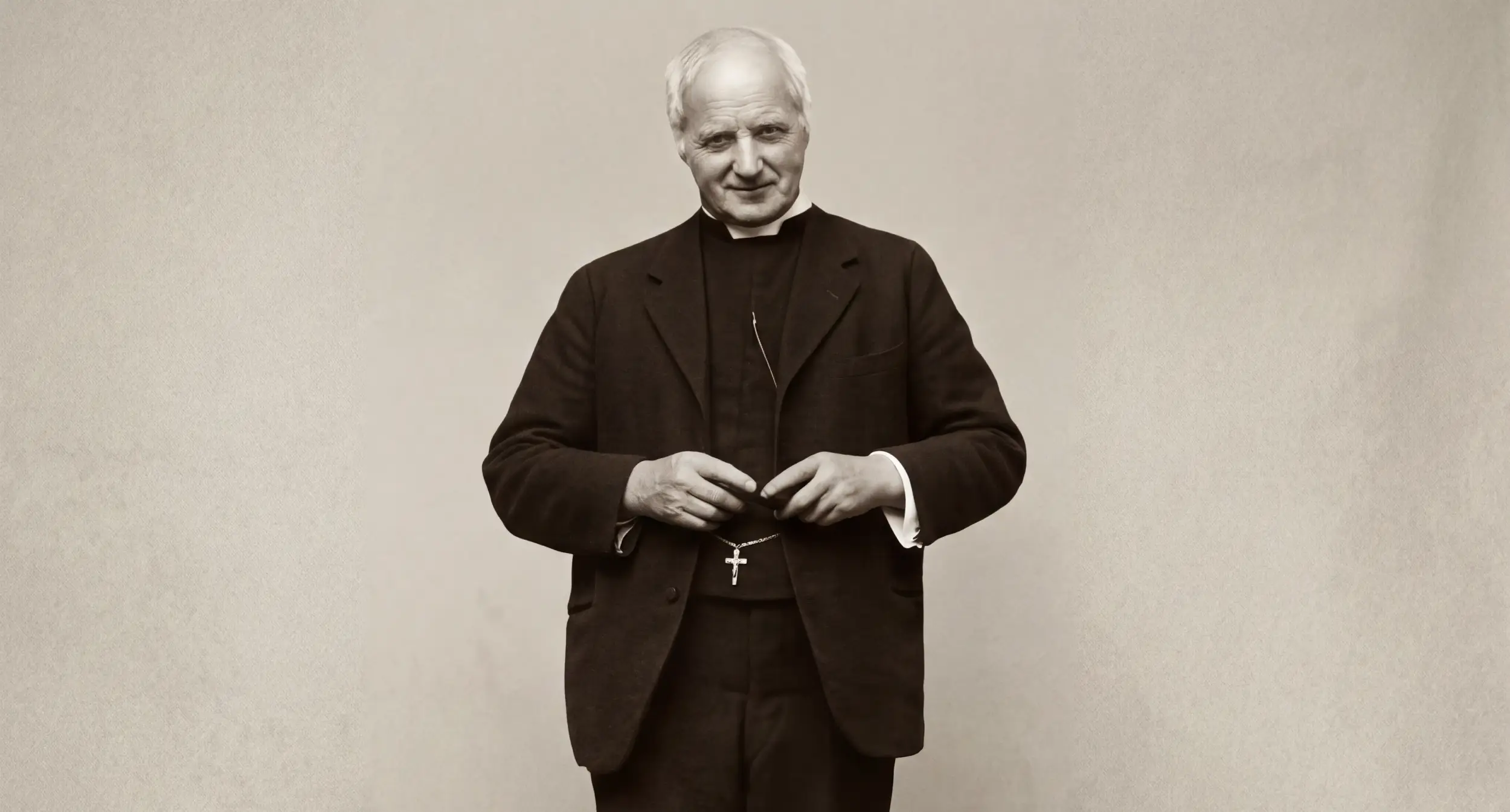
Few writers have captured the strange atmosphere of the Fens quite like E. G. Swain.
A life in dates
- 1861Born Edmund Gill Swain
- 1905Becomes vicar of St John the Baptist, Stanground
- 1912The Stoneground Ghost Tales published
- 1916Leaves the Stanground parish
- 1932The Story of Peterborough Cathedral published
- 1938Dies
The clergyman
Born Edmund Gill Swain in 1861, he was an English clergyman, antiquarian, and author whose name became closely associated with the golden age of the classic English ghost story.
Although little known to the wider public today, Swain holds a special place in literary history as one of the earliest and most important followers of the great supernatural writer M. R. James.
Swain studied at Emmanuel College, Cambridge, before entering the Church of England.
Stanground into Stoneground
His path would eventually lead him to Stanground, near Peterborough, where he served as vicar of St John the Baptist Church from 1905 to 1916. The quiet Fen-edge parish left a lasting impression on him and became the inspiration for his most famous work, The Stoneground Ghost Tales.
In these eerie and atmospheric stories, Stanground was transformed into the fictional village of “Stoneground”, a mysterious parish of ancient churches, lonely roads, old gravestones, hidden waterways, and unsettling supernatural encounters.
The stories followed the kindly Reverend Roland Batchel, a character widely believed to have been based on Swain himself.
The Stoneground Ghost Tales
Published in 1912, The Stoneground Ghost Tales became an important contribution to the tradition of the English ghost story. Swain’s writing shared much of the quiet unease and scholarly atmosphere associated with M. R. James, yet his tales possessed a gentler, deeply human quality rooted in the landscapes and communities around Peterborough and the Fens.
At the Cathedral
Swain’s connection to Peterborough extended far beyond fiction. Later in life he served the Cathedral in several important roles.
His cathedral posts
- Honorary Canon
- Librarian
- Precentor
He also wrote The Story of Peterborough Cathedral in 1932, helping preserve the history of one of the city’s greatest landmarks.
- 1912 The Stoneground Ghost Tales Fiction
- 1932 The Story of Peterborough Cathedral History
What survives
Today, E. G. Swain’s work remains treasured by enthusiasts of classic supernatural fiction. His stories are remarkable not simply for their ghosts, but for the way they preserve a haunting vision of old Peterborough and the Fenland fringe.
A landscape of misty churchyards, isolated villages, candlelit rectories, and ancient secrets waiting quietly in the dark.
For anyone exploring Peterborough’s literary and cultural heritage, Swain offers a reminder that the city’s stories are not only found in history books and cathedrals, but also in the strange imagination of those who once walked its quiet lanes after sunset.