
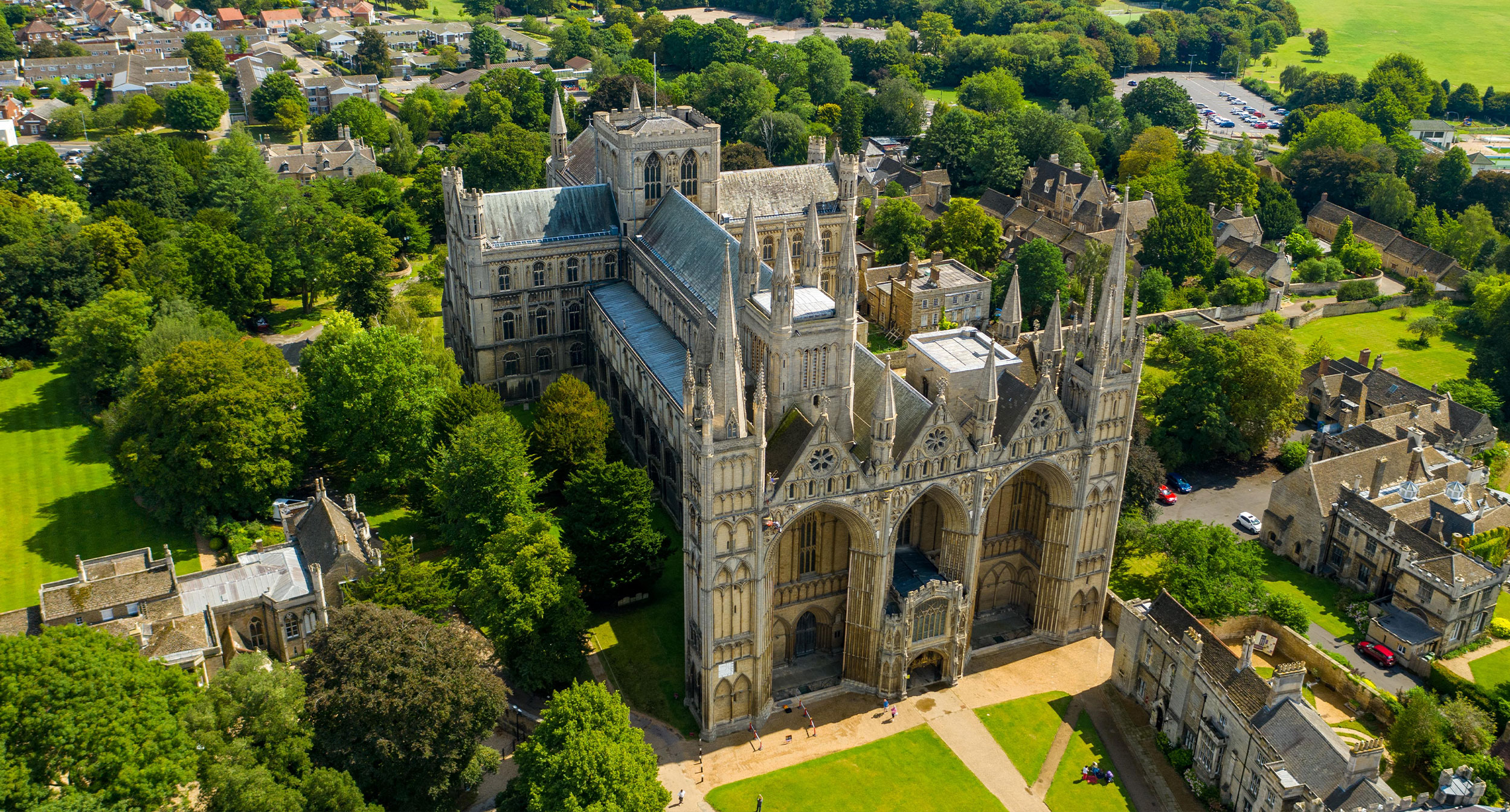


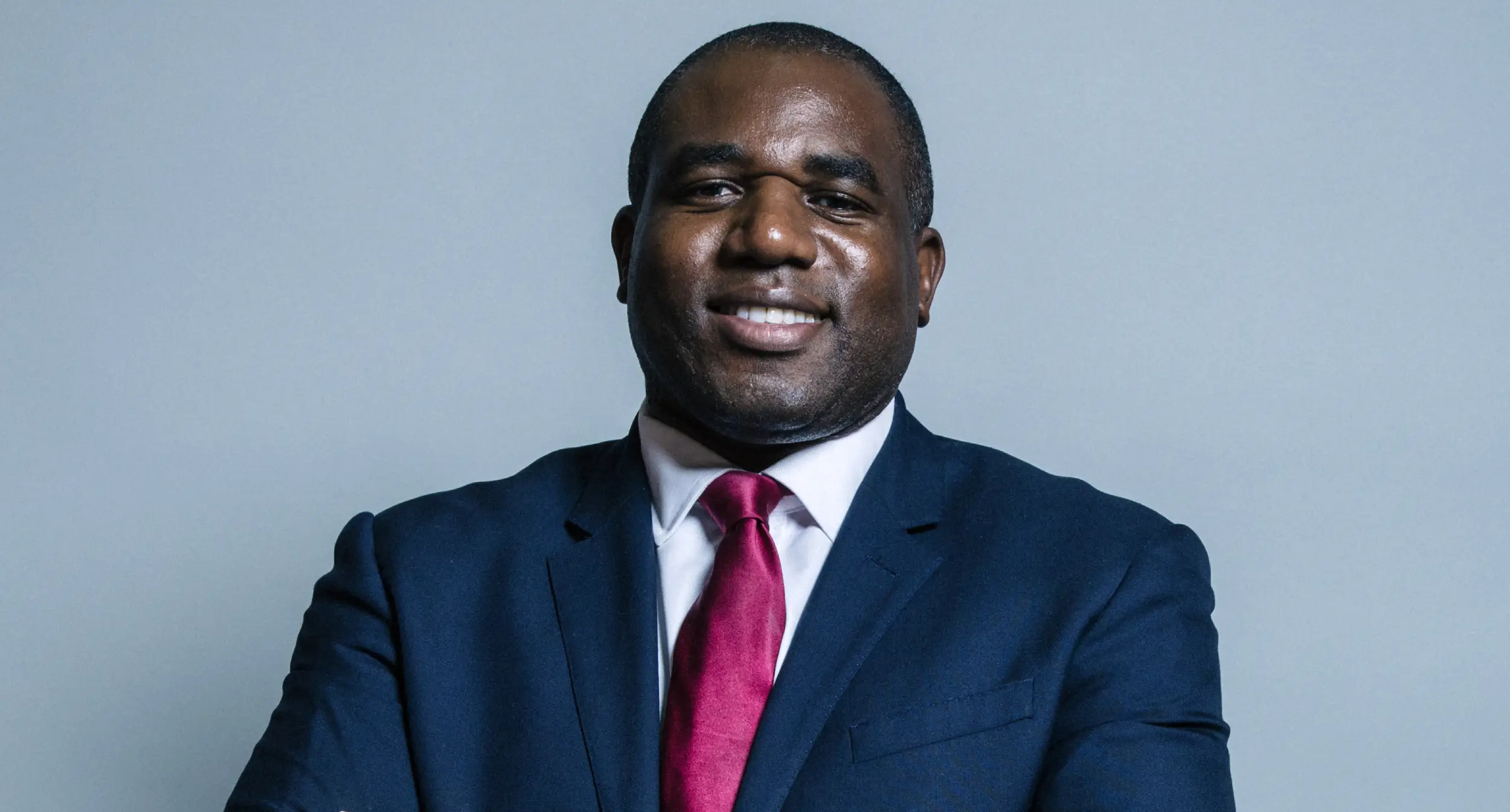
A former Peterborough Cathedral chorister and Head Boy at The King’s School, David Lammy went on to become a barrister, author, long-serving Member of Parliament and one of the most prominent British politicians of his generation.
Life and career in dates
- 1972 Born in London and brought up in Tottenham
- 1983 Arrives in Peterborough as a Cathedral chorister
- 1995 Called to the Bar of England and Wales
- 1997 Completes a Master of Laws at Harvard Law School
- 2000 Elected to the London Assembly and then as MP for Tottenham
- 2002 Begins the first of several ministerial appointments
- 2017 Publishes the independent Lammy Review
- 2024 Appointed Foreign Secretary
- 2025–26 Serves as Deputy Prime Minister, Lord Chancellor and Justice Secretary
From Tottenham to Peterborough
David Lindon Lammy was born in London on 19 July 1972 to Guyanese parents and grew up in Tottenham, north London. One of five children, he was brought up largely by his mother after his father left the family when Lammy was twelve.
His childhood combined the cultural richness of a close West Indian community with financial insecurity and the pressures facing many inner-city families during the 1970s and 1980s. His mother placed a strong emphasis on education, while the family’s Christian faith introduced him to church and choral music from an early age.
That musical ability created an unexpected connection with Peterborough. At the age of ten, Lammy won a choral scholarship awarded through the Inner London Education Authority. In September 1983, aged eleven, he travelled from London to join The King’s School and sing as a chorister at Peterborough Cathedral.
The Peterborough years
Moving between Tottenham and Peterborough exposed Lammy to two markedly different versions of Britain. At King’s, a state-funded cathedral school with a long history, he encountered strong academic expectations, extensive facilities and the discipline of daily choral life.
The transition was not always easy. As one of very few Black pupils in his surroundings, Lammy has spoken about experiencing racism, bullying and a powerful sense of being an outsider. He has also remembered the pastoral support, teaching and opportunities he received in Peterborough with considerable affection.
Rather than concealing social differences, the move made them more visible. The contrast between the resources and surroundings he encountered in Peterborough and those available to children in Tottenham encouraged him to think about class, race, education and unequal access to opportunity.
While boarding in Peterborough, the thirteen-year-old Lammy watched news coverage of the 1985 unrest in Tottenham and worried about relatives living close to the violence. His position between the two places helped turn an emerging awareness of inequality into a deeper interest in politics and justice.
Choral life brought another kind of formation. Rehearsing and singing in Peterborough Cathedral demanded concentration, confidence and teamwork. The Cathedral also offered stillness and continuity during a turbulent period in his family life. Lammy remained at The King’s School and became Head Boy in his final year.
Lammy has credited his Peterborough education with changing the direction of his life, saying that without the opportunity to become a chorister at King’s, he does not believe he would have become a politician.
Law and Harvard
After leaving Peterborough, Lammy studied law at the School of Oriental and African Studies, now SOAS University of London. He joined Lincoln’s Inn and was called to the Bar of England and Wales in 1995, completing his pupillage the following year.
He then travelled to the United States to study at Harvard Law School, completing a Master of Laws degree in 1997. The international environment at Harvard expanded his intellectual horizons and, by his own account, gave him greater confidence to pursue a career in public life.
Lammy subsequently worked at the San Francisco law firm Howard Rice before returning to Britain and joining a London firm. Although his legal career was relatively brief, its influence can be seen throughout his later work on criminal justice, constitutional questions, equality and institutional reform.
Parliament and government
Lammy’s elected career began in May 2000, when he secured a London-wide seat for Labour on the newly created London Assembly. Less than two months later, following the death of the respected Tottenham MP Bernie Grant, Lammy contested and won the constituency’s parliamentary by-election.
Elected on 22 June 2000 at the age of 27, he became the youngest serving member of the House of Commons. He has represented Tottenham continuously ever since.
Between 2002 and 2010, Lammy held ministerial positions across health, constitutional affairs, culture, skills and higher education. As Culture Minister, his responsibilities included the arts, heritage and preparations to commemorate the bicentenary of Parliament’s abolition of the transatlantic slave trade. His later education brief reflected his longstanding interest in widening access to leading universities.
Lammy was appointed to the Privy Council in 2008. Following Labour’s defeat in the 2010 general election, he spent a decade largely on the back benches before returning to the opposition front bench as Shadow Justice Secretary in 2020. He became Shadow Foreign Secretary in November 2021.
Following Labour’s 2024 general election victory, Lammy was appointed Secretary of State for Foreign, Commonwealth and Development Affairs. He served as Foreign Secretary from 5 July 2024 until 5 September 2025, representing the United Kingdom during a period dominated by conflict in Ukraine and the Middle East and by efforts to reshape Britain’s international relationships.
On 5 September 2025, he became Deputy Prime Minister, Lord Chancellor and Secretary of State for Justice. He held those three offices until 20 July 2026 and continues to serve as Labour MP for Tottenham.
Justice, identity and writing
Alongside his parliamentary career, Lammy has become a prominent public voice on race, education, social mobility, criminal justice and the meaning of belonging in modern Britain.
In 2016, Prime Minister David Cameron asked him to lead an independent examination of the treatment and outcomes of Black, Asian and minority ethnic people within the criminal justice system. Published in September 2017, the resulting Lammy Review examined disparities throughout policing, the courts, prisons and probation and proposed reforms intended to improve fairness, transparency and public trust.
His work has also encompassed university access, the Windrush scandal, the Grenfell Tower fire and the experiences of communities that feel excluded from political and institutional power. For many years, he served on Parliament’s Ecclesiastical Committee, maintaining another connection between his public life and his early formation within the Church of England.
Lammy’s first book, Out of the Ashes: Britain after the Riots, was published in 2011 following disturbances that began in Tottenham and spread to other English cities. It combined personal reflection with an examination of family, community, responsibility and social inequality.
His second book, Tribes: How Our Need to Belong Can Make or Break Society, appeared in 2020. Drawing on his Guyanese heritage, Tottenham upbringing, Peterborough education and political experience, it explored the groups and identities that give people meaning but can also deepen division.
He has written for national publications, appeared frequently on television and radio and presented programmes including the Channel 4 documentary The Unremembered: Britain’s Forgotten War Heroes. He has also held academic roles as a Professor in Practice at both the London School of Economics and SOAS.
A Peterborough story
David Lammy was not born in Peterborough, but his relationship with the city is far more substantial than a brief period of school attendance. He spent formative years here, sang regularly within one of England’s great medieval cathedrals, completed his secondary education at King’s and left as Head Boy.
Peterborough gave him access to a different educational and cultural landscape, while his movement between the city and Tottenham helped him recognise the inequalities that would later become central to his public life. Music, faith, education and place all contributed to that formation.
His journey from Cathedral chorister to the highest levels of government makes David Lammy an important part of the Peterborough People story: a life shaped locally that went on to influence national and international affairs.