
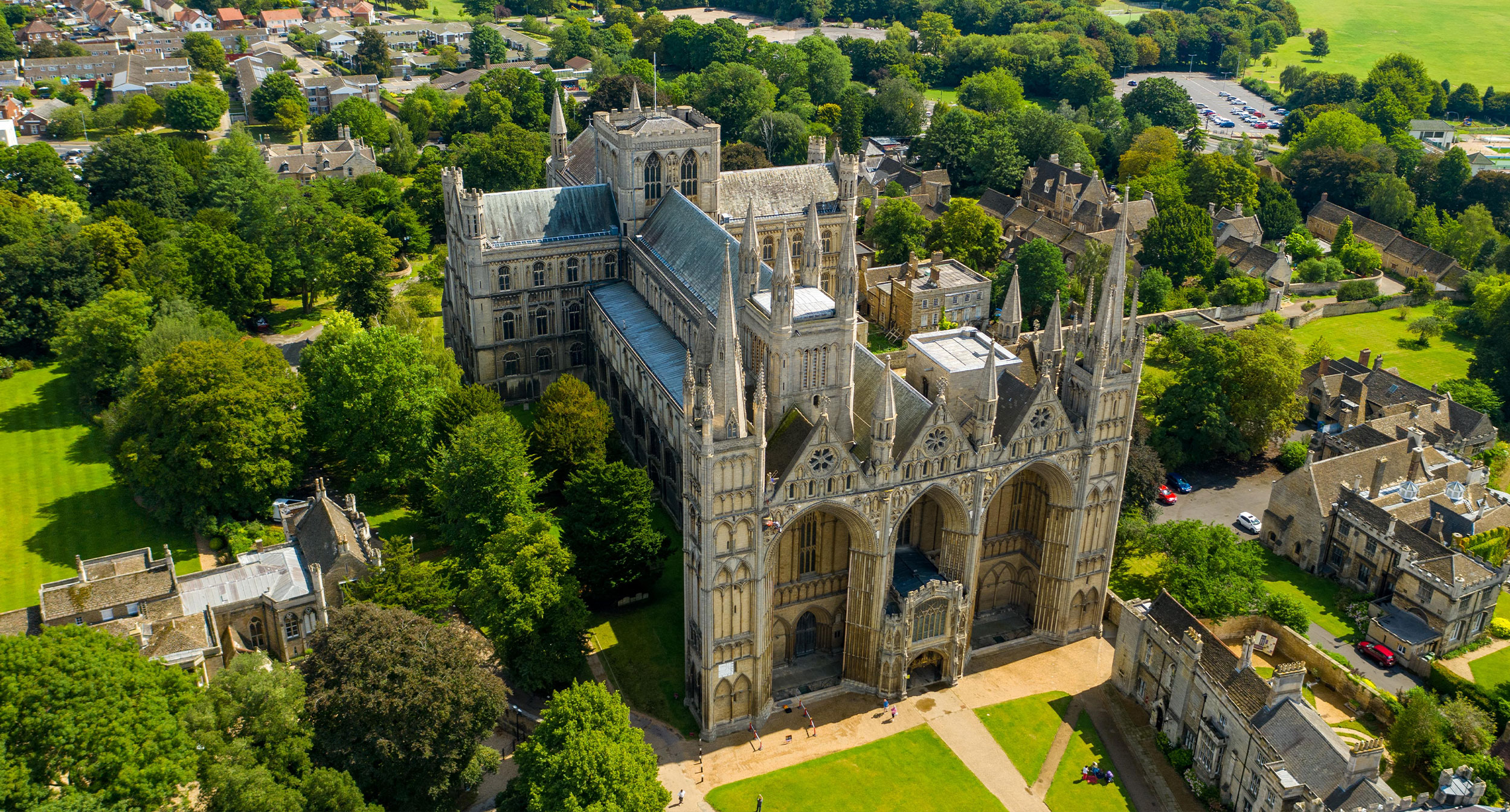
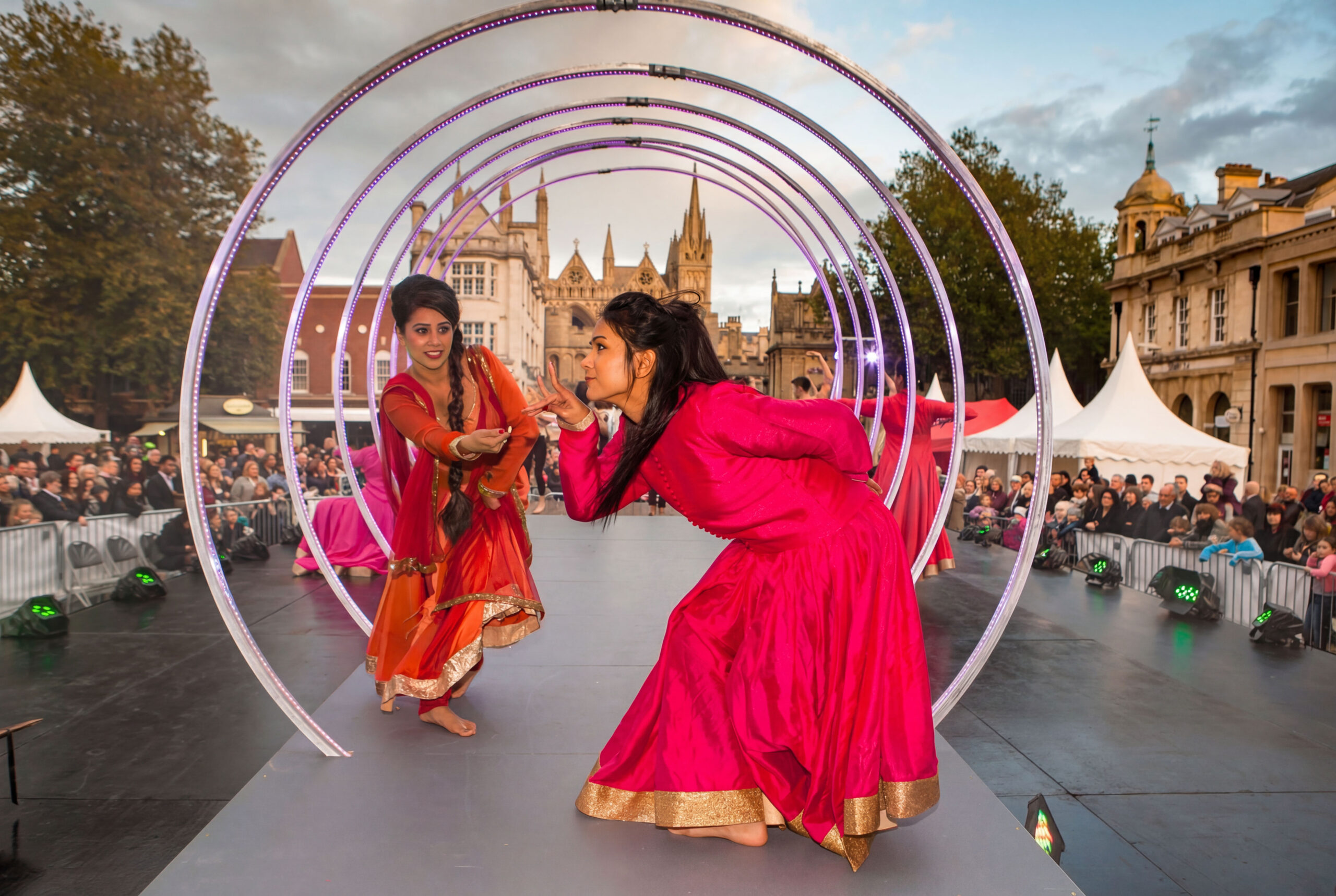
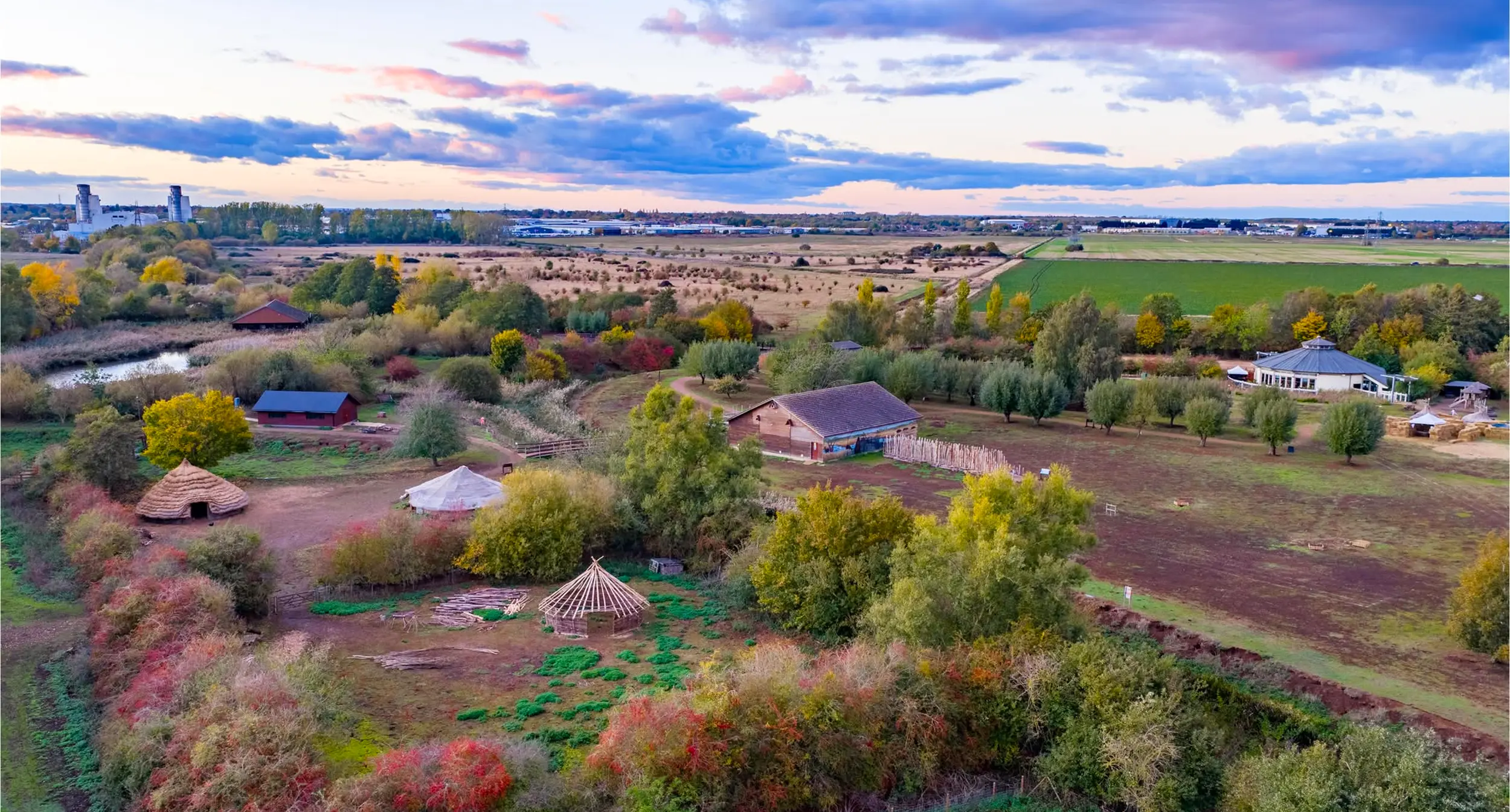
Every January, only a few miles east of Peterborough, an extraordinary transformation takes place. A person disappears beneath a carefully constructed covering of straw, a keeper takes hold of the rope, musicians and dancers gather around, and the Whittlesea Straw Bear begins its journey through the streets of Whittlesey. It is one of the most distinctive living traditions in the Fens, and one whose history connects agriculture, folklore, performance, community memory and the landscape Peterborough shares with its eastern neighbours.
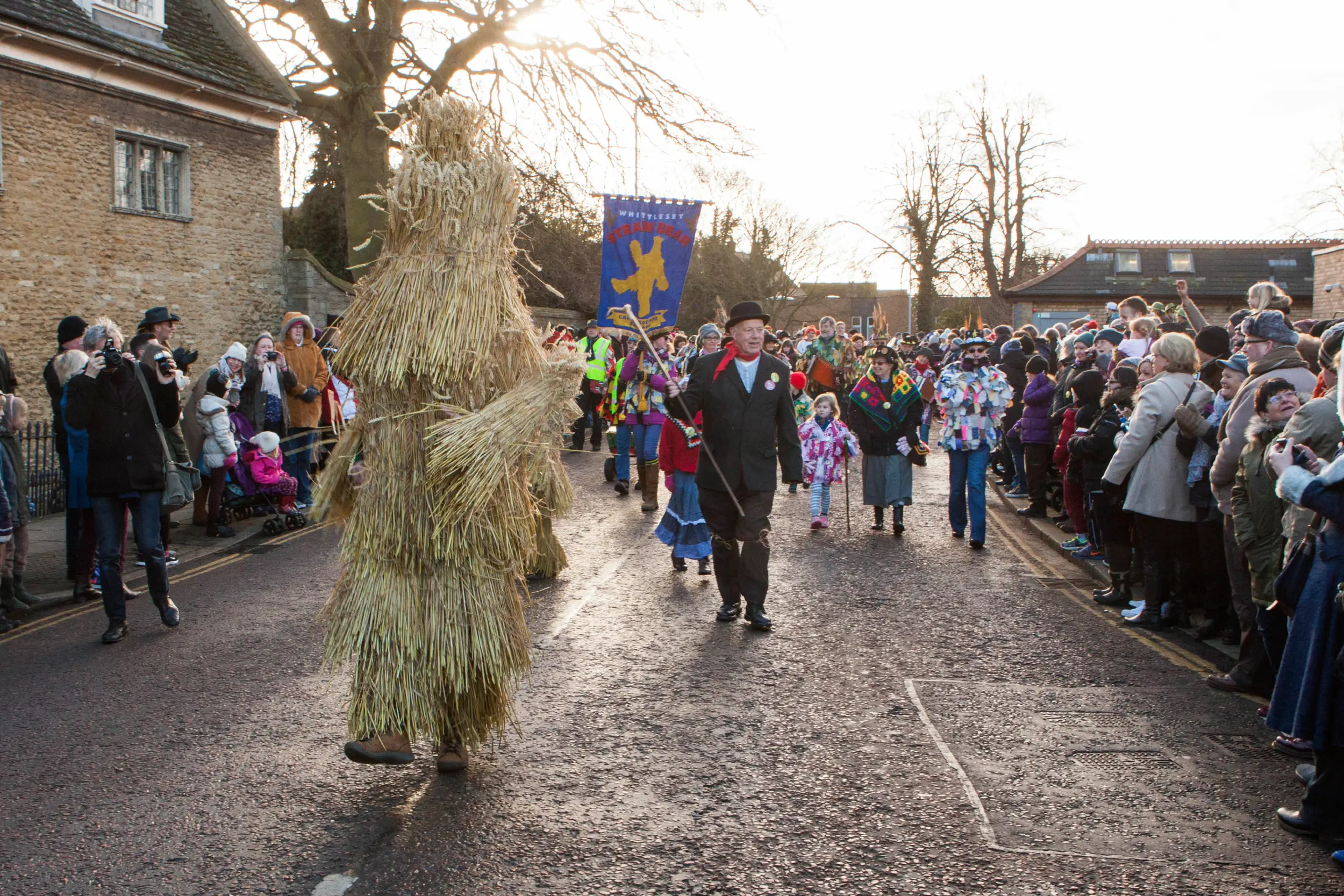
Its material life is temporary, but the knowledge, performance and community surrounding it continue from one generation to the next.
An object that has to be remade
Most of the objects in this collection have survived because somebody prevented them from disappearing. The Whittlesea Straw Bear is different, because disappearance is built into its story.
The Bear is not one ancient costume carefully preserved from the nineteenth century. Straw is gathered, a new covering is constructed around a human performer, the resulting figure moves through Whittlesey during the festival, and eventually the material reaches the end of its useful life. When the tradition returns, the physical Bear has to be created again.
That makes it a particularly revealing example of living heritage. What has survived is not the same bundle of straw but the accumulated knowledge of how to make the Bear, how it should move through the town, how it relates to its keeper, how music and dancing surround it and, above all, the shared understanding that Whittlesey should continue to have a Straw Bear at all.
The Straw Bear survives not as one ancient object, but as inherited knowledge about how to create one.
What exactly is the Straw Bear?
At its simplest, the Bear is a human performer enclosed in straw, but that description does not quite capture what happens once the figure enters the street. Historical accounts describe a man, and sometimes a boy, being completely swathed in straw and led through the town, where the Bear would dance outside houses in expectation of money, food or drink.
The resulting figure sits somewhere between costume, character and moving object. Without the person inside it, there is no dancing Bear. Without the straw, there is no transformation. Without the keeper, music, route and audience, much of the meaning disappears. The custom therefore depends upon several elements acting together rather than upon a single preserved artefact.
The Bear is animated by a human performer rather than existing as a free-standing effigy.
A material taken directly from the agricultural landscape transforms the body beneath it.
The Bear is traditionally led through the streets, reinforcing the appearance of a strange creature under control.
Movement is fundamental. The costume becomes the Straw Bear through performance.
Its world begins with Plough Monday
The Straw Bear belongs to a much wider family of winter customs associated with agricultural labour. Plough Monday, traditionally the first Monday after Twelfth Night, marked the point at which farm workers were expected to return to work after the Christmas period. In the middle of a Fenland winter, however, the calendar and the weather did not necessarily agree. Frozen, flooded or waterlogged ground could prevent work, and for labourers whose income depended upon that work the consequences were immediate.
Across eastern England, customs developed around this point in the year in which groups of agricultural workers travelled through towns and villages performing and collecting money, food or drink. Decorated ploughs might be dragged through the streets, faces could be blackened or disguised, Molly dancers and mummers appeared, and in a small part of the Fens another figure emerged: a person transformed into a Straw Bear.
This is the same wider traditional landscape explored throughout Peterborough Folklore. Peterborough and the villages around it possessed their own Plough Monday traditions, and the Straw Bear should be understood as one particularly distinctive expression of a cultural world that extended across the fen edge rather than stopping at today's local authority boundaries.
Whittlesey had its own day: Straw Bear Tuesday
In Whittlesey, the Bear became associated particularly with the Tuesday following Plough Monday, a day remembered as Straw Bear Tuesday. The figure was led through the streets and encouraged to dance outside houses, with gifts or payment expected in return. The practice formed part of the seasonal rhythm of a working agricultural community rather than a festival created primarily for visitors.
A performer wrapped in straw was led through Whittlesey, dancing in return for money, food or drink.
Exactly when the custom began is unknown, and that uncertainty is important. Folklore attracts ancient explanations very easily, particularly when disguise, animals, fire or the agricultural year are involved. There is no need, however, to invent an unbroken prehistoric fertility ritual to make the Straw Bear significant. Its documented history already tells us a great deal about agricultural labour, seasonal poverty, communal expectation, disguise, performance and the relationship between workers and the people whose doors they approached.
The strongest evidence does not take us into prehistory. It takes us into the streets of a working Fenland town.
A remarkable eyewitness account from 1909
One of the most valuable records of the old custom comes from the literary scholar G. C. Moore Smith, who was in Whittlesey on 12 January 1909 and encountered a Straw Bear in the street. Moore Smith remembered the tradition from his childhood and later wrote about what he had seen for the Folklore Society.
Moore Smith remembered a man completely covered in straw, led by another person and made to dance outside houses for money. In 1909 the performer he encountered was a boy, and he recognised that the custom was already fading.
His account is important because it captures the tradition while it was still being practised rather than reconstructing it decades later. We have a specific observer, on the correct Tuesday, in Whittlesey itself, describing something that was already becoming unusual.
The festival's historical account also points to a much earlier appearance reported in the Peterborough Advertiser in January 1861. That small detail is especially useful for this collection because it shows that Peterborough was already part of the documentary world through which knowledge of the Whittlesey custom circulated.
Why did the old custom disappear?
By the beginning of the twentieth century, customs rooted in the older agricultural economy increasingly collided with changing attitudes towards public order, begging and acceptable behaviour in the street. Moore Smith was told that a police inspector had prohibited Straw Bears because the practice was regarded as a form of cadging.
The tension was not unique to Whittlesey. A performance that participants understood as part of a customary seasonal entitlement could be interpreted by authorities as begging, nuisance or intimidation. At the same time, agricultural employment itself was changing, communities were becoming less dependent upon older seasonal rhythms and many related customs were weakening throughout the country.
By the early twentieth century the old tradition had effectively disappeared, and for decades there was no Straw Bear making its way through Whittlesey.
Then, in 1980, the Bear came back
The modern history of the Straw Bear begins with Brian Kell, who proposed reviving the custom after moving to Whittlesey. The idea received the support of the Whittlesea Society, and on 12 January 1980, roughly seventy years after the old tradition had faded, a Straw Bear once again appeared in the streets of the town.
The traditional custom is recorded as it fades.
Whittlesey takes the Straw Bear into the streets again.
The distinction between survival and revival is worth preserving. The modern festival is not an untouched ritual that continued in an unbroken line from some remote past. It is something arguably more revealing about the way culture actually survives. A community rediscovered evidence of a former local tradition, decided that it still had meaning and deliberately gave it another life.
That conscious act of revival is now part of the history of the Straw Bear in its own right. The festival has grown far beyond the scale of the older custom, attracting dancers, musicians and visitors while also creating a new generation for whom the Bear is once again part of Whittlesey's identity.
The modern Straw Bear is both an old custom and a twentieth-century decision not to lose it.
First, somebody has to make a Bear
Despite the size of the modern festival, the Bear still begins with an agricultural material that could hardly be more ordinary: straw. Suitable material has to be grown or obtained, prepared and then worked by volunteers into a costume capable of covering a person while still allowing that person to move through the streets.
That process is central to understanding why the Bear belongs within an objects collection. The transformation begins in the landscape itself. A cereal crop produces straw; the straw becomes raw material; people who understand the tradition turn that material into a recognisable form; a performer enters it; and only then does the Straw Bear acquire movement and personality.
The agricultural landscape produces the raw material.
Suitable straw is gathered and prepared.
Community knowledge turns straw into a costume.
A performer enters and gives the Bear movement.
The physical object, the agricultural landscape and the knowledge required to construct it are therefore inseparable. The Bear is not simply decorated with straw. Straw is the material through which a human body temporarily becomes something else.
The Bear is not complete until it moves
The modern festival has developed into one of the major folk gatherings of the region, with the Saturday procession providing its most familiar public spectacle. The Bear moves through Whittlesey surrounded by musicians and visiting dance sides, bringing together traditions that include Molly, Morris, sword and clog dancing.
This growth has changed the scale of the event, but movement remains fundamental to the object itself. A Straw Bear standing motionless can be examined as craftsmanship; a Straw Bear dancing through a crowded street becomes part of a living tradition.
There is also a particularly strong Peterborough connection through Peterborough Morris. The side records its involvement with the revived tradition and has been a regular presence at the festival since the early 1980s, creating a direct cultural link between Whittlesey and the city only a few miles to the west.
What happens to the straw afterwards?
The festival traditionally concludes with the disposal of the year's Bear material, something that has inevitably encouraged more dramatic interpretations. A straw figure and fire are almost irresistible ingredients for stories about sacrifice, pagan ritual or The Wicker Man, but the organisers themselves are refreshingly cautious about such claims.
For an object page, that practical lifecycle is actually more interesting than an invented prehistoric origin. The straw begins as part of a crop, is temporarily turned into something culturally powerful, performs its role and then disappears. The next Bear will depend on another supply of material and another group of people who know what to do with it.
The Bear disappears. The knowledge needed to bring it back does not.
Why does it belong in a Peterborough collection?
Whittlesey is not administratively part of the City of Peterborough, and there is no reason to blur that distinction. It is a historic market town in Fenland District, Cambridgeshire. But it is also one of Peterborough's closest neighbours, lying only around six miles east of the city and connected to it by road, rail, the River Nene and centuries of movement across the same fen-edge landscape.
Close neighbours connected by the A605, direct rail services and the wider Nene and Fenland landscape.
Modern administrative boundaries are useful for governance, but they are much less useful for understanding culture. Plough Monday customs were practised across the countryside surrounding Peterborough; agricultural workers, markets, families and performers moved between settlements; newspapers in Peterborough recorded events in Whittlesey; and today's festival continues to attract direct participation from Peterborough-based groups.
The relationship is therefore best described clearly rather than defensively. The Straw Bear is not a Peterborough city custom. It is one of the most distinctive surviving traditions of the wider cultural landscape immediately around Peterborough, and it offers a particularly vivid way of understanding the agricultural and folkloric world the city shared with the Fens.
The boundary is modern. The landscape, customs and connections are much older.
Whittlesey keeps appearing in Peterborough's story
The Straw Bear is only one of many reasons that Whittlesey naturally appears within the wider Peterborough story. Travel east from the city and the connections repeatedly cross the administrative boundary.
One of Europe's most extraordinary prehistoric settlements was discovered close to Whittlesey within the wider Flag Fen basin.
WETLAND LANDSCAPE Flag FenThe prehistoric wetland landscape connects Peterborough's eastern edge with the wider basin stretching towards Whittlesey.
INDUSTRY Brick CountryThe Oxford Clay belt and brick industry created another powerful economic connection between Peterborough and Whittlesey.
FOLKLORE Fenland CustomsPlough Monday, disguise, seasonal celebrations and folk belief developed across landscapes rather than council boundaries.
Even the different spellings preserve a small piece of this layered history. The modern town is normally written Whittlesey, while its railway station retains Whittlesea, and the festival itself continues to use the historic title Whittlesea Straw Bear Festival. Old and new forms therefore coexist, much as an old custom now survives through a modern revival.
Why the Straw Bear matters
The Whittlesea Straw Bear stretches the idea of an object in a useful way. It is unquestionably material: the straw can be grown, harvested, handled, tied and worn. It has weight, shape and physical limitations. Yet almost everything that makes it culturally important exists beyond the material itself.
A product of the agricultural landscape becomes the physical substance of a cultural tradition.
A human performer gives the temporary object movement, personality and presence.
Historical records and community memory allowed something that had disappeared to be recognised again.
Volunteers, performers and residents repeatedly choose to give the tradition another year of life.
A Roman milestone survives because limestone is durable. A medieval manuscript survives because generations protected its pages. A bronze object can remain in the ground for thousands of years and still be recovered. The Straw Bear survives according to a completely different principle. Its physical substance is expected to disappear, so continuity depends upon people remembering how to recreate it.
That is why the gap between the fading custom recorded in 1909 and its revival in 1980 is not an awkward interruption in the story. It is one of the most important parts of it. The Bear vanished, but enough evidence and memory remained for a later generation to decide that it should exist again.
Most objects survive the people who made them. The Straw Bear survives only because people keep making it.
Only a few miles from Peterborough, a field becomes straw, straw becomes costume, costume becomes creature and creature becomes community identity. Then the physical object disappears and the whole process begins again.