It was built in Derby, worked some of Britain’s hardest steam routes and was withdrawn after just fourteen years. Then No. 73050 came to Peterborough. What happened next helped create a heritage railway, mobilised generations of local engineers and volunteers, and gave the city something extraordinary: a steam locomotive of its own.
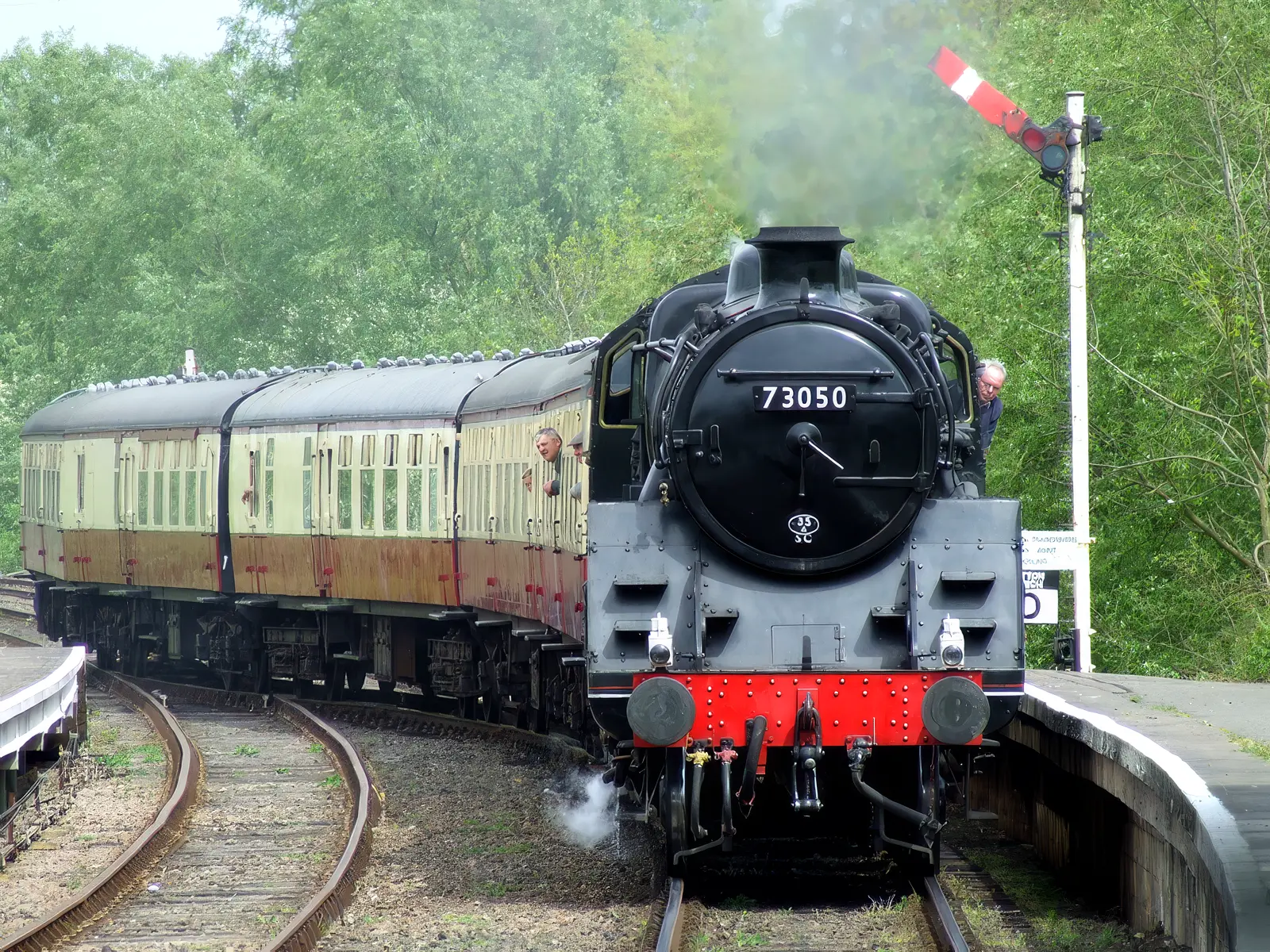
73050 through time
- 14 Apr 1954 No. 73050 leaves British Railways’ Derby Works.
- May 1954 The new locomotive represents its class at the International Railway Congress in London.
- 1954–64 73050 works from Bath Green Park, principally over the demanding Somerset & Dorset route.
- 29 Jun 1968 British Railways withdraws the locomotive from normal service.
- 20 Sep 1968 73050 travels under its own power to Peterborough after the end of regular BR steam.
- 28 Aug 1972 The Mayor names the locomotive City of Peterborough.
- 1973 Richard Paten gives the locomotive to the city.
- 1977–80 Peter Brotherhood apprentices undertake a major overhaul.
- 30 Jun 1986 Prince Edward drives 73050 to open the railway extension into Peterborough.
- 2005 The locomotive returns to steam after an exceptionally extensive overhaul.
- 2014 Its boiler ticket expires and another major overhaul cycle begins.
- 2025 Peterborough City Council approves a new loan agreement with the Nene Valley Railway through 2045 to support restoration and future operation.
A locomotive becomes a Peterborough object
No. 73050 was not built in Peterborough.
It did not work here during its British Railways career.
It did not even have the city’s name.
Yet few railway objects now belong more completely to Peterborough’s story.
The transformation happened after its working life was supposed to have ended.
In 1968, as British Railways swept steam traction away, a Peterborough clergyman called Richard Paten bought one locomotive from the railway.
His initial idea was modest.
Put it on display.
Preserve something tangible from a railway age that Peterborough had helped to shape.
But the locomotive proved too good simply to become a monument.
Peterborough did not build 73050. It did something just as important. It refused to let it die.
Explore the wider background through Peterborough’s Railway Story.
What exactly is a BR Standard Five?
After the railways were nationalised in 1948, British Railways inherited an extraordinary variety of steam locomotive designs from the former private railway companies.
Its response was a new family of BR Standard locomotives.
The aim was not to reinvent steam completely.
It was to take proven British locomotive engineering and make it more standardised, easier to maintain and suitable for a national railway.
The Standard Class 5 was heavily influenced by the enormously successful LMS Stanier Black Five.
A mixed-traffic locomotive intended to handle both passenger and freight duties.
Four leading wheels followed by six large driving wheels.
Large driving wheels suitable for sustained passenger work.
Built around common parts and maintenance-conscious engineering principles.
One hundred and seventy-two Standard Class 5 locomotives were constructed between 1951 and 1957.
Only five survive.
73050 is one of them.
Derby Works, 14 April 1954
No. 73050 was the first locomotive in its particular Derby-built batch.
It emerged from Derby Works in April 1954.
Before entering ordinary traffic, it was selected for display at the International Railway Congress at Willesden in London that May.
That was an impressive beginning for an otherwise unnamed machine.
There was one feature that made 73050 particularly distinctive.
It was one of only three Standard Fives, Nos. 73050 to 73052, fitted with the larger BR1G tender.
That extra capacity was useful because of where it was going next.
Bath to Bournemouth over the Somerset & Dorset
73050 was allocated to Bath Green Park.
Its principal territory became one of Britain’s most famous and demanding steam railways: the Somerset & Dorset route between Bath and Bournemouth.
The line combined steep gradients, heavy trains and long-distance passenger work.
A mixed-traffic locomotive needed strength, reliability and enough flexibility to do whatever was asked of it.
73050 sometimes assisted the famous Pines Express.
For around a decade, this was its railway world.
Then the railway itself began changing.
Dieselisation accelerated.
Steam locomotives were moved, stored and withdrawn.
73050 left the Somerset & Dorset world in 1964 and eventually reached the Manchester area.
By June 1968, its British Railways career was over.
Then something extraordinary happened
Regular British Railways steam traction ended in August 1968.
Steam locomotives awaiting preservation or scrap were generally not supposed to wander around the national network under their own power.
Yet on the night of 20 September 1968, 73050 did exactly that.
A steam locomotive moving under its own power after the end of regular BR steam.
British Railways had initially wanted it transported by road.
Instead, permission was eventually given for the locomotive to travel under its own power from the Manchester area through Wakefield and onwards to Peterborough.
Its destination was New England shed.
A locomotive built for the national railway had become a preserved Peterborough machine.
The Reverend who wanted a locomotive on a plinth
The man responsible was the Reverend Richard Paten.
Paten understood that Peterborough’s railway history was disappearing physically as steam traction ended, railway installations closed and old locomotives vanished.
He wanted Peterborough to save one.
The original plan was wonderfully straightforward.
Place it outside Peterborough Technical College as a monument to the city’s railway history.
The locomotive was in sufficiently good condition that restoration to working order became the goal.
Paten paid approximately £3,000, essentially its scrap value.
He had bought an object.
What Peterborough gained was a movement.
That preservation instinct later surfaced again when Paten helped establish Railworld Wildlife Haven, another remarkable volunteer-led part of the city’s railway heritage.
1972: the city gives the engine its name
The locomotive arrived in Peterborough simply as 73050.
It had never carried a name in British Railways service.
That changed on 28 August 1972.
The Mayor of Peterborough formally named the preserved locomotive.
The transformation was symbolic.
A locomotive that had worked hundreds of miles away became explicitly associated with the city that saved it.
Richard Paten subsequently donated 73050 to Peterborough City Council in 1973.
It was no longer merely privately preserved.
It belonged to the city.
The locomotive that helped create the Nene Valley Railway
This is the most important part of the story.
Saving 73050 required people.
People required organisation.
An organisation required somewhere to work.
And once railway enthusiasts had a locomotive, the obvious question became:
What if Peterborough had a railway on which it could run?
The Peterborough Locomotive Society formed around the preservation of 73050.
It evolved into the Peterborough Railway Society.
That organisation became central to the creation of the Nene Valley Railway.
The result is now one of Peterborough’s major heritage attractions.
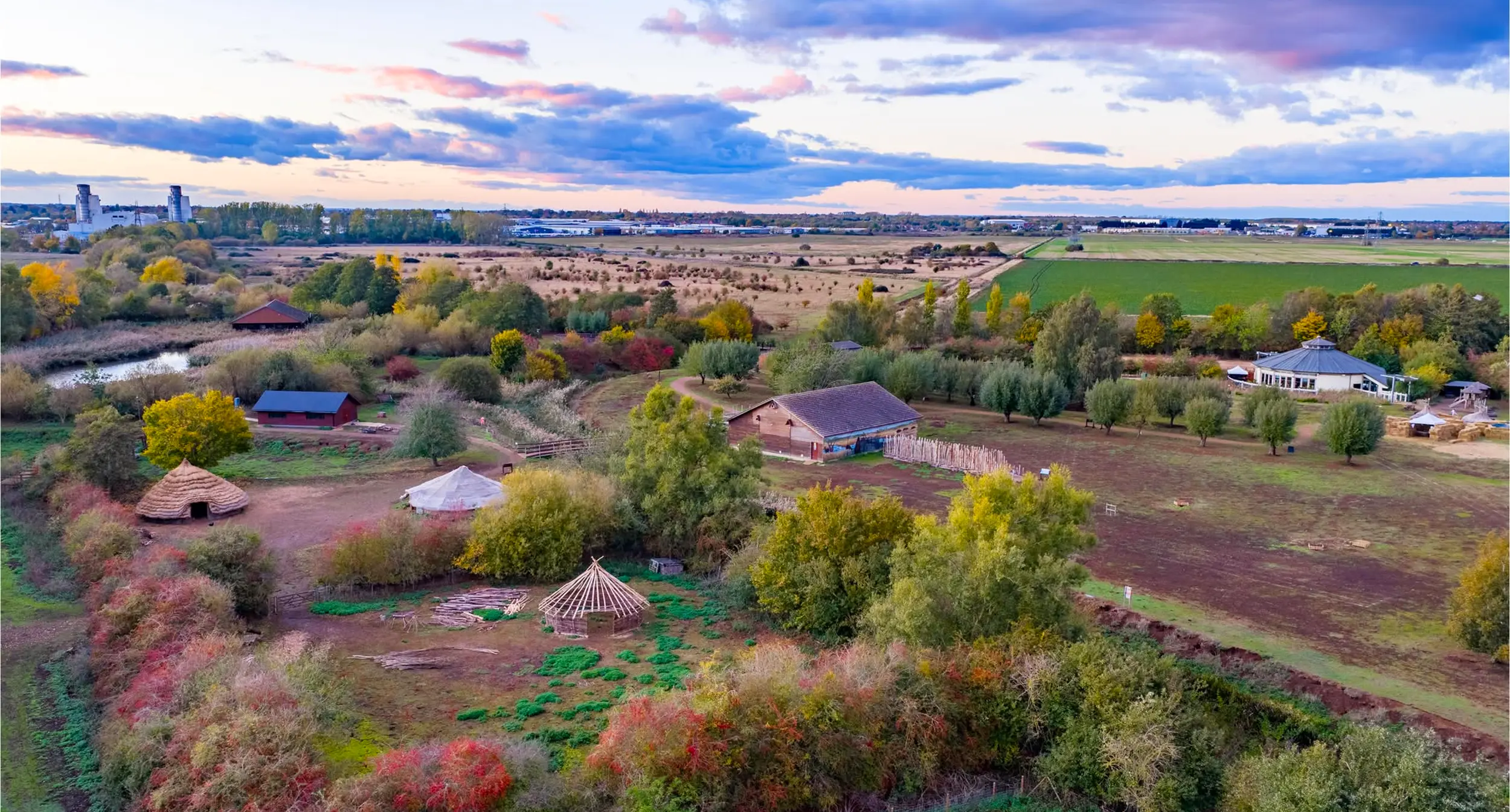
Visitors can travel by steam and heritage diesel between Peterborough and Wansford through the Nene Valley, passing Ferry Meadows, Orton Mere and landscapes that combine railway history with river and countryside.
Explore the attraction through the Discover Peterborough guide to the Nene Valley Railway.
Peterborough industry rebuilt it
The preservation story also brings several strands of Peterborough’s industrial history together.
Early restoration work took place beside Baker Perkins.
The locomotive later moved to the British Sugar factory at Woodston.
Then another great Peterborough engineering company became involved.
Peter Brotherhood.
Peter Brotherhood undertook a major overhaul of 73050 using the locomotive as a substantial engineering training project for apprentices.
This is a beautiful detail in the story.
The city preserved railway engineering by using contemporary engineering skills.
Young apprentices were not merely being told how heavy engineering worked.
They were rebuilding it.
Follow the wider story through Peterborough’s Engineering Story.
Then a prince drove it into Peterborough
On 30 June 1986, the Nene Valley Railway opened its extension eastwards from Orton Mere to Peterborough Nene Valley station.
The locomotive chosen for the occasion was 73050.
Its driver was Prince Edward.
City of Peterborough helped open the heritage railway’s physical connection back into the city whose name it carried.
The symbolism could hardly have been better.
In 1968, Peterborough had saved a locomotive.
Eighteen years later, that locomotive was helping bring a preserved railway back into Peterborough.
Sometimes City of Peterborough pretended to be somewhere else
The Nene Valley Railway has another unusual speciality.
Film and television.
Its stations, adaptable rolling stock and continental collection have allowed Peterborough to double for railway locations across Europe.
73050 itself has joined that tradition.
British locomotive · continental disguise · television and music-video performer
The locomotive has appeared disguised for screen productions including adaptations of Agatha Christie stories and has also appeared in a music video.
It is another example of the strange second life that preserved machinery can acquire.
Explore that much bigger story through Peterborough on Screen.
A preserved steam locomotive is never really finished
Keeping a large steam locomotive alive is completely different from displaying an object in a glass case.
Boilers wear.
Bearings wear.
Steel corrodes.
Pipes need replacing.
Components that disappeared from normal industry have to be repaired or manufactured again.
73050 illustrates that cycle perfectly.
A particularly extensive overhaul begun around 1990 lasted approximately fifteen years.
The locomotive was dismantled.
Major firebox and boiler work was undertaken.
A new smokebox and cab were produced.
Even the theft of much of the locomotive’s copper pipework had to be overcome by recreating it from drawings and photographs.
73050 finally returned to service in 2005.
It ran for another nine years before its boiler certificate expired in 2014.
Another major overhaul subsequently began.
That decision is important.
It means 73050 is not simply an object Peterborough happened to save in the 1960s.
The city is still participating in its survival.
Why this is a Peterborough object
There is an apparent problem with including 73050 in Peterborough in Objects.
It was built in Derby.
Its working career was largely elsewhere.
It only came here when British Railways had finished with it.
But that is precisely why it belongs.
Some objects are defined by where they were created.
Others are defined by what happens to them afterwards.
Peterborough gave 73050 its second life.
A national railway locomotive.
A condemned machine becomes heritage.
73050 becomes City of Peterborough.
Volunteers, apprentices and a heritage railway grow around it.
Peterborough saved one locomotive. In the process, it helped save a railway.
That makes 73050 one of the most genuinely civic objects in this collection.
It was bought because Peterborough needed a physical symbol of its railway story.
Residents restored it.
Local engineering companies rebuilt it.
The Mayor named it.
Richard Paten gave it to the city.
Volunteers kept it alive.
The organisation created around it developed into one of Peterborough’s major visitor attractions.
And Peterborough City Council still owns it.