


More than thirteen centuries ago, before Peterborough had its present name, a monk called Seaxwulf helped establish a monastery beside the River Nene. That community, Medeshamstede, became one of Anglo-Saxon England's important religious houses and ultimately gave rise to Peterborough Abbey, Peterborough Cathedral and the city that grew around them.
Life and career in dates
- c.654 A Christian monastery begins to emerge at Medeshamstede under the Mercian prince Peada
- 650s Later Peterborough tradition says responsibility for developing the monastery was entrusted to Seaxwulf
- c.656 King Wulfhere of Mercia supports the developing monastery following the death of his brother Peada
- c.675 Seaxwulf leaves the abbacy after being appointed Bishop of the Mercians
- 676 Bede records Seaxwulf giving refuge, a church and land to the displaced Bishop Putta of Rochester
- 678 Political changes remove Lindsey from Seaxwulf's jurisdiction
- 680s The enormous Mercian church begins to be divided into smaller dioceses
- c.692 Seaxwulf dies after one of the most significant ecclesiastical careers of early Mercian England
Before Peterborough was Peterborough
To understand Seaxwulf, it is necessary to imagine Peterborough before there was a Peterborough.
In the middle of the seventh century there was no cathedral, no medieval city and no place bearing the modern name.
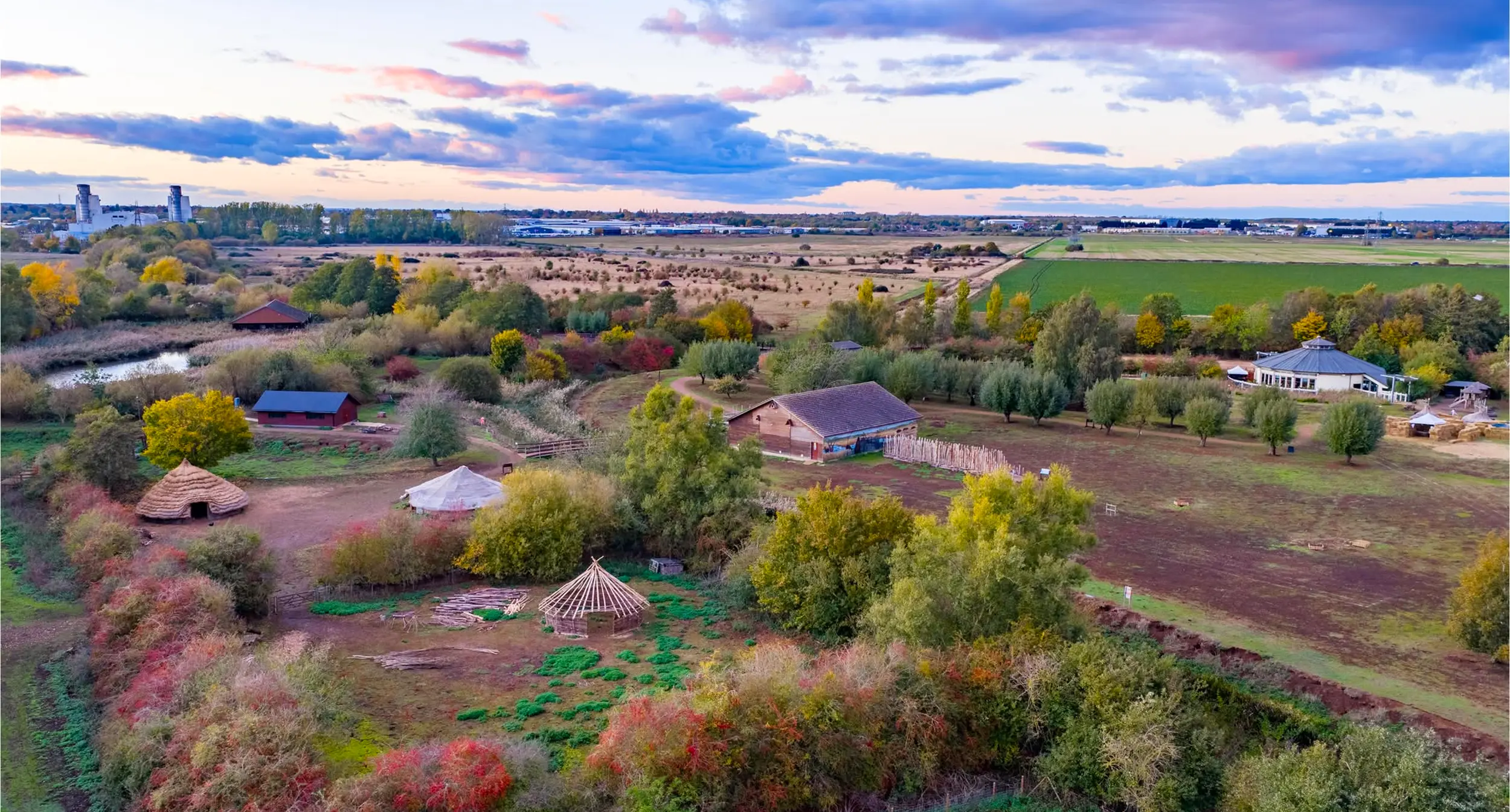
The landscape around the lower River Nene was one of water, woodland, marsh and rich meadowland. Communities occupied the drier ground between rivers and fens, while the political map of England was divided between competing Anglo-Saxon kingdoms.
This area lay within the influence of Mercia, one of the kingdoms that would become a dominant power in Anglo-Saxon England.
Mercia was also undergoing a profound transformation.
Christianity was spreading through a kingdom whose ruling dynasty had only recently been pagan. Churches and monasteries were not simply religious foundations. They became centres of learning, administration, political influence, agriculture and economic activity.
Somewhere within this world appears one of the earliest named people directly connected with the story of Peterborough.
His name was Seaxwulf.
Medeshamstede
The place with which Seaxwulf became associated was known as Medeshamstede.
The name is generally understood as referring to a homestead or settlement among the meadows. It was an appropriate description for a site beside the River Nene, surrounded by the wetland landscape of the Fens.
Here, in the middle decades of the seventh century, a new Christian religious community was established.
Peterborough Cathedral dates its original monastic foundation to around 654 or 655 and connects it with Peada, son of the powerful Mercian king Penda.
Peada had converted to Christianity as part of the complicated political relationship between Mercia and the Christian kingdom of Northumbria. His conversion was followed by missionary activity within Mercian territory.
The foundation at Medeshamstede formed part of that transformation.
Peterborough began not as a town, but as a religious community in the water meadows beside the Nene.
What Bede tells us
For a man who lived more than thirteen centuries ago, one piece of evidence about Seaxwulf is extraordinarily important.
The Northumbrian monk and historian Bede knew who he was.
Writing his Ecclesiastical History of the English People in the early eighth century, only a generation after Seaxwulf's death, Bede described him as:
“Founder and abbot of the monastery which is called Medeshamstead.”
Bede, Ecclesiastical History, Book IV
That brief sentence is enormously valuable.
It means Seaxwulf's connection with the foundation was not simply a legend created by Peterborough monks centuries later. An independent historian writing comparatively close to his lifetime already regarded him as both its founder and its abbot.
Bede gives us frustratingly little personal information. We do not know with certainty when Seaxwulf was born, where he came from, who his parents were or precisely how he first became involved with Medeshamstede.
But we know that his contemporaries remembered him as one of the people responsible for creating it.
What can we actually know?
Building the monastery
The fuller story comes from Peterborough's own later historical tradition.
The Peterborough version of the Anglo-Saxon Chronicle says that Peada and the Northumbrian king Oswiu began the foundations of the monastery and entrusted the work to a monk named Saxulf.
Peada's reign was brief. He was killed in 656.
According to the later Peterborough account, his brother Wulfhere, who subsequently became king of Mercia, continued and greatly enlarged the project.
Medeshamstede was dedicated to St Peter, the apostle whose name would eventually become inseparable from Peterborough itself.
The Chronicle presents Seaxwulf as the man overseeing the work while Mercian rulers supplied land, resources and political protection.
Some of the documents associated with this story are now regarded by historians as later constructions rather than authentic seventh-century charters. The precise details therefore have to be treated carefully.
But beneath the later embellishment lies the much earlier testimony of Bede.
Seaxwulf was there.
And he was remembered as a founder.
The first abbot
Seaxwulf became the first abbot of Medeshamstede.
In the seventh century, an abbot could wield considerable authority. A major monastery controlled land, organised agricultural estates, received royal patronage, educated clergy and offered hospitality to travellers and important visitors.
Medeshamstede's geographical position gave it particular potential.
It sat close to the Nene at the meeting point between the Midlands and the Fenland world, with river routes extending east towards the Wash and land routes reaching into Mercia.
Under Seaxwulf and his successors, the community became the nucleus of a network of religious and landed interests.
The settlement that grew around the monastery would survive destruction, rebuilding, political upheaval and the Viking age.
Centuries later, Medeshamstede would be known as Burgh, then Peterborough.
From abbot to bishop
Seaxwulf's importance extended far beyond his monastery.
In around 675, Archbishop Theodore of Canterbury removed Winfrith, Bishop of the Mercians, from office following a dispute over obedience.
His replacement was Seaxwulf.
The appointment says something important about the status he had achieved.
The founding abbot of Medeshamstede was now entrusted with responsibility for one of the largest and most politically important Christian territories in England.
His episcopal centre was associated with Lichfield, but his responsibilities extended across a huge part of central England.
Bede describes him as bishop of the Mercians and Middle Angles and indicates that, for a time, his authority also extended over Lindsey.
The monk who helped create Medeshamstede became one of the leading churchmen of Anglo-Saxon England.
A vast Mercian bishopric
The territory Seaxwulf inherited was very different from a modern diocese.
It potentially stretched across large areas of what are now the Midlands and eastern England. Christianity itself was still establishing permanent institutions across much of the landscape.
Bishops travelled, advised rulers, ordained clergy, supported monasteries and helped organise an emerging network of churches.
One episode preserved by Bede gives a glimpse of Seaxwulf exercising that authority.
In 676 King Æthelred of Mercia invaded Kent and devastated Rochester. Its bishop, Putta, lost his church and possessions.
Putta turned to Seaxwulf.
Bede records that Seaxwulf gave the displaced bishop a church and a small piece of land where he could live.
It is only a small incident in a much larger history, but it shows Seaxwulf as a church leader with the resources and authority to support another bishop displaced by war.
Political boundaries continued to change. By 678 Lindsey had passed out of Mercian control and received its own bishop. Archbishop Theodore subsequently encouraged the division of the enormous Mercian territory into smaller dioceses.
Seaxwulf lived through the moment when the Christian geography of central England was beginning to take recognisable institutional form.
History and later tradition
Peterborough remembered Seaxwulf long after his lifetime.
When monks at Peterborough Abbey wrote and copied the history of their house centuries later, they placed him near the beginning of their story.
The Peterborough Chronicle describes Saxulf as beloved by the people, nobly born and wealthy.
It also embeds him in a dramatic account involving Peada, Wulfhere and other members of the Mercian royal dynasty.
These details are fascinating, but they must be treated differently from Bede's near-contemporary evidence.
Medieval monasteries had powerful reasons for preserving foundation stories. Ancient royal connections could help demonstrate ownership of land, privileges and independence.
Some documents claiming to preserve the monastery's seventh-century privileges are now considered later fabrications.
That does not make the whole story fiction.
Instead it gives Peterborough two layers of history: the small number of things we can establish with considerable confidence, and the much richer memory through which later generations understood their origins.
One man, several spellings
Anglo-Saxon names were recorded in different ways by different scribes and later translators. Seaxwulf is common in modern scholarship, while Saxulf and Sexwulf appear frequently in older histories and translations.
Seaxwulf and Peterborough
Seaxwulf died around 692.
The original monastery he knew has disappeared.
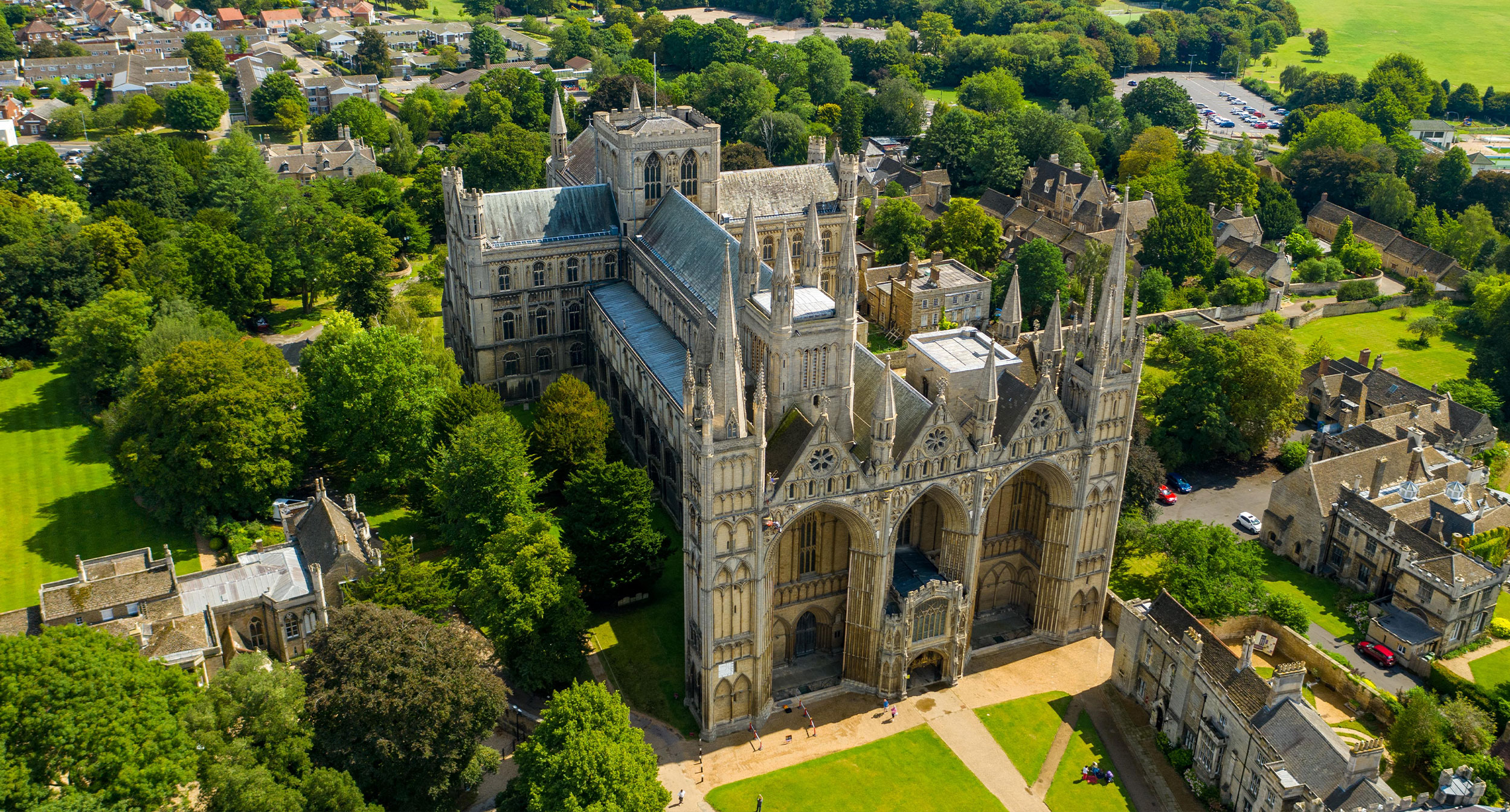
Medeshamstede was later devastated during the Viking age. It was refounded in the tenth century, developed into one of England's great Benedictine abbeys and was rebuilt magnificently after a disastrous fire in the twelfth century.
Following the Dissolution of the Monasteries, the abbey church became Peterborough Cathedral in 1541.
The building visitors see today is therefore not Seaxwulf's church.
But the place is his.
A thirteen-century legacy
c.654A religious community begins beside the Nene at Medeshamstede.
↓ Peterborough AbbeyThe monastery develops into one of medieval England's great religious houses.
↓ Peterborough CathedralThe abbey church becomes the cathedral of a new diocese in 1541.
↓ PeterboroughA modern city still carries the identity that grew around the monastery dedicated to St Peter.
That makes Seaxwulf something more significant than simply the first name in a list of abbots.
He belongs to the foundation story of Peterborough itself.
Kings supplied patronage. Missionaries brought Christianity into Mercia. Generations of monks, builders and townspeople transformed the settlement that followed.
But among the earliest people we can actually name at this place is Seaxwulf, the man whom Bede remembered as the founder and abbot of Medeshamstede.
More than thirteen centuries before modern Peterborough, Seaxwulf helped establish the community from which the city would grow.