
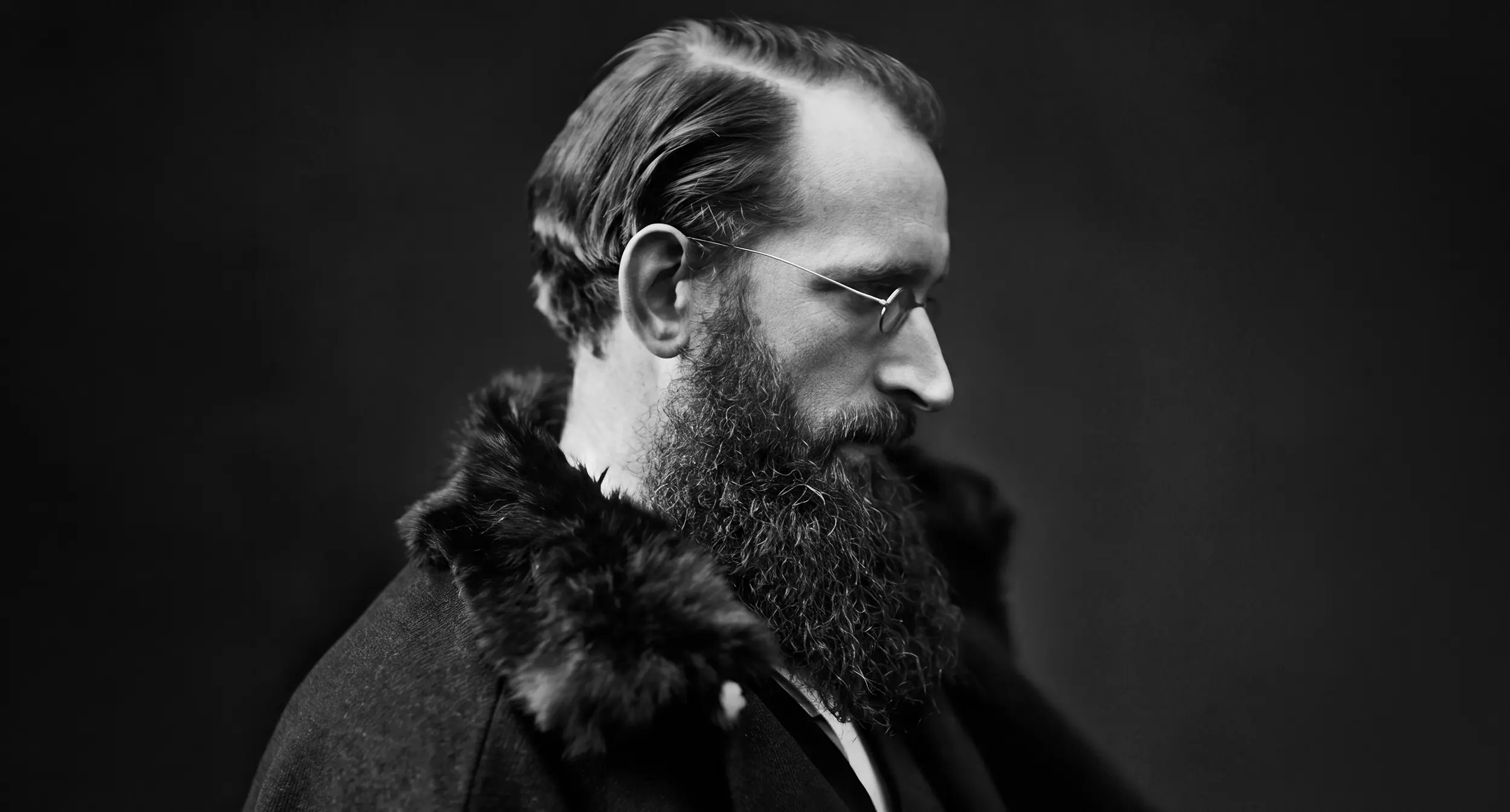
Mandell Creighton was one of Victorian Britain's leading historians and churchmen. As Bishop of Peterborough from 1891 to 1897, he brought an extraordinary academic career into the life of a vast diocese, while continuing to write, lecture and shape the emerging profession of modern history.
Life and career in dates
- 1843 Born in Carlisle on 5 July
- 1862 Wins a postmastership to study at Merton College, Oxford
- 1870 Ordained deacon in the Church of England
- 1872 Marries Louise von Glehn, herself a future historian and writer
- 1873 Ordained priest
- 1875 Becomes vicar of Embleton in Northumberland
- 1882 Publishes the first volumes of his monumental history of the papacy
- 1884 Becomes the first Dixie Professor of Ecclesiastical History at Cambridge
- 1886 Becomes the first editor of the English Historical Review
- 1887 Receives Lord Acton's famous letter on the corrupting nature of power
- 1891 Consecrated and enthroned as Bishop of Peterborough
- 1894 Completes the fifth volume of his great history of the papacy
- 1895 Intervenes during the Leicester boot and shoe dispute
- 1896 Represents the Church of England at the coronation of Tsar Nicholas II in Moscow
- 1897 Leaves Peterborough to become Bishop of London
- 1901 Dies in London aged 57
From Carlisle to Oxford
Mandell Creighton was born in Carlisle on 5 July 1843, the son of a prosperous cabinet-maker whose expectations for his son were considerable.
He was educated in Carlisle and at Durham School before winning a postmastership to Merton College, Oxford, in 1862.
Oxford revealed the direction his life would take.
Creighton excelled academically and remained at Merton as a fellow and tutor. He became fascinated by European history, particularly the relationship between religion, politics, institutions and individual character.
It was an important moment in the development of history as an academic subject. Victorian scholars were beginning to move beyond history written principally as literature, moral instruction or patriotic narrative and towards increasingly systematic research based upon documentary evidence.
Creighton would become one of the figures who helped make that transition possible.
Becoming a historian
Creighton's great historical subject became the Renaissance papacy.
During a journey through Italy with his wife Louise in 1873, he decided to devote himself to understanding the popes and political world of the late medieval and Renaissance period.
It was an ambitious subject.
The papacy stood at the intersection of religion, diplomacy, war, patronage, personal ambition and European politics. Writing its history required Creighton to examine figures whose religious importance could not easily be separated from their exercise of worldly power.
His approach was deliberately analytical.
Creighton tried to understand historical figures within the circumstances in which they acted rather than beginning with a verdict about whether they had been heroes or villains.
That commitment to historical context became one of his defining characteristics.
Scholar and parish priest
Academic life was not Creighton's only vocation.
He was ordained deacon in 1870 and priest in 1873. In 1875 he left Oxford to become vicar of Embleton, a rural parish on the Northumberland coast.
The move gave him something he wanted badly: time.
His mornings could be devoted to historical research and writing, while afternoons and evenings were occupied by parish work.
Creighton visited families, worked with schools and became involved in local administration. The experience also brought a scholar accustomed to Oxford colleges into close contact with farmers, fishermen, quarrymen, railway workers and their families.
He later regarded his decade at Embleton as among the happiest years of his life.
It was there that the first volumes of his History of the Papacy were written.
Cambridge and a new profession
In 1884 Creighton was appointed the first holder of the newly created Dixie Professorship of Ecclesiastical History at the University of Cambridge.
His arrival formed part of a wider transformation of historical study within British universities.
Two years later he became the first editor of a publication that would play an important role in that transformation:
The English Historical Review
First published January 1886
It was the first English-language academic journal devoted specifically to historical scholarship and remains one of the world's leading historical journals.
Editing it meant deciding which research deserved publication, encouraging scholars and helping establish standards for a developing academic profession.
Creighton the historian
The famous letter
Creighton's determination to understand historical figures rather than simply condemn them led to one of the most famous exchanges in the history of historical writing.
Lord Acton, another formidable Victorian historian, believed Creighton was too forgiving towards powerful historical figures, particularly Renaissance popes.
In April 1887 he wrote directly to Creighton.
“Power tends to corrupt, and absolute power corrupts absolutely.”
Lord Acton to Mandell Creighton, 5 April 1887
The sentence has since become one of the most famous political quotations in the English language.
Its original context, however, was historical scholarship.
Acton was arguing with Creighton over whether kings, popes and other powerful people should be judged by precisely the same moral standards as everybody else.
Creighton preferred to ask how people had acted within the political and moral world available to them.
The disagreement went to the heart of an enduring question for historians: should the historian principally understand the past, or judge it?
Bishop of Peterborough
In 1891 Creighton's life changed dramatically.
Prime Minister Lord Salisbury offered him the vacant bishopric of Peterborough following the translation of William Connor Magee to York.
Creighton had not been seeking a bishopric.
Accepting it meant giving up much of the academic freedom he had enjoyed at Cambridge and assuming responsibility for one of England's large Victorian dioceses.
He nevertheless believed that refusing the responsibility would be wrong.
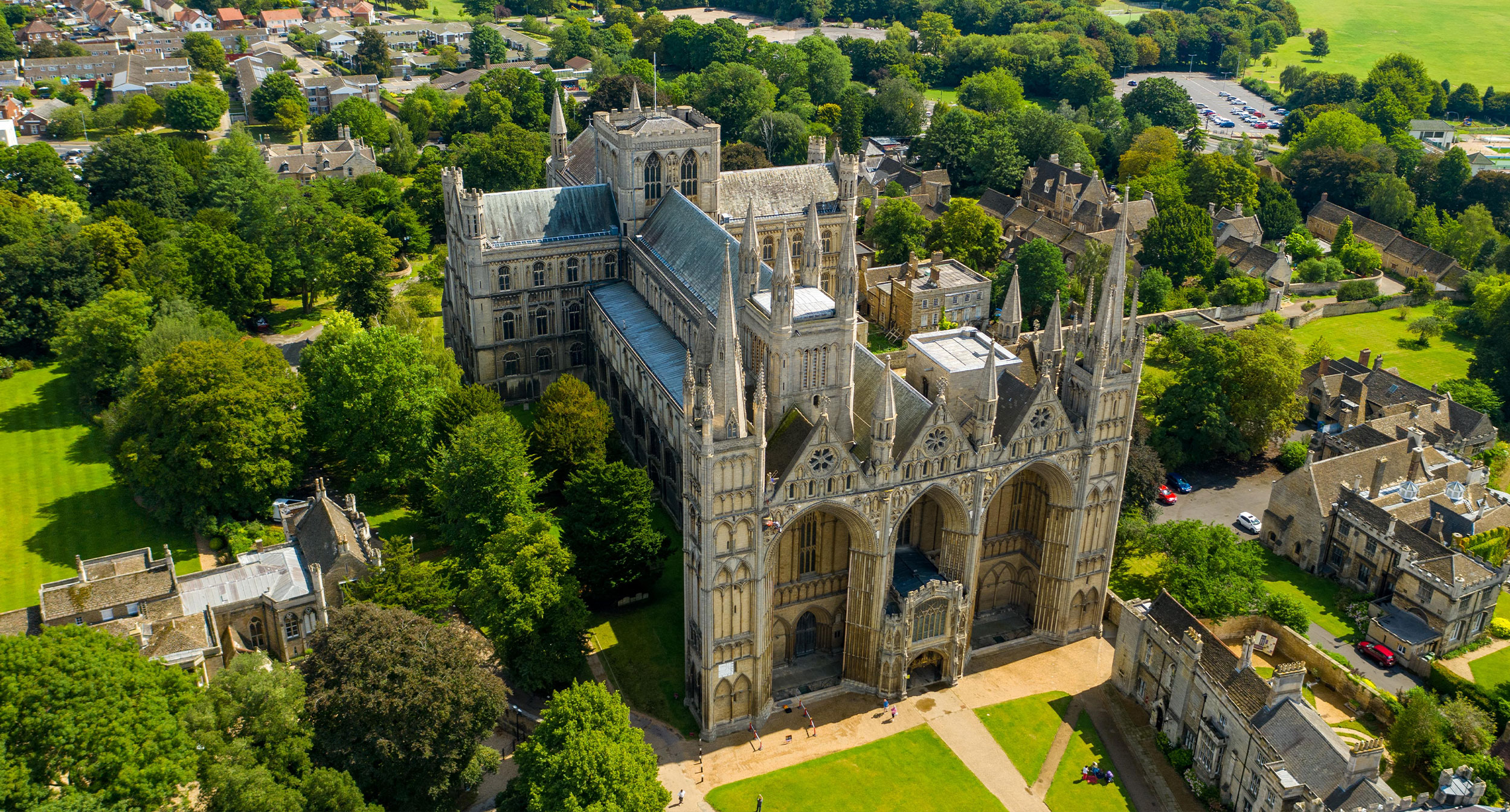
Creighton was consecrated at Westminster Abbey in April 1891 and enthroned at Peterborough Cathedral the following month.
He arrived as something unusual: a bishop already internationally recognised as a historian.
Peterborough acquired not simply a Victorian bishop, but one of the leading historical scholars of his generation.
Across a vast diocese
Creighton's Peterborough was not the modern Diocese of Peterborough.
The Victorian diocese stretched across a huge geographical area and contained approximately 676 parishes. Its responsibilities extended through Northamptonshire and large parts of Leicestershire as well as Peterborough itself.
Creighton responded by travelling.
During his early years as bishop he visited communities throughout the diocese, often travelling by railway, staying with clergy and conducting services in parish churches.
He wanted to know the clergy personally and understand the communities for which they were responsible.
This mattered in a rapidly changing society.
The diocese included rural villages, market towns and increasingly industrial communities. Leicester in particular was expanding quickly through industries including footwear, hosiery and engineering.
A bishop whose previous parish experience had introduced him to working communities in Northumberland now confronted the social consequences of industrialisation on a much greater scale.
The Victorian Diocese of Peterborough
676 parishesCreighton's diocese stretched far beyond Peterborough itself, including Northampton and Leicester and bringing the bishop into contact with rural, urban and industrial communities.
The Leicester dispute
One of the defining episodes of Creighton's Peterborough episcopate came not in the Cathedral, but within the industrial communities of Leicester.
In 1895 a major dispute engulfed the boot and shoe industry.
Relations between manufacturers and organised workers deteriorated into a large-scale lockout, threatening livelihoods across one of Leicester's most important industries.
Creighton refused to treat the conflict simply as a confrontation in which the Church should automatically side with employers or workers.
He encouraged clergy to understand the seriousness of the dispute, listen carefully and facilitate communication between the opposing sides.
Creighton himself became involved in the attempt to find common ground.
A compromise was eventually reached.
His involvement strengthened his reputation for moderation and practical peacemaking, qualities that would become even more significant when he later confronted religious disputes as Bishop of London.
Peterborough to Moscow
Creighton's growing national reputation took the Bishop of Peterborough far beyond his diocese.
In 1896 he was chosen to represent the Church of England at the coronation of Tsar Nicholas II of Russia in Moscow.
It was one of the great ceremonial occasions of late nineteenth-century Europe.
Creighton had a genuine enthusiasm for ceremony and travelled to Russia in episcopal dress rather more elaborate than many English bishops habitually wore.
He was the only non-Russian invited to the state banquet following the coronation.
On returning to Britain he wrote an account of what he had witnessed. Queen Victoria took sufficient interest to request copies for members of the Royal Family.
The episode illustrates just how far Creighton's reputation had developed during his Peterborough years.
From Peterborough to London
At the end of 1896 Frederick Temple was appointed Archbishop of Canterbury, leaving the Bishopric of London vacant.
Creighton was chosen to succeed him.
He was translated from Peterborough and installed as Bishop of London in January 1897.
London was one of the most demanding positions in the Church of England, bringing Creighton into the religious, political and social controversies of the capital.
His instinct remained much the same as it had been in Peterborough: establish principles clearly, understand competing positions and avoid unnecessary confrontation.
His moderation won the respect of Queen Victoria and political leaders, and by the end of his life he was widely regarded as a possible future Archbishop of Canterbury.
He never reached that office.
Mandell Creighton died in London on 14 January 1901, aged only 57. He was buried in St Paul's Cathedral.
Creighton and Peterborough
Mandell Creighton spent less than six years as Bishop of Peterborough, but they came at the point when his academic and ecclesiastical careers converged.
He arrived as one of Britain's foremost historians.
While bishop he continued to write and lecture, completing the fifth volume of his great history of the papacy in 1894. He gave major university lectures at Cambridge and Oxford and became the first president of the Church Historical Society.
At the same time, the realities of the Peterborough diocese drew him repeatedly out of the library and into communities facing industrial change, religious disagreement and social conflict.
Peterborough therefore occupies an important position in Creighton's life.
It was here that the professional historian became a major national church leader.
Scholar, bishop, historian
CambridgeCreighton helped establish history as a modern academic discipline.
↓ PeterboroughHe applied scholarship, moderation and administration across one of England's great Victorian dioceses.
↓ LondonHis Peterborough experience helped prepare him for one of the most demanding offices in the Church of England.
His association with Peterborough remains visible inside the Cathedral.
A memorial to Creighton stands there today, a replica of the memorial stone placed over his grave in St Paul's Cathedral.
For six years, one of Victorian Britain's most important historians called Peterborough's ancient Cathedral his episcopal seat.