
The City That Looked Harder
Peterborough’s great discoveries were not all made by institutions, kings or cathedral builders. Again and again, they began with ordinary people who paid unreasonable attention to one small piece of the world, the birds in a Helpston hedge, the bones beneath an Eyebury field, or a point of light above a Farcet roof.
Draw a loose triangle around Peterborough. Put Helpston at its north-western corner, Eyebury to the east and Farcet to the south. Across roughly two centuries, three men within that small piece of England became extraordinarily good at looking in three different directions.
John Clare looked outward and down, into hedges, nests, ditches, flowers, fields and the changing natural calendar. Alfred Nicholson Leeds looked underneath, into the Oxford Clay exposed by the great brick pits. George Alcock looked up, until the night sky became so familiar that an unexpected point of light could announce itself to him almost immediately.
None began as a professional specialist in the field for which he would become famous. Clare worked on the land. Leeds farmed it. Alcock taught schoolchildren. Expertise grew alongside ordinary working lives rather than inside laboratories or universities.
What connects them is not simply that they came from the Peterborough area. It is something stranger and more interesting: an appetite for sustained attention. They looked at something most people passed every day, and kept looking until they could see what everybody else had missed.
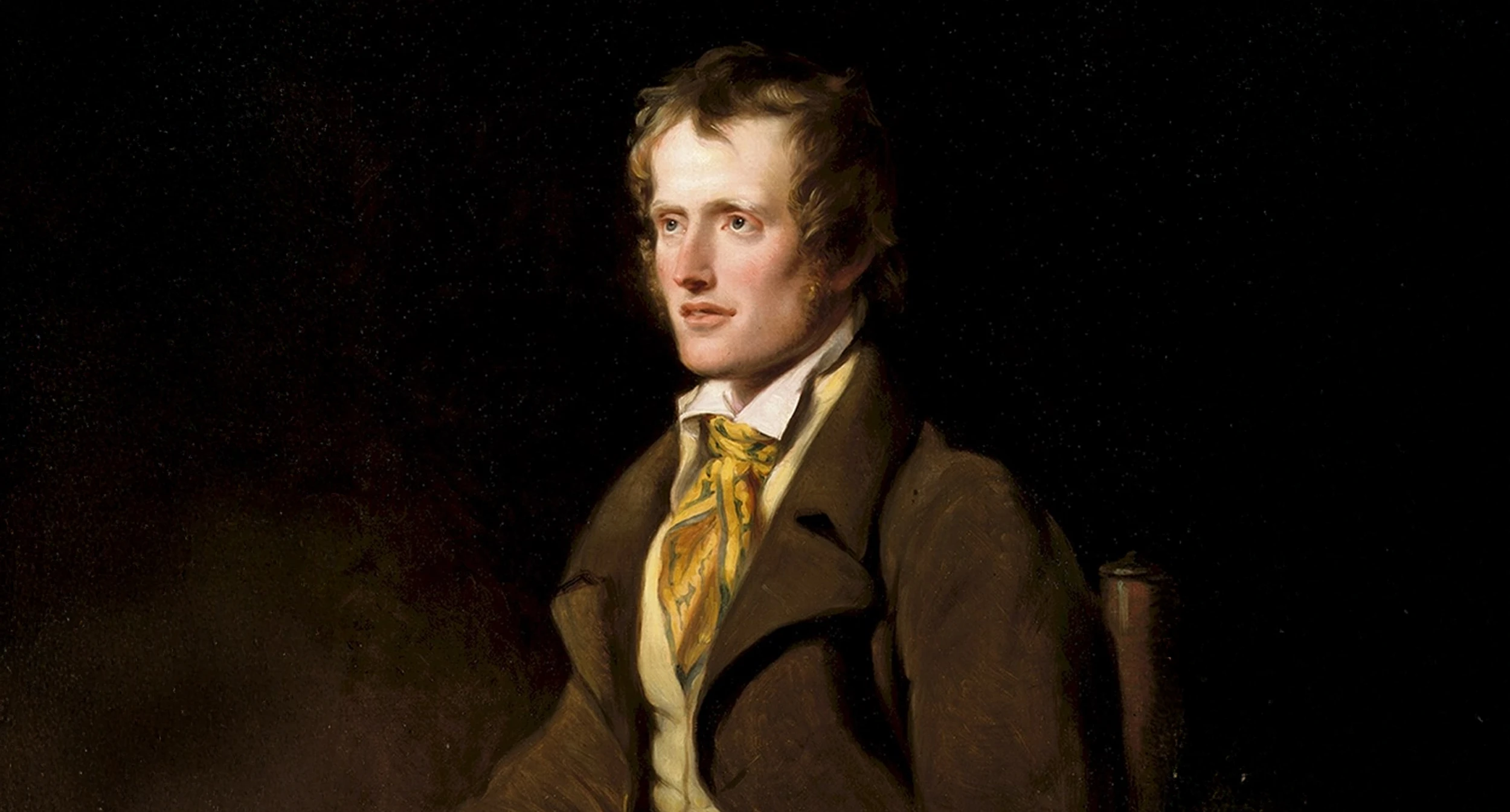
John Clare
Clare did not merely write about the countryside around Helpston. He watched it closely enough to turn one parish into an archive.
Born in Helpston in 1793, Clare spent much of his early life working in agriculture. The landscape of his poetry was not somewhere picturesque that he travelled to for inspiration. It was the place in which he worked, walked, earned, listened and belonged.
That difference matters. Clare recorded birds, nests, plants, flowering times, weather, field names, customs, dialect and seasonal work with an accuracy that continues to interest ecologists and natural historians as much as literary scholars. Cambridge researchers have described the precision of his bird and plant observations, while his unfinished Natural History of Helpston, begun in the 1820s, attempted something remarkably ambitious: a close record of the natural world of one village. 1 2
He listened as carefully as he looked. Birdsong entered the poems not simply as decoration but as sound observed in the field. Plants appear under local names. Habitats are specific. A nest is not merely a nest but something found in a particular hedge, bank or patch of grass.
That is also why enclosure struck Clare so deeply. To an outsider it might look like a rearrangement of fields and boundaries. To someone who had accumulated a lifetime of intimate knowledge about paths, commons, habitats and customary access, it was the alteration of an entire living system.
Clare’s achievement was therefore larger than nostalgia for a lost countryside. He preserved evidence. Read closely enough, his poems and prose contain information about a particular landscape, its ecology and the people who used it that survives almost nowhere else.
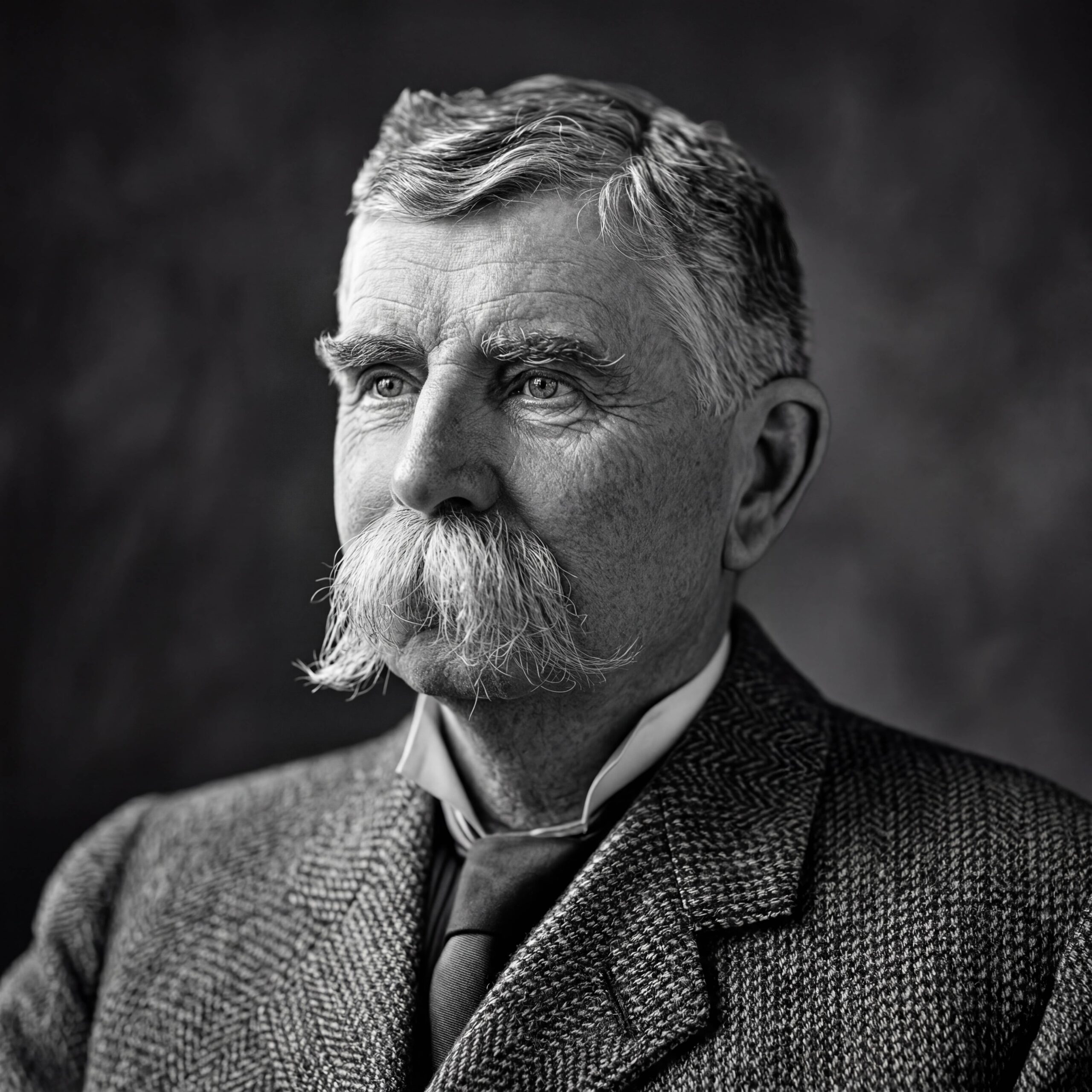
Alfred Leeds
A few miles east, another observer found his landscape by looking beneath it.
Alfred Nicholson Leeds was a farmer at Eyebury. From the 1860s onwards, the industrial landscape around Peterborough offered him an extraordinary accidental laboratory. Brickmaking was cutting deeper and deeper into the Oxford Clay, a geological deposit laid down beneath a warm Jurassic sea more than 160 million years ago.
Where a brickmaker saw raw material, Leeds learnt to see skeletons.
He developed relationships with quarry workers, paying them to alert him when bone appeared in the clay. He then excavated specimens himself, gradually developing techniques for recovering extremely fragile fossil remains from a material that could destroy them almost as quickly as it exposed them.
Peterborough Museum describes Leeds as a self-taught collector whose work brought leading scientists to Eyebury, while the Natural History Museum continues to recognise the importance of the collection that bears his name. 3 4
Over decades the farm became a destination for palaeontologists. The animals coming out of the Peterborough clay included marine reptiles, crocodilians, fish and other creatures from a vanished sea. The collection became fundamental to scientific understanding of the Oxford Clay fauna and material collected by Leeds eventually entered major museum collections.
The gigantic Jurassic fish Leedsichthys carries his name. It is an extraordinary form of immortality for a farmer who did much of the work in whatever time agriculture left him. 5
Clare recorded a world before parts of it disappeared. Leeds reconstructed one that had disappeared more than a hundred million years earlier. Both achievements began with the same decision: pay closer attention to the ground beneath you.
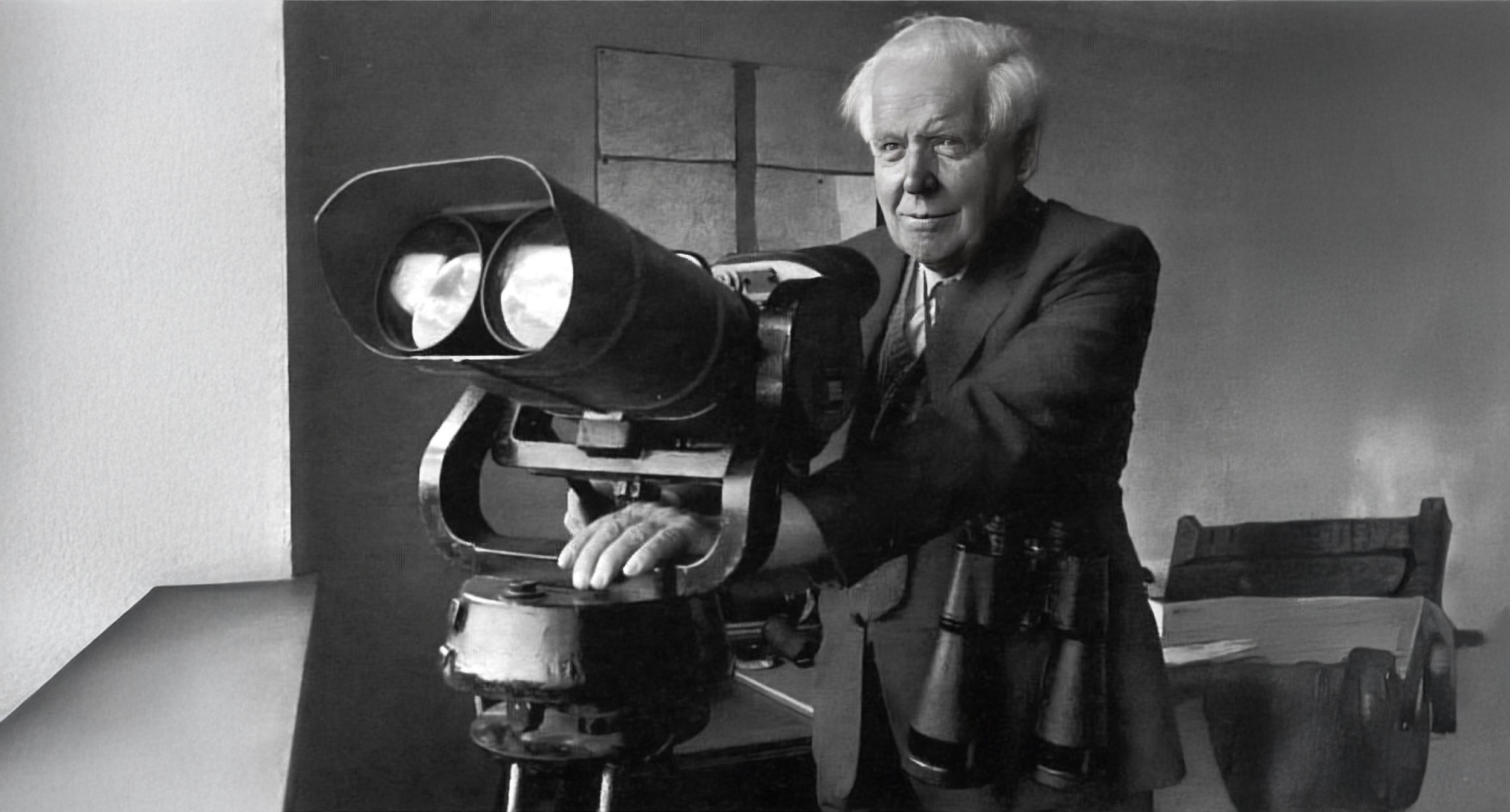
George Alcock
South of the city, George Alcock trained himself to recognise another landscape entirely: the night sky.
Alcock was a schoolteacher who lived at Farcet in a house appropriately called Antares. His principal astronomical equipment was not a giant observatory telescope but a large pair of binoculars, exceptional eyesight and a memory trained over decades.
He learnt the sky as a pattern. Accounts of his observing describe an extraordinary visual memory for tens of thousands of stars. The effect was less like searching an enormous celestial catalogue and more like walking into a familiar room and immediately noticing that something had moved.
On 25 August 1959, Alcock discovered a comet. It was the first comet discovered from Britain since William Frederick Denning’s find in 1894. Five days later, Alcock found another. 6
By the end of his observing career he had discovered five comets and five novae. His first nova came in 1967. His fifth comet was discovered in 1983 from inside Antares, through the landing window, after he had put his wife to bed. Alcock was seventy. In 1991, aged seventy-eight, he made his final nova discovery, again observing from indoors. 6
But astronomy tells only half the story.
Alcock was also an obsessive observer of the natural world. British Astronomical Association material preserves his natural-history notes and watercolour sketches, and records that he maintained his own weather station at Farcet. 7 Birds, plants, clouds and weather received the same disciplined attention as comets and stars.
Which means that a schoolteacher in a fen village was, in his own century, doing something recognisably close to John Clare’s work while simultaneously looking after the sky.
Peterborough did not give them laboratories. It gave them a patch of ground, a working life, and something worth noticing.
The habit of looking harder
The habit
Three men would make a good coincidence. Peterborough becomes more interesting when you notice how often the same instinct appears elsewhere in its history: keep watching, keep collecting, and write it down before it disappears.
Keep writing when everybody else stops
At Peterborough Abbey, scribes continued their version of the Anglo-Saxon Chronicle into the twelfth century. Known today as the Peterborough Chronicle, its final entry is for 1154, taking the surviving record more than seventy years beyond the other surviving versions and preserving precious evidence for the continued use of written English after the Norman Conquest. 8
Listen before the stories vanish
Around the turn of the twentieth century, railway clerk and antiquarian Charles Dack collected Peterborough’s weather sayings, customs and folklore. Cambridge University Library records how much of that knowledge came simply from talking to people visiting the museum. His Weather and Folk Lore of Peterborough and District appeared in 1911. 9
Turn local memory into evidence
Dr Thomas James Walker served as a surgeon at Peterborough Infirmary for more than four decades. He also spent years reconstructing the history of the Norman Cross prisoner-of-war depot, publishing his major study in 1913. Historic England still cites Walker’s work as an important documentary source for the site. 10
Measure what the landscape is doing
In 1848 landowner William Wells commissioned a gauge at Holme Fen so the shrinking peat could be measured as Whittlesey Mere was drained. The ground continued to sink. Today roughly four metres of the surviving post stand above the surface, turning an experiment in observation into one of the most striking records of landscape change in Britain. 11
Why here?
There is probably no single answer, and trying to invent one would spoil the story. But the recurrence is difficult to ignore.
Perhaps flat country encourages a particular sort of looking. In a landscape without mountains or spectacular horizons, information lives in smaller differences: a ditch, a change of soil, the arrival of a bird, the colour of a cloud, a barely altered point of light.
Perhaps it has something to do with Peterborough’s working character. These are stories in which knowledge grows beside a job rather than instead of one. A farm labourer becomes a poet-naturalist. A farmer becomes a palaeontologist in everything but professional title. A schoolteacher becomes one of the great visual astronomers of the twentieth century. A railway clerk becomes a folklorist.
And perhaps there is something about a place that has repeatedly changed beneath people’s feet. Fen drainage, enclosure, quarrying, railways, brickmaking and rapid urban growth all transform landscapes. In a place where things disappear quickly, recording them can become an instinct.
Where to find them
The remarkable thing is that these are not remote stories. Much of the landscape, material and evidence is still here.
John Clare Cottage
Visit Clare’s home, then step outside into the village and landscape that supplied the birds, plants, paths and people of his writing.
Explore Clare Country → PriestgatePeterborough Museum
Encounter the Jurassic creatures preserved in the Oxford Clay and explore the collections that connect Peterborough with Leeds, Clare, Walker and generations of local collectors.
Explore the Museum → Cathedral PrecinctsPeterborough Cathedral
Alcock is commemorated inside the Cathedral, only yards from the place where medieval Peterborough scribes carried on writing their Chronicle centuries before.
Explore the Cathedral →There is one difference George Alcock would notice immediately.
The skies above Farcet are brighter now. Peterborough has grown, artificial light has spread and many of the faint stars Alcock trained himself to recognise are harder to see from the landscape in which he learnt them.
John Clare watched a familiar landscape altered by enclosure. Alfred Leeds watched industrial excavation reveal an ancient one. Alcock lived long enough to watch the conditions of his own observing begin to change.
He would probably have made a note of it.
Research sources
This feature draws on university, museum, scientific, archival and heritage sources. Discover Peterborough pages are linked for further exploration but have not been used as research citations below.
- University of Cambridge, Centre for John Clare Studies, Clare, Botany and Classification .
- University of Cambridge, Poet, activist, bird watcher: exploring John Clare as nature writer .
- Peterborough Museum & Art Gallery, Jurassic Gallery guide .
- Natural History Museum, Fossil fish collections , including material from the Alfred Nicholson Leeds Collection.
- The Big Jurassic Fish, Alfred Leeds .
- The Guardian, George Alcock obituary .
- British Astronomical Association, George Alcock goes to Antarctica .
- Cambridge University Press, The Anglo-Saxon Chronicle, Manuscript E .
- Cambridge University Library Special Collections, Charles Dack and Peterborough folklore .
- Historic England, Norman Cross Prisoner of War Camp .
- The Great Fen, The Holme Fen Posts .