

Peterborough Cathedral at a glance
- What
- One of England’s great medieval cathedrals and the historic heart of Peterborough
- Where
- Minster Precincts, Peterborough, PE1 1XS
- Origins
- A Christian foundation established here in the Anglo-Saxon period
- Present church
- Its great Norman rebuilding began in 1118
- Look out for
- West Front, Norman nave, painted ceiling, Hedda Stone and royal burials
- Best for
- Architecture, history, royalty, medieval culture, folklore and remarkable objects
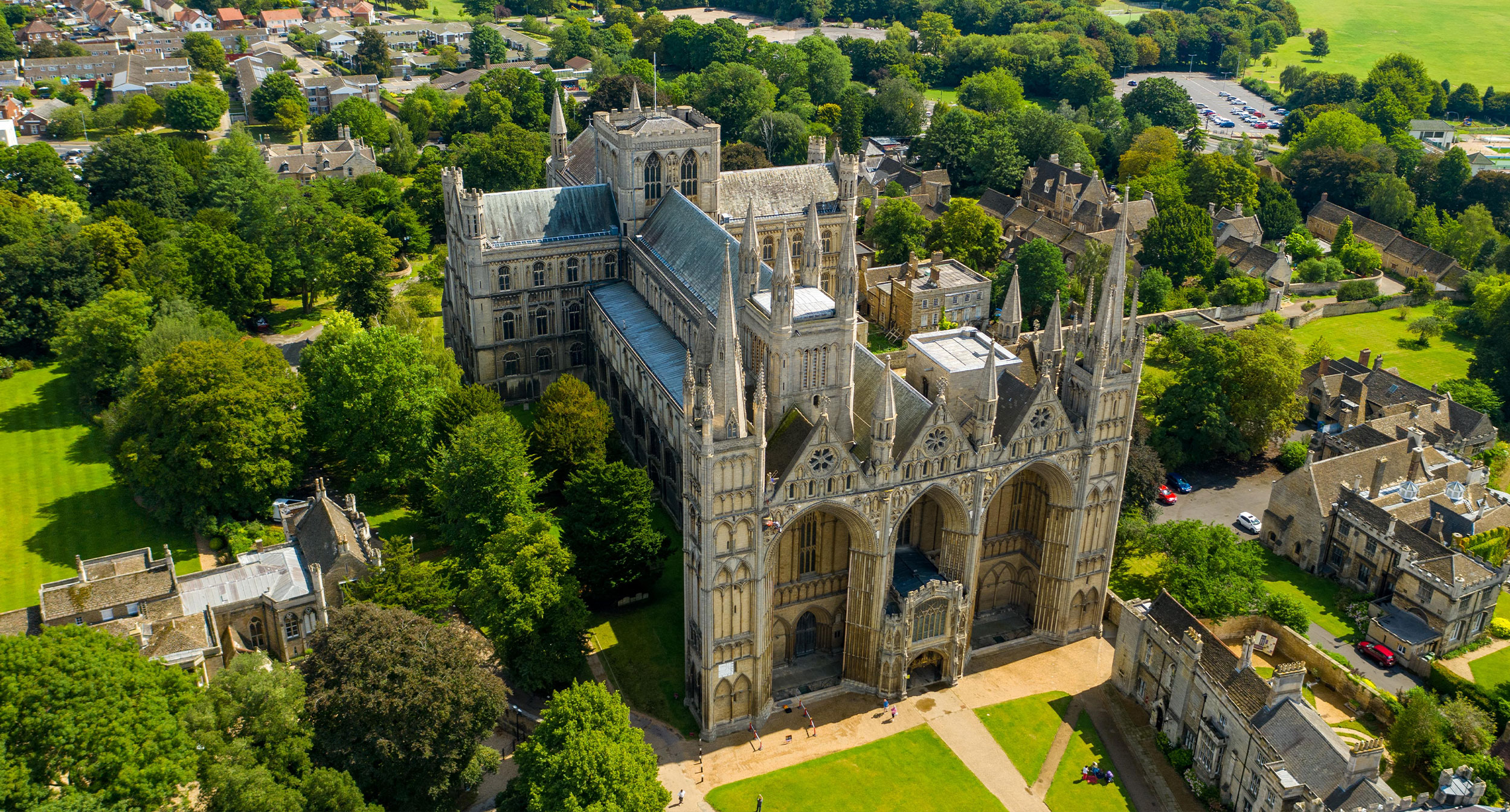
Stand beneath Peterborough Cathedral’s immense West Front and you are looking at far more than the city’s most famous building. This is the place around which Peterborough itself grew.
Before there was a modern city, before the railways, factories or New Town, there was a religious community beside the water meadows. From that foundation came an abbey, a fortified settlement, markets, streets, royal visits, manuscripts, legends and eventually the Peterborough we know today.
The Cathedral seen now is the monumental survivor of that story. Its great Norman church rose after a devastating fire in 1116, with rebuilding beginning two years later. Medieval builders then continued to reshape it for centuries, producing the extraordinary combination of massive Romanesque architecture, soaring Gothic arches, painted timber and intricate fan vaulting visible today.
But architecture is only the beginning. Peterborough Cathedral is connected with Anglo-Saxon saints, Hereward the Wake, the Peterborough Chronicle, kings of England, Katharine of Aragon, Mary Queen of Scots, the Civil War, strange folklore and some of the most intriguing objects in Peterborough’s history.
Explore more than thirteen centuries of Cathedral history
Follow the complete story from Medeshamstede and the Norman Conquest through royal visits, the Reformation, two queens, Civil War destruction, Victorian restoration and the living Cathedral of today.
Six things not to miss
The Cathedral rewards slow looking. Some of its greatest treasures dominate the building. Others are astonishingly easy to walk straight past.
The Great West Front
Stand back in the precinct and take in the extraordinary composition of three giant Early English Gothic arches before walking beneath them.
The Norman nave
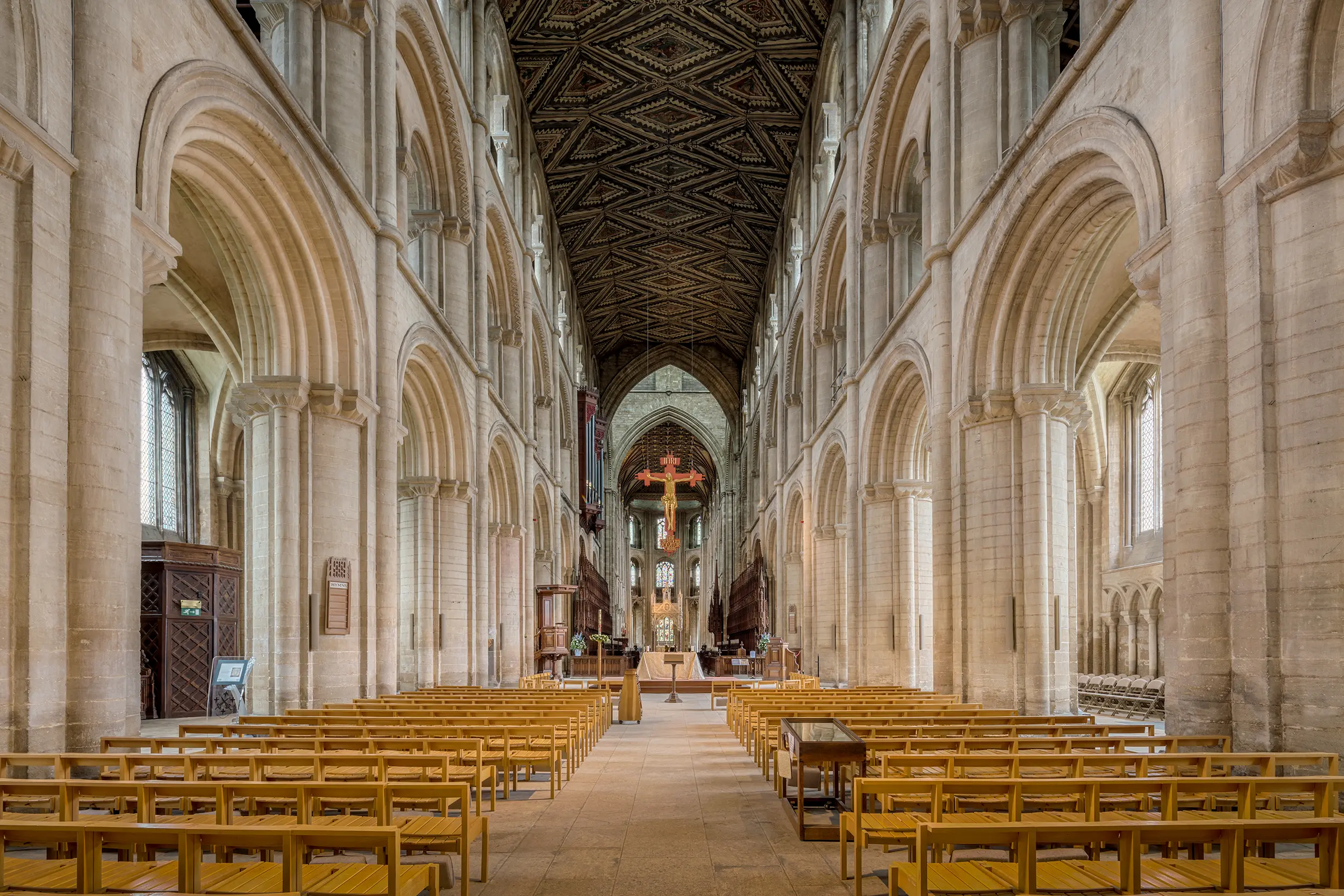
Massive cylindrical piers and repeated rounded arches create one of the most powerful surviving Romanesque interiors in England.
The painted nave ceiling
One of medieval Europe’s great survivals stretches above the nave, filled with painted figures, animals, symbols and extraordinary visual detail.
The Hedda Stone
Seek out one of the Cathedral’s most remarkable Anglo-Saxon survivals, carved centuries before the building surrounding it was begun.
The two queens
Find Katharine of Aragon’s tomb and the marked former burial place of Mary Queen of Scots, once positioned on opposite sides of the church.
The New Building
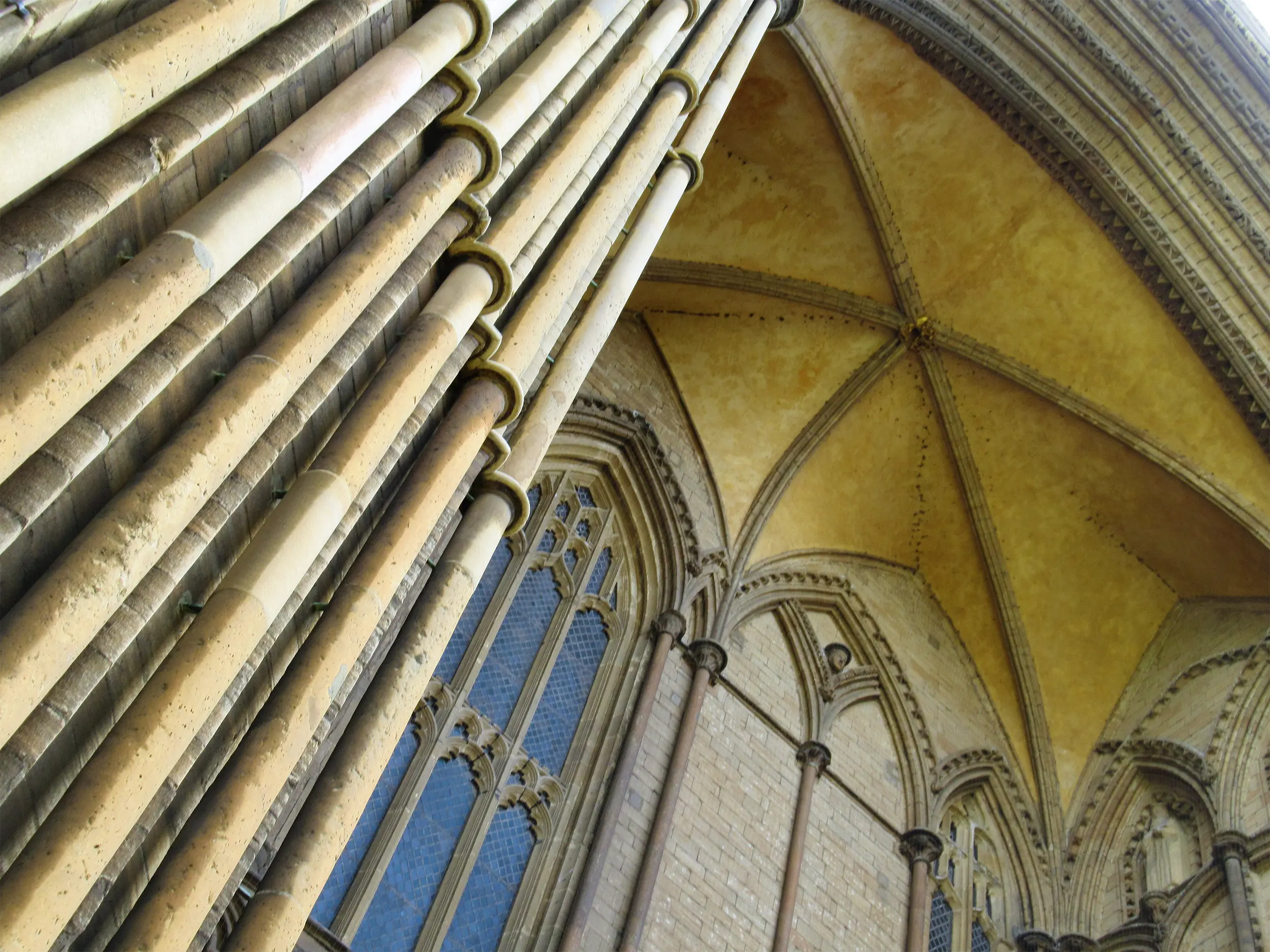
Watch the heavy Norman architecture give way to an extraordinary late-medieval space of light, tracery and delicate fan vaulting.
Walk through centuries of architecture.
The Cathedral is not the product of a single moment. Its spaces record generations of building, rebuilding, ambition and survival.
The nave carries the enormous physical confidence of the Norman period. Move east and later medieval builders begin to lighten the architecture until the journey culminates in the spectacular fan-vaulted New Building.
The effect is almost a lesson in English medieval architecture experienced simply by walking from one end of the church to the other.
Read the building through timeBefore the Cathedral: Anglo-Saxon Peterborough
The Cathedral’s story begins long before the Norman church. A monastery was founded here in the seventh century at a place known as Medeshamstede. Over time the religious settlement became one of the institutions around which the town itself developed.
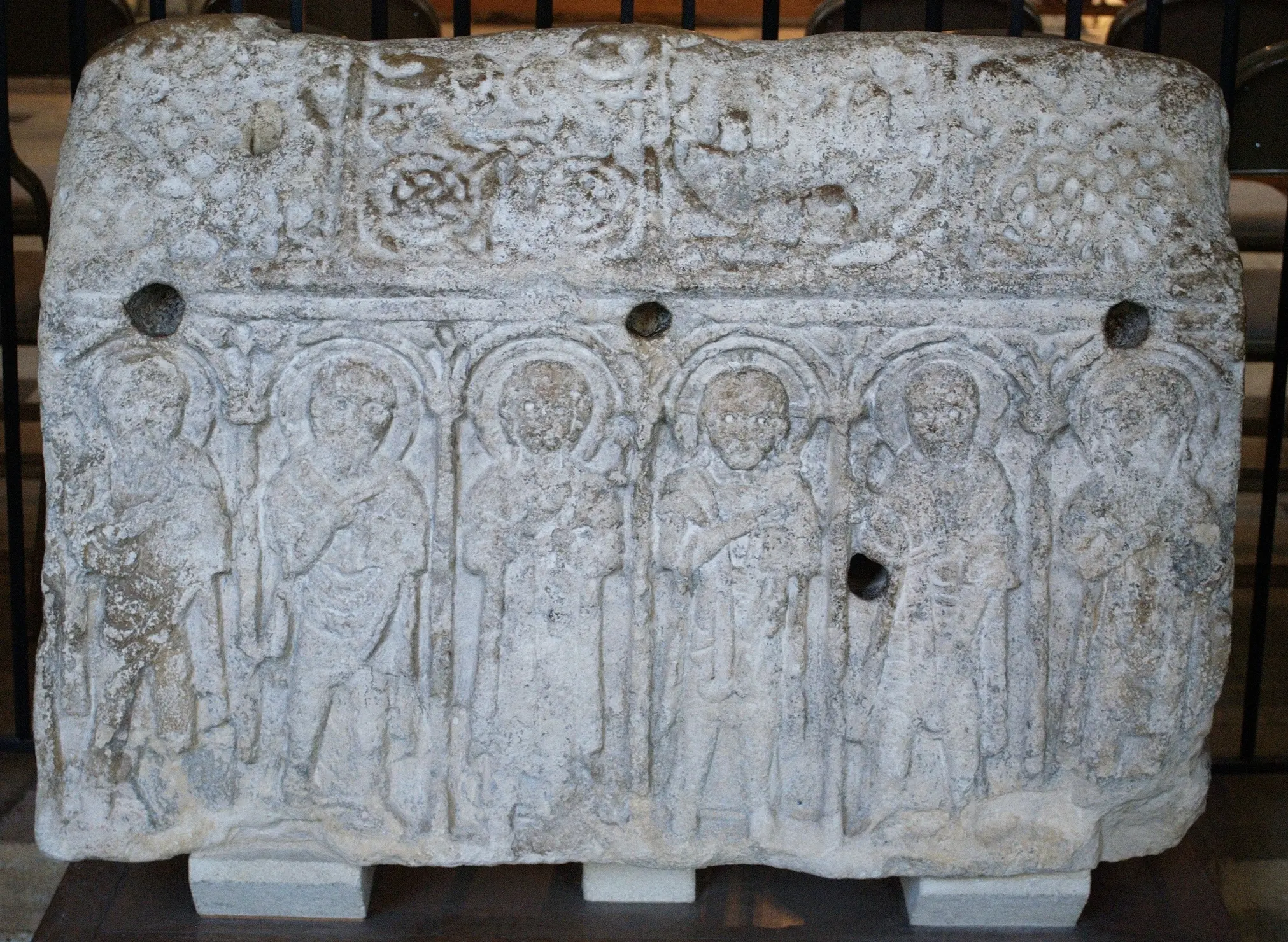
One of the most extraordinary physical survivors from this earlier world is the Hedda Stone. Usually dated to the late eighth or early ninth century, its carved figures offer a tangible connection to Peterborough centuries before the great Norman nave existed. :contentReference[oaicite:3]{index=3}
The abbey that wrote history
Peterborough was not simply a place where history happened. Its monks recorded it.
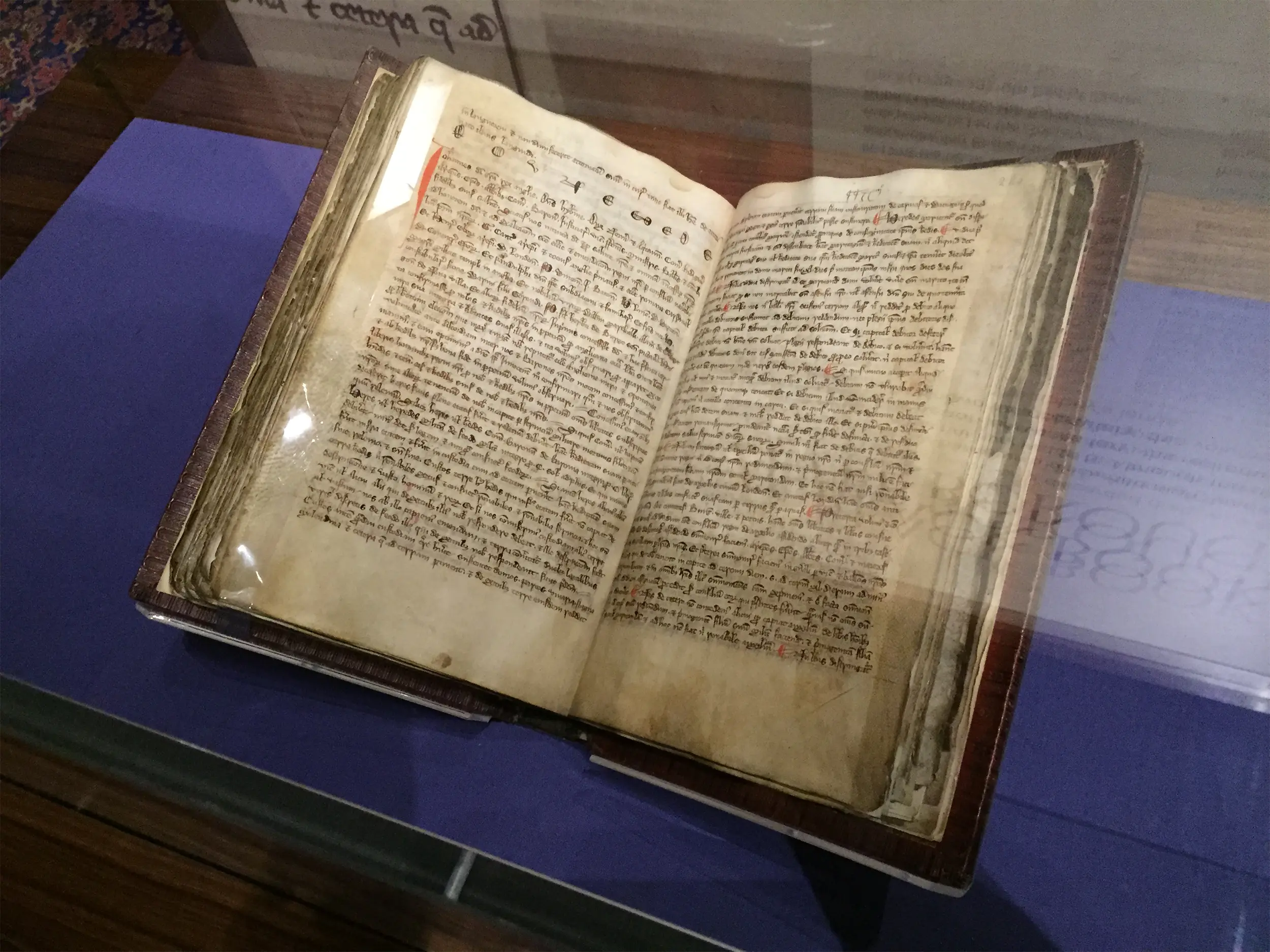
The Peterborough Chronicle is the local version of the Anglo-Saxon Chronicle. Its scribes continued writing after other surviving versions had stopped, creating exceptional evidence for England after the Norman Conquest and for the changing English language.
The abbey was also responsible for other important manuscripts and records, including the Black Book of Peterborough and the later chronicle and cartulary associated with Walter of Whittlesey. These make medieval Peterborough important not simply for architecture, but for the preservation of written memory. :contentReference[oaicite:4]{index=4}
You can explore the wider culture of collecting, observing and recording in The City That Looked Harder, or discover surviving pieces of Peterborough’s past through Peterborough in Objects.
Peterborough in objects
Some of the Cathedral’s biggest stories survive through surprisingly small things. They are ideal starting points for exploring Peterborough through individual objects.
The Hedda Stone
A carved survival from the early religious community that existed here before the Norman Cathedral.
Explore Peterborough in ObjectsThe Peterborough Chronicle
A manuscript that preserved Peterborough’s voice through conquest, upheaval and the changing English language.
Explore Peterborough in ObjectsThe Black Book
A reminder that the abbey preserved charters, law, estates and history as carefully as it built in stone.
Explore Peterborough in ObjectsEnd beneath a ceiling of stone lace.
The New Building at the east end represents medieval Peterborough at the height of architectural sophistication.
Built around the older Norman apse, its vast windows and extraordinarily delicate fan vaulting feel almost weightless after the heavy stone rhythms of the nave.
It is one of the moments where simply walking through the Cathedral makes hundreds of years of architectural change instantly understandable.
Place it on the Peterborough timeline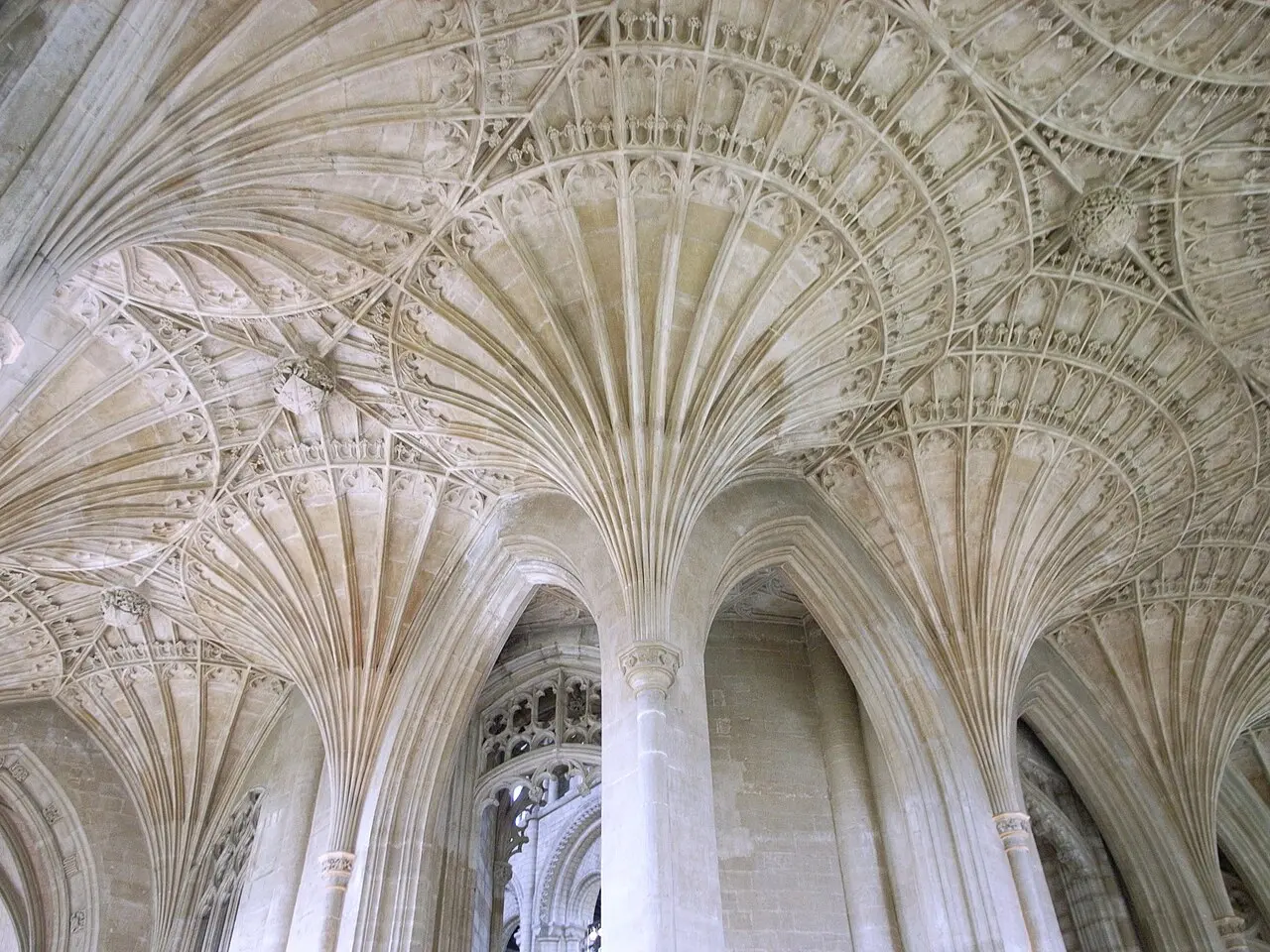
Two queens. One Cathedral.
Few visitor experiences connect Peterborough so directly with the drama of Tudor Britain as the Cathedral’s royal burials.
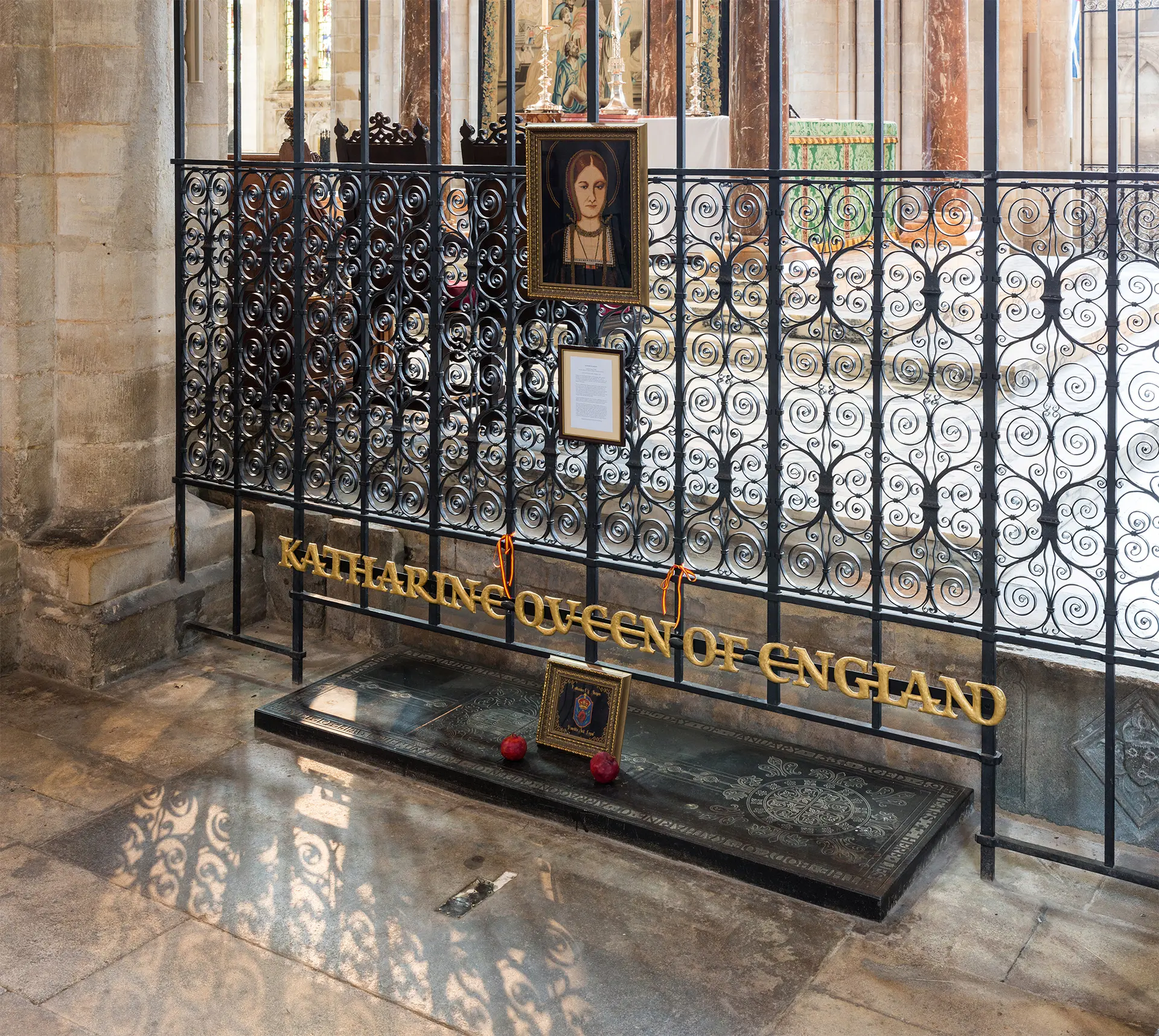
Katharine of Aragon, Henry VIII’s first wife, was buried here in 1536 when the church was still Peterborough Abbey. She remains here today.
Just over half a century later, Mary Queen of Scots was brought from Fotheringhay after her execution. Peterborough became her resting place for twenty-five years before her son James I ordered her remains transferred to Westminster Abbey.
For a generation, therefore, two of the most famous queens in British history lay beneath the same roof. Their burial places can still be encountered inside the Cathedral. :contentReference[oaicite:5]{index=5}
For the complete story, explore Peterborough’s Two Queens.
Katharine of Aragon
The Queen who stayed. Her grave remains one of the Cathedral’s most powerful connections with Tudor history.
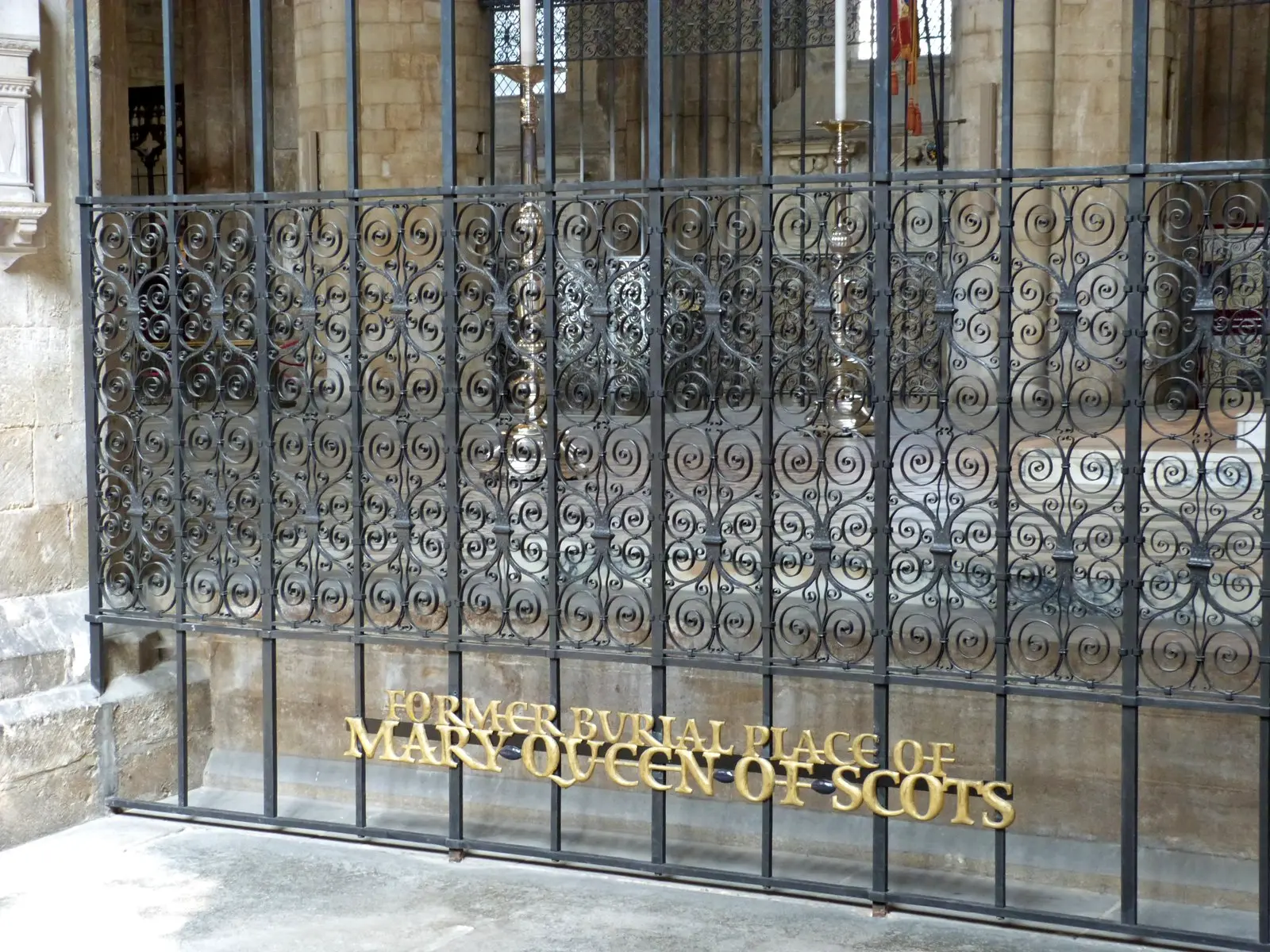
Mary Queen of Scots
The Queen who left. The place where Mary rested before her transfer to Westminster is still marked.
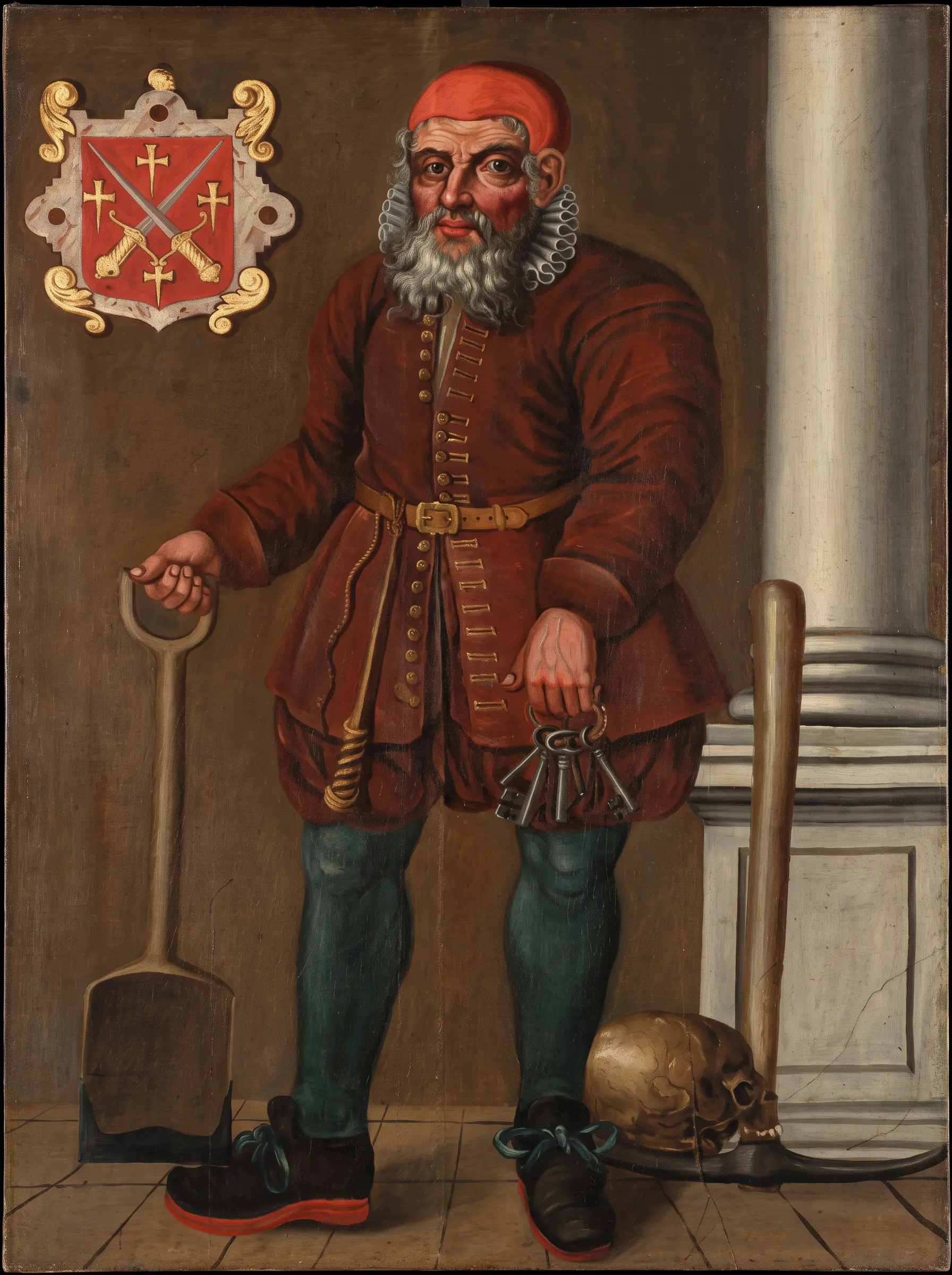
The man who buried two queens.
Robert “Old” Scarlett was the Cathedral sexton whose name became inseparable from Peterborough’s royal burials.
Tradition credits him with burying Katharine of Aragon and, more than half a century later, Mary Queen of Scots. His painted portrait remains inside the Cathedral, complete with his spade and keys.
He is one of those wonderful figures who sits somewhere between documented history, local character and folklore.
Meet Old ScarlettThe strange Cathedral hiding in plain sight
The Cathedral is full of details that most visitors never notice. Demons, finger holes, vanished fish, royal gravediggers and one of England’s earliest accounts of a supernatural hunt all belong to the wider story of the building.
Simon Magus
Look down for an upside-down figure being pulled apart by four demons beneath one of England’s greatest medieval façades.
Behind the high altarThe finger holes
Six mysterious holes in the ancient Hedda Stone acquired a tradition of their own. Find them before reading the story.
Near the west endOld Scarlett
Find the painted sexton with his spade and remember that his life connected two extraordinary royal funerals.
The monks wrote it downThe Wild Hunt of 1127
Black riders and monstrous hounds entered the Peterborough Chronicle in what became England’s oldest written Wild Hunt account.
Take a Weird Weekend inside the Cathedral
The Cathedral is one of the richest stops on Peterborough Weird Weekends. Rather than treating the strange details as footnotes, the route encourages visitors to actively look for them.
Find Simon Magus beneath the West Front. Search for the finger holes in the Hedda Stone. Locate Old Scarlett. Walk the cloisters and imagine the famous lost medieval image of the Last Supper with a Fenland pike on the table.
Then explore the full archive through Peterborough Folklore, where the Cathedral sits at the centre of stories involving saints, omens, fires, medieval memory and things heard riding through the darkness.
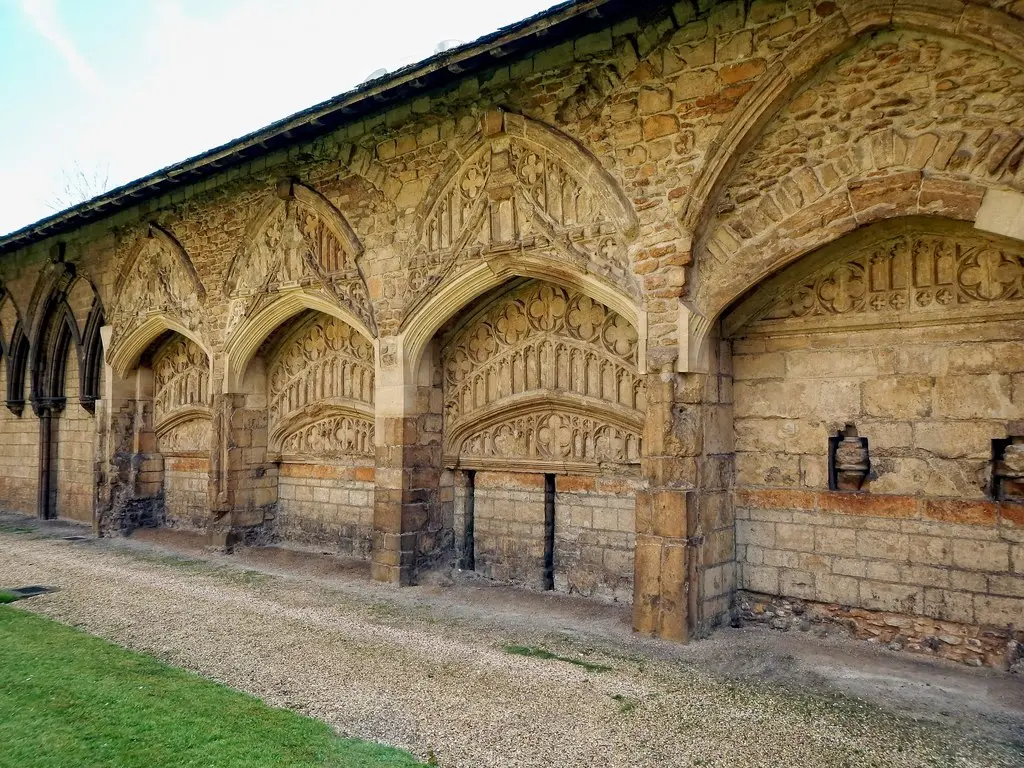
Walk beyond the church itself
The Cathedral building was only the centrepiece of a much larger medieval world.
At its height, Peterborough Abbey included cloisters, a chapter house, dormitory, refectory, kitchens, infirmary, guest accommodation, workshops, gardens and extensive lodgings. Important fragments of that landscape still survive around the Cathedral precinct. :contentReference[oaicite:6]{index=6}
Take time to walk rather than leaving immediately after the nave. Historic gateways, monastic remains, green spaces and later buildings allow the visitor to understand that medieval Peterborough was organised around an institution that functioned almost like a town within a town.
People who bring the Cathedral to life
Peterborough’s story becomes much richer when the names in the history are treated as people rather than dates.
Katharine of Aragon
Queen of England, diplomat and the royal figure whose burial gave Peterborough a permanent place in Tudor history.
Meet KatharineMary Queen of Scots
Queen, prisoner and dynastic rival whose final journey brought her from Fotheringhay to Peterborough.
Meet MaryPeterborough People
Meet the monarchs, chroniclers, poets, engineers, artists, rebels and remarkable characters connected with Peterborough.
Meet Peterborough’s peopleMedieval structure. Victorian vision. Living Cathedral.
Peterborough Cathedral is not a medieval building frozen at one moment in time.
The great stone arcades are Norman. The painted ceiling is medieval but has been conserved and repainted over centuries. The New Building belongs to the last flowering of medieval Gothic, while much of the choir’s carving and furnishing reflects major Victorian restoration.
Later generations have continued to add, conserve and interpret the building. That layering is part of what makes it so rewarding to explore.
Travel through the full timeline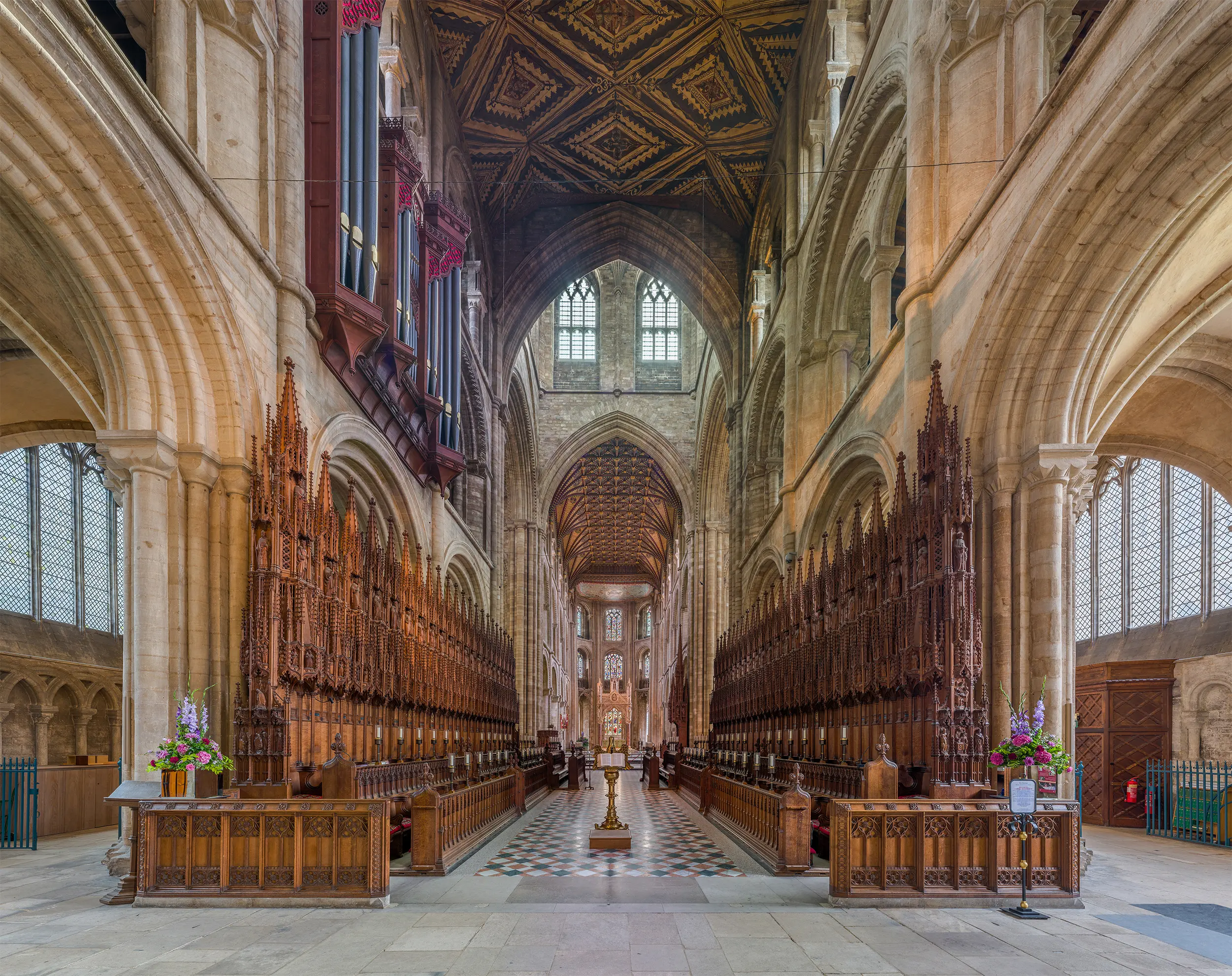
Put the Cathedral into the bigger Peterborough story
The Cathedral can feel ancient enough to be the beginning of everything, but Peterborough’s story stretches much further back.
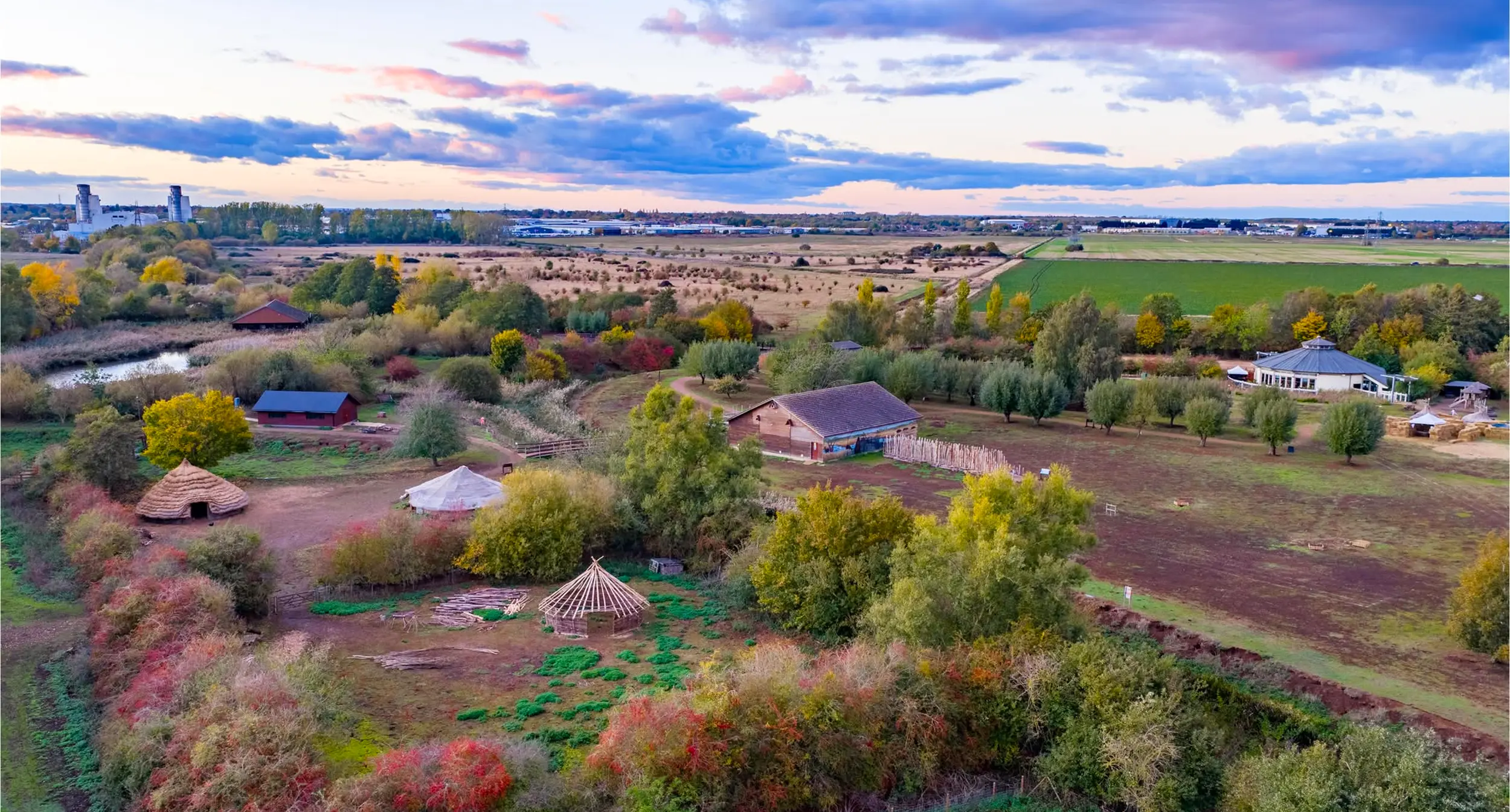
The interactive Peterborough timeline begins millions of years before the Cathedral, passes through prehistoric landscapes, Roman industry and Anglo-Saxon Peterborough, and then shows how the monastery became one of the great forces shaping the city.
The broader Peterborough History hub connects the Cathedral into Flag Fen, Must Farm, Roman Durobrivae, the Two Queens, Norman Cross, the railway city, brickmaking, engineering and the remaking of Peterborough in the twentieth century.
Seen in that context, the Cathedral becomes not an isolated old building but one enormous layer in a city built repeatedly on top of its own past.
Planning your visit
- Where to find the Cathedral
- Peterborough Cathedral is in Minster Precincts, immediately beside the historic city centre, PE1 1XS.
- Before you travel
- Visit the official Peterborough Cathedral website for current visitor access, services, tours and practical information.
- A living place of worship
- The Cathedral remains an active Christian church. Services and ceremonies are part of its continuing story, so visitor access to individual areas can vary.
- Accessibility
- The Cathedral provides visitor access within a historic building whose spaces vary considerably. Check the official accessibility guidance if you have particular requirements.
Discover Peterborough tip: do not rush straight down the centre of the nave. Start outside, look at the West Front, then deliberately look down as well as up. Some of Peterborough’s strangest and oldest stories are hiding exactly where most visitors walk past them.
Continue exploring Peterborough
The Cathedral is one of the best possible starting points for discovering the rest of Peterborough because so many of the city’s stories begin, end or pass through this one place.
The complete Cathedral history
Go from Roman archaeology beneath the precinct to Medeshamstede, Norman rebuilding, royal visits, Reformation, war and restoration.
Explore the full storyPeterborough Timeline
Place the Cathedral within millions of years of Peterborough history through the interactive chronological timeline.
Travel through timePeterborough’s Two Queens
Follow the extraordinary stories of Katharine of Aragon and Mary Queen of Scots through the building where both were buried.
Meet the two queensPeterborough in Objects
Discover the manuscripts, stones, engines, artefacts and remarkable physical objects through which Peterborough’s past survives.
Explore the objectsPeterborough Folklore
Enter a stranger Peterborough of medieval demons, Wild Hunts, saints, omens, old customs and stories rooted in real places.
Enter the folklorePeterborough Weird Weekends
Turn Cathedral curiosities and Peterborough’s stranger stories into things you can actually go out and find.
Start the huntThe City That Looked Harder
Discover the Peterborough tradition of people who watched, recorded and collected their surroundings with extraordinary care.
Read the storyPeterborough Museum & Art Gallery
Continue into archaeology, fossils, social history, art and collections in another of the city centre’s great historic buildings.
Explore the museumSt John the Baptist Church
Cross Cathedral Square to discover Peterborough’s historic medieval parish church and another layer of the city’s religious story.
Explore St John’sPeterborough Guildhall
Step from ecclesiastical power into civic Peterborough at the seventeenth-century Guildhall in Cathedral Square.
Discover the GuildhallPeterborough History
Go beyond the Cathedral into the people, landscapes, industries and turning points that made the wider city.
Enter the history hubMore things to do
Find more heritage, culture, family experiences, outdoor attractions and memorable places across Peterborough.
Find more experiencesPlan your visit to Peterborough Cathedral
For current visitor information, access guidance, worship, tours and everything you need before travelling, visit Peterborough Cathedral’s official website.