



A Victorian River Custom
Drumming Up
the Dead
A loaf weighted with quicksilver. A boat following the current. A drum beating steadily across the water. This was once one Peterborough way of searching for the drowned.
The Nene had taken them. Now you had to find them.
Before divers, sonar and specialist underwater search teams, a drowned person could disappear into a river with frightening completeness.
Peterborough knew the River Nene intimately. It carried boats, goods and people through the city. It fed mills and connected Peterborough with the fenland waterways beyond.
But a working river was also dangerous.
Deep water, currents, weirs, mud and submerged obstacles could make recovery difficult. A body might not rise where somebody had entered the water. Sometimes it did not immediately rise at all.
When ordinary searching failed, folklore offered another way.
In Peterborough, a method remembered from the middle of the nineteenth century began with something impossibly ordinary.
A loaf of bread.
Put quicksilver inside the loaf.
The bread was weighted with quicksilver, the old name for metallic mercury.
Then it was placed on the river.
Nobody steered it.
The current was allowed to take it.
According to the belief, the loaf would drift downstream until it reached the place where the drowned person lay beneath the surface.
There it would stop.
Sometimes versions of the custom said the loaf would circle. Others said it would sink.
In the Peterborough tradition, the important moment was when the journey ended.
The river had shown you where to look.
Then everybody watched the loaf.
It is easy to describe the custom and miss what the scene must actually have felt like.
Somewhere beside the Nene stood relatives and neighbours waiting for somebody who had not come home.
Men had probably already searched the banks. Boats may have worked the water. Poles, hooks or dragging equipment could be used where the likely location was known.
And when none of that produced an answer, a loaf was lowered onto the surface.
The boat followed.
Everyone watched where it went.
Every turn of the current suddenly mattered.
An eddy could look like hesitation. A slowing loaf could look like recognition.
And wherever the bread finally stopped, hope and dread converged on the same patch of water.
A man in the boat began to drum.
One Peterborough recollection preserves a second stage of the ritual, and it gives the story its extraordinary name.
A boat followed the loaf down the Nene.
In that boat sat a man carrying a drum.
As they moved along the river, he beat it steadily.
The purpose, as the story was remembered, was not merely to locate the body.
The sound was supposed to bring it up.
The image is haunting precisely because there is so little spectacle.
A small boat.
A slow river.
The dull repeated sound of a drum travelling across the water.
And somewhere below, perhaps, somebody the people on the bank were waiting to bring home.
The man telling the story had seen it done for his own uncle.
This is where the Peterborough tradition becomes more than a curious description of an old superstition.
The person who remembered the practice said that the drowned man was his uncle.
He remembered the loaf.
He remembered the boat.
He remembered the drum.
And he remembered whether the old method succeeded.
It is a remarkably unsentimental ending.
There is no miraculous recovery added to make the folklore work. The story was remembered even though the ritual failed.
Perhaps that is one reason it feels so human.
Similar searches were still taking place across Britain.
The Peterborough custom sounds extraordinary until you discover how widely its individual elements were known.
Nineteenth-century folklore collectors recorded bread being floated on streams to discover drowned bodies in several parts of Britain.
Quicksilver was sometimes pushed into the loaf to weight it. The belief was that the bread would stop, turn or sink over the hidden body.
The drum had a tradition of its own.
In Norfolk in 1892, a navigation superintendent and a policeman rowed down a river while the policeman slowly beat a large drum. The belief recorded at the time was that the sound of the drum would change when the boat passed over a submerged body.
A similar use of a drum was recorded in Derbyshire during the nineteenth century.
So Peterborough's story was not an isolated local invention.
It belonged to a much wider family of British beliefs about rivers, drowning and the recovery of the dead.
A superstition can occasionally appear to prove itself.
There are practical reasons why floating objects might sometimes have seemed uncannily successful.
Rivers do not flow evenly from bank to bank.
Eddies and slower water form around bends, structures, deep pools and obstacles. Those same features can trap both floating material and objects below the surface.
A loaf carried into an eddy might therefore linger near a place where a body had also become caught.
When that happened, the custom appeared vindicated.
When it failed, as it did in the Peterborough recollection, the failure did not necessarily destroy the belief.
Folklore rarely survives because every experiment succeeds.
It survives because the occasions when something remarkable appears to happen are the occasions people remember and retell.
The Nene was not scenery. It was part of everyday life.
To understand the story, it helps to forget the modern idea of a riverside primarily as somewhere to walk, cycle or sit.
The Nene was a working artery.
Boats moved freight through Peterborough. Wharves, mills, bridges and waterside industries crowded its course. Beyond the city, the river entered the low fen landscape and eventually the waterways leading towards the Wash.
People worked beside it, crossed it and travelled upon it.
Inevitably, people also drowned in it.
That is the landscape from which this piece of folklore emerged.
It was not an abstract belief about mysterious water.
It was a response to a familiar river that could suddenly become unknowable.
Quicksilver is mercury.
Historical accounts describe mercury being inserted into the bread. Mercury is toxic and environmentally hazardous, so this old practice should never be recreated or introduced into a river. The interest here is in the history of the belief, not in repeating it.
Sometimes folklore begins where certainty runs out.
There is something profoundly understandable beneath this strange old practice.
Somebody was missing.
Their family knew they were probably dead, but they did not know where they were.
The river offered no answer.
In an age with few effective ways of searching deep or murky water, ritual gave people something they could still do.
Put the loaf on the river.
Follow it.
Beat the drum.
Keep searching.
Seen that way, Drumming Up the Dead is less a story about superstition than a story about refusing to abandon somebody to the water.
The drum sounded across the Nene.
And the river kept its secret.
More Peterborough Folklore
Springs that healed, lights that moved across the fen, strange river journeys and customs remembered long after the world that created them disappeared.
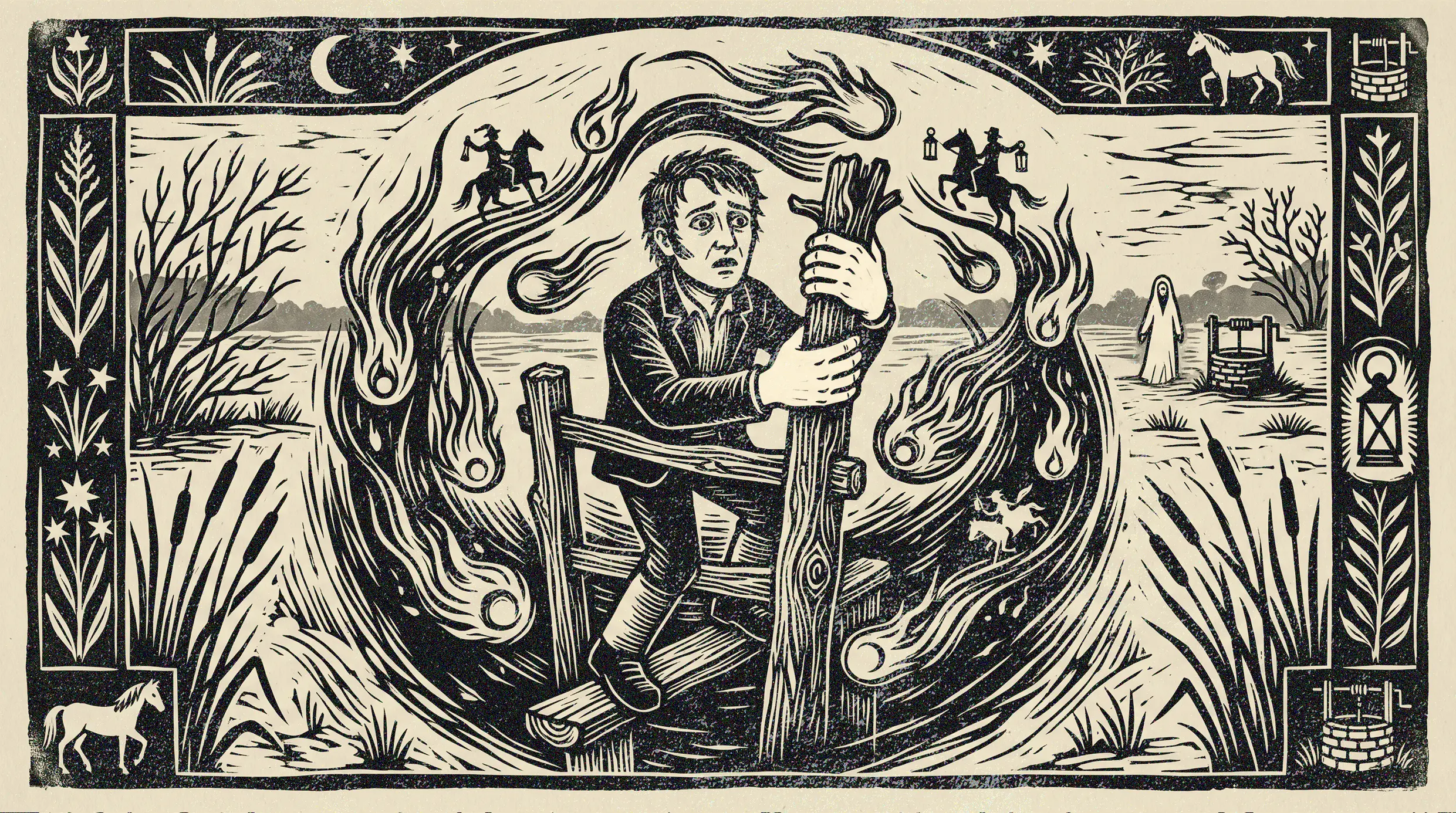
The Will o' the Wisps
Strange lights danced over the wet ground around Helpston, and even the sceptical John Clare was frightened of them.
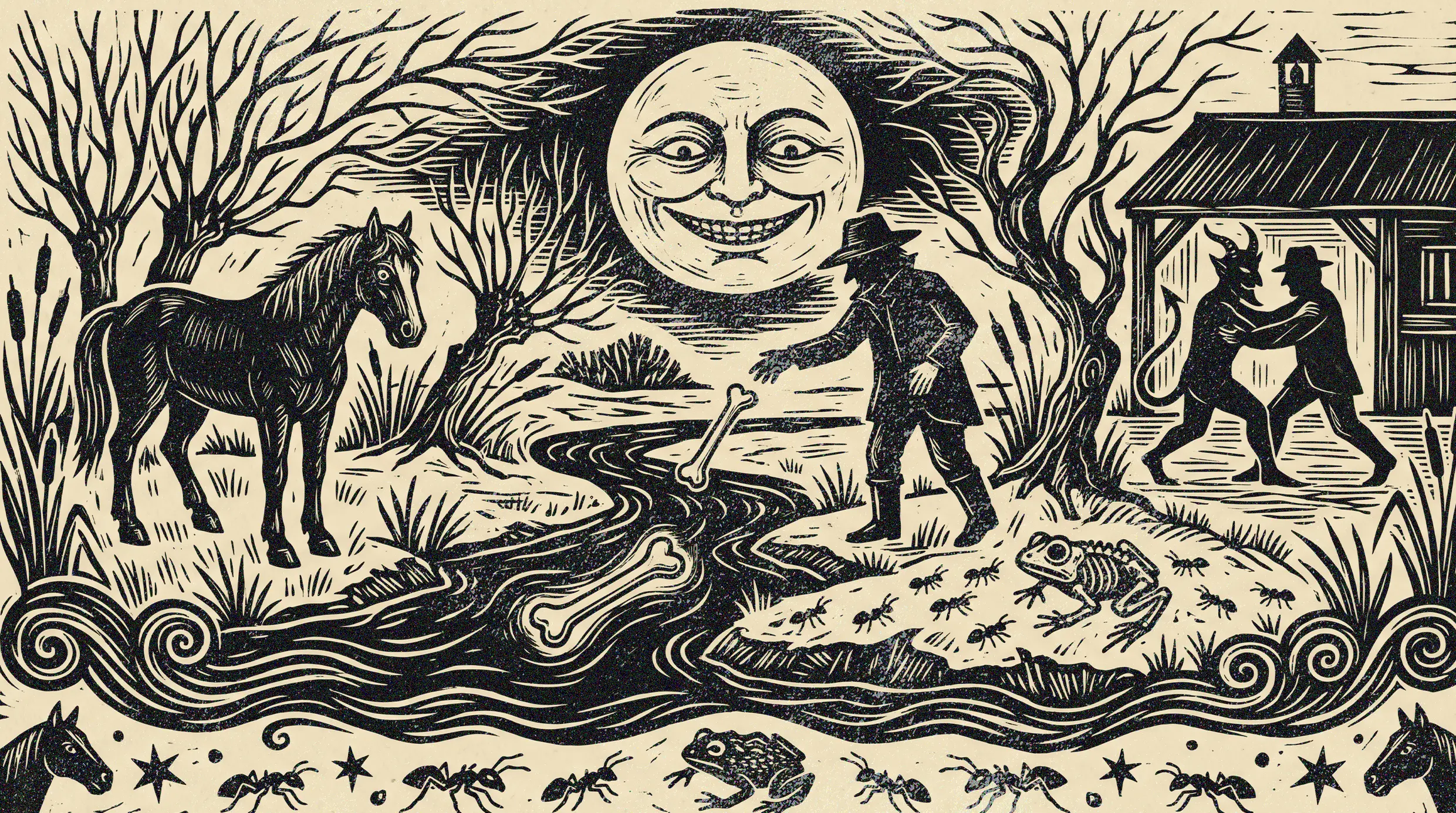
The Toadmen
Men who were said to gain an extraordinary power over horses through one of the Fens' strangest rituals.
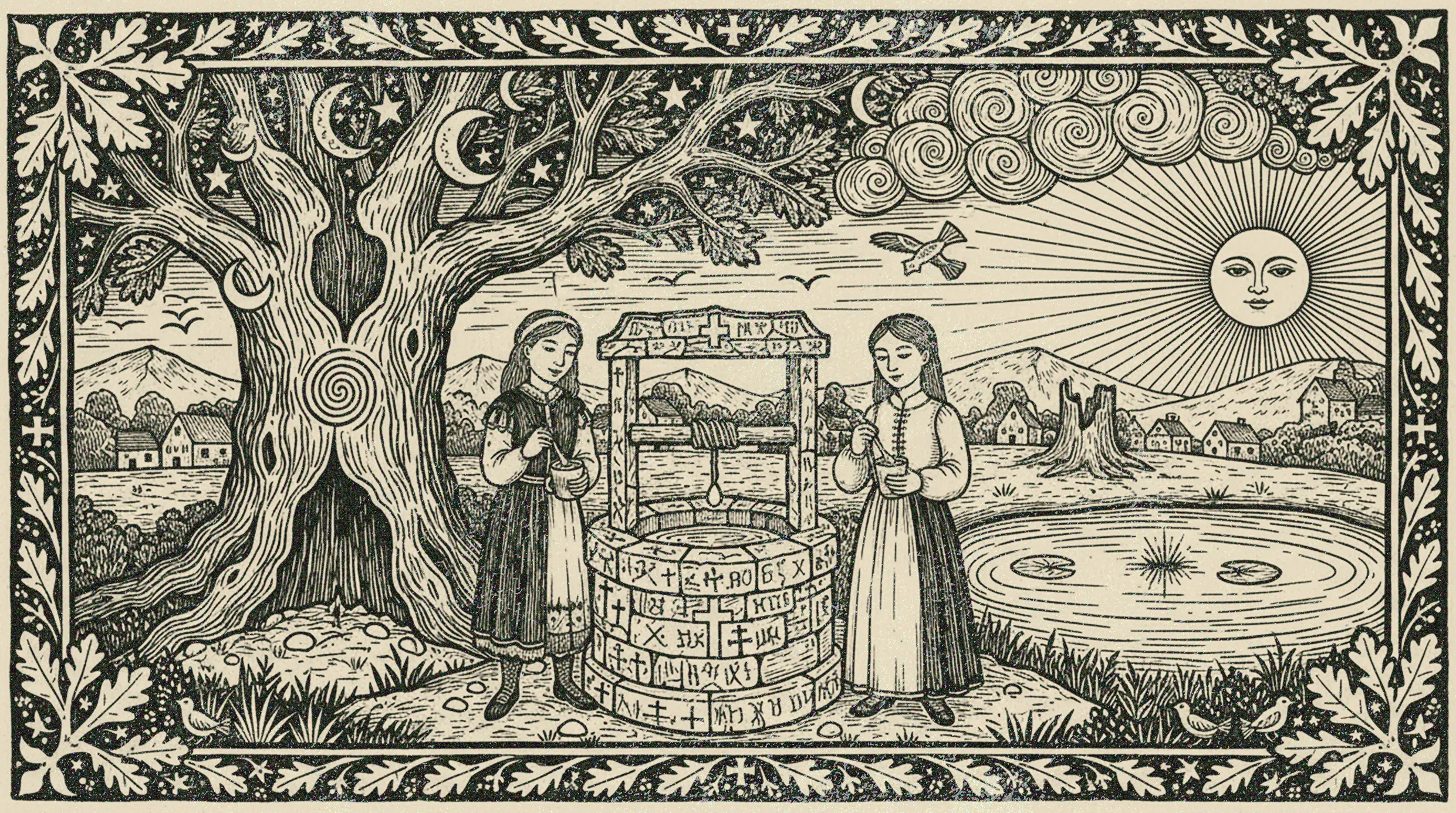
Sugar Cupping at East Well
On Whit Sunday, Helpston villagers walked to a spring, stirred sugar into the water and drank it for luck.
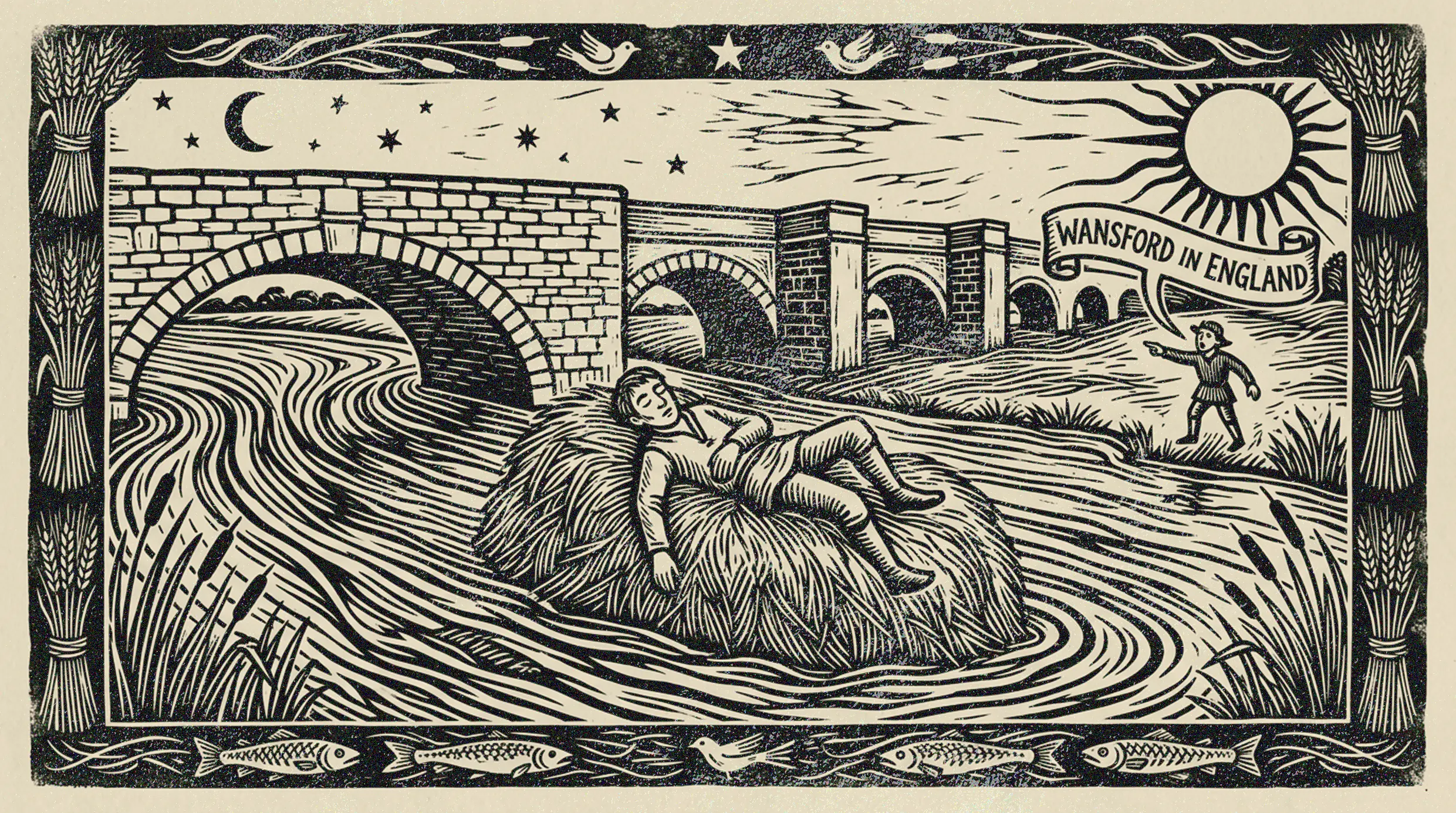
Wansford in England
A sleeping man, a floating haycock and the river journey that supposedly gave Wansford its most enduring joke.
St Mark's Eve
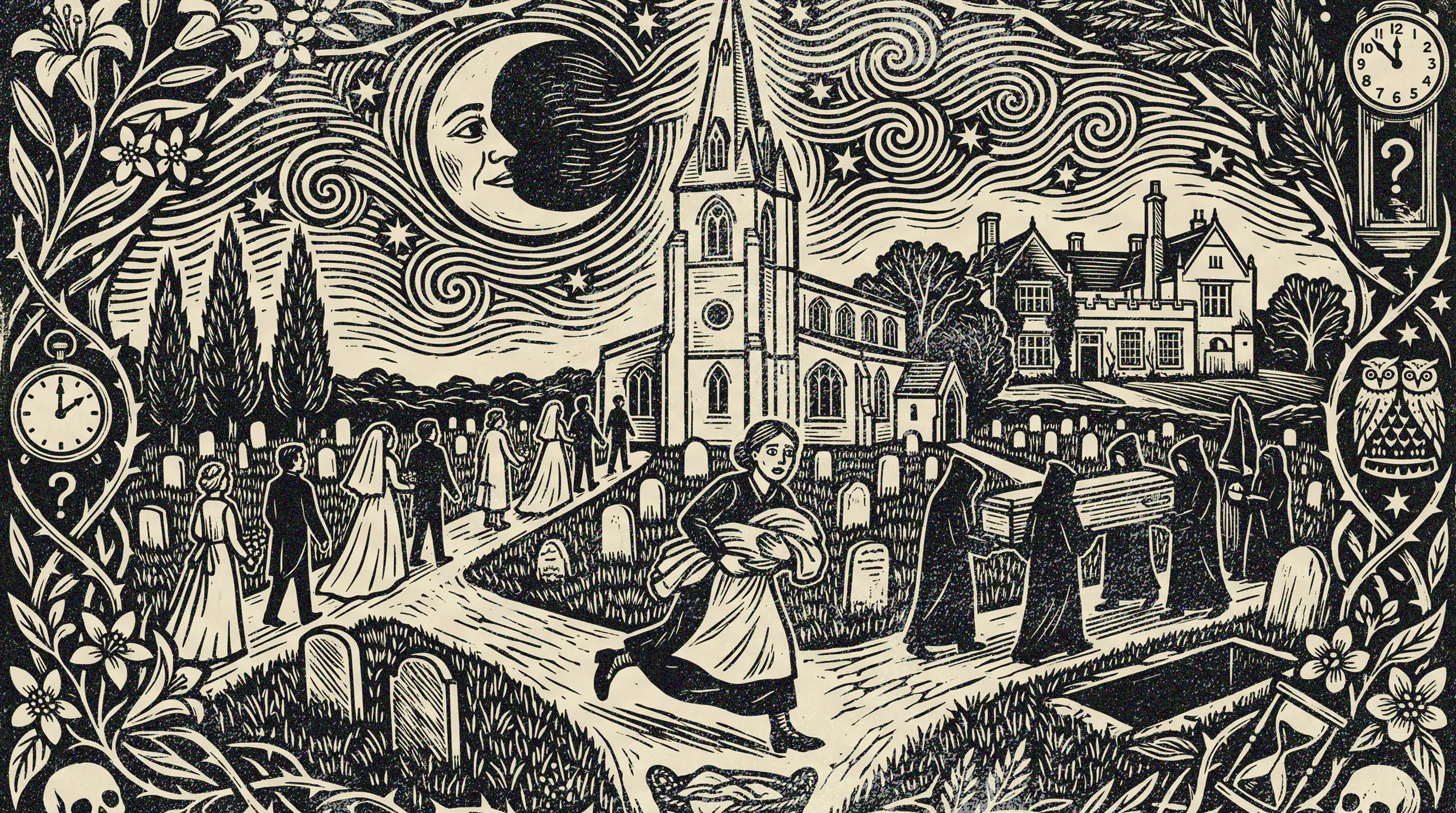
Sit in the churchyard on one particular April night and, according to tradition, you might see who would die that year.
The Plough Witches
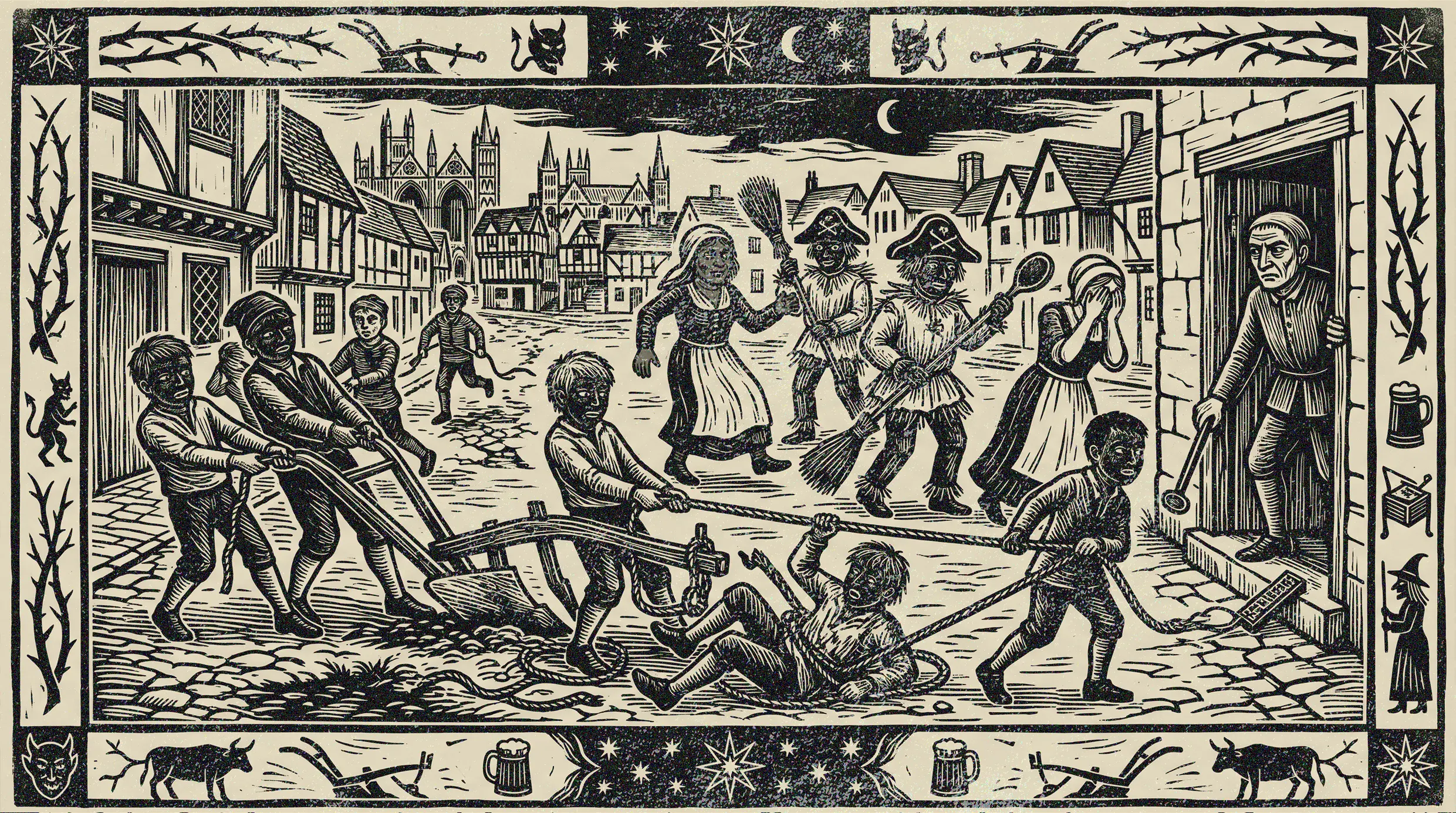
Blackened faces, cross-dressing, a decorated plough and one gloriously unruly winter day remembered by John Clare.
Behind the folklore
The Peterborough story belongs to a wider nineteenth-century British tradition of using floating bread and sound to locate people believed to have drowned.
-
Peterborough local tradition
The surviving Peterborough account remembers the use of a quicksilver-weighted loaf and a drum on the River Nene during the nineteenth century, including an unsuccessful search for the storyteller's uncle. -
Folk-Lore, Volume IV · 1893
Records a Norfolk search in 1892 in which a navigation superintendent and policeman travelled by boat while a large drum was beaten. The belief was that its sound would alter over the location of a submerged body. -
S. O. Addy · Household Tales with Other Traditional Remains
Records the nineteenth-century custom of floating bread containing quicksilver in the belief that it would stop or turn above a drowned body. -
James M. Mackinlay · Folklore of Scottish Lochs and Springs
Describes both the floating-loaf and drum methods as wider British folk practices associated with the recovery of drowned bodies.