

A haycock · a flood · one very persistent joke
Wansford
in England
A man falls asleep on a haycock beside the Nene. The river rises, the hay begins to float and he wakes somewhere he does not recognise. Nearly four centuries later, the punchline is still attached to the village.
The strange thing about Wansford's story is not the floating hay. It is how the punchline changed.
The version most people hear today is wonderfully simple. A man sleeps on a haycock beside the River Nene. A flood carries him away. He wakes, asks where he is and, when somebody answers “Wansford”, replies in disbelief: “Wansford in England?”
It is an excellent story. It is also not quite the story that first appeared in print.
Wansford's unusual nickname can be traced through almost four centuries of travel writing, local history, folklore and inn signs. Each teller preserves the same essential ingredients: a sleeping man, hay, rising water and the phrase Wansford in England.
Almost everything else moves.
Sometimes he is a drunken traveller. Sometimes he is a local haymaker. Sometimes he wakes at Wansford Bridge. In Daniel Defoe's expansive version he travels astonishingly far towards the sea.
The modern joke has even reversed who asks the crucial question.
Far from damaging the legend, that evolution is what makes it such a good piece of folklore.
Within sixty years, the literary joke was being told as local history.
In 1698 the remarkable traveller Celia Fiennes rode through Peterborough and on to Wansford, crossed the bridge and stayed at the Swan.
She was told a story recognisably related to Barnaby's voyage, but the character had changed.
Her sleeper was now simply a man making hay. He fell asleep on a heap beside the river. A great storm washed both hay and man into the water and carried them towards Wansford Bridge.
When he woke he did not know where he was. He called to people in the fields and told them that he lived at a place called Wansford in England.
Fiennes added another priceless observation: it was already a joke made at the expense of the men of Wansford “to this day”.
That makes the legend more than a later Victorian invention. Whatever its exact origin, the phrase and the floating-hay story were firmly associated with Wansford by the end of the seventeenth century.
Every generation moved the haycock a little further.
The surviving versions form an unusually clear example of folklore changing as it passes between books, travellers, local memory and popular storytelling.
Drunken Barnaby sleeps on a haycock and floats downstream. People call out asking whether he is heading from Greenland. He replies that he comes from Wansford Brigs in England.
The protagonist has become a local haymaker. A storm washes him and the hay into the river. He wakes near the bridge and says that he lives at Wansford in England. Fiennes says the phrase is already used as a joke about local people.
In his Natural History of Northamptonshire, Morton includes the tale while discussing the sudden floods of the Nene. His sleeper wakes on what seems to him a vast body of water and answers that he lives at Wansford in England.
Defoe makes the adventure much bigger. His flood carries the haycock towards Wisbech and almost to the open sea before fishermen rescue the sleeper. Asked where he lives, he answers Wansford in England.
Eventually the tale is simplified again. The man wakes, somebody tells him he is at Wansford, and he asks the now familiar question: “Wansford in England?”
Folklore rarely travels in a straight line.
The fact that the modern version is different from Brathwaite's does not make it false folklore. It shows the mechanism by which folklore works.
The oldest answer may be much simpler than the modern legend suggests.
The modern story makes “in England” sound like the confused question of a man who has floated so far that he wonders whether he has left the country.
Brathwaite's version points somewhere else.
The phrase is part of a comic rhyme: Greenland against England. It works rhythmically and supplies a ridiculous contrast between somewhere unimaginably remote and a bridge on the Nene.
Later storytellers appear to have turned that memorable phrase into the reason for the nickname itself.
Wansford's geography may have helped the joke remain plausible. The bridge has long stood in a border landscape. Today it still lies on the boundary between Wansford parish in the City of Peterborough and Sibson-cum-Stibbington on the south side of the river.
Historically, administrative and county boundaries around the crossing added another layer to the feeling of moving from one jurisdiction into another.
The explanation kept changing.
Brathwaite gives us the earliest famous printed joke. Fiennes proves that a related local tradition was established by 1698. Morton and Defoe show it continuing to evolve. What we cannot demonstrate is whether Brathwaite invented the Wansford episode from nothing or adapted an older oral tale already known locally.
Wansford Bridge was already there when Barnaby floated into print.
The bridge gives this ridiculous story a surprisingly solid historical anchor.
Historic England records the present structure as a Grade I listed twelve-arch stone bridge. Construction began in 1577, more than half a century before the complete English and Latin edition of Barnabee's Journal appeared.
The bridge was altered over time. Several arches date from 1672 to 1674, while the southern end was rebuilt in 1795. Much of the sixteenth-century fabric remains.
So when Brathwaite wrote of “Wansford Brigs”, his readers were being pointed towards a real and relatively new piece of major infrastructure on one of England's most important north-south routes.
The bridge is very real.
It was also exactly the sort of place where a story could spread.
Travellers, carriers, coaches, horses and later mail traffic crossed here on the Great North Road. The bridge joined river traffic with one of the principal roads between London and the north.
A memorable local joke attached to the crossing could therefore travel far beyond Wansford.
The joke exaggerates. The river does not.
No source proves that a sleeping man genuinely made the voyage. But the landscape that made the story believable is real.
Wansford sits beside the River Nene among low meadows and floodplain. Sudden changes in water level were part of life beside the river long before modern flood management.
John Morton thought the connection important enough that he included the story in 1712 while discussing the greatness and suddenness of inundations of the Nene.
His version begins with a man asleep on a small haycock in a perfectly dry meadow. The comedy comes from the transformation. He lies down on land and wakes apparently surrounded by an ocean.
That is a much better joke in a community where listeners knew how quickly riverside meadows could change.
Water everywhere when he opens them.
Defoe later pushes the geography beyond credibility by carrying the sleeper towards Wisbech and almost into the sea.
That expansion is not evidence for a longer voyage. It is evidence that Defoe understood how to improve a story.
It was a haycock, not necessarily the giant haystack we imagine today.
Modern retellings often describe Barnaby sleeping on a huge haystack or hayrick. The old sources repeatedly use the word haycock.
A haycock was a gathered heap of cut hay in the field, part of the process of drying and collecting the crop before it was finally stored.
That makes the image slightly less impossible than a complete farmyard haystack sailing away intact, although a human being sleeping peacefully on one through a major flood remains firmly in comic territory.
The word became inseparable from Wansford.
The historic inn beside the bridge, known to Celia Fiennes as the Swan, later became the Haycock. Its sign depicted the floating sleeper, allowing generations of Great North Road travellers to understand the joke without opening a book.
Wansford stood on the road that carried England past its front door.
Before the modern A1 bypassed the village, the Great North Road crossed the Nene at Wansford Bridge.
That placed the village directly on the great overland route between London, the Midlands, Yorkshire and Scotland. Coaching inns prospered because travellers had to come through.
Celia Fiennes came through in 1698. Daniel Defoe followed in the early eighteenth century. Countless travellers who never wrote books encountered the bridge and its inn sign too.
This may explain why an absurd local story became unusually durable.
The joke had distribution.
The Great North Road carried the story.
By the nineteenth century, travel writers could refer to “Wansford in England” knowing that readers might already recognise the phrase.
The village had effectively turned an old joke at its expense into a piece of identity.
Today the village is still defined by journeys, just of a different kind.
The Great North Road no longer pours traffic across the old bridge, but Wansford remains one of Peterborough's most interesting transport landscapes.
Across the river, Wansford Station is the operational heart of the Nene Valley Railway. Heritage trains now carry visitors through the same river landscape that once supplied the floating-haycock legend.
The railway has even allowed Wansford to become somewhere else entirely. On screen it has doubled for continental Europe, East Germany and Russia.
Nene Valley Railway
Board at Wansford Station and follow the Nene east towards Peterborough aboard restored steam and heritage diesel trains.
Explore Nene Valley Railway →Wansford became the world
The station became Karl-Marx-Stadt for Octopussy and the railway later returned to James Bond duty for GoldenEye.
Discover Peterborough on Screen →The best part is that the punchline is still attached to the place.
You do not need to reconstruct a seventeenth-century flood to follow this story. Walk to Wansford Bridge and you are standing at the physical landmark around which nearly every version eventually turns.
Look at the bridge itself. Twelve arches cross a river that once carried commercial traffic as well as floodwater. Sixteenth-century stone sits beside later alterations made as the crossing was repaired and adapted.
Then look for the name.
Wansford in England is still used locally, turning a joke recorded before the English Civil War into something close to a village signature.
If you have time, continue to Wansford Station on the Nene Valley Railway → .
Few folklore trails can take you from a seventeenth-century drunken traveller to a steam railway and James Bond in such a short distance.
Find the Wansford in England name, photograph it and cross the old bridge on the public route. Look down at the Nene and imagine waking there on top of a heap of hay. Do not enter private riverside land, approach the water during flooding or attempt to test whether a haycock is genuinely navigable.
Because Wansford eventually stopped living down the joke and started owning it.
Plenty of seventeenth-century jokes vanished with the people who first laughed at them. This one became part of a place.
Brathwaite put a comic traveller on a floating haycock. Celia Fiennes found Wansford still repeating the story sixty years later. Morton preserved it as a local proverb. Defoe enlarged the journey. Innkeepers painted it on their sign. Travellers carried the phrase along the Great North Road.
Eventually nobody needed to know exactly which version came first.
The phrase had become Wansford's.
That is what makes this apparently silly little story valuable. It allows us to watch folklore being manufactured over centuries, not by one author or one community, but by a conversation between literature, landscape, travellers, businesses and local memory.
Even the modern version, in which the sleeper wakes and asks whether this really is Wansford in England, is another stage in that process.
The haycock keeps moving.
The river moved him.
Wansford kept the punchline.
Wansford is only one strange story along Peterborough's western river.
Continue through old crossings, medieval legends and the stories that grew around the Nene and the country immediately west of Peterborough.
Nene Valley Railway
Travel through the river landscape from Wansford towards Peterborough aboard one of the country's most distinctive heritage railways.
Explore the railway → 02 · OLD ROUTE MARKERSRobin Hood and Little John
Two old stones beside another historic route through the Nene landscape eventually acquired their own impossible legend.
Find the stones → 03 · FURTHER UP THE NENEThe Ghost of Woodcroft Castle
A few miles from Wansford, a violent episode in the Civil War produced one of Peterborough's most enduring haunting traditions.
Enter Woodcroft → 04 · WANSFORD ON SCREENPeterborough on Screen
Discover how Wansford Station and the Nene Valley Railway became East Germany, Russia and other international locations for film and television.
Roll through the credits →More Peterborough Folklore
Strange journeys, ancient stones, wild riders and stories attached to real places across Peterborough.
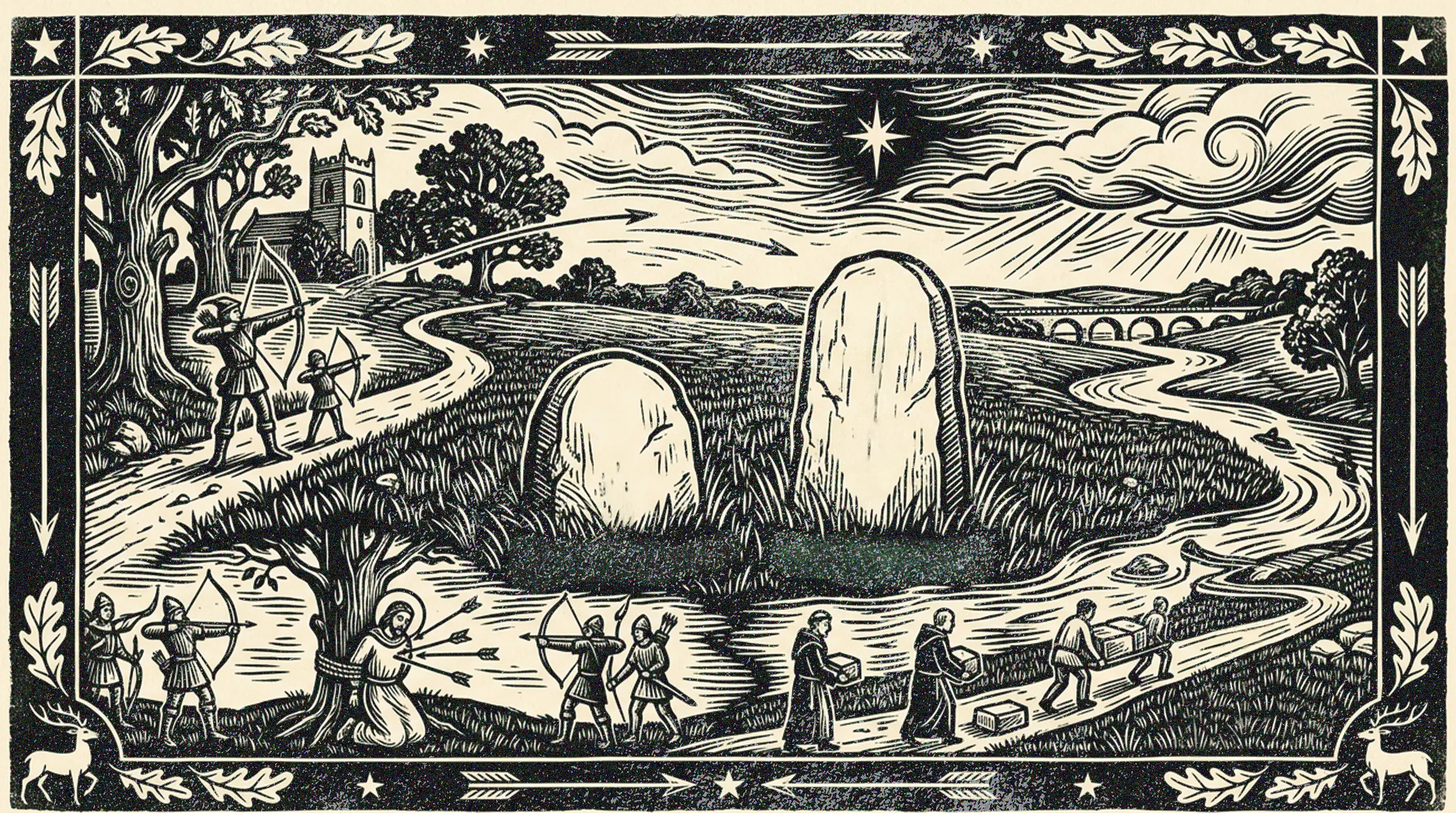
Robin Hood and Little John
Two old route markers acquired a story about impossible archery and England's most famous outlaw.
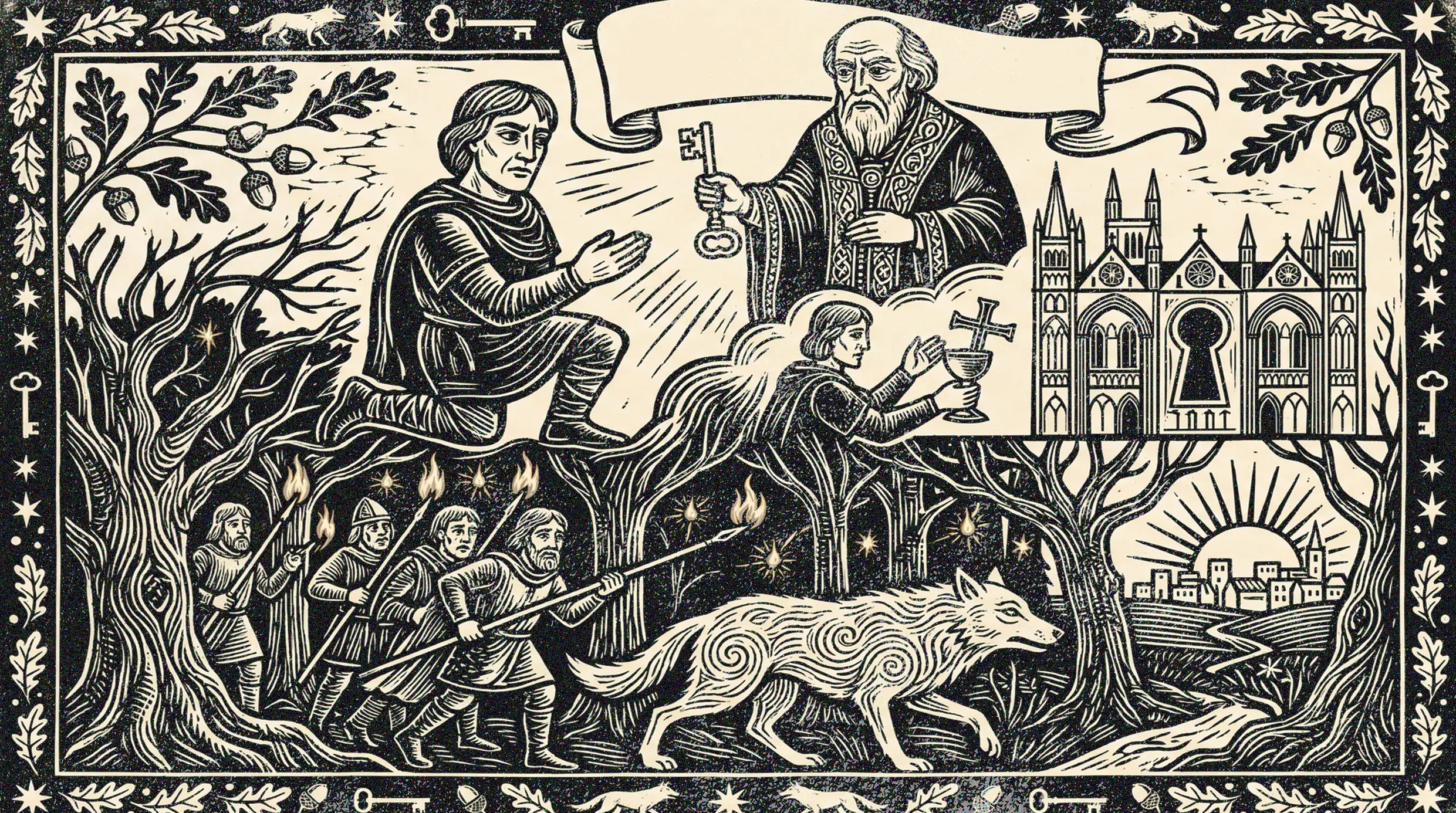
Hereward and the White Wolf
A documented raid on Peterborough grew into a legend of dreams, strange lights and a mysterious white wolf.
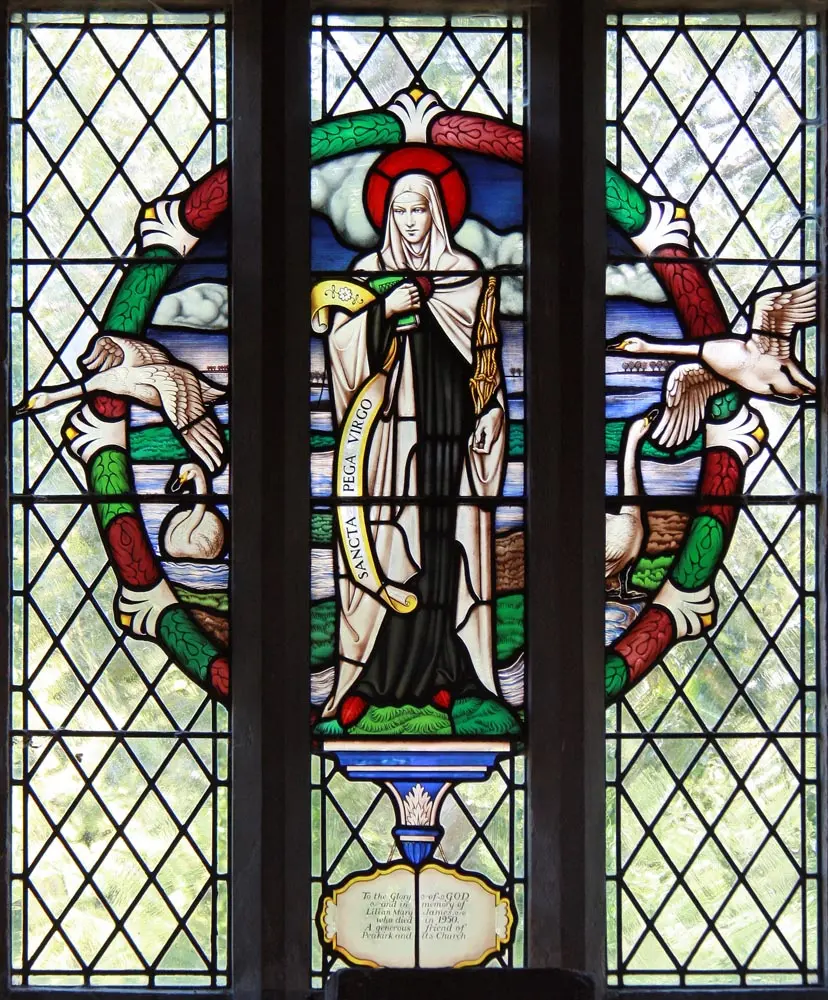
St Pega of Peakirk
A saint, a place-name and centuries of later tradition preserve one of Peterborough's oldest sacred stories.
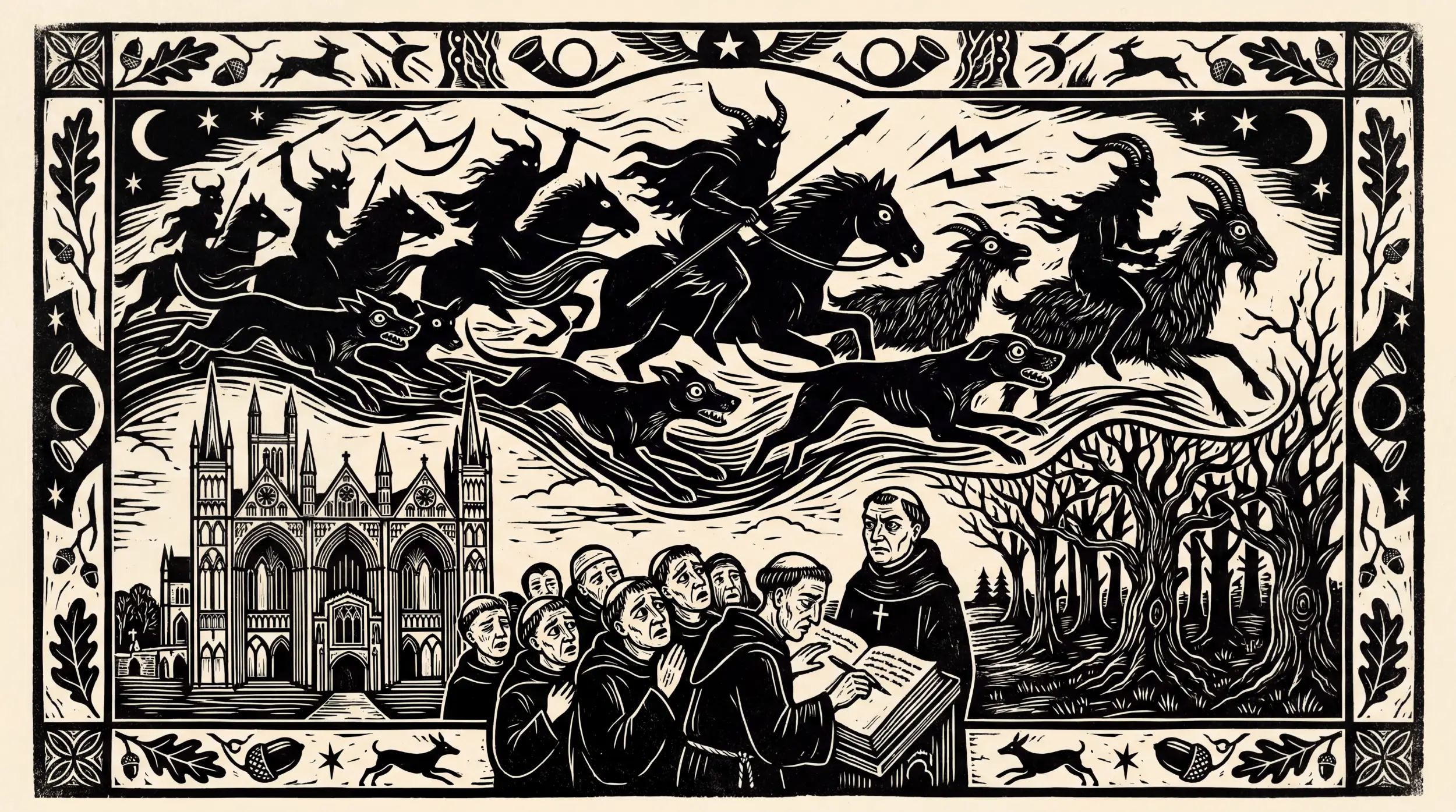
The Wild Hunt of 1127
Peterborough's chronicler recorded black riders, monstrous hounds and hunting horns sounding through the night.
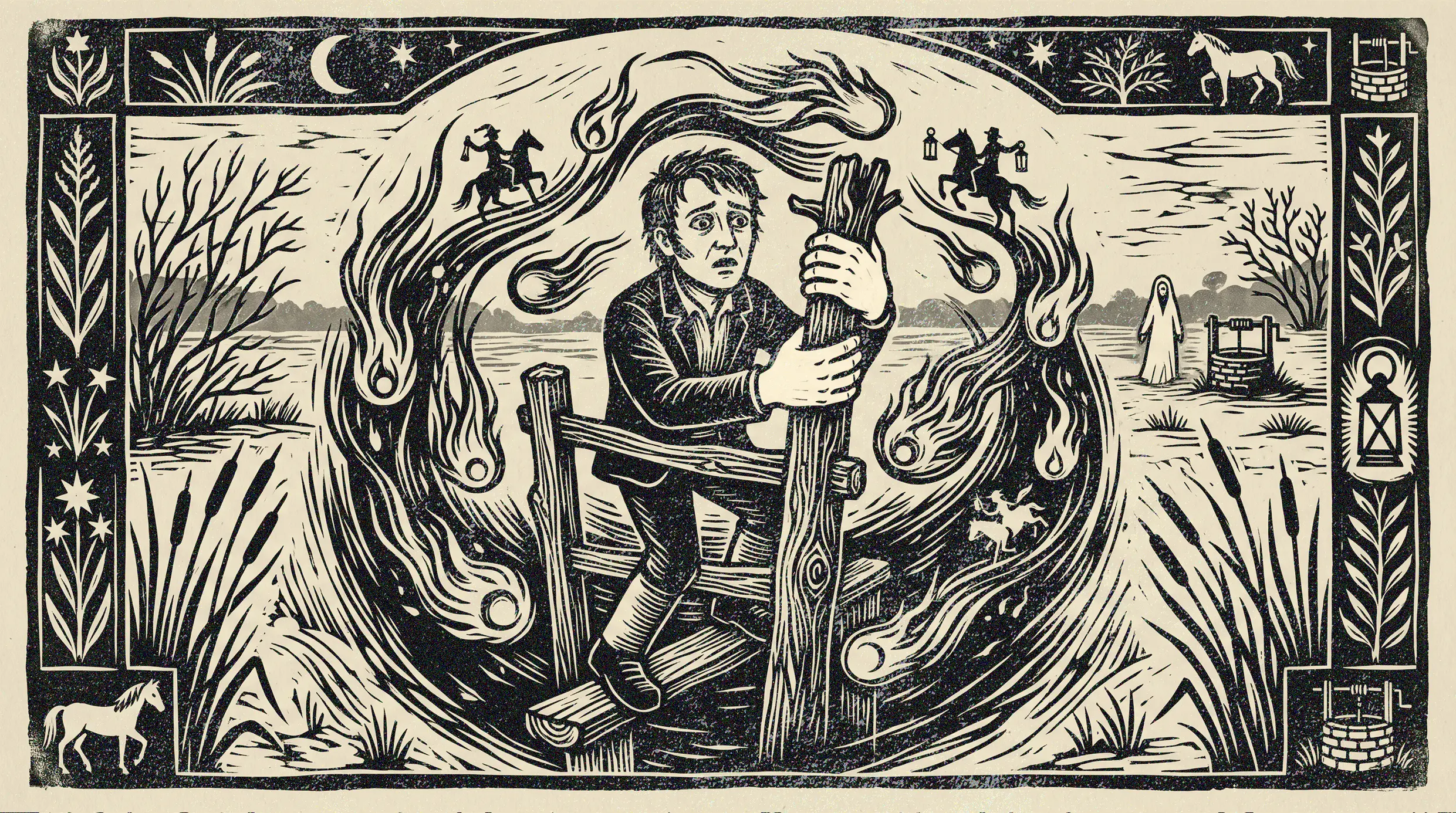
The Will-o'-the-Wisps
John Clare saw unexplained lights moving through the countryside he knew better than almost anyone.
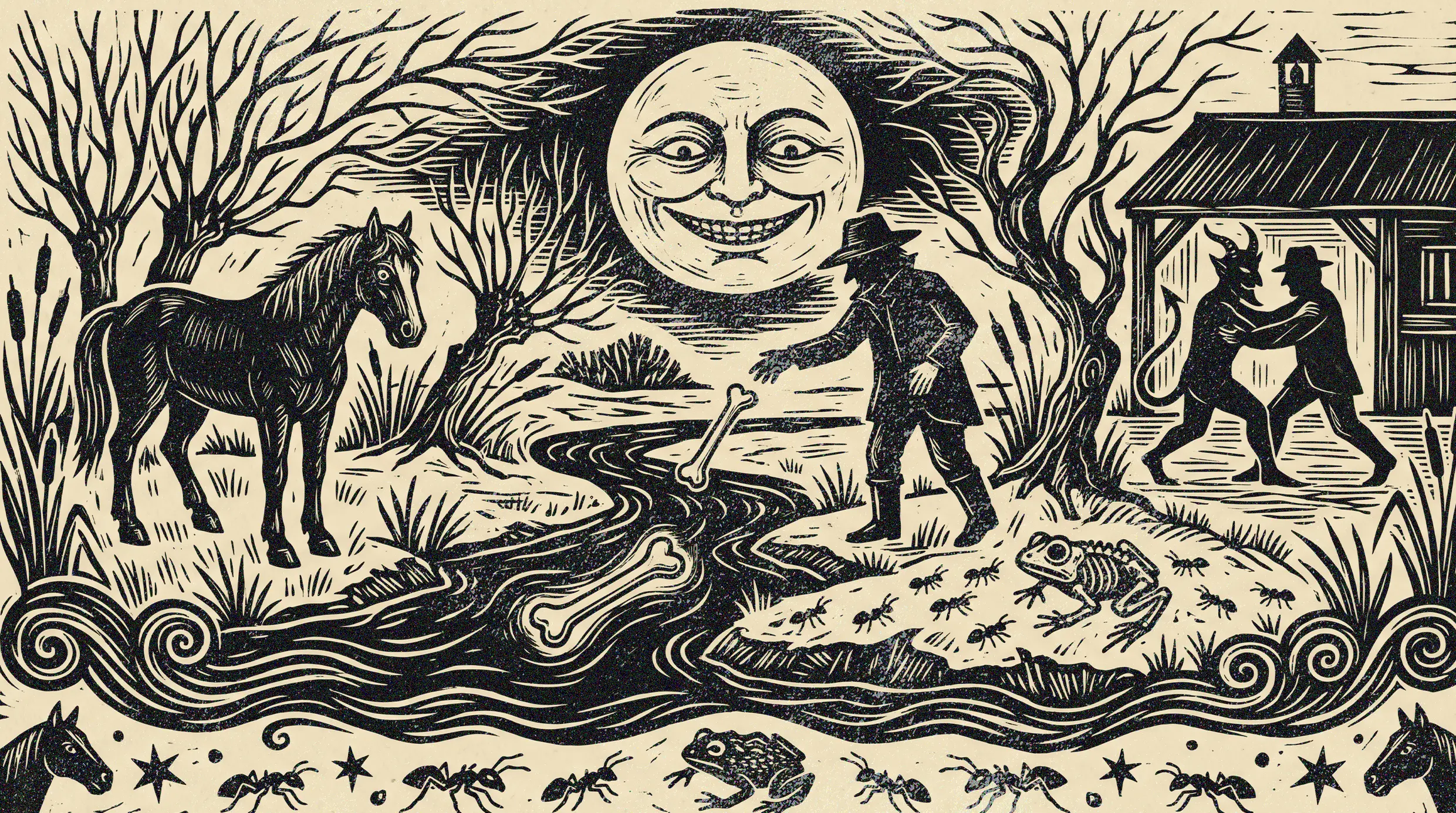
The Toadmen
Certain horsemen were said to gain extraordinary power through a ritual involving one carefully prepared bone.
Behind Wansford in England
This page distinguishes the earliest printed versions from later retellings. The floating-haycock episode is treated as folklore, not as a proven historical accident. The history of Wansford Bridge, the Nene and the Great North Road provides the real landscape in which the story developed.
-
Richard Brathwaite · Barnabee's Journal · 1638
The first complete edition in English and Latin. The Wansford passage gives the earliest famous printed form of the joke, with Barnaby floating on a haycock and answering the call “from Greenland?” with “Wansford Brigs in England”. -
Celia Fiennes · journey through Wansford · 1698
Fiennes crossed Wansford Bridge and stayed at the Swan. She recorded the local version of a haymaker washed into the Nene and noted that “Wansford in England” was already used as a joke about Wansford people. -
John Morton · Natural History of Northamptonshire · 1712
Morton's account is reproduced in Thomas Sternberg's nineteenth-century folklore collection. Morton treats the tale as an example of the sudden flooding of the Nene and records “Wansford, in England” as a well-known local proverbial saying. -
Daniel Defoe · A Tour Through the Whole Island of Great Britain
Defoe records an expanded version in which the flood carries the sleeper towards Wisbech and nearly to the sea, showing how dramatically the story had grown by the early eighteenth century. -
Historic England · Wansford Bridge
Official Grade I listing record. The twelve-arch ashlar bridge was begun in 1577, with additional work in the seventeenth century and rebuilding at the south end in 1795. -
Wansford Parish Council · The Story of Wansford
David Stuart-Mogg's detailed local history brings together documentary material on the bridge, river, inns, travellers and the long history of the Wansford in England tradition. -
Discover Peterborough · Nene Valley Railway
Explore Wansford Station and travel through the modern Nene Valley landscape by heritage train. -
Discover Peterborough · Peterborough on Screen
Discover how Wansford and the Nene Valley Railway became international film and television locations, including two James Bond productions. -
Discover Peterborough · Peterborough Folklore
Explore Peterborough's wider collection of legends, strange encounters, customs and stories attached to real places. -
Discover Peterborough · Weird Weekends
Follow Peterborough's stranger stories into the landscapes where they developed.