

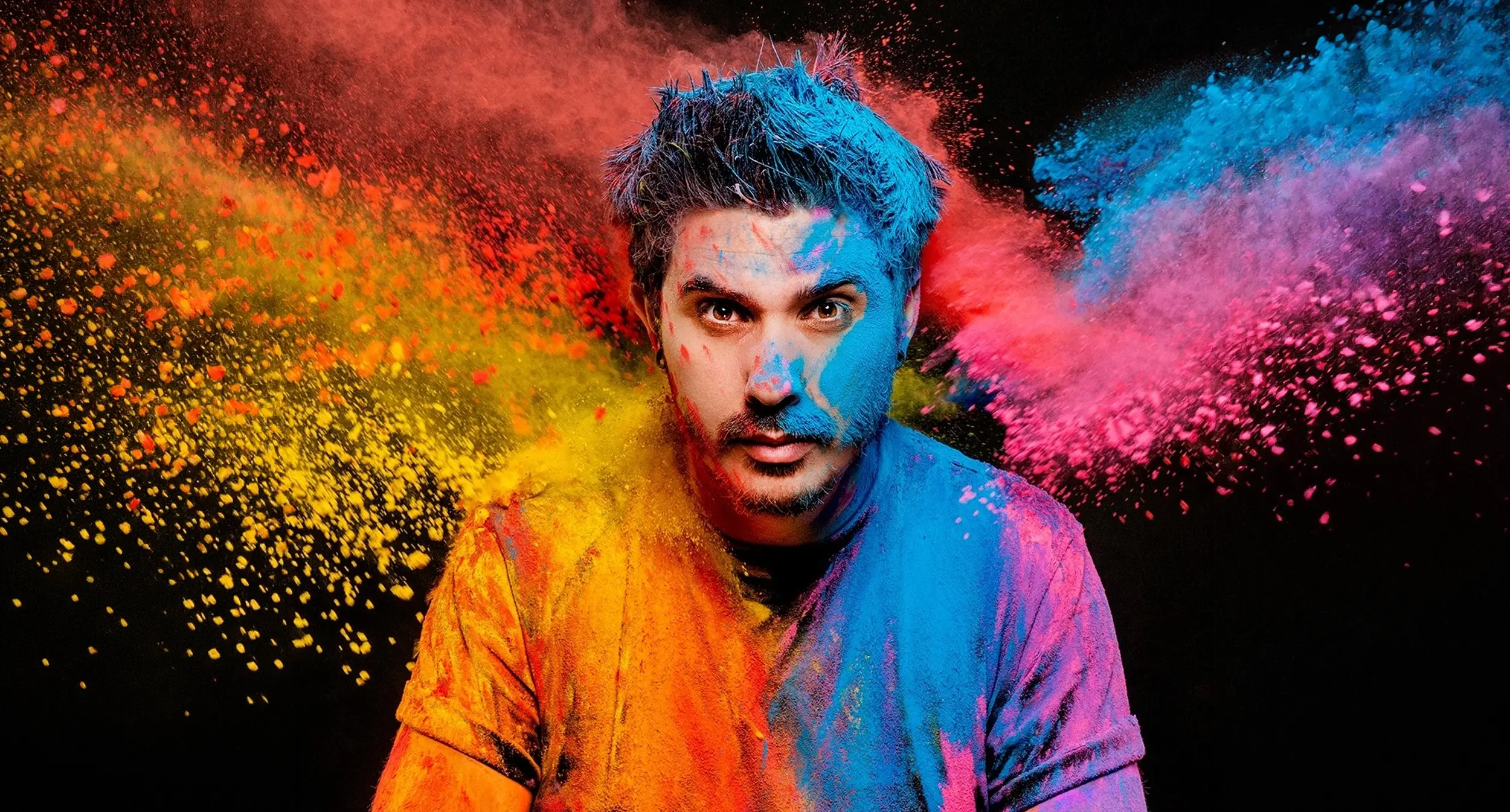
Born in Peterborough, Rich Simmons is a self-taught contemporary artist whose vividly coloured work combines pop art, comic books, street culture, punk energy and social commentary. His career has taken him from designing T-shirts and running creative workshops to international exhibitions, major murals and museum displays.
Career in dates
- 1986 Born Richard Simmons in Peterborough
- 2008 Launches Art Is The Cure after completing a Prince’s Trust programme
- 2009 Wins the vInspired award for Most Inspirational Young Volunteer
- 2011 Creates a punk reinterpretation of the royal wedding on London’s South Bank
- 2012–14 Presents three solo exhibitions with Imitate Modern in London
- 2014 Takes the solo exhibition London Calling to New York
- 2014–15 Between the Capes becomes his most recognisable image
- 2017 Stages exhibitions in London and New York while producing public murals
- 2019 Included in the museum exhibition Men of Steel, Women of Wonder
- 2019 Completes a 3,400-square-foot mural in Rogers, Arkansas
- 2022 Presents a solo exhibition at Taglialatella Galleries in New York
- 2023 Stages the retrospective exhibition Quintestencil in London
- Today Works from Brighton while developing Rich Simmons Art, Art Is The Cure and CreateScene
Peterborough beginnings
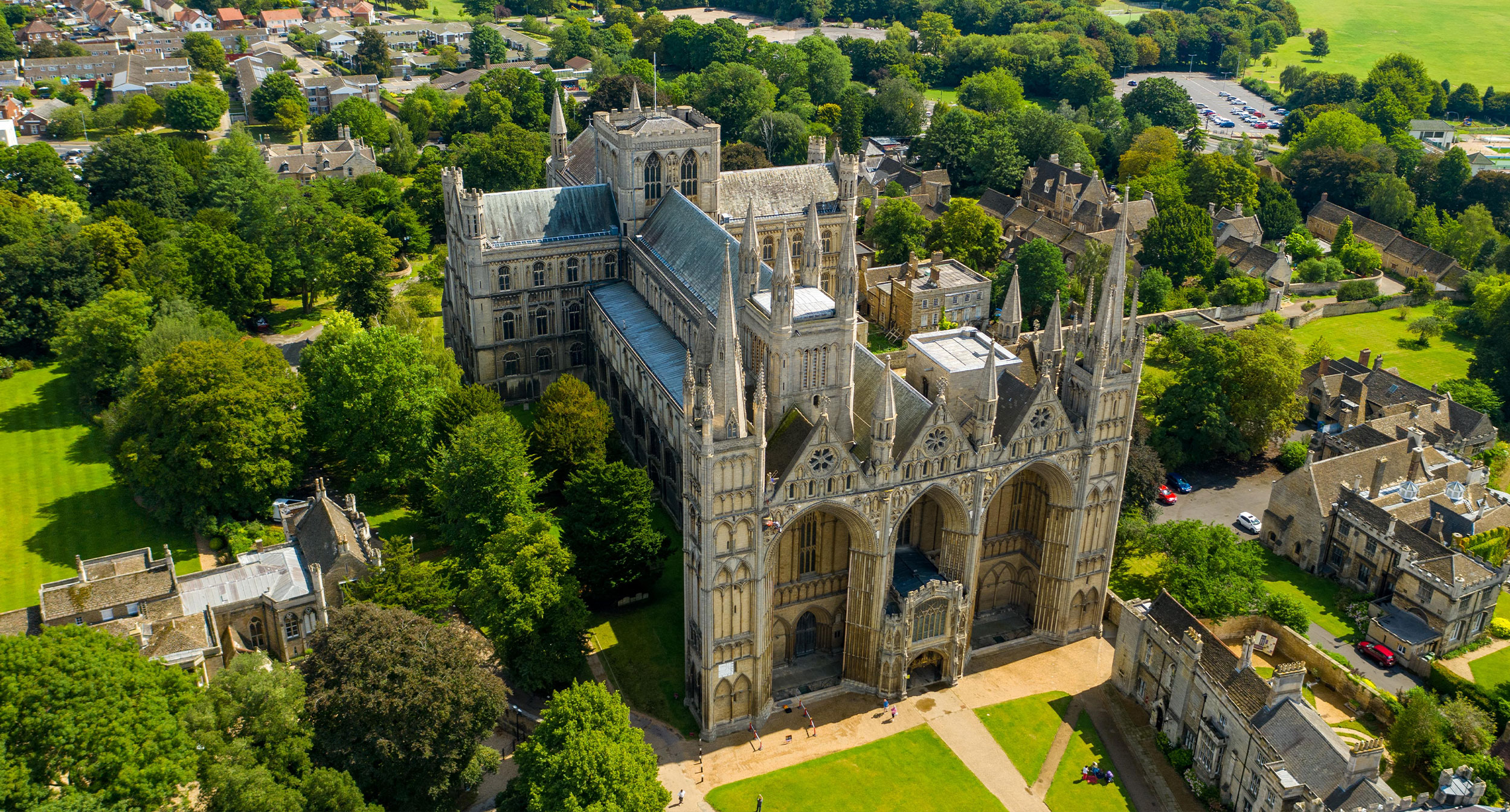
Richard “Rich” Simmons was born in Peterborough on 20 February 1986. He grew up drawing and absorbing the visual culture around him, from cartoons and comic books to music, fashion, films and advertising.
Simmons did not follow a conventional route through art school. He is entirely self-taught, developing his practice through experimentation, independent projects and the process of turning personal difficulties into creative work.
After leaving school, he moved between different jobs and struggled to establish a permanent career. By his late teens, he was experiencing depression and uncertainty about his future. Drawing, painting and designing provided a constructive outlet through which he could process those experiences.
What began as a personal method of expression would eventually shape both his artistic career and his commitment to encouraging creativity in other people.
Finding a visual language
Simmons initially experimented with graphic design and T-shirts. The popularity of his early designs suggested that creativity might provide not only a personal outlet but the foundation for a career.
He joined the Prince’s Trust Enterprise programme and developed a business plan around his creative ideas. Contemporary accounts record that he received a £2,000 loan to help establish the project that became Art Is The Cure.
At the same time, Simmons was teaching himself how to translate drawings into larger and more technically ambitious works. Spray paint and stencils gave him a way to reproduce the sharp outlines and blocks of colour associated with comics, advertising and classic pop art.
The stencil process became increasingly intricate. Simmons designs the composition before drawing and cutting separate layers by hand, with each stencil controlling a different section or colour. The finished image is then built gradually through repeated applications of spray paint.
This method allowed him to take the same visual language from T-shirts and paper to canvas, walls and large public murals.
Art Is The Cure
Simmons launched Art Is The Cure in 2008, before his professional art career had become established. The project grew directly from his experience of using creativity to work through depression, social anxiety and the difficulties he associated with autism.
Its central idea was simple: people experiencing emotional pain or personal difficulty could be encouraged to channel some of that energy into drawing, painting, writing, music, photography or another creative activity.
Simmons began giving talks, running workshops, visiting schools and organising events. In 2009, he received the national vInspired award for Most Inspirational Young Volunteer for his work.
Art Is The Cure later developed films, interviews, podcasts, workshops, school visits and online resources. Its three recurring themes are inspiration, community and movement.
Simmons’s art and social mission developed in parallel. Greater recognition as an artist gave him a larger platform from which to discuss creativity, while the experiences behind Art Is The Cure supplied many of the deeper emotional narratives within his work.
Pop Punk Art
Simmons describes his evolving style as “Pop Punk Art”. The term reflects his combination of recognisable pop imagery with the independence, disruption and anti-establishment attitude associated with punk culture.
His images draw upon comic-book heroes, 1950s pin-ups, fashion, advertising, celebrity, consumer brands and art history. These familiar elements are taken apart and recombined to create new stories about identity, sexuality, beauty, power and social expectations.
Roy Lichtenstein’s comic-inspired pop art provides an obvious visual reference, but Simmons’s use of spray paint and hand-cut stencils places his practice within street art. Punk music supplies part of its attitude, while composition and geometry introduce a less immediately visible connection with Renaissance art.
Humour and bright colour make the work accessible, but the surface is often deliberately deceptive. Images that initially appear playful can contain criticism of consumerism, prejudice, fame or the pressure to present a perfect public identity.
Simmons uses the language of comics and popular culture because it is instantly recognisable. Once it has attracted attention, he changes the story those familiar images are expected to tell.
Between the Capes
Simmons’s best-known work depicts Batman and Superman kissing. Originally known widely as Superman Kissing Batman, the image has subsequently developed into a series titled Between the Capes.
The choice of characters is significant. Batman and Superman are among popular culture’s most familiar representations of physical power, heroism and conventional masculinity. By showing them in an intimate embrace, Simmons interrupts those expectations and asks whether identity or sexuality diminishes the qualities that make someone heroic.
The image appeared as street art in Croydon, New York and Los Angeles and circulated widely online. Simmons created it before same-sex marriage had become legal across the United States, and it was adopted by some viewers as a visual statement of LGBTQ+ equality.
Its public display also attracted hostility. A Croydon version was defaced in 2015 in what Simmons and local political figures described as homophobic vandalism. He has also spoken about receiving threats while painting the image.
Rather than abandoning the subject, Simmons continued developing it through murals, paintings, prints and exhibitions. In 2022, a New York exhibition at Taglialatella Galleries used versions of Between the Capes to celebrate Pride and distributed signed prints to visitors.
The work remains central to his career because it combines his most recognisable influences: comic-book imagery, bold stencil work, public intervention, humour and a serious argument about identity and acceptance.
From the street to international galleries
Simmons’s commercial gallery career gathered momentum in London during the early 2010s. He presented the solo exhibitions Just Be You Tiful, Inner Outsider and Kryptonite with Imitate Modern between 2012 and 2014.
In 2014, London Calling introduced his work to audiences at Soho Contemporary Art in New York. Further exhibitions followed in New York, London and Florida, including Misfits, Corrosively Bright, Pop Provocateur, Pop Rocks and Imaginarium.
His murals enabled the work to operate outside the commercial gallery system. In Croydon, Simmons created large public images including Princess Diana, comic-book figures and works responding to Andy Warhol.
In 2019, he completed a mural covering approximately 3,400 square feet in Rogers, Arkansas. The scale required Simmons to translate his layered stencil technique onto the side of a building using specialist access equipment.
That year his work was also included in Men of Steel, Women of Wonder, an exhibition developed by Crystal Bridges Museum of American Art. The show brought together more than 70 works examining the ways artists have used Superman and Wonder Woman to explore politics, identity, gender and national culture.
A further New York solo exhibition took place at Taglialatella Galleries in 2022. In 2023, Quintestencil brought together established and new work in a London exhibition exploring the development of his technique and ideas.
Art with deeper layers
Although comic books remain among his most visible influences, Simmons’s work extends beyond superheroes. Fashion imagery, vintage advertising, skulls, butterflies and celebrated works from art history recur throughout his paintings.
His “Skullerflies” combine skull and butterfly forms to create images concerned with mortality, beauty and transformation. Other works place skeletal hands beside luxury products, questioning the value attached to fashion, status and possessions.
The Reflections series revisits portraits and figures through overlapping colours and distorted perspectives. Works referencing the Mona Lisa reveal Simmons’s continuing interest in Leonardo da Vinci, geometry, proportion and Renaissance composition.
This combination is characteristic of his practice. Comic-book imagery provides immediacy, punk culture supplies its energy, and carefully planned stencil layers give the work its technical discipline.
Brighton and CreateScene
Earlier biographies commonly described Simmons as London-based, reflecting the period when his studios, street art and gallery career were centred on the capital and Croydon. His own current website now identifies him as a Brighton-based artist.
From his Brighton studio and gallery, Simmons continues to produce paintings, stencils, prints and murals while developing creative collaborations, workshops and public-speaking projects.
He is also the founder and chief executive of CreateScene, a social-networking and media platform developed with Frazer Miller. The project is intended to help artists and other creative people connect, share work, find opportunities and develop sustainable careers.
CreateScene grew from ideas first explored through the Art Is The Cure community. It expands the earlier project’s emphasis on inspiration and connection into a broader platform for artists, musicians, filmmakers, photographers, performers and other creative practitioners.
Across these different activities, Simmons’s central argument remains consistent: creativity is not a private luxury reserved for galleries or formally trained artists. It is a language through which people can communicate, question expectations, form communities and make sense of difficult experiences.
From Peterborough teenager to internationally exhibited artist, Rich Simmons has built a career by treating creativity as both personal expression and public action: something capable of disrupting familiar images, opening conversations and helping people feel less alone.