

Sacrewell Heritage Farm & Country Centre at a glance
- What
- Family farm attraction, countryside centre and heritage site
- Where
- Thornhaugh, Peterborough, PE8 6HJ
- History
- A farming landscape with roots reaching back to the Domesday Book
- Heritage highlight
- Grade II* listed watermill built in 1755
- Look out for
- Farm animals, rare breeds, play areas, tractor rides, trails and the restored mill
- Best for
- Families, younger children, countryside lovers, farming history and relaxed days outdoors
Meet the animals, follow the sound of water into an 18th-century mill, climb aboard a tractor and discover a farming landscape whose story reaches back nearly a thousand years.
Sacrewell is one of those places where children can simply enjoy being on a farm while adults gradually realise there is an extraordinary amount of history beneath the fun. Animals, play, fields and family activities occupy a landscape shaped by centuries of farming, milling and food production.
The site sits at Thornhaugh, west of Peterborough, where the countryside begins to change from the open fen-edge landscape towards limestone country. Farming has defined this area for centuries, and Sacrewell deliberately keeps that relationship between food, land, animals and people visible.
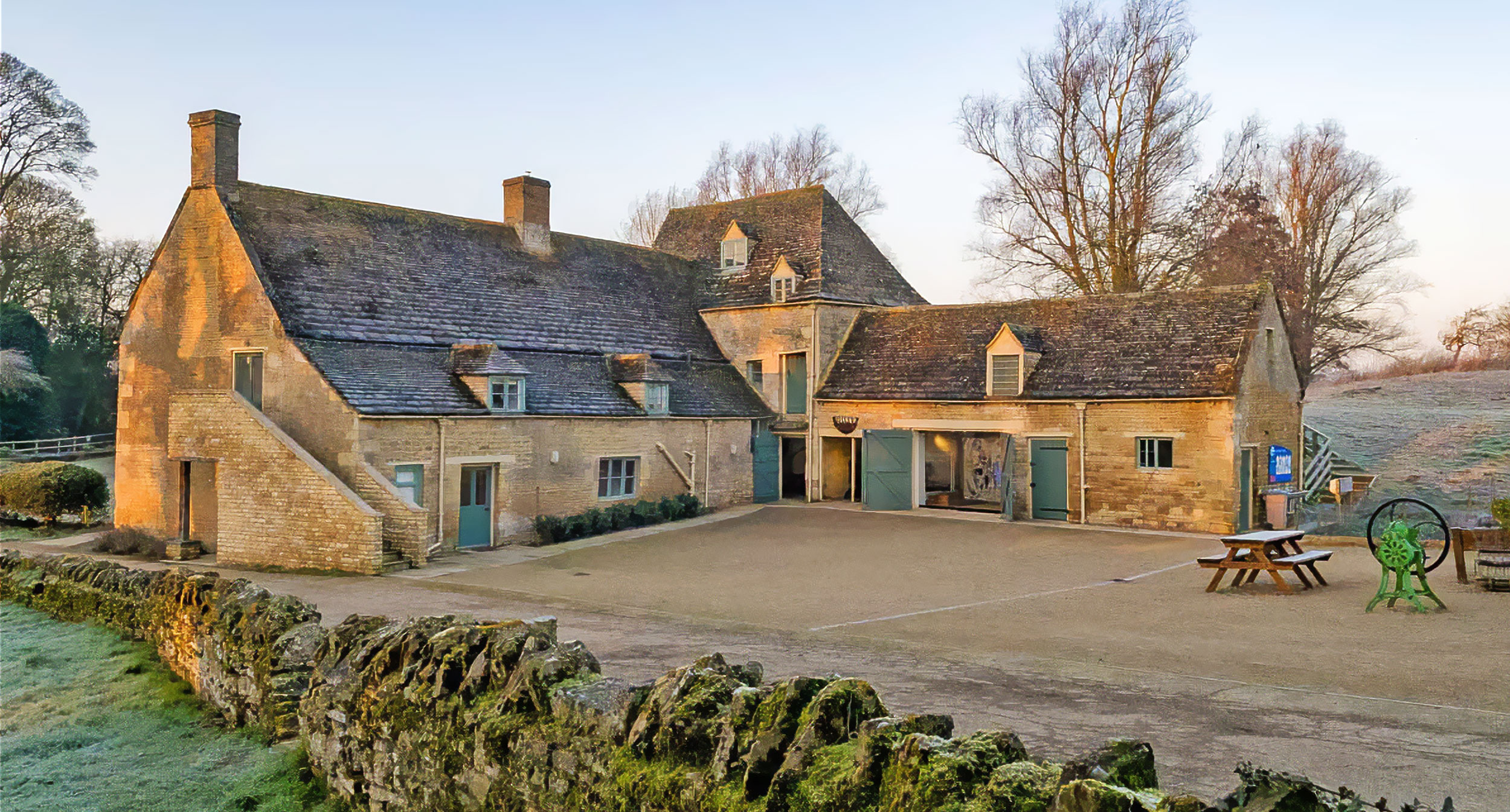
At the heart of it all is the watermill. The present building dates from 1755, but milling here reaches much further back. The Domesday Book records mills in the area in 1086, while archaeological evidence suggests people were farming this landscape long before that.
Look beyond the animals and discover a much older story
Sacrewell brings together farming, water power, changing agricultural technology and countryside education. It is a particularly good place to understand how the rural landscape surrounding Peterborough has actually worked.
What to discover at Sacrewell
For families, the attraction works because there is plenty to do. For curious visitors, almost everything also opens another door into farming, nature or heritage.
Farm animals
Get close to pigs, sheep, cattle, goats, ponies, donkeys, alpacas, poultry and other animals while learning about the breeds found on British farms.
Rare and heritage breeds
Sacrewell keeps rare, native and recovering breeds, helping visitors understand why preserving agricultural biodiversity still matters.
The watermill
Explore four floors of a restored 18th-century mill and see how water power was turned into the mechanical energy needed to grind grain.
Tractor rides
Travel out across the wider farm and see working agricultural land that cannot be appreciated from the visitor centre alone.
Indoor and outdoor play
Large play areas give younger visitors plenty of opportunities to climb, run and explore whatever the weather is doing.
Walks and countryside
Paths, gardens and open spaces allow visitors to step away from the busier attractions and enjoy the farmland itself.
Follow the water into a working piece of history.
Sacrewell’s Grade II* listed watermill was built in 1755, but it occupies a site where milling is thought to have taken place for centuries.
Before industrial food processing, grain needed to be ground close to where it was grown. Watermills therefore sat at the centre of local farming economies, turning flowing water into dependable mechanical power.
Sacrewell Mill continued working commercially until 1965. Its survival allows visitors to walk directly into a technology that once shaped daily life across rural England.
Explore the watermill storyFrom grain to flour
1755: the surviving mill building was constructed.
1965: commercial milling finally stopped.
2015: the restored mill reopened after a major conservation project.
The machinery, building and water system now allow visitors to understand the process rather than simply read about it.
A thousand years of milling
The surviving mill is eighteenth century, but the story of water power at Sacrewell is considerably older.
The Domesday survey of 1086 records three mills in the wider Wittering area, and Sacrewell is considered likely to have been one of them.
The physical position is ideal. The site lies between the River Nene to the south and the River Welland to the north, with watercourses crossing a landscape used for agriculture since prehistoric and Roman times.
Archaeological remains on Sacrewell land include evidence associated with Roman farming. The route later known as Ermine Street ran nearby, connecting this countryside into one of Roman Britain’s great transport corridors.
For the wider Roman landscape, explore Roman Peterborough.
Farming before Sacrewell
Archaeological evidence shows that this landscape was already being organised and exploited for agriculture around two thousand years ago.
The Domesday landscape
Mills are recorded in the area, placing water-powered food production firmly within the medieval rural economy.
The surviving watermill
The present mill building was constructed and became the focal point of a complex of agricultural buildings and machinery.
William Scott Abbott arrives
The modern Sacrewell story begins when farmer William Scott Abbott took on the farm and began developing his ideas about agriculture and education.
The Land Girls
Women of the Women’s Land Army helped keep the farm operating as Britain mobilised its agricultural workforce for wartime food production.
A farm with an educational purpose
The William Scott Abbott Trust continued the vision of helping people understand farming, food and the countryside.
Wartime Sacrewell and the Land Girls
One of Sacrewell’s most human stories belongs to the Women’s Land Army, whose members helped keep British farming operating during the Second World War.
A national emergency
With men serving in the armed forces and imported food under pressure, women were recruited to undertake essential agricultural work across Britain.
Working the farm
Land Girls helped care for livestock and sustain farm operations, becoming part of the working community here.
Opening the farm
Mary Abbott was involved with the local Women’s Land Army organisation, while Sacrewell became home to women contributing directly to wartime food production.
More than military history
The story is a reminder that the Second World War was fought in fields, dairies and farmyards as well as on battlefields.
William Scott Abbott and a different idea of a farm
The modern Sacrewell story is strongly associated with William Scott Abbott, who arrived as a tenant farmer in 1917 and later acquired the farm.
Abbott was interested not only in producing food but in helping other people understand agriculture. That educational instinct became fundamental to Sacrewell’s future.
After his death, the William Scott Abbott Trust was established to continue that vision. Since the 1960s it has kept Sacrewell focused on agricultural education and public access.
The result is unusual. This is not simply a historic farm preserved at one fixed date. It is a place where the interpretation of farming continues alongside changing agricultural practice.
Why rare breeds matter
Visitors naturally enjoy meeting the animals, but Sacrewell also uses them to explain a serious part of farming heritage.
Traditional breeds carry characteristics developed over generations, from hardiness and temperament to suitability for particular landscapes or farming systems.
When a breed disappears, part of that agricultural genetic diversity disappears with it.
Pigs, sheep, goats, cattle and plenty of personality.
Sacrewell’s animals include familiar farm species alongside rare, heritage and recovering breeds.
That turns a family encounter into something more useful. Children can see that “a sheep” or “a pig” is not one single thing but part of a much wider variety shaped by farming history.
The animals also help explain the relationship between agriculture, land management and wildlife in rural England.
Meet Sacrewell’s animalsFrom field to fork
Sacrewell is particularly useful because farming here is not presented as something that ended with horses and wooden ploughs.
The wider estate remains agricultural land. Tenant farmers grow crops and use modern systems, while tractor rides take visitors out beyond the visitor centre into a landscape where planting, harvesting and food production continue.
That allows children to make connections that are surprisingly easy to lose: flour begins as grain, vegetables begin in soil, livestock needs land and food production depends on seasons, weather and farming skill.
A countryside that inspired poetry
Sacrewell sits within the wider rural landscape west and north-west of Peterborough, a world of fields, hedgerows, villages and changing seasons that also shaped the writing of John Clare.
Clare’s famous relationship with the countryside was not sentimental distance. He knew working rural landscapes intimately, watching farming, wildlife, enclosure, paths, weather and seasonal change.
For visitors interested in that deeper connection between people and landscape, Sacrewell pairs naturally with John Clare Cottage and the poet’s wider story.
Planning your visit
- Where to find Sacrewell
- Sacrewell Farm is at Thornhaugh, Peterborough, PE8 6HJ, close to the A1 and A47 west of the city.
- Before you travel
- Check the official Sacrewell website for current visitor information, activities, access and any seasonal arrangements.
- Indoor and outdoor
- The farm combines outdoor animals, trails and play with indoor attractions including the Playbarn and heritage spaces, making it useful for mixed-weather days.
- Historic watermill
- The mill contains multiple floors and historic machinery. Visitors with particular access requirements should check the current accessibility guidance before travelling.
- Allow time to wander
- Sacrewell works best when the farm, mill, animals and landscape are treated as one experience rather than rushing between individual attractions.
- Seasonal experiences
- Farm activities naturally change through the year. Use the official website to see what is happening around the time of your visit.
Discover Peterborough tip: do not let the watermill become the bit adults visit while the children race ahead. Take them inside. Seeing water physically drive machinery is one of those brilliantly simple demonstrations that can make engineering, food and history click at the same time.
Continue exploring Peterborough
Sacrewell is an excellent starting point for exploring the rural landscapes, history and family attractions west of Peterborough.
John Clare Cottage
Visit the poet’s birthplace and discover the rural world that shaped one of England’s most remarkable observers of nature.
Discover John Clare CottageJohn Clare
Meet the Helpston poet who recorded fields, wildlife, farming and rural change with extraordinary intimacy.
Meet John ClareNene Valley Railway
Continue through the countryside aboard a heritage railway running between Peterborough and the villages of the Nene Valley.
Explore the railwayNene Park
Swap the farm for lakes, woodland, meadows, walking and waterside adventures closer to the city.
Explore Nene ParkRoman Peterborough
Follow the Roman roads and agricultural landscape into the wider story of Durobrivae and the Nene Valley.
Enter Roman PeterboroughPeterborough History
Travel from deep prehistory through Roman farming, medieval landscapes, industry and the making of the modern city.
Explore the historyFamily Fun
Find more Peterborough attractions, activities and days out designed for families and younger visitors.
Find family adventuresMore things to do
Discover more heritage, countryside, culture, family attractions and memorable experiences across Peterborough.
Find more experiencesPlan your day at Sacrewell
For current visitor information, farm activities, seasonal experiences and practical arrangements, visit Sacrewell’s official website before travelling.