

Discover Peterborough · Roman Britain
AD 43–410
Roman PeterboroughDurobrivae, Roads, Pottery & Power
Roman Peterborough was not one place. It was a connected landscape of forts, roads, river crossings, villas, workshops and settlements centred on Durobrivae at Water Newton — one of the largest and most complex Roman small towns in Britain.
A Roman landscape, not a single Roman city.
Peterborough sat at a strategic crossing between road, river and Fen.
The Roman story of Peterborough is centred on Durobrivae at Water Newton, around seven kilometres west of the modern city centre. It developed beside the River Nene and Ermine Street, one of Roman Britain's great north–south roads.
Around it grew a dense network of military sites, suburbs, pottery workshops, villas, roads and river connections. Longthorpe preserves evidence of an earlier military presence nearer modern Peterborough, while Castor, Normangate Field and the wider Nene Valley reveal a landscape of wealth, production and administration.
Durobrivae was formally classed as a Roman “small town”, but that description understates its scale. Historic England notes that its walled core alone is exceptionally large for the category and that, once its suburbs are included, the settlement becomes much more complex.
An unusually large defended area for a Roman small town.
Town, fort, suburbs and cemeteries stretched far beyond the walls.
Large-scale Nene Valley pottery production develops around Durobrivae.
The Water Newton Treasure reveals a wealthy Christian community.
After AD 43
The conquest landscape
First came the army.
The first Roman presence in the Peterborough area was military.
Longthorpe, close to modern Peterborough, preserves the remains of a Roman fort and associated settlement. It formed part of the military landscape created as Roman forces pushed north after the invasion of AD 43.
As control consolidated, the strategic focus shifted towards the River Nene crossing at Water Newton. A fort was established beside what became Durobrivae, positioned to oversee Ermine Street and the bridge across the river.
The name appears in the Antonine Itinerary, a Roman route document. Its meaning captures the reason the place mattered: control of a major road and river crossing.
Ermine Street
A Roman road ran straight through the town.
Durobrivae grew around one of the great arteries of Roman Britain.
Ermine Street connected London with Lincoln and the north. At Durobrivae it crossed the town, approached the River Nene and continued across the bridge towards the northern suburbs.
The Roman road is still legible in the landscape and in aerial photographs. Historic England describes its remarkably straight line bisecting the town before reaching the river crossing.
Other routes spread from the crossing. King Street ran north, while the Fen Causeway headed east towards the Fens and ultimately Norfolk. Roman Peterborough was therefore connected not only north and south, but deep into the Fenland economy.
2nd century AD
Town from fort
Durobrivae became an urban and industrial centre.
The military fort appears to have been short-lived, but civilian settlement continued to grow around the road and bridge. Shops, houses, workshops and services developed along Ermine Street and in the expanding suburbs.
The town itself was not laid out on a perfectly regular Roman grid. Instead it appears to have grown organically around existing routes. By the later second century, a wall and bank enclosed the central settlement.
Beyond those walls, development continued. Industrial and domestic suburbs stretched to the west, south, east and across the Nene into Normangate Field.
The defended town was only the core of a much wider urban and industrial landscape.
Made in Peterborough
Nene Valley pottery travelled across Roman Britain.
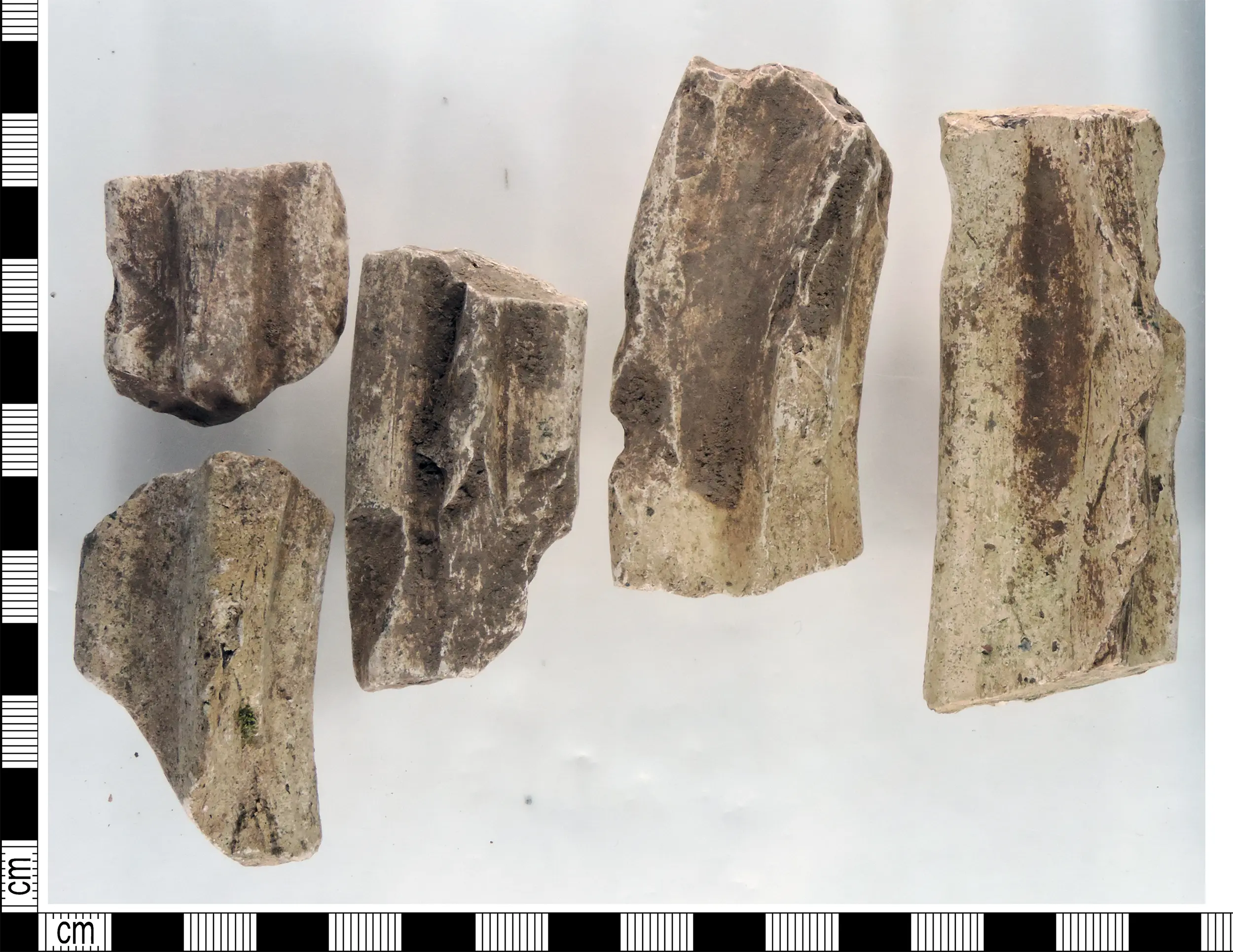
Roman Peterborough became famous for manufacturing pottery on an industrial scale.
Natural clay and plentiful fuel made the Nene Valley ideal for production. Large-scale manufacture developed near Durobrivae from around AD 120 and continued for almost three centuries.
Early production included grey wares and everyday kitchen vessels. By around AD 150, specialist colour-coated wares had become increasingly important, producing fine beakers, bowls, flagons, cups and mortaria.
Kiln sites have been identified across the wider Peterborough area, including Stibbington, Sibson, Stanground, Stilton and Yaxley. Products from the industry circulated far beyond the Nene Valley.
An industrial Roman landscape
The town was surrounded by production.
Pottery kilns
Large kiln zones produced grey ware, mortaria and the famous Nene Valley colour-coated wares.
Iron working
Industrial activity around the town also included metalworking and processing.
River trade
The Nene linked production areas to surrounding settlements and the Fenland economy.
Road distribution
Ermine Street and connected routes moved goods through one of eastern England's key transport corridors.
Suburbs
Industrial and domestic neighbourhoods spread outside the defended town and north of the river.
Markets
Durobrivae may have acted as a processing and distribution hub for a wider Fenland estate economy.
Roman Nene Valley
Beyond the town
Villas, estates and elite buildings surrounded Durobrivae.
The wider landscape contained villas and substantial rural settlements, including sites at Ailsworth, Mill Hill and elsewhere around the Nene Valley.
Across the river at Castor lay a major Roman building complex often described as a praetorium. Historic England's assessment of Durobrivae explicitly highlights the importance of understanding the relationship between the town, surrounding villas and the possible administrative complex beneath Castor village.
Together these sites suggest a landscape richer and more structured than a single market town: urban settlement, industry, elite residences, agricultural estates and transport infrastructure all interacted around the Nene crossing.
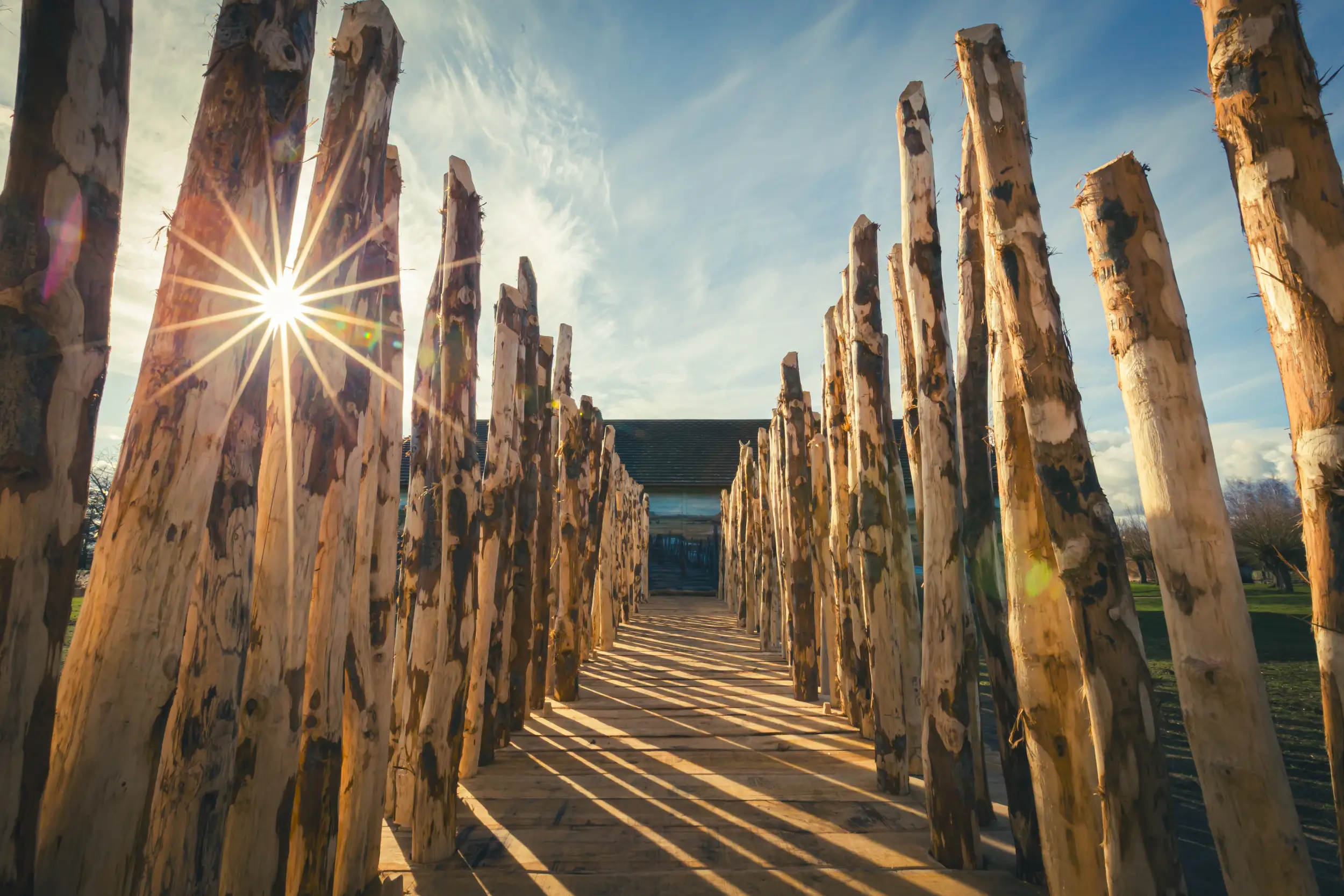
The Fen Causeway
Roman engineers crossed a landscape already ancient.
The Fen Causeway connected Durobrivae eastwards into the Fens. Near Flag Fen, its route crossed a landscape already shaped by Bronze Age monuments and centuries of wetland change.
Historic England notes that by the early Roman period peat and alluvial deposits had covered the Flag Fen timber structures. The Roman road builders may still have encountered enough of the old alignment in the landscape for it to influence the route.
Explore Flag Fen →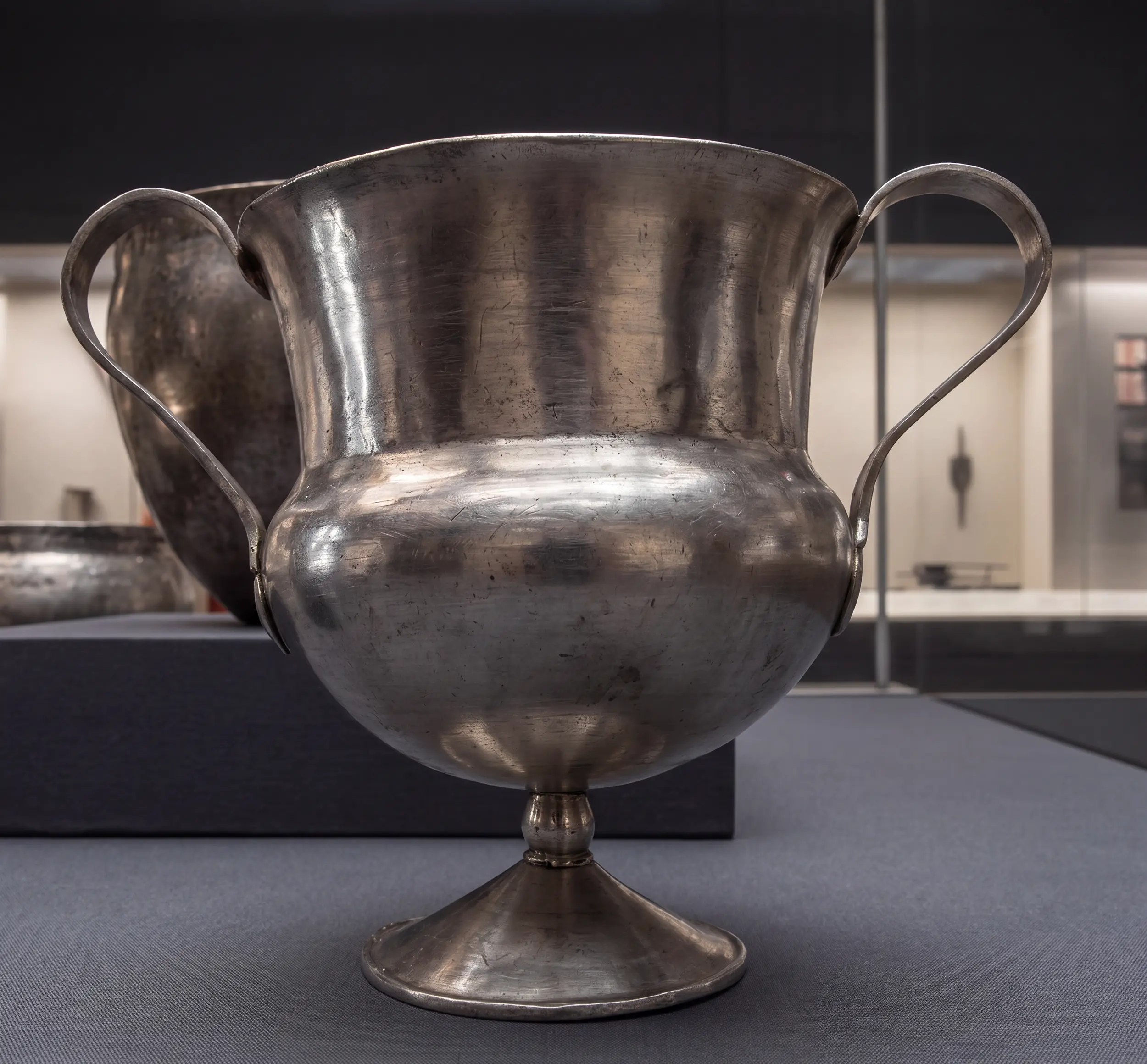
Water Newton Treasure
One of Roman Britain's most extraordinary Christian discoveries.
In 1975 a hoard of late Roman silver was discovered at Water Newton on the site of Durobrivae. It included vessels and votive plaques carrying unmistakably Christian symbols and inscriptions.
The British Museum describes the group as the earliest collection of Christian liturgical silver yet found in the Roman Empire. Several pieces bear the Chi-Rho monogram, while one inscribed bowl refers directly to a sacred altar or church.
The treasure transforms the way we imagine late Roman Durobrivae. This was not merely an industrial town producing pottery. By the fourth century it contained a wealthy Christian community capable of owning and dedicating precious silver.
Explore the Water Newton silver →1820–1828
Rediscovering Durobrivae
Edmund Tyrell Artis mapped a buried Roman town.
Much of what first made Durobrivae famous to archaeologists came from the work of Edmund Tyrell Artis, house steward to Lord Fitzwilliam at Milton.
Between 1820 and 1827 Artis excavated buildings, cemeteries and pottery kilns across the town and its suburbs. In 1828 he published The Durobrivae of Antoninus, illustrating plans, structures, mosaics and objects with unusual care for the period.
Later road schemes and archaeological investigations added new evidence, but much of the Roman town itself has remained relatively undisturbed beneath farmland. Modern aerial photography, geophysics and limited excavation continue to reveal its street pattern and buildings.
Roman Peterborough timeline
Four centuries of change.
Roman invasion
Roman armies begin the conquest of Britain.
Longthorpe fort
A military installation forms part of the early conquest landscape around modern Peterborough.
Nene crossing consolidated
Military focus shifts towards the strategic road and river crossing at Water Newton.
Pottery industry expands
Large-scale production develops around Durobrivae and the Nene Valley.
Town enclosed
Defences are added around the urban core as settlement and industry flourish.
Regional centre
Durobrivae continues as an important civic, industrial and distribution centre.
Christian community
The Water Newton Treasure reveals late Roman Christian wealth and worship.
Industry outlives Roman rule
Pottery production in the wider Nene Valley continues into the transition beyond formal Roman administration.
See Roman Peterborough
The landscape survives.
The objects tell the story.
Durobrivae is a protected archaeological site rather than a reconstructed Roman visitor attraction. Its significance lies in the buried town, visible earthworks, cropmarks and the extraordinary material recovered from the wider Nene Valley.
Peterborough Museum & Art Gallery holds major local archaeology collections including Nene Valley Ware and finds from Durobrivae, and its Roman displays provide the best public introduction to the region's Roman story.
Research sources
Evidence behind the story.
- Historic England — Durobrivae fort, walled town, suburbs and cemeteries
- Historic England — Longthorpe Roman fort and settlement
- Historic England — Flag Fen and the Roman Fen Causeway landscape
- Archaeological Services Durham University — Durobrivae geophysical survey
- J. R. Perrin — Roman pottery from Durobrivae and Water Newton excavations
- Peterborough Museum — Nene Valley pottery and local Roman archaeology
- Peterborough Museum & Art Gallery — archaeology collections
- British Museum — Water Newton Treasure, inscribed Christian bowl
- British Museum — Water Newton Treasure, silver cup
Image Credits
Photography & licensing.
- Nene Valley Roman pottery
Suggested source: Derby Museums Trust / Alastair Willis / Portable Antiquities Scheme / Wikimedia Commons. - Water Newton Treasure
Suggested source: Udimu / Wikimedia Commons.
Discover Peterborough
Roads, rivers and empire.Roman Peterborough connected worlds.
Continue through Peterborough's history, from Jurassic seas and Bronze Age wetlands to medieval power, industrial growth and the modern city.
Discover more Peterborough history →