

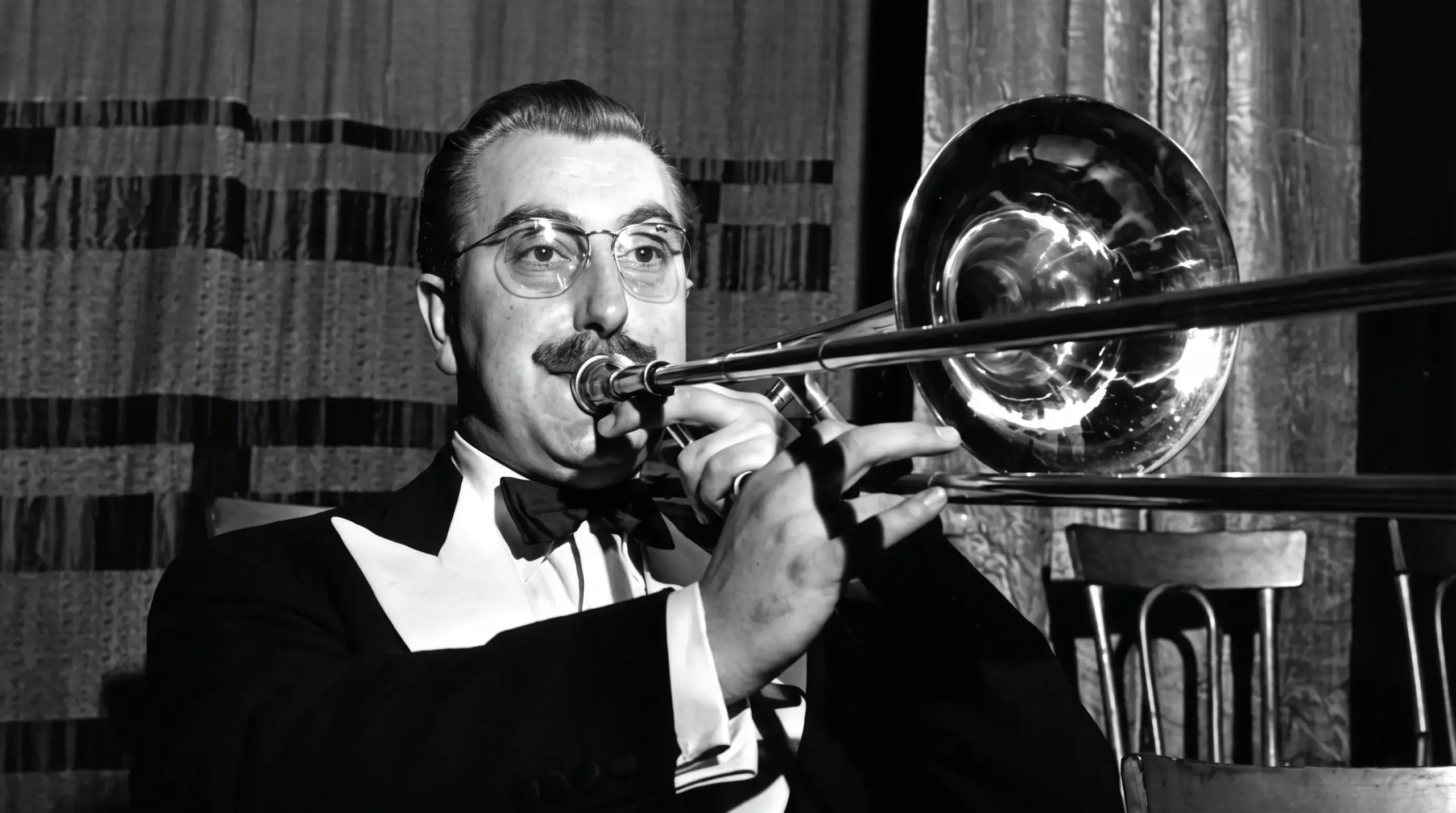
Don Lusher OBE was one of Britain's great post-war trombonists. Born in Peterborough and introduced to brass-band music through the city's Salvation Army, he went on to play with the country's leading dance orchestras, tour America with Ted Heath, accompany international stars including Frank Sinatra, lead his own big band and teach generations of younger musicians.
Life and career in dates
- 1923 Born Gordon Douglas Lusher in Peterborough on 6 November
- c.1929 Begins learning trombone aged six and joins Peterborough Salvation Army Band
- 1940s Serves as a gunner-signaller in the Royal Artillery during the Second World War
- 1944 Takes part in the Allied campaign in Normandy following D-Day
- 1947 Begins establishing himself professionally with Joe Daniels and other leading dance bands
- 1953 Joins the Ted Heath Orchestra
- 1950s Repeatedly wins national polls as one of Britain's leading trombonists
- 1950s–60s Makes five coast-to-coast tours of the United States with Ted Heath
- 1974 Forms the Don Lusher Big Band
- 1975 Gives the first performance of Gordon Langford's Rhapsody for Trombone
- 1976 Takes leadership of the Ted Heath revival orchestra and is named BBC Jazz Society Musician of the Year
- 1987 Receives the Gold Badge of Merit for services to British music
- 1993 Becomes a Freeman of the City of London
- 2000 Leads the Ted Heath orchestra at its final Royal Festival Hall concert
- 2001 Records British Jazz Legends Together with leading figures from British jazz
- 2003 Appointed OBE for services to the music industry
- 2006 Dies on 5 July, aged 82
A Peterborough musical childhood
Gordon Douglas Lusher was born in Peterborough on 6 November 1923 into a family for whom music was not an occasional entertainment but part of everyday life.
The Lushers belonged to the Salvation Army, whose brass-band tradition gave generations of ordinary people the opportunity to learn instruments, perform publicly and develop formidable musical discipline.
Don was the third generation of his family to play in Peterborough's Salvation Army band.
His father played.
His grandfather played.
Before Don had even reached secondary-school age, he was playing alongside them.
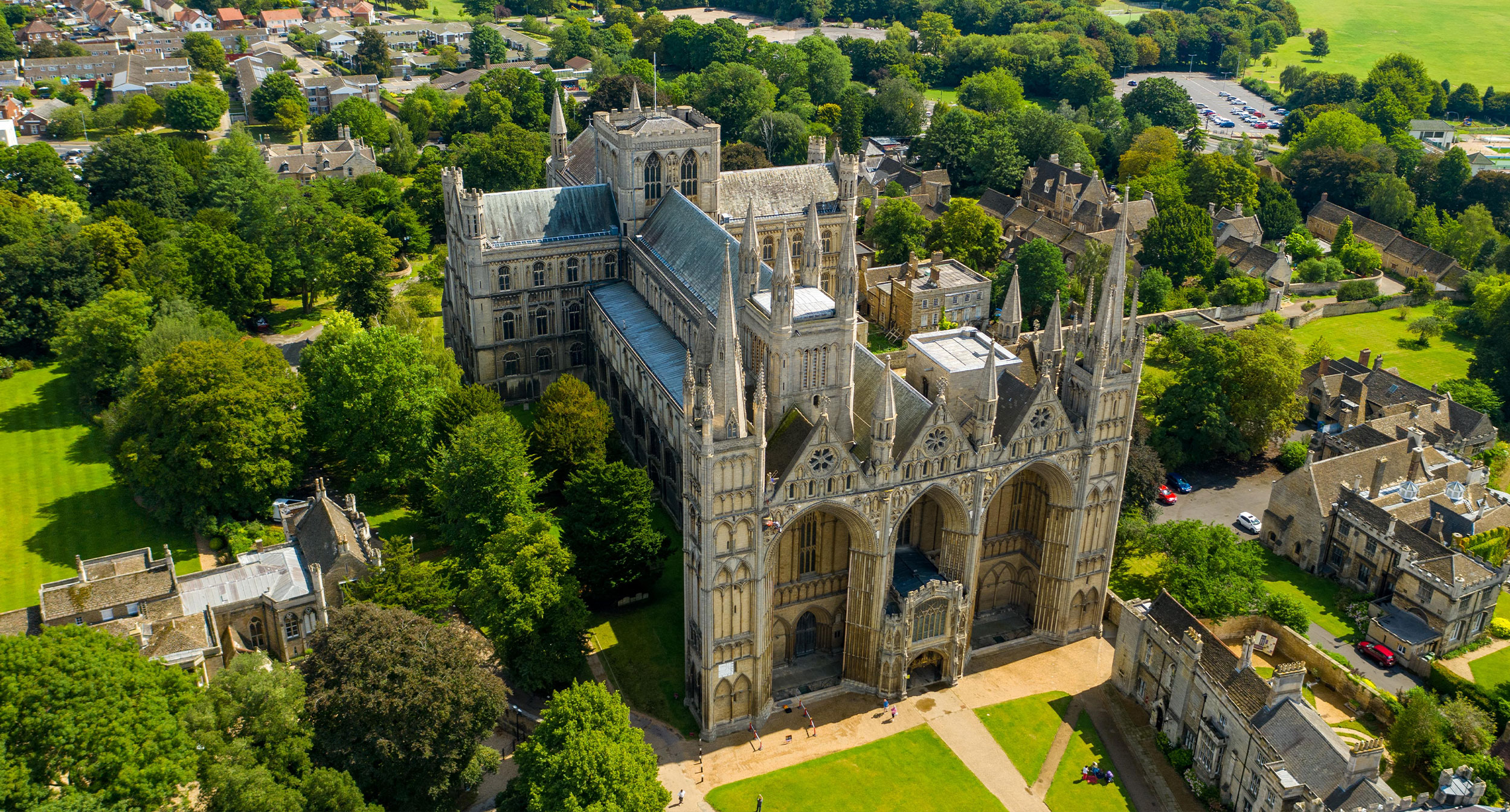
Peterborough provided other musical influences too. Lusher later remembered annual visits to performances of Handel's Messiah at Peterborough Cathedral and the excitement of hearing professional dance orchestras appearing in the city.
The contrast mattered.
Salvation Army music gave him technique and discipline. The glamorous dance bands gave him an idea of what professional music might sound like.
Long before the international tours and recording studios, Don Lusher's musical world was Peterborough, brass instruments and the Salvation Army.
The trombone at six
Lusher began studying trombone when he was only six years old.
It was an unusually demanding instrument for a child.
Unlike a piano, where a particular key produces a particular note, the trombonist has to develop an instinctive sense of exactly where the slide must be positioned. Pitch, breath control, tone and movement have to work together.
Starting so young gave Lusher years to make that relationship instinctive.
His early musical environment was largely brass-band based, but popular music was changing rapidly during his childhood.
Radio, gramophone records and touring dance orchestras were making jazz-influenced music available to audiences across Britain.
Lusher became fascinated by the sound and professionalism of bands such as Geraldo's.
The boy playing Salvation Army music in Peterborough was beginning to imagine a much larger stage.
Music and war
The Second World War interrupted the lives of Lusher's entire generation.
He was called up and served as a gunner-signaller in the Royal Artillery.
His military service included the campaign associated with the D-Day landings and the Allied advance into Europe.
Music remained part of his life even in uniform.
Lusher performed with an Army concert party called the Polar Stars, discovering that the instrument he had learned as a Peterborough child could provide a route into professional entertainment.
The experience helped crystallise a decision.
When the war was over, he wanted to be a professional musician.
Second World War
Royal ArtilleryLusher served as a gunner-signaller and continued performing through an Army concert party before pursuing music professionally after demobilisation.
Becoming a professional
The transition was not immediate.
Lusher later recalled that after leaving the Army he spent around a year struggling to find professional work.
Once the first opportunities arrived, however, they came quickly.
He worked with Joe Daniels and the Hot Shots before moving through a succession of leading British bands, including those associated with Lou Preager, Maurice Winnick, the Squadronaires, Jack Parnell and Geraldo.
This was the golden era of the British dance orchestra.
Major hotels, ballrooms, theatres, radio programmes and television shows required large ensembles of skilled musicians who could read difficult arrangements at sight and reproduce them reliably night after night.
Lusher developed a reputation for exactly that combination of reliability and personality.
He could fit perfectly inside a brass section.
Then, when required, he could step forward and make the trombone unmistakably his own.
The Ted Heath years
In 1953 Lusher joined the orchestra that would define the central part of his career.
Ted Heath led arguably the most important British big band of the post-war era.
The Heath orchestra combined the precision of a great dance band with the energy and sophistication of modern jazz. It recorded prolifically, appeared on radio and television and filled major concert halls.
Lusher became one of its most recognisable musicians.
He spent two decades associated with the band and for years occupied the crucial lead-trombone chair.
His technical command made demanding arrangements sound effortless, while features written for him allowed audiences to hear the unusually lyrical quality of his playing.
The Ted Heath years
The trombone player who had learned his craft in Peterborough was now part of Britain's most celebrated big band.
Taking British big-band music to America
For a British jazz musician of Lusher's generation, America carried enormous significance.
Jazz and big-band music had developed there. American players and arrangers established many of the standards by which musicians elsewhere judged themselves.
Ted Heath's orchestra became one of the relatively few British big bands able to cross the Atlantic and compete successfully on those terms.
Lusher took part in five coast-to-coast tours of the United States.
The experience placed him on stages across the country and alongside some of the biggest names in international entertainment.
One tour in 1956 also brought the band close to one of the ugliest realities of segregated America.
During a concert in Birmingham, Alabama, white supremacists attacked singer Nat King Cole on stage.
For British musicians accustomed to admiring American jazz culture from afar, the episode exposed the racial divisions surrounding many of the Black artists who had created that music.
The musician everyone called
Lusher's career was never confined to one orchestra.
He became one of Britain's most dependable studio and session trombonists.
Recording studios required a particular kind of professionalism. Musicians might see music for the first time only minutes before recording and were expected to produce a finished performance almost immediately.
Lusher became a first-choice player.
His work crossed jazz, popular music, television, film and live entertainment.
He worked with performers including Frank Sinatra and Tom Jones and played in Jack Parnell's television orchestra.
He also appeared in the big-band rock group CCS, demonstrating how comfortably he could move between musical styles.
Listeners who never knew Don Lusher's name may therefore still have heard his trombone.
Don Lusher the bandleader
By the 1970s Lusher had spent decades standing within other people's orchestras.
In 1974 he created one carrying his own name.
The Don Lusher Big Band allowed him to preserve the scale and excitement of traditional big-band music at a moment when popular taste had moved increasingly towards smaller rock and pop groups.
Then came another responsibility.
Ted Heath had died in 1969, but affection for his music remained enormous.
In 1976 Heath's widow, Moira, asked Lusher to take over leadership of the revived orchestra.
He accepted.
For roughly two decades he became the principal custodian of the Ted Heath sound, leading the orchestra until its final concert at London's Royal Festival Hall in December 2000.
From section player to custodian
Ted Heath → Don LusherAfter establishing his own big band, Lusher became the musician trusted to carry one of Britain's greatest big-band traditions into a new generation.
The trombone as a solo voice
Lusher was equally determined that the trombone should be heard as a serious solo instrument.
In 1975 he gave the first performance of Gordon Langford's Rhapsody for Trombone at the Royal Albert Hall.
The work became closely associated with him.
He subsequently premiered other concert works written for trombone, demonstrating an ability to move from jazz and commercial studio sessions into concert-hall repertoire.
That breadth was central to his reputation.
Lusher was not simply a jazz improviser, a brass-band musician, an orchestral player or a commercial session professional.
He was all of them.
For Don Lusher, the trombone was never limited to one musical world.
Passing it on
As his career developed, teaching became increasingly important.
Lusher taught at the Royal College of Music and later became Professor of Trombone at the Royal Marines School of Music in Portsmouth.
He also gave masterclasses internationally and produced music designed to help younger players develop their technique.
For three decades, the Don Lusher Trombone Prize formed part of BBC Radio 2's National Big Band Competition.
The progression is striking.
A six-year-old learning within the Peterborough Salvation Army tradition eventually became one of the people responsible for training professional trombonists at some of Britain's most respected musical institutions.
Passing on the sound
Recognition
By the end of his career, Lusher had become an elder statesman of British popular and jazz music.
During the 1950s he repeatedly topped the major music-paper polls for Britain's leading trombonist.
In 1976 the BBC Jazz Society named him Musician of the Year.
In 1987 he received the Gold Badge of Merit for services to British music.
He became a Freeman of the City of London in 1993.
He also served twice as President of the British Trombone Society, reinforcing his status as one of the defining British players of the instrument.
National recognition came in the 2003 New Year Honours.
2003 New Year Honours
OBEDon Lusher was appointed Officer of the Order of the British Empire for services to the music industry.
The honour recognised a professional career stretching from wartime entertainment and the golden age of British dance bands to modern jazz education.
Lusher and Peterborough
Don Lusher died on 5 July 2006 at the age of 82.
By then his career had lasted more than sixty years.
He had performed with many of Britain's greatest big bands, toured the United States repeatedly, backed internationally famous singers, led major orchestras, premiered concert music and taught generations of younger players.
Yet the beginning of the story remained unmistakably Peterborough.
His first musical education came through the city's Salvation Army.
His father and grandfather played beside him.
Peterborough Cathedral provided some of his earliest memories of live large-scale music.
Touring dance orchestras appearing in the city opened another musical world.
From Peterborough to the world's stages
Age 6Begins playing trombone in Peterborough.
↓ Ted HeathBecomes one of the defining trombonists of Britain's great post-war big-band era.
↓ International careerAmerica, recording studios, television and concert halls.
↓ OBENational recognition for a lifetime of service to music.
Lusher's story also adds another dimension to Peterborough's cultural history.
The city is often associated with engineering, railways and industry, but its people have also made important contributions to British music, broadcasting, literature, film and performance.
Don Lusher belongs firmly within that story.
Don Lusher learned to play in Peterborough and spent the next sixty years showing just how far the sound of a trombone could travel.