

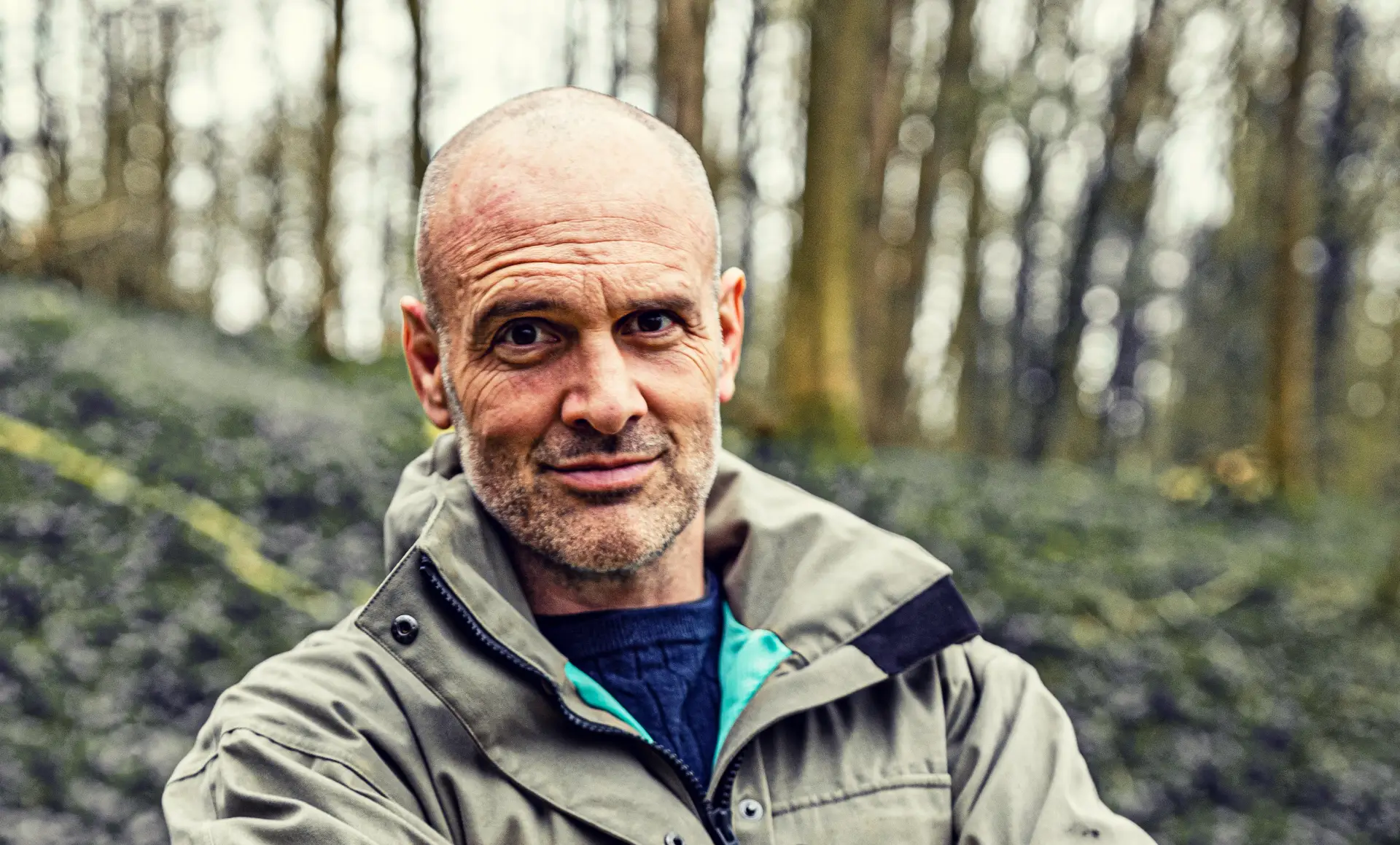
Peterborough-born explorer Ed Stafford achieved one of the great modern feats of exploration when he became the first person to walk the entire length of the Amazon River. The journey took 860 days. Since then, the former Army captain has built an international career exploring extreme environments, testing survival skills and bringing remote places and communities to television audiences around the world.
Life and career in dates
- 1975 Born in Peterborough on 26 December
- 1997 Graduates in Geography from Newcastle University
- 1998 Begins officer training at the Royal Military Academy Sandhurst
- 1999 Commissioned into the Devonshire and Dorset Regiment
- 2002 Leaves the British Army as a captain and develops a career leading expeditions
- 2008 Sets out to walk the entire length of the Amazon River
- 2010 Reaches the Atlantic after 860 days and becomes the first person to walk the Amazon from source to sea
- 2010 Named among National Geographic's Adventurers of the Year
- 2011 Receives the Royal Scottish Geographical Society's Mungo Park Medal
- 2013 Survives 60 days alone on an uninhabited Pacific island for Naked and Marooned
- 2019 Lives on Britain's streets for Channel 4's 60 Days on the Streets
- 2020s Continues exploring, writing and presenting programmes for Discovery and Channel 4
Born in Peterborough
Edward James Stafford was born in Peterborough on Boxing Day 1975.
His connection with the city begins at birth rather than through his upbringing. Stafford was adopted as a baby and raised in Leicestershire, where his childhood developed away from Peterborough.
That distinction matters.
Discover Peterborough's people are not limited to those who spent their whole lives within the city. Peterborough has been a starting point for people whose lives subsequently spread across Britain and around the world.
Few journeys beginning here have travelled further than Stafford's.
Born in Peterborough, Ed Stafford would eventually make his name by completing a journey that nobody before him had managed on foot.
Geography and the Army
Stafford's interests in landscape and the outdoors developed during his youth in Leicestershire.
He studied Geography at Newcastle University, graduating in 1997.
The following year he entered the Royal Military Academy Sandhurst and trained as an Army officer.
In 1999 he was commissioned into the Devonshire and Dorset Regiment.
Stafford eventually rose to the rank of captain before leaving the Army in 2002.
Military life provided experience in leadership, planning, endurance and decision-making under pressure, but Stafford did not remain on a conventional military career path.
He increasingly wanted to work outdoors and overseas.
Becoming an explorer
After leaving the Army, Stafford began leading expeditions and working on projects in remote environments.
The work took him into jungles and developing regions and gave him practical experience of managing groups far from the infrastructure most people take for granted.
Exploration was changing too.
The great blank spaces on maps had largely disappeared. Satellites could photograph almost every part of the planet and aircraft could cross continents in hours.
Modern exploration therefore required a different question.
What had still never been done?
Stafford found an answer in South America.
Walking the Amazon
The Amazon is one of the defining geographical features of the planet.
Its river system cuts across South America from the Andes to the Atlantic, passing through immense areas of rainforest and some of the most remote inhabited landscapes on Earth.
People had travelled its waters.
Nobody had successfully followed its complete length on foot.
Stafford decided to try.
On 2 April 2008 he began his expedition from the Pacific side of Peru, travelling towards the recognised source region of the Amazon near Nevado Mismi before turning east.
From there, the objective was brutally simple:
Walk to the Atlantic.
The reality was anything but simple.
Stafford had to negotiate mountains, rainforest, flooded landscapes, rivers, difficult terrain, tropical disease, insects, shortages of food and money and the constant challenge of explaining his intentions to communities along the route.
An expedition he initially imagined might take around a year stretched into more than two.
860 days on foot
Stafford's original expedition partner left after the first few months.
Later in Peru he was joined by forestry worker Gadiel “Cho” Sánchez Rivera.
Cho initially intended to accompany Stafford only briefly.
He stayed for most of the remaining journey.
Walking the Amazon
Guinness World Records calculates the river route Stafford walked at 4,345 miles. Including his approach from the Pacific to reach the source added another 145 miles.
More remarkable than the distance was the duration.
Days became weeks. Weeks became months. Seasons changed and Stafford simply continued east.
He also filmed much of the journey himself, creating an intimate visual record rather than travelling with a conventional television crew.
On 9 August 2010, after two years, four months and eight days, Stafford reached the mouth of the Amazon in Brazil.
The walk was complete.
9 August 2010
FirstEd Stafford became the first person recorded by Guinness World Records to walk the entire length of the Amazon River.
Into the record books
The achievement immediately placed Stafford among Britain's best-known contemporary explorers.
Guinness World Records formally recognised the expedition as the first complete walk of the Amazon River.
National Geographic selected Stafford as one of its Adventurers of the Year for 2010.
The following year the Royal Scottish Geographical Society awarded him its prestigious Mungo Park Medal, an honour given for outstanding contributions to geographical knowledge through exploration or adventure.
The self-shot footage became the television documentary Walking the Amazon, while Stafford later turned the experience into a book.
Recognition
Survival television
Completing the Amazon did not lead Stafford towards a quieter life.
Instead, television provided a way to explore a different question.
How little does a human being actually need to survive?
For Naked and Marooned, Stafford was left alone on the uninhabited island of Olorua in Fiji for 60 days.
He had no food, no tools and no conventional survival equipment.
Apart from emergency equipment and cameras needed to document the experiment, he effectively had to begin with nothing.
Naked and Marooned
60 daysAlone on an uninhabited Pacific island, without food, tools or a camera crew.
The resulting programme established Stafford as a distinctive kind of survival presenter.
His programmes were not simply demonstrations of expert technique.
Much of their appeal came from watching exhaustion, loneliness, frustration and uncertainty unfold through a camera Stafford was operating himself.
Discovery subsequently sent him into environments ranging from African wetlands and South American grasslands to deserts, mountains and tropical forests.
Series including Marooned, Into the Unknown, Left for Dead and First Man Out developed an international audience.
Beyond survival
Stafford's television career gradually moved beyond the conventional survival genre.
In 2019, Channel 4's 60 Days on the Streets placed him in London, Manchester and Glasgow, living without money, food or shelter alongside people experiencing homelessness.
Later projects used a similar immersive approach to explore Gypsy and Traveller communities and life on some of Britain's most disadvantaged housing estates.
The environments were now social rather than wilderness landscapes, but the method remained recognisable.
Stafford entered an unfamiliar world, lived within it, filmed his own experiences and tried to understand it from the inside.
His work as an author has developed alongside television, covering his Amazon journey, survival, expeditions and the psychological experiences behind adventure.
Today he continues to work internationally as an explorer, writer, television presenter and speaker.
Stafford and Peterborough
Ed Stafford's relationship with Peterborough is different from that of someone such as Frank Perkins, Tommy Robson or Lily Violet Bryant.
He was born here, but he did not grow up here and his career was not built here.
That should not be disguised.
Yet it is precisely what makes the wider Peterborough People story interesting.
A city's connections are rarely contained by its boundaries.
People are born here and leave. Others arrive and make Peterborough their home. Some spend a lifetime here. Others pass through at a decisive moment.
Together they create a much larger network of Peterborough stories.
From Peterborough to the Amazon
1975Born in Peterborough.
↓ British ArmyTrains as an officer and rises to captain.
↓ 860 daysWalks from the source region of the Amazon to the Atlantic.
↓ World firstEnters the Guinness World Records.
Stafford's achievement also gives Peterborough an unexpected place in the modern history of exploration.
The city that produced engineers, sports pioneers, scientists and broadcasters can also claim the birthplace of the first person ever to walk the length of the world's greatest river.
Ed Stafford's story begins in Peterborough and stretches, quite literally, across a continent.