
At a glance
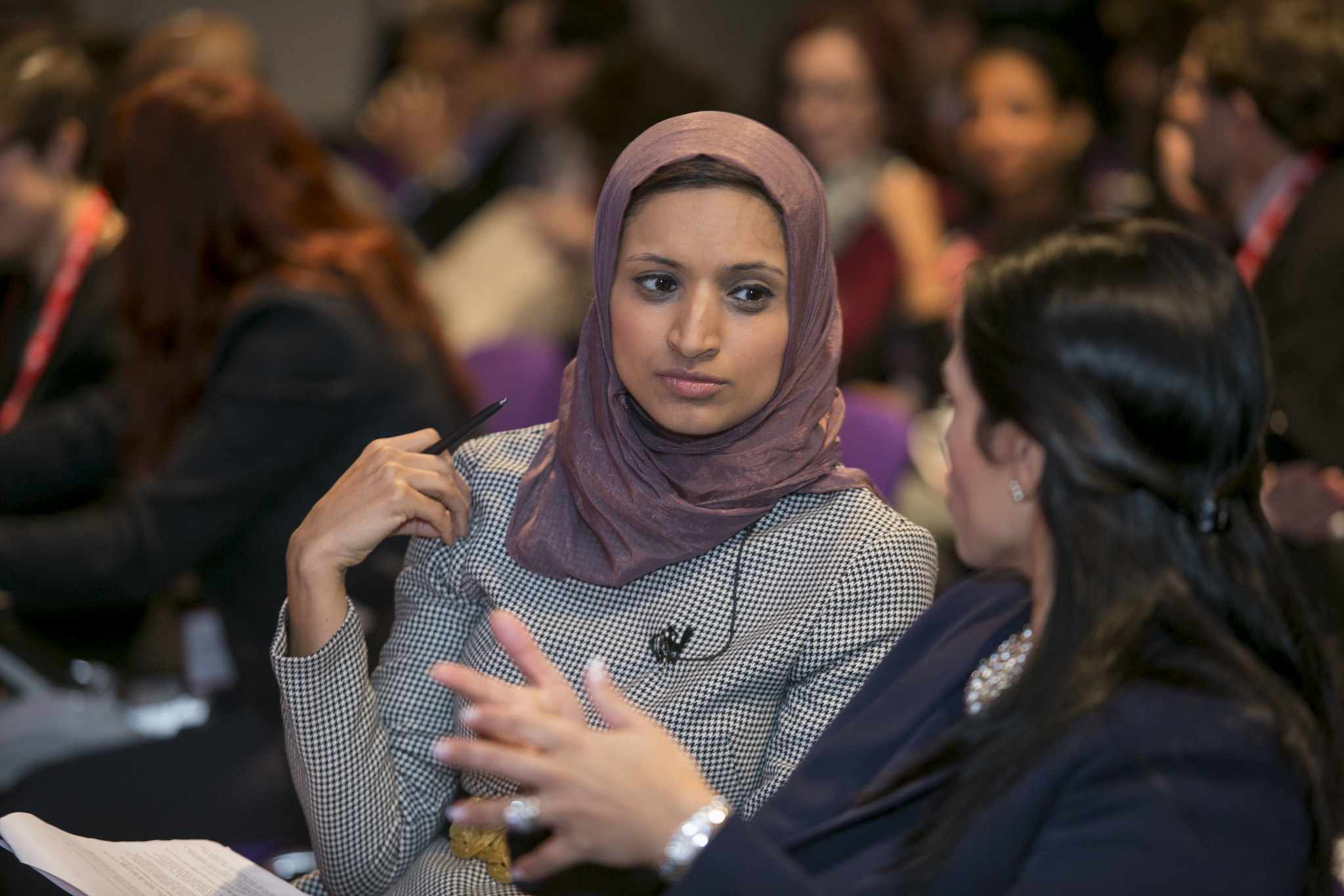
Fatima Manji is a Peterborough-born journalist, broadcaster and author whose career has taken her from local reporting in the East of England to some of the biggest national and international stories of the twenty-first century. In 2016 she became the first hijab-wearing journalist to present a national television news bulletin in Britain, but her significance extends far beyond that landmark. Her career has been built around reporting, questioning power and widening the range of voices through which Britain understands both itself and the wider world.
Life and career in dates
- 1985 Born in Peterborough on 28 November.
- 1990s Grows up in Netherton and attends Jack Hunt School.
- 2000s Studies politics at the London School of Economics.
- BBC Joins the BBC through its trainee scheme and reports for BBC Radio Cambridgeshire and BBC Look East.
- 2012 Joins Channel 4 News as a reporter.
- 2015 Chairs Channel 4's first Youth Leaders' Debate ahead of the General Election.
- 2016 Becomes Britain's first hijab-wearing national television newsreader.
- 2016 Named Media Personality of the Year at the Asian Media Awards.
- 2021 Publishes Hidden Heritage, exploring overlooked connections between Britain and the wider world.
- 2024 Leaves Channel 4 News after twelve years.
A Peterborough beginning
Fatima Manji was born in Peterborough on 28 November 1985 and grew up in Netherton, on the western side of the city. She attended Jack Hunt School, one of Peterborough's large comprehensive schools, and was involved in community life around Burton Street Mosque.
Those beginnings matter because the career that followed did not begin in the traditional centres of Britain's national media. It began in a diverse English city whose communities, industries, migration stories and changing identity would provide a remarkably appropriate background for somebody who would later spend much of her professional life examining how Britain understands itself.
Manji has said that the ambition to become a journalist appeared extraordinarily early. By the age of eight, she had decided that she wanted a career which placed her close to important events and allowed her to ask questions about them.
“I wanted to be where history is made.”
Fatima Manji, reflecting on her childhood ambition to become a journalistAfter Jack Hunt School she studied politics at the London School of Economics. The move took her from Peterborough into one of Britain's leading universities for politics and the social sciences, but the route into broadcasting would soon bring her back towards the region where she had grown up.
Becoming a journalist
Journalism offered Manji something that suited the curiosity she had identified as a child. It placed her close to politics and public affairs, but also required her to understand the consequences of decisions far beyond Westminster.
She joined the BBC through a trainee scheme and developed as a reporter in the East of England. It was the sort of grounding that has shaped many significant British journalists: local stories, communities, public services and people whose experiences rarely arrive neatly packaged for television.
Rather than entering national broadcasting fully formed, Manji learned the profession by reporting from the places where national debates become everyday realities.
Learning the craft at the BBC
Her early BBC work included reporting for BBC Radio Cambridgeshire before becoming a reporter, presenter and video journalist for BBC Look East.
Among the subjects she investigated were hate crime against migrant workers and pressures surrounding housing. These were not abstract questions in the East of England. They were issues being experienced directly by communities across places such as Peterborough and the surrounding agricultural economy.
The work showed an emerging pattern in Manji's journalism: an interest in what happens when large political, economic or social forces reach individual lives.
Her reporting also became international. She contributed to the BBC World Service from Sarajevo in Bosnia, widening a career that had begun in regional broadcasting into foreign reporting.
Local
Reporting rooted in communities across Cambridgeshire and the East of England.
National
Political interviews, investigations and major stories for a UK-wide audience.
International
Reporting on conflict, migration and the human consequences of global events.
Channel 4 News
In 2012 Manji joined Channel 4 News, the beginning of a twelve-year association with one of Britain's most distinctive television news programmes.
Her work ranged across domestic politics, international affairs, migration and conflict. She reported from Europe's borders during the migration crisis, interviewed Iraqis displaced by ISIS and worked on investigations involving subjects ranging from security services to members of the Saudi royal family.
It was journalism that frequently involved people caught between powerful institutions and events largely beyond their control. Alongside foreign reporting came political interviewing and studio presentation, placing Manji increasingly prominently within Channel 4's national news coverage.
In 2015 she chaired Britain's first televised Youth Leaders' Debate, bringing together the youth wings of seven political parties ahead of the General Election. It reflected another recurring theme in her work: the belief that news should contain a broader range of participants, rather than relying continually upon the same established voices.
A national first
In March 2016 Manji reached a milestone in British broadcasting when she became the country's first hijab-wearing journalist to present a national television news bulletin.
The importance of the moment lay partly in how ordinary it was. Manji was not appearing as a commentator invited to discuss faith or identity. She was simply presenting the news.
That distinction became more significant later in 2016 when former newspaper editor Kelvin MacKenzie publicly questioned whether Manji should have presented Channel 4's coverage of the terrorist attack in Nice because she was wearing a hijab.
The argument generated a major debate about journalism, religious identity and representation. Channel 4 and ITN defended Manji, while the controversy attracted more than 1,700 complaints to the press regulator IPSO.
For Manji, the underlying issue was larger than one newspaper column. It raised the question of whether journalists from minority backgrounds could ever simply report the news, or whether their identity would continually be treated as something requiring explanation.
Why the journalism matters
It would be easy to reduce Manji's career to the historic significance of appearing on screen wearing a hijab. Doing so would miss much of what makes her work important.
Her reporting repeatedly asks whose experiences become part of the public record. Whether dealing with migration, conflict, political power or social division, she has often concentrated on people who might otherwise appear merely as statistics within a much larger story.
That approach connects directly with a wider question facing modern journalism: who gets to describe Britain?
A newsroom inevitably makes choices. It decides which places matter, which voices deserve attention, which experiences are typical and which stories become part of the national conversation. The people making those decisions therefore matter too.
Manji has argued for newsrooms that more accurately reflect the populations they report upon. Her own career provides a particularly visible example of why that matters, but the principle extends far beyond any single journalist or community.
Manji and Peterborough
Fatima Manji's connection with Peterborough is not a passing biographical detail. The city is where she was born, where she grew up and where she went to school.
It is also where the first stage of the journey towards national journalism makes particular sense. Peterborough is a city where local and international stories constantly overlap. Railway connections, industrial recruitment, migration, religion, politics and rapid demographic change have all contributed to a place whose identity cannot easily be explained through a single narrative.
Manji emerged from that environment to become a journalist whose career has repeatedly examined precisely those kinds of connections.
Peterborough
East of England
international journalism
There is another reason her story belongs within Peterborough People. High-profile careers can sometimes make achievement appear remote from the everyday places in which young people grow up. Manji's story works in the opposite direction.
A pupil at a comprehensive school in Netherton went on to question politicians on national television, report from international crises, write about Britain's history and change the visual language of British broadcasting.
That journey makes her not simply a nationally recognised journalist who happens to have been born in Peterborough, but part of the modern story of the city itself.
A changing idea of who tells Britain's story
Fatima Manji left Channel 4 News in 2024 after twelve years with the programme, closing one major chapter in a career that had moved from regional BBC reporting to the centre of national television news.
The significance of that career is found partly in the stories she reported and partly in the space she occupied while reporting them.
Her presence challenged an old assumption about what a national television newsreader was expected to look like. Her journalism, however, made the more substantial argument: that representation is not simply about visibility, but about who is trusted to ask questions, investigate institutions, interpret events and participate in constructing the national story.
Her work as an author has pushed that idea further, asking not only who tells Britain's present but how Britain chooses to remember its past.
Peterborough produced a journalist who went on to change not simply who appeared on British television news, but who could be seen telling Britain's story.
From Netherton and Jack Hunt School to BBC regional journalism, Channel 4 News and international reporting, Fatima Manji's career is another reminder that nationally significant stories can begin in Peterborough.
Discover more of the writers, artists, innovators, campaigners, broadcasters and remarkable lives connected with the city through Peterborough People.