

The Great Fen at a glance
- What
- Landscape-scale peatland and wetland restoration project
- Where
- Between Peterborough and Huntingdon in Cambridgeshire
- Vision
- Approximately 3,700 hectares or 14 square miles
- Connecting
- Holme Fen and Woodwalton Fen National Nature Reserves
- Habitats
- Peatland, reedbeds, wet meadows, woodland and open water
- Suggested start
- Great Fen Information Point at New Decoy
A landscape of immense skies, dark peat, reed-fringed water and recovering wildlife. The Great Fen is reconnecting two precious fragments of ancient fenland while creating a more resilient landscape for nature, people and surrounding communities.
More than 99 per cent of the ancient wild fens disappeared as the landscape was drained and converted to agriculture. Woodwalton Fen and Holme Fen survived as isolated remnants, preserving habitats and species that had vanished from much of the surrounding countryside.
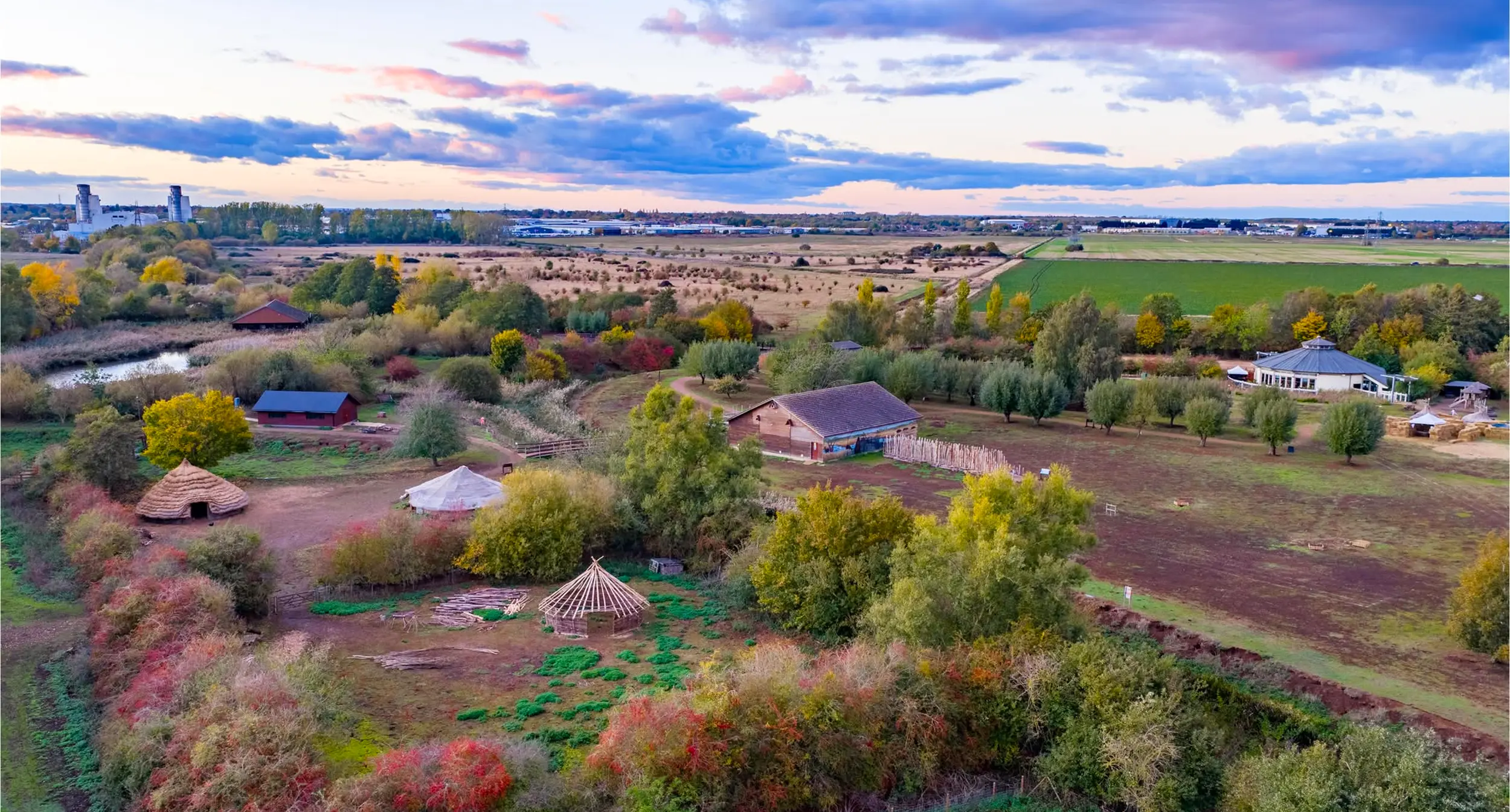
The Great Fen vision seeks to reconnect and enlarge these reserves within a landscape of approximately 3,700 hectares. Former farmland is being restored to a mosaic of wet meadows, reedbeds, open water, woodland and carefully managed grazing land, allowing wildlife to move through a much larger and more resilient habitat.
At Woodwalton Fen, paths wind through reeds, dykes and meres within an internationally important National Nature Reserve protected through the work of conservation pioneer Charles Rothschild. Holme Fen offers silver birch woodland, wetland habitats and the famous Holme Post, marking land 2.75 metres below sea level.
This is also a landscape shaped by human decisions. Drainage caused peat to shrink and release stored carbon, while leaving the surrounding area increasingly vulnerable to environmental change. Rewetting the land helps protect the remaining peat, creates space for floodwater and rebuilds habitat for wildlife.
The Great Fen forms part of the wider story of Peterborough’s Fen Edge, where engineering, farming, drainage and conservation have continually reshaped the relationship between people and water.
What to expect
Woodwalton Fen
Explore reedbeds, meres, dykes and fen vegetation within an internationally important National Nature Reserve.
Holme Fen
Walk through extensive silver birch woodland and discover the Holme Post at Britain’s lowest land point.
New Decoy
Maps and interpretation introduce the wider project, with routes leading through restored wet meadows and open fenland.
Ramsey Heights
The Wildlife Trust Countryside Centre provides an introduction to fen habitats, local heritage and the restoration project.
Fenland wildlife
Look for marsh harriers, water voles, dragonflies, butterflies, wetland plants and other species associated with the Fens.
Restoration in progress
See farmland gradually becoming wet grassland, reedbed and open water as habitats reconnect across the landscape.
Planning your visit
- A landscape, not one site
- The Great Fen includes several reserves, information points, trails and restoration areas with separate access arrangements.
- Suggested starting point
- New Decoy Information Point, Holme Road, near Holme, Peterborough, PE7 3PW.
- Great Fen team
- The Wildlife Trust Countryside Centre is on Chapel Road, Ramsey Heights, Cambridgeshire, PE26 2RS.
- Before visiting
- Check the official website for current trail conditions, diversions, flooding, restoration work and reserve access.
- Admission
- Self-guided access to the reserves and trails is normally free. Donations support conservation work.
- By car
- Driving is the most practical way to reach the different Great Fen visitor locations.
- Parking
- New Decoy and Ramsey Heights have car parks. Holme Fen uses laybys, while Woodwalton Fen has informal bank-side parking.
- Public transport
- Public transport is limited. Check connections from Peterborough, Huntingdon and Ramsey before travelling.
- Walking trails
- Waymarked trails range from short introductory walks to longer routes linking restored landscapes and nature reserves.
- Footwear
- Wear sturdy, waterproof footwear. Natural paths can be muddy, uneven, wet or slippery.
- Water and flooding
- Deep drains border some paths, and parts of the landscape may flood. Always follow closures and diversion signs.
- Dogs
- Dogs are not permitted at Woodwalton Fen. Rules differ elsewhere, so check each reserve before visiting.
- Accessible visits
- Ramsey Heights offers an introductory trail and accessible facilities. Contact the team about mobility equipment and route suitability.
- Visitor facilities
- Facilities vary significantly. Toilets and visitor support are concentrated at Ramsey Heights rather than throughout the landscape.
- Protect the peat
- Fires, barbecues and camping are prohibited at Holme Fen because dry peat can ignite and burn below ground.
- Contact
- Call 01487 815524 or email info@greatfen.org.uk.
Map and starting point
The map is centred on the Great Fen Information Point at New Decoy. The Great Fen extends across a much larger landscape, including Holme Fen, Woodwalton Fen and Ramsey Heights.
Explore more of Peterborough
Fen Edge
Explore the landscape where drainage, farming, wildlife and open fenland skies meet.
Explore the landscapeFlag Fen Archaeology Park
Discover how prehistoric communities lived beside the wetlands of the Peterborough Fens.
View the listingPeterborough History
Follow the changing relationship between landscape, water and human settlement across millions of years.
Explore the timelinePeterborough Green Wheel
Explore a network of walking and cycling routes connecting the city with its surrounding countryside.
Discover the routesTrail access, parking, ground conditions and facilities vary across the Great Fen and can change following flooding or conservation work. Check the official website before travelling and follow all signs on site.