


Voice of the City
On Lower Bridge Street, close to the River Nene, one of Peterborough’s most distinctive pieces of public art tells the story of a craftsman whose work once gave voice to communities across England.
Voice of the City commemorates Henry Penn (1685–1729), the celebrated Peterborough bellfounder whose foundry once stood close to this spot.
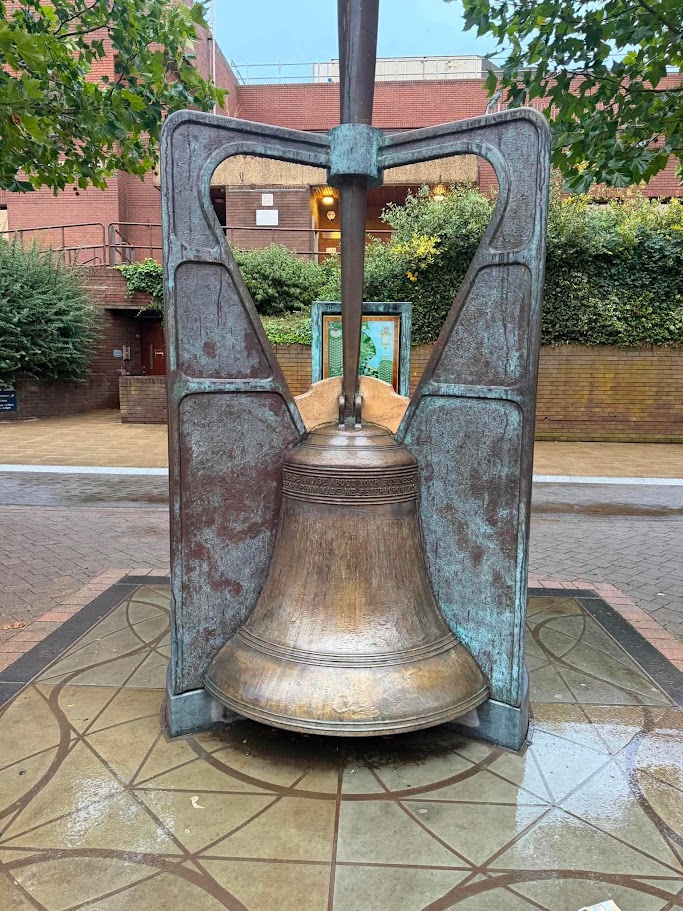
Created by artist Stephen Broadbent and installed in 2017, the bronze and stone sculpture transforms the centuries-old process of bell founding into a striking piece of contemporary public art.
A bell being born
At first glance, the sculpture appears to be an abstract interpretation of a bell. Look more closely and the process behind it begins to emerge.
The bell
The central form represents a bell emerging from its stone mould, capturing the point at which an object created through heat, metal and craftsmanship begins to take recognisable form.
The casting process
The form rising above the bell evokes the pouring of molten bronze, recalling the intense industrial process that once took place nearby at Henry Penn’s Peterborough foundry.
The sound
Patterns worked into the sculpture reference sound and vibration, connecting the physical act of casting a bell with the voice it would eventually produce.
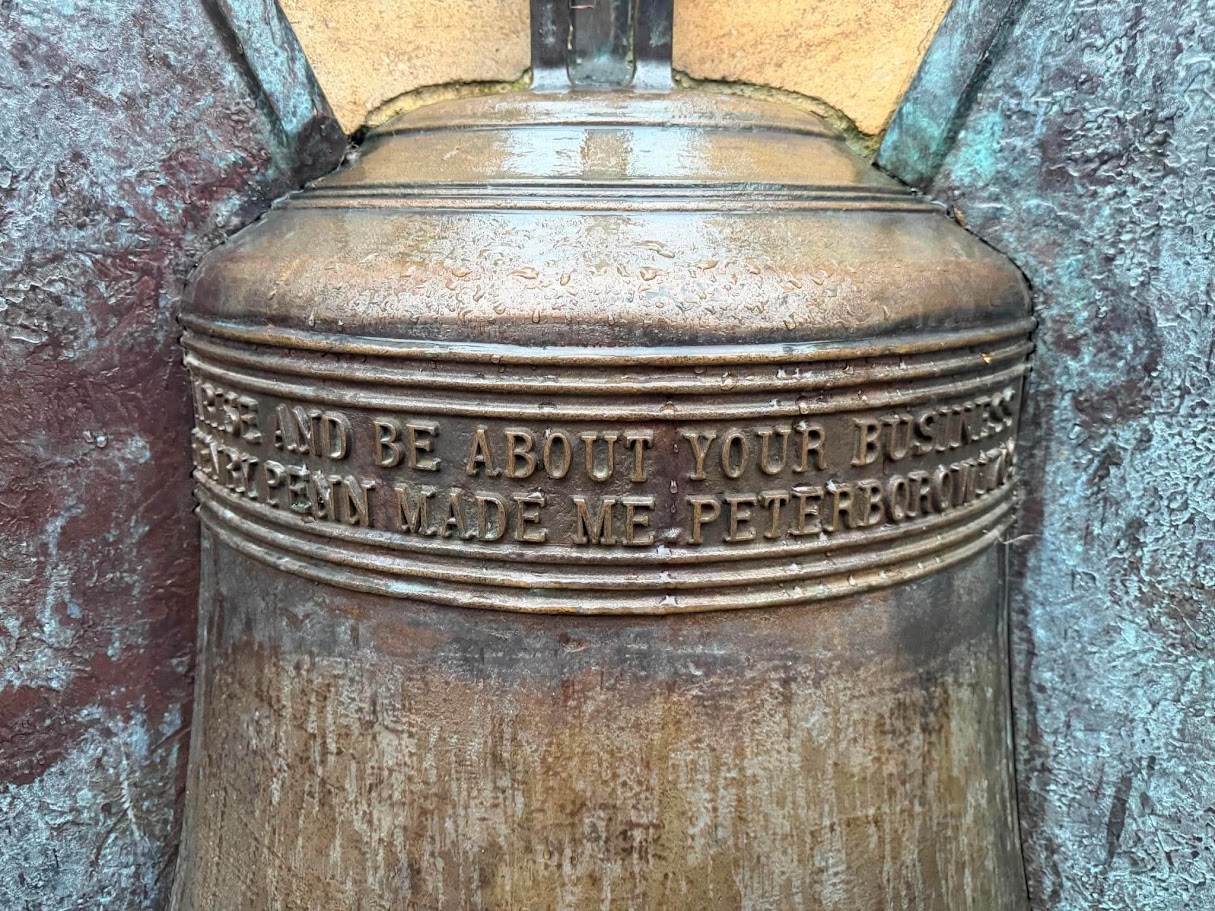
Cast into the bronze are the words “Henry Penn Made Me”, a playful echo of the inscriptions Penn placed on his own bells more than 300 years ago.
The bellfounder behind the sculpture
Henry Penn established his bell foundry close to Bridge Street and became one of the most significant English bellfounders of the early eighteenth century.
More than 250 bells are associated with his Peterborough workshop, supplied to churches, country houses and communities across a wide area of England.
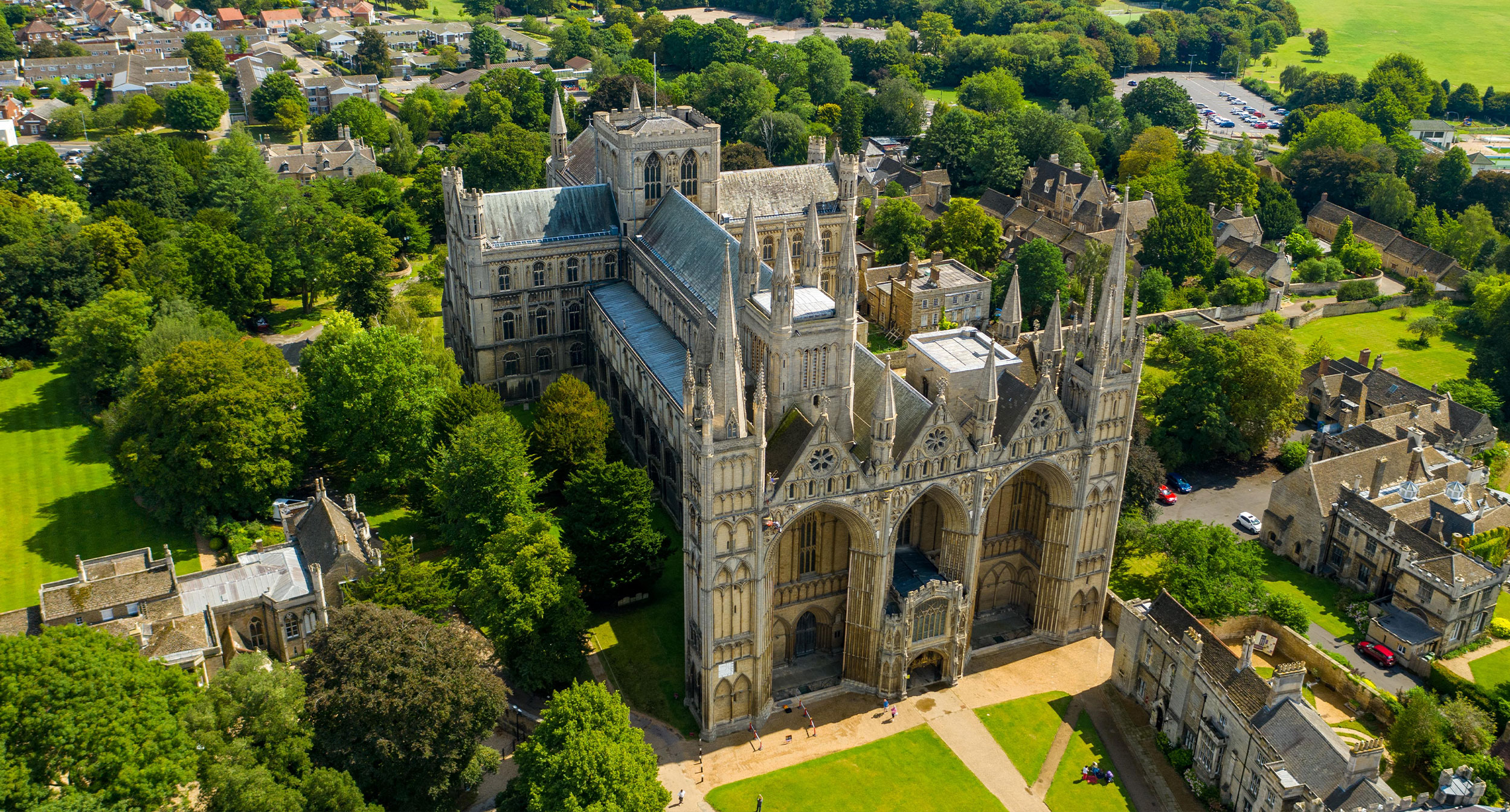
His most important local commission came in 1709 when, still only in his twenties, Penn cast a ring of ten bells for Peterborough Cathedral.
The largest survives as the Cathedral’s City Bell, continuing to strike the hours over Peterborough more than three centuries after it was made.
A sculpture rooted in its location
Voice of the City has not been placed here by accident. Henry Penn’s foundry stood nearby, making this part of Peterborough one of the centres of his remarkable business.
The works were situated close to a small waterway known as Bell Dyke. Once cast, heavy bells could be moved from the foundry towards the River Nene and transported onwards by water.
That industrial history still survives quietly in the modern cityscape. Nearby Foundry Walk and Henry Penn Walk preserve the memory of an industry whose products travelled far beyond Peterborough.
The voice of a community
Bells were once among the most important shared sounds in everyday life. They marked the passing hours, summoned communities together, announced celebrations, sounded warnings and became familiar voices heard across towns and villages.
Voice of the City therefore commemorates more than Henry Penn himself. It connects Peterborough with the craft, movement, sound and community life embodied by the bells that left his foundry.
The connection is particularly powerful here because one of Penn’s greatest surviving creations can still be heard only a short walk away at Peterborough Cathedral.
See the sculpture. Then listen for the real thing. Henry Penn’s City Bell still sounds above Peterborough today.
Follow the Henry Penn story
Discover the remarkable Peterborough craftsman behind the sculpture, explore his bellfounding legacy and continue the story at Peterborough Cathedral.