
Discover Peterborough · Tudor History
Two Queens.
One Cathedral.
Katharine of Aragon came to Peterborough in death and never left. Mary, Queen of Scots was brought here after her execution and lay beneath the Cathedral for twenty-five years. Their stories place Peterborough at the heart of some of the most dramatic events of the Tudor age.
Peterborough & the Tudors
A city written into royal history
Two queens came here after everything was over.
Peterborough did not host either woman at the height of her power. Its place in their stories came at the end.
In January 1536, Katharine of Aragon, first wife of Henry VIII and for more than twenty years Queen of England, was buried in the great abbey church at Peterborough.
Fifty-one years later, the body of Mary, Queen of Scots was brought from nearby Fotheringhay Castle after her execution and buried in the same church, by then Peterborough Cathedral.
Their graves occupied opposite sides of the choir. Katharine remains here. Mary remained for twenty-five years before her son, James VI of Scotland and I of England, ordered her reburial in Westminster Abbey in 1612.
For a generation, Peterborough held the graves of two of Tudor Britain’s most famous queens.
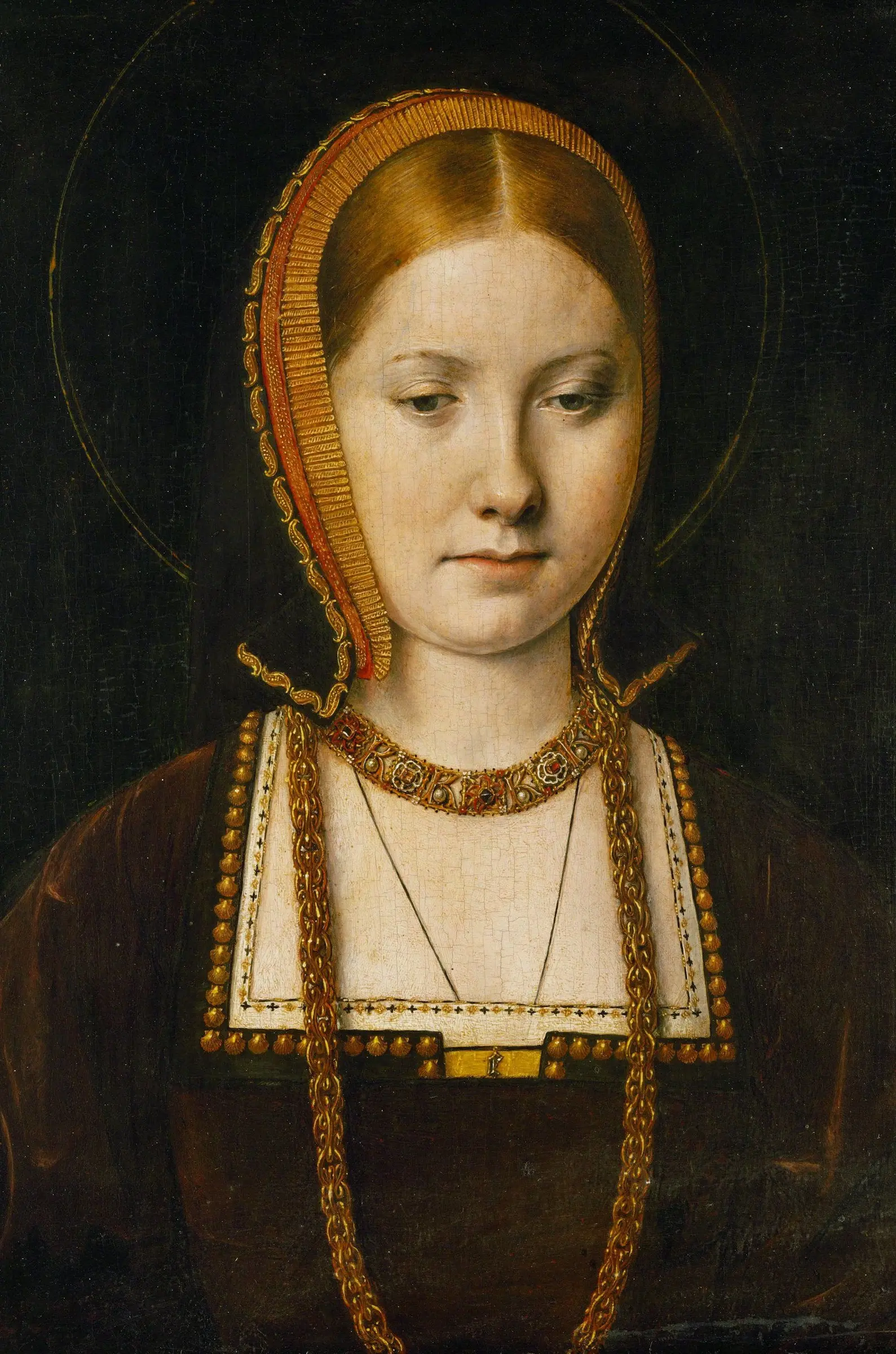
Queen I · 1536
Katharine of Aragon
A queen cast aside. A queen Peterborough kept.
Katharine’s burial made Peterborough part of the story of Henry VIII’s break with Rome.
Born in 1485, the daughter of Ferdinand of Aragon and Isabella of Castile, Katharine came to England to marry Prince Arthur. After Arthur’s death she later married his younger brother, Henry VIII, in 1509.
Their marriage lasted for more than two decades. Their surviving daughter became Mary I, but the absence of a surviving male heir helped drive Henry’s determination to end the marriage and marry Anne Boleyn. The resulting struggle became entangled with the English Reformation.
Katharine refused to accept that she had never been Henry’s lawful queen. Separated from her daughter and increasingly isolated, she spent her final months at Kimbolton Castle, where she died on 7 January 1536.
Explore Katharine’s Cathedral story ↗29 January 1536
The road to Peterborough
Black velvet. A thousand candles.
Katharine’s funeral was staged with extraordinary ceremony.
Henry VIII ordered that she should be buried at Peterborough Abbey, the nearest great religious house considered suitable for a woman of her rank. Her funeral procession included a coffin wagon covered in black velvet, heralds, servants carrying torches and richly coloured banners and standards.
At the abbey church, four bishops and six abbots received the body. Cathedral accounts describe the coffin lying beneath a canopy illuminated by around a thousand candles.
This was still Peterborough Abbey. Henry’s Dissolution of the Monasteries would close it only three years later. In 1541, however, the former abbey church became the cathedral of a new diocese. Katharine’s grave was therefore carried from the monastic world into the new Church of England.
Kimbolton
Katharine dies at Kimbolton Castle on 7 January 1536.
Peterborough Abbey
Henry orders burial at the great Benedictine monastery.
29 January
The elaborate funeral takes place in the abbey church.
1541
The church becomes Peterborough Cathedral. Katharine remains.
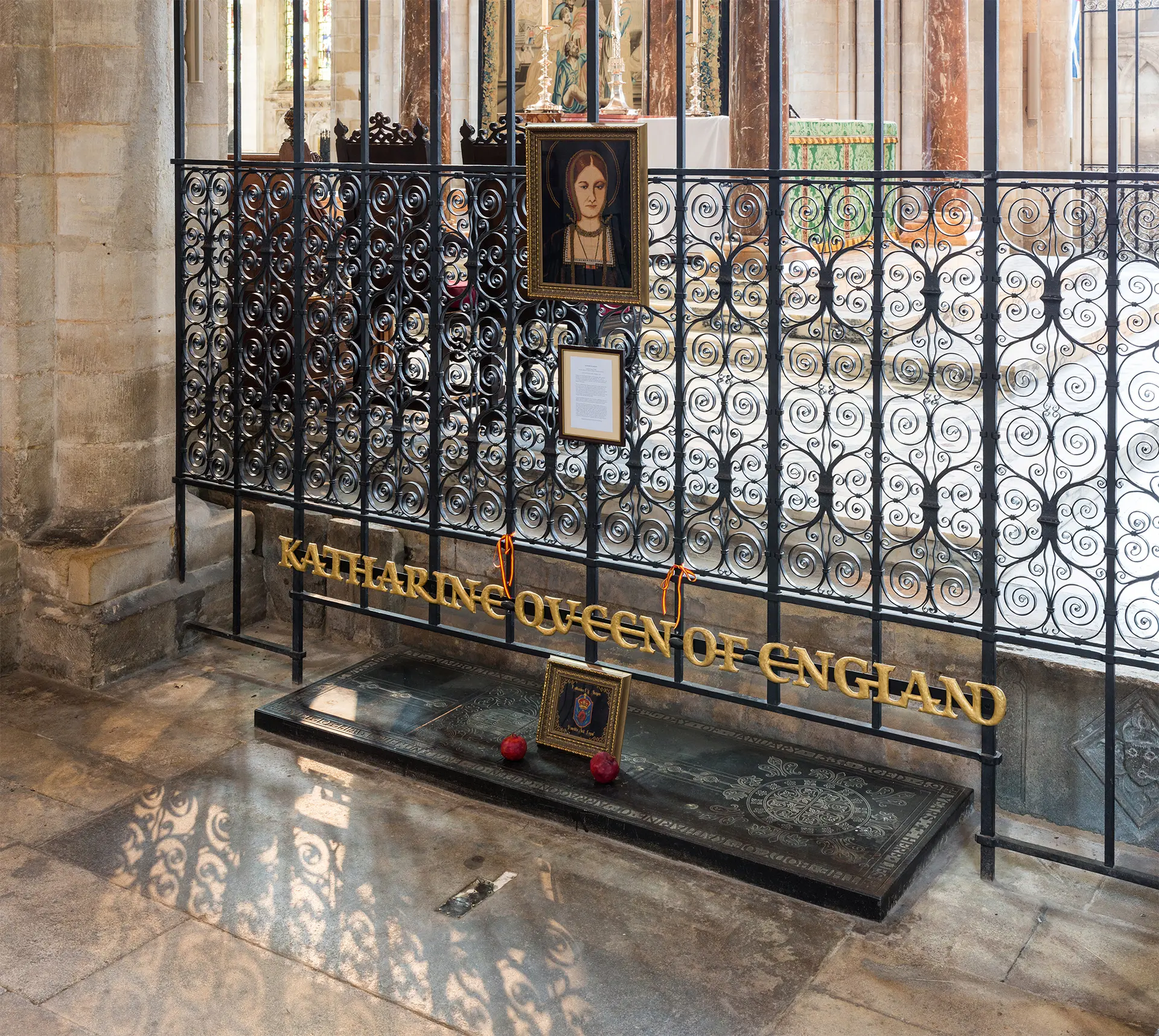
The Grave Today
“Katharine Queen of England”
The monument was lost. The memory was not.
Katharine’s original monument did not survive intact. It was damaged during the Civil War when Parliamentarian troops entered the Cathedral in 1643.
The present memorial slab dates from the late nineteenth century, created after a national appeal associated with Katharine Clayton, wife of a Cathedral canon. Today the grave is one of Peterborough Cathedral’s most visited historic sites.
Each January the Cathedral’s Katharine of Aragon commemorations return the Tudor story to the building through services, talks, tours and events.
Katharine’s emblem remains part of the visual language of her Peterborough story and is still placed at her tomb by visitors.
The abbey closes.
1541The Cathedral is born.
1587Queen II · 1587
Mary, Queen of Scots
Executed at Fotheringhay. Buried at Peterborough.
Mary’s connection to Peterborough begins only after one of the most famous executions in British history.
Queen of Scots from infancy, briefly Queen Consort of France and a dynastic rival to Elizabeth I, Mary spent almost nineteen years in English captivity.
After her implication in the Babington Plot, she was tried for treason and executed at nearby Fotheringhay Castle on 8 February 1587.
Her body did not immediately receive a public funeral. Months later it was brought by night from Fotheringhay to Peterborough. On 1 August 1587, a great heraldic funeral was held in the Cathedral.
Discover Mary at Peterborough Cathedral ↗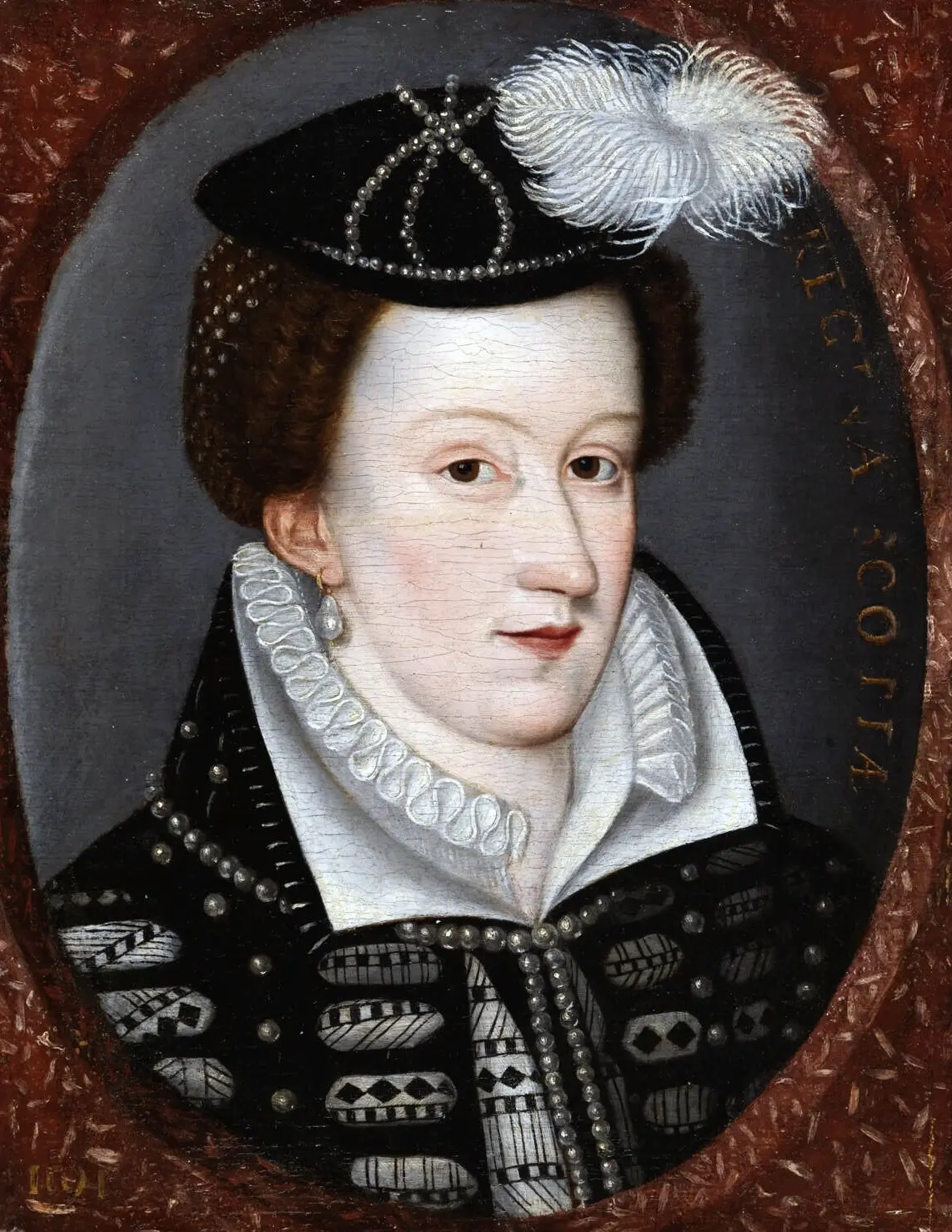
1 August 1587
A royal funeral without a living queen
Peterborough became the theatre of Mary’s burial.
From Fotheringhay
Mary’s coffin was brought to Peterborough by torchlight and placed in the Cathedral ahead of the public ceremony.
The heraldic funeral
Nobles, heralds, Scottish attendants and mourners took part in a carefully ordered funeral under Elizabeth I’s authority.
Twenty-five years
Mary remained buried in the Cathedral from 1587 until her removal to Westminster Abbey in 1612.
The Empty Grave
A royal absence that is still marked
Mary left Peterborough. Her place did not.
The site of Mary’s former grave remains marked inside the Cathedral. Her burial lay on the south side of the choir, broadly corresponding with Katharine’s grave on the north.
In 1612 Mary’s son, James VI of Scotland and I of England, ordered her remains to be translated to Westminster Abbey. There she was placed beneath a magnificent monument in Henry VII’s Lady Chapel.
Westminster Abbey records that Mary had first been buried at Peterborough “with great solemnity” and that James later ordered her remains brought to Westminster.
Follow Mary from Peterborough to Westminster ↗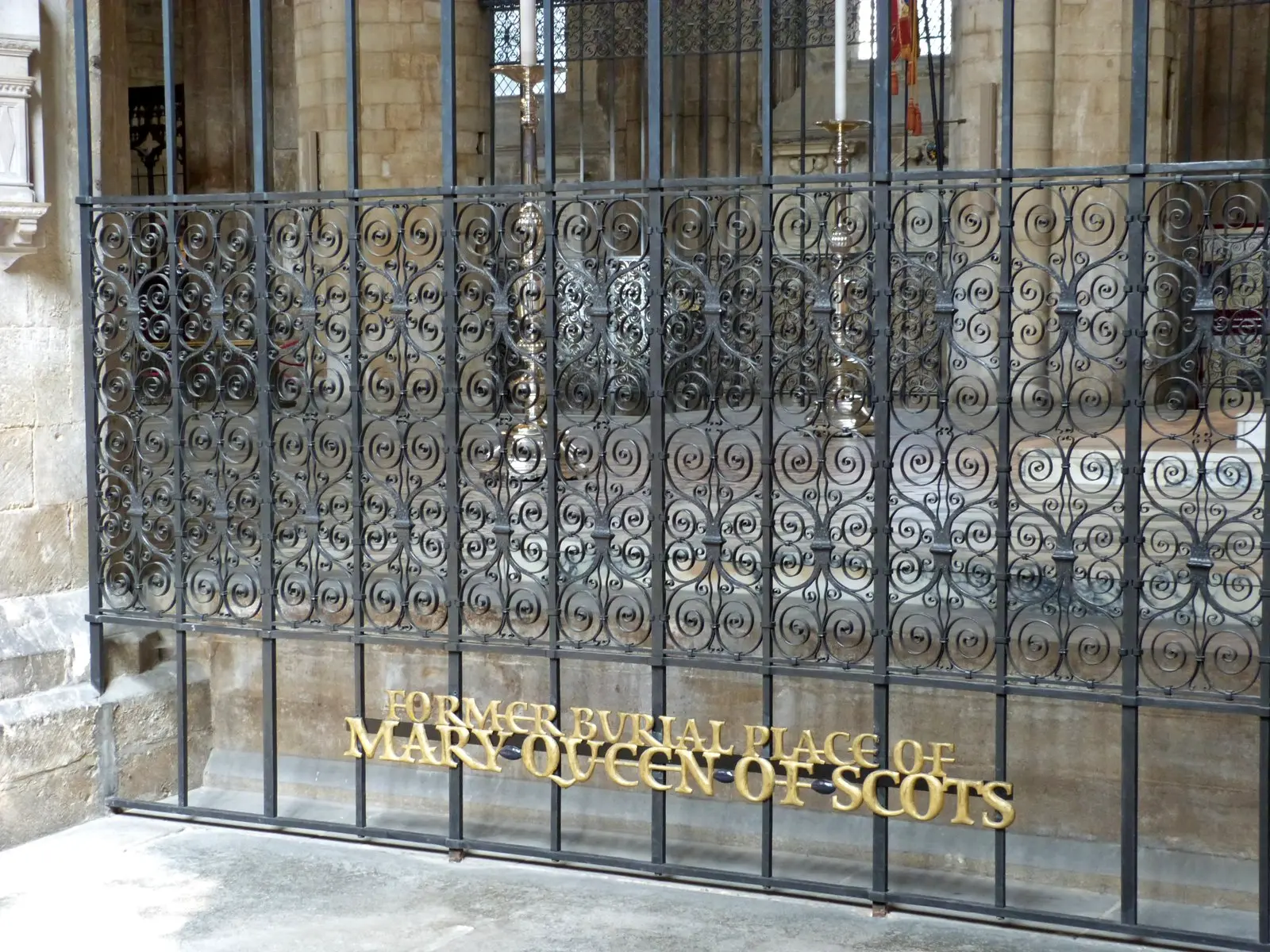
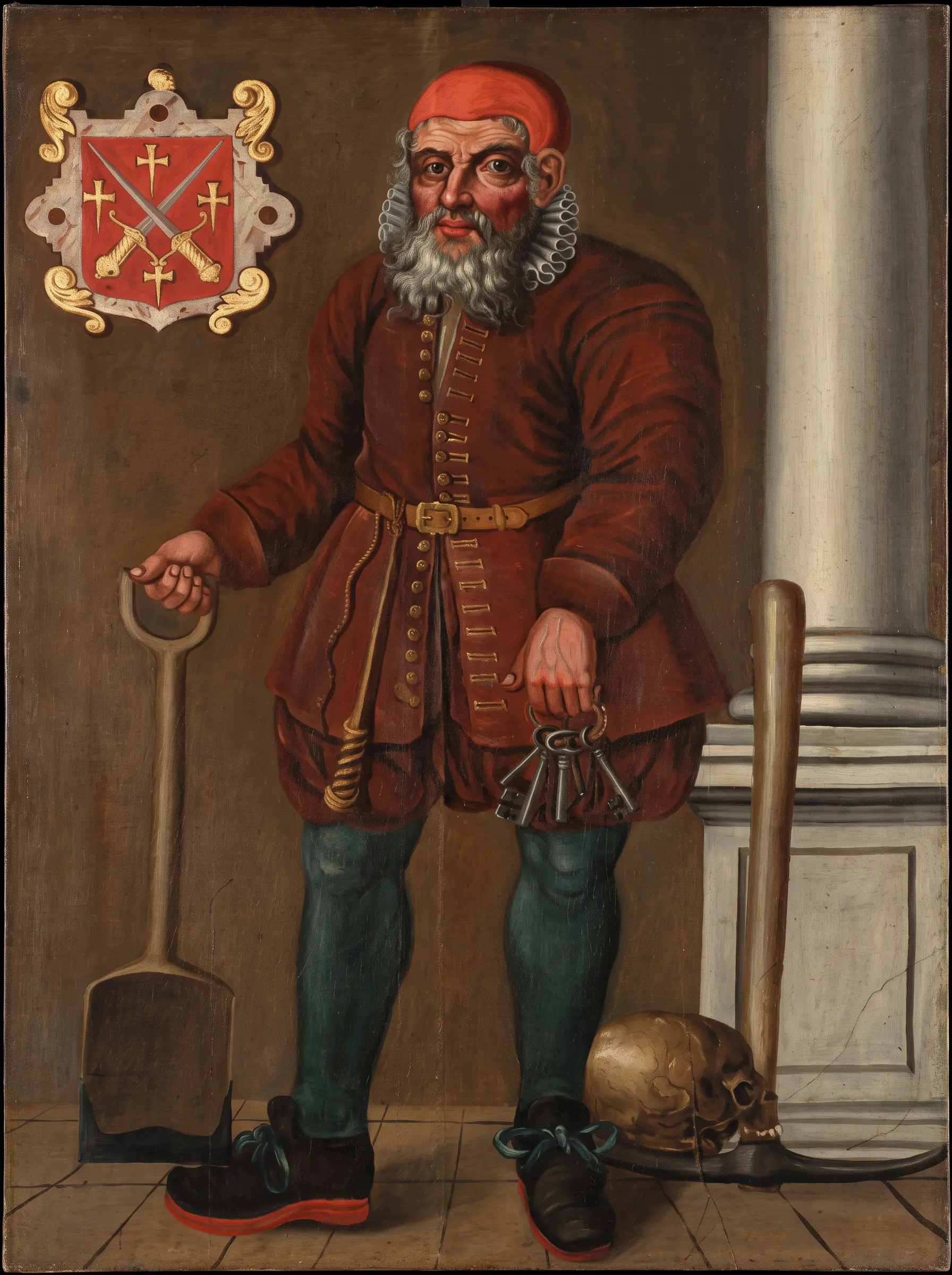
The Man Between the Queens
Robert “Old” Scarlett
One gravedigger. Two queens.
Peterborough’s strangest human link between these stories is not a king, bishop or courtier.
It is Robert Scarlett, the Cathedral sexton traditionally credited with burying both Katharine of Aragon and Mary, Queen of Scots. He died in 1594, reportedly aged 98.
His portrait and memorial remain inside the Cathedral. The verse associated with him proudly records that he had “inter’d two Queenes within this place”.
Meet Old Scarlett at the Cathedral ↗Two Queens · Two Legacies
The similarities end quickly
Peterborough remembers them differently.
The Queen who stayed
Her body remains in Peterborough. Her grave is a major visitor landmark, an annual focus of commemoration and a living connection between Peterborough, Tudor history and Spain.
1536 → todayThe Queen who left
Her body left Peterborough for Westminster, yet the former grave remains marked. Her Peterborough burial connects the city directly with Fotheringhay, Elizabeth I and the Stuart succession.
1587 → 1612The Royal Thread
Peterborough through a Tudor century
Follow the story.
Katharine becomes Queen
Katharine of Aragon marries Henry VIII and is crowned Queen of England.
The marriage is declared invalid
Henry’s struggle to end the marriage reshapes the English church and monarchy.
Katharine is buried at Peterborough
Her funeral takes place at Peterborough Abbey on 29 January.
Peterborough Abbey closes
The monastery is surrendered during the Dissolution.
Peterborough Cathedral is created
The former abbey church becomes the cathedral of a new diocese.
Mary Stuart is born
Six days later she becomes Queen of Scots.
Mary is executed and buried
Executed at Fotheringhay on 8 February, Mary is buried at Peterborough on 1 August.
Old Scarlett dies
The sexton associated with both royal burials is himself buried in the Cathedral.
Mary leaves Peterborough
James I orders his mother’s remains transferred to Westminster Abbey.
Both stories remain visible
Katharine’s tomb, Mary’s former burial place and Old Scarlett can all be encountered inside the Cathedral.
See the Story
Peterborough Cathedral
Stand between the two queens.
This is not history hidden in an archive. The physical places remain inside one of England’s great medieval cathedrals.
Katharine’s Tomb
Visit the Queen’s grave on the north side of the choir.
Mary’s Former Grave
Find the marked place where Mary lay for twenty-five years.
Old Scarlett
See the memorial to the sexton who connected the two burials.
Go Deeper
Keep following the Tudor story
From Peterborough to the wider world.
Katharine of Aragon
Explore the Cathedral’s detailed account of Katharine’s life, funeral and tomb.
Discover more ↗ 02 Peterborough CathedralMary & Old Scarlett
Discover the Cathedral’s interpretation of Mary and the sexton who buried both queens.
Discover more ↗ 03 Westminster AbbeyMary’s final tomb
Follow the story of her 1612 translation from Peterborough to Westminster.
Continue the story ↗ 04 Discover PeterboroughPeterborough Timeline
Place both royal burials within more than 3,500 years of Peterborough history.
Explore the timeline →Sources & Further Reading
Research behind this story.
- Westminster Abbey, Mary, Queen of Scots
- The National Archives, Henry VIII’s Divorce, 1527
- The Royal Household, Henry VIII
- The Royal Household, Mary, Queen of Scots
- British Library, Cotton MS Vitellius B XII: records concerning Henry VIII’s divorce from Catherine of Aragon
Dates, royal biography and burial information have been checked against Westminster Abbey, The National Archives, the Royal Household and British Library records. Historical interpretation is written for Discover Peterborough as an accessible synthesis rather than a transcription of any single source.
Discover Peterborough
Two royal graves. One extraordinary city story.
Peterborough’s history repeatedly intersects with national and international events. The burials of Katharine of Aragon and Mary, Queen of Scots are among its most powerful connections.
Explore Peterborough History →