Discover Peterborough
Peterborough's Engineering Story
From Victorian ironworks and railway workshops to Henry Royce, Peter Brotherhood, Baker Perkins and Perkins Engines, discover how generations of Peterborough engineers designed, built and powered machines used across Britain and around the world.
Before the engines came the engineers.
Peterborough did not become an engineering centre by accident. Agriculture demanded machinery. The railway brought workshops, materials, markets and skilled labour. Ironworks developed close to the historic centre, and generations of apprentices learned how to turn, measure, cast, fit and refine.
By the nineteenth century Peterborough-made agricultural machinery was travelling far beyond the surrounding countryside. Over the next hundred years the city would become associated with some of the most recognisable names in British engineering: Barford & Perkins, Peter Brotherhood, Baker Perkins, Newall and Perkins Engines.
Engineering for emperors.
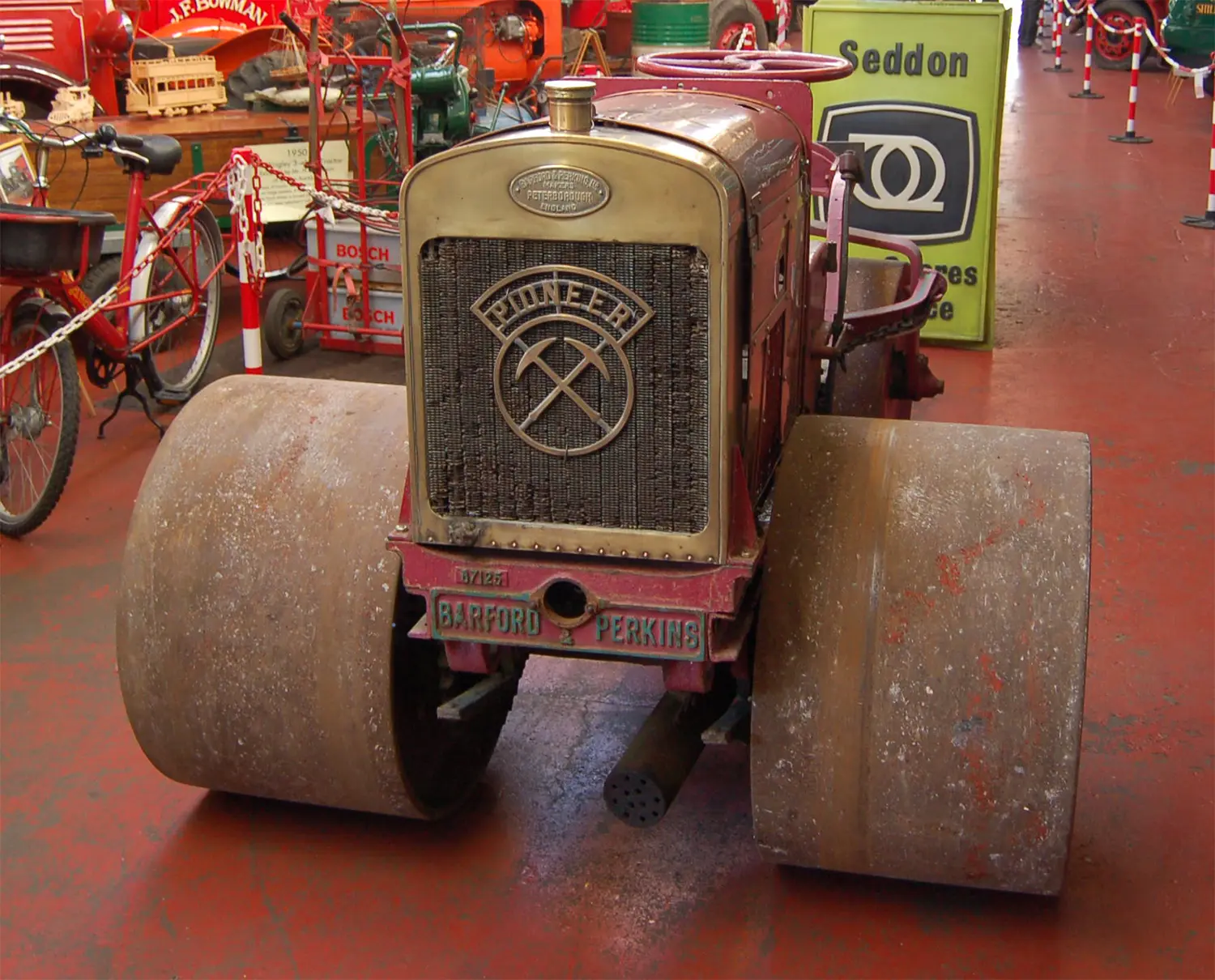
The roots reach into Peterborough's nineteenth-century ironworking tradition. The Queen Street works produced agricultural and industrial machinery at a time when mechanisation was transforming both farming and transport.
By 1869, Amies, Barford & Co was selling machinery to customers including the Pasha of Egypt and the emperors of France and Russia. Thomas Perkins later became a partner, and Barford & Perkins developed an international reputation for rollers and agricultural engineering.
Frank Perkins would eventually emerge from this family tradition. His grandfather and father were agricultural engineers, creating a direct line between Victorian Peterborough's machine shops and one of the twentieth century's great engine manufacturers.
Before Rolls-Royce, there was Royce.
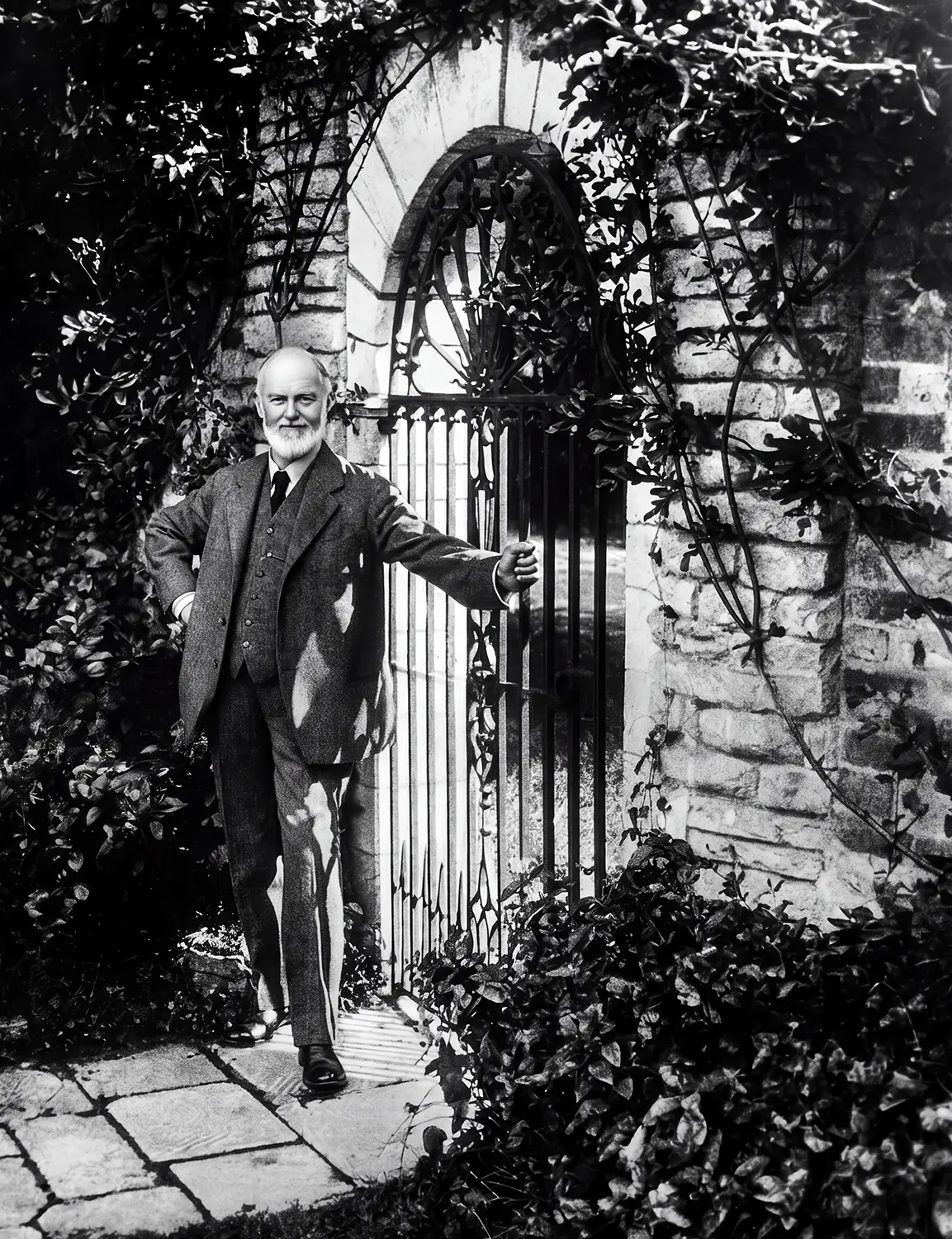
Frederick Henry Royce was born at Alwalton, just outside Peterborough, in 1863. His childhood was marked by financial hardship, but as a teenager he returned to the area for an apprenticeship with the Great Northern Railway's engineering works in Peterborough.
It was here that the young Royce began learning the discipline of practical engineering: working with tools, components and machinery, and developing the obsession with accuracy and quality that would define his later career.
Royce went on to build electrical equipment before producing his first motor car. His 1904 meeting with Charles Rolls created one of the most celebrated partnerships in engineering history, and Royce's designs would eventually extend from luxury motor cars to aircraft engines.
Power, pressure and precision.
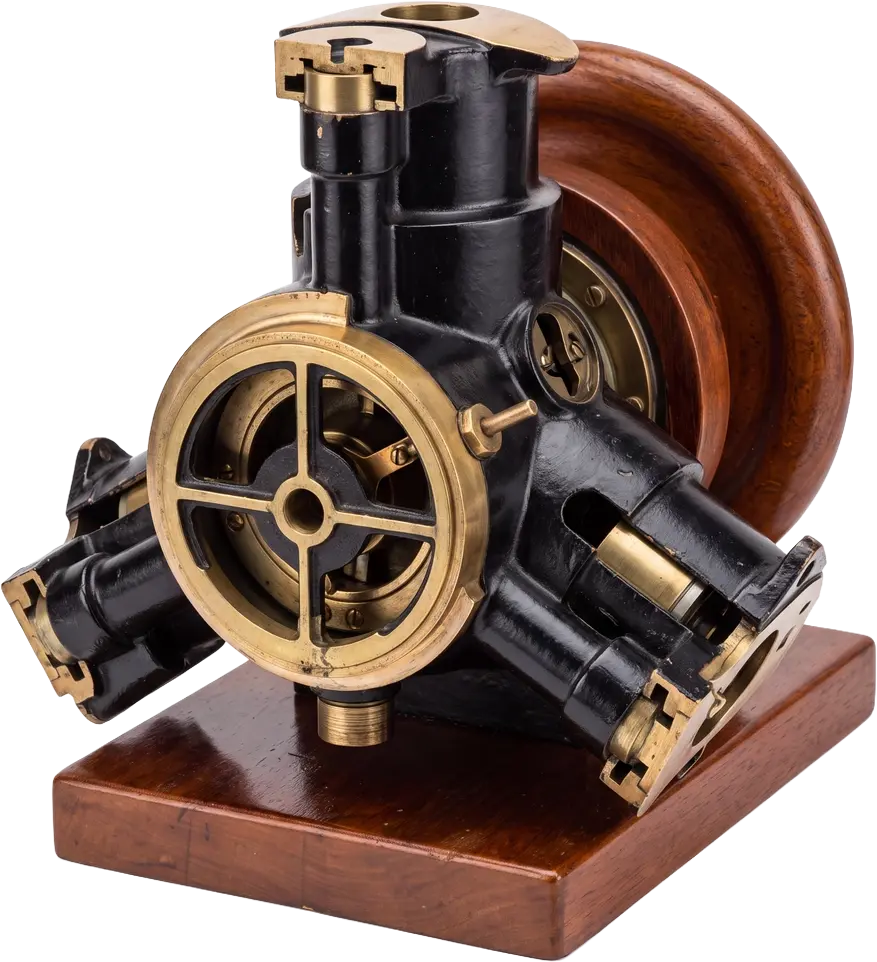
Engineer Peter Brotherhood developed a remarkably compact radial engine in the nineteenth century. Its balanced arrangement made it suitable for high-speed applications, and versions became associated with everything from dynamos and fans to the propulsion of early Whitehead torpedoes.
After Peter Brotherhood's death, his son Stanley brought the family engineering business to Peterborough at the beginning of the twentieth century. Peter Brotherhood Ltd was incorporated in 1907, embedding another specialist engineering tradition in the city.
The Peterborough works became known for steam engines, turbines, compressors, diesel engines and power-generation equipment.
The business survived multiple changes of ownership across more than a century. Its specialist turbine and compressor operation was acquired by Howden in 2021, carrying the engineering lineage into another era.
The machines behind the things we eat.
Peterborough engineering did not only power vehicles and factories. It also helped manufacture the world's food.
A Perkins engineering business established its Peterborough works at the beginning of the twentieth century. The Baker Perkins name emerged in 1919 after the merger of former rivals, creating a business that became internationally known for machinery used in baking, confectionery and food production.
From industrial ovens and mixing systems to equipment that could put jam into biscuits or chocolate onto confectionery, machinery designed and built in Peterborough disappeared into factories across the world, quietly producing familiar products by the million.
Baker Perkins and Perkins Engines are separate businesses. Their shared surname often causes confusion, but both became major parts of Peterborough's engineering identity.
Baker Perkins technology is now part of Coperion's international portfolio, continuing a Peterborough engineering lineage that stretches back more than a century.
The Peterborough name found under bonnets around the world.
In 1932 Frank Perkins and Charles Chapman set out to make something that conventional wisdom said diesel could not be: small, light and fast enough for road vehicles.
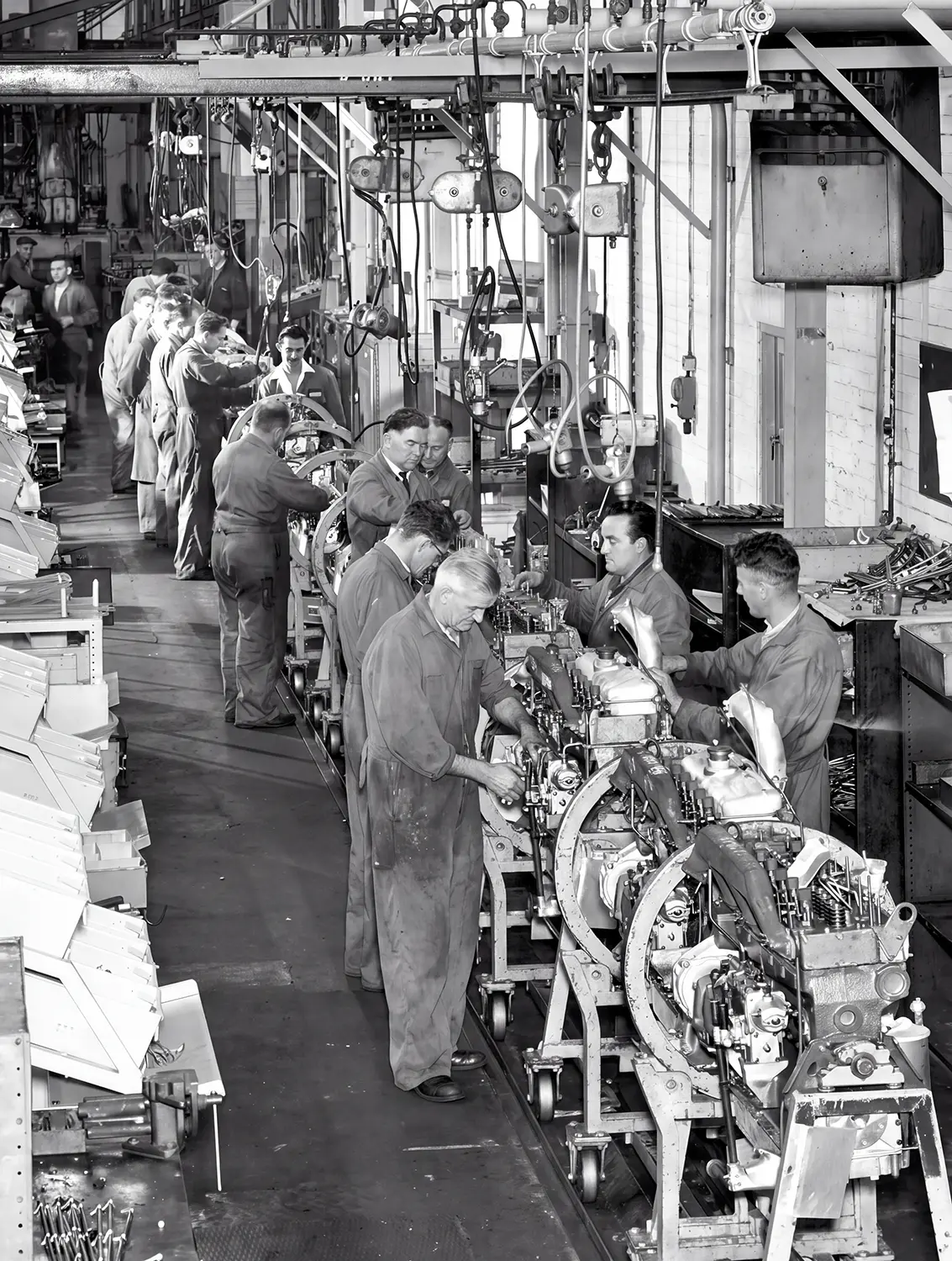
A lighter diesel
Frank Perkins brought drive, commercial instinct and family engineering experience. Charles Chapman supplied extraordinary technical ability. Together they pursued the high-speed diesel.
Six world records
In 1936 a Perkins-powered car established six world diesel speed records at Brooklands, demonstrating that diesel performance had entered an entirely new era.
Eastfield and the world
Production moved to the Eastfield site in 1947. The company expanded internationally and became one of Peterborough's defining employers and one of the world's best-known engine manufacturers.
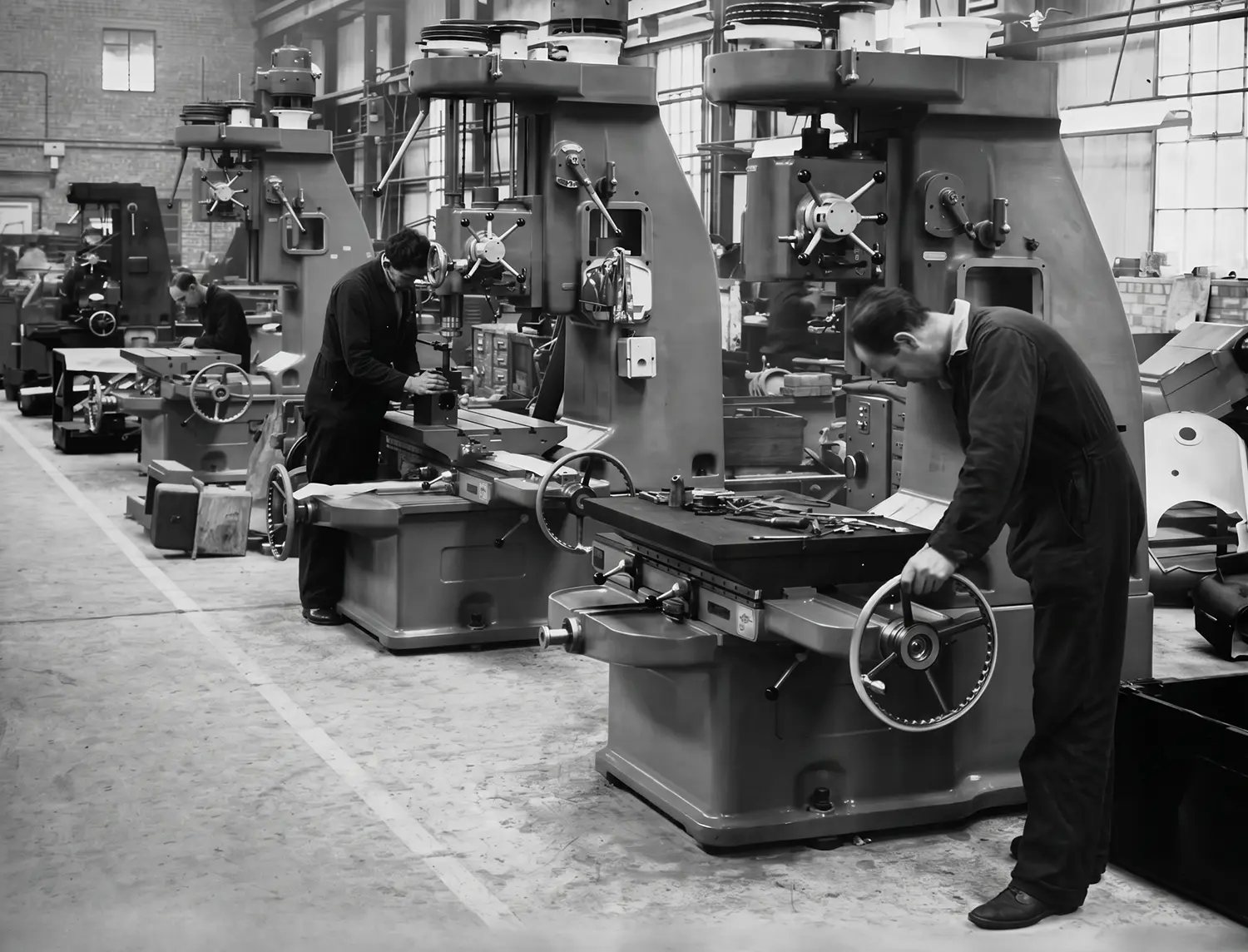
When fractions of an inch mattered.
Newall Engineering moved its machine-tool operations to Peterborough in 1935, taking over premises in Old Fletton and later expanding into further works at Shrewsbury Avenue and Padholme Road.
Its world was one of precision gauges, measuring equipment, jig borers, grinders and increasingly sophisticated machine tools. Newall's own factories became demonstrations of the accuracy its products promised.
That made Newall important in a different way. Perkins produced the engines people recognised. Newall produced machinery capable of making components to the tolerances modern engineering demanded.
The original Peterborough machine-tool operation eventually closed in the late 1980s, but its decades of apprenticeships, technical knowledge and engineering employment formed part of the city's wider industrial inheritance.
Peterborough's engineering timeline.
Different companies, different technologies and different generations, connected by an unusually persistent culture of practical engineering.
Queen Street becomes an engineering address
Ironworking and agricultural machinery establish the foundations of Peterborough's industrial engineering tradition.
Peterborough machinery reaches international customers
Amies, Barford & Co develops markets far beyond the surrounding agricultural region.
Henry Royce is born at Alwalton
The future co-founder of Rolls-Royce begins life only a few miles from the centre of Peterborough.
Royce enters the Great Northern Railway works
A teenage apprenticeship in Peterborough gives Royce formative practical engineering experience.
New engineering names establish themselves in Peterborough
The Brotherhood business relocates from London while the Perkins engineering operation that would lead to Baker Perkins establishes its Peterborough works.
Baker Perkins emerges
The merger of former rivals creates a business that becomes internationally associated with food-processing machinery.
F. Perkins Ltd is founded
Frank Perkins and Charles Chapman establish their new diesel-engine business in Queen Street.
Newall Engineering moves to Peterborough
Precision gauges and machine tools add another major strand to the city's industrial economy.
Perkins proves diesel can be fast
Six world diesel speed records at Brooklands transform perceptions of the high-speed diesel engine.
Perkins moves to Eastfield
The new Peterborough site becomes the base for expansion into a genuinely global engine manufacturer.
Perkins becomes part of Caterpillar
The Peterborough company enters another chapter as part of one of the world's largest machinery manufacturers.
The engineering story continues
Manufacturing, research, process technology and specialist engineering remain part of Peterborough's economic identity.
Ideas need engineers.
Companies dominate industrial history, but Peterborough's engineering story was made by individuals: inventors, entrepreneurs, designers, machinists and generations of apprentices.
Thomas Perkins
Agricultural engineer whose involvement in the Queen Street works established the Perkins name in Peterborough engineering.
Sir Henry Royce
Born at Alwalton and apprenticed in Peterborough before becoming one of Britain's most celebrated engineers.
Peter & Stanley Brotherhood
An inventive engineering dynasty whose specialist engine and turbine business became deeply associated with Peterborough.
Frank Perkins
Entrepreneur and engineer who turned an ambitious diesel proposition into one of Peterborough's most famous global businesses.
Charles Chapman
The brilliant technical mind alongside Frank Perkins whose engine design work was fundamental to the company's early breakthrough.
A city that never stopped engineering.
Peterborough's industrial landscape has changed dramatically. Factories have closed, companies have merged and old works have disappeared beneath new development.
Yet this is not a story with a full stop. Perkins remains based in Peterborough, combining manufacturing with research and development. Baker Perkins technology continues within Coperion, while the specialist Peter Brotherhood business became part of Howden.
More important still is the accumulated culture left by generations of engineering employment: apprenticeship, practical problem-solving, precision, manufacturing knowledge and the expectation that things designed in Peterborough can be used anywhere.
From Victorian ironworks to twenty-first-century engine development, Peterborough's engineering story is not simply about what the city made. It is about the knowledge, ingenuity and confidence to make things that the rest of the world wanted.
Industry changed the city.
Engineering is only one strand of Peterborough's transformation. Follow the clay beneath the city, meet the people behind its history, or explore the full story from prehistory to the present.