

Peterborough History
Hereward the Wake
Rebel, raider, outlaw and folk hero. The man remembered for resisting William the Conqueror also came to Peterborough with a Danish army, attacked its monastery and left much of the settlement in flames.

The problem with Hereward
Peterborough’s enemy became England’s hero
Peterborough’s claim on Hereward the Wake begins with an uncomfortable truth. Long before later generations turned him into a romantic champion of English resistance, the people of Peterborough remembered him as the man who came with an army.
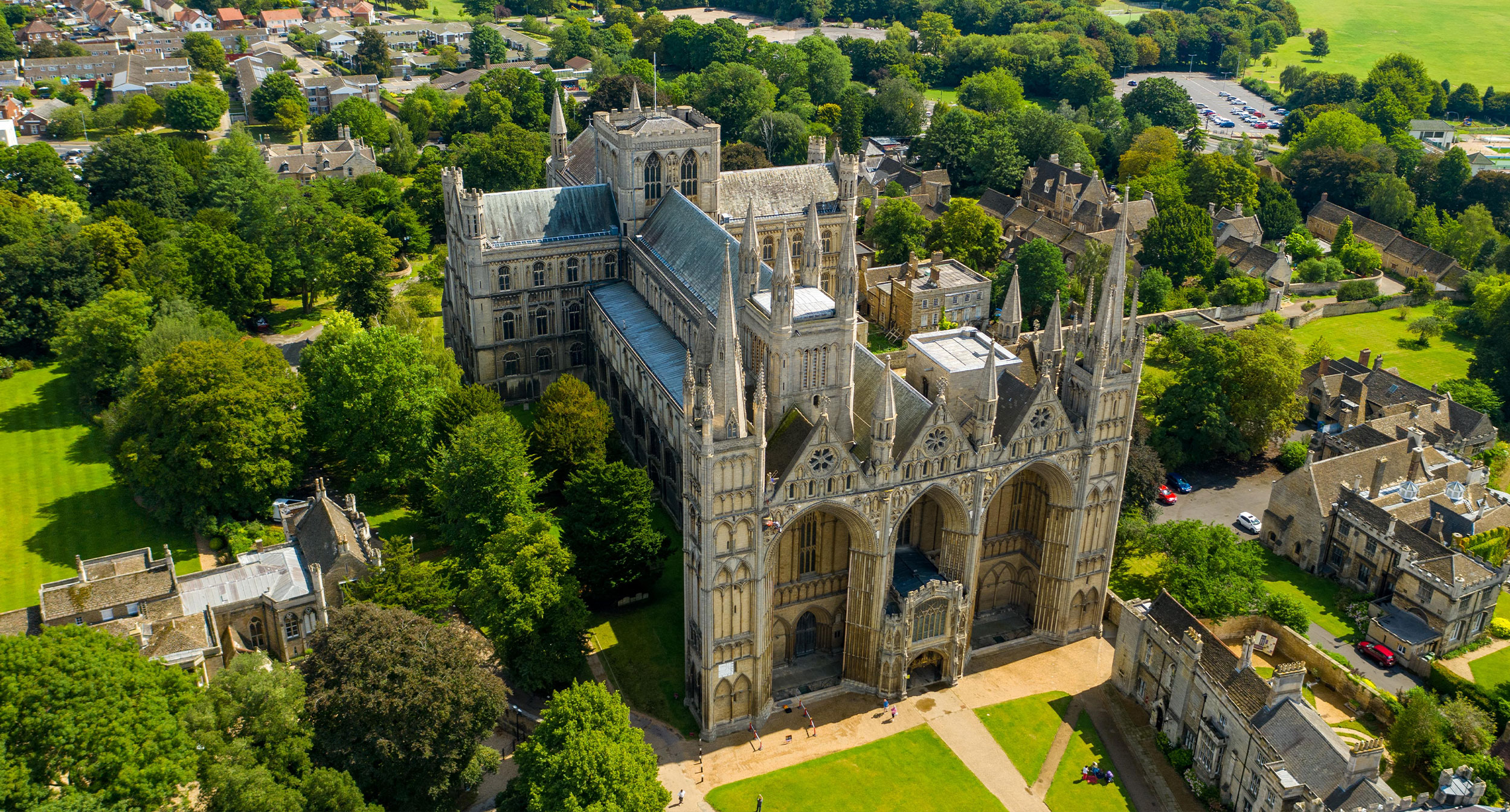
In 1070, four years after the Norman Conquest, Hereward joined forces with Danish troops operating in eastern England. Their target was the fabulously wealthy monastery at Burgh St Peter, the settlement from which modern Peterborough would grow.
The monks resisted. The attackers used fire.
Much of the settlement was burned and the monastery was stripped of extraordinary quantities of gold, silver, crosses, shrines, vestments, money and books.
Yet later tradition would give the raid another meaning. Hereward, the story suggested, was attempting to prevent Peterborough’s treasures from falling into Norman hands. The man remembered by the monks as a destroyer could therefore be recast as a defender.
That contradiction lies at the heart of Hereward’s story. History gives us a rebel whose actions could be violent and opportunistic. Legend gives us England’s last unconquered hero.
Burgh St Peter
Then came the fire
The Peterborough version of the Anglo-Saxon Chronicle preserves a vivid account of what happened.
The Danish force tried to enter the monastery, but the monks prevented them. The attackers then burned their way into the precinct. Once inside, they removed treasures from the church on an extraordinary scale.
It is worth remembering who recorded this story. These were the voices of Peterborough’s monastery, the institution that had suffered the attack. Their account was not detached from the event, but it is one of the most important pieces of evidence we have.
“They laid fire to it, and burned down all the monks’ buildings and all the town.”Peterborough Chronicle tradition, 1070
History versus legend
The real man is visible only through the mist
Hereward certainly existed. The problem is that the extraordinary life later attributed to him is a mixture of documentary evidence, medieval storytelling and centuries of reinvention.
What we can reasonably say
Hereward was an English landholder with connections to the southern Lincolnshire and Peterborough area. He was involved in anti-Norman resistance, took part in the Peterborough raid of 1070 and became closely associated with the resistance centred on the Isle of Ely.
What the legend added
Dramatic adventures abroad, heroic single combat, romantic episodes, miraculous escapes and an elaborate family history accumulated around him as medieval and later writers filled the silences left by the record.
Even his ending is uncertain
Accounts differ over what happened after Ely. Some traditions reconcile Hereward with William the Conqueror. Others give him the violent death expected of a legendary outlaw. History never provides a neat final scene.
From conquest to legend
One life, nearly a thousand years of storytelling
Norman Conquest
William defeats Harold at Hastings and begins reshaping England’s ruling elite.
Peterborough attacked
Hereward and Danish forces raid the monastery at Burgh St Peter.
The resistance at Ely
The great fenland stronghold of anti-Norman resistance falls.
Legend takes over
Medieval accounts begin transforming the rebel into a heroic adventurer.
Charles Kingsley
Hereward, the Last of the English creates the enduring Victorian hero.
The Key Theatre
David Pinner brings Hereward back to a Peterborough stage.
Hereward in folklore
St Peter, fairy fire and the white wolf
History remembers the raid. Folklore tries to make sense of the man who carried it out.
In one Peterborough legend, Hereward intended to strip the monastery and destroy the town. Before he could complete the deed, an angry old man appeared to him in a dream, splendidly dressed and carrying a key.
The visitor was St Peter.
Hereward was warned to return what he had taken from the church or die before the following day was over.
The outlaw obeyed.
Later, as Hereward and his followers struggled through the darkness of Bruneswold, a great white wolf appeared and guided them towards safety. Pale lights burned without heat at the tips of their weapons.
None of this is documentary history. Yet folklore is evidence of another kind. It reveals how later generations struggled with Hereward’s contradiction, transforming the man who attacked a holy place into somebody who could still receive supernatural protection.
Discover the White Wolf legendThe pictures came centuries after the man.
No contemporary portrait of Hereward survives. The familiar warrior is itself part of the legend created by later generations.
The Victorian reinvention
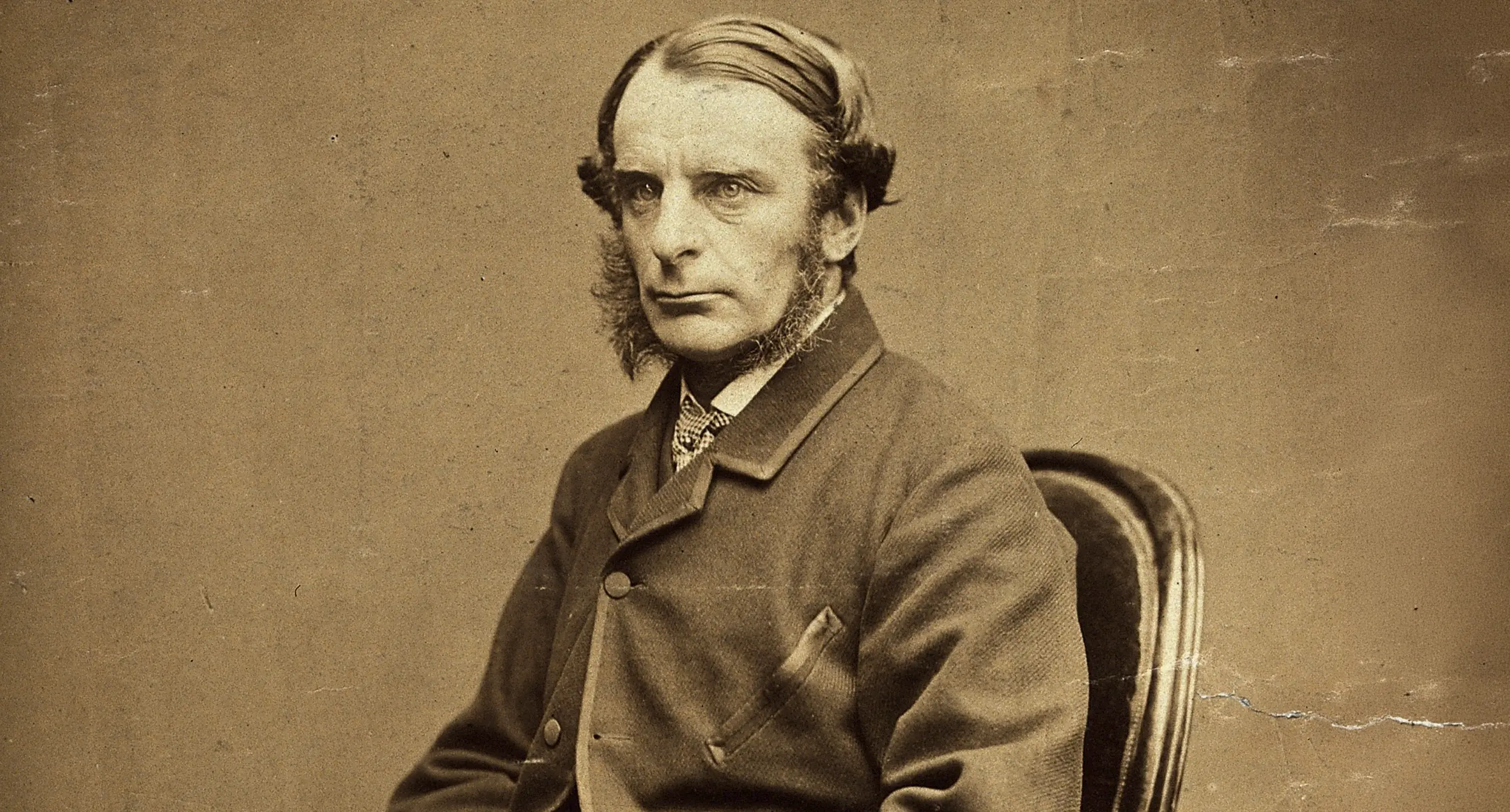
Charles Kingsley Creating the Last of the English
By the nineteenth century, Hereward’s fragmented medieval story had become perfect material for historical romance. Charles Kingsley did more than perhaps anyone else to create the Hereward recognised today.
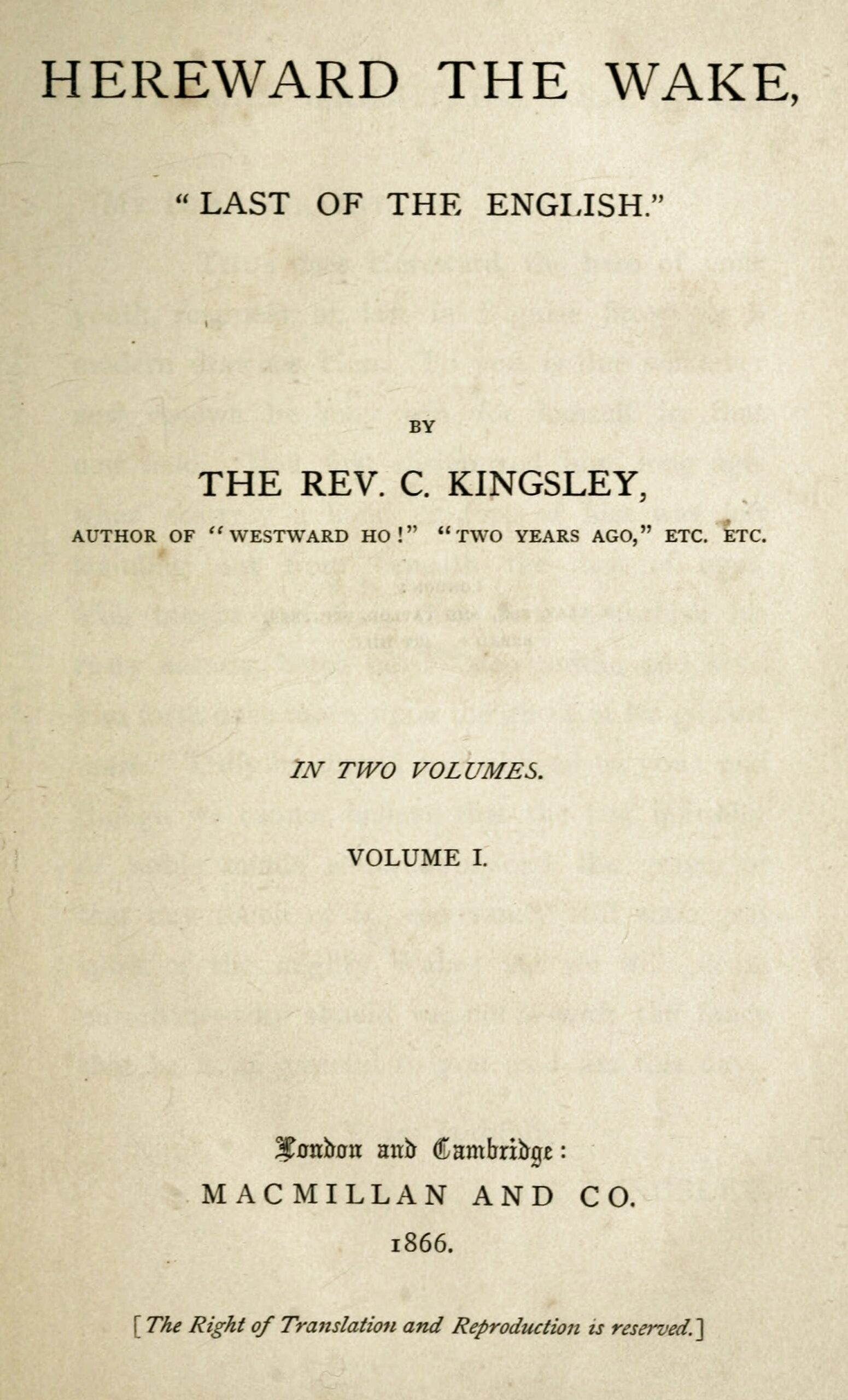
His novel Hereward, the Last of the English was published in book form in 1866.
Kingsley transformed the elusive fenland rebel into a vast romantic figure. His Hereward travels, fights, loves, returns to a conquered homeland and ultimately becomes the champion of a disappearing Anglo-Saxon England.
Where the historical record hesitated, Kingsley supplied colour, motive and certainty.
He also made the landscape essential. The Fens were no longer merely the setting for resistance. Their marshes, islands, waterways and low horizons became part of the Hereward myth itself.
“There have been heroes likewise in the lowland and in the fen.”Charles Kingsley, Hereward, 1866
The story comes home
David Pinner Hereward returns to Peterborough’s stage
More than a century after Kingsley, another writer took possession of Hereward’s story. This time the connection with Peterborough was direct.
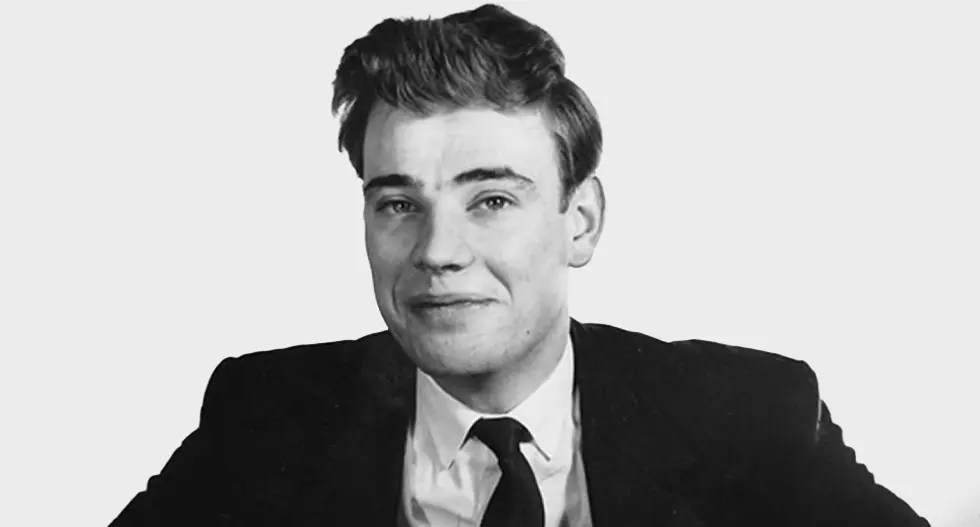
David Pinner was born in Peterborough in 1940. Actor, novelist and playwright, his career repeatedly explored history, ritual, belief and the unsettling territory where folklore and reality meet.
In 1974 he wrote Hereward the Wake, staged at Peterborough’s recently opened Key Theatre.
The location gave the production an extraordinary resonance. Hereward was being performed beside the River Nene and only a short distance from the cathedral precincts where the Peterborough story of his raid had begun more than nine centuries earlier.
Pinner is now also remembered as the author of Ritual, the novel that became one of the important inspirations behind The Wicker Man. His interest in Hereward sits naturally within that wider fascination with English myth, ritual and the stories hidden beneath familiar landscapes.
27 June to 13 July 1974
A Peterborough-born playwright brought the city’s most complicated medieval figure back to a Peterborough audience.

A name Peterborough kept
From medieval rebel to local identity
Hereward did not remain trapped in chronicles, novels and theatre. His name became woven into everyday Peterborough.
For generations of residents, “Hereward” did not necessarily mean an eleventh-century outlaw. It might mean going shopping, switching on the radio or following a route through the Fens.
The old Hereward Arcade ran through the city centre from Midgate to Broadway. Later redevelopment retained the name in Hereward Cross, ensuring that a figure from the Norman Conquest remained part of the vocabulary of modern Peterborough.
Then, on 10 July 1980, Peterborough gained Hereward Radio. Broadcasting from the city and serving a much wider area, the station made the name Hereward part of daily life for thousands of listeners.
It later became Hereward FM and remained one of Peterborough’s most recognisable local brands until the station was absorbed into the Heart network in 2009.
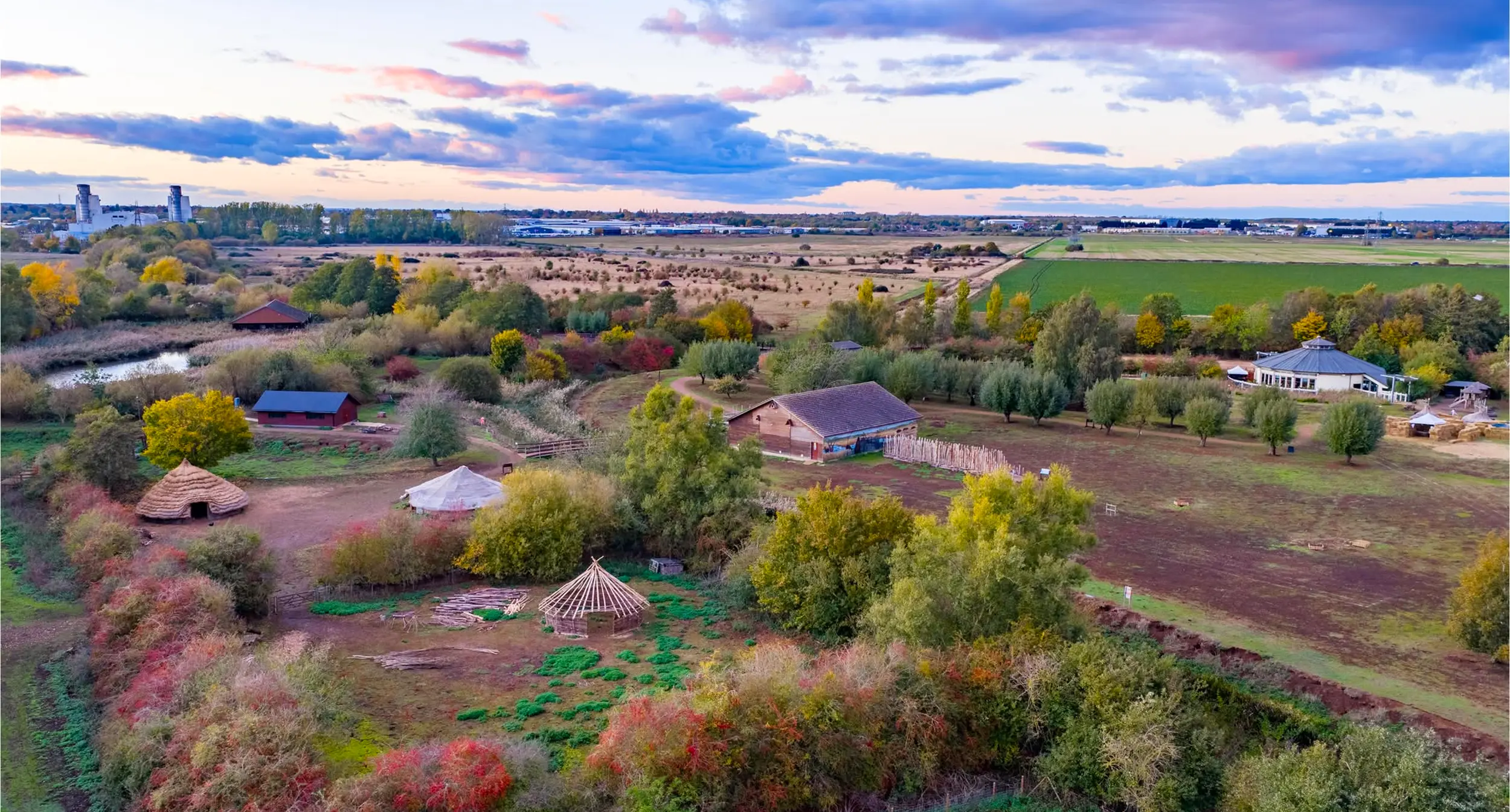
Even the landscape carries the name. The Hereward Way passes through Peterborough and the Fens towards Ely, following country that has been associated with Hereward’s resistance for centuries.
Hereward Arcade
The former shopping arcade ran between Midgate and Broadway, with the Hereward name later surviving in Hereward Cross.
The Hereward Way
A long-distance walking route passing through Peterborough, March and Ely carries the rebel’s name through the landscape most closely associated with him.

Hereward went on air
Hereward Radio launched in Peterborough in 1980 and became one of the most familiar names in local broadcasting. For a generation, the medieval rebel was also the name people heard coming from their radios every day.
Historical sources and image credits
Peterborough history and the 1070 raid: Peterborough Cathedral, A Peterborough History.
Charles Kingsley: Hereward, the Last of the English, first published in book form in 1866.
David Pinner’s 1974 Peterborough production: Theatricalia, Key Theatre production archive.
Hereward Radio launched in Peterborough in 1980. Peterborough Images Archive records the station’s early Bridge Street studios and its later history before the service became part of Heart.
Peterborough Images Archive records the now-lost Hereward Arcade running between Midgate and Broadway. The later Hereward Cross shopping centre retained the historic name.
The Hereward Way is a long-distance walking route passing through Peterborough and Ely and crossing the Fenland landscape associated with Hereward.
The North Prospect of the Cathedral Church of Peterborough is used from the Discover Peterborough image collection. It is a later historical view of the cathedral site, not a depiction of Peterborough in 1070.
Hereward the Wake submits to William the Conqueror is a later artistic interpretation of Hereward and is used from the Discover Peterborough image collection.
The Charles Kingsley portrait, first-edition Hereward image and Hereward Radio logo are hosted within the Discover Peterborough image collection.
Historical illustrations of Hereward are later artistic interpretations. No authenticated contemporary portrait of Hereward is known.