
For nearly fifty years, the quickest walk from Peterborough station into the city centre ran through a pair of concrete subways beneath the Queensgate roundabout. They closed for good on Monday 6 July 2026. Most of the people who used them over the decades had no idea that the route passed straight through the middle of a Georgian graveyard.
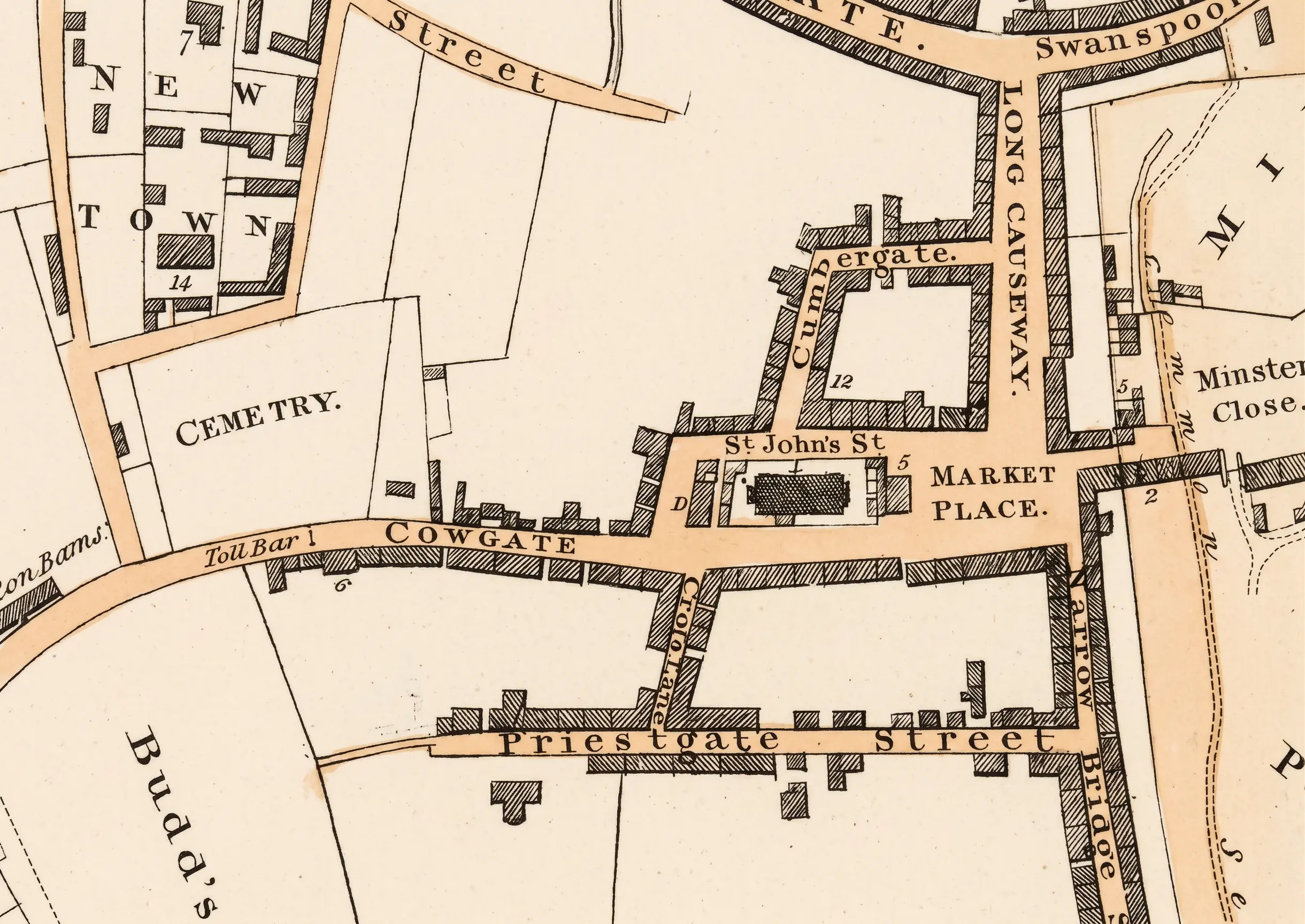
Three acres at the bottom of Cowgate
By the early 1800s Peterborough had a problem that was familiar to almost every growing English town. The lay cemetery on the north side of the cathedral, which had taken the parish dead for centuries, was full.
The churchwardens of St John the Baptist, the parish church that still stands in Cathedral Square, bought three acres of farmland at the western end of Cowgate. The first person buried there was Elizabeth Money, in March 1805. For the next half century, this was where Peterborough buried its own.
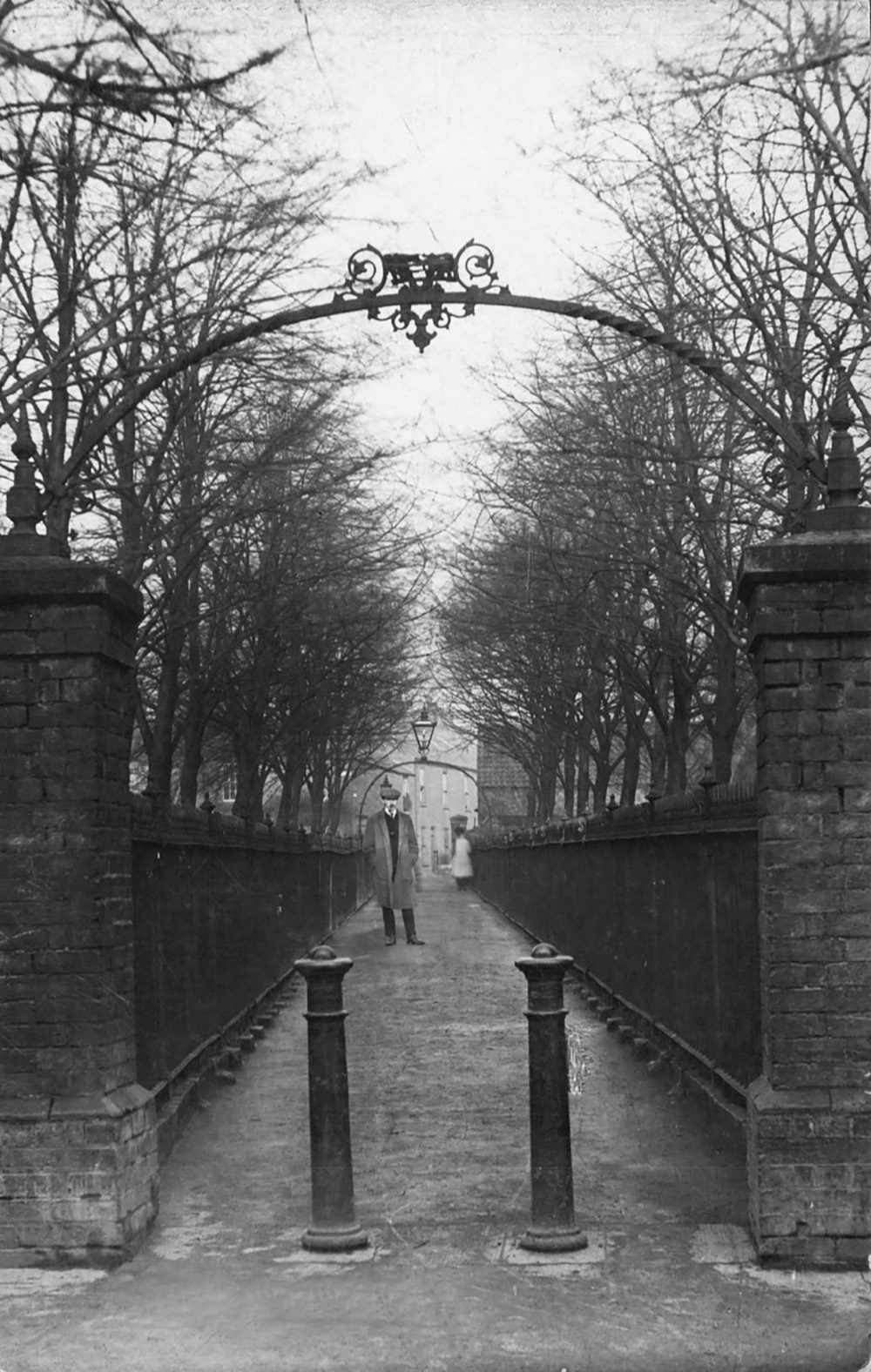
It is worth picturing the setting, because it bears almost no relation to what is there now. Cowgate ran west out of the market place and ended at a level crossing over six sets of railway tracks. The burial ground sat beside it: walled, gated, with a path running through the stones. There are photographs in the Peterborough Images Archive that show it looking like any small country churchyard, which is more or less what it was.
The Peterborough body snatchers
One November evening in 1828, someone in Cowgate noticed a cart drawn up outside the cemetery wall and two men loading sacks onto it. The alarm went up. The men bolted, and the chase carried on out of the city as far as the road between Yaxley and Norman Cross, where they abandoned the cart and ran off across the fields.
This was Peterborough’s first recorded case of body snatching, and it was reported at the time in the Stamford Mercury. It was not the last. Between November and December 1830 the perimeter wall of the burial ground was breached again. The parish repaired the brickwork and had iron railings fitted along the top of every wall.
The timing fits a national pattern. The years from 1827 to 1830 were the peak of the trade in stolen corpses, driven by anatomy schools that needed bodies faster than the law could legally supply them. Parliament closed the market with the Anatomy Act of 1832. Cowgate is said to have been among the last graveyards in the country to be raided.
Full, and then in the way
The burial ground had been laid out for a market town of a few thousand people. The arrival of the railways in the 1840s changed that completely, and by around 1858 the site was declared full. A new cemetery opened between Eastfield Road and Broadway, and Broadway Cemetery has served the city ever since.
A closed graveyard beside a busy street is a vulnerable thing, and the first bite was taken out of it within two generations. In the early twentieth century there was a long campaign to replace the Cowgate level crossing with a bridge, and the only ground available for the new approach roads on the Cowgate side was the burial ground itself. Work to remove the headstones directly in the line of the road began in 1911. Crescent Bridge opened in 1913.
The Development Corporation years
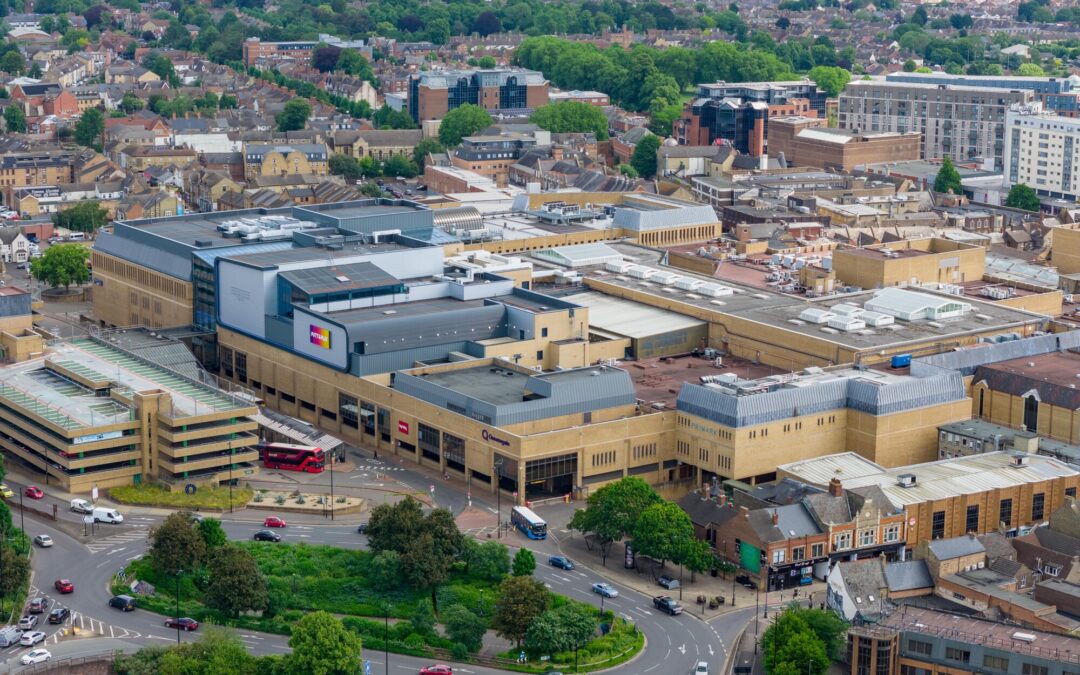
The rest went in the 1970s. Peterborough Development Corporation, which was remaking the city on a scale not seen since the Normans arrived, bought the site from the parish. What followed was the Crescent roundabout, the road network that fed the new Queensgate Shopping Centre when it opened in 1982, and the two pedestrian subways, built in the late 1970s, which ran beneath it all.
Remains disturbed by the works were reinterred at Broadway Cemetery, joining the headstones that had been relocated there earlier. Accounts differ on exactly when the last of the stones and burials were moved: the Peterborough Images Archive dates the transfer to Broadway as complete by the end of the 1940s, while St John’s own parish history describes exhumation and reinterment around the time of the sale. What is not in doubt is that by the early 1980s there was nothing left to see.
There is one quiet survival. The money the parish received for the land became St John’s Burial Trust Fund, and the interest still appears in the church’s annual accounts to this day. A Georgian graveyard is, in a small and administrative way, still paying its way in the twenty-first century.
Back up to ground level
The subways that replaced it have now gone the same way. On 6 July 2026 both were closed to the public, and 418 cubic metres of flowable concrete, roughly a thousand tonnes, began going in to seal them permanently.
This is the first phase of City Link, the pedestrian and cycle route being built as part of the wider Station Quarter regeneration. The thinking has simply reversed. Subways were considered good practice when the Development Corporation planned them; now the priority is a direct, well lit, accessible route at street level, with 49 new trees, a rain garden and stone walls. Work is due to finish in summer 2027.
When it does, people walking from the station to the cathedral will cross the site at roughly the level the mourners of 1805 walked on, which is a neater piece of circularity than anyone involved probably intended.
Update: seven skeletons, and a four week delay
28 July 2026. The ground has had the last word, at least for now.
Seven human skeletons have been found on land deep within the Queensgate roundabout during the City Link works. An archaeological licence has been obtained and an archaeologist appointed to oversee the remains and ensure they are reburied in line with national guidelines.
The archaeologist’s initial view is that the burials come from a cemetery that stood on the site in the medieval period and was developed further during the Victorian era. City Link is now forecast to run around four weeks behind, though the project team has said it is looking at ways to recover some of that time in later phases.
Where to find it
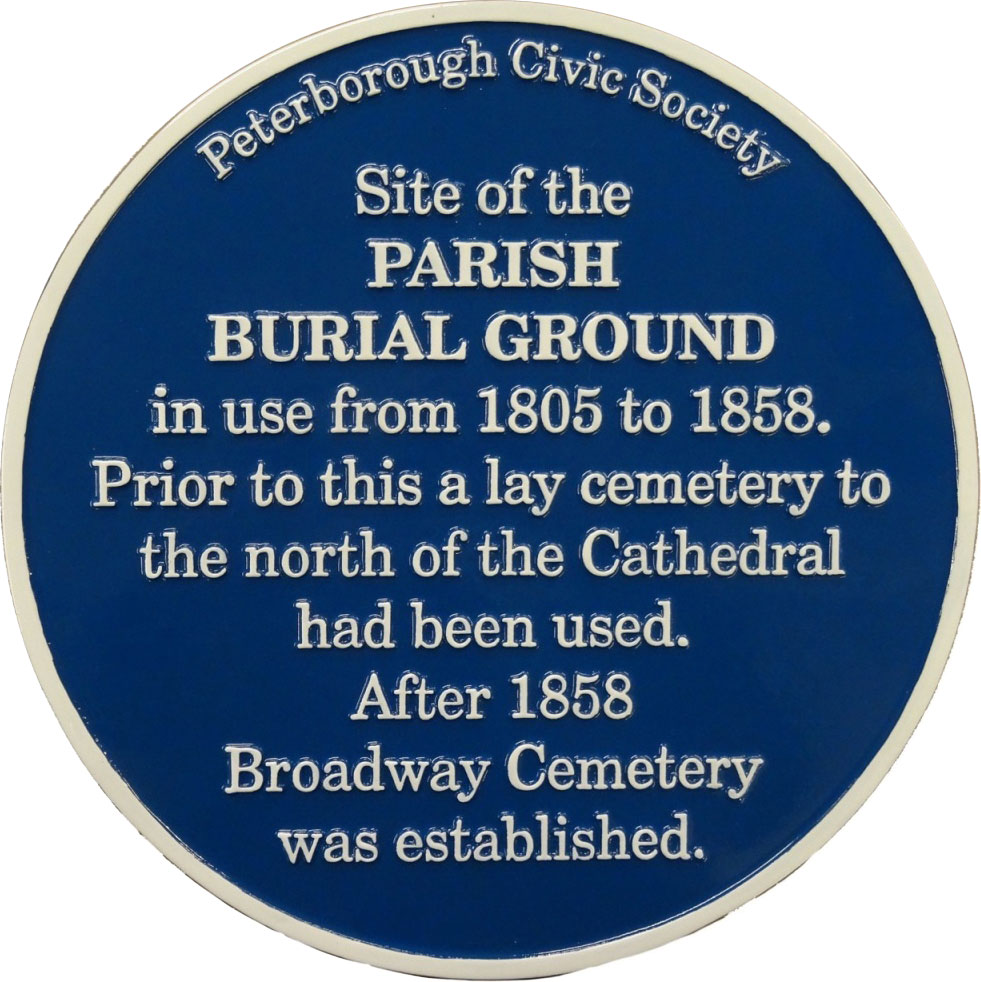
The Peterborough Civic Society blue plaque marking the burial ground is on the retaining wall at the west end of Cowgate, beside the Crescent Bridge roundabout. It was installed in 2017, and an earlier brushed metal plaque from 1985 sits just above it. Thousands of people walk past both every week without looking up. Do check current access before you go, as diversions are in place around the roundabout while the City Link works continue.
For the other half of the story, Broadway Cemetery is a fifteen minute walk north east of the city centre, off Eastfield Road. Opened in 1858 as the direct replacement for Cowgate, it is where the headstones and, eventually, many of the burials ended up.
Aerial Photograph © Terry Harris / Discover Peterborough
Plaque image © Peterborough Civic Society
Cowgate Cemetery image © Peterborough Images