


Haydn Keeton at a glance
- Born
- 26 October 1847, Mosborough
- Died
- 27 May 1921, Peterborough
- Known for
- Organist, choirmaster, conductor, composer and teacher
- Peterborough Cathedral
- Organist and choirmaster, 1870–1921
- Famous pupils
- Malcolm Sargent, Thomas Armstrong and Alfred Whitehead
- Legacy
- More than half a century shaping Peterborough’s musical life
For more than fifty years, the musical life of Peterborough Cathedral passed through the hands of Haydn Keeton, a gifted organist, composer and teacher whose influence reached far beyond the city through the remarkable musicians he trained.
Haydn Keeton was born in Mosborough in 1847 into a musical family. His father, Edwin Keeton, was an organist, and Haydn’s own talent developed early enough for him to become a chorister at St George’s Chapel, Windsor Castle.
There he studied with Sir George Elvey, one of the leading church musicians of Victorian England.
That musical inheritance would eventually travel with Keeton to Peterborough, where in 1870 he began a Cathedral career lasting until his death in 1921.
Fifty-one years at Peterborough Cathedral
Keeton served as organist and choirmaster of Peterborough Cathedral for more than half a century, making him one of the defining figures in the Cathedral’s modern musical history.
From Windsor to Oxford
Keeton’s musical education placed him within an important strand of nineteenth-century English church music.
As a chorister at St George’s Chapel, Windsor Castle, he studied under George Elvey, whose own career had centred on the music of the royal chapel.
Keeton later studied at Oxford, graduating Bachelor of Music in 1869 and Doctor of Music in 1877.
Before Peterborough, he served as organist of Datchet Parish Church from 1867 to 1870.
Then, still only in his early twenties, he arrived at Peterborough Cathedral.
The Cathedral musician
Cathedral organist
Keeton presided over the musical instrument at the heart of Cathedral worship and ceremonial life for more than fifty years.
Choirmaster
He trained generations of Cathedral choristers and singers, helping maintain Peterborough’s centuries-old choral tradition.
Conductor
His work extended beyond the Cathedral into Peterborough’s orchestral and choral societies.
Teacher
Perhaps his greatest legacy came through the young musicians who trained under him and later carried that tradition into national and international musical life.
A city conductor as well as a cathedral organist
Keeton’s influence did not stop at the Cathedral doors.
He conducted Peterborough’s local orchestral society for around 25 years and the Choral Union for around 20 years.
That placed him at the centre of both sacred and secular music in the city.
Concert halls, churches, rehearsals and Cathedral services all formed part of the musical world he helped build.
Peterborough was listening.
The late Victorian and Edwardian city supported choirs, orchestras, church music and private musical study.
Keeton was one of the people who connected those different worlds.
His career helps reveal a Peterborough whose cultural life was far richer than its later industrial image sometimes suggests.
The teacher behind famous names
The most extraordinary part of Keeton’s legacy may lie in the musicians who passed through Peterborough Cathedral under his guidance.
Among them were Malcolm Sargent, who would become one of Britain’s best-known conductors, and Thomas Armstrong, the Peterborough-born musician who later became Principal of the Royal Academy of Music.
Another pupil, Alfred Whitehead, went on to become an important Canadian organist and composer.
The result is a remarkable musical genealogy: one Cathedral teacher in Peterborough influencing musicians whose careers spread through concert halls, broadcasting, conservatoires and churches far beyond the city.
Haydn Keeton, Malcolm Sargent and Thomas Armstrong
Two of Keeton’s pupils would become particularly significant in twentieth-century British music.
Malcolm Sargent developed into a celebrated conductor, closely associated with the BBC Proms and major orchestras.
Peterborough-born Thomas Armstrong became an organist, composer and educator, eventually serving as Principal of the Royal Academy of Music.
Both men had learned under Keeton at Peterborough Cathedral.
From Peterborough to Mozart
Thomas Armstrong and Malcolm Sargent enjoyed tracing their musical teaching lineage backwards through Keeton.
Keeton had studied with George Elvey, whose own musical connections could be followed through earlier teachers towards Thomas Attwood.
Attwood had studied with Mozart.
It created a wonderfully evocative idea: the musical tradition being passed down in Peterborough had roots reaching into the world of eighteenth-century European music.
Music passed from person to person
Before conservatoire training became the only obvious route into a professional career, cathedral musicians often learned through close apprenticeship.
A young organist would study technique, repertoire, choir training, harmony, accompaniment and the practical demands of church music under an established master.
Keeton became precisely that kind of mentor in Peterborough.
The composer
Keeton was not only a performer and teacher. He also composed extensively.
His known works included a symphony for orchestra, organ voluntaries, piano pieces, songs, church services, psalm chants and anthems.
One anthem, Give ear, Lord, unto my prayer, received the Meadowcroft Prize.
He also produced a method for singing, published in London in 1892.
The breadth of his work reflects the many roles expected of a Victorian cathedral musician: performer, composer, conductor, trainer and educator.
The sound of the Psalms
Keeton also contributed directly to the Cathedral’s musical repertory.
From 1879 he began assembling his own collection of psalm settings for Peterborough Cathedral Choir.
That tradition did not end with him. Later Cathedral musicians continued adding to the collection, including Stanley Vann, another major figure in Peterborough’s twentieth-century choral history.
It is a small but revealing example of how musical tradition accumulates inside a cathedral: one generation writes, the next inherits, and another adds its own voice.
Born in Mosborough
Haydn Keeton was born on 26 October into a musical family.
St George’s Chapel, Windsor
He became a chorister and studied under George Elvey.
Datchet Parish Church
Keeton began serving as an organist before his Cathedral appointment.
Bachelor of Music
He graduated BMus from Oxford.
Peterborough Cathedral
Keeton became organist and choirmaster, beginning a 51-year tenure.
Doctor of Music
Oxford awarded Keeton his doctorate in music.
Psalm settings
He began developing a collection of psalm chants for the Cathedral choir.
Singing method published
Keeton’s teaching work reached print with a published method for singing.
A new generation
Pupils including Malcolm Sargent and Thomas Armstrong trained under him in Peterborough.
Dies in Peterborough
Keeton died on 27 May after more than half a century at the Cathedral.
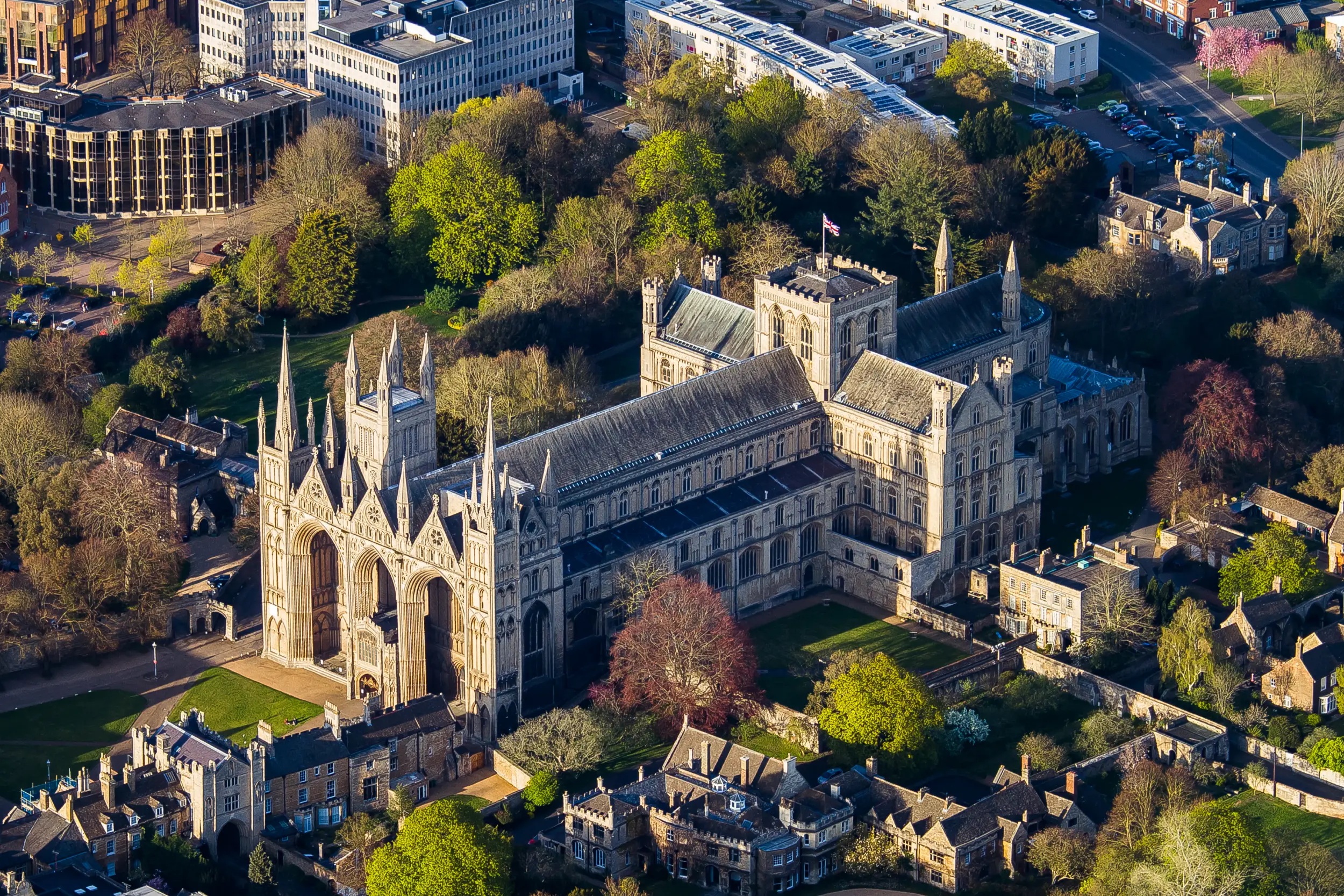
More than half a century beneath the Cathedral towers
Cathedral appointments often lasted many years, but Keeton’s tenure was exceptional.
He arrived in Peterborough in 1870 and remained organist until his death in 1921.
During those decades he witnessed enormous change beyond the Cathedral Close: railway expansion, industrial growth, a rising population, the Victorian city becoming Edwardian, and then the upheaval of the First World War.
Through all of it, the Cathedral’s musical life continued.
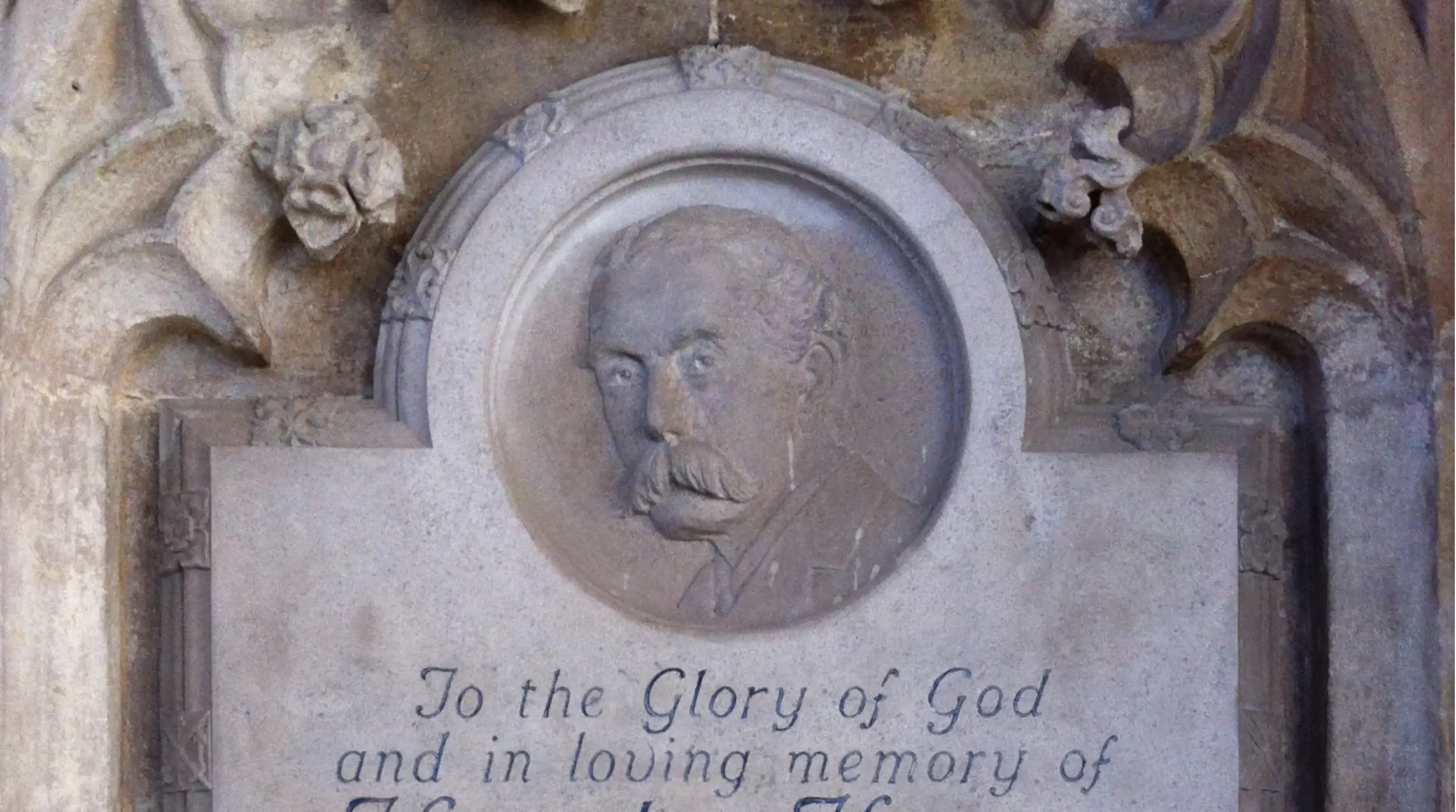
Buried in Peterborough Cathedral
Keeton’s connection with Peterborough did not end with his death.
He was buried in Peterborough Cathedral, the building in which he had spent the defining fifty-one years of his career.
That makes the Cathedral not merely the setting for his story but also the place where his physical memorial survives.
For visitors, it creates a direct connection between the building they experience today and the musician who shaped its sound for generations.
The man behind the men who became famous
Keeton is not as widely remembered nationally as Malcolm Sargent or Thomas Armstrong.
Yet both careers lead back to him.
That makes Keeton an important reminder that cultural history is not only made by the people who become household names.
Sometimes the deeper influence belongs to the teacher who recognised talent, trained it and sent it out into the world.
One city. Several extraordinary careers.
Keeton trained Sargent and Armstrong.
Armstrong later led the Royal Academy of Music.
Sargent became one of Britain’s most recognisable conductors.
Together they reveal an unexpectedly important musical story rooted in Peterborough Cathedral.
Peterborough’s forgotten musical lineage
Haydn Keeton belongs within a much bigger Peterborough story.
The city produced or nurtured musicians whose careers reached the Royal Academy of Music, major orchestras, royal occasions, the BBC and international concert halls.
Later generations would add names such as James Blades and Don Lusher to that tradition.
Keeton sits near the beginning of this remarkable chain, not because he was born here, but because Peterborough became the place where his influence multiplied.
His story helps explain why the city’s musical heritage is not a collection of isolated biographies. It is a network of teachers, pupils, institutions and traditions stretching across generations.
Continue exploring Peterborough
Peterborough Cathedral
Explore the building where Keeton served as organist and choirmaster for more than half a century.
Explore the Cathedral1,350 Years of Cathedral History
Place Keeton’s musical career within the much longer story of worship, culture and community at Peterborough Cathedral.
Read the Cathedral storySir Thomas Armstrong
Meet the Peterborough-born pupil of Keeton who went on to lead the Royal Academy of Music.
Discover Thomas ArmstrongPeterborough People
Discover more musicians, writers, scientists, sporting greats and changemakers connected with the city.
Explore more peopleArts, Culture & Heritage
Explore more of Peterborough’s extraordinary musical, architectural and cultural heritage.
Explore culturePeterborough Timeline
See the transformation of the Victorian and Edwardian city through the decades Keeton spent here.
Travel through timePeterborough History
Go deeper into the people, places and stories that shaped Peterborough.
Explore the historyThings to Do
Discover more heritage, culture, attractions and memorable experiences across Peterborough.
Explore PeterboroughDiscover more Peterborough musical stories
Explore the composers, performers, teachers and musicians whose careers reveal a remarkable cultural tradition running through Peterborough.
Explore Peterborough People