


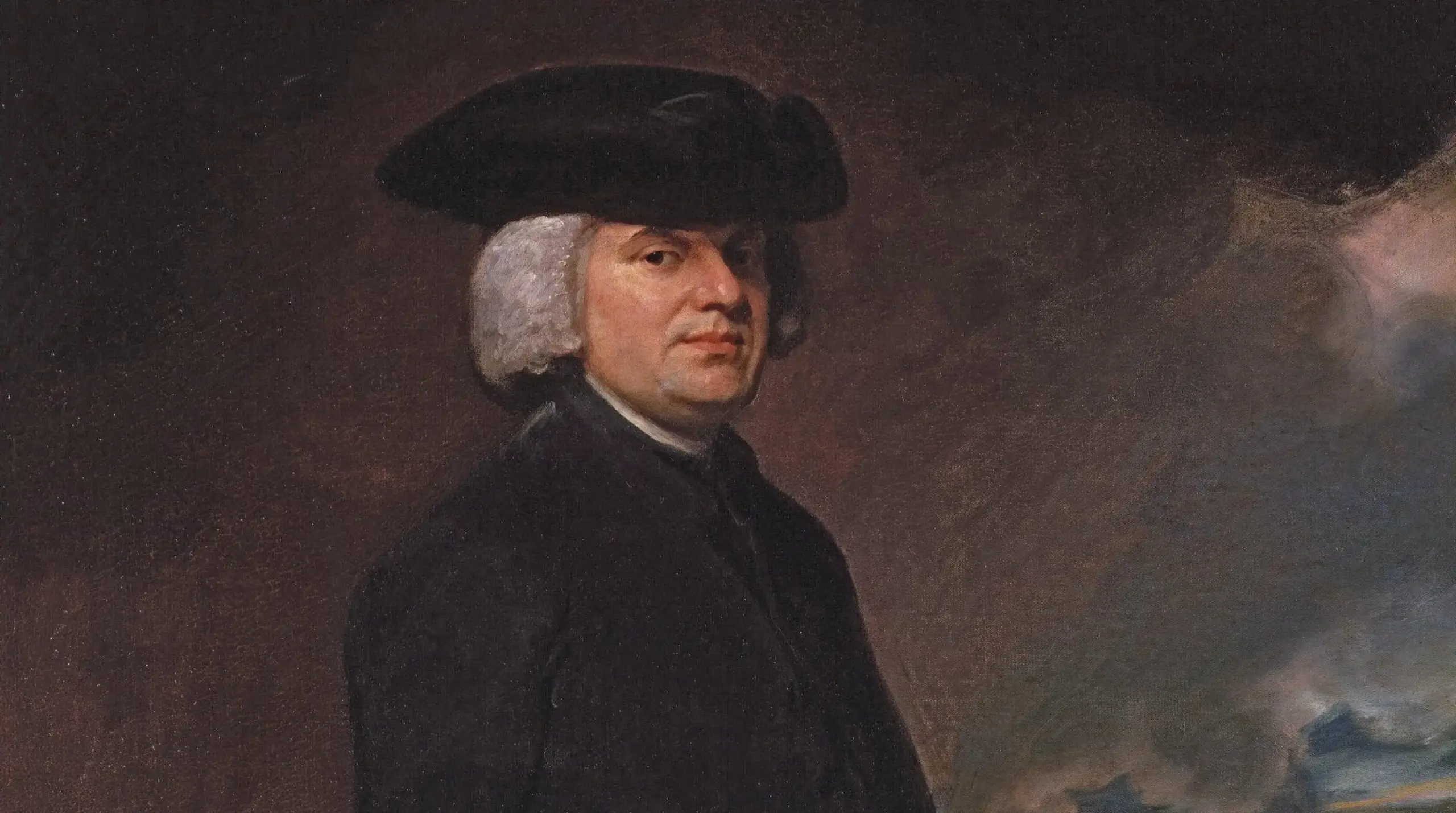
William Paley was a Peterborough-born clergyman, philosopher and theologian whose books became some of the most influential intellectual texts of Georgian Britain. His famous argument that the complexity of nature suggested a designer shaped generations of students, including a young Charles Darwin, while his moral philosophy addressed questions ranging from political authority to the slave trade.
Life and career in dates
- 1743 Born in Peterborough in July and baptised at Peterborough Cathedral on 30 August
- 1745 Moves with his family to Giggleswick in Yorkshire
- 1759 Begins studying at Christ's College, Cambridge
- 1763 Graduates as Senior Wrangler, the highest-ranking mathematics student at Cambridge
- 1766 Elected a Fellow of Christ's College
- 1767 Ordained priest in the Church of England
- 1770s Teaches moral philosophy, theology and philosophy at Cambridge
- 1782 Becomes Archdeacon of Carlisle
- 1785 Publishes The Principles of Moral and Political Philosophy
- 1789 Takes an active public role in opposition to the slave trade
- 1790 Publishes Horae Paulinae
- 1794 Publishes the highly successful A View of the Evidences of Christianity
- 1795 Becomes Sub-Dean of Lincoln Cathedral and Rector of Bishopwearmouth
- 1802 Publishes Natural Theology, the work for which he is now best remembered
- 1805 Dies in Lincoln on 25 May and is buried at Carlisle Cathedral
Born in Peterborough
William Paley was born in Peterborough in July 1743, into a family already closely connected with the religious life of the city and its surrounding villages.
His father, also named William Paley, had studied at Christ's College, Cambridge before becoming Vicar of Helpston in 1735.
He also served as a minor canon at Peterborough Cathedral.
That role brought the family into Peterborough, where the younger William was born.
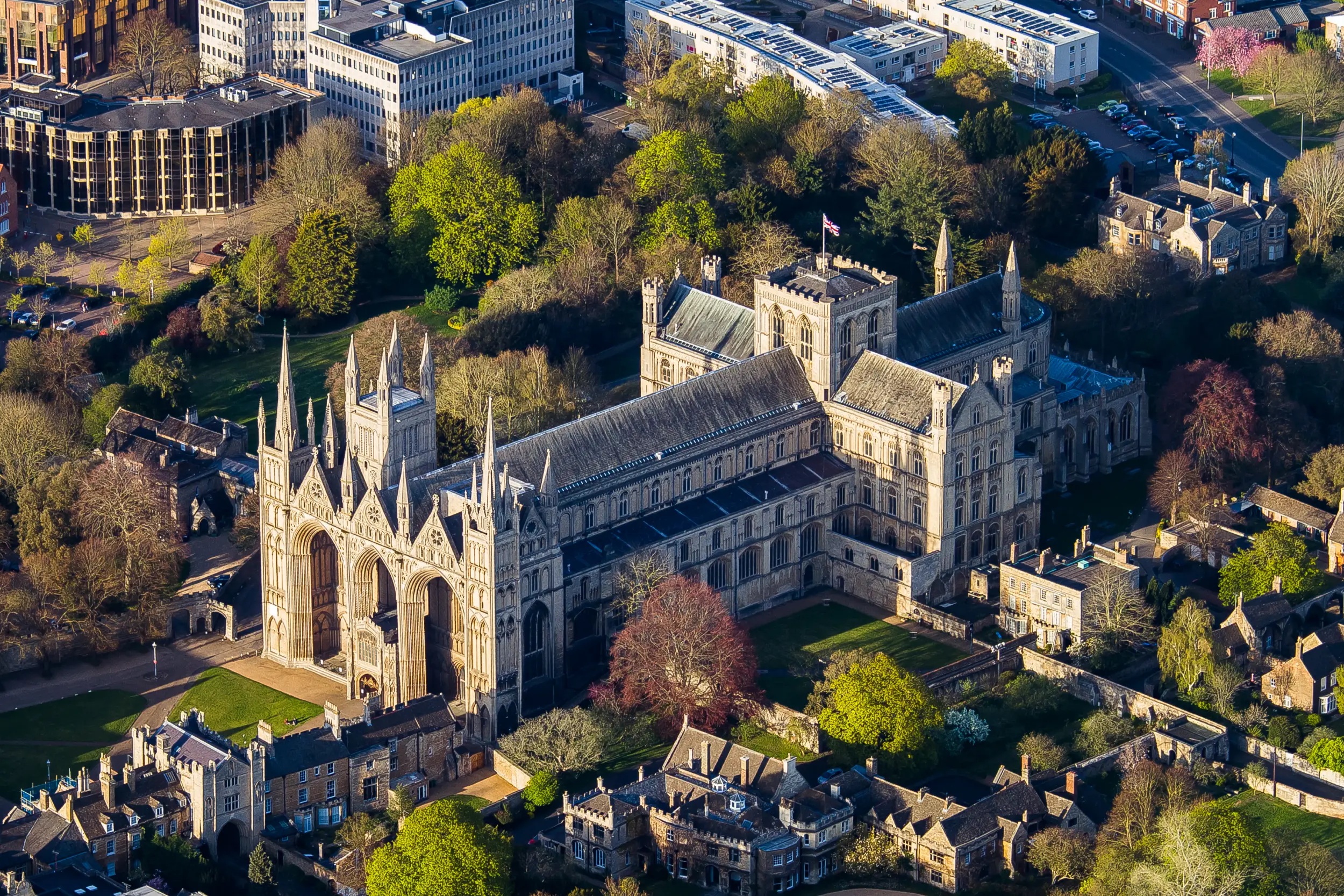
On 30 August 1743 he was baptised in Peterborough Cathedral.
It is an unusually tangible connection for a thinker whose later career is much more commonly associated with Cambridge, Carlisle and northern England.
One of Georgian Britain's most influential philosophers began life within the religious world of eighteenth-century Peterborough.
His time in the city was brief.
In 1745 his father became headmaster of Giggleswick Grammar School in Yorkshire and the family moved north.
William was about two years old.
Growing up in Yorkshire
Paley grew up at Giggleswick, where his father was responsible for his education.
He was not remembered as a particularly athletic boy. Instead, his interests tended towards mechanics, argument, observation and fishing.
The combination would prove significant.
Paley developed a mind that liked to take difficult ideas apart and explain how their individual pieces fitted together.
He was less interested in philosophical language for its own sake than in constructing arguments that an intelligent general reader could follow.
At fifteen he was admitted to his father's old college, Christ's College, Cambridge.
The journey would transform him.
A brilliant Cambridge career
Paley began residence at Christ's College in 1759.
Mathematics provided his first great academic success.
In 1763 he graduated as Senior Wrangler, the student placed first in Cambridge's demanding mathematical examinations.
Cambridge, 1763
Senior WranglerPaley graduated at the top of Cambridge's mathematical rankings before returning to Christ's as a Fellow and teacher.
After briefly teaching at a school in Greenwich, he returned to Christ's when he was elected a Fellow in 1766.
He subsequently became a tutor and lecturer.
His subjects included philosophy, ethics, theology and the New Testament.
Cambridge teaching would provide the raw material for books that reached audiences far beyond the university.
Making philosophy readable
Paley's first major book appeared in 1785.
The Principles of Moral and Political Philosophy grew out of the lectures he had delivered at Cambridge.
It addressed an enormous range of subjects: morality, happiness, property, promises, government, political obedience, crime, punishment and social institutions.
Paley belonged to the emerging utilitarian tradition.
He judged institutions and actions partly by their consequences for human happiness, although unlike later secular utilitarians he placed his moral system firmly within Christian belief.
The book became an extraordinary success.
Four books that shaped his reputation
Principles went through fifteen editions during Paley's lifetime and became a Cambridge textbook.
Generations of students were therefore required not merely to know who William Paley was, but to study his arguments in detail.
Speaking against slavery
One of the most important aspects of Paley's moral philosophy was his opposition to slavery.
Britain was deeply involved in the Atlantic slave trade during Paley's lifetime. British ships transported enslaved Africans across the Atlantic while merchants, plantation owners and investors accumulated enormous wealth from the system.
Paley condemned it.
His discussion of slavery in Principles of Moral and Political Philosophy attracted considerable attention, and he subsequently took part directly in the abolition campaign.
In 1789 he became active in the agitation against the slave trade.
He later presided over an abolition meeting at Carlisle and prepared resolutions supporting the campaign.
Moral philosophy in practice
AbolitionPaley did not confine his opposition to slavery to a textbook. He became publicly involved in the campaign against Britain's slave trade.
Reason and Christianity
Paley's religious writing reflected one of the great intellectual concerns of the eighteenth century.
Could Christianity be defended through reason?
Paley thought that it could.
In Horae Paulinae he compared details in the letters attributed to St Paul with the Acts of the Apostles, arguing that apparently incidental agreements supported their historical authenticity.
Four years later came A View of the Evidences of Christianity.
The book brought together historical and philosophical arguments intended to demonstrate that Christian claims deserved rational belief.
It was enormously successful.
Like his moral philosophy, it entered the Cambridge curriculum and remained influential long after Paley's death.
His method was characteristic.
Begin with evidence.
Arrange it clearly.
Then ask what conclusion a reasonable person should draw.
The watch on the heath
In 1802 Paley published the book that would make his name familiar far beyond theology.
Natural Theology; or, Evidences of the Existence and Attributes of the Deity Collected from the Appearances of Nature asked whether the structure of the natural world itself provided evidence of a creator.
Its opening illustration became famous.
Imagine walking across open ground and finding a watch.
The watch contains numerous components arranged so that they work together towards a purpose.
You would not normally assume that it had assembled itself by accident.
You would infer a maker.
Paley then asked readers to look at the natural world in the same way.
The famous argument
The human eye was particularly important to him.
Its structures seemed precisely arranged for vision. Paley argued that biological complexity of this kind pointed towards design in the same way that the mechanism of a watch pointed towards a watchmaker.
Paley did not invent the broad comparison between machinery and divine design. Similar arguments had circulated for centuries.
What he did was present the argument with such memorable clarity that the watchmaker became permanently associated with his name.
Paley and Darwin
The most remarkable chapter of Paley's intellectual afterlife began more than twenty years after his death.
In 1828 another student arrived at Christ's College.
His name was Charles Darwin.
Darwin studied Paley closely.
Principles of Moral and Political Philosophy and Evidences of Christianity formed part of the Cambridge academic world into which he entered, while Natural Theology particularly impressed him.
Darwin admired the logical structure of Paley's arguments even when his own thinking later moved in a radically different direction.
An extraordinary intellectual connection
Paley → DarwinThe thinker who made biological design one of the great arguments for a creator became a formative influence on the student who would later explain adaptation through natural selection.
That relationship is often presented simply as Paley against Darwin.
The real story is more interesting.
Paley taught Darwin to look closely at adaptation.
Why was an organism structured the way it was?
How did individual parts contribute to its survival or function?
Paley's answer was purposeful design by a creator.
Darwin eventually developed natural selection as a mechanism capable of producing remarkable adaptation without requiring each biological structure to have been individually designed.
The conclusion changed.
But the fascination with adaptation remained.
One of the intellectual roads that led Darwin towards evolutionary theory passed through the work of a man born in Peterborough.
Final years
Paley's successful religious books brought further church appointments.
He became a prebendary of St Paul's Cathedral, Sub-Dean of Lincoln Cathedral and Rector of Bishopwearmouth while retaining his position as Archdeacon of Carlisle.
His health deteriorated sharply around 1800.
Recurring illness caused considerable pain and forced him to give up public speaking.
Yet he continued working.
Natural Theology was written during these difficult final years and published in 1802.
In 1805 Paley travelled to Lincoln for his annual period of residence as Sub-Dean.
There he suffered another severe attack of illness.
William Paley died peacefully on 25 May 1805.
He was 61.
His body was taken north and buried in Carlisle Cathedral beside his first wife.
Paley and Peterborough
William Paley spent only the first two years of his life in Peterborough.
His intellectual career belongs principally to Cambridge and northern England.
But his Peterborough connection is not incidental or speculative.
He was born here because his father belonged to the Cathedral clergy.
His father served both Peterborough Cathedral and nearby Helpston.
And the infant who would become one of Georgian Britain's most widely read intellectual figures was baptised beneath the roof of Peterborough Cathedral.
From Peterborough to intellectual history
1743Born in Peterborough and baptised at the Cathedral.
↓ CambridgeSenior Wrangler, Fellow, tutor and influential teacher.
↓ Natural TheologyMakes the watchmaker argument one of the most famous ideas in philosophy of religion.
↓ DarwinHis books help shape the intellectual development of one of history's greatest scientists.
His reputation has changed dramatically since his own lifetime.
Arguments once treated as standard university texts became subjects of historical and philosophical debate. Darwinian evolution transformed scientific explanations of biological adaptation, while moral and political philosophy developed far beyond Paley's theological utilitarianism.
Yet Paley remains important precisely because his ideas were so influential.
To understand the intellectual world in which Darwin was educated, the development of British utilitarian thought or the eighteenth-century relationship between science and religion, William Paley is difficult to avoid.
William Paley left Peterborough as a toddler, but the child baptised in its Cathedral grew into a thinker whose arguments would echo through theology, philosophy and the history of science.