


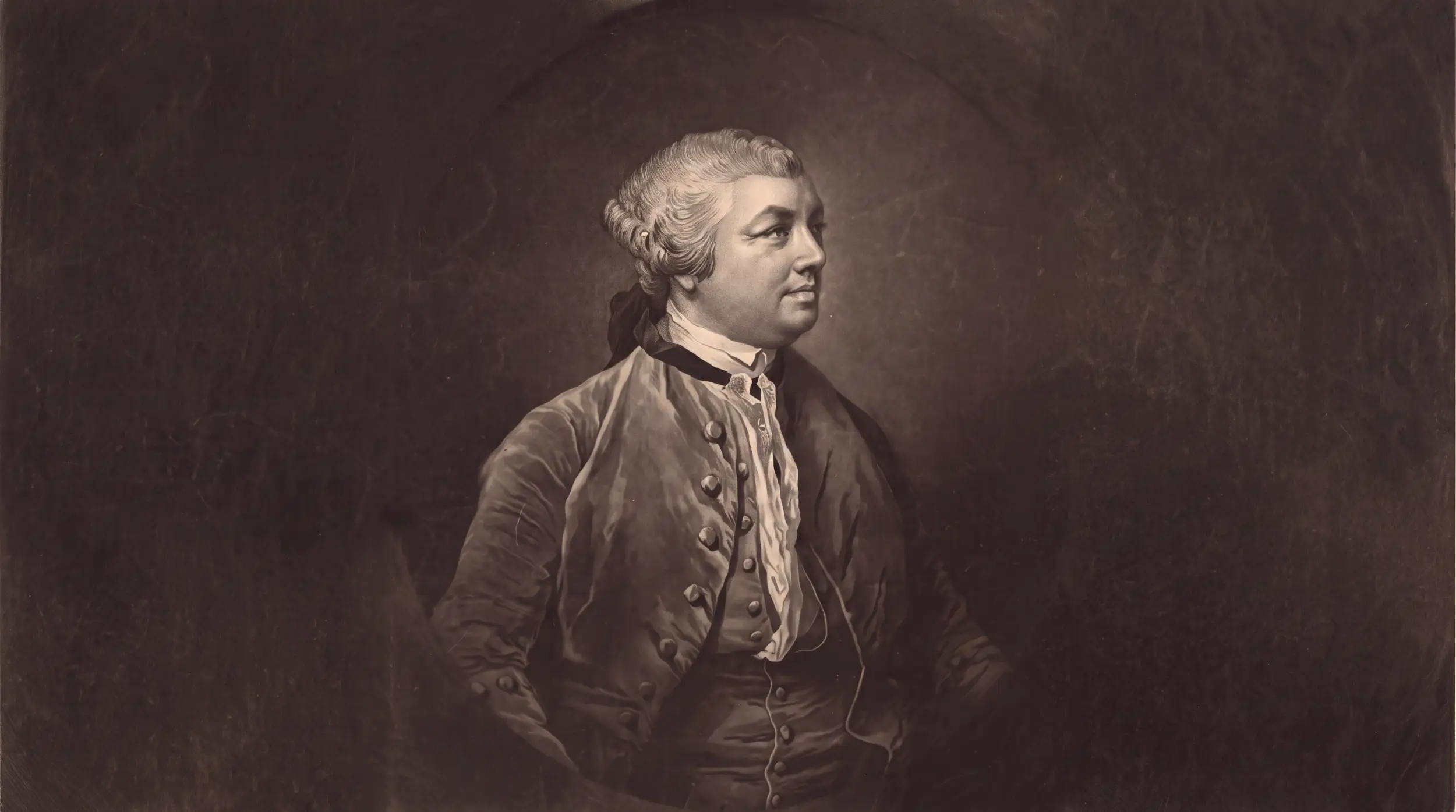
Sir John Hill was one of the most colourful figures in eighteenth-century British science. Probably born in Peterborough and certainly baptised in the city, he became a botanist, physician, naturalist, journalist, playwright and relentless self-publicist whose enormous illustrated study of plants earned royal recognition from Sweden. He also produced one of the earliest medical warnings connecting tobacco with cancer.
Life and career in dates
- 1714 Baptised at St John the Baptist Church in Peterborough on 17 November
- 1731 Begins an apprenticeship with a London apothecary
- 1730s Develops practical botanical expertise working with important private gardens
- 1746 Publishes his translation and study of Theophrastus's History of Stones
- 1746 Begins editing The British Magazine
- 1750 Receives a Doctor of Medicine degree from the University of St Andrews
- 1751 Publishes a highly critical review of the work of the Royal Society
- 1751–53 Writes the hugely prolific daily newspaper column The Inspector
- 1755 Publishes The Useful Family Herbal
- 1756 Publishes the lavishly illustrated British Herbal
- 1759 Begins publication of the monumental Vegetable System
- 1761 Publishes an early clinical warning linking excessive use of snuff with cancer
- 1774 Receives the Swedish Order of Vasa from King Gustav III
- 1775 Completes the final volume of The Vegetable System and dies in London
A Peterborough beginning
John Hill's life began in Peterborough, although even something as apparently simple as his date of birth became tangled by later biographies.
Older sources frequently give 1716 or 1717 and occasionally suggest that he may have been born near Spalding.
Modern research provides something firmer.
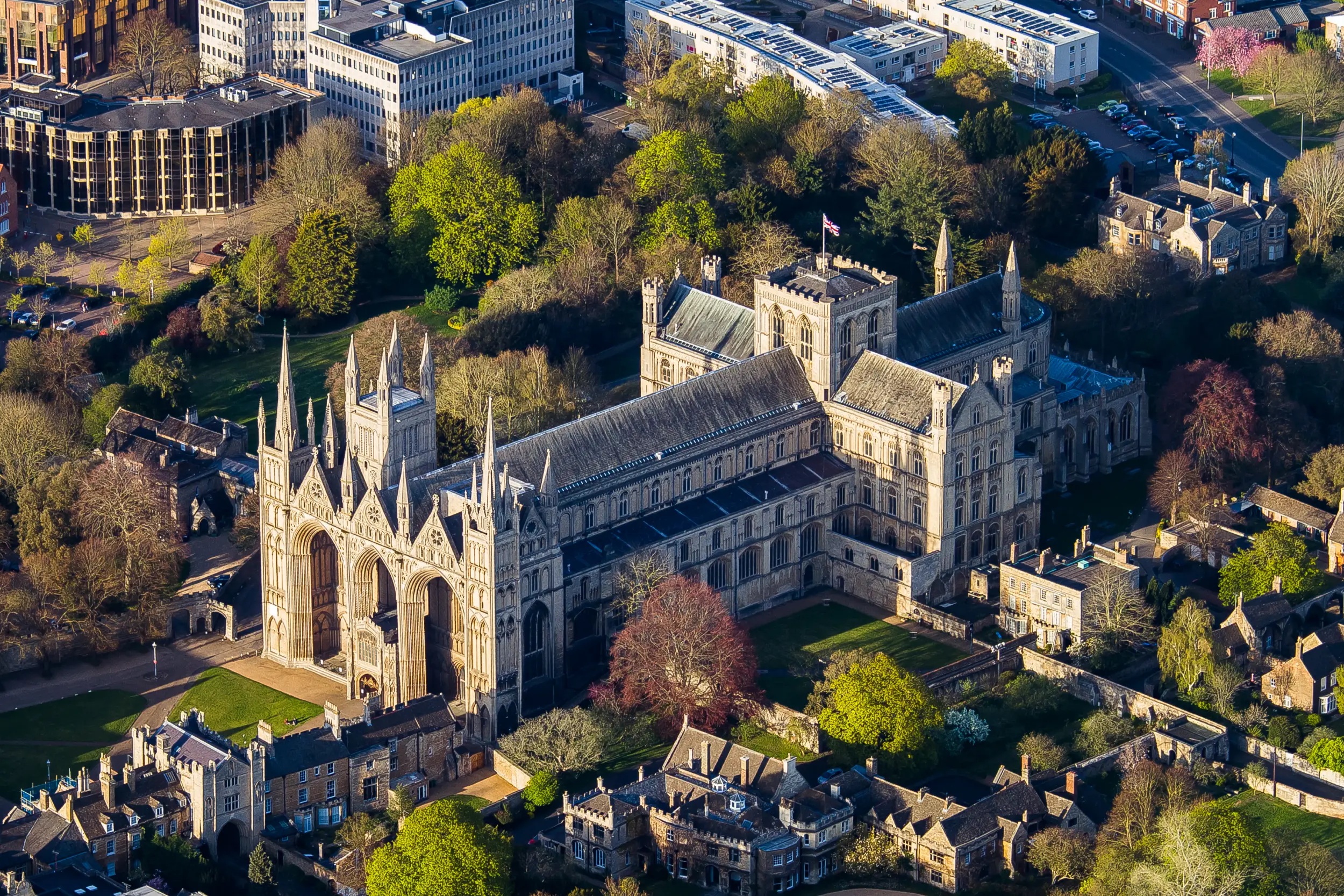
John Hill was baptised at the parish church of St John the Baptist in Peterborough on 17 November 1714.
He was a son of the Reverend Theophilus Hill and Anne Turner. Theophilus belonged to the Church of England clergy and was associated with Peterborough Cathedral.
We therefore know with certainty that the infant John belonged to Peterborough's community in 1714, even if the precise location and date of his birth remain less securely documented.
From eighteenth-century Peterborough emerged one of the most prolific, argumentative and unpredictable scientific writers of his age.
From apothecary to botanist
Hill did not enter science through a university.
His route was practical.
In 1731 he apprenticed himself to a London apothecary, Edward Angier.
Apothecaries occupied a fascinating position within eighteenth-century medicine. They prepared and sold medicines, but many also treated patients directly. Knowledge of plants therefore had immediate commercial and medical value.
Hill developed that botanical knowledge rapidly.
Plants were not simply things to identify. They could be cultivated, dried, classified, prescribed, sold and described in books.
For someone with Hill's extraordinary appetite for making a living from almost anything he learned, botany offered possibilities everywhere.
Among Britain's great gardens
Hill's practical botanical career brought him into some of Britain's most important eighteenth-century gardens.
He worked with the remarkable collection developed by Lord Petre at Thorndon Hall in Essex and was also employed in connection with the Duke of Richmond's plants at Goodwood.
These were not gardens in the modern domestic sense.
Wealthy collectors were acquiring unfamiliar plants from around the world. Botanical gardens became places where science, fashion, imperial trade and horticultural experimentation met.
Hill learned from gardeners, collectors and plant traders while developing his own expertise in identifying and preserving specimens.
University of St Andrews research describes this period as Hill's first formal entrance into the scholarly world of botany and emphasises how deeply his scientific knowledge was rooted in practical horticulture.
Botany before the laboratory
The man who wrote everything
If botany had been Hill's only occupation, he would still have produced an extraordinary body of work.
It was not remotely his only occupation.
He tried acting.
He wrote plays.
He wrote novels.
He composed and wrote for the stage.
He wrote journalism, scientific treatises, gardening books, medicine, natural history and works of popular advice.
His first major publication was a translation and expansion of the ancient Greek writer Theophrastus's History of Stones in 1746.
That same year he began editing The British Magazine.
From 1751 to 1753 he wrote a daily newspaper contribution under the name The Inspector.
Daily really did mean daily.
Hill's productivity became legendary.
An eighteenth-century polymath
Taking on the Royal Society
Hill had ability.
He also had an extraordinary talent for making enemies.
The combination made him one of Georgian London's most controversial intellectual figures.
He wanted recognition from the scientific establishment and sought election to the Royal Society.
He did not get it.
Hill responded in characteristic fashion.
Rather than quietly accepting rejection, he attacked the institution in print.
His 1751 Review of the Works of the Royal Society of London criticised papers published by the Society and ridiculed research he considered trivial or incompetent.
It made him notorious.
The disputes spread into literature and theatre.
Henry Fielding attacked him. Christopher Smart wrote the mock-epic The Hilliad against him. David Garrick responded to Hill's criticism with epigrams.
Hill gave as good as he received.
John Hill did not stand politely outside the scientific establishment. When it refused him entry, he started throwing stones at the windows.
Making plants understandable
Behind the noise was serious botanical work.
Hill's ability to communicate complicated subjects to a large reading public was considerable.
The Useful Family Herbal, published in the 1750s, described British plants and the medicinal properties traditionally associated with them.
Then came the much grander British Herbal.
Published in 1756, it attempted to describe plants and trees native to Britain as well as species cultivated for utility or beauty.
Its great attraction was visual.
Large engraved plates brought multiple species together, allowing readers to compare the structures that distinguished one plant from another.
Hill understood that scientific knowledge was more powerful when readers could see what was being described.
A remarkable medical warning
One of Hill's most important contributions had little to do with his reputation as a colourful botanist.
It concerned tobacco.
Snuff, powdered tobacco inhaled through the nose, was fashionable in eighteenth-century Britain.
Hill noticed something disturbing among habitual users.
In 1761 he published Cautions Against the Immoderate Use of Snuff.
He discussed several patients who developed growths inside the nose after prolonged heavy use of snuff. Some had developed ulcerated cancers.
Hill was cautious about claiming absolute proof of cause and effect, but he believed the association serious enough to warn readers.
1761
Tobacco and cancerHill published what has subsequently been described in medical literature as the first clinical report suggesting a relationship between tobacco use and cancer.
That makes the episode extraordinary in retrospect.
It came almost two centuries before the modern epidemiological evidence that established smoking as a major cause of cancer.
Hill certainly did not possess the modern understanding of carcinogens, cellular mutation or epidemiology.
What he did possess was something equally important to science:
observation.
The Vegetable System
Hill's greatest undertaking began in 1759.
It would consume the remainder of his life.
The Vegetable System attempted nothing less than an enormous illustrated account of the plant kingdom.
The finished work stretched across 26 folio volumes.
Its production required thousands of pages of description and approximately 1,600 engraved botanical plates.
The Vegetable System
The cost was immense.
Producing large scientific books required paper, engravers, printers, colourists and distribution on a scale that could financially ruin an author.
Hill's patron Lord Bute helped support the project, but the work still placed severe pressure on Hill's finances.
The result was nevertheless one of the great illustrated botanical publications of the eighteenth century.
Hill and Linnaeus
Hill was working during a revolution in the way plants were named.
Swedish naturalist Carl Linnaeus had developed a systematic method of classification and binomial naming that would transform biology.
Each species could be identified by a two-part scientific name consisting of genus and species.
Hill did not agree with Linnaeus on everything.
In fact, disagreement came naturally to him.
But he recognised the extraordinary usefulness of the Linnaean system and became one of the important figures helping introduce it to British botany.
His works adopted Linnaean nomenclature while sometimes retaining distinctions between plants that Linnaeus had combined.
In some cases later botany ultimately agreed with Hill.
A changing scientific language
Linnaeus → Hill → British botanyHill helped bring the new Linnaean language of plant classification into British scientific publishing while retaining an independent approach to individual genera and species.
Why was he called Sir John?
Hill is usually encountered in historical sources as Sir John Hill.
The title needs a little explanation.
He was not knighted by the British Crown.
His botanical work attracted recognition in Sweden, the country of Linnaeus.
In 1774 King Gustav III awarded Hill the Order of Vasa, an order established to recognise achievement in fields including agriculture, commerce and the useful arts.
Hill subsequently styled himself Sir John Hill.
Sweden, 1774
Order of VasaInternational recognition for the botanical work of a man who had struggled for acceptance within parts of Britain's own scientific establishment.
There is something wonderfully appropriate about it.
The botanist who had quarrelled spectacularly with London's scientific elite received one of his greatest honours from abroad.
Genius, showman or rogue?
John Hill remains difficult to categorise.
His contemporaries certainly tried.
Many of them disliked him intensely.
He promoted proprietary herbal medicines, sometimes making claims that modern medicine would regard with deep scepticism.
His journalism could be vicious.
His disputes were personal.
Some of his writing was derivative and accusations of plagiarism accompanied parts of his career.
Samuel Johnson reportedly considered him ingenious but unreliable.
Yet reducing Hill to a Georgian quack would be equally misleading.
He possessed real botanical knowledge.
He observed plants closely.
He understood the importance of classification and illustration.
He recognised a potential link between tobacco and cancer astonishingly early.
And he completed a botanical publishing project of almost absurd ambition.
John Hill's problem was never a shortage of ability. It was that ambition, science, commerce, journalism and self-promotion were almost impossible to separate.
Hill and Peterborough
Hill died in London in November 1775, shortly after the final stages of his great botanical work.
The expense of The Vegetable System had contributed to serious financial problems, despite the considerable sums he had earned through writing and medicine.
His reputation then faded.
Linnaeus became one of the defining names in biological history. Hill became more often remembered through Georgian literary quarrels and stories about questionable medicines.
Modern historical research has produced a more interesting picture.
Hill belonged to a period when the boundaries between gardener, botanist, apothecary, physician, natural philosopher and commercial writer were still fluid.
His career shows science becoming professional before the profession itself had fully formed.
An extraordinary Peterborough connection
1714Baptised at St John the Baptist in Peterborough.
↓ BotanyHelps introduce Linnaean classification to British readers.
↓ 1761Publishes a pioneering warning about tobacco and cancer.
↓ 1774Receives Sweden's Order of Vasa for his botanical work.
His story also adds another unexpected dimension to Peterborough's scientific history.
The city can already claim connections with engineering, physics, astronomy and natural philosophy through figures such as Frank Perkins, Daphne Jackson and William Paley.
John Hill takes that story back into the eighteenth century and into the emerging science of the natural world.
Before modern botany had settled on its language, a Peterborough-born polymath was already collecting plants, classifying them, drawing them, arguing about them and publishing them for the world to see.