
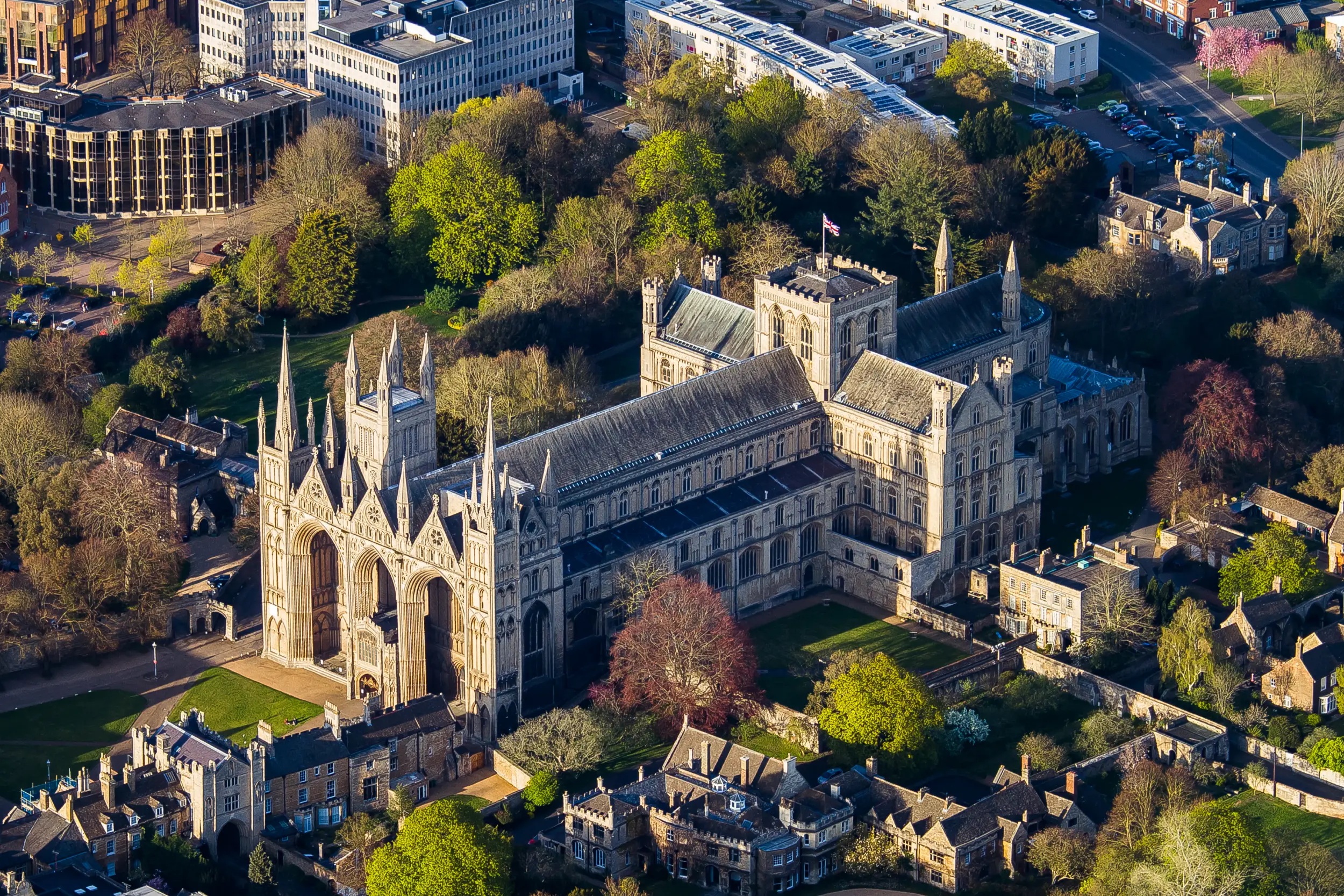


Discover Peterborough · Modern History
1967–1988
Peterborough New Town The Plan That Remade the City
In July 1967 an ancient cathedral city was designated a New Town. Over the next two decades, Peterborough was expanded on a scale unlike anything in its previous history: new townships, parkways, industries, parks, shopping centres and tens of thousands of homes reshaped the city for a new generation.
The city that
built a new city.
Ancient roots. A modern city built at extraordinary speed.
In 1967, Peterborough was designated for major expansion under Britain's New Towns programme. What followed transformed the city: new townships, roads, parks, workplaces, shopping, culture and tens of thousands of new homes. Much of the Peterborough we know today was planned and built within a single generation.
Peterborough was chosen to grow.
The ancient cathedral city was about to become one of Britain's great post-war experiments in planned urban growth.
Peterborough was designated for New Town expansion in 1967. Its location was a major advantage: close to the A1 and linked directly to London by the East Coast Main Line, with space around the existing city for substantial growth.
The task was much bigger than simply building housing. The expanded Peterborough would need employment, roads, schools, shops, parks, community facilities and an entirely new physical structure capable of supporting a dramatically larger population.
This wasn't the creation of a separate New Town beside Peterborough. It was the deliberate transformation of Peterborough itself into a much larger city.
An organisation created to remake the city.
Established in 1968, Peterborough Development Corporation was given the job of turning the ambition into roads, neighbourhoods, workplaces and landscapes.
The Development Corporation worked alongside local authorities and private investors on a scale that is difficult to imagine today. Its objective was to accommodate substantial population growth while creating jobs and giving the expanded city the infrastructure needed to function.
New townships
Bretton and Orton became major new townships, while development across Peterborough transformed the scale and shape of the urban area.
The Parkway system
A network of fast urban roads was constructed around the city, creating the distinctive Parkway system that still defines how Peterborough moves.
A city for business
New employment areas attracted major businesses, supported by Peterborough's strategic position beside the A1 and its exceptional railway connections.
A new commercial heart
The city centre was reshaped through major retail, transport and public-realm projects, culminating in the opening of Queensgate in 1982.
Green space built in
Parks, lakes, green corridors and recreation were integral to the planning philosophy, with Ferry Meadows becoming one of its most enduring legacies.
More than bricks and roads
Public art, theatres and community facilities were woven into the growing city, helping new neighbourhoods develop identities of their own.
Two decades of extraordinary change.
Look at the sequence of projects and the sheer pace of Peterborough's transformation becomes clear.
New Town designation
Peterborough is selected for major planned expansion.
Development Corporation established
Peterborough Development Corporation begins the job of planning and delivering the expanded city.
The new Peterborough takes shape
Housing, roads, employment areas and community infrastructure begin appearing across the expanded city.
Bretton begins to emerge
Bretton becomes one of the major new townships planned around the expanded city.
The Parkway network expands
A new high-capacity road system fundamentally changes movement around Peterborough.
Orton grows
Development south-west of the old city creates another major group of new neighbourhoods beside the Nene Valley.
Ferry Meadows opens
A landscape partly shaped by gravel extraction for the city's expansion becomes one of Peterborough's best-loved green spaces.
Queensgate opens
The new shopping centre transforms Peterborough's commercial heart and strengthens its role as a regional shopping destination.
The Development Corporation era ends
After two decades of transformation, Peterborough Development Corporation is wound up, leaving behind a fundamentally different city.
Queensgate changed the heart of Peterborough.
Few projects symbolise the scale and confidence of the New Town transformation more clearly than Queensgate Shopping Centre.
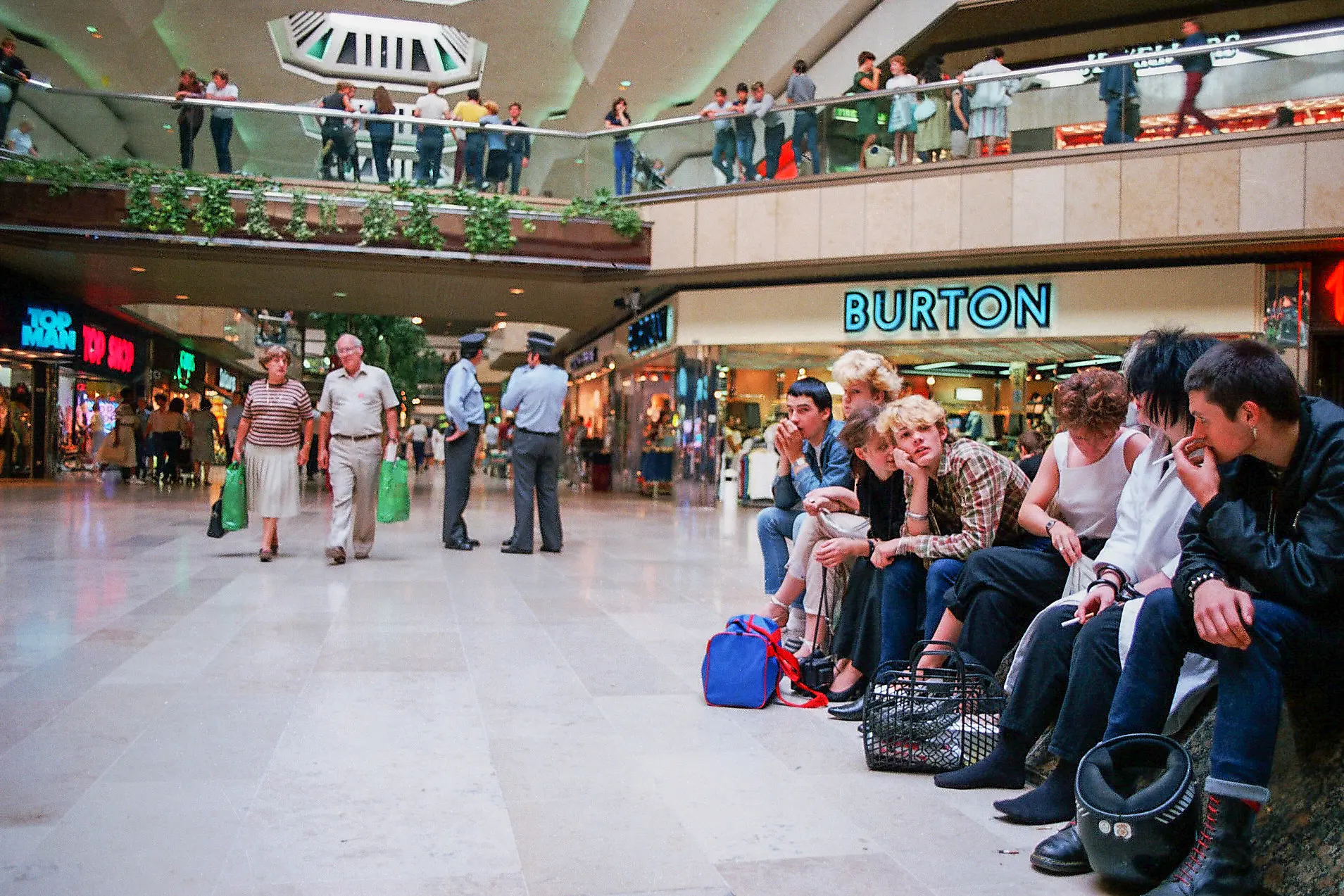
Old streets. New scale.
Queensgate opened in 1982, creating a major regional shopping destination directly beside Peterborough railway station and transforming the western side of the city centre.
Its arrival embodied the confidence of the era. Peterborough was not simply expanding its suburbs. It was rebuilding its infrastructure and commercial centre for a much larger regional role.
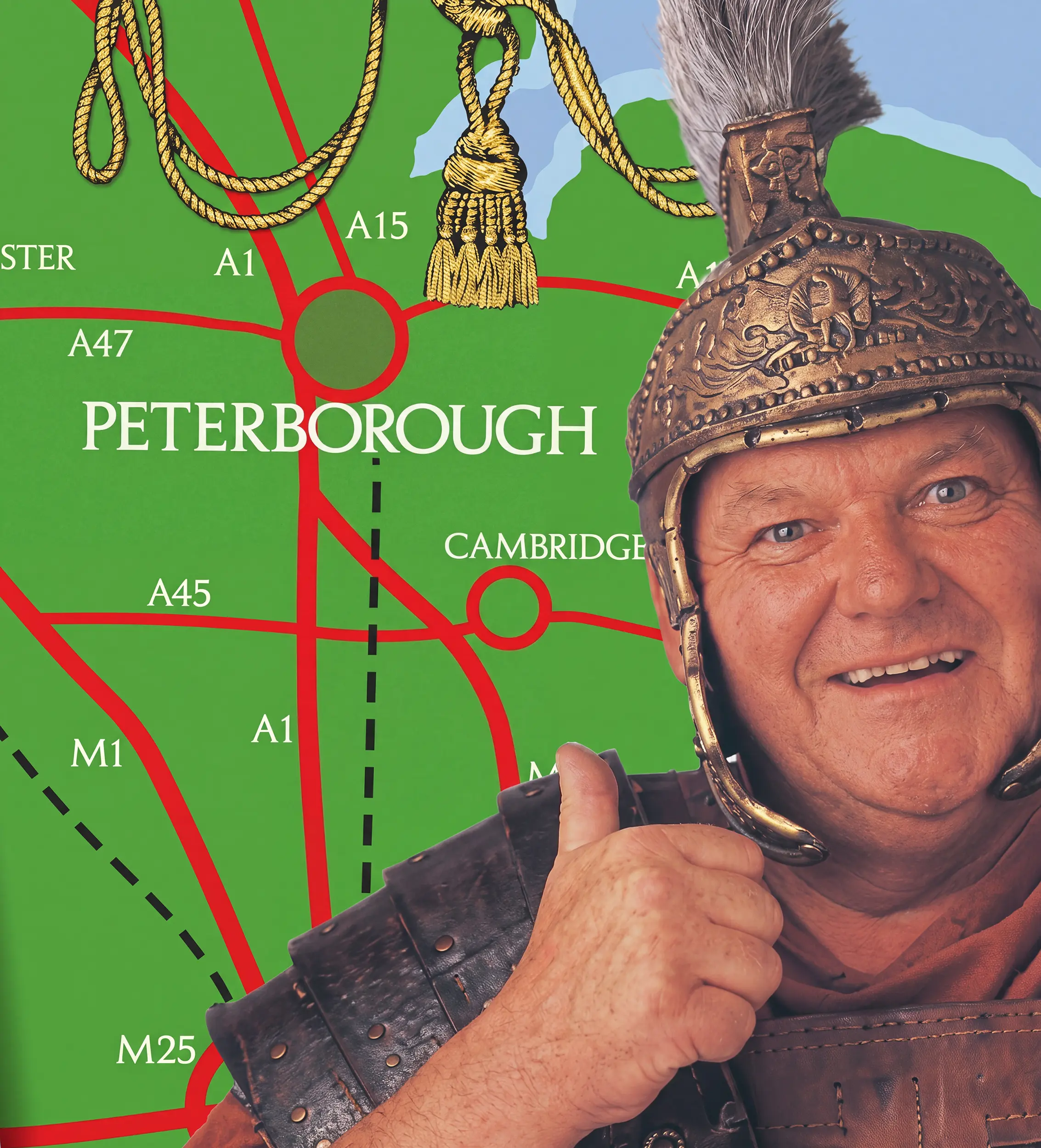
The Peterborough Effect.
Building the city was only half the job. Peterborough also had to persuade people and businesses that something remarkable was happening here.
The Development Corporation promoted Peterborough with the confidence of a place that expected to grow. Advertising campaigns sold its connectivity, new homes, employment opportunities and quality of life to audiences far beyond the city.
Among the most memorable were the Peterborough Effect adverts featuring actor Roy Kinnear. Their tone was playful, but the underlying message was serious: Peterborough was a place on the move.
Even the map used in the campaign tells its own story. Peterborough is illustrated as the biggest place in the region, visually dominating its neighbours. It is a wonderfully unapologetic expression of the ambition and civic pride that accompanied the city's transformation.
The Development Corporation disappeared. Its city did not.
The organisation was wound up in 1988, but the Peterborough it helped create surrounds us every day.
The townships
Bretton and Orton remain major parts of Peterborough, with their own centres, schools, green spaces and community identities.
The Parkways
Peterborough's road system is one of the most recognisable products of the New Town era and continues to shape the city's geography.
Nene Park
Ferry Meadows opened in 1978 and became one of the great successes of the expansion period: a vast green landscape on the doorstep of the city.
Public art and culture
Sculpture, community facilities and cultural venues helped give the rapidly expanding city an identity beyond roads, houses and offices.
An ancient city with modern ambition built into its fabric.
Peterborough's New Town era is sometimes treated as recent planning history. In reality, it is one of the defining chapters in the story of the city. Within little more than twenty years, Peterborough changed its scale, population, economy and physical form. The cathedral city did not disappear. A new city grew around it.