


Peterborough: Three Musicians, One Extraordinary Legacy
Sir Thomas Armstrong shaped generations of British musicians. James Blades created sounds heard by millions. Don Lusher became the trombonist the greats wanted beside them. Their lives took Peterborough into concert halls, cinemas, broadcasting studios and stages around the world, yet the most revealing part of their story may be where each of them began.
There is a curious kind of fame in music in which the work becomes better known than the person who made it. Millions recognise the sound, the performance or the institution, yet the musician behind it gradually slips from public memory.
Peterborough produced three men who understood that world unusually well. Sir Thomas Armstrong became one of the most influential figures in British musical education. James Blades helped transform the role of percussion and produced sounds that entered the national consciousness. Don Lusher became one of Britain's finest trombonists, admired by fellow musicians and trusted on stages where precision mattered more than showmanship.
Their instruments could hardly have been more different. Armstrong came from the organ loft and the classical tradition, Blades from percussion, film and the experimental edges of orchestral music, while Lusher belonged to the great age of brass, dance bands and jazz. Yet their stories repeatedly fold back towards the same ideas: craft before celebrity, music learned within a community, and the belief that mastery carries with it an obligation to pass something on.
That makes them more than three notable Peterborough musicians. Together, they reveal a city that once possessed an informal musical ecosystem capable of carrying children from church choirs, workshops and community bands into some of the most important institutions and performances in British music.
They were performers, certainly, but they were also teachers, craftsmen, collaborators and institution builders. Their influence travelled further than their fame.
A Cathedral, a workshop and a Salvation Army hall.
Their later careers reached London, America and the highest levels of British music, but all three were formed first by places that belonged to everyday Peterborough.
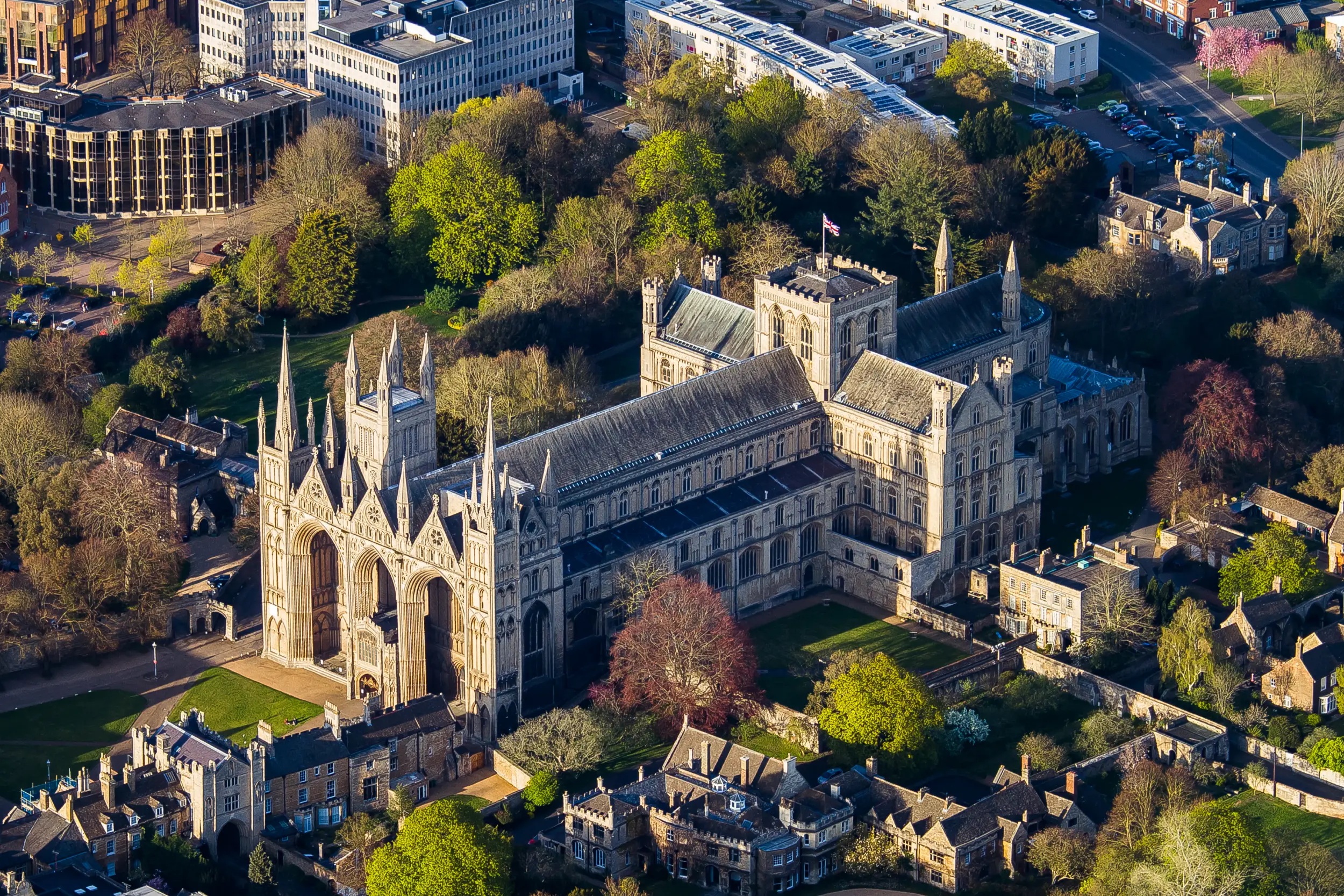
Cathedral.
Armstrong was born into a deeply musical Peterborough family. His father, Amos, taught music and worked as an organist, choirmaster and conductor, while Thomas himself entered the Cathedral tradition and studied under Haydn Keeton, the long-serving organist of Peterborough Cathedral. 1
Music was not an occasional cultural luxury. It was embedded in institutions that trained young people seriously.
Workshop.
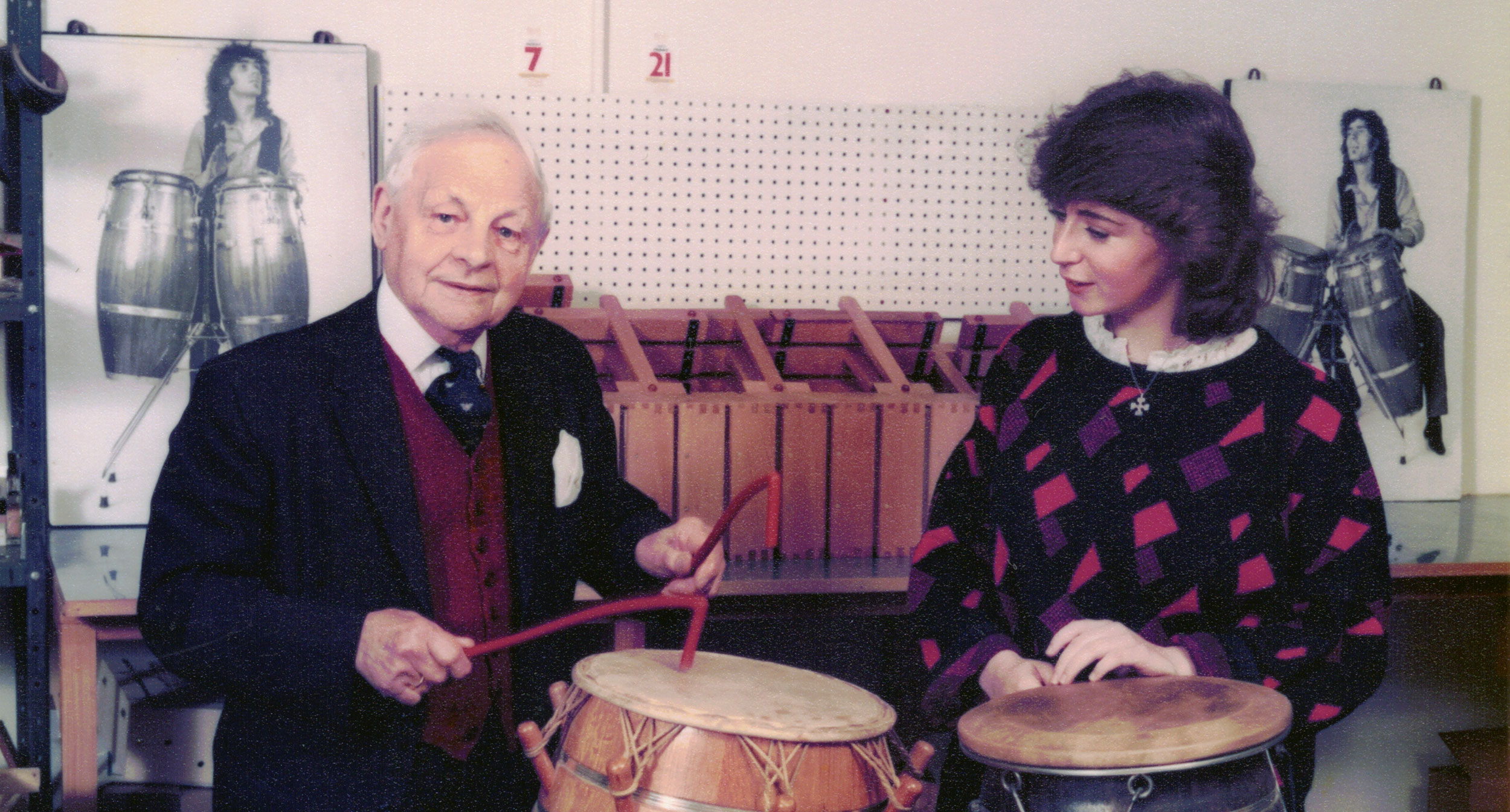
Blades absorbed church music, Salvation Army bands and the city's works bands before beginning an engineering apprenticeship at Peter Brotherhood in 1915. The workshop gave him more than employment: its orchestra fed his musical ambitions, while engineering gave him a practical understanding of materials, construction and sound. 2
Brass band.
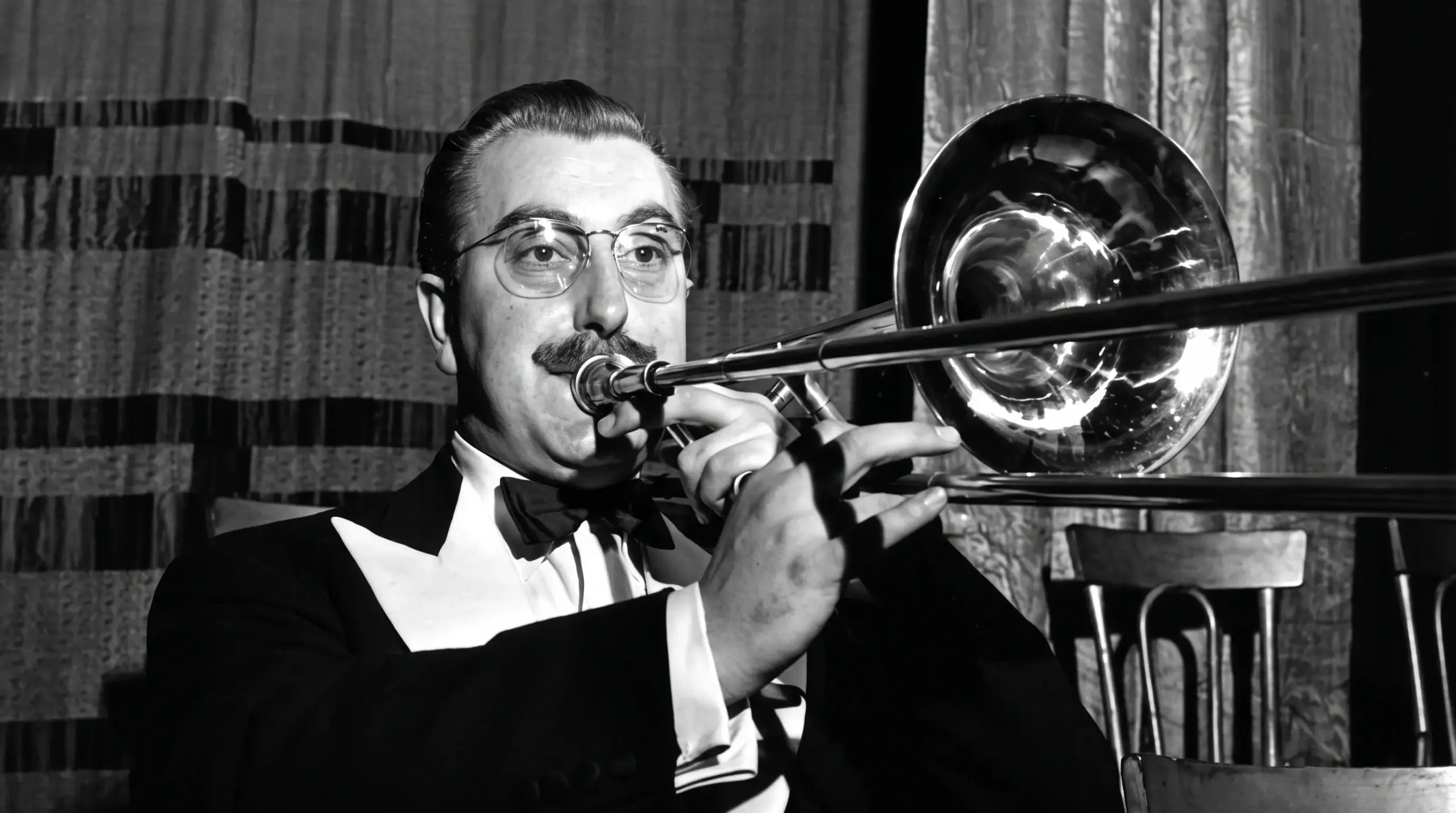
Lusher began learning trombone at six and became the third generation of his family to play in Peterborough's Salvation Army Band. Long before the studios and international tours, there was family, community and the discipline of learning how to play as part of an ensemble. 3
Sir Thomas Armstrong and the art of making musicians.
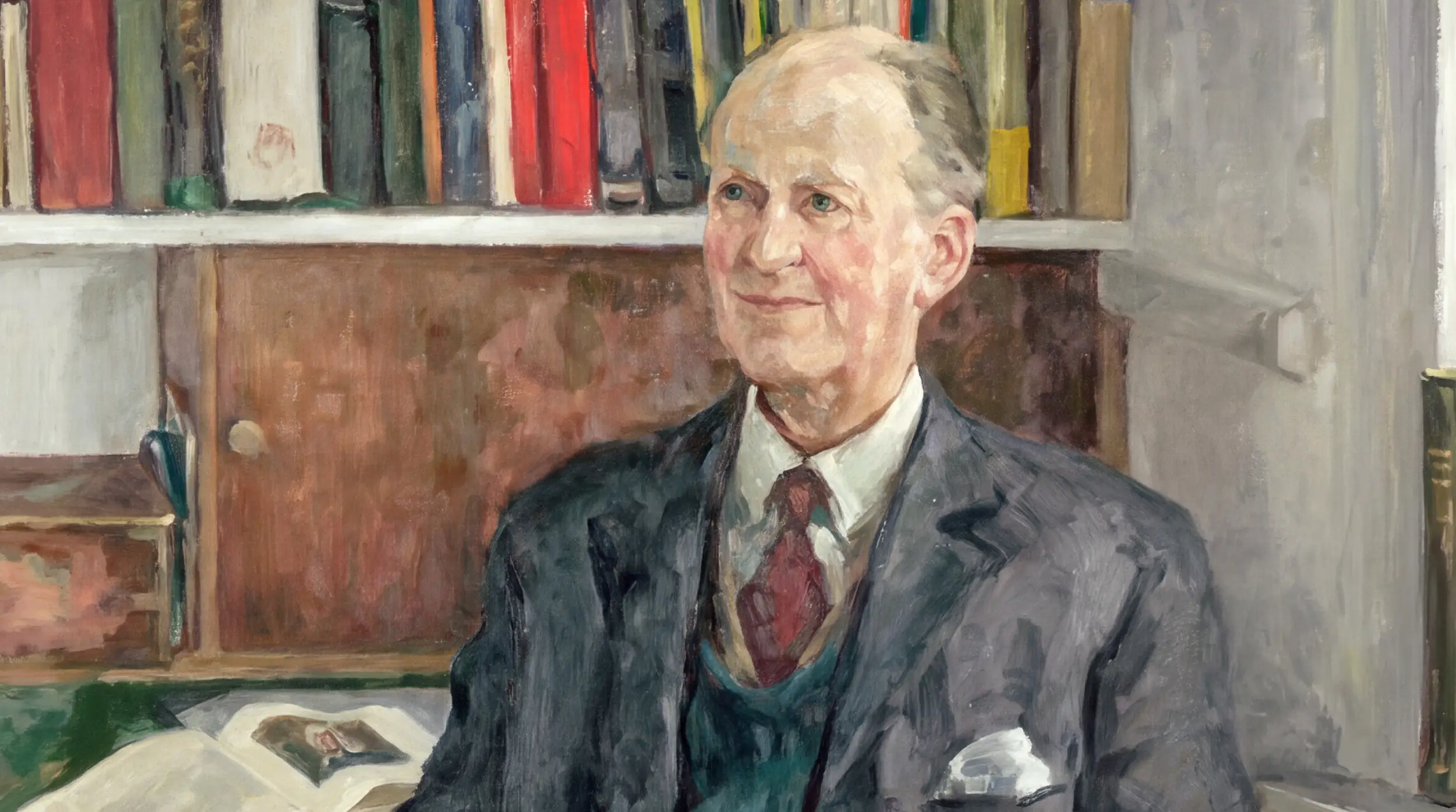
Thomas Armstrong's importance is difficult to compress into a single achievement because his influence did not depend upon one.
Born in Peterborough in 1898, he grew up within a family for whom music was both vocation and public service. His father Amos was active as a teacher, organist, choirmaster and conductor, and the young Armstrong entered the musical life surrounding Peterborough Cathedral , where he studied with Haydn Keeton. The same musical world also nurtured Malcolm Sargent, who would become one of the best-known British conductors of the twentieth century. 1
Armstrong's studies were interrupted by the First World War. During his service he encountered Ralph Vaughan Williams, whom he later described as the greatest influence on his life. Oxford followed the war, and from there his career widened naturally through organ playing, composition, conducting, broadcasting, university music and administration.
In 1955 he became Principal of the Royal Academy of Music, remaining in the role until 1968, and he was knighted in 1958. His influence stretched well beyond the Academy through a network of national musical institutions, but the most revealing aspect of his career was perhaps his instinct for creating the conditions in which other musicians could flourish. 4
Armstrong began as an organist, but over time the institution itself became a kind of instrument. He understood how to shape a musical environment, how to encourage talent and how to strengthen the structures that allowed musicians to develop. His legacy therefore survives not simply in the music he made, but in the people whose careers were helped by the institutions he led.
Explore the longer musical culture of the Cathedral through People of Peterborough Cathedral .
James Blades and the sounds everybody knew.
If Armstrong's influence often travelled through other musicians, James Blades achieved another kind of anonymity: people knew his sounds without necessarily knowing his name.
Blades was born in Peterborough in 1901 into a large working-class family and absorbed music from almost every direction. He sang in local churches and at the Cathedral, listened closely to Salvation Army and works bands, and became fascinated by percussion while still a boy. When he entered an engineering apprenticeship at Peter Brotherhood in 1915, he found himself in a workplace with its own orchestra, bringing industrial Peterborough and musical Peterborough together in the same building.
Those engineering skills stayed with him. Throughout a career that moved through circus, silent cinema, orchestras, film studios, broadcasting and modern opera, Blades possessed an unusual ability to think physically about sound. He understood not simply how to strike an instrument, but how materials, balance, resonance and construction could be manipulated until the precise sound a composer wanted finally existed.
His most widely heard performance may also be the perfect example of his peculiar fame. The tremendous sound accompanying the Rank Organisation's famous gong sequence was produced by Blades on a large Chinese tam-tam. Audiences saw another man swing the mallet on screen, while the sound itself belonged to the Peterborough percussionist behind the image. 2
During the Second World War, an even simpler performance acquired extraordinary significance. Blades played three short beats followed by one long, the Morse-code letter V, for broadcasts associated with the BBC and Radio Belgique. The rhythm became part of the V for Victory campaign heard across occupied Europe. Four strokes of percussion were enough to carry defiance, recognition and hope.
His long relationship with Benjamin Britten subsequently pushed percussion into still more imaginative territory. Blades advised on unusual instruments, experimented with found and constructed sounds, and helped realise musical ideas that demanded the instincts of an engineer as much as those of a conventional orchestral player.
Yet, like Armstrong, performance was only part of the story. Blades became an influential professor at the Royal Academy of Music, wrote books that helped establish percussion as a serious field of study, and passed his extraordinary curiosity about sound to another generation.
The sound became famous. The musician remained just beyond the frame.
Peterborough behind the music
From the Cathedral to the Royal Academy.
The connection between Armstrong and Blades gives the story one of its most satisfying turns.
They were born only three years apart, and their early musical worlds overlapped in Peterborough. Blades later recalled the Cathedral environment in which musicians including Thomas Armstrong and Malcolm Sargent were already part of the landscape. 5
Decades later, those Peterborough beginnings converged again at one of Britain's great conservatoires. Armstrong was Principal of the Royal Academy of Music while Blades taught percussion there, placing two men formed within the city's early twentieth- century musical culture at the heart of training professional musicians for the next generation.
The coincidence is appealing, but the deeper connection matters more. Neither man's career ended with his own performance. Armstrong helped build the structures in which musicians could develop; Blades turned experience, experiment and craftsmanship into knowledge that could be handed on.
The boys who had encountered music in Peterborough had become the teachers of British music.
cross
Don Lusher and the discipline of playing beautifully.
By the time Don Lusher was born in Peterborough in 1923, the musical world was changing, but the route into it remained surprisingly familiar.
Lusher began learning trombone at six and became the third generation of his family to play within Peterborough's Salvation Army Band. He grew up hearing brass music at close quarters, but the city offered other sounds too. Performances of Handel's Messiah at Peterborough Cathedral opened a window onto the classical tradition, while the dance bands that visited local venues offered the excitement of a professional musical life. 3
The Second World War interrupted that development and took him into the Royal Artillery, although music followed him into military life through an Army concert party. After demobilisation the professional future he wanted was far from certain. Work was scarce enough for him to return to Peterborough and take an ordinary job while considering whether music could really become a career.
Then a telegram arrived offering the possibility of an audition with Lou Preager's band at the Hammersmith Palais. Lusher travelled to London carrying his trombone and suitcase, auditioned on the Friday and found himself broadcasting with the band the following evening. 3
What followed was one of the outstanding British brass careers of the post-war period. Lusher joined the Ted Heath Orchestra, toured America repeatedly, became a highly sought-after studio musician and later led the Heath tribute orchestra. His playing also placed him behind some of the most famous performers in the world, including Frank Sinatra on European tours.
That last image fits this story almost too neatly. Sinatra occupied the spotlight, as he was supposed to. Lusher belonged to the musicians around him whose precision, judgement and tone made the performance possible.
Lusher's philosophy was rooted in consistency rather than spectacle. He absorbed the professional maxim that every performance should be approached as though it were a broadcast, until playing well ceased to be something switched on for important occasions and became simply the normal way of playing.
Like Armstrong and Blades, he eventually became a teacher, sharing the craft with younger musicians and ensuring that the knowledge accumulated over a lifetime did not end with the applause.
Three careers begin to sound like one story.
Once the instruments are set aside, the similarities become more revealing than the differences.
Excellence before celebrity.
Armstrong, Blades and Lusher all built reputations inside music before they built them outside it. Other musicians trusted their judgement, technique and reliability, which is a quieter form of fame but often a more enduring one.
No need for musical borders.
Church music, brass bands, orchestras, film, jazz, broadcasting, opera and popular entertainment move freely through their lives. Their careers belonged to a period when a good musician could cross musical worlds without worrying too much about the label on the door.
The instinct to pass it on.
Armstrong became a great musical educator, Blades turned his experience into teaching and scholarship, and Lusher worked with younger brass players. For all three, mastery seems to have carried an implicit responsibility to make the next musician better.
An accidental conservatoire.
Perhaps the most interesting part of their combined story is not what happened after they left Peterborough, but the network of places that allowed their talent to emerge before anyone knew what it would become.
Perhaps we have been looking for the wrong kind of musical fame.
Cities often tell their musical histories through stars: the singer with the number one, the band that filled an arena, the face everybody recognised on television. Peterborough can tell those stories too, but Armstrong, Blades and Lusher offer another way of thinking about musical importance.
They belonged to the machinery of music in the best possible sense. Armstrong built environments in which musicians could develop. Blades helped composers, broadcasters and filmmakers create sounds that did not exist until somebody worked out how to make them. Lusher became the kind of player other musicians wanted beside them because he could be relied upon to make the music better.
None of that makes them peripheral. Quite the opposite. Their careers suggest that some of the most central people in music are precisely those whose excellence allows somebody else to occupy the centre of the stage.
From those beginnings came the Royal Academy of Music, Benjamin Britten, the BBC, the Rank gong, Ted Heath, Frank Sinatra, international tours, broadcasting studios and generations of younger musicians.
The connections seem improbable only until they are placed beside one another. Then a different Peterborough appears: not a city that happened, by coincidence, to produce three remarkable musicians, but a place whose churches, schools, workshops, families, bands and performance spaces once formed a loose conservatoire of their own.
That makes their apparently forgotten history unexpectedly relevant to the present. If Peterborough hopes to produce its next Armstrong, Blades or Lusher, identifying talent is only part of the challenge. Talent has always existed.
The question their lives leave us is whether the city will continue to create the ordinary places in which extraordinary musicians can first discover what they are capable of.
Before asking where the next great Peterborough musician is, perhaps we should ask where they will first get the chance to play.
Their influence travelled further than their fame.
Sir Thomas Armstrong · James Blades · Don Lusher
Follow Peterborough's musical story.
These three lives sit inside a much larger story of music, performance, engineering and creative life across Peterborough.
James Blades
From Peter Brotherhood and silent cinema to Britten, the Rank gong and four wartime beats heard across Europe.
Read his story → Jazz & big bandDon Lusher
From Peterborough's Salvation Army Band to Ted Heath, international touring and the musicians surrounding Sinatra.
Read his story → PeoplePeterborough People
Discover musicians, performers, writers, scientists, athletes and remarkable lives connected with the city.
Meet the people → CathedralThe People Behind the Cathedral
Explore the organists, musicians, bishops, abbots, builders and makers behind more than thirteen centuries of Cathedral life.
Explore the people → MakingPeterborough's Engineering Story
Follow the workshops, invention and practical ingenuity that formed another important part of James Blades's early world.
Discover the makers → Music nowWhat's On
Find live music, concerts, performances and festivals happening across Peterborough today.
See what's on →Research sources
Discover Peterborough biographies are linked throughout for deeper local exploration. Historical details have been cross-checked against institutional archives, contemporary obituaries and oral-history material.
- Royal Albert Hall archive, Sir Thomas Armstrong , covering his Peterborough origins, musical career and Principalship of the Royal Academy of Music.
- The Guardian, James Blades obituary , covering his Peterborough upbringing, percussion career, broadcasting, teaching and musical experimentation.
- National Jazz Archive, Don Lusher interview , including Lusher's own recollections of his Peterborough childhood, Salvation Army background and early professional career.
- The Independent, Obituary: Sir Thomas Armstrong , covering Armstrong's work at Oxford, the Royal Academy of Music and his wider contribution to British musical life.
- The Guardian, James Blades obituary , documenting his early Peterborough musical environment and connections with Thomas Armstrong and Malcolm Sargent.
- National Jazz Archive, Don Lusher , covering his Ted Heath years, teaching career and later legacy.