


Sir Thomas Armstrong at a glance
- Born
- 15 June 1898, Peterborough
- Died
- 26 June 1994, Olney, Buckinghamshire
- Known for
- Organist, conductor, composer and music educationalist
- Peterborough connection
- Born into one of the city’s leading musical families and trained at Peterborough Cathedral
- Major role
- Principal of the Royal Academy of Music, 1955–1968
- Honour
- Knighted in 1958
From the choir stalls and organ lofts of Peterborough to the leadership of the Royal Academy of Music, Sir Thomas Armstrong became one of the most influential figures in twentieth-century British musical education.
Thomas Henry Wait Armstrong was born in Peterborough in 1898 into a household where music was part of everyday life. His father, Amos Ebenezer Armstrong, was music master at The King’s School, organist and choirmaster at St Augustine’s Church in Woodston, and an important figure in the city’s operatic, orchestral and choral societies.
For the young Thomas, Peterborough was therefore not simply his birthplace. It was the place where his musical world was formed.
He would go on to become a cathedral organist, conductor, composer, broadcaster and educational leader, eventually reaching one of the most important positions in British musical life as Principal of the Royal Academy of Music.
From Peterborough Cathedral to Mozart
Armstrong trained under Peterborough Cathedral organist Haydn Keeton alongside the future conductor Malcolm Sargent. The two friends enjoyed tracing their musical teaching lineage backwards through Keeton, George Elvey and Thomas Attwood to Wolfgang Amadeus Mozart himself.
A childhood surrounded by music
Armstrong’s early life was unusually rich in musical opportunity.
Between 1907 and 1910 he was a chorister at the Chapel Royal, St James’s Palace. During that period he sang at the funeral of King Edward VII in Westminster Abbey.
He then returned to the Peterborough area and, in 1912, was appointed organist of Thorney Abbey while still in his teens.
The following year he became articled to Haydn Keeton at Peterborough Cathedral, placing him directly inside one of the city’s strongest musical traditions.
Peterborough’s musical apprenticeship
A musical household
His father taught music, directed choirs and orchestras and helped shape Peterborough’s wider musical life.
Chapel Royal chorister
Armstrong sang at St James’s Palace and took part in the funeral of King Edward VII at Westminster Abbey.
Thorney Abbey
Still a teenager, Armstrong became organist of one of the Peterborough area’s most historic churches.
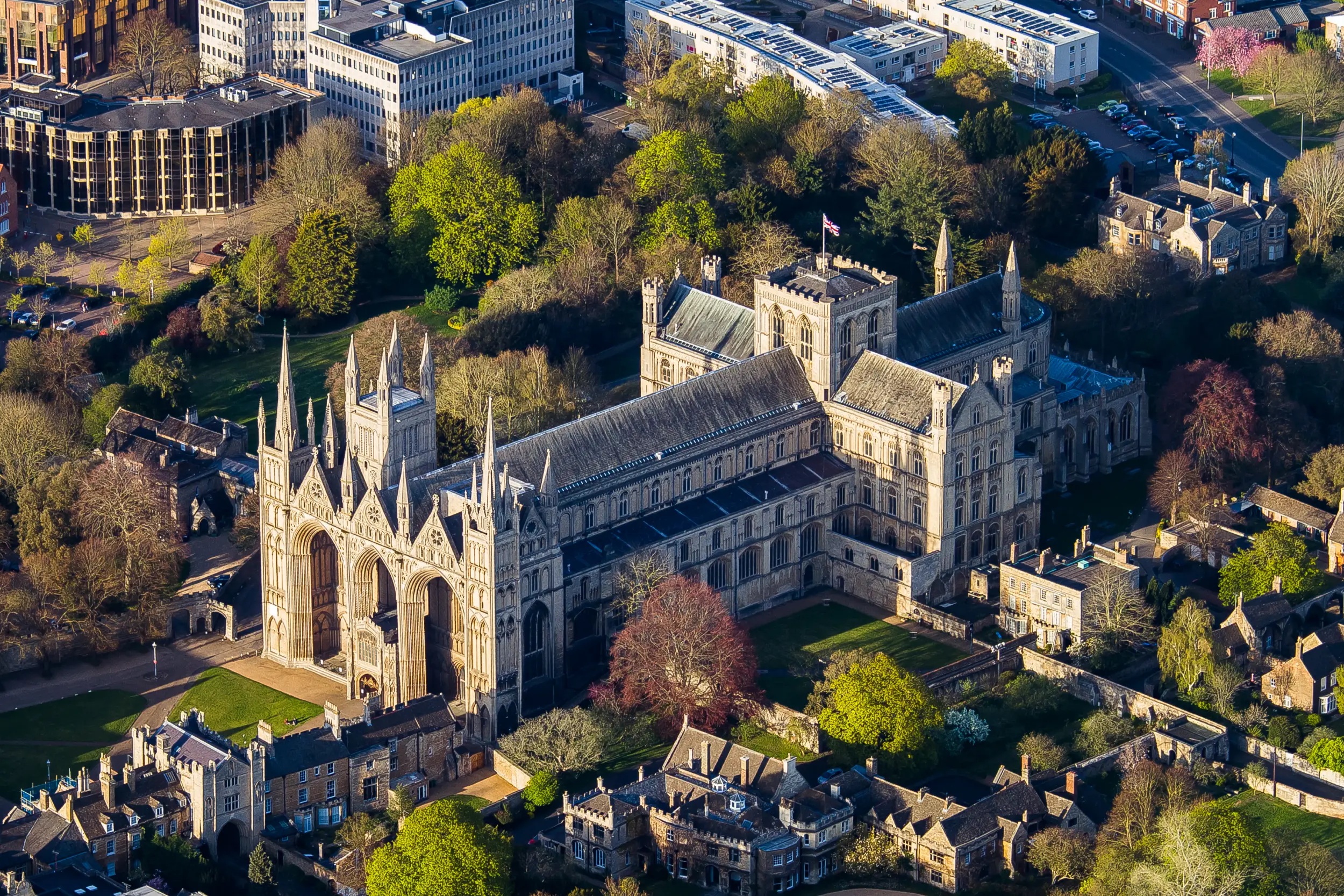
Peterborough Cathedral
He trained under Cathedral organist Haydn Keeton and formed a lifelong friendship with fellow pupil Malcolm Sargent.
Oxford, the First World War and Vaughan Williams
In 1915–16 Armstrong served as assistant organist in Peterborough before winning an organ scholarship at Keble College, Oxford.
His studies were interrupted when he enlisted in the Royal Artillery in 1916 and served in France during the First World War.
One encounter during his military service proved particularly important. Armstrong met composer Ralph Vaughan Williams, whom he later described as the greatest personal influence on his life.
A piano in Cambrai
Armstrong remained in France for several months after the fighting ended.
Determined to recover the musical technique disrupted by military service, he rented a room with a piano in Cambrai and began practising seriously again before returning to England.
It is a small episode, but one that says a great deal about the determination behind his later career.
From Oxford to the cathedrals
After the war Armstrong returned to Oxford, studying with Hugh Allen and Henry Ley. He graduated in modern history in 1921 and completed his Bachelor of Music the following year.
His career then moved rapidly through some of the leading institutions of British church music.
Manchester Cathedral
Armstrong became assistant organist and worked alongside conductor Hamilton Harty.
St Peter’s, Eaton Square
He moved to London and continued his studies at the Royal College of Music with Gustav Holst and Ralph Vaughan Williams.
First BBC broadcast
An organ recital began a long relationship with broadcasting that later included talks on British music.
Exeter Cathedral
Armstrong served as organist while also directing music at the University College of the South West.
Christ Church, Oxford
He became organist of Christ Church and an increasingly prominent figure in Oxford musical life.
Royal Academy of Music
Armstrong was appointed Principal of one of Britain’s foremost music conservatoires.
Player, conductor, teacher and academic
Armstrong returned to Oxford in 1933 as organist of Christ Church. His role soon extended far beyond the organ loft.
He conducted the Oxford Orchestra and Oxford Bach Choir and became president of the Musical Club and Union. In 1939 Christ Church elected him a Student, the equivalent of a fellowship elsewhere in Oxford, making him the first organist there to receive that distinction.
Oxford became what his family later described as a kind of spiritual home, combining scholarship, music and academic community in a way that suited Armstrong perfectly.
Leading the Royal Academy of Music
Armstrong’s most influential public appointment came in 1955 when he became Principal of the Royal Academy of Music in London.
He led the Academy for thirteen years, becoming known not only for musical judgement but for his concern for students and staff.
He also worked to strengthen relationships between the Academy and conservatoires elsewhere in Europe, helping develop a more international outlook for musical education.
Characteristically, Armstrong was still prepared to become a beginner himself. At the age of 57, after becoming Principal, he began taking lessons in the double bass from a member of his own staff.
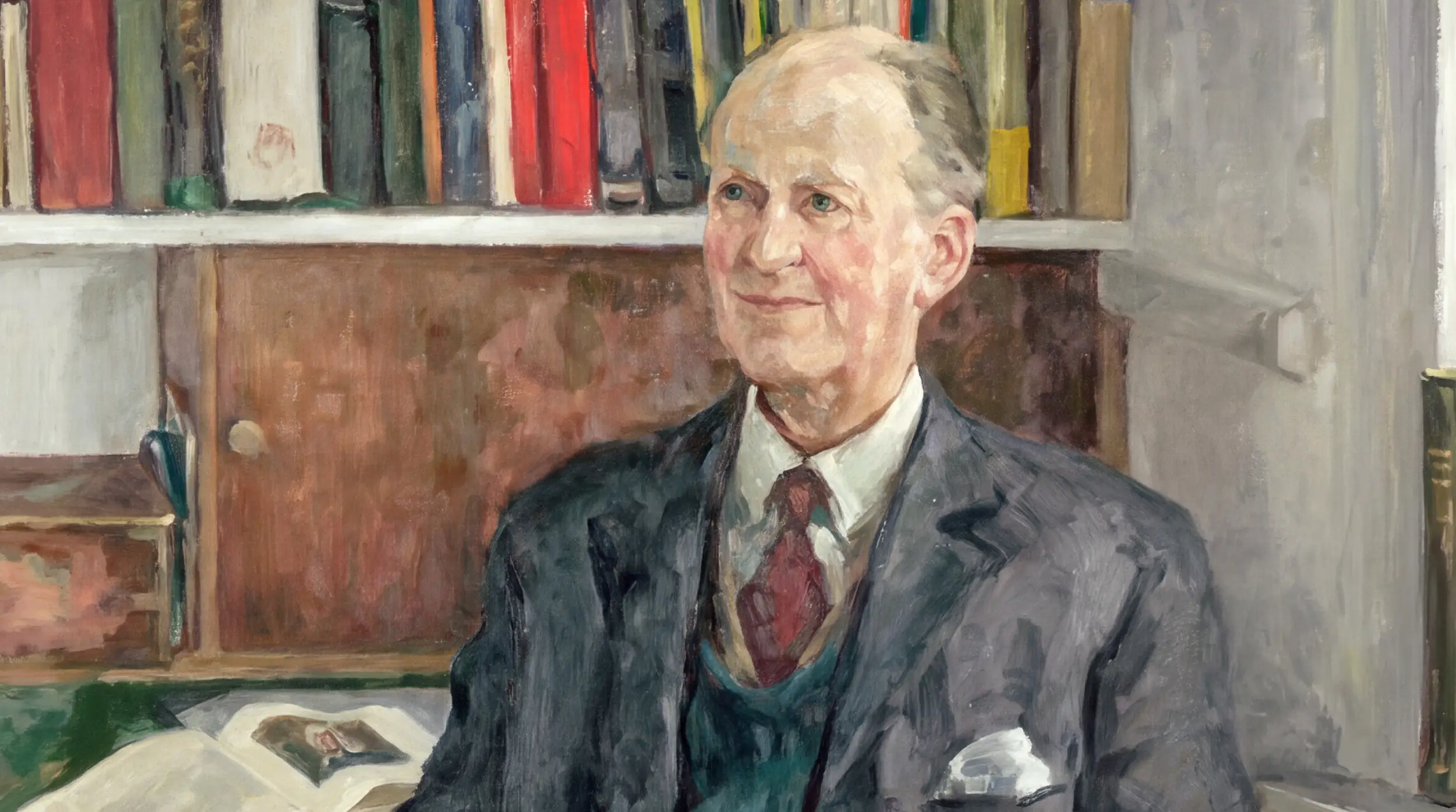
Sir Thomas Armstrong
Three years after becoming Principal of the Royal Academy of Music, Armstrong was knighted for his contribution to British musical life.
By then, the boy who had begun his musical education in Peterborough was helping shape the careers of a new generation of professional musicians.
At the centre of British music
Armstrong’s influence extended through many of Britain’s most important musical organisations.
He served as chairman of the Royal Philharmonic Society and the Musicians Benevolent Fund, was a director of the Royal Opera House and became involved with institutions including the Delius Trust and the school that would later become the Purcell School.
The composer
Administration and education came to dominate Armstrong’s public reputation, but he composed throughout his life.
His output included around twenty-five anthems as well as carols, church services and a substantial number of songs.
For his Oxford doctorate he composed three larger works: A Passer-By, a Fantasy Quintet for piano and strings, and Friends Departed.
The larger works remained unperformed during his lifetime and were only recorded after his death.
Armstrong’s music belonged firmly to the English tradition associated with composers such as Parry, Vaughan Williams, Howells and Finzi. Even into his nineties, he continued to compose.
A broadcaster before broadcasting became ordinary
Armstrong’s first BBC organ recital was transmitted in 1927, only a few years after regular broadcasting began in Britain.
It became the beginning of a long association with the BBC, not only as a performer but as a communicator who could talk about British music to a wider public.
That part of his career is easy to overlook, but it placed Armstrong among a generation of musicians who helped move serious music beyond concert halls, cathedrals and universities and into people’s homes.
He never really retired from music
Armstrong retired from the Royal Academy of Music in 1968 at the age of seventy, but retirement did not mean silence.
After moving to Buckinghamshire he formed and conducted a village choir. Even at around ninety years old, he was still willing to play the organ for local services when asked.
Music had begun in his Peterborough childhood and remained part of his everyday life almost to the end.
A Peterborough musical story
Armstrong’s national career can make it easy to lose sight of how deeply Peterborough shaped the beginning of his life.
His father was embedded in the city’s musical institutions. Thomas learned within that environment, became organist at Thorney Abbey, worked as assistant organist in Peterborough and trained beneath the ancient vaults of Peterborough Cathedral.
His fellow Cathedral apprentice Malcolm Sargent would also become one of the leading names in British classical music.
For a city sometimes better known nationally for engineering and industry, the careers of Armstrong and Sargent reveal another Peterborough tradition: a remarkably strong culture of church music, choirs, orchestras and musical education.
Continue exploring Peterborough
Peterborough Cathedral
Explore the Cathedral where Armstrong trained under Haydn Keeton and worked as a young assistant organist.
Explore the Cathedral1,350 Years of Cathedral History
Discover the wider institution whose musical tradition shaped generations of singers and organists.
Read the Cathedral storyPeterborough People
Meet more remarkable people connected with the city and surrounding area.
Discover more peopleArts, Culture & Heritage
Explore more of Peterborough’s music, heritage, architecture and cultural life.
Explore culturePeterborough Timeline
Place Armstrong’s lifetime within the wider story of the rapidly changing twentieth-century city.
Travel through timeThings to Do
Discover more historic, cultural and memorable places across Peterborough.
Explore PeterboroughDiscover more Peterborough people
From musicians and writers to scientists, sporting greats and local legends, explore the people whose stories reach far beyond the city.
Explore Peterborough People